Android

See All Stories

Breaking news for Android. Get the latest on apps, carriers, devices, and more!
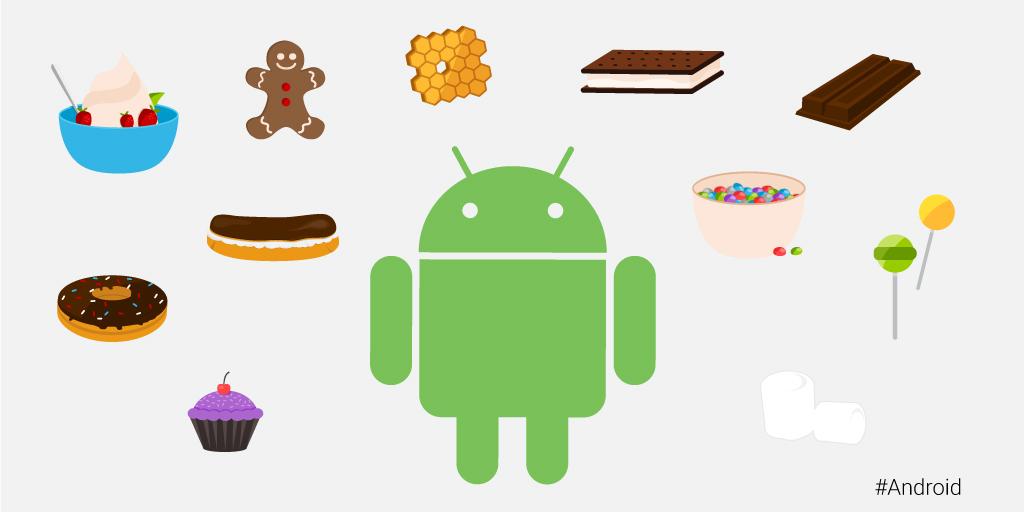
Android is Google’s mobile operating system, launched in September 2008, although its history technically began with the release of the Android alpha in November 2007. To this day, Android powers the majority of the world’s smartphones and comes in several different flavors across many phone makers.

What is Android?

Android Inc.

Android, before it was Android, was a company called Android Inc. That company was founded in Palo Alto, California, in 2003 by a crew of four: Andy Rubin, Rich Miner, Nick Sears, and Chris White. The company and its project was acquired by Google in 2005 for a sum of more than $50 million, although the exact number is unknown. The company’s founders joined Google as part of the deal.

In its infancy, Android was an operating system built not for touch screen smartphones like the iPhone, but rather BlackBerry-like devices with physical keyboards. It’s well documented that after Apple shocked the world with the iPhone, ahead of its nearest competition by at least a couple years, Google and Android Inc. had to go back to the drawing board to build something competitive.

Adoption by third-party makers

It didn’t take long after the launch of the iPhone for various manufacturers to enter the market with their alternatives — and Google’s Android immediately became the obvious platform of choice for just about everyone except Microsoft. HTC was the first manufacturer on board, and introduced the T-Mobile G1 running Android in September 2008. Soon after, HTC, Motorola, Samsung, and carriers like Sprint and T-Mobile jumped on board to form the Open Handset Alliance.

Android makers across the world

Iconic Android handsets

There have been thousands of Android phones released since Android’s inception, but some have been more important to the platform’s history than others. There was the original T-Mobile G1, as mentioned, but there was also the HTC One Google Play Edition, Moto G, Samsung Galaxy S4, and others. Some of the most iconic Android handsets include:

  • HTC G1
  • HTC Nexus One
  • Samsung Galaxy S, S2, S3, S4, and their successors
  • HTC Incredible S
  • Samsung Nexus S
  • Samsung Galaxy Nexus
  • Samsung Galaxy Note
  • Nokia 8
  • BlackBerry KeyOne
  • Google Pixel and its successors

In more modern times, there are several Android smartphones makers that popped up across various niches and in several international markets. Huawei is a dominant Android maker in China and many European markets, while Samsung is by far the most popular maker in the United States by far — effectively creating a duopoly with Apple. Today, there are dozens of major device makers contributing to the Android ecosystem.

Full list of Android OEMs

History of major Android versions

Android has seen countless software revisions over the course of its life, but in modern times the OS usually sees a major release on an annual cadence. In the earlier days, Google famously gave its major software releases dessert-themed codenames, but retired that practice in 2019 with the release of Android 10.

VersionNameReleaseDevices
2.3GingerbreadFebruary 9, 2011Nexus S
4.0Ice Cream SandwichOctober 19, 2011Galaxy Nexus
4.1Jelly BeanJuly 9, 2012Nexus 7
4.2Jelly BeanNovember 13, 2012Nexus 4, 10
4.3Jelly BeanJuly 24, 2013Nexus 7 (2013)
4.4KitKatOctober 31, 2013Nexus 5
5.0LollipopNovember 3, 2014Nexus 6, 9
5.1LollipopMarch 9, 2015Android One
6.0MarshmallowOctober 5, 2015Nexus 5X, 6P
7.0NougatAugust 22, 2016Nexus 5X, 6P
7.1NougatOctober 4, 2016Pixel, Pixel XL
8.0OreoAugust 21, 2017Pixel, Pixel XL
8.1OreoDecember 5, 2017Pixel, Pixel XL
9PieAugust 6, 2018Pixel 2, Pixel 2 XL
1010September 3, 2019Pixel 3, 3a
1111September 8, 2020Pixel 4

List of major Android OS platforms

While Android proper is certainly the most widespread of Google’s Android operating systems, the company has also launched many offshoots of the main OS over the years. There’s Android Auto, Android Wear (now Wear OS), Android TV (now rebranded to Google TV), as well as versions of Android built for tablets and Android Things (now defunct).

Head of Samsung Mobile leaves company, NYT reports

Site default logo image

(via <a href="Wired.com" target="_blank">Wired.com</a>)

Samsung’s chief product officer for its mobile devision, Kevin Packingham, has parted ways with the company, The New York Times reports.

Packingham, a former Sprint Nextel vendor, was responsible for leading the company’s mobile team during the notably successful launches of the Samsung Galaxy S III and Galaxy S 4 Android phones on all the major US carriers. Packingham cited Samsung’s aggressive advertising campaign for the Galaxy smartphones as a key to making their respective launches successful for both Samsung and the carrier stores.

Samsung Mobile confirmed the departure to NYT:

“Kevin Packingham has departed Samsung Mobile,” said Ashley Wimberly, a Samsung Mobile spokeswoman, in a statement. “We thank Kevin for his contributions and wish him well in his future endeavors.”

Details surrounding Packingham’s departure are vague at this point, and a successor to the two-year Samsung Mobile chief has yet to be announced.
Expand
Expanding
Close

Site default logo image

Chrome 31 Beta released with shortcuts for web apps on Android & more

Google today announced the release of Chrome Beta 31 for Android and desktop that includes new web app shortcuts on Android, an improved auto complete experience for payments, and much more.

The new application shortcuts for Chrome for Android allows you to add a shortcut to a webpage to your Android home screen. While you could already save a similar type of shortcut on Android, Google is now giving the sites an option to open in a special fullscreen mode without all the browser controls:

Sites launched in this way will open in a normal Chrome for Android window, unless they include themobile-web-app-capable meta tag. Those sites will instead open in a special fullscreen Chrome for Android window that doesn’t display tabs, buttons, menus, or the Omnibox. Try adding a shortcut to weight.aerotwist.com to see this in action.

Chrome 31 also includes a smoother experience for autocomplete on Android, Windows, and Chrome OS (soon on Mac) that makes it easier to fill out forms online starting first with payments:

requestAutocomplete() makes it easier for users to fill out online forms by offering web developers programmatic access to the browser’s autocomplete information (with the user’s explicit permission). For this first release, we’ve made it work for web payments. On sites with requestAutocomplete(), users will be able to either use their existing payment data stored with the browser or enter new details through a browser-provided interface. As a developer, you can continue processing payments with your existing payment processor.

The release has a ton of other new features and improvements including new Chrome Apps APIs, the ability for developers to execute native code with Portable Native Client (PNaCl), Speech recognition with the JavaScript Web Speech API, and much more. A full list of what’s new is available on the Chromium blog.

WSJ: LG launching 6-inch “G Flex” smartphone with curved screen next month

Site default logo image

Following a translated report yesterday claiming that LG was planning to introduce its first smartphone with a flexible OLED display, The Wall Street Journal chimes in today with more details on the device. According to the report, LG will launch the “G Flex” smartphone next month featuring a 6-inch curved OLED display:

LG’s new phone, dubbed G Flex, will have a six-inch screen using organic light-emitting-diode technology, a person familiar with the matter said. The handset itself is slightly concave, according to sketches of the prototype viewed by The Wall Street Journal.

For the Flex’s curved display, LG employed what the company refers to as a “plastic OLED” screen, using materials that are more flexible than conventional liquid-crystal-display screens, said the person familiar with the matter.

The WSJ was also able to grab the image above showing a sketch for a prototype of LG’s curved device. 
Expand
Expanding
Close

Jelly Bean likely to be on majority of Android devices within a week or so

Site default logo image

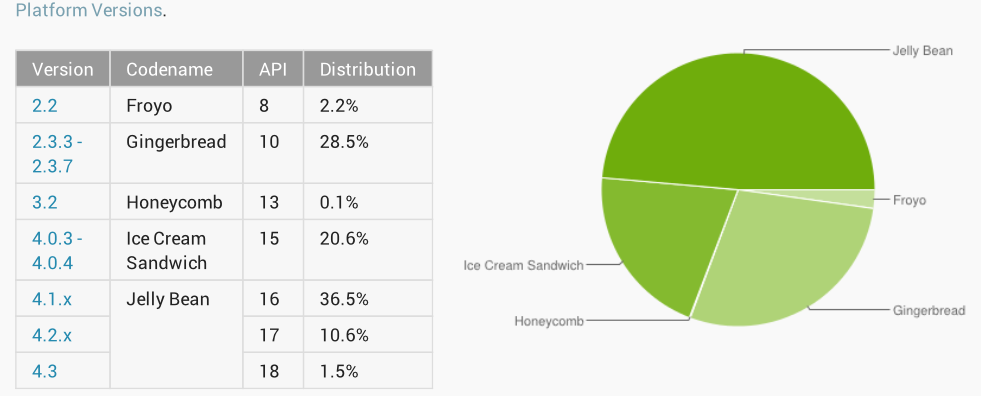
The latest Android stats from Google show that Jelly Bean is now installed on 48.6 percent of Android devices, and given current growth rates is likely to break the magic 50 percent barrier within a week or two. Jelly Bean became the most-used version of Android back in July.

The rather less impressive stat is that more than a quarter of devices – 28.5 percent – are still running Gingerbread, which dates back as far as 2010. It’s also worth pointing out that there are couple of fudge-factors in Google’s stats … 
Expand
Expanding
Close

Report finds almost all Android OEMs, not just Samsung, cheat on benchmarks

Site default logo image

When a story earlier this week discovered Samsung was artificially inflating benchmark scores for its new Galaxy Note 3, many were quick to point out it wasn’t the first time Samsung had been caught engaged in such a practice. The same issue was discovered by AnandTech for the Galaxy S4 back in July, and today the site has an extensive report showing that almost every Android smartphone manufacturer is shipping devices that do the same.

As pictured in the chart above, that includes the HTC One, HTC One mini, LG G2, Galaxy Tab 10.1, and many others. In fact, the only companies that appear to not be using the method is Apple and Motorola, as well as Google with its Nexus 4 and Nexus 7 devices:

We started piecing this data together back in July, and even had conversations with both silicon vendors and OEMs about getting it to stop. With the exception of Apple and Motorola, literally every single OEM we’ve worked with ships (or has shipped) at least one device that runs this silly CPU optimization. It’s possible that older Motorola devices might’ve done the same thing, but none of the newer devices we have on hand exhibited the behavior. It’s a systemic problem that seems to have surfaced over the last two years, and one that extends far beyond Samsung…  None of the Nexus do, which is understandable since the optimization isn’t a part of AOSP. This also helps explain why the Nexus 4 performed so slowly when we reviewed it – this mess was going on back then and Google didn’t partake.

As noted in the report, the gains that OEMs are experiencing from the inflated scores are probably not worth the press they’ve been receiving. AnandTech points out that most of the inflated scores provide under a 10% increase in GPU and CPU performance benchmarks:
Expand
Expanding
Close

Report claims ‘LG Z’ with flexible OLED display will debut later this month

Site default logo image

Samsung might have planned on being the first to market with a flexible OLED screen with a special edition of its Galaxy Note 3, but it looks like LG too will soon be launching its first smartphone to incorporate curved display. According to a translated report from ZD Net (via UnwiredView), LG is prepping an “LG Z” smartphone that will be the company’s first to utilize that flexible display technology it’s been working on.

We don’t get many details from the report, but it does claim that the device is already in mass production and could debut as early as this month.

It’s worth pointing out that we still don’t have any real official details on either of these curved devices from Samsung or LG, but we’re guessing the first generation of flexible display smartphones will likely sport a rather rigid casing that will make the product appear curved, opposed to actually being flexible in one’s hand.

Hulu Plus app adds support for Chromecast for big-screen viewing

Site default logo image

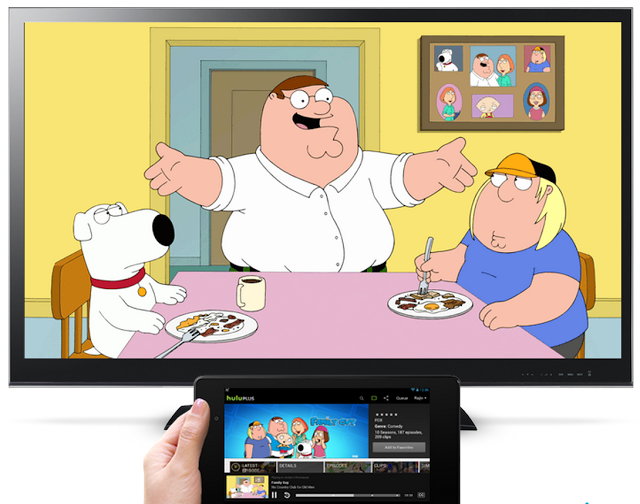
Google has announced that Hulu has added Chromecast support to its Hulu Plus app, enabling online shows to be viewed on the big screen – something it promised back in July.

Now you can easily enjoy your favorite shows, such as “Modern Family,” “New Girl” and “Parks and Recreation,” on your big-screen TV by casting from Hulu Plus on your mobile phone or tablet. It’s the same intuitive, remote-free experience you’ve come to enjoy with the other Chromecast-supported apps, and is as simple as pressing the Cast button which will now appear in the app … 
Expand
Expanding
Close

Site default logo image

Chrome for Android updated with new gestures for quick tab switching & more

Google announced some updates for Chrome today on its blog that bring new features for both desktop and Android users. Over the next week users on the desktop will now be able to search Google for images when right-clicking an image in Chrome, but the most notable update comes in the form of new gestures for the Chrome for Android app (pictured above):

The new gestures include:

  • Swipe horizontally across the top toolbar to quickly switch tabs.
  • Drag vertically down from the toolbar to enter into the tab switcher view.
  • Drag down from the menu to open the menu and select the item you want without having to lift your finger.

Google said the updates for Chrome on the desktop and Android will be rolling out in the next few days.

Site default logo image

Google Play Music lands in seven new countries including Russia, Netherlands & Switzerland

Google has been adding support for various Google Play services in a lot of new countries recently and today it continues that trend with the roll out of Google Play Music in seven new locations. The company made the announcement in a tweet on its official Google Play Twitter account today and confirmed that the Czech Republic, Finland, Hungary, Liechtenstein, Netherlands, Russia, and Switzerland now all have access to purchase music through Google Play.

Earlier this week Google rolled out its Google Play Books service in a handful of new countries as well, including: New Zealand, Singapore, Taiwan, Hong Kong, Indonesia, Malaysia, Philippines, Thailand & Vietnam.

Galaxy Gear reviews make for painful reading [Review roundup]

Site default logo image

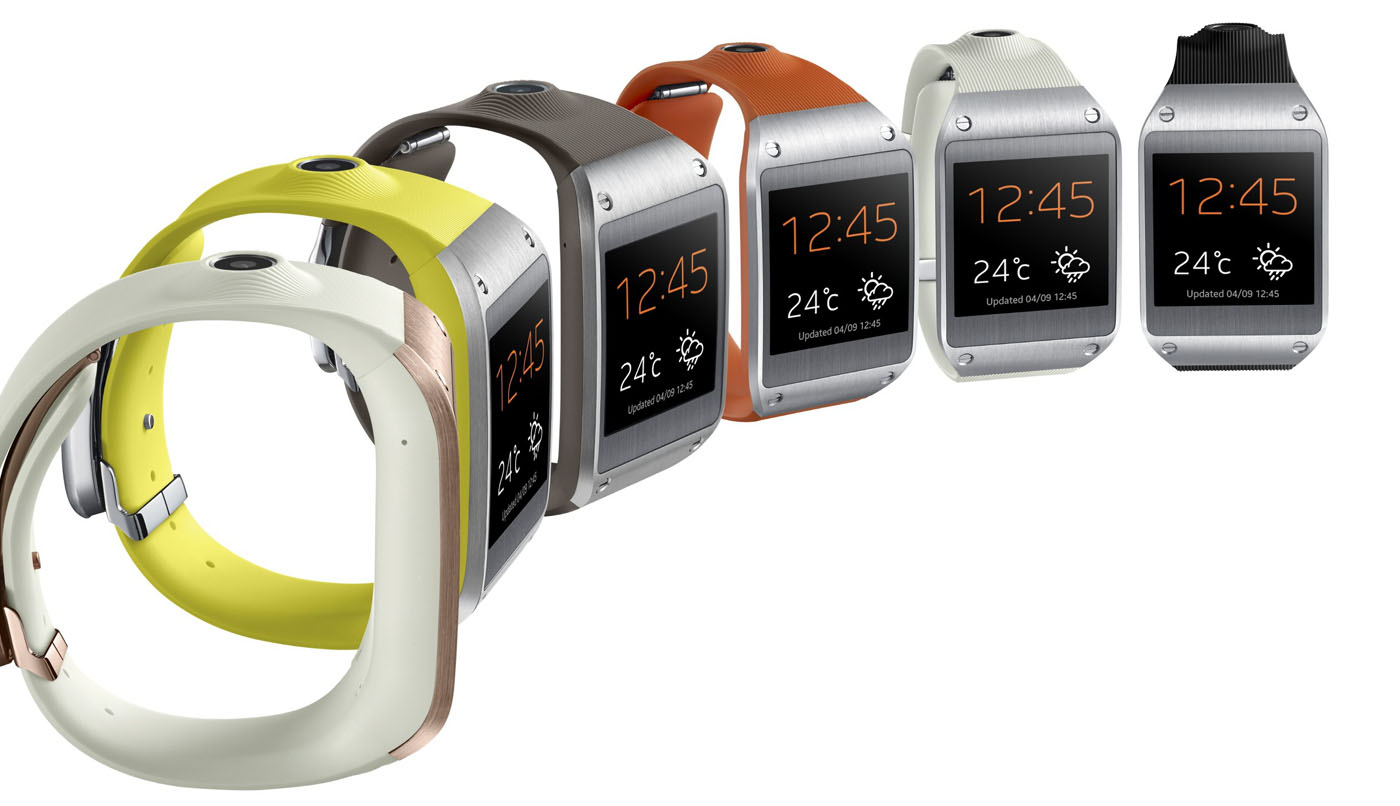
The Samsung Galaxy Gear smartwatch reviews are out, and that red glow you see on the horizon is from the blushing faces at Samsung, visible all the way from Korea. The reviews are not, to put it kindly, overwhelming in their enthusiasm for the device.

The Verge

A smartwatch the Galaxy Gear is not. Frankly, I’m not sure exactly what it’s supposed to be. Samsung describes it as a companion device, and the Gear is indeed chronically dependent on an umbilical link to another Samsung device, but it never left me feeling like it was a helpful companion. The notifications are Orwellian, the media controls are exiguous, and the app selection has no substance to underpin the hype. Samsung’s attempt to turn the Gear into a style icon is also unlikely to succeed, owing to the company’s indecision about its target demographic. Trying to please all tastes has resulted in a predictably charmless and soulless product.

The Gear’s camera and phone calls are both surprising and delightful, but they’re unfortunately isolated highlights. When all is said and done, I expect the Galaxy Gear will be looked back upon as a rough first draft that helped the Korean chaebol steer a better course en route to the goal of producing a real smartwatch. As it stands today, though — unintuitive, oversized, overpriced, and in constant need of a Galaxy guardian — the Galaxy Gear might have been better off staying on the drawing board … 
Expand
Expanding
Close

Site default logo image

Smaller, more affordable Moto X variant passes through the FCC

Rumors of a lower-cost Moto X variant have been around for a while, but if recent FCC documentations are to be believed, the device is not too far away from being released (via Android Police). A recent revised Permissive Change filing with the FCC has revealed a couple of photos of the device, which looks nearly identical to the Moto X. The phone is referred to as the Motorola DVX and appears to have a slightly smaller screen than the Moto X, coming in between 4.3-inches and 4.5-inches.

The FCC documents show the DVX as being compatible with GSM 850/1900 bands, meaning that it lacks LTE and will work only with AT&T here in the states. 
Expand
Expanding
Close

Site default logo image

Google releases completely redesigned Analytics app for Android

Google announced today on its Google Analytics blog that it is releasing a brand new version of its Analytics app for Android that brings a new design for smartphones and tablets (pictured above) alongside a handful of new features. On top of improved real-time reporting and new visualizations that Google notes “automatically resize to fit your screen size and orientation,” the app is also built on Google Tag Manager allowing Google to configure reports and visualizations without having to update the app:

We’re also introducing new visualizations designed with tablets and phones in mind. Rather than getting overwhelmed with too much information on a small screen, you now see just the most relevant metrics on cards, so you decide when you want to drill-down for details or just get a quick update on your performance

The app also includes specialized reports for web and app views and “deeper analysis via dimension-based drill down in most reports.”

The updated Google Analytics app is available now on Google Play and a full list of what’s new is below:

  • A completely redesigned look and feel, ideal for tablets and phones
  • New visualizations that automatically resize to fit your screen size and orientation
  • Side navigation that mirrors Google Analytics on the web for quick access to reports
  • Specialized reporting for web and app views (profiles)
  • An Overview screen summarizing key metrics from each report
  • Deeper analysis via dimension-based drill down in most reports
  • Better Real-Time reporting
  • Advanced Segments to further analyze your data

Google rolling out Google Play NFC vending machines in Japan (Gallery)

Site default logo image

Engadget got its hands on shots from the unveiling of new Google Play vending machines being rolled out in Japan today. The machines will sell Google Play content starting with a mix of 18 different free and paid games, and users will complete their purchase using any Android device running 4.0 and up with NFC. Engadget walked us through the process:

You rest the phone on the tray below the screen, and NFC pairing takes care of the rest. We put the machine to the test with our LG G2 on hand, and had no troubles choosing and downloading a free game through the machine. There’s a slick unified animation from the giant touchscreen (which looks almost identical to drinks machines elsewhere in the country) to your Android phone of choice when the download kicks in. Also, for trying out another Google app, you’ll get a ‘present’ which ‘drops’ down from the screen and into the vending tray once your download is complete.

The three Google Play machines will officially open to the public tomorrow at Parco department store in Shibuya. 
Expand
Expanding
Close

AT&T announces Oct. 4 release for Galaxy Note 3 & Galaxy Gear

Site default logo image

AT&T and other carriers have already started accepting preorders for Samsung’s new Galaxy Note 3 and Galaxy Gear companion smartwatch, but today AT&T announced official release dates for the two products.

Both devices will become available online and in stores on October 4th for the same prices AT&T previously announced for preorders. That’s $299 on contract for the Note 3 (or $35 per month on AT&T Next), and $299 for the Galaxy Gear. Preorders from AT&T’s site are currently listed as shipping on October 1st.

Other carriers, including T-Mobile and Sprint, will also begin selling the Note 3 and Galaxy Gear beginning early next month. 
Expand
Expanding
Close

Site default logo image

Samsung says ChatON now at 100 million users, up 50 million since May

Samsung announced today that ChatON, the company’s chat service that comes preinstalled on many of its mobile devices, has now passed the 100 million subscriber mark. That’s up around 50 million users in fourth months since first hitting 50 million subscribers in May, according to Samsung. The press release notes that ChatON has been experiencing growth in markets such as India and China, but doesn’t say how many active users the service has:

ChatON was designed in-line with Samsung’s drive to deliver products that meet specific local needs in different markets. In India for example, ChatON has seen exponential growth as the service supports 10 regional dialects, with plans to support 13 dialects by the end of 2013. Additional features such as the Ramadan Anicon have helped boost its popularity in the Middle East.

It’s important to note that this certainly doesn’t mean active users, and with ChatON currently preinstalled on Samsung’s most popular devices– the Note II & III, Galaxy S4, etc– there’s no telling how many users signed up and only tried the service once.

ChatON is also available on other Android devices, iOS, Windows Phone, and PCs, as well as in 63 different languages, but Samsung didn’t share details on how many subscribers it has on each platform.

Samsung: We’ve been making gold phones longer than Apple has been making phones

Site default logo image

With Apple’s new gold iPhone 5s getting the most attention of any of the new colorful iPhones it released earlier this month, Samsung wants you to know that it isn’t copying Apple with its new gold Galaxy S4.

In a blog post on its official Samsung Tomorrow blog titled, “Golden History of Samsung Phones,” the company makes a point of noting that it announced the Gold Galaxy S4 on August 27th and launched it in stores on September 8– over a week before Apple’s gold iPhone 5s launch. It also showed off some gold phones it’s made dating back to 2004.

Some were unreleased like special edition phones for the Olympics and one for Ocean’s 13, and Samsung notes that “this is definitely not a complete list of gold-colored products made by Samsung.”
Expand
Expanding
Close

Site default logo image

Facebook Android app now lets you edit posts and comments

Facebook is rolling out an update to its Android app today that brings a much welcomed new feature with the ability to edit posts and comments after sharing. Previously the only option was to delete and or repost a comment, but now users will be able to tap an arrow on each post and select “Edit post” to quickly make and save changes. You’ll also be able to see a history of changes.

The ability to edit posts and comments is rolling out today for Android and on the web.

The updated Android app also includes a few other new features. A full list of what else is new below:

-Use icons in status updates to express what you’re feeling or doing

-See upcoming events at a glance on your favorite Pages

-Create and share new photo albums from your phone

Samsung’s Galaxy Note 10.1 – 2014 Edition arriving at U.S. retailers on October 10 for $549

Site default logo image

Samsung today announced U.S. availability for the new Galaxy Note 10.1 – 2014 Edition that it first unveiled earlier this month at IFA. Preorders for the device will kick off tomorrow at midnight ET, and become available through the company’s major retail partners on October 10.

Samsung will be selling the new Note 10.1 in Jet Black and Classic White for a retail price of $549.99 (16GB) and $599.99 (32GB). Preorders will be available through select retailers, and the following stores will have stock of the device on October 10: Best Buy, Best Buy Mobile specialty stores, BestBuy.com, Amazon, PC Richard & Son, Fry’s, Tiger Direct, Walmart, Samsung.com.

As a reminder, the new Galaxy Note 10.1 features a Exynos® 5420 quad-core processor, 3GB of RAM, and a 2,560 x 1,600 pixel WQXGA display with over 4 million pixels, and that new leather-like textured backside like the new Galaxy Note III. You’ll also get those new S Pen features that we first saw on the Galaxy Note III, $600 worth of free bundled content, and other goodies. Head below for Samsung’s full press release. 
Expand
Expanding
Close

Nexus 5 to “match or beat” iPhone 5s graphics performance – preliminary benchmarks

Site default logo image

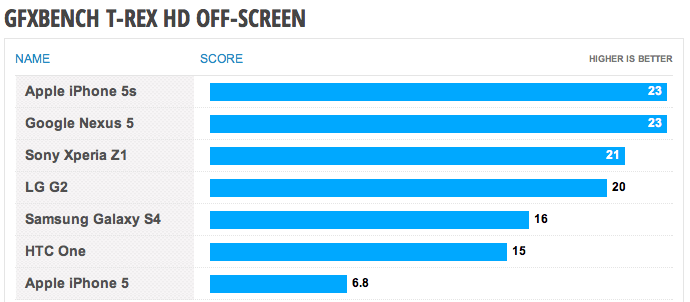
The Nexus 5 appears set to match or beat the iPhone 5s in graphics performance, according to benchmark data posted on the the GFXBench website, achieving 23.1 frames per second in a key test.

The GFXBench T-Rex tests are one of the most demanding tests of the graphics performance of a phone, and provide a particularly good guide to how well a handset is likely to fare when paying graphics-intensive games. The just-released iPhone currently tops the T-Rex scores, but one of the four tests appears to show that the Adreno 330 expected to be used in the Nexus 5 will at least equal that performance … 
Expand
Expanding
Close

Google Talk & Hangouts bug sends messages to the wrong recipients – Google investigating

Site default logo image

Update 2, Sept. 27: Google is reporting that Google Talk issues have now bee resolved for all users.

Update, Sept. 27: Some users are continuing to experience issues with Google Talk services today. Google says it expects “a resolution for all users in the near future.”

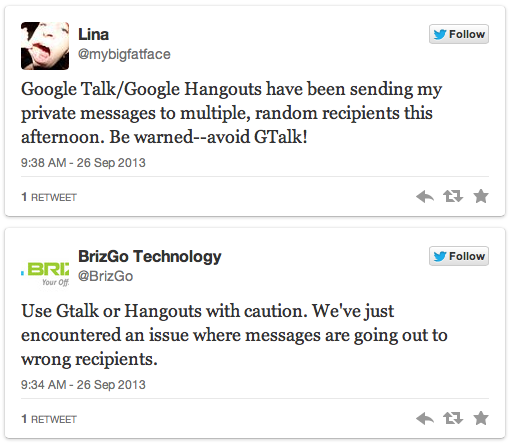
TechCrunch alerted us to an issue with Google Talk and Google Hangouts, which is rather alarmingly resulting in some messages being delivered to the wrong recipients.

 … 
Expand
Expanding
Close

Site default logo image

Google Search for Android updated with improved Google Now cards, related websites based on location, and more

In the continuation of update-everything day, Google has just released an update to its search app for Android. The update adds a handful of new features. For one, the app will now show you recommended websites based on your current location. For example, if Google notices that you are near a restaurant, it may recommend a website with that restaurant’s menu.

Also new are several improvements to Google Now. The sports and flights cards will now update in real-time, whereas they used to update only every 15 minutes. There are also new Smart-TV cards for news and music currently on TV.

The update also adds the ability to automatically tell your friends and family when you are leaving work, based on your GPS data and time. This feature is rolling out gradually, however.

The full change-log follows:

– Related website for current location
– Real-time sports and flight updates, no 15 min delay
– Set reminders from Google searches for album & book releases, tv shows
– Car rental reservations from Gmail
– Event tickets for select websites
– Improved public transit card
– Additional Smart-TV cards for news & music currently on TV
– Ability to tell family & friends when you’ve left work (rolling out gradually)
– Choose calendars and edit reminders

The update is available now on the Play Store.

Site default logo image

Google expands same-day delivery service to the entire Bay Area, launches new iOS and Android apps

Nearly a year ago, Google began testing its same-day delivery service in a small area of the Bay Area in California. Part of the Google Shopping Express service, the same day delivery shipping was available with a handful of retailers and only to a handful of people. Today, however, the company has announced that Shopping Express is now open to everyone living or working in the Bay Area delivery zone, which runs from San Francisco to San Jose. Same-day delivery is available from a variety of local and national businesses, including American Eagle, Blue Bottle Coffee, Lucky, Office Depot, Palo Alto Toy & Sport, Photojojo, Raley’s Nob Hill Foods, Staples, Target, Toys“R”Us/Babies“R”Us, and Walgreens.

In addition to expanding the service to more people, Google has also launched a Shopping Express app for both iOS and Android. The app allows you to easily buy goods from all of those retailers and have them shipped to your door on the same day.

For a limited time only, Google is offering six months of free, unlimited same-day delivery. Normally, the shipping runs $4.99 per store order.

Site default logo image

Google Hangouts for Android gets status icons and more

Google is rolling out a new version of Google Hangouts today for Android that will bring a couple long requested features to the messaging service. On top of being able to see who is online with new green and grey icons next to contacts, Google is also making it easier to browse contacts and access invites:

– You can see who’s reachable right now on Hangouts. Green icons mean they are, and gray icons mean they aren’t.

– It’s easier to browse your contacts when starting a new Hangout. From top to bottom you’ll now see ‘People you Hangout with’, ‘Suggested People’, and ‘Other Contacts’.

– Hangout invites are now located above your conversations so they’re easier to find.

– Aaaand… you can hide people from the New Hangout screen by pressing on their name for a few seconds and touching ‘Hide contact.’

The update is hitting Google Play in the coming days as version 1.2.