Google Search


From 9to5Mac:
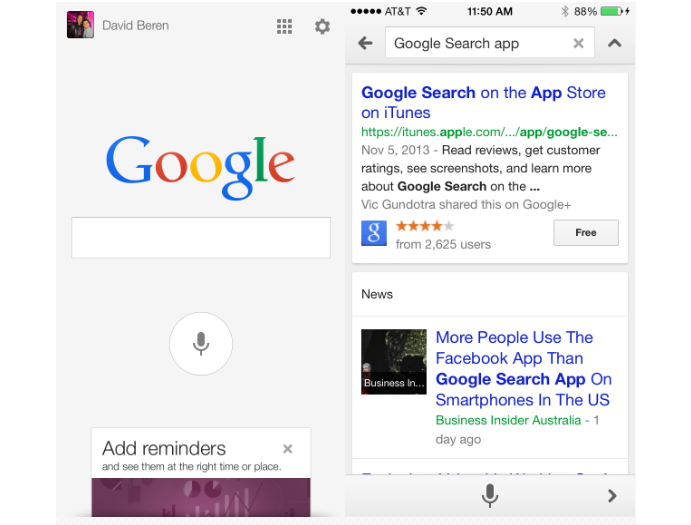
Chalk up another Google app for iOS update as the app goes all iOS 7-fied as the official app finally receives the treatment. It takes a few seconds to notice the changes as I almost missed the full screen front page that now omits the signal, battery and carrier label. Overall, the update introduces:

Oh Canada as the country’s Competition Bureau is targeting Google with a formal inquiry. Our neighbors to the north are eyeballing el Goog over concern the company is abusing its position as the worlds most dominant search engine.

Google announced today that it has added yet another new category to its ever-expanding Knowledge Graph service. Starting today, users can search the make, model, and year of a car to find out a variety of information, directly from the Google search page.
For instance, if you search “Tesla Model S”, the Knowledge Graph will now show up and present you with the MSRP, horsepower, miles-per-gallon, make, and available trims. Different cars show a different set information, as well. Should you search “Ford Focus”, you will be presented with the MSRP, MPG, and horsepower, as well as the engine size, body styles, and other years. Google doesn’t appear to have a whole lot of information in its database at this point. For example, it only has data for the 2012, 2013, and 2014 Ford Focus models.
To try it out for yourself, simply use voice search and say the make and model of a car, or type it into a Google search, just like you would any other search.

Google just announced a major update to Google Search for Android that is going to make finding information a whole lot easier. In simple terms, Google had added app listings to search results which allows your apps to show up in search results, as well as results from Google Play.
In the continuation of update-everything day, Google has just released an update to its search app for Android. The update adds a handful of new features. For one, the app will now show you recommended websites based on your current location. For example, if Google notices that you are near a restaurant, it may recommend a website with that restaurant’s menu.
Also new are several improvements to Google Now. The sports and flights cards will now update in real-time, whereas they used to update only every 15 minutes. There are also new Smart-TV cards for news and music currently on TV.
The update also adds the ability to automatically tell your friends and family when you are leaving work, based on your GPS data and time. This feature is rolling out gradually, however.
The full change-log follows:
– Related website for current location– Real-time sports and flight updates, no 15 min delay– Set reminders from Google searches for album & book releases, tv shows– Car rental reservations from Gmail– Event tickets for select websites– Improved public transit card– Additional Smart-TV cards for news & music currently on TV– Ability to tell family & friends when you’ve left work (rolling out gradually)– Choose calendars and edit reminders
The update is available now on the Play Store.

Google is rolling out a new hashtag experience in Google Search today that will see search results for queries with hashtags display related Google+ posts and content from other social networks:
– When you search on Google for a hashtag, say [#AmericasCup] or [#WaterfallWednesday], a set of relevant Google+ posts may appear to the right of regular results.
– You’ll only be able to see posts that have been shared publicly or shared with you.
– If you click on any of these posts you’ll go to Google+, where you’ll see the full set of relevant posts.
– You’ll also see links to search for these hashtags on other social sites.
The new feature will only be available to English users in the US and Canada initially and will go live on Google.com and Google.ca sometime today.
Google noted today on its Google+ page that it has updated search on both the desktop and mobile with new and improved definitions. Google search would previously let users ask for a definition by simply asking, for example, “What’s the definition of fortuitous?” The most recent update makes those definitions even more useful with the addition of sample sentences, synonyms, origin, translations and more:
Now you’ll also see sample sentences that highlight how the word is used, as well as synonyms…Give it a whirl the next time you’re reading an article online and you stumble across an unfamiliar word. In addition, try translating words to one of 60+ languages directly from the box. When you select a language, future definition searches will consistently provide a translation to that same language.
In addition to those features, Google will also offer spoken responses when tapping the microphone icon next to the definition:
Expand
Expanding
Close

Now that Chrome 29 has gone mainstream, Google has introduced Chrome 30 to the beta stage. This release makes it easier to use Google’s search-by-image feature, which allows you to upload an image and search the internet for webpages that have that image (also great for finding larger sizes of images). Right-click any image on the web in Chrome 30 and you’ll see the option to “Search Google for this image”.
Chrome for Android also sees some improvement in this release with the introduction of new gestures:
Expand
Expanding
Close

Google has updated the Android version of its Google Search app to include everything from directions to car rental pickup points to the music playing in the TV show you’re watching. Several of the updates are designed to make life easier when traveling, whether locally or further afield.
Car rentals card: Get reservation details and directions to the rental center directly in Google Now, which together with the boarding pass and hotel reservation cards, makes Google Now your ultimate travel companion.
Concert ticket card: Going to a concert? Google Now will have your event ticket ready when you arrive at the venue; along with popular, locally relevant websites, such as the upcoming events page for the venue.
Improved public transit cards: If you regularly take public transit, Google Now will now inform you about the last train or bus to home so you never miss it.
Commute sharing card: When leaving work, you can now choose to inform your loved ones that you are on your way home. Learn more at http://goo.gl/bVUkLY
Set reminders while you search: When searching for music artists, movie actors, filmmakers and TV shows on Google, you’ll see a new “remind me” button on the panel by the search results. Click on it and a Google Now reminder will show up for new albums, book releases or upcoming TV episodes.
Updated TV card: Google Now can tell you about the news mentioned and music playing in the TV show you’re watching, in addition to program information and people mentioned in show. Simply tap on the TV card if you have a smart TV or tap on the mic and say “listen to TV”.
NCAA football scores: Football season is about to start, and Google Now has you covered–you can now see real-time scores for your favorite NCAA team in Google Now.
Google Now is available from the Play Store. The iOS version of the app has not yet been updated.
 Google announced today on its Google Maps blog that it’s finally tapping into the talent and technology it picked up with its acquisition of Waze back in June to integrate real time incident reports from Waze into Google Maps. The new integration means that when Waze users report incidents for everything from accidents to road closures, Google Maps users on both iOS and Android will now be able to benefit:
Users of Google Maps for Mobile will now benefit from real time incident reports from Waze users. This means when Wazers report accidents, construction, road closures and more on Waze, the updates will also appear on the Google Maps app for Android and iOS.
The features will initially be limited to users in certain locations, including: Argentina, Brazil, Chile, Colombia, Ecuador, France, Germany, Mexico, Panama, Peru, Switzerland, UK and the US. In addition, as Google first hinted back in June, the company will also be integrating Google Search into the Waze apps on iOS and Android, while the Waze Map Editor now has access to Google Street View imagery:
Expand
Expanding
Close

European Competition Commissioner Joaquin Almunia (photo: Reuters)
Google’s proposed changes to its search results don’t go far enough to address claims that it is using its dominant position to freeze out competitors, says the EU (via Reuters).
The decision comes as no surprise after EU Competition Commissioner Joaquin Almunia said back in May that he was “almost 100 percent certain” to reject the proposals, in which Google’s key offers were to clearly separate organic results from sponsored links and to provide links to at least three rival search services in its results …
Expand
Expanding
Close
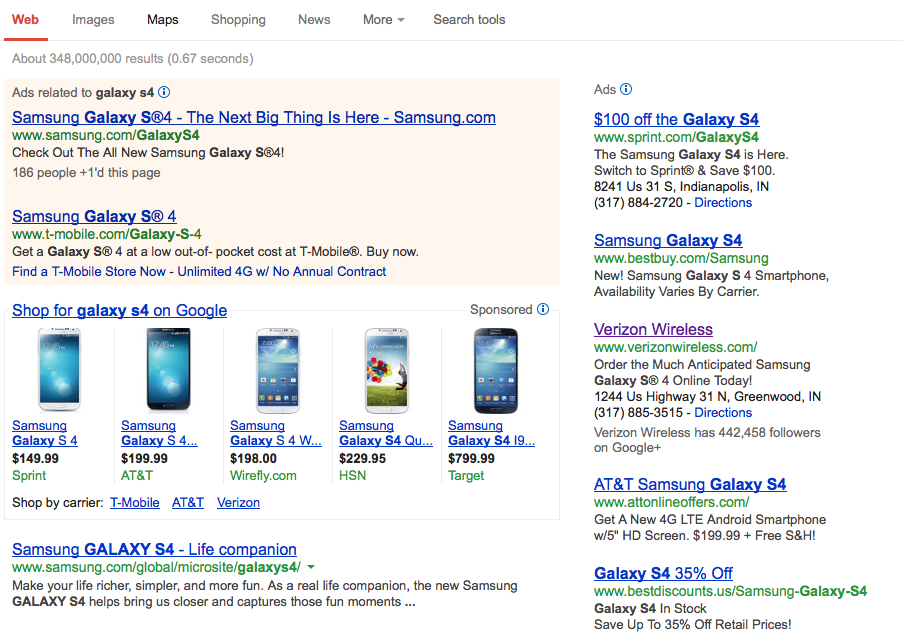
The Federal Trade Commission has sent out a letter to 20 search engines informing them that they are not properly distinguishing the ads in search results from the actual results themselves. Back in 2002, the FTC doubled down on paid listings in search results, forcing search engines to clearly show a difference between the two, but the firm believes that since 2002, companies have fallen back into their old habits. “We have observed a decline in compliance with the letter’s guidance,” the agency said in the letter.
The FTC has now issued new guidelines for search result ads, saying that things such as borders, shading, and text labels must be different when compared to true search results. The agency pointed a finger at Facebook’s new Graph Search feature, saying that “Regardless of the precise form search may take in the future, the long-standing principle of making advertising distinguishable from natural results will remain applicable.”
Expand
Expanding
Close
Google announced today that it is rolling out a new interactive carousel for restaurants and other local places directly in search results on the desktop. Users will be able to click on thumbnails in the carousel to quickly get more info on a specific place, including: “overall review-based score, address and photos.” The feature was previously available to some Nexus tablet and iPad users since rolling out back in December, but today it’s rolling out to everyone through Google search on the desktop:
Expand
Expanding
Close
Microsoft must be pretty happy with Apple’s decision to include Bing as the default search engine powered web results in Apple’s revamped Siri application heading to iOS 7 this fall. However, what does this all mean for Google? It could very well signal Apple’s increasing desire to cut its reliance on services powered by its biggest competitor in the smartphone space.
Before iOS 7, searching for something with Siri would often turn up the option to search for web results. Doing so would give you results through Safari using your default search engine (which by default is set to Google). Now, in iOS 7, web results will be displayed right in the Siri app, however, they will be powered by Microsoft’s Bing– and not Google.
Expand
Expanding
Close


As noted by Droid Life , Google is rolling out nutritional information from the Knowledge Graph into its search results for users in the U.S. over the next ten days.
Google Now will be able to take advantage of these results across various platforms including Android and its iOS application:
From the basics of potatoes and carrots to more complex dishes like burritos and chow mein, you can simply ask, “How much protein is in a banana?” or “How many calories are in an avocado?” and get your answer right away. You’ll hear the answer to your specific question, see relevant nutrition information under an expansion, and be able to switch to other related foods or serving sizes.
Many consumers will value this information as caloric intake and personal fitness trends more and more popular. Even fast food restaurants are starting to report nutritional information for its products. Good on Google’s part for making this information more accessible for everyone.
Expand
Expanding
Close
Earlier today Google officially pushed out an update to its existing Google Search app for iPhone enabling the Google Now service with weather and traffic conditions, updates on breaking news and sports, and more. Some users logging into Google Search through a Google Apps account might have noticed that using the features would prompt an error that “your administrator hasn’t enabled Google Now for your domain.” Hanselman.com shares instructions on enabling the feature which aren’t exactly obvious since the setting is buried in “Android settings”.
Google Apps for Business, Education, and Government: Google Now needs to be turned on by an administrator before it can be used.
If you are an administrator, you can enable Google Now for users in your organization by following these steps:
via phandroid.com
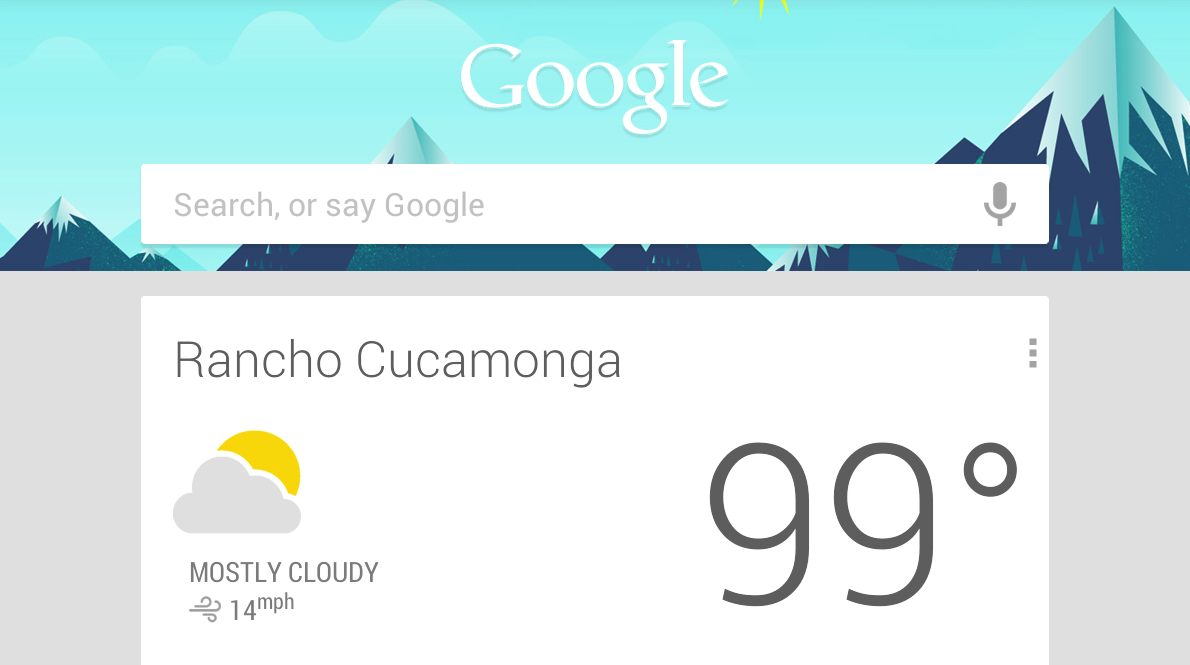
Google appears to be readying a Google Now web interface for the company’s Siri-like voice search with Google’s homepage as the intended destination.
It’s no surprise that Google would bring its voice search to the web, as it already offers the service on Android and plans to bring it to iOS (Google Search for iOS currently offers real-time voice search but doesn’t support Google Now cards), and tends to have a cross-platform approach to its services as opposed to Apple’s ownership approach to its services.
Sure, Apple does have limited iCloud functionality on Microsoft’s Windows operating system and allows users to manage iCloud from a nicely designed web interface, but Apple only offers Siri on the iPhone 4S and 5, as well as the iPad mini, iPad 3 and 4, and latest iPod touch, though the upcoming release of OS X 10.9 could bring Siri to the Mac just in time to compete with Google Now on the web.
According to Bloomberg, U.K. based internet map provider Streetmap is suing Google over allegedly favoring its own maps to those of competitors. Streepmap is claiming that it’s harder to find their maps (and other competitors) in a Google search than it is to find Google Maps. Streetmaps is calling the issue a “cynical manipulation” by Google and is calling for a change in the way Google displays map related search results:
“We have had to take this action in an effort to protect our business and attract attention to those that, like us, have started their own technology businesses, only to find them damaged by Google’s cynical manipulation of search results,” Kate Sutton, commercial director of Streetmap, said in the statement.
The lawsuit mirrors complaints at the heart of the EU’s current investigation into whether or not Google’s abuses its search dominance to favor its own services over competitors within search results and elsewhere. Earlier today we reported that Google had handed in a formal offer of concessions to the European Commission related to the investigation, but there is no word yet on exactly Google’s settlement offer includes…
Expand
Expanding
Close
Google isn’t slowing down investing in new data center operations around the world. Back in January we heard that it is expanding its Berkley County data center in South Carolina with an additional $600 million investment bringing the project up to $1.2 billion total. Today, Associated Press reports that Google is set to invest $390 million in a new expansion of its European data center in Belgium.
Internet search giant Google says it is investing 300 million euros ($390 million) to expand its continental European data center. Google Inc. said Wednesday it will upgrade the facility in Belgium to meet growing demand for its online services
Back in October of last year Google opened its data center doors to all with a new project dubbed “Where the internet lives” that gives anyone a unique behind the scenes look at its facilities responsible for handling 20 billion web pages indexed per day, 3 billion daily searches, and free mail to 425 million Gmail users.
[tweet https://twitter.com/CNBC/status/266973350025367553]
Many reports are coming in that Chinese users are having trouble accessing a number of Google’s web products. There is no word on the exact cause of the service disruptions, but The Wall Street Journal noted Google’s Transpareny Report website shows “a precipitous drop in traffic in China starting more than eight hours ago,” although the site doesn’t list the services as completely inaccessible in the country. Google provided a statement to WSJ confirming the interruptions do not appear to be on its end:
“We’ve checked and there’s nothing wrong on our end,” a Google spokeswoman said in a prepared statement.
The Washington Post reported “Users with special VPN (virtual private network) services,” which many Chinese users take advantage of to access banned sites like Facebook, are still able to access Google’s services.
Expand
Expanding
Close
Google announced today on the Official Google Blog that it will now include public AMBER Alerts through Google Search results and Maps in coordination with the National Center for Missing and Exploited Children and the Google Public Alerts platform:
If you’re using Google Search or Maps on desktop and mobile you’ll see an AMBER Alert if you search for related information in a particular location where a child has recently been abducted and an alert was issued. You’ll also see an alert if you conduct a targeted search for the situation. By increasing the availability of these alerts through our services, we hope that more people will assist in the search for children featured in AMBER Alerts and that the rates of safe recovery will rise.
Google explained the alert could include information about an abducted child or additional details including “make and model of the vehicle he/she was abducted in or information about the alleged abductor.” It also said it is working with other organizations, such as Missing Children Europe and the Canadian Centre for Child Protection, to roll out alerts to other countries as well. Google has partnered with the National Center for Missing and Exploited Children in order to display the AMBER alert data:
Expand
Expanding
Close

Google has opened its Google search+ Gmail result beta further this afternoon so more users can get Gmail results in their main Google Search. The feature was first introduced in a limited beta in August. For those who do not know about the feature, relevant Gmail conversations will appear in Google Search (as you can see in the image above). Just search “Paris” and emails that you have sent talking about “Paris” will then appear. If you think about it, expanded search makes a lot of sense.
Furthermore, the folks at Google announced this afternoon that Google Drive, Google Calendar and more will now appear when searching in Gmail:

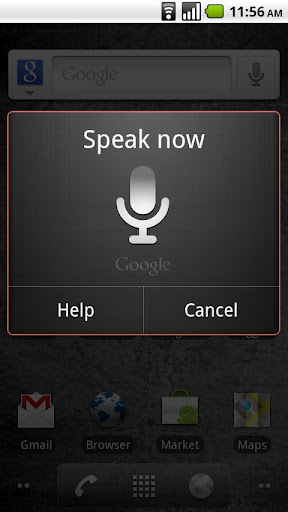
Google’s Voice Search is now available in 42 languages in 46 countries.
The search giant added 13 new languages to its app; so over 100 million worldwide speakers can now use Voice Search. The new languages include, according to the official Google blog, Basque, Bulgarian, Catalan, European Portuguese, Finnish, Galician, Hungarian, Icelandic, Norwegian, Romanian, Serbian, Slovak, and Swedish.
“Each new language usually requires that we initially collect hundreds of thousands of utterances from volunteers and, although we’ve been working on speech recognition for several years, adding these new languages led our engineers and scientists to tackle some unique challenges,” explained Product Manager Bertrand Damiba in Google’s post.
This update is rolling out over the next week. Those with an Android 2.2 or later device can use Voice Search by way of a microphone icon on the Google Search widget from the homescreen. Otherwise, a user must install the Voice Search app from Google Play.
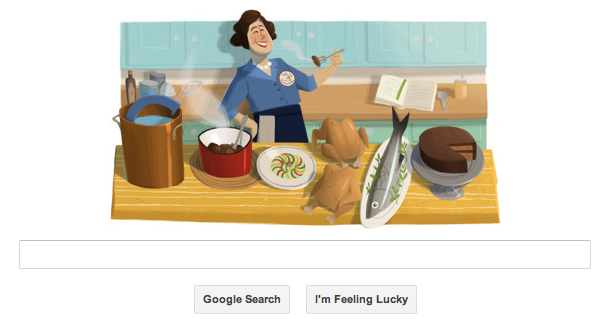
Google is celebrating Julia Child’s 100th birthday today.
The American chef, author, and television personality died at the age of 91 on August 13, 2004, as first noted by SearchEngineLand, but she is notable for seamlessly bringing the art of French cuisine to the American home with her first —and massive—cookbook, “Mastering the Art of French Cooking”, and later through her television programs, such as “The French Chef”, which began airing in 1963.
Child is now a part of American and worldwide culture, as she is the subject of many films and parodies in television and radio skits, and she is very well known for her striking height and memorable voice, personality and appearance.
Click here to Google search “Julia Child”.