Stay up to date on news from Google headquarters. Be the first to learn about plans for Android, Google Plus, Google Apps, and more!
Stay up to date on news from Google headquarters. Be the first to learn about plans for Android, Google Plus, Google Apps, and more!


Google gave a testimony to Congress last year claiming it earned two-thirds of its mobile revenue from iOS devices, but now it seems as though the company’s estimate might have been low.
Google made less than $550 million in revenues for Android between 2008 and 2011, while making four times as much revenue during the same period with Apple products that employ Google services like Search and Maps.
According to The Guardian, the settlement offer provided yesterday by Google to Oracle depicted Android’s revenue streams. Settlement discussions ordered by Judge William Alsup were derailed when Oracle rejected Google’s low offer to pay royalties on Android if alleged patent infringements deem true in court.
Reuters reported yesterday that the settlement stems from a 2010 lawsuit where Oracle claimed its Java-related patents were infringed by Android. Oracle acquired the intellectual property in question when it purchased Sun Microsystems in 2010.
[youtube=http://youtu.be/YR_tckUfcEc]
Daria Musk is a singer-songwriter that joined Google+ last July and went from zero followers to over 1 million with the help of Hangouts in less than 8 months.
Check out the video above to hear this performer’s awe-inspiring story. It looks like YouTube isn’t the only Google service turning-out stars these days (ahem—Bieber). The official Google Ad Words blog also highlighted Musk in a post today about how to go global with Google+:

Stemming from a lawsuit in 2010 where Oracle claimed Google was infringing on its Java-related patents with Android, a court document today reveals Oracle rejected Google’s offer to pay a percentage of Android revenue if the alleged patent infringement is proven in court. Reuters reported:
Google proposed to pay Oracle a percentage of Android revenue if Oracle could prove patent infringement of the mobile operating technology at an upcoming trial, but Oracle rebuffed the offer as too low, according to a court filing late on Tuesday.
As for Google’s offer, Reuters said the company would give approximately $2.8 million in damages to cover 2011, and a future 0.5-percent royalty of Android revenue for one patent that will expire in December. A second patent included in the case would provide Oracle with an additional 0.015-percent until it expires in April 2018. According to the court document, Oracle is holding out for a possible injunction:
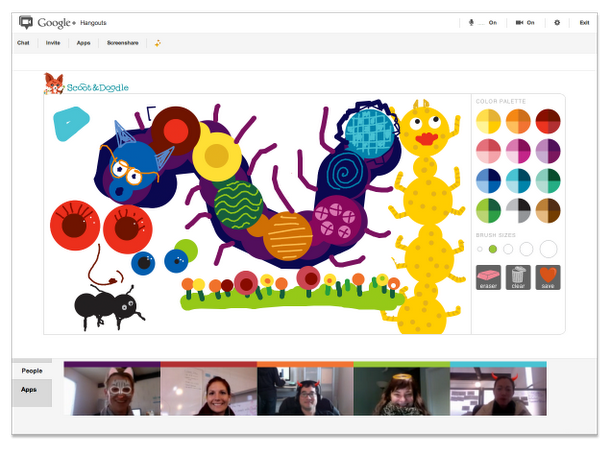
Just when the tech-world is seemingly about to explode with apps—apps for Android, apps for iPhone, apps for set-top boxes, apps for computers, apps for Facebook—Google adds to the bubbling pot with Google+ Hangout apps.
Google Product Manager Amit Fulay announced on Google+ today the first implementation of apps in the social network’s standout multi-person video chat feature:

[youtube=http://www.youtube.com/watch?v=wZd_hIln1-I]
Today, Google Enterprise announced a new offering designed to aid Apps customers in managing information and preserving important data. “Vault” is aimed at easing document and email management as it relates to corporate litigation, regulatory investigation and compliance actions.
Businesses of all sizes need to be prepared for the unexpected. In today’s environment, using Vault to manage, archive and preserve your data can help protect your business. Litigation costs can really take a toll on a business when minor lawsuits can run up to many thousands of dollars, and larger lawsuits can cost even more. Significant litigation costs come from having to search and find relevant data, which is also known as electronic discovery (eDiscovery).
The tool costs $5/user/year and will knock down some walls of companies who would not have been able to get Google Apps if it were not for this tool.
Expand
Expanding
Close
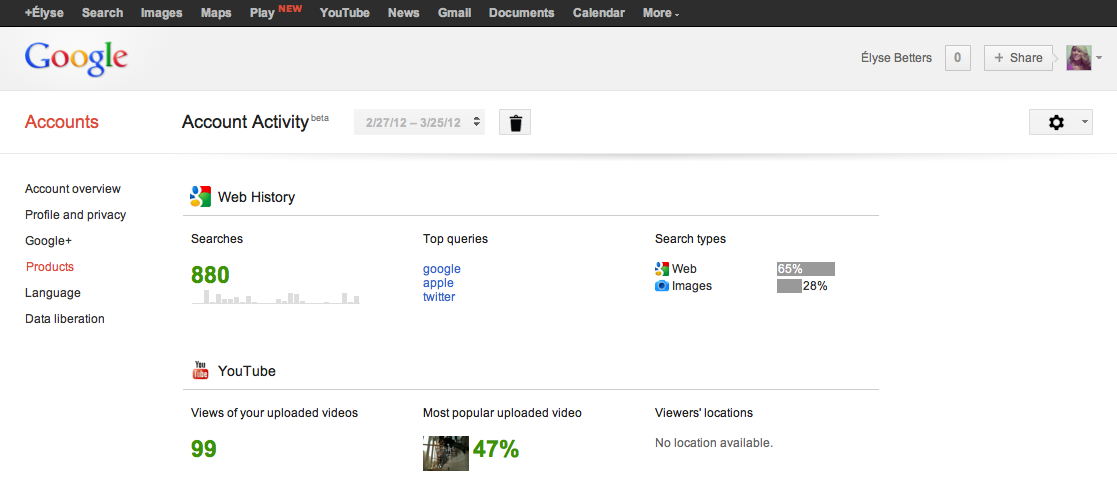
Google just launched a new feature called “Account Activity” that sends account-holders monthly encrypted reports about their signed-in frittering across the Web and Google services.
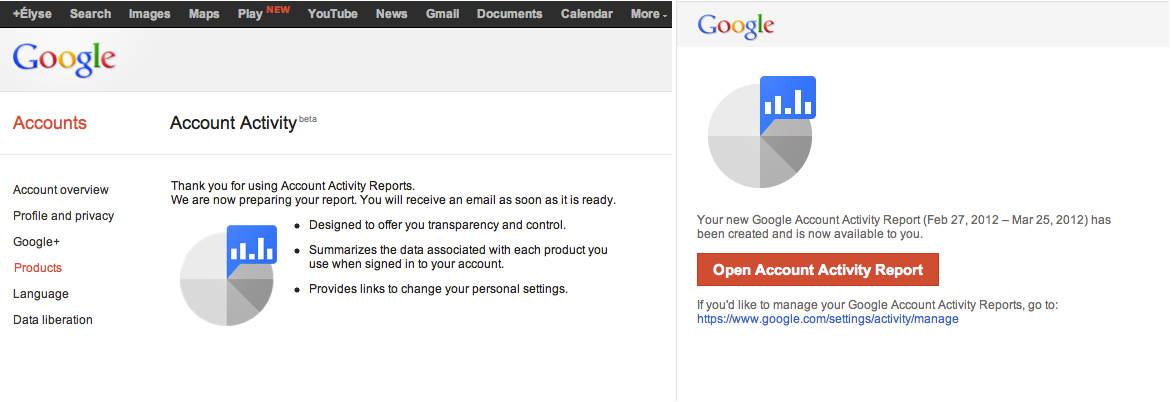
Once a user opts-in to the feature, Google will confirm and then send the first monthly report (see image below). The full-report gives Account information, such as locations, browsers, and platforms employed while Internet surfing.
The report also gives Gmail specifics, like most contacted addresses and to-and-fro message counts, and it breaks-down other Google services’ particulars, including Web history with users’ top searches, types, and queries, and a personal YouTube report on uploaded video activity and viewers’ location data. Users can also delete old reports or browse previous months as they begin to pile up.
Epson America announced it is now shipping the world’s first Android-powered wearable display—the Epson Moverio.
With Google’s impending entry into the glasses space, Epson’s $699.99 offering is essential due to its 80-inch perceived projection display, Dolby Mobile surround sound, Wi-Fi connectivity, 6-hour battery life, 1GB of built-in storage, and 4GB microSDHC with accompanying slot.
Google’s mobile platform powers the track-pad controller and allows a user to watch YouTube or Vimeo videos, play apps and games, browse the Internet, and more. According to Epson America’s Director of New Business Development Anna Jen, there is even support for side-by-side 3D technology:
“The Moverio BT-100 see-through display is poised to significantly impact not only the way people interact with content for personal enjoyment, but the development of content for future applications – from virtual training platforms to a new way to interact with 3D CAD environments to visualizing 3D design renderings.”
The Epson Moverio BT-100 is now available through Epson’s retail website, select resellers, or by pre-order through Amazon. The Tokyo, Japan-based electronics manufacturer also recommended a few apps that take full advantage of its latest achievement, such as Netflix, Pandora, Amazon Kindle, and the Angry Birds suite.
The full presser and additional promo shots are below.
The Cloud storage Google Drive has been an on-again, off-again rumor for years.
Today, GigaOm’s Om Malik says Google Drive will release to the public in the first week in April.
I am told the big day is sometime during the first week of April 2012…Google is going to offer 1 Gb of storage space for free, but will charge for more storage. The market leader Dropbox currently offers 2 Gb for free. Google’s product will come with a local client and the web interface will look much like the Google Docs interface. Interestingly, it will launch for Google Apps customers and will be domain specific as well. Google has also built an API for third party apps with this service so folks can store content from other apps in the Google drive. My sources are impressed, so far with what they have seen.
This could be the last piece of the Cloud puzzle.
Expand
Expanding
Close

Google’s consorted undertaking to virtually preserve the extraordinary life of African leader Nelson Mandela finally went live today.
Google’s Cultural Institute Product Manager Mark Yoshitake took to the Official Google Blog this morning to announce the Nelson Mandela Digital Archive project. The Internet giant gave a $1.25 million grant to the Nelson Mandela Centre of Memory of Johannesburg, South Africa last year to help preserve and launch documents and multimedia about Mandela online.
A new report from The Next Web claimed a “source close to the product’s development” confirmed Google has a new commenting system in the works. With continued integration of Google+ into the rest of the company’s web services, the report claimed Google will likely aim to take on Facebook and its third-party commenting platform. The report explained:
Expand
Expanding
Close

Google added its Google Play service to the black navigation bar found at the top of its search engine.
The “Play” link seems to only appear for users logged into their Google account. Moreover, the Mountain View, Calif.-based Company is likely rolling out the addition, because some users claim they are unable to see the new icon in the Google bar.
It is worth noting the link still does not appear on Google’s main search page—despite being signed-in.
UPDATE: The “Play” link now appears on Google’s main search page whether or not a user is signed-in.
Princeton University’s Office of Information Technology recently polled 150 students who tested Google Apps’ Gmail and Microsoft Office 365 and results showed only two preferred the latter.
According to The Daily Princetonian, the undergraduate student government is collaborating with OIT to move the student body from its current email server Webmail to either Google Apps or Microsoft Office 365.
Google Apps is a cloud-based productivity suite that features several Web application user-interfaces similar to traditional office suites—like Microsoft Office 365. The services vary per edition but generally include Docs, Gmail, Calendar, Talk, Sites, Groups, Video, and Marketplace. Its popularity among students and educational institutions is rapidly increasing due to enhanced sharing features, accessibility, and cost.
Google Apps for Education is just one edition that offers 25 GB of storage space per user for free through K-12 schools, colleges, and universities with up to 30,000 users. Forty-million active users currently use Google Apps, and according to US News & World Report, 61 of the Top 100 schools have switched to the educational service.
USG IT Committee Chair Josh Chen said the University’s polled students prefer Gmail due to its “many benefits and no drawbacks.” Meanwhile, U-Councilor Lily Alberts said the poll’s results likely attribute to the student’s prior familiarity with Gmail during pilot testing. The group of 150 students piloted the two options, and those students came from a pool that replied to an earlier campus-wide email.
Up until now, only Android users on Sprint had the luxury of integrating Google Voice into their main cell service. Due to a partnership with Google last year, users can enable Google Voice on their existing Sprint number providing them with access to better rates on international calling, visual online voicemail, personalized greetings, and the ability to use one number across all devices. According to a report from Cnet, Google’s Group Product Manager for Google Voice Vincent Paquet confirmed the company is in talks with other carriers about integrating the service:
“We are having discussions with other carriers about this.. Sprint integration has worked really well.. We have, since Day One, had a steady stream of people signing up for it.“

Reports surfaced in China that claim Apple plans to integrate Baidu into iOS next month as the country’s possible default search function—suggesting iOS aims to become less dependent on Google’s services.
According to Chinese news website Sina Tech (machine-translation):
Sina Technology News on March 26 morning news, according to informed sources, Apple iOS operating system next month will be formally introduced Baidu search, Baidu and Apple between cooperation component in the China region.
Google’s Susan Creighton revealed last fall that two-thirds of the Mountain View, Calif.-based Company’s mobile search comes from Apple iOS devices.
Meanwhile, recent speculation claims Apple is moving to an in-house Mapping solution that would replace Google Maps. The firm also recently removed its publish to YouTube option in QuickTime for Mountain lion. If these latest rumors deem true, Apple’s move to Baidu would further indicate a significant effort to reduce Google’s presence in iOS.
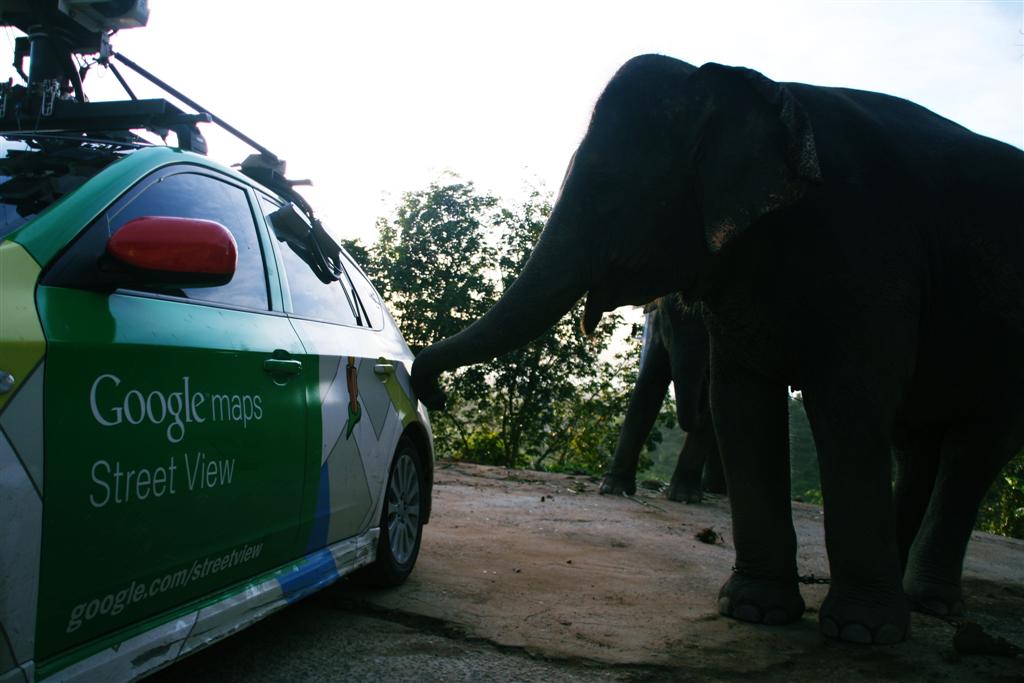
Google launched its Street View galleries this past week for Amazon and Thailand without a hiccup, but the Internet giant was not-so lucky elsewhere, as it has faced many obstacles over its mapping applications throughout the globe—especially in Asia.
Reuters published a lengthy reported today detailing how Google often meets hurdles worldwide, such as the recent debacle on its privacy policy, and it fully described the Mountain View, Calif.-based Company’s tenacious attempts to chart the streets and landscapes of Asia while consistently meeting privacy, political, and cultural barriers.
For those that live under a rock: Google Street View is a service highlighted in Google Maps and Google Earth that offers panoramic views of streets. It launched in 2007 in the United States and has expanded to many cities and rural areas worldwide.
A round up of Asia’s criticisms is below.
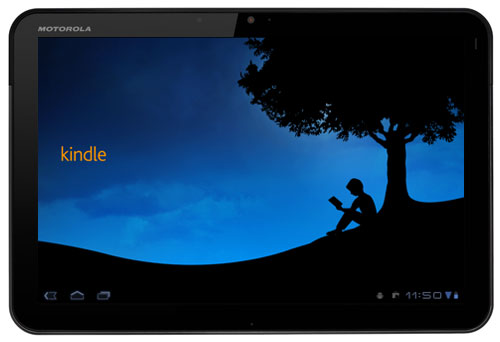
Amazon just updated the “Kindle” for Android app to support Kindle Format 8, and it brings a variety of children’s books, comic books, and graphic novels with vivid color and illustrations.
“Shop for over 1000 children’s titles such as Brown Bear and Curious George, and comics such as Batman and Superman. Plus, richer formatting in thousands of other Kindle titles,” announced the app’s description on the Google Play Store.
The new collection of reading materials compliment an already existing catalog of over 850,000 Kindle books and 100 different newspapers and magazines hosted through Amazon’s free application that does not need a Kindle slate. For those that already own a Kindle, Whispersync seamlessly beams a user’s last page read, and any bookmarks, highlights, and notes across all compatible devices.
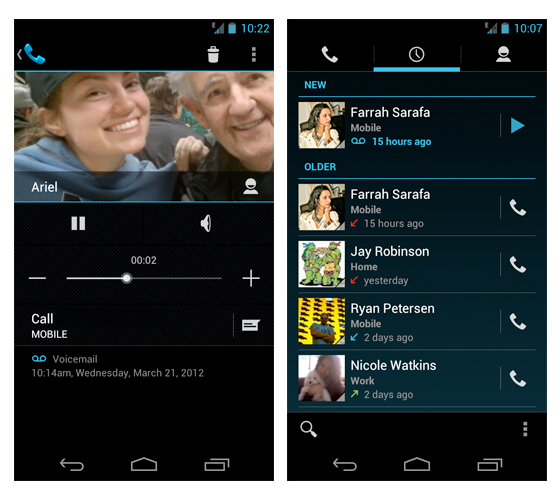
Google released an update for the “Google Voice” Android app today that allows Android 4.0 visual voicemail integration.
Software Engineer Yong-Hoon Choi explained on the official Google Voice blog that the app supported visual voicemail since 2009, but jumping between the call log and Google Voice app proved cumbersome.
With Microsoft and numerous regulatory bodies nipping at Google’s heels and decrying the Internet giant of shady advertising practices and loose privacy standards, one would think the Mountain View, Calif.-based Company might lie low for a while.
Well, that is not the case: The Next Web reported on a Google patent today that introduced technology for analyzing the environmental conditions (or background sound) of phone calls. The action would essentially allow Google to exhibit advertisements based on the clamor its science heard.
 The patent, called “Advertising based on environmental conditions,” described how the method recognizes signal outputs from environmental conditions using a sensor coupled with the remote device (such as a smartphone). Google would then serve personalized ads based on the data gathered. In other words, if Google noticed a NASCAR race in the background of a phone call, it would then promptly offer ads for motor sports…
[youtube=http://youtu.be/2b5uKF-7qDM]
Editing videos with YouTube just got much easier.
The video-sharing website launched YouTube Video Editor last year, but now its latest editing tool allows YouTube to automatically detect any stabilization and lighting issues…
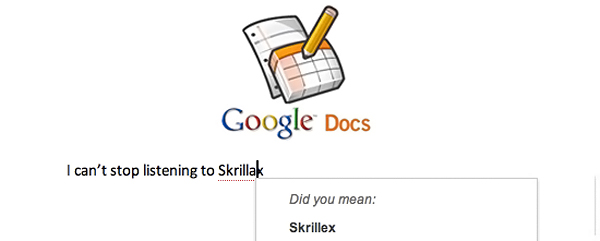
Google Docs can now spell check threw through the Web.
Software Engineer Yew Jin Lim took to the official Google Docs blog this afternoon to explain how the Internet is helping Google Docs get smarter. The ambiguous and ever-adapting Googlebot is able to crawl cyberspace and adapt to words. The resulting action enables Google to improve suggestions during misspelled queries in Google Search. Well now, the same process is applied to Google Docs…

Republican presidential candidate and former Massachusetts Governor Mitt Romney will host a Google+ Hangout today as the first in a series of GOP presidential candidate Hangouts.
“In American politics, there’s nothing quite so frantic or fast-paced as a presidential campaign,” announced Google+’s Head of Community Partnerships Steve Grove on the Google Politics & Elections page. “Google+ Hangouts have made that a little bit easier, providing new ways for politicians, political organizations, advocates and campaigners to connect directly over video to share information online.”
More information is available below.
[youtube=http://www.youtube.com/watch?feature=player_embedded&v=4DbgiOCTQts]
This is what desperation looks like. Also this:
[tweet https://twitter.com/jr_raphael/status/181907358618882049]
Expand
Expanding
Close
Engadget shows us something it pulled from Chinese language forums:
What you see on the right is called the Droid RAZR “Fighter,” and it has a 4.6-inch 720P display much like HTC’s 4.7-inch One and the 4.65-inch Galaxy Nexus.
You will note that it does not have physical capacitive buttons, instead opting for the ICS-y soft buttons. That allows Motorola to push the screen further toward the edges, which is something we complained about in our review.
The smaller bezel and lack of physical buttons allows Motorola to break out a much bigger screen without increasing the footprint…much.
Other probabilities: LTE on board, lots more graphics power, and Ice Cream Sandwich.
Hopefully the Google buyout of Motorola cuts through the blur, but as with all Verizon phones, you will expect that Verizon will have its way with ICS.
A story from Wired today interviewed Chris Sharp, the GM of content and cloud at data center Equinix where Google happens to lease space alongside some of its biggest competitors. Sharp told an interesting story about Google removing all the light bulbs above its server cages a couple years back. The company then required those working on the servers to wear helmets with lights:
About two years ago, Chris Sharp says, Google unscrewed all the light bulbs inside the hardware cages it occupied at that Equinix data center. “They had us turn off all overhead lights too, and their guys put on those helmets with lights you see miners wear,” he tells Wired. “Presumably, they were bringing up custom-built gear they didn’t want anyone else to see.”
The reason Google did this, according to Sharp, is “there’s a lot of valuable intellectual property.” He added that many companies try to conceal equipment, but he was “always amazed by Google and the helmets.” As Wired pointed out, Google builds its own servers and associated gear and most likely does not want competitors leasing space at Equinix to get a look.
Expand
Expanding
Close
![[brightcove vid=1532728417001&exp3=88243316001&surl=http://c.brightcove.com/services&pubid=88246127001&pk=AQ~~,AAAAFIvhCZk~,7xyzJ_9_m5Guzgt0rNZvDtr2oxJKW81f&w=586&h=512]](http://9to5google.com/wp-content/uploads/sites/4/2012/03/epson_moverio_feature5.png)