Stay up to date on news from Google headquarters. Be the first to learn about plans for Android, Google Plus, Google Apps, and more!
Stay up to date on news from Google headquarters. Be the first to learn about plans for Android, Google Plus, Google Apps, and more!

Top U.S. Brands via Brand Finance
According to Brand Finance, a London-based research firm, Apple is now second to Google in brand value after a 33% increase to overtake IBM, Microsoft, Wal-Mart, and GE for the first time. The firm attributes Apple’s success to “innovative design, loyal consumer base and well-executed marketing activities.”
Google, sitting in the top spot with a brand value of almost $48.3 billion was up 9% among the top 30 U.S. brands analyzed by the Brand Finance. Other top companies other than Apple and Google all seen a significant drop including Microsoft down 9% to $39 billion, and IBM and AT&T both experiencing decreases from the year previous.
Expand
Expanding
Close

[youtube=http://www.youtube.com/watch?v=G-n9p28Yh8w]
YouTube has released a simple editor available on the web for users who want to make changes, before actually uploading a video. The editor isn’t anything ground breaking, but adds the ability to add small changes like stabilizing, color changes, and rotation. The new editing features also work on videos that have already been uploaded. If you don’t like changes you can revert back to the original, or upload the changes as a totally new video. We’re sure Google will add more editing features over time, but in the mean time give it a try!
[youtube=http://www.youtube.com/watch?v=kYS8mfgiw8I]
The official announcement by Google regarding Honeycomb for Google TV is just around the corner, and more and more leaks of the OS running on Google TVs are popping up. Today’s leak (seen in the video above) even includes video of the Netflix app optimized for the big screen — score!
You’ll also notice that besides Netflix, other Honeycomb optimized apps are appearing on the Market. A search in the Market for Google TV will return results like, “Fox News for Google TV”.
If you’re feeling adventurous, instructions for installing this latest build on a Logitech Revue are posted over at GTVHacker, but please be aware that this could brick your device. But at $69, it doesn’t seem like as big of a deal. The official announcement should be coming any day now..

IDC has just released their second quarter results for tablet and eReader shipments as well as an updated forecast for the remainder of 2011. While Apple continued to dominate with 68.3% of the global market during Q2, IDC expects Apple’s share to fall as vendors bring competitive Android devices to market later this year and early next.
The study reports second quarter tablet shipments worldwide increased 88.9% (303.8% year over year) citing robust demand for the iPad 2 and sales of 9.3 million units, leading the firm to raise its estimates for the remainder of 2011 from 53.5 million units to 62.5 million.
From the report:
Expand
Expanding
Close
According to an SEC filing made by Motorola today (seen after the break), Motorola was able to get $3 billion more out of Google before they were acquired for $12 billion — even without any other bidders present. But it isn’t that simple.
Today’s report contradicts August’s, saying Andy Rubin actually assisted in the acquisition when he reached out to Motorola first. It was previously stated that Rubin has no knowledge of the acquisition until the buyout was close to being announced. Rubin and company reached out to Motorola to buy patents, after losing the Nortel deal according to the filing.
The story continues as follows: Motorola’s Sanjay Jha told Google that Motorola wouldn’t only sell patents, rather the whole Motorola Mobility sector. Motorola than rejected two of Google’s offers which were $30 and $37 a share respectively, until both companies finally settled on a final price of $40 per share. Google, it appears, was in a hurry to get the deal done and bid pretty close to Motorola was after in order to avoid going to a long, drawn out auction process.
SEC filing after the break:

Google has launched Travel search which will debute across select cities today. The new search is the first product to emerge from ITA, a company Google acquired in April. The new Travel search uses similar methods that you’re used to in traditional Google search. As you can see, a simple search like “flights from New York to San Francisco” returns results under the “flights” category.
With the flights category, flights that pertain to your search will be displayed — where you can see the airline and then purchase tickets. Users are then guided to the airline’s website to actually book the flight.
More screenshots after the break: (via Search Engine Land)

Image courtsy of Anandtech
TIMN reports that Google’s head of mobile, Andy Rubin, dropped a bombshell during his on-stage appearance at the Intel Developer Forum, by announcing that all future versions of Android will be optimized for Intel chips top to bottom. Intel also showed off a prototype Android tablet and phone running on the Medfield chip. Medfield is Intel’s fourth-generation mobile Internet device platform based on a 32-nanometer Atom processor.
The news prompted former Engadget editor Joshua Topolsky to observe on Twitter that Google is cozying up to Intel’s x86 platform at a time when Microsoft is adding support – for the first time in its history – for ARM’s mobile platform in Windows 8. Of course, we remember that Intel promised on numerous occasions that we’d see phones running on Intel chips in “early 2012,” even if everyone assumed the company was referring to Windows 8-powered devices. Google here wants to cover all bases with future versions of Android and it’s likely that the announcement will spark more competition between Intel and chip vendors that manufacture mobile chips based on ARM’s processor blueprints.
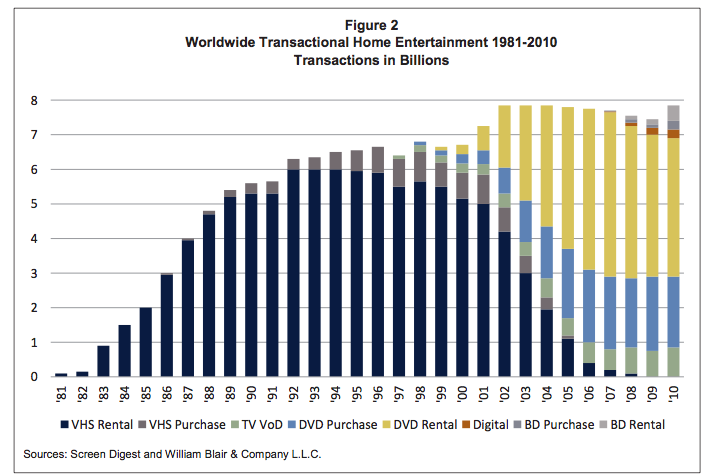
Back in April, the Wall Street Journal reported that Google was spending a hundred million dollars to commission premium YouTube content from the likes of Creative Artists Agency, William Morris Endeavor and International Creative Management, to name a few. But the search monster’s agenda is likely much, much bigger, per research note issued to clients by William Blair & Company. The research firm believes that “Google is silently buying/licensing hundreds of millions of dollars of professional Hollywood content”. Think $100-$200 million for rights to premium Hollywood content:
Google has the resources and infrastructure to be a big player in Hollywood content. Becoming a major player in the premium-content industry requires a com- bination of capital and technology resources that few have. Google fits the bill, how- ever, with $39 billion in cash, annual free cash flow of $9.4 billion, Android, Chrome, YouTube, Google TV, the world’s largest advertising platform, and Motorola Mobility’s set-top-box business. Lastly, Google has made several key Hollywood hires over the past year to understand content rights.
Hollywood studios could consider going to bed with Google should it subsidize their wholesale fees and at least partially monetize the movies through advertising. Consumers would be given the choice of either watching a pricier, ad-free version or rent ad-supported titles for a lower fee. Stakes are high in this game. The market is worth an estimated $65 billion and just advertising on digital home entertainment is a billion dollar business (see the table after the break).
Google, of course, is facing fierce competition from the likes of Apple, Amazon, Netflix, Hulu, in addition to traditional retailers such as Best Buy (CinemaNow) and Wal-Mart (Vudu). Weighing in on Amazon, Google and Apple, William Blair summed it up nicely:
We believe Amazon’s digital agenda is to gain Prime customers, Apple’s strategy is to sell devices, and Google’s focus is to build a bigger ad footprint.
Now, if Google has in fact been quietly licensing studio content left and right, prudent watchers should expect a splashy announcement alongside GoogleTV 2.0, which is due end of summer, as in any day now. If Google can leverage their pending Motorola acquisition, which makes millions of set-top boxes for other IPTV players, Google could quickly establish an end-to-end Hollywood entertainment delivery platform that even Apple might find difficult to crack. In all, Google has likely found its new $65 billion market, the research note reasons:

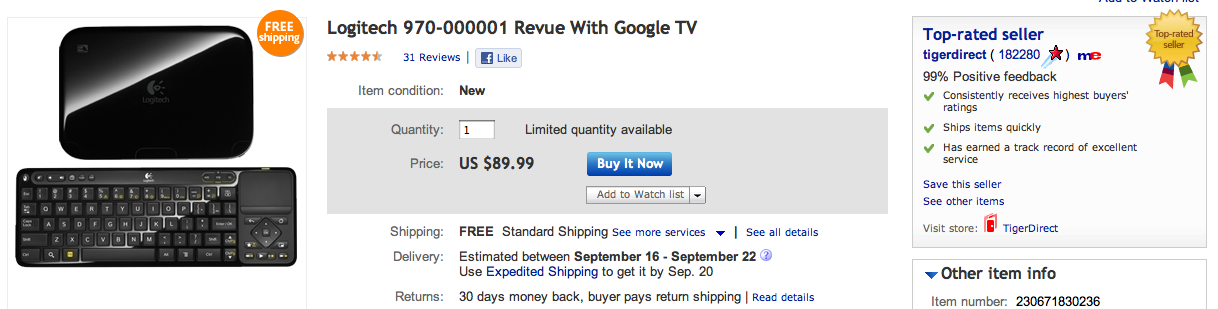
The Logitech Google TV console has just dropped to $90 at Tiger Direct (New, free shipping). Interestingly, this box will be upgradable to GoogleTV 2.0, due out in the next month or so. Why is Google/Logitech in such a hurry to get rid of these? Certainly when GoogleTV 2 comes out, they will be worth more to the consumer, won’t they?
I think this also hints that the second round of GoogleTVs will be much cheaper than the first.
Expand
Expanding
Close
This is a Samsung-branded Windows 8 tablet Microsoft is giving away to BUILD attendees today. Wanna take bets on possible actions from Apple? Go past the break for unboxing clips. Image courtesy of MobileTechWorld
The latest in the ongoing patent saga involving Apple, Google, Motorola and Samsung includes an unexpected twist as Samsung goes after iPhone and iPad with a complaint filed before a Paris district court in July. The filing alleges infringement of Samsung’s three technology patents, reports AFP. The first hearing is expected in December of this year.
Meanwhile, patent expert Florian Müller notes on his blog FOSSPatents that Apple has filed motions to temporarily halt two Motorola lawsuits until Google completes its $12.5 billion acquisition, which shook the technology world last month. Put simply, Apple argues Motorola waived its rights to sue when it transferred patents to Google. Apple wrote:
To further its pending acquisition by Google, Motorola has surrendered critical rights in the patents-in-suit, such that Motorola no longer has prudential standing to pursue this action. According to the publicly-filed Merger Agreement, Motorola has ceded control of the most basic rights regarding the patents-in-suit
As you know, Google has transferred some of the Motorola patents to HTC, in addition to the ones acquired from Palm and Openwave Systems. HTC then used those patents to counter-sue Apple. Back to Apple vs. Samsung…
Financial Times today opined that Samsung needs to hit the reset button, predicting a licensing agreement of sorts provided Apple succeeds in blocking Galaxy products in the U.S. next month. Contrary to the reports, the publication thinks “Apple is restricted from taking its chip business to Samsung’s rivals in Taiwan because Samsung offers a complete package of components that other firms cannot match”. However, there are indications that Apple’s been lowering Samsung orders for some time and it’s widely believed the company is eager to take its silicon business to TSMC beginning next year.
In jargon talk, marketeers frequently argue that Android is from Mars and iPhone is from Venus when explaining the different demographics and appeal of the two platforms. Be that as it may, it would be interesting to figure out what apps are people particularly liking on their Android devices. That’s what research firm Nielsen set out to discover in their latest survey that analyzes app trends among U.S. consumers. Based on data obtained from on-device meters on thousands of Android smartphones, Nielsen found out that Google’s own programs dominate the list of most-used Android apps nation-wide.
In addition to Facebook (#2) and Android Market (as expected, it ranked first), the top 10 list based on overall active reach includes Google Map, Gmail, Google Search, YouTube, Adv. Task Killer Free, Angry Birds, QuickOffice Pro and Pandora Radio. Amazon’s storefront app to their own Appstore for Android ranked twelfth.
Gender break down reveals that the Facebook app is more popular with the ladies, reaching 81 percent versus 69 percent for male users. Google+, on the other hand, is more popular with male Android users (15.8 percent active reach) than women (7.2 percent). Google Maps has the highest reach among male Android users, 77.1 percent, second only to Android Market. Twitter, Words With Friends and Kindle apps are more popular with female Android users in the United States.
And while we’re at it, what do you reckon the most profitable apps on Android are? Games? Entertainment? Adult apps? No. It’s weather programs, per research2guidance’s free “Android Market Insights” research note.
Chrome and Android, the two crucial weapons in Google’s assault on mobile and desktop, are showing no signs of stopping. We already reported today that Android passed iOS globally. When it comes to browsing the web, Google’s Chrome zoomed past the 25 percent mark for the first time this weekend, ConceivablyTech observed. More precisely, Chrome grabbed 25.02 percent share this past Sunday, per StatCounter Global Stats data.
The software has been growing rapidly, registering global market share of 18.29 percent in April, 19.36 percent in May 2011, 20.65 percent in June and 22.14 percent in July. Apple’s Safari grew marginally, adding just 0.02 percentage points to its 5.17 percent share in July. The latest StatCounter data, which may not be representative of the entire market, really spells trouble for Mozilla’s Firefox. Mozilla’s browser used to be the preferred alternative to Microsoft’s market-dominating Internet Explorer not that long time ago. How times change…
Firefox’s share is declining five times faster than Internet Explorer’s, indicating that Chrome is slowly but steadily chipping away at Firefox’s market position, which is now within spitting distance. Firefox scored a 27.49 share for the month of August versus 41.89 percent for Internet Explorer. The fact that only 14.5 percent of web users, or 54 percent of Firefox users, have upgraded to Firefox 6 is another indicative of shifting tides as Google gains significant ground in the web browsing space.
Google also benefits from the silent updating mechanism, a computer process that sits in the background to automatically keep your Chrome installation up to date, without any intervention on your part. Did the latest StatsCounter numbers surprise you? The writing has been on the wall for some time.
[youtube=http://www.youtube.com/watch?v=2RJaAUeASyU]
In May, Google proclaimed the end of the wallet by announcing a new service called Google Wallet that promises to make mobile paying as easy as tapping a phone to an intelligent terminal which can take digital receipts and coupons and carry out the transaction. The company followed-up with a splashy video that highlighted the bright future of digital invoicing. Four months in, people still carry traditional wallets in their pockets. Heck, some even keep an iPhone in their wallet.
The Next Web points to an interesting video put together by AdZag, explaining why Google Wallet is a disruptive technology of the future rather than a fad. It’s actually the clip Google showed at the Wallet presser, it just hasn’t been available online until now. Google Wallet’s biggest hurdle is availability….
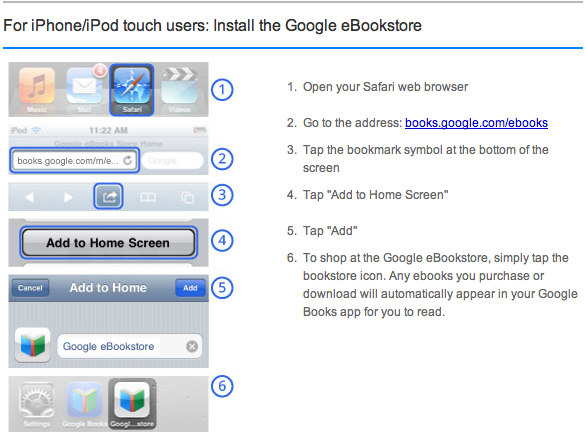
Google has just notified Google Books users via email that they can now purchase books through Google’s eBookstore website. This workaround comes after Apple shut off Google’s in-app book store on the Google Books app — available on the iTunes App Store. As seen in the image sent with the email, Google suggests you add this website to your iOS device’s homepage. Email from Google:
PLEASE NOTE: IF YOU DO NOT USE THE GOOGLE BOOKS APP FOR YOUR IPAD, IPHONE, OR IPOD TOUCH, YOU CAN DISREGARD THIS MESSAGE.
Dear Google eBooks customer,
We are writing to let you know about important changes to your Google Books app for your iPad, iPhone or iPod touch. Due to Apple’s new policies, you can no longer shop for Google eBooks within the app.
But don’t worry, you can install the Google eBookstore on your iOS device using the easy steps in this email, and continue to buy the books you want quickly and easily. For further assistance and more detailed, step-by-step, visual instructions, please visit our Help Center article or you can contact us.
Video tour after the break:

Google has just released a HTML 5 optimized Music Beta player for the mobile web, announced via Twitter. Upon first launching the webpage, Google asks for the allowance of 25mb to be stored on your device. After, you are presented with a full run down of all of the artists you uploaded to the service. Once you have selected a preferred song, you are taken to a “Now Playing” page. Yes, if you haven’t realized already it works a lot like the music.app. This feels so sleek!
Check it out in the video below:
An example Chrome advert before and after the conversion. Go here for live demo.
Swiffy, Google’s experimental tool that converts Flash files to HTML5 code, will not be killed off due to their Fall spring-cleaning which will retire other Google Labs projects, namely Fast Flip, Desktop and Notebook, among others. Engineer Pieter Senster wrote in a post over at the official Google Code blog that Swiffy has a new home at g.co/swiffy. Although it’s in beta and won’t convert overly complex Flash files, Swiffy has gotten off to a great start and already users have converted “hundreds of thousands of files”, the company noted.
Google also highlighted several new features, such as support for shape tweening and drop shadow, blur and glow filters, all using SVG, CSS and JavaScript. A great example of Swiffy is this Chrome banner, which converted into HTML5 runs and looks just as smooth and pixel-perfect as its Flash counterpart. Google specifically mentions iOS devices in the Swiffy description which details how the web-based tool lets people“reuse Flash content on devices without a Flash player (such as iPhones and iPads)”.
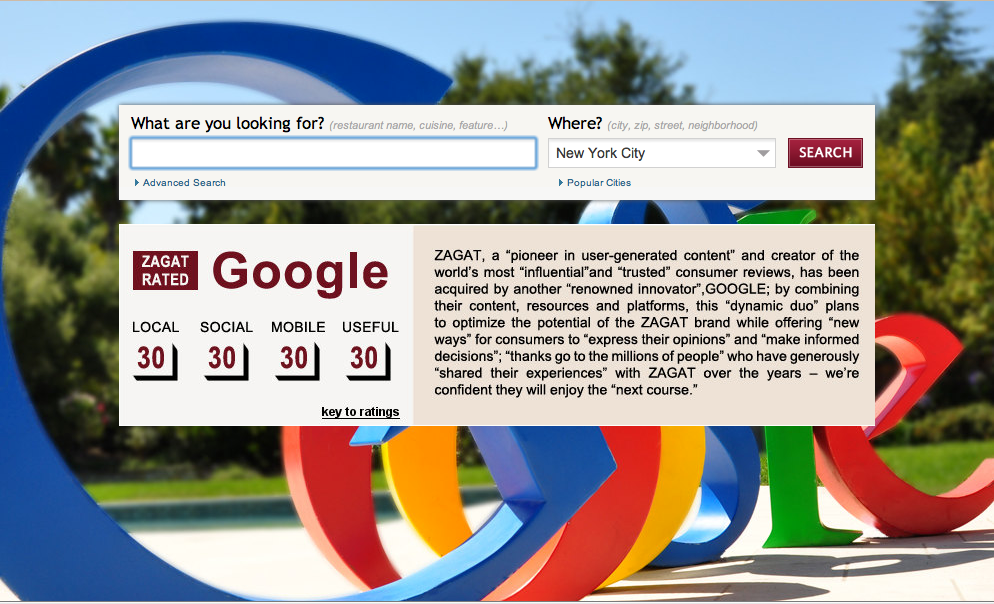
Marisa Mayer just made the announcement:
So, today, I’m thrilled that Google has acquired Zagat. Moving forward, Zagat will be a cornerstone of our local offering—delighting people with their impressive array of reviews, ratings and insights, while enabling people everywhere to find extraordinary (and ordinary) experiences around the corner and around the world.
That is an interesting play which I’m pretty sure no one was expecting. It gives Google a huge foothold in local and will certainly put Yelp, Open Table and company on the defensive and will also fit in nicely with its Offers service. Zagat’s statement below the fold:
Google’s been rolling out a series of product updates lately in an effort to unify its many services in terms of both looks and features departments. For example, the company is working towards bringing the encrypted and regular search pages on par. Today, the Google Operating System blog spotted that the advanced image search interface has been re-worked to function more like the corresponding web search page. In addition, the new interface provides access to the features that were previously only available in the sidebar. You’d want to tap the advanced search page (by clicking the “Advanced Image Search” link on images.google.com) in order to narrow down your search results to a domain or a country, a certain filetype or list only Creative Commons images.
Google’s art department’s not been standing still either. Ever since Larry Page took over Google’s reins and pledged his company would put great design front and center, we’ve seen the search behemoth revamp its many properties. It started with the appealing Circles interface in Google+ and continued with the little tweaks that have freshened up the overly simplistic and geeky appearance of Google’s many web properties, bringing them on par with the Google+ theme. Latest examples include the Google Account sign-in page and the Blogger interface, both updated with the new look. Google hired renowned designer who worked on the original Macintosh, Andy Hertzfeld, to create the Circles user interface.
Have you been redirected to the encrypted Google search page this morning? Worry not, you should be honored for having participated in “an experiment”, the Google Operating System blog reports. The search monster is sending “some percentage of Chrome 14 users” to the more secure, SSL-enabled search page, which is still in beta. The reason?
They are testing out the new functionality of the SSL page, which now sports nearly all of the features of its non-SSL counterpart. Previously, encrypted search lacked many features of the regular search page, such as Image Search, Google Instant and Instant Preview. The encrypted search page still lacks navigation links and Google Maps doesn’t support SSL yet.
As Google works to bring feature parity between SSL and non-SSL search pages, eventually users might just tick a check box in their search settings to opt-in to SSL search. SSL, a secure communications protocol, ensures that anything that gets sent between your browser and Google’s servers (such as your query and search results) is encrypted to prevent eavesdropping.
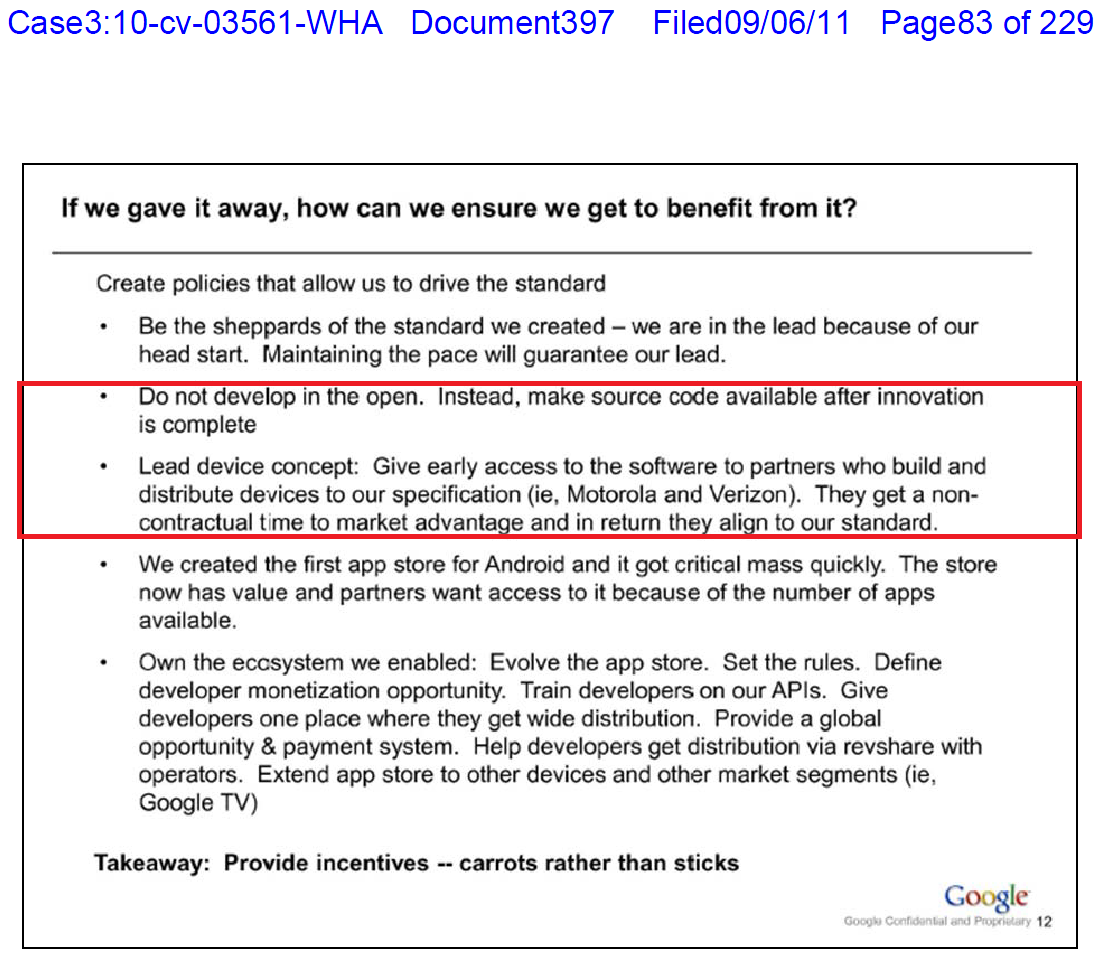
A new report by Foss Patents’ Florian Mueller this afternoon implies that Motorola will be given the lead to innovate with new versions of Android and be able to issue the lead device, before any Android OEMs get the chance. The report comes after an internal document (seen above) was published to the public by the judge of the current Oracle vs Google proceedings. This Verizon/Motorola lead device is the XOOM tablet. The next one will be Samsung. Anything beyond that is speculation.
Hasn’t Google been developing a lead Android device for the last two years — aka Nexus and Nexus S?
With Gingerbread, Google released the updated OS on the Nexus S before it was given to any other OEM. They picked a specific OEM, in this case Samsung, to begin working on a device they pictured to be ideal for this version of Android to run on. Same with the original Nexus, which Google picked HTC.
All of this worry comes after Motorola was acquired by Google. Many analysts, speculators, and journalists assume that Google will turn to Motorola as being the one stop for releasing their new versions of Android. Compare this to what Apple does: one device that rules them all.
[youtube=http://www.youtube.com/watch?v=JDl5hb0XbfY&feature=player_embedded]
We already expected Ice Cream Sandwhich, Google’s forthcoming overhaul of Android, to land sometime in the fall thanks to rumors of the Droid Prime landing on Verizon in October. However, a October/November release has now been officially confirmed by Eric Schmidt himself during the Dreamforce conference in San Francisco (video above).
“We have a new operating system, internally known as Ice Cream Sandwich for some reason, which is being released in October/November, which everyone’s really excited about.”
It’s also possible that the rumored Nexus Prime could be landing sometime in or shortly after that timeframe as well. As Android and Me points out, it might even land on Google TV in lieu of a public Honeycomb refresh.
Expand
Expanding
Close
[vodpod id=Video.15375563&w=425&h=350&fv=]
You know that scene in GoodFellas where the FBI comes to search the house for the 15th time in as many weeks and Karen Hill explains how they are on a first name basis and she’s cordial and serves them coffee while they turn over her house? That’s how Google’s South Korean office must feel.
Google’s Seoul office has been searched by the police at least twice since August last year amid investigations into whether the company illegally collected wireless Internet data and location information from Android smartphone users.
They got raided yet again by the South Korean government this week over whether the search giant was making it too difficult for local competitors NHN Corp. and Daum Communications Corp., who together control 90% of the Korean Search market, to get their search onto Android handsets.
The charge is that Google delays certification to handset makers who include other companies’ search products, Seongnam-based NHN said in April. Google will probably say that it takes longer to certify third party software.
AllThingsD is reporting that along with Amazon, Yahoo, and Dish Network, Google has made a bid for the free video streaming service Hulu. AllThingsD doesn’t provide any details quite yet, but we can imagine Google’s bid is in the range of $1.5 – $2 billion — just like the other three companies are offering. AllThingsD can’t confirm if Google has made a definitive bid, or is just offering a sum of money.
Google chariman Eric Schmidt said at a conference in Europe last month that Google isn’t ready to give up on Google TV. He cites possible Google TV downfall is due to the scarce amount of set-top boxes rather than full television sets.
The acquisition of Hulu would sure be a break through for Google TV. Currently, almost every large television network is blocking streaming to Google TV, making the content lineup almost non-existent. With Hulu and its partners, Google could open up a whole new realm of content to the service.
AllThingsD has indictated that Google has made clear to Hulu that they are ready to offer a large sum of cash for the product, and we know they’re not scared to do it. Hulu isn’t exactly sure what their stance is on selling quite yet, but we’re sure to hear more in the coming weeks.
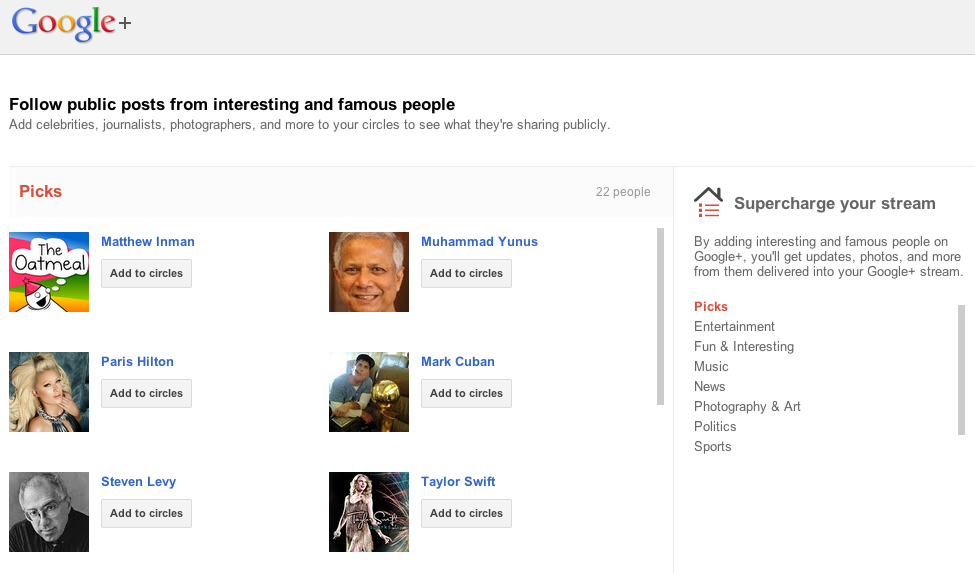
Just like Twitter, Google has unveiled the suggested user list for Google+. The list is broken up into several categories, some examples being: Entertainment, News, and Sports. If you find someone on the list you’d like to stay up to date with, you can add them into one of your circles — just like throughout the rest of the service. People are added to the list based on their +1s, reshares, and Hangouts. More categories are even on the way!