Motorola



Motorola announced in a blog post today its all-in-one fitness band is about to get a new update. Motorola said it would detail more as the launch date of the update comes closer, but it did reveal that the MOTOACTV would gain support for up to 40 new activities, including: yoga, Pilates, dancing and martial arts. Motorola will also roll out an online hub —where users can track fitness progress—at the time of the update. The MOTOACTV band will push the fitness information over Wi-Fi, so you can then setup competitions among friends.
Just as a refresher: Motorola announced the MOTOACTV at an event in October along with the Droid RAZR. The MOTOACTV can track your every move, play music through an FM radio, and can even store up to 4,000 songs. The 8GB version retails for $210 and the 16GB version retails for $300. Stay tuned, as Motorola said there is more to come.

As 9to5Google reported last October, the search Goliath appears to be on a spending spree since 2011. Having reported holiday quarter earnings, the company filed its 10-K with the U.S. Securities and Exchange Commission yesterday. The document, available online at the agency’s website, specifies that Google spent $1.9 billion dollars acquiring 79 companies throughout last year.
The sum includes cash and stock and is nearly double the $1 billion they spent on 48 acquisitions in the previous year. For the entire 2011, the number of full-time employees at the company ballooned 33 percent to 32,467 Googlers. Just do not count on the company satisfying its appetite for acquisitions anytime soon, as the filing reads:
Acquisitions will also remain an important component of our strategy and use of capital, and we expect our current pace of acquisitions to continue.
So, has Google put its acquisition money to good use?

If you are after an Ice Cream Sandwich tablet you now have exactly two options: the ASUS Transformer Prime which got the update last week, or the Motorola XOOM Wi-Fi that just got ICS, according to Motorola.
Note that only the Wi-Fi version gets ICS. The 3G/LTE versions are coming shortly —we are assuming— due to radio issues.
It is still impressive of ASUS/embarrassing for Google/MOT that ASUS beat the Android tablet reference design to ICS. The press release is available below…
A smartphone reference design by Intel.
Handset maker Motorola Mobility, which was acquired by Google, and is subject to approval from regulators in the United States and Europe, said at CES 2012 yesterday that it would release fewer phones in 2012. The company also announced a multi-year strategic mobile partnership with Intel to make Android smartphones powered by the chipmaker’s struggling Atom platform.
According to Motorola CEO Sanjay Jha’s roundtable meeting with reporters at CES yesterday, Motorola no longer sees value in dispersing its efforts by flooding the market with countless devices:
A lot of products that are roughly the same doesn’t drive the market to a new place. […] I made this decision independent of what the others will. We’re doing what we think is the right thing.
Motorola issued a warning last week on fourth-quarter results, and the company said numbers would come in below the $3.9 billion that most analysts expected. As for the Motorola-Intel partnership…
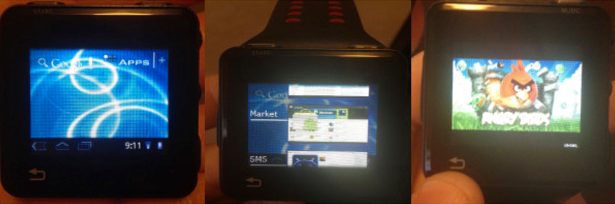
The MotoACTV was announced in the fall and is flaunted as the ultimate sports watch for those who are active. It ships with Android 2.3 and a custom skin on top, and one would not think the wristwatch could ever be rooted. However, like every other Android device out on the market, the MotoACTV was rooted with Revolutionary’s zergRush exploit. The root enables full Android 2.3 on the wristwatch. As you can see above with the Angry Birds start screen, users can even access the Android Market with the help of CyanogenMod. (via The Verge)
While we do not know if this is exactly useful, it is cool -nonetheless- seeing a tablet user interface run on a 1.6-inch display. The MotoACTV 8GB version is available for $209 on Amazon, and the 16GB version is available for $299. Check it out in action after the break:
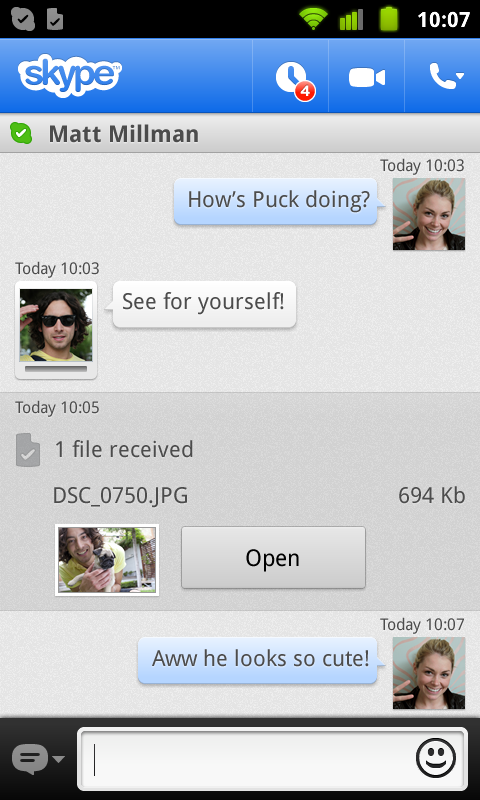
Skype today updated its Android client with the ability to share videos and images over 3G cellular networks or WiFi hotspots. According to a blog postannouncing Skype for Android version 2.6, the company also improved battery life while the owners of devices using Nvidia’s Tegra 2 chipset, such as the Samsung Galaxy Tab 10.1, Motorola Xoom and Acer Iconia Tablet, will notice better video quality on a bigger canvas. Additionally, the app now supports video calling on new devices, including the HTC Amaze 4G, Motorola Droid 4 and Motorola Droid Razr. Skype 2.6 for Android is a free download from Android Market.
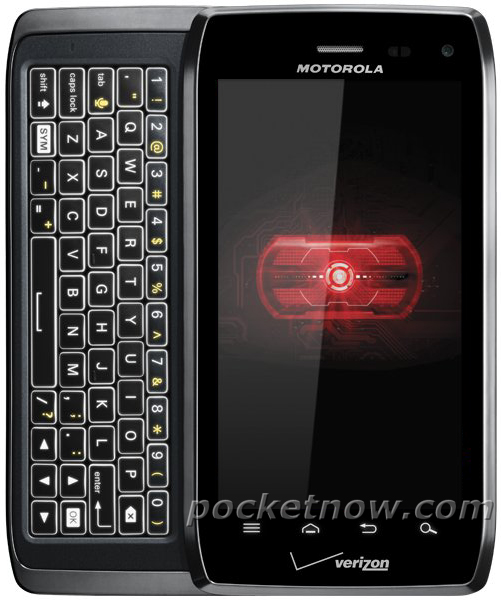
The answer to the question of “what would happen if you slapped a keyboard on the back of a Droid Razor” just showed up for a brief moment on Verizon’s DroidDoes website. The Droid 4 “only” has a 4-inch screen compared to the RAZR’s 4.3″ but pretty much everything else lines up the same. Perhaps more importantly, yes, that is a 5 row keyboard (4 rows is for suckers) and of course the speedy LTE comes along too. DOES below.
Expand
Expanding
Close
Motorola Mobility this morning scored a major win in Germany as the Mannheim Regional Court ruled against Apple in one of the patent infringement lawsuit that the maker of the Razr phone filed against the Cupertino firm in April of this year. Interestingly, Motorola’s counsel Quinn Emanuel also beat Apple’s motion for a preliminary injunction against Samsung products in the United States and is representing Motorola in another Apple lawsuit involving iCloud.
As part of the ruling, first reported by the FOSS Patents blog, Motorola won an injunction against infringing Apple products, meaning the original iPhone, iPhone 3G, iPhone 3GS, iPhone 4, the original iPad 3G and iPad 2 3G. The court decision follows a default judgment against Apple last month, scheduled to be discussed again in early February.
The ruling involves the European Patent 1010336 (B1) – the European equivalent of the U.S. Patent No. 6,359,898 – which covers a “method for performing a countdown function during a mobile-originated transfer for a packet radio system” and was declared essential to the General Packet Radio Service (GPRS) standard. This is the first “substantive ruling” as the injunction is “preliminarily enforceable” against Ireland-based Apple Sales International in exchange for a bond unless Apple wins a stay, FOSS Patents explains. How can Apple fight back?
NNUD86X7AFHA
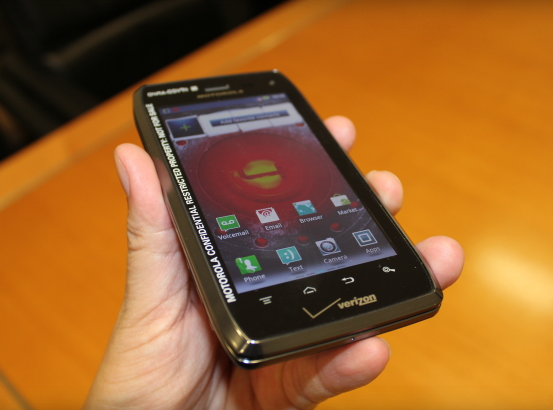
Verizon Wireless allowed CNET to photograph the carrier’s upcoming Droid 4 and Xyboard tablet designed by Motorola. The Droid 4 looks very similar to the current Droid RAZR — a device we loved — and also in a way represents the Droid 3. CNET calls the Droid 4, “essentially the Droid 3, but with an LTE connection.” Verizon wouldn’t go into details over specs, but Droid-Life has leaked plenty over the past few weeks. The device will reportedly have a 4-inch touchscreen, 1.2GHz dual-core processor, 1GB of RAM, 5-row slide-out keyboard, front camera (specs unknown,) and an 8MP rear camera. Count on this device being a Droid RAZR with a keyboard.
Next, Verzion’s next tablet offering, the Xyboard has also been in the rumor-mill these past couple of months. The tablet, offered in both an 8- and 10-inch variant, is a successor to Motorola’s Xoom, which was the first to device to ship with Google’s Android Honeycomb. Verizon once again wouldn’t go into details about the tablet, but here’s what we know so far..
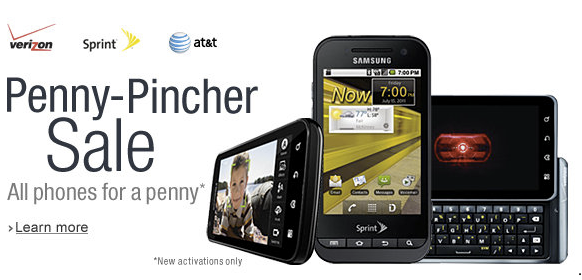
Last week (ending today), Amazon had a pretty incredible Penny Pincher sale where it offered just about every Android and otherwise phone (except Apple’s iPhone) for a penny with a two year plan. That’s what we call a game-changing, evening of the field. Sure, carriers and the plans matter, but if every phone is free, you can get a pretty good idea which are the most sought after phones in the “price not being an option” category.

From our Amazon Affiliate account we can see just how many of each phone our readers picked up, thereby getting a pretty good sample of what are the hot phones out there. Here are some stats:
Overall, no huge surprises, especially at the top, though we’re somewhat surprised that Sprint’s Galaxy SII beat both of AT&T’s combined. Toward the bottom, we started seeing some unlocked Nokias (5 C6’s) Windows Phones (3 HTC Titans, 3 Samsung Focus Ss) and a few BlackBerry Bolds.
The big question is: How will the Galaxy Nexus on Verizon upset the line? Whatever the outcome, Verizon is already the clear winner with the RAZR and Rezound (and Bionic) already topping many granted holiday wish lists.
Fuller results below:
Expand
Expanding
Close

From the world of non-tablet Android devices, both Motorola and Sony have products launching in the UK including the Sony Tablet P and Motorola’s MotoACTV. You can grab the foldable 5.5-inch dual screen Sony Tablet P starting today, while the MotoACTV fitness-focused device will go up for sale on Thursday, December 1.
As for the Tablet P, expect a Nvidia Tegra 2 processor, Android 3.1 on Wifi model, and Android 3.2 on 3G models. We haven’t got our hands on the dual screen experience as of yet, but we know other dual screen devices like Nintendo’s DS line rely on software designed specifically for the display setup. Unfortunately at £500 (about $750) for the 3G model, we’re not so sure there will be a market for the Tablet P. The device is available now through Dixons and local Sony Centre stores.
If you’re unfamiliar with the Moto ACTV, it is essentially an iPod nano/Nike+ competitor allowing you to track fitness stats like calories burned as well as sync and monitor the stats online. It also includes GPS features, and the ability to transfer calls to the bundled SF700 headset/biometric sensor. The Moto ACTV will be available to UK customers later this week on December 1 for £249.99 through fitness apparel retailer sweatshop.co.uk.
Expand
Expanding
Close
Following Motorola winning a possible injunction against Apple mobile products in Germany, Apple has told a German court it is set to lose $2.7 billion if it rules in favor of Motorola regarding a patent case related to an “emailing syncing patent”, according to a report from Bloomberg (via BusinessInsider). Apple has reportedly requested the court to demand Motorola provide $2.7 billion in collateral in the event the judge sides with Motorola. Bloomberg reports:
German courts often require the winning side in a case to post collateral if it wants to enforce a ruling while the other side is appealing. The amount reflects the losses the party is facing when forced to comply with the ruling. If it wins the appeals, it can seek damages and can make use of the collateral held for that.
While we have no information about how exactly Apple has come to that figure, the judge hearing the case apparently doesn’t agree with Apple’s valuation:
Expand
Expanding
Close
[youtube=http://www.youtube.com/watch?feature=player_embedded&v=7ridjtcza7E]
Motorola Ad
I’ve been enamored with the Droid RAZR since the unveiling event last month. It is everything about the “anti-iPhone” Droid message multiplied by 100. From the excellent commercials to the handsome styling to the robot-y motif. Where Samsung and to a lesser extent HTC make efforts to assimilate to the smartphone (read: iPhone) norms, Motorola’s Droids try to differentiate.
[youtube=http://www.youtube.com/watch?feature=player_embedded&v=yj9yisLa4ao]
Expand Expanding Close
[youtube=http://www.youtube.com/watch?feature=player_embedded&v=tP9duHWDmLc]
It’s Droid Razr launch day today and in addition to a price tag of $111.11 ($11?) for today only on Amazon, Motorola also gave us a look into the engineering behind the device’s 0.28 inch “impossibly thin” design, and now Verizon is hitting the streets to hand out free Droid Razrs to probably the last remaining original Razr owners. You can check out our full review of the Motorla Droid Razr here.
Yesterday Verizon launched their ‘Payload’ commercial for the Razr where they continued with their typically masculine ad style in an ad appearing more like a Hollywood action movie trailer than the usual iPhone commercial clone.
Expand
Expanding
Close

After their $12 billion acquisition of Motorola Mobility this summer, many critics began to think Google would favor Motorola over other Android vendors. Google has already assured us that they won’t, but today at a meeting with reporters in South Korea, Google’s Chairman Eric Schmidt said that Motorola Mobility will run separately from the rest of the company. Schmidt said:
“In general, with all of our partners, we told them that the Motorola deal will close and we will run it sufficiently and independently, that it will not violate the openness of Android…we’re not going to change in any material way the way we operate.”
The comments of course are to assure other OEMs, like HTC and Samsung, that they won’t be left in the dark after the recent acquisition. Google so far seems to be holding up to their promise, seeing as the Galaxy Nexus is a Samsung device, but time will only tell. (via Reuters)
Eric Schmidt also made comment today that, “Android efforts started before the iPhone efforts.”
[vodpod id=Video.15665143&w=425&h=350&fv=]
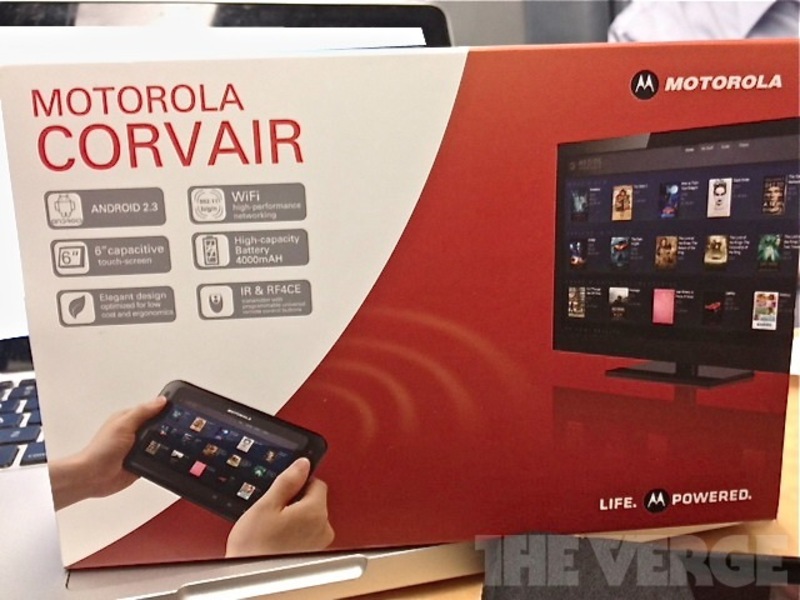
You have to wonder if someone is playing a a joke on the Verge. Someone sent in a box cover that purports to hide a 6-inch Android 2.3 tablet that does double time as a remote control for your cable box. If this isn’t a Punk’d-ing, the device is with cable company testers right now and will be used to control the cable box, GoogleTV be damned.
The box calls it a “dedicated controller,” but it also seems to show the tablet wirelessly displaying its entire UI on the TV, so we’re guessing it can be used to watch and stream content in addition to serving as a remote control for one of Motorola’s cable boxes. (That would also explain the hardware power and volume buttons next to the display.)
We don’t know much specs-wise, but the box says the design is “optimized for low cost,” so we wouldn’t expect anything high-end inside. It also looks like it says something “OS” in the upper left, so it seems like a fairly custom version of Android. There’s also IR control and RF4CE, which is a ZigBee-based RF control protocol, as well as a high-capacity 4,000mAH battery
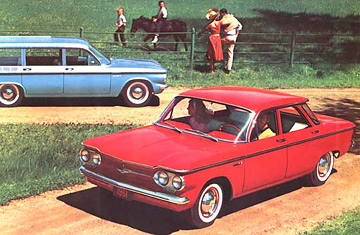 Of course “Corvair” is also a car that Chevy built in the early 60s that makes every “worst car ever” list and was the subject of the Ralph Nadar book, Unsafe at Any Speed. We’re hoping that Motorola’s naming/branding department is playing a joke on us in this case.
Also, as Motorola gets folded into Google, this will likely get folded into GoogleTV, which is to say, cancelled…just like its namesake.
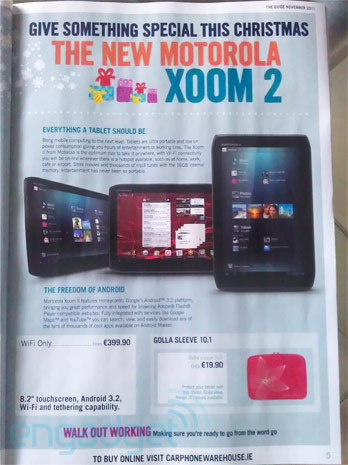
A flier from Carphone Warehouse confirms the Motorola Xoom 2 will be hitting the market before the holidays, Engadget found. Motorola’s next tablet, a successor to the original Xoom, will land for 400 euros with Wi-Fi and 16GB of storage packed in (presumably there’ll be a 32GB version too).
The flier touts the Xoom 2 having an 8.2-inch touchscreen, Android 3.2 (no ICS!), Wi-Fi, and tethering. There’s no word on U.S. availability, but more information will most likely come out about that soon.
 .
.
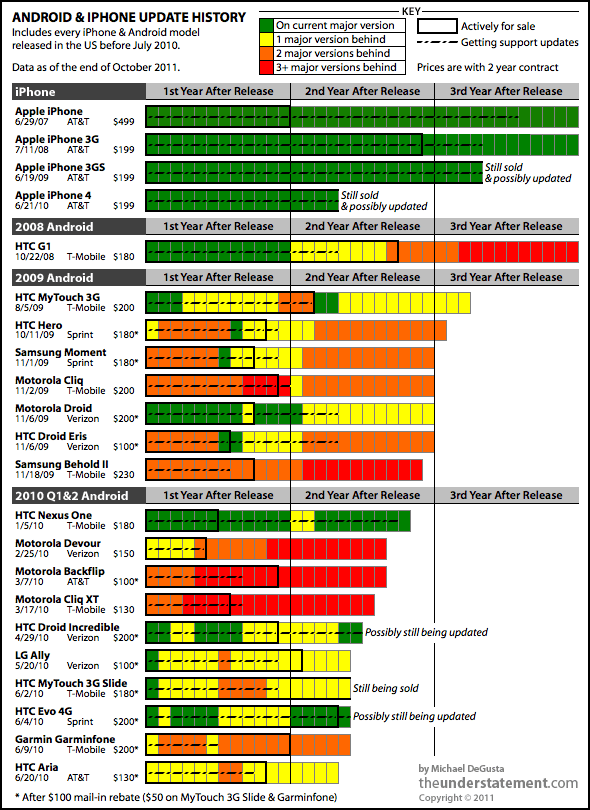
Up above here you have the graphic heading around the Internet today made by Michael DeGusta at the Understatement.com. While some of it is unfair/sloppy – He says the Nexus One was hanging back because it didn’t have Android 2.2 when it was announced, but that was a beta period before the final version was released – that’s like saying no iPhones had iOS 5 for 4 months back when iOS 5 was announced in June, Also the Samsung behold isn’t the most expensive Android phone offered ever on T-Mobile – the point is still valid
Overall it does serve to demonstrate the major problem with the Android ecosystem. The motivations of the carriers and manufacturers are short term gains and keeping customers by locking them into proprietary overlays. As DeGusta says:
Expand
Expanding
Close

Motorola Mobility has announced their Q3 earnings this afternoon, reporting $3.3 billion in revenue up 11% from Q3 of 2010 and a net loss of $32 million, which is better than Q3 of 2010’s $56 million net loss. Motorola Mobility also announced that they sold 100,000 Xoom tablets and shipped 4.8 million smartphones in Q3.
In the press release, seen after the break, Motorola Mobility shed some more light on their on-going acquisition by Google. November 17th the company will hold a meeting with shareholders to gain approval, and also has current pending approvals from the US Department of Justice, European agencies, and other governments around the world. The deal is expected to close by the end of 2012.
 .
.
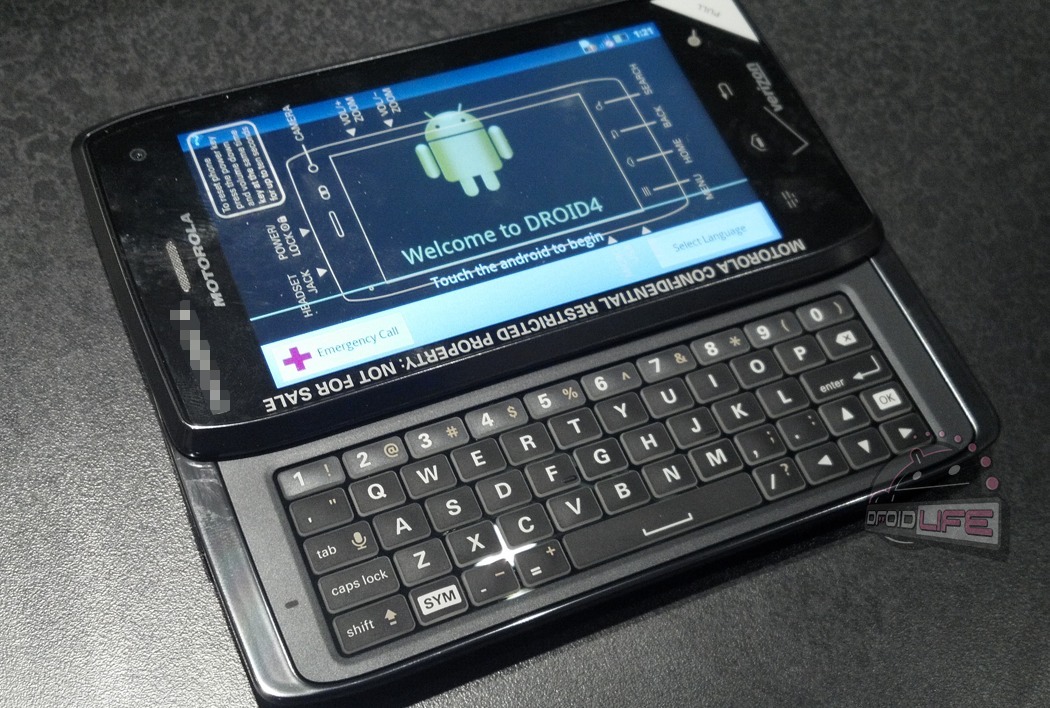
As is usually the case, the next Droid leaks have started months before any product is released. Droid Life got their hands on a whole gallery of images of the new Droid 4 and it looks incredibly impressive. So impressive that those Droid 3s now selling in stores are looking like a waste of time and money. The Specs:
If you like your physical Keyboards, your Verizon and Motorola bloatware (already loaded so coming soon) then you may want to keep your ear to the ground. Head over to Droid Life for a full gallery
Expand
Expanding
Close
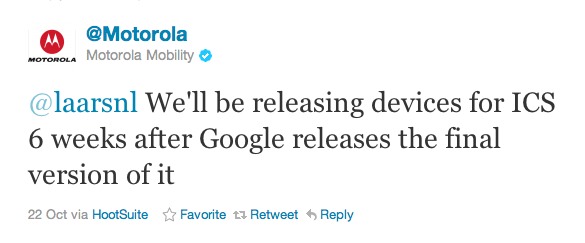
Motorola announced via their official Twitter account that they will be updating all of their Android devices to Ice Cream Sandwich, six weeks after Google releases it to OEMs. Like any new Android update users worry about how quickly it will be available on their devices. Luckily, Motorola is being pretty proactive about this one, most likely because there wont be much customization — since MotoBlur is no longer. It is unclear how other OEMs will respond with the update.
It was recently rumored that the Droid Bionic would be updated to Ice Cream Sandwich in Q1 of January 2012. We’re certainly happy that Motorola gave us an official timeframe to ease the waiting. Now its Google’s turn to get the ball rolling.
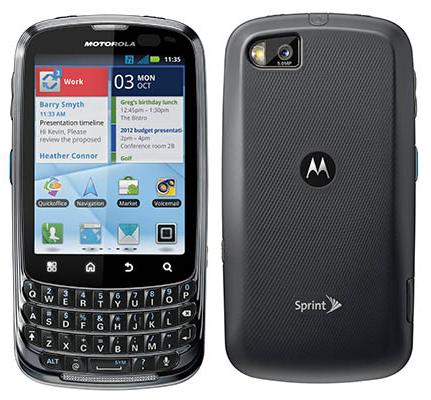
Sprint has announced the Motorola Admiral this afternoon, a 3.1-inch device running Android 2.3 with a design to withstand rugged environments. The device features a 3.1-inch VGA display (Gorilla Glass), full QWERTY keyboard, 1.2 GHz processor, 4GB of internal memory, 5-megapixel camera, Wi-Fi, and Android 2.3. That Gorilla Glass and full QWERTY keyboard are definitely a selling point for some.
The Motorola Admiral launches October 23rd for $99. We’ll have a full review then, so stay tuned.
From 9to5toys.com:
 .
.
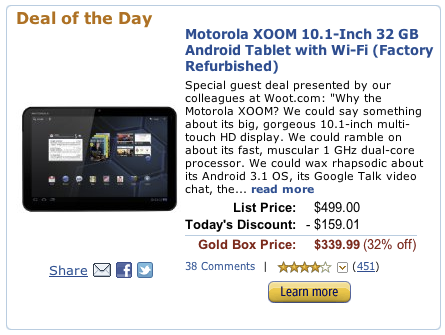
Woot! via Amazon has the 32GB Motorola XOOM Android Tablet for $339.99. That’s 32% off and the lowest price we could find for this refurbished item.
Andy Rubin told the audience at AllThingsD in Asia that the XOOM would be the first tablet to be upgraded to Ice Cream Sandwich later this year.
Expand
Expanding
Close
[youtube=http://www.youtube.com/watch?v=XGyp6dS6zqk]
Following the announcement of the RAZR in partnership with Verizon yesterday, Motorola has released the official commercials for the new Android device. Motorola has released both a U.S. and Europe version of the ad. Check out the European version after the break:
