Author

Avatar for 9to5 Staff

9to5 Staff

DigiTimes: Success of Amazon’s seven inch tablet anything but given

Site default logo image


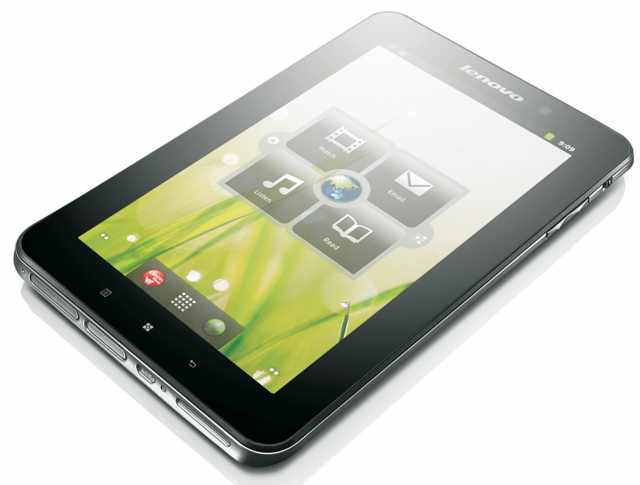
A seven-inch Amazon tablet priced at $250 or less will compete against inexpensive Android tablets such as Lenovo’s $199 IdeaPad A1 (pictured above) or the $249 Nook color

Amazon is reportedly launching its inaugural Android tablet in the fourth quarter of this year. If the back office chatter is true, the online retailer will first out a seven-incher followed by a larger form-factor device(s) early next year. The latest news has the seven-inch Kindle Tablet costing $250 or less. However, market sources polled by DigiTimes warn of a lack of differentiation between Amazon’s dedicated Kindle e-readers and a seven-inch Android tablet:

Market observers are showing concerns as to how Amazon will differentiate its e-book reader market from that of its tablet while making profits for both after the company’s launch of the 7-inch tablet in fourth-quarter 2011. […] The sources also pointed out that Amazon may run a risk by releasing a 7-inch tablet when 10-inch models have mostly outperformed 7-inch competition over the past six months.

Shipping estimates have been revised and now call for a million units by the end of this month, “but the sources remain skeptical whether Amazon can meet its shipment goal of four million units in 2011”.

Now, about that differentiation comment. TechCrunch’s MG Siegler who saw prototypes described a seven-inch device without cameras. He said the screen used is a regular LCD as opposed to a color display utilizing electronic ink technology many people have been hoping for.

The fact Amazon could be marketing this thing under the Kindle moniker won’t help either, if true. On the flipside, there’s no reason as to why an Amazon-branded Android tablet tied to their all-encompassing cloud and shopping services would ever be confused with a family of dedicated and inexpensive Kindle e-readers.

Expand
Expanding
Close

HTC teams up with Dropbox: 5GB of free cloud storage on new HTC phones

Site default logo image

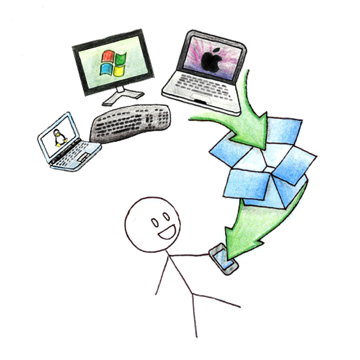
It is no secret that HTC is doubling down on software. One example: Recently, their chairwoman Cher Wang contemplated an operating system of their own. HTC also has Sense, an Android user interface skin, and the company has expanded into a cloud-based delivery service for music, television shows and Hollywood entertainment on the go. The latest addition to their arsenal includes cloud-storage service Dropbox, which teamed up with the Taiwanese handset maker to offer folks with select HTC smartphones a bonus three gigabytes of free storage. This is on top of the two gigabytes free storage Dropbox has always had in store for new sign-ups, resulting in five gigabytes of free storage for HTC handset owners. Plus, convincing five friends to sign up for a Dropbox account raises the free limit to a maximum of ten gigabytes of free cloud storage.

Given Dropbox’s popularity, many people will no doubt take advantage of this promotion. Using Dropbox, users can effortlessly sync their files across desktop and mobile devices, regardless of the platform. The service takes care of file system differences between the platforms, resolving conflicts and keeping platform-specific file meta data intact. This promotion is valid from October, Pocket-lint reports. It requires a new HTC handset with the Sense 3.5 software or later, which currently includes only the Rhyme and Sensation XE smartphones.

As of April 2011, more than 25 million people saved a cool 200 million files daily on Dropbox. Eagle-eyed readers could observe that computer maker Hewlett-Packard used to bundle its PlayBook tablet with a 50GB of free cloud storage on Box.net, until they shuttered webOS.


Expand
Expanding
Close

YouTube to live stream Rock in Rio 2011

Site default logo image

[youtube=http://www.youtube.com/watch?v=jrZRPgk1XtA]

Rock in Rio, a series of music festivals held in Rio de Janeiro, Brazil (and later in Portugal, Spain and other countries) will be live-streamed this year on YouTube in 24 different languages, Google made it known in a blog post. Headliners include Metallica, Red Hot Chili Peppers, Katy Perry, Elton John and Stevie Wonder. The rock fest is running from September 23 through October 2 so don’t forget to tune in to a live stream over at the Rock in Rio YouTube channel.


Expand
Expanding
Close

Eric Schmidt: It’s possible to use Android without Google search

Site default logo image

Google chairman and former CEO Eric Schmidt is on Capitol Hill testifying before the Senate Judiciary Committee on antitrust issues, competition policy and consumer rights. Just a quick note here. When asked whether Google can use Android to disadvantage competitors by tying that operating system to Google services, Schmidt responded, per transcript over at the Wall Street Journal blogs.

It’s possible to use Google search with Android but also possible to expressly not use Google search.

Also, Google has just been accused of “having monopoly power in Android”.

While some would be quick to accuse Schmidt of bending truth, there are in fact Android phones out there which use search engines other than Google. For example, Verizon’s Fascinate and Continuum smartphones are all Binged out and AT&T has some Android phones with Yahoo! search, like the Backflip.

In preparation for today’s hearing, the company this morning blogged that its users in both Europe and the U.S. are getting the same level of service and privacy protection:

Our approach, just like over 2,500 other US companies that offer services in Europe, is guided by the US – EU Safe Harbor Agreement, which is designed to ensure that transatlantic data transfers remain protected according to seven core EU-like privacy principles. In practice, for Google, Safe Harbor means our users in both Europe and the US can be sure they’re getting not just the same level of service, but also the same level of privacy protection.

And yesterday, Google published a survival guide of sorts to today’s hearing, tackling popular notions such as Google is favoring its own content or Google’s search ranking changes hurt a certain website or caused them to lose traffic. Concerning Google search, the company wrote:

Google makes more than 500 changes to our search algorithms every year, and each change is designed to improve the quality of our search results for consumers. Consumers come to search engines to help them sift through all the information on the web, and not every site can appear at the top of the results.

By the way, the Senate is live streaming the event so why not tune in?

Expand
Expanding
Close

New Google Docs feature: Merging spreadsheet cells vertically

Site default logo image

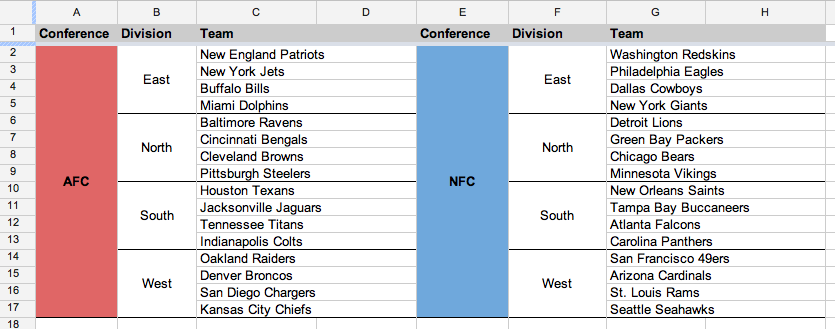
Those of you that crunch numbers using Google Docs: The company has just added a cool new feature to the spreadsheets editor – merging cells vertically. In addition to the existing horizontal merging functionality, this new feature allows for some pretty complex layouts. Just drag the set of cells, hit the down arrow next to the merge icon and select Merge vertically. You can also assign headers to sets of rows. Why would anyone want to merge cells vertically? Google offers an example:

In the spirit of the NFL season, let’s say you want to host a football tournament for your friends. To make it easier for them to cast their votes on the winning team, you organize the NFL teams by conference and division in a Google spreadsheet. After applying vertical merges to all of the conference and division headers and horizontal merges across the team names in each conference, you’re ready to share with your friends for the tournament!


Expand
Expanding
Close

HTC on Apple lawsuit: We shall prevail

Site default logo image

HTC is absolutely certain it’ll prevail in an ongoing legal battle against Apple’s patent infringement claims and is promising a “more active” involvement in defending its patent portfolio. This came from the mouth of HTC North Asia president Jack Tong in a Korea Times article today. He said:

We have no question that HTC will definitely win. HTC is waiting for a final ruling from the U.S. International Trade Commission (USITC) and the ruling will be on our side. HTC will be more active in defending our intellectual properties

Meanwhile, an unnamed Samsung source assured the publication that HTC’s eventual win in the United States will tilt balance of power in the Samsung-Apple case to Samsung’s side.


Expand
Expanding
Close

HTC unveils Rhyme smartphone with Charm

Site default logo image

[youtube=http://www.youtube.com/watch?v=LWTJvjLbPEc]

HTC at a New York presser yesterday introduced the Rhyme smartphone, a Verizon network exclusive in the United States and coming next month to Europe, the Middle East, Africa and Asia Pacific. This Android phone sports a 3.7-inch WVGA display and a five-megapixel camera with auto focus, power LED flash, face detection, action burst scene, panoramic mode and other image-taking features. The Rhyme being the ladies’ phone means one thing – accessories. These include a docking station, sports armband, headphone, Bluetooth headset and car speaker. The high point? The HTC Charm, a tiny pager-like accessory designed to alerts you of incoming calls or messages. Check it out in a promo video above and notice the luxury Apple-like packaging.


Expand
Expanding
Close

Contacts manager from consumer Gmail now live in Google Apps

Site default logo image


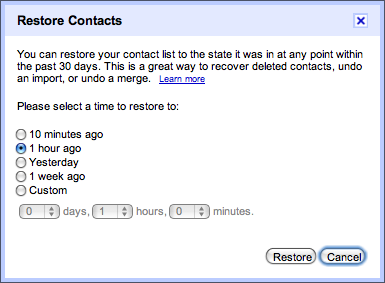
Google Apps customers can now roll revert changes to contacts for up to a month.

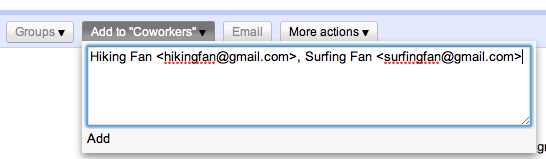
Google announced customers who host their domain on Google’s servers are now able to take advantage of the Contacts interface which has been available in consumer Gmail for some time. Users of Google Apps for Enterprise will notice that adding new contact information now defaults to “Work” instead of “Home”. Thanks to the prettified interface, you can quickly add email addresses to groups, and pick from a contact’s multiple email addresses to use on a group-by-group basis. Most importantly, the new Contacts manager lets you undo contacts import and go back in time up to a month in order to salvage deleted or merged contacts.


Add multiple contacts to a group in a snap.


Expand
Expanding
Close

Adobe unveils Flash Player 11, AIR 3 with console-quality graphics on mobile devices

Site default logo image

[youtube=http://www.youtube.com/watch?v=c0IwvN4IdH4]

Adobe today announced in a blog post that it will updated its Flash Player and AIR platform with new capabilities allowing for rich 3D-accelerated graphics across desktop and mobile devices. The company boasted top to bottom 3D acceleration on supported hardware and said developers will be able to take advantage of native code libraries and tap specific hardware and software features of a target device, such as NFC, accelerometers, light sensors, magnetomeres, device vibration and what not.

2D graphics will also see significant performance enhancements with overall rendering faster up to a thousand times. AIR 3 apps can be packaged with the embedded AIR run-time and can be updated separately of the AIR runtime updates. They believe that under-the-hood tweaks will enable Flash Player 11 and AIR 3 to power console-quality games on any mobile or desktop platform and the company made compelling demos to prove their bold claims.

Flash Player 11 and AIR 3 will be available across Windows, Mac OS X, Linux, BlackBerry Tablet OS, Android and other platforms. The release candidate versions are available for download here. The company also noted it partnered with Microsoft to bring Flash Player 11 and AIR 3 to Windows Phone software. Needles to say, support for iOS is planned only for AIR 3. Go past the fold for more impressive tech demos and features.

[youtube=http://www.youtube.com/watch?v=szaXvTsoeVs]


Expand
Expanding
Close

Google+ now open to everyone: Live broadcasts, hangouts on your phone, search

Site default logo image

Google rolled out nine new features pertained to its social thing dubbed Google+. Per the official blog post by Google’s head of engineering Vic Gundotra, the service is no longer in limited beta. Beginning today, everyone can join the party at google.com/+ – no invitation required. Yes, Facebook’s worst nightmare comes true just three months following the service’s introduction.

Next up, Google’s search expertise comes to Google+. The big search box now returns relevant people, posts and web content. The popular Hangout feature has gotten lots of enhancements. For example, developers can now take advantage of the new Google+ Hangouts APIs to write more integrated, immersive apps. Google-created Hangout extras (still rough around the edges) include screensharing, sketchpad, Google Docs integration and named hangouts. Give it a try by clicking the “Try Hangouts with extras” link in the green room.

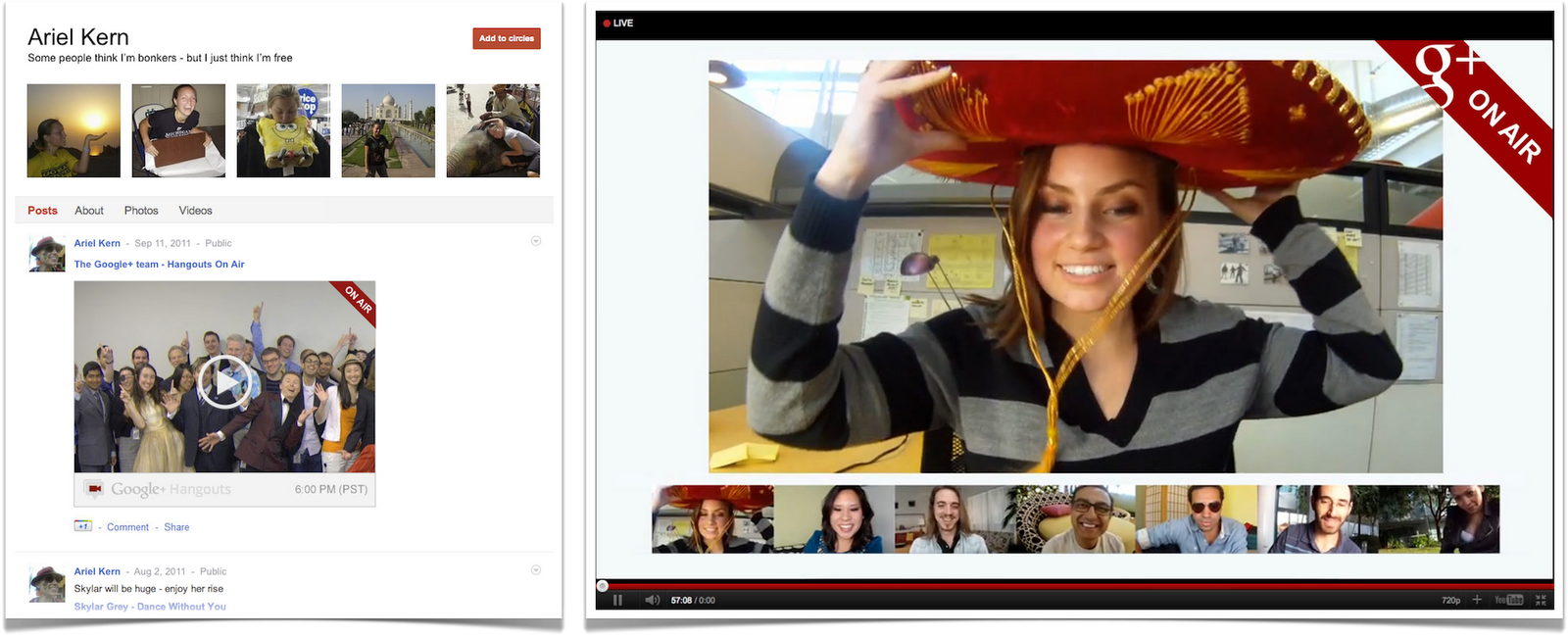
Even more interesting, it is now possible to broadcast a hangout for the world wide web to see. They call it Hangouts on Air and even though you can broadcast and record your session, there’s still that nagging nine-per-hangout limit. Of course, an unlimited number of people can be spectators of your live broadcast.

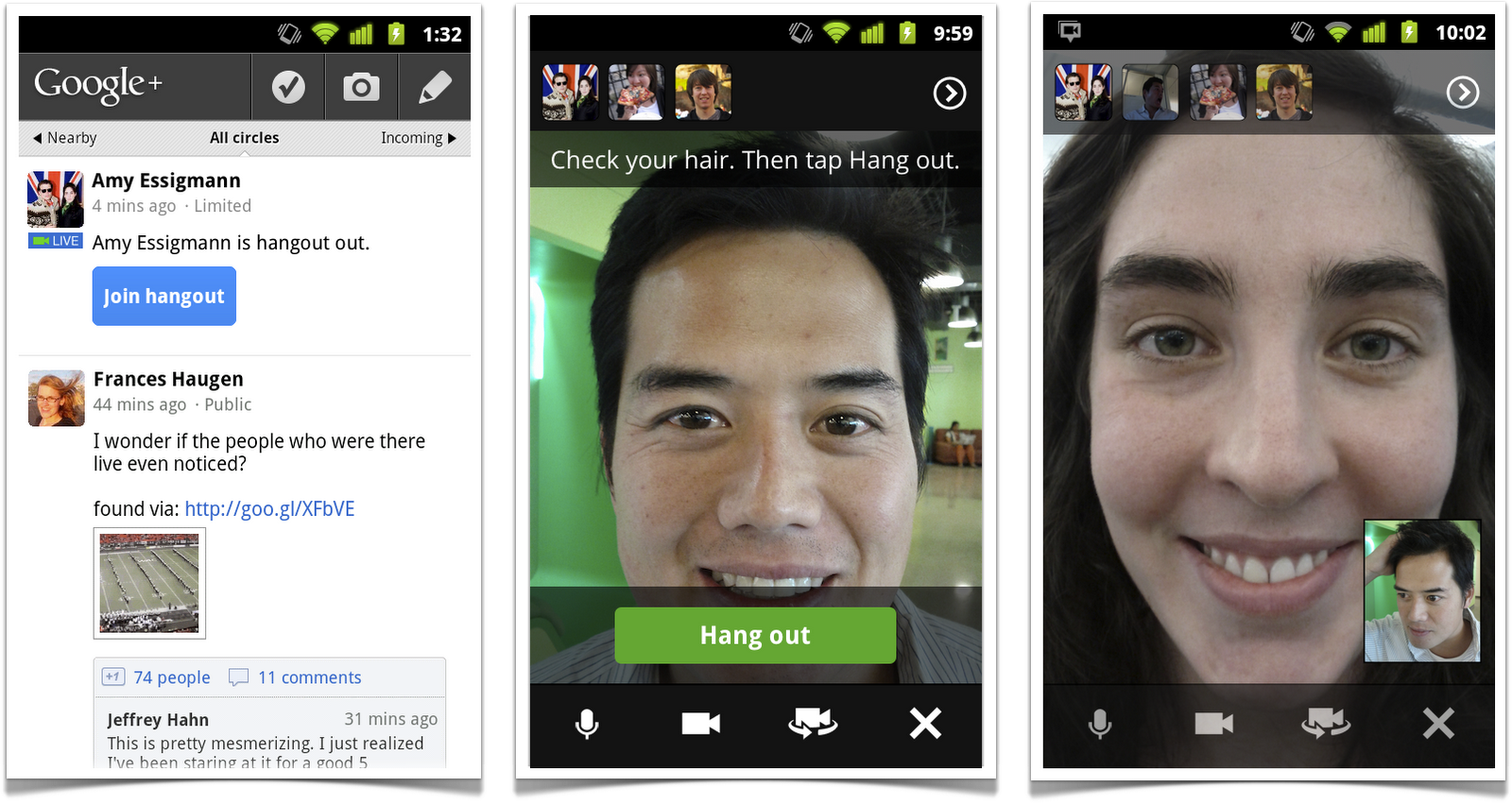
Another cool addition: You can join a hangout from your mobile phone, by finding an active hangout in the Stream of the Google+ app and tapping “Join”. This works on Android 2.3+ phones with front-facing cameras, but Google said iOS support is “coming soon”. The aforementioned features will be rolling out globally over the next day (not days, per usual), Google said.

Google released the Hangout API for developers as well.

Last,  but not the least, Dave Girouard, a Google Apps guy, announced on Twitter that Google+ is coming to business and education customers soon, indicating that Google+ will be rolled out to Google Apps users. “New stuff on G+ today that biz/edu will love! Working hard to bring G+ to Google Apps in the very near future!”, his tweet reads. In our opinion, this could be a game-changer in the social media landscape, probably putting Facebook on the defensive – especially when Google begins selling and promoting Google+ apps on the Apps Marketplace.


Expand
Expanding
Close

Google launches Wallet with new promo clip and $10 free bonus

Site default logo image

[youtube=http://www.youtube.com/watch?v=DsaJMhcLm_A]

First they made a video testimonial featuring a bunch of excited developers. Last week brought us a promo clip they first played back to journalists who attended presser in May. Then came the first official Google Wallet commercial featuring Seinfeld’s George Constanza and his exploding wallet. Today, the search company has officially rolled out Wallet, a mobile payment service.

As you can see from the clip we embedded above, it features Google engineers highlighting the many benefits of paying simply by tapping your phone to a terminal. One thing immediately captures attention: The “hundreds of thousands” of points of sale which support Google Wallet, all MasterCard PayPass terminals. Google promised at the May unveiling they would support more smartphones with an NFC chip in the future, not ruling out  a next-gen iPhone. Today, the company wrote in a blog post:

Today, Visa, Discover and American Express have made available their NFC specifications that could enable their cards to be added to future versions of Google Wallet.

If you’re a Sprint customer with a Nexus S 4G device, the Google Wallet app will be delivered as an over the air update. Just tap the Wallet app on your home screen, add your Citi MasterCard credit card or set up a Google Prepaid Card and transfer some funds to it from any of your credit cards and off you go.

Early adopters who set up a Google Prepaid Card before the year’s end also get a $10 free bonus. When you see the Google Wallet logo on a poster, simply scan it with your phone to add the advertised offer or coupon to your Google Wallet account. The below walkthrough by TechCrunch lays out everything you need to know about Google Wallet in Layman’s terms. Good-bye wallet, the phone will take it from here and another from ThisIsMyNext
Expand
Expanding
Close

Samsung wants to impose iPhone 5 ban in Korea ahead of official launch

Site default logo image

The Korea Times reports that Samsung “is seeking a complete ban” on the iPhone 5 sales in Korea – even before the handset is even released, let alone officially announced. Local carriers KT and SK Telecom have so far sold about 3.1 million iPhones in the country. The paper quotes an unnamed Samsung senior executive:

Just after the arrival of the iPhone 5 here, Samsung plans to take Apple to court here for its violation of Samsung’s wireless technology related patents. For as long as Apple does not drop mobile telecommunications functions, it would be impossible for it to sell its i-branded products without using our patents. We will stick to a strong stance against Apple during the lingering legal fights.

Another Samsung executive is “quite confident” about “a big breakthrough” provided Samsung wins in Germany, adding that “so will other envisioned efforts against such products as the iPhone 5”. The report goes on to mention that iPhone sports an LG Display-made screen, LG Innotek’s eight-megapixel camera, Samsung-made NAND flash and A5 chip and an NFC chip for wireless payment.

The twist in this case, of course, is the fact that Apple is Samsung’s biggest customer, buying displays, NAND flash memory and custom-built A4 and A5 chips for its products. It has been reported that Samsung may soon lose its contract as Apple turns to rival TSMC.

The manufacturing relationship means Samsung gets information about the innards of Apple’s non-released devices months before the actual manufacturing ramp up. This early access to Apple’s designs could have led Samsung to move with the iPhone 5 ban in Korea ahead of Apple’s official launch. On the other hand, Apple did not accuse Samsung yet of abusing its manufacturing contract to rip off Apple’s upcoming devices with its own products.


Expand
Expanding
Close

More details on Propeller, Google’s Flipboard-killer for Android and iOS devices

Site default logo image

The first mention of a social news app from Google came in a Google+ post yesterday by tech watcher Robert Scoble. He wrote:

I heard from someone working with Google that Google is working on a Flipboard competitor for both Android and iPad. My source says that the versions he’s seen so far are mind-blowing good. 

The news prompted AllThingsD’s Kara Swisher to dig for more clues. The service is code-named Propeller, Swisher learned:

Google is indeed working on rolling out the new product, which is currently called Propeller. Sources said Propeller is apparently one of a number of new socially focused announcements Google is prepping, including new apps.

The app should launch in the near future because Facebook is also unveiling a social publishing platform of its own next week. It was not immediately clear at the time of this writing how Propeller ties with Google+, if at all. Given the company’s strong social focus and the fact that Propeller is being described as a social news app, it would seem logical to incorporate at least Google+ sharing features.

9to5Google learned from people familiar with the project that Propeller will boast a prettified interface, as is a norm with its high-end rivals Flipboard and Pulse. Publishers will be able to package their content for distribution right within their web browser, using a dedicated web app. Layout options are said to include multiple layouts to target various tablet and phone brands, including iPhone and iPad. Navigation capabilities will include individual articles, table of contents, as well as browsing custom-made sections that curate multiple articles. Images, video and other rich media types are also at disposal.

Publishers will also be able to…


Expand
Expanding
Close

Asian suppliers up 10.1-inch cover glass output to ten million units a month

Site default logo image


10.1-inch form factor has been adopted by Android tablets, but not Apple’s iPad. A major ramp up in 10.1-inch cover glass manufacturing could indicate high demand for Android tablets.

Touch panel makers TPK Holding, G-Tech and Wintek – all major Apple suppliers – are reportedly ramping up 10.1-inch cover glass manufacturing to ten million units per month, reports DigiTimes, a trade publication specialized in Asian supply chain. Such a substantial increase is eyebrow raising knowing that the market-leading iPad sports a 9.7-inch display while the 10.1-inch form factor is mostly an Android play.

9to5Google learned that Samsung’s Tabs are selling very well, measured in millions. We also know Amazon is close to launching its tablet and if market sources are correct, the online retailer is eager to ship millions of units in the run-up to Christmas. However, Amazon’s inaugural tablet PC will be a seven-incher, with both TechCrunch and DigiTimes reporting that a 10.1-inch Amazon tablet won’t be out until early 2012.

In any case, that’s a lot of cover glass units for non-iPad devices. Market watchers say Fuji Crystal and Lens Technology supply Apple with an estimated 70 percent of the cover glass, mainly for iPhones. G-Tech and Wintek supply to iPads and TPK Holding is said to provide cover glass to both iPhone and iPad.

Either touch panel makers have overestimated demand (which we doubt), or Apple is switching to 10.1-inch form factor for iPad 3 (highly unlikely, but possible given the hints of four-inch iPhone) or Android makers have decided to blanket the market this holiday season with millions of 10.1-inch tablets, which is the most reasonable assumption.


Expand
Expanding
Close

MasterCard shows off the future of payment (and it’s not just Google Wallet)

Site default logo image


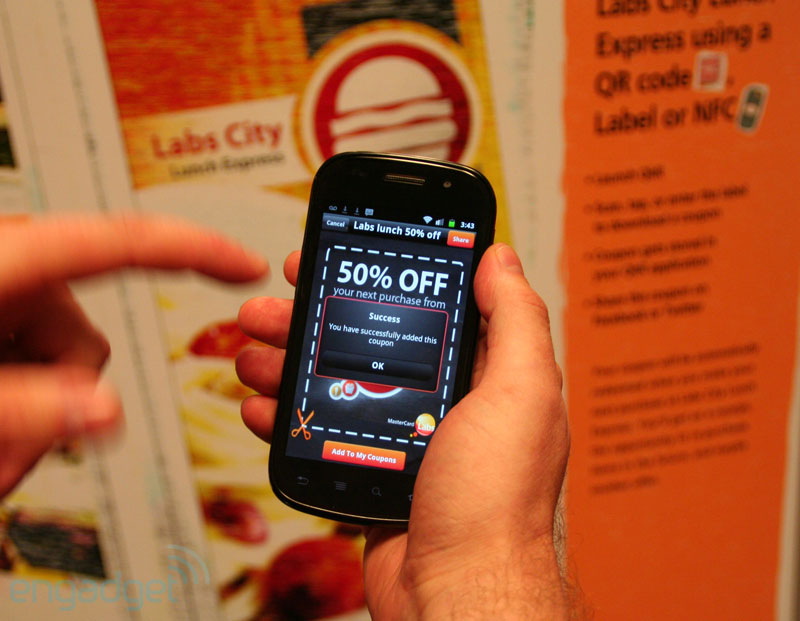
Image courtesy of Engadget

Google Wallet, a mobile payment service announced in May, lets you pay on the go by tapping a phone to an intelligent terminal. If a splashy video tour from Monday is anything to go by, it should forever change – for the better – how we as a society pay for goods and services. Initial implementation requires a MasterCard PayPass terminal which accepts digital receipts and coupons from mobile devices, over the air, and then carries out transactions with financial institutions.

MasterCard today shed more light on a mobile application they’ve been developing in partnership with Google. A quick visit to Engadget which has a cool video tour proves the app works as advertised: Tap a phone to a terminal and that’s it. The app will allow users to set spending limits, set alerts for overseas activity and restrict purchases across categories so, say, your spouse can only pay for dinning, movie tickets and gas, excluding clothes, make up and other impulse purchases.

The app currently works on Sprint’s Nexus S 4G but they are planning on supporting more devices with an NFC chip. The software will also enable MasterCard’s QkR platform for mobile purchasing that supports QR codes, television audio signals encoded with purchase data and even tiny NFC chips embedded into real-world objects, such as fast-food tabletops. These QkR-supported features should be realized across Android, iOS, Windows Phone Mango and BlackBerry platforms, MasterCard promises.


Expand
Expanding
Close

Android Voice Actions go overseas

Site default logo image

[youtube=http://www.youtube.com/watch?v=HsI76lrvJt4]

In addition to mapping and navigation, the ability to control your handset with voice commands is another treat that sets Android apart from the crowd, even if other phones had voice commands before Google’s software. Pity than that Android Voice Actions were introduced last year to the U.S. audience only.

Well, Android fans overseas can breathe a collective sigh of relieve because Google announced that Voice Actions are now available to users in the UK, France, Italy, Germany and Spain. Even better, non-English speakers are able to issue Voice Actions in British English, French, Italian, German and Spanish. There are three ways to invoking Voice Commands on your Android 2.2+ smartphone or tablet:

  • tap the microphone button on the Google search box on your home screen,
  • open the Voice Search app,
  • or press down for a few seconds on the physical search button on your phone to activate the “Speak Now” screen

Some of the supported Voice Actions: send text to [contact] [message]; call [business]; call [contact]; go to [website]; navigate to [location/business name]; directions to [location/business name]; map of [location].

You can get a better idea about the usefulness of Voice Actions by spending less than two minutes of your time sitting through Google’s video tour embedded right above.


Expand
Expanding
Close

Gmail chat liberated: Read your chat logs in your email client via IMAP

Site default logo image

[youtube=http://www.youtube.com/watch?v=0p_jUltvwng]

As you know, Google Takeout, a recently introduced service, allows you to export your data from the Google cloud. For example, you can download an archive from Google Buzz, Picasa Web Albums, Contacts and Circles and Google Profile – even Google Voice. Beginning today, it is possible to pull your Gmail chats to an email client such as Thunderbird, via IMAP protocol.

Even though Gmail’s been working with your local email client via IMAP for ages, you were not able to retrieve chat logs – although they appear as email messages under the Chat label in the lefthand side of the web interface. Per Google’s blog post, recorded chat logs can now be downloaded to your local email client provided it’s configured to use IMAP. You only have to tick the “Show in IMAP” checkbox for Chats in the Labels tab of your Gmail settings. A step-by-step instructions in the video above.


Expand
Expanding
Close

Three new Google Docs features put the fun in functional

Site default logo image

Google Docs, the office productivity suite from everyone’s favorite search provider, has gotten updated with three new tools that Google says “put the fun in functional”. These are the format painter (finally!), fusion tables and drag & drop images. Format painter has been long in the coming and was arguably an important missing feature that probably put off some people from entrusting the cloud with their office productivity.

It’s real simple, just select a chunk of text and press the paintbrush button to copy its style (font, size, color and other formatting features) and apply it to one or more (double click the paintbrush button) blocks of text. Handy shortcuts are also available:

To copy the style of your selected text
  • Mac: Ctrl+Option+C
  • Windows: Ctrl+Alt+C
To apply any copied styles to whatever text you have selected:
  • Mac: Ctrl+Option+V
  • Windows: Ctrl+Alt+V

More on fusion tables and drag & drop images after the break.


Expand
Expanding
Close

Chrome Web Store expands to 24 more countries

Site default logo image

Chrome Web Store, the Google-operated repository of web apps for the Chrome browser, has expaneded to 24 new countries, Google announced in a blog post. The newly supported territories are:

Argentina, Austria, Belgium, Brazil, Czech Republic, Denmark, Finland, France, Germany, Hong Kong, India, Israel, Italy, Japan, Mexico, Netherlands, Norway, Poland, Portugal, Russia, Spain, Sweden, Switzerland and the United Kingdom.

Last month, Google brought Chrome Web Store to sixteen new countries. The nine-month-old store is now available in 55 countries around the world and it hosts web apps which accept in-app payments with a flat five percent fee.


Expand
Expanding
Close

Android achieves Windows-type monopoly in Taiwan as HTC overtakes Nokia in sales volume and value

Site default logo image

Android is the dominant smartphone platform pretty much everywhere, but nowhere is Google’s lead more evident than in Taiwan, the country traditionally on the bleeding edge of technology. According to the Asian trade publication DigiTimes which cited the latest data from IDC, the 990,00 smartphones accounted for half the 1.97 million cell phones shipped in Taiwan during the second quarter of this year.

Taiwan will probably become the first country where all phones will eventually become smartphones as shipments of feature phones dropped 17 percent sequentially and 32 percent annually: As for Android:

Android-based smartphones accounted for over 70% of all smartphones sold in Taiwan in the second quarter, followed by iOS and Symbian models, the data showed.

Mind you, this isn’t the Android-iOS monopoly any more, this is a Windows-type monopoly and it’s unfolding in Taiwan before our very eyes. Makes you wonder if that’s a sign of things to come elsewhere in the world. The gap between Android and iOS in Taiwan is unheard-of. And with just 30 percent of smartphones divided between iOS and Symbian, Apple’s platform is likely far behind Android in Taiwan. Of course…


Expand
Expanding
Close

Google Goggles can now auto-upload your phone camera roll and check for visual search results

Site default logo image

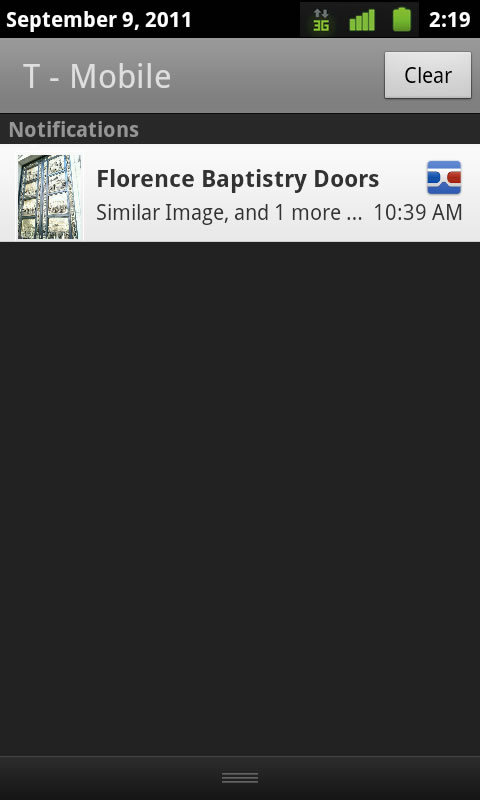
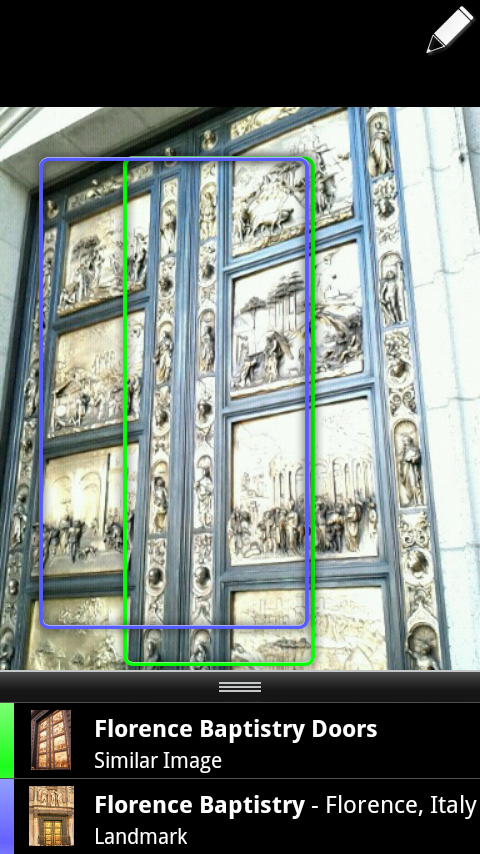
Goggles, a visual search technology from Google available on Android and iOS devices, is great for researching products, buildings and other objects simply by snapping them with your phone camera. Google announced in a blog post that a new version is available which lets you opt-in to have your camera roll automatically uploaded to the Google cloud. It’s similar to how the instant upload feature in the Google+ mobile app uploads photos and videos to a private album as you take them. They call it camera search and you can enable it in Goggles version 1.6 by checking Search from Camera in Menu > Settings.

Once up in the cloud, Google will auto-analyze your snaps and notify you when it recognizes something . For example, you may have taken a bunch of shots of historic buildings on your vacation. By allowing Goggles to upload your snaps, you can get search results for, say, recognized landmarks almost instantly. This lets you explore more information about the city, such as its history, and learn something new right on the spot. We like it a lot and if you’re fan of Goggles, update the app and give it a try.


Expand
Expanding
Close

Samsung: We’re on track to ship ten million Galaxy S II phones by end of 2011

Site default logo image

By all accounts, Samsung’s Galaxy S smartphone family has risen to become the most serious challenger to Apple’s iPhone. Sales are picking up and Samsung now has the momentum to ship some ten million Galaxy S II units by the end of this year. This came from the mouth of Andy Tu, Samsung Taiwan’s president of mobile communications unit. Tu told DigiTimes, an Asian trade publication:

Global sales of the Galaxy S II are expected to top six million units by the end of September 2011 and 10 million units by the end of the year.

Considering the Galaxy S II hasn’t yet hit the U.S. with full force, ten million units is a pretty impressive number. That Samsung is aiming for four million units in the holiday quarter is especially telling in the face of sales blockade imposed in some countries as a result of Apple’s patent and design complaints.

Samsung sold three million Galaxy S II pre-orders worldwide early May and about 120,000 units in the first few days of availability in South Korea. It took the company 85 days to ship five million units in late July. Strong phone sales are seen as a boon to Samsung’s declining television and semiconductor operations which are blamed on a 26 percent drop in the June quarter profits.

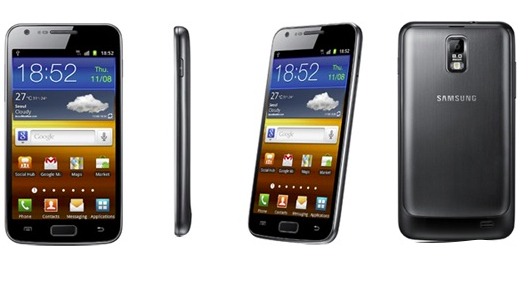
Samsung today launched the Galaxy R in Taiwan, basically a rehashed Galaxy S version running Nvidia’s Tegra 2 chip instead of Samsung’s own speedy Exynos 4210 processor. The device is coming to North & Eastern Europe, South East & West Asia, Middle East Asia and China soon.


Expand
Expanding
Close

Samsung launches Nvidia Tegra 2-powered Galaxy R in Taiwan, coming elsewhere soon

Site default logo image

As noted last month, Samsung at IFA 2011 said it would expand the Galaxy S family with new “R”, “W”, “M” and “Y” branded smartphones. Today, they made good on that promise by unveiling the Galaxy R (“R” as in Royal) smartphone in Taiwan. It actually first debuted in Sweden back in August as the Galaxy Z, but it took the company a little more than a month to re-brand it under the Galaxy R moniker. The 4.19-inch handset with Super Clear LCD has virtually the same innards as its Galaxy S counterpart, sans Nvidia’s dual-core Tegra 2 chip.

It’s actually Samsung’s first Tegra-powered Android smartphone. Other features include Android 2.3 Gingerbread. The Tegra 2 chip’s GeForce GPU lends itself great to high-end games, 1080p video output and Adobe Flash. Tegra-optimized games are available through the Tegra Zone app on Android Market. It will be interesting seeing whether the Galaxy R can beat Galaxy S’s Exynos 4210 chip said to clock the fastest GPU on any smartphone today.

For now, the Galaxy R is available in Sweden and Taiwan for a suggested retail price of NT$15,900, or about $546. Samsung said the phone would come to other regions “soon”, including North & Eastern Europe, South East & West Asia, Middle East Asia and China. Nvidia’s video tour of the Galaxy R is right after the break.


Expand
Expanding
Close

Google: We will optimize all future versions of Android for Intel chips

Site default logo image


Image courtsy of Anandtech

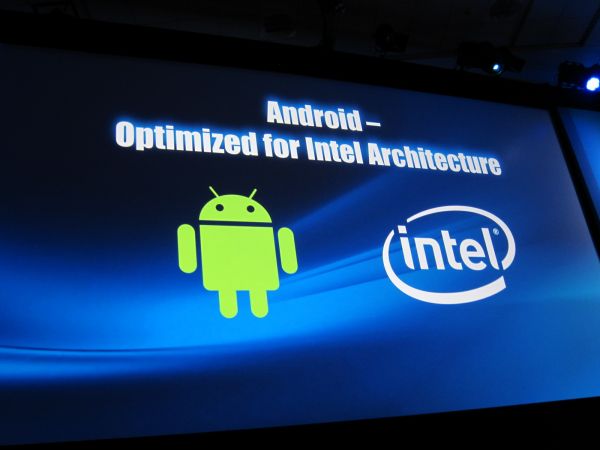
TIMN reports that Google’s head of mobile, Andy Rubin, dropped a bombshell during his on-stage appearance at the Intel Developer Forum, by announcing that all future versions of Android will be optimized for Intel chips top to bottom. Intel also showed off a prototype Android tablet and phone running on the Medfield chip. Medfield is Intel’s fourth-generation mobile Internet device platform based on a 32-nanometer Atom processor.

The news prompted former Engadget editor Joshua Topolsky to observe on Twitter that Google is cozying up to Intel’s x86 platform at a time when Microsoft is adding support – for the first time in its history – for ARM’s mobile platform in Windows 8. Of course, we remember that Intel promised on numerous occasions that we’d see phones running on Intel chips in “early 2012,” even if everyone assumed the company was referring to Windows 8-powered devices. Google here wants to cover all bases with future versions of Android and it’s likely that the announcement will spark more competition between Intel and chip vendors that manufacture mobile chips based on ARM’s processor blueprints.


Expand
Expanding
Close