Author

Avatar for 9to5 Staff

9to5 Staff

Offline mode makes a comeback in Gmail, Calendar and Docs

Site default logo image


Strangely enough, offline mode in Gmail is a standalone web app (pictured above) rather than being baked into Gmail directly. Click for larger.

Google announced in a post over at the official Gmail blog that it is bringing offline functionality back to Gmail, Calendar and Docs. The feature had initially been enabled in select Google services via Gears, the company’s proprietary browser extension that was later retired in favor of HTML5. It took longer than expected to re-write the offline functionality in HTML5, though. This was in part because Google had to wait until the World Wide Web Consortium ratified new HTML5 features that allow for local browser storage and other technologies that make it possible for developers to write web apps which sync seamlessly between offline and always-on modes of operation.

Gmail offline will be available today, Google said, and offline for Google Calendar and Google Docs will be rolling out over the next week, starting today. In the case of Gmail, offline functionality is enabled via a Chrome Web Store app dubbed Offline Google Mail. As for Calendar and Docs, clicking the gear icon at the top right corner and choosing the Offline mode lets you view events from your calendars and RSVP to appointments while offline, as well as view your Google documents and spreadsheets. Offline Docs editing isn’t supported yet, but Google is “working hard to make it a reality”.

The question is, will you care about working offline now that mobile/broadband Internet and wireless hotspots have become ubiquitous?  (YES!)


Expand
Expanding
Close

U.S. government blocks AT&T/T-Mobile merger citing competition concerns

Site default logo image

UPDATE 1 [Wednesday, August 31, 2011 at 12:17pm EST]:AT&T has provided us with the official line regarding this development, found at the bottom of this article.

Bloomberg reports that the U.S. government has made a move to block the proposed merger of AT&T and T-Mobile USA valued at $39 billion:

The U.S. government sued to block AT&T Inc.’s proposed $39 billion acquisition of T-Mobile USA Inc., saying the deal would “substantially lessen competition” in the wireless market.

The publication writes that the Justice Department filed a complaint Wednesday in federal court in Washington. The government is arguing that the proposed transaction would effectively legitimize duopoly in the country, adding in its filing that “AT&T’s elimination of T-Mobile as an independent, low- priced rival would remove a significant competitive force from the market”.

The government’s reasoning resonates with Sprint, the nation’s third-largest wireless operator, which asked Uncle Sam to intervene on the grounds that the resulting super carrier would prevent any meaningful competition on the market. AT&T denied Sprint’s accusations and said the merger would lead to fewer dropped calls and cheaper data plans for customers.

This is my next has a statement from FCC chairman Julius Genachowski who expressed “serious concerns” about competition:

By filing suit today, the Department of Justice has concluded that AT&T’s acquisition of T-Mobile would substantially lessen competition in violation of the antitrust laws. Competition is an essential component of the FCC’s statutory public interest analysis, and although our process is not complete, the record before this agency also raises serious concerns about the impact of the proposed transaction on competition. Vibrant competition in wireless services is vital to innovation, investment, economic growth and job creation, and to drive our global leadership in mobile. Competition fosters consumer benefits, including more choices, better service and lower prices.

If the transaction does indeed get rejected, T-Mobile USA will walk out with…


Expand
Expanding
Close

Amazon also working on a 10.1-inch tablet, due early next year

Site default logo image

Trade publication DigiTimes quoted market sources this morning who heard that the online retail giant, Amazon, is gearing up for mass production of another tablet, a 10.1-inch device, for the first quarter of next year. The world’s largest contract manufacturer, Foxconn, will take care of manufacturing, the report notes. Foxconn is also Apple’s long-time manufacturing partner and they make gadgets and computers for a number of Western brands.

While the report doesn’t cast more light on the device, the screen size suggests a Honeycomb-class tablet. The story does corroborate an AndroidMe claim back in May that Amazon has been working on a family of mobile devices powered by the Android software.

Amazon is also in the process of tweaking its web shopping site to mobile access, apparently in preparation for its inaugural tablet launch next month. That device is said to be a seven-inch slate tightly integrated with Amazon’s cloud and content services.

DigiTimes’ report also notes Amazon placed an order for up to eighteen million Kindle units for the entire year, confirming their lead in the e-reader market with an estimated 60-70 percent share of global e-book reader shipments in 2011.


Expand
Expanding
Close

Amazon testing mobile-optimized shopping site ahead of tablet launch

Site default logo image

This is interesting. Amazon appears to be testing a redesign of its shopping web site that appears to be specifically optimized for tablet browsing. The Next Web discovered several tweaks which seem to be accessible only to a small number of users who are testing out the new design. These include the more prominent search bar and bigger controls, so you don’t have to sand your fingers down.

Another tell-tale sign: The new site gives prominence to Amazon’s tablet-friendly services such as Instant Video, MP3 Store, Cloud Player, Kindle, Cloud Drive, AppStore for Android, Game and Software Downloads and Audiobooks. Yes, we might be reading too much into it, but this feels like a part of launch preparations for the rumored Amazon tablet.

Forrester’s Sarah Rotman Epps predicts bright future for the Amazon tablet, which in her own words will “be synonymous with ‘Android’ on tablets” a year from now (disclosure: Epps was wrong on predicting iPad numbers plummeting back in June). She wrote in a note to clients Monday that Amazon could sell five million tablet units in the fourth quarter, considerably more than the 3.27 million iPads Apple sold in its first quarter, adding:

Enter Amazon.com, whose tablet can compete on price, content, and commerce. If it’s launched at the right price with enough supply, we see Amazon’s tablet easily selling 3 million to 5 million units in Q4 alone, disrupting not only Apple’s product strategy but other tablet manufacturers’ as well.

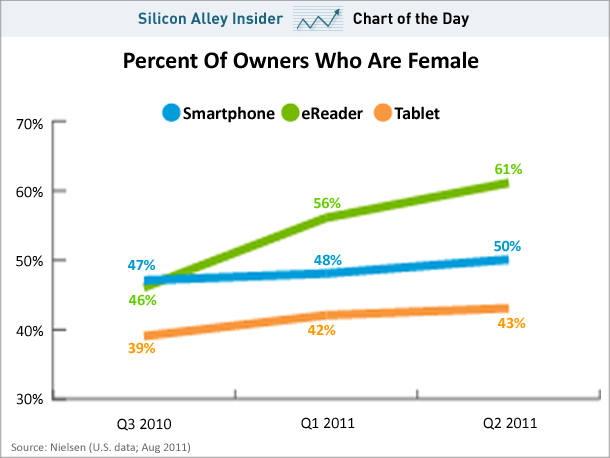
A recent survey from Nielsen revealed that a tablet from Amazon marrying e-reading features of the Kindle to the computing capabilities of tablets could appeal to wide demographics. Nielsen says women now amount to a whopping 61 percent of e-reader owners, up from 46 percent last year. As for tablet and smartphone adoption, women climbed only by four and three percentage points in the period, respectively. The numbers led Silicon Alley Insider to joke that “women are from Amazon, men are from Apple”.


Expand
Expanding
Close

Amazon seen pushing five million tablets in the fourth quarter

Site default logo image


Amazon tablet mockup via BGR.

The rumored Amazon tablet isn’t even out yet (the company is sourcing components for manufacturing), but that hasn’t stopped market analysts from estimating its potential. According to Forrester Research, the online retailer could sell up to five million tablets in the fourth quarter of this year. The figure is not to be dismissed easily, especially in light of poor sales of other vendors in the Android tablet space. Heck, the number fares more than favorably versus the 30 million iPads Apple sold since April of last year. Analyst Sarah Rotman Epps wrote in a note to clients:

Thus far, Apple has faced many would-be competitors, but none have gained significant market share. Not only does Amazon have the potential to gain share quickly but its willingness to sell hardware at a loss, as it did with the Kindle, makes Amazon a nasty competitor.

In addition, strong sales of the Amazon tablet is likely to become the key incentive for Android developers who have largely ignored the market for Honeycomb devices.

Nevertheless, popularized by Apple’s iPad, the tablet is on the rise. Amazon on its part is best poised to reap the benefits due to the sheer size of its ecosystem offering the kind of integrated product which can challenge Apple’s vertically integrated approach to gadget making. Also…


Expand
Expanding
Close

DigiTimes: Samsung “considering purchasing webOS” to compete head on with Apple and Google

Site default logo image


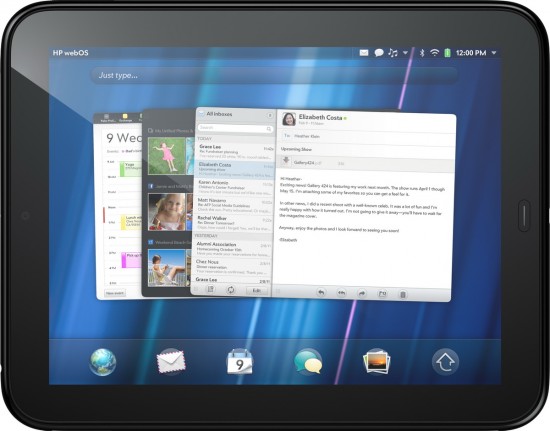
HP’s now deceased TouchPad tablet, powered by the webOS software.

In addition to whispers of a possible take over of Hewlett-Packard’s personal computer business worth forty million PC units in 2011, Samsung is said to be considering purchasing the webOS operating system HP got through the last year’s Palm acquisition.

This comes via a DigiTimes report this morning, citing “sources from notebook players”. In fact, that may be the reason alone behind Samsung’s rumored interest in HP’s PC making biz, the sources suspect. Samsung, of course, already  makes PC notebooks but with only ten million units in this year they aren’t exactly in the big league.

Of course, the rumor-mill has been speculating about such a move since Hewlett-Packard shot down webOS and announced intentions to exit the low-margin personal computer business earlier this month. While we have to take those stories with a few pinches of salt, it’s easy to see webOS flourish under Samsung.

The company would further reduce its dependence on Android software as Google’s $12.5 billion acquisition of Motorola has left the search giant’s commitment to Android backers  dwindling in the air.

Samsung, which also develops Bada, its own operating system for feature phones, could make, promote and sell webOS smartphones and tablets on a global scale. And if HP’s TouchPad fire-sale is an indication, the industry and consumers yearn for a third mobile platform in order to avoid the Android-iOS duopoly. Think about it: The webOS software running on Samsung’s beautifully designed hardware rocking cutting-edge processors and graphics – and priced aggressively – could let Samsung compete with iPad more effectively than with its current crop of Android-driven tablets.

Let’s not forget Palm’s intellectual property portfolio that would no doubt enable the company to avoid future lawsuits from rivals. As a matter of fact, the webOS licensing would enable Samsung to gain a much-needed patent leverage against Apple in the mobile space.


Expand
Expanding
Close

BGR: Verizon lands Samsung Droid Prime exclusive, due in November

Site default logo image

Boy Genius Report claims it has learned that carrier Verizon Wireless landed an exclusive deal with Samsung for the upcoming Droid Prime, the next Google-branded superphone. It is said to carry a model number SCH-i515 and launch on the Verizon network in October:

Apparently, “Verizon doesn’t think the Samsung Galaxy S II will be competitive with the iPhone 5 when it launches.” Instead, not only is Verizon launching the Samsung DROID Prime, a device that is sure to be the new flagship Android phone ahead of the holidays, but the company will have the handset as an exclusive.

What’s best, the Droid Prime should be the first smartphone to run Google’s Ice Cream Sandwich software, basically Android 4.0 with a unified set of features on both smartphones and tablets. The publication previously wrote that the Droid Prime should sport a Super AMOLED HD display, probably 720p, and Texas Instrument’s OMAP4460 processor rather than Samsung’s own dual-core chip.


Expand
Expanding
Close

Video testimony in the cards as Apple secures another delay for Samsung’s Galaxy Tab 10.1 in Australia

Site default logo image

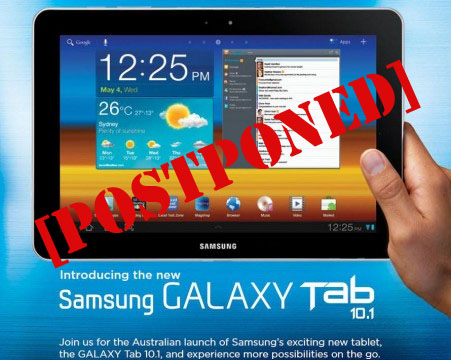
Samsung on Monday promised to challenge Apple’s copyright infringement claims  in Australia. Specifically, news agencies report, the Korean consumer electronics maker said today it “will continue to actively defend its right to launch the Samsung Galaxy Tab 10.1 in Australia”. Reuters reports that the company confirmed plans to delay the Galaxy Tab 10.1 launch in Australia until after  a court ruling in late September on its ongoing legal spat with Apple. Furthermore, Samsung will file a counterclaim with the Australian court in the coming days, seeking to invalidate Apple’s patents plus another one asserting a patent infringement on Apple’s part:

Today, Samsung informed the Federal Court of Australia it intends to file a cross claim against Apple Australia and Apple Inc regarding the invalidity of the patents previously asserted by Apple and also a cross claim against Apple regarding violation of patents held by Samsung by selling its iPhones and iPads

According to The Sydney Morning Herald, a hearing before the Australian court is due September 26 and 29 and Samsung agreed “not to sell or advertise” the tablet before September 30. The article also mentions the possibility of a high-profile testimony by both parties:

Apple and Samsung returned to court this afternoon, with Samsung agreeing not to sell or advertise the Galaxy Tab 10.1 before September 30. Apple will detail the specific patents involved in the case by this Friday and will provide a more comprehensive statement of facts by September 5. Samsung will provide points in answer by September 16, with the case going to a formal hearing on September 26 and 29. It was indicated today that top executives and inventors from both Apple and Samsung may appear in person or over video link to explain their patents.

It’s an interesting strategy on Samsung’s part…


Expand
Expanding
Close

Samsung confirms hardware refresh for Galaxy S II, Galaxy Tab 8.9: 4G LTE, faster processors, more

Site default logo image

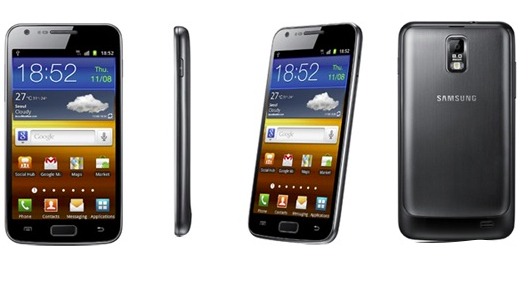
So now we have a pretty good idea about that “big thing” Samsung recently promised. SammyHub reports that the Korean consumer electronics maker will demo a new Galaxy S II smartphone at the IFA trade show scheduled to run September 2-7, 2011 in Berlin, Germany. It’ll feature 4G connectivity and Samsung intends to pitch it as the first true world phone capable of connecting to LTE, GSM and WCDMA cellular networks.

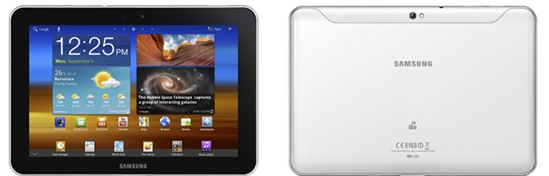
The device will also sport slightly revised specs, including a bigger 4.5-inch Super AMOLED Plus display, 1.5GHz dual-core processor, NFC, WiFi, Bluetooth, eight-megapixel camera with flash and a 1850mAh battery. The 8.9-inch Galaxy Tab tablet will also get LTE and a 1.5GHz processor, in addition to a 1280-by-800 pixel resolution display and a three-megapixel camera. The company should reveal US launch plans August 29 at a major product announcement to take place in New York City.


Expand
Expanding
Close

Google TV is coming to the UK, British press claims

Site default logo image

Google has not had much luck with the Google TV project, which failed to gain market traction thus far. Nevertheless, the search company is adamant to bring Google TV to international markets, reports The Telegraph, adding that the service, compatible set-top boxes and TV sets with Google TV built-in (such as Sony’s Internet TV) will become available in the country in the next six months. Daily Mail corroborated the report, adding you’ll be able to “watch material from catch-up services like the BBC iPlayer and ITV Player” on your TV set. Voice searching and remote apps for iOS and Android are also highlighted in the reports. The official announcement is expected by Eric Schmidt in a lecture at the Edinburgh Television Festival later today.


Expand
Expanding
Close

Google signs up three schools for Chromebooks

Site default logo image

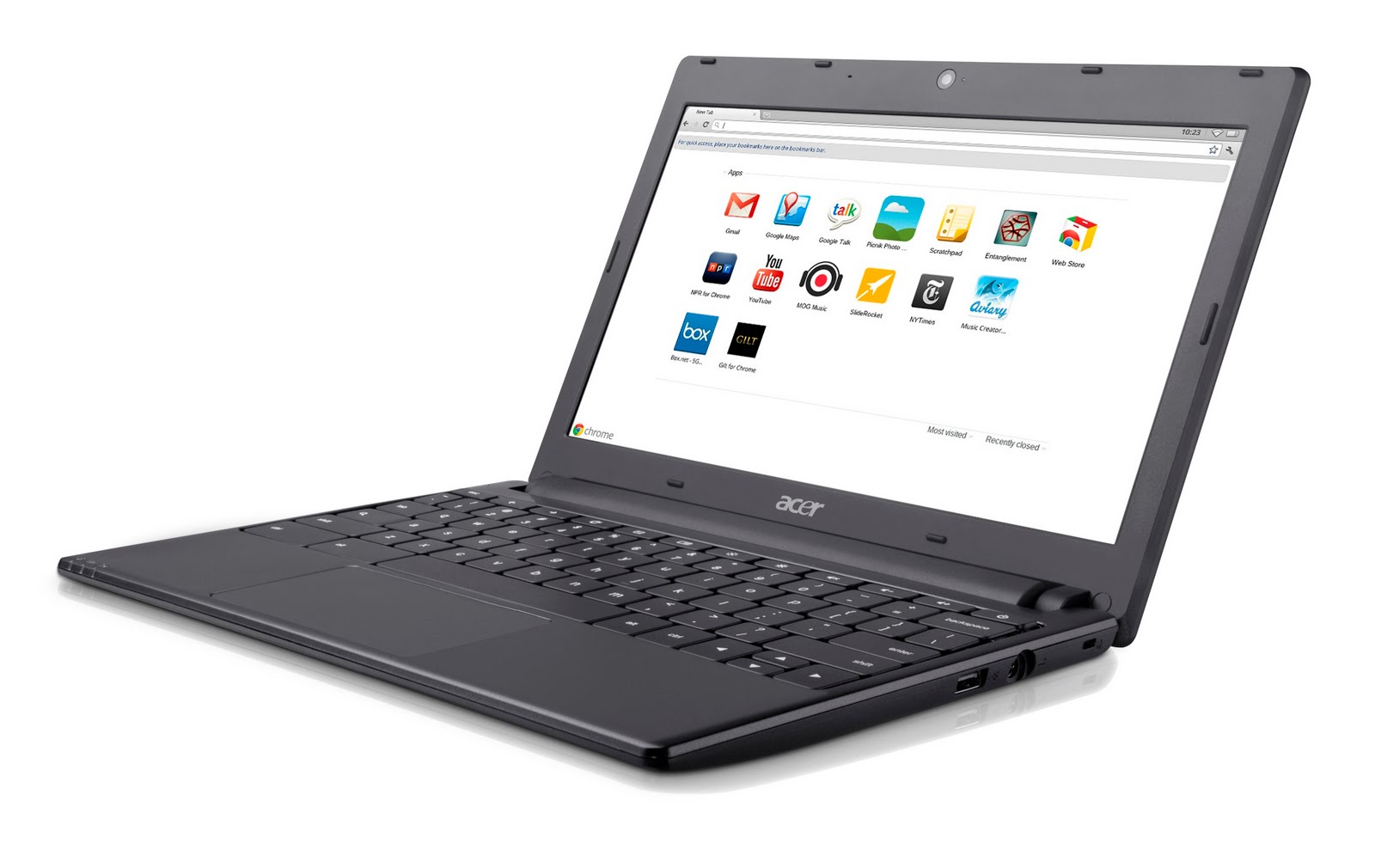
Google’s put in motion an Apple-like plan calling for Chromebooks in education, traditionally a strong market for Apple’s Macintosh computers. The company announced on its official Enterprise blog back-to-school deals with three schools that will begin using Chromebooks when students return over the coming weeks. First up, the Fessenden School in West Newton, MA, an independent K-9 institution which will add two carts of Chromebooks that will also be available for use in the library.

Grace Lutheran School, a small private school in Oshkosh, central Wisconsin, will be sharing Chromebooks throughout the day in classrooms among 5th through 8th grade students. And finally, Merton Community School District, also in Wisconsin, will give 110 sixth graders Chromebooks to keep and use until they graduate from eighth grade. At $20 per user per month, users get a Chromebook, a web-based management console for IT and 24/7 support from Google. The company says it’s seeing “a lot of interest from K-12 institutions” from their Chromebook for Education initiative.


Expand
Expanding
Close

How Google improves its search algorithm

Site default logo image

[youtube=http://www.youtube.com/watch?v=J5RZOU6vK4Q]

Google’s been tight-lipped about the intricate, intertwined algorithms that make their search machine tick and we can only speculate how they rank web pages beyond the commonly known guidelines for web developers. A whole cottage industry is thriving out there, built on the presumption that one can reverse-engineer parts of the Google code so to affect search results and ensure the best possible placement. While Googlers aren’t about to spill the beans on the industry’s most closely-kept secret, they did reveal a couple of tidbits in a video published over at the official Google blog.

“While an improvement to the algorithm may start with a creative idea, it always goes through a process of rigorous scientific testing”, the company wrote in the post. “Simply put”, Google explains, “if the data from our experiments doesn’t show that we’re helping users, we won’t launch the change”. For example, did you know that the Google search algorithm is made up of several hundred different “signals” that collectively determine the results? Surprisingly, just last year Google perfected its search engine with more than five hundred algorithm changes, most of them rolled out quietly. More tidbits in that YouTube video, embedded above.


Expand
Expanding
Close

Code hooks hint September 1 launch of Galaxy Tab 7.7, Wave 3 phone and mysterious Galaxy Note device

Site default logo image

This is my next has learned that Samsung has a few interesting announcements up its sleeve ready for the IFA trade show which is scheduled to run September 2-7, 2011 in Berlin, Germany. Hints inside the code of Samsung’s Android app contain references to an unreleased 7.7-inch tablet conveniently referred to as the Galaxy Tab 7.7. The code also makes mention of Wave 3, most likely a new version of the Wave series of feature phones powered by the company’s own operating system dubbed Bada.

Finally, the publication discovered references to Galaxy Note, a mysterious device most likely to be a tablet of sorts. The fact that Samsung is telling users to updated said app September 1 indicates with a high degree of certainty plans to unveil new products on that day. In addition to this “leak”, 9to5Google informed you yesterday of the specs supposedly belonging to an array of new Samsung smartphones to be marketed under the Galaxy M, Galaxy W, Galaxy Y and Galaxy R monikers.


Expand
Expanding
Close

Chrome gets Omnibar history sync, Lion multitouch gestures, more

Site default logo image

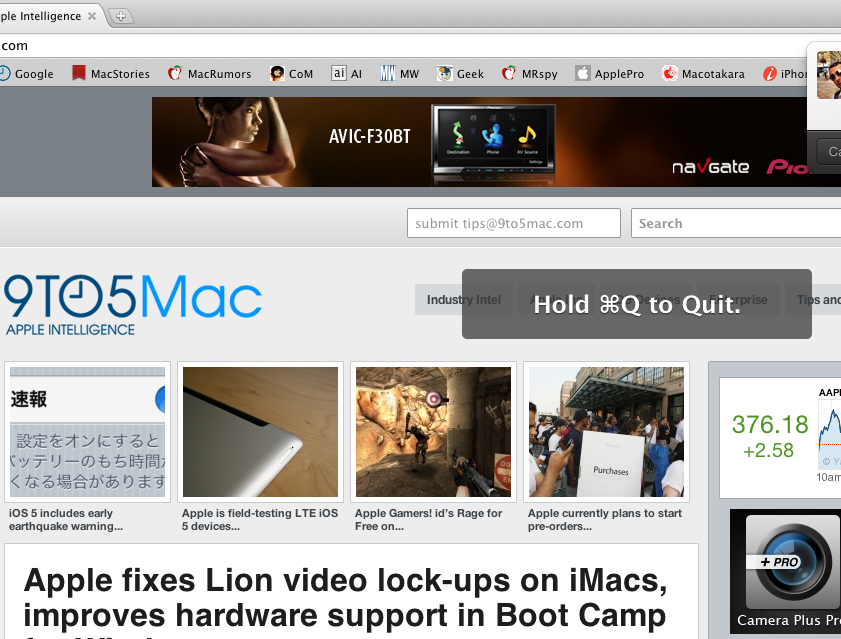
Several new enhancements have surfaced in the latest developer version of Google’s Chrome browser. As previously announced, the software now respects Apple’s multitouch gesturing philosophy in OS X Lion. This means you can flick your finger left or right on your Magic Mouse (or two fingers on a trackpad) to advance and go back in your history. Unfortunately, the browser doesn’t yet support double-tap or pinch to smoothly zoom in and out of web pages iPhone-style, like Safari on Lion. Another handy treat: You can now rest assured that accidentally hitting the Command + Q combo won’t quit Chrome because a subtle overlay appears telling you to hold down the combo briefly in order to quit.

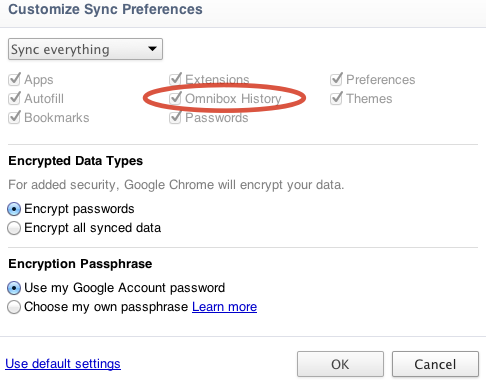
In addition, Chrome now supports Lion’s Full-Screen feature through the standard full-screen button found in the upper right corner of the window. The latest nightly build across all platforms also sports the brand new Omnibar history syncing feature which comes on top of the previously available syncing capabilities for Chrome extensions, passwords, bookmarks, web apps, autofill items, browser settings and themes. A multi-profile feature has also seen some work in the visual department, even though it is not yet available in nightly Chrome builds for OS X. If you wish to try out those experimental features, we recommend installing the Google Chrome Canary build. This particular version, unlike other Chrome channels, runs without a hiccup alongside your existing stable Chrome installation.

Cross-posted on 9to5Mac.com

Expand
Expanding
Close

Vic Gundotra: Steve Jobs asked me to fix the yellow gradient of the Google icon on iPhone

Site default logo image

<

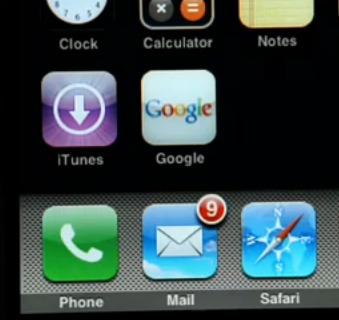
Joining other reactions on the web to Steve Jobs’ sudden resignation as the CEO of Apple yesterday, Google’s vice president of engineering Vic Gundotra recalled on Google+ a particular Sunday in January 2008 when Apple’s boss asked him to call his home. The reason? The Google logo on the iPhone:

So Vic, we have an urgent issue, one that I need addressed right away. I’ve already assigned someone from my team to help you, and I hope you can fix this tomorrow. I’ve been looking at the Google logo on the iPhone and I’m not happy with the icon. The second O in Google doesn’t have the right yellow gradient. It’s just wrong and I’m going to have Greg fix it tomorrow. Is that okay with you?

The following day, the world’s greatest product developer followed-up with an email message with the subject “Icon Ambulance”, directing Vic to work with Greg Christie to fix the icon. MacRumors dug up the Google logo icon back from those days, shown below. Of course, Steve Jobs’ penchant for calling people in the middle of the night is legendary. Gondotra acknowledges that “it was customary for Steve to call during the week upset about something”. A 2004 Bloomberg interview quotes Jobs’ approach to product design and calling unexpected ad hoc meetings:

Innovation comes from people meeting up in the hallways or calling each other at 10:30 at night with a new idea, or because they realized something that shoots holes in how we’ve been thinking about a problem. It’s ad hoc meetings of six people called by someone who thinks he has figured out the coolest new thing ever and who wants to know what other people think of his idea.

Vic, who is in charge of engineering at Google and as such had been in direct competition with Apple’s former boss on multiple fronts, has more praise for Jobs’ leadership qualities:


Expand
Expanding
Close

Amazon adds third touch panel supplier ahead of tablet launch next month

Site default logo image

The Amazon tablet we’ve been hearing about every now and then in past weeks is inching closer to release, folks. Industry publication DigiTimes reported this morning that Amazon picked a third supplier for touch panel parts as it gears up for manufacturing. Looks like TPK Holdings will be joining Wintek and JTouch as suppliers, the publication wrote:

Amazon, considering that the supply of 7-inch touch panels by Wintek and JTouch may not be sufficient for use in its tablet PCs, has decided to add TPK Holding as a third supplier, according to industry sources.

Shipments will begin in September, Wintek “stressed”. Note the may-not-be-sufficient part in the above quote, suggesting a likely increase of the original two million launch units. Amazon allegedly planned on unveiling its inaugural tablet in October, around the same time Apple was rumored to bring iPad 3 to market. At first, the online retailer had experienced difficulties sourcing parts because Apple pretty much locked out other vendors until mid-July they signed up Foxconn, Apple’s long-standing manufacturing partner, to produce the Amazon tablet. Surprisingly, Amazon even went on to become the largest buyer of tablet parts. A market survey has it that…


Expand
Expanding
Close

You can now paste photos from your Android phone into a Google document via web clipboard

Site default logo image

You’d be forgiven for thinking that the official Google Docs app for Android does web clipboard, a handy feature allowing you to copy and paste content between Google documents through the cloud. Having recently added vector drawings to web clipboard, the team today announced in a blog post the updated Android app which now supports 45 additional languages and cloud clipboard. This opens up interesting possibilities, like pasting images taken on your Android phone into a Google document on your desktop, without syncing anything.

Just tap the camera icon from the Docs widget on your home screen, snap a photo then select Send to Web Clipboard and press OK. The image gets uploaded to the cloud, ready for pasting by clicking the Web Clipboard icon on a Google document toolbar. Another improvement: The updated Android app, available on Android Market, lets you open your documents with any compatible viewer application or send a doc as an attachment through email or another app on your phone.


Expand
Expanding
Close

+1 button now broadcasts to Google+

Site default logo image

Google today announced two new features for its +1 social button that web site owners can embed on their pages. Google’s senior vice president of engineering Vic Gundotra explained in a blog post that the +1 button (Chrome extension here) can now broadcast posts to your Google+ circles and do so with custom layouts. Previously, clicking the +1 button would only share web content with your contacts in their search results and on your Google Profile. Beginning today, you can choose the scope of sharing by clicking the +1 button and select the new “Share on Google+” option. You’ll be presented with options to choose a circle on Google+ to share with and write an optional comment.

Also new is the ability for publishers to customize a link, an image and a description (so-called +snippets”). Google writes over at the official Google Webmaster blog that “+Snippets let you put your best face forward by customizing exactly what appears when your content is shared”. An example includes Rotten Tomatoes, a popular movie review site where +1 posts include the movie title, poster and a brief synopsis (see the above screenshot). The new features will be rolling out over the next week so be patient. Another little nugget: The +1 button is today doing four billion daily views, twice as much it did back in July. The button is installed on more than a million web sites, which is not bad at all for yet another social button a little over two months old.

[youtube=http://www.youtube.com/watch?v=XvJrfwuIRa4]

Expand
Expanding
Close

Samsung expanding the Galaxy S family with new “R”, “W”, “M” and “Y” smartphones at IFA 2011

Site default logo image


Samsung is introducing seven new monikers to their smartphone branding so people can “simply identify the device designed to deliver the perfect experience for them”

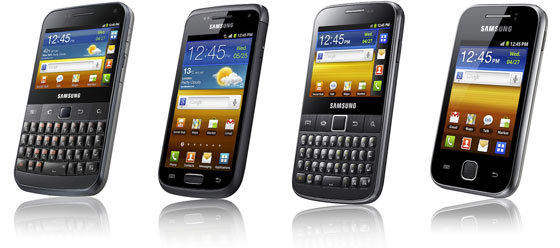
The Inquirer reports that Samsung confirmed they will be adding four new smartphone sub-categories to the venerable Galaxy family of smartphones and tablets at the IFA 2011 show in Germany, nine days from today. Expanding on the successful Galaxy S series, the company will roll out new models that will be distinguished with the following suffixes: “R” for Royal/Refined, “W” for Wonder, “M” for Magical and “Y” for Young. As for the Galaxy S, the “S” stands for Super Smart, the South Korean company explained.

In addition, each model may be offered in three flavors, which will be denoted by adding “Pro”, “Plus” and “LTE” to their brand names. What are those about? Well, “Pro” means a physical QWERTY keyboard, “Plus” is for upgraded devices and “LTE”, as the name tells, means the device supports the fourth-generation Long-Term Evolution radio technology. Go past the fold for a quick list of the upcoming new phones.


Expand
Expanding
Close

Koreans talking about smartphones

Site default logo image

[youtube=http://www.youtube.com/watch?v=3j_2srh7o3M]

Google is anything but the dominant force in Asia, where local search engine Baidu is number one. Also, Asia, the world’s largest and most populous continent with the population of 3.88 billion people, is just beginning to discover Android, but the continent is poised to become the next gold mine for Google as smartphones become more affordable to the mass consumer. One exemption that proves the rule: Korea, a poster child for the latest tech.

People wield the latest gadgets there and use them more often and in ways that put to shame their counterparts from the Western world. Google’s mobile ad team went out into the streets of Seoul to ask smartphone users how they use their devices. The professionally produced footage is, of course, yet another showcase of the numerous ongoing marketing activities meant to convince people to stay under the Google fold.

In this case, Google wants potential advertisers to place adverts on web sites and inject them inside mobile apps using their technology. By the way, notice a bunch of Galaxy S phones everywhere (to our Apple readers: iPhone 4 spotting on mark 1:15).

But who could blame the Internet’s #1 search company for promoting the use of smartphones? With a whopping 97 percent of Google’s revenues coming from advertising, no wonder they did not spare any expense producing this testimonial. Still, worth your time so sit back, relax and enjoy the three and a half minute ride. Also, go past the fold for interesting takeaways from a Google survey in collaboration with Ipsos of over a thousand South Korean smartphone users…


Expand
Expanding
Close

Google recruiting spam busters

Site default logo image

In its never-ending battle against annoying spammers who pollute our search results, the Dublin, Ireland arm of the Internet search giant published job openings for spam fighters who are fluent speakers of Arabic, German, Russian and Spanish, indicating the rising spam threat in those markets. The job listing requires would-be candidates to have BA/BS degree, “preferred with a strong academic record”, excellent web research and analytical skills and experience with HTML and working for an Internet company.

If terms such as ‘WHOIS’ or ‘DNS’ mean nothing, don’t even apply as understanding of firewalls, IP addresses and name servers is a must as you’ll be directly impacting the quality of Google’s search results through search quality evaluation. Here’s from Google:

You will be working on the cutting edge of search and the forefront of the web ensuring quality information is provided to millions of internet users, and you will be expected to keep pace with constant change in a fast-paced work environment, bringing innovative ideas to improve access to relevant information on the web. You are a web-savvy individual who is a take-charge team player, as well as a quick learner and strongly interested in providing a better search experience for Google users.


Expand
Expanding
Close

Samsung cites Stanley Kubrick’s ‘2001: A Space Odyssey’ as prior art argument against iPad design

Site default logo image

You may have heard about “prior art”. In patent law, prior art is basically all information made available publicly before a date which might be relevant to a patent’s claims of originality. Hence, if any invention can be described in prior art, its patent can be invalidated. Samsung is resorting to some pretty sci-fi (literally!) arguments in its legal spat with the Cupertino gadget maker, having gone as far as citing Stanley Kubrick’s ‘2001: A Space Odyssey’ movie as prior art against Apple’s tablet.

The finding, discovered by intellectual property expert Florian Mueller on his blog FOSS Patents, stems from page two of an exhibit Samsung filed with the U.S. District Court for the Northern District of California. The document reads:

Attached hereto as Exhibit D is a true and correct copy of a still image taken from Stanley Kubrick’s 1968 film “2001: A Space Odyssey.” In a clip from that film lasting about one minute, two astronauts are eating and at the same time using personal tablet computers. The clip can be downloaded online at http://www.youtube.com/watch?v=JQ8pQVDyaLo. As with the design claimed by the D’889 Patent, the tablet disclosed in the clip has an overall rectangular shape with a dominant display screen, narrow borders, a predominately flat front surface, a flat back surface (which is evident because the tablets are lying flat on the table’s surface), and a thin form factor.

The prior art claim is in Samsung’s defense against Apple’s motion for a preliminary injunction. The company recently claimed in a Dutch court that Apple doctored Galaxy smartphone images.

Cross-posted on 9to5Mac.com


Expand
Expanding
Close

The march continues as Android gains share and Google eyes the prepaid market

Site default logo image

In the battle for mobile supremacy, Apple and Google are winning as competitors continue to lose ground, finding it increasingly difficult to compete with the strong iOS and Android ecosystems (can you say ‘duopoly’?), per latest survey from the NPD Group. The results came by tracking U.S. consumers aged 18+ who reported purchasing a mobile phone and exclude corporate purchases. In the June quarter, iOS grabbed 29 percent of the U.S. smartphone share versus Google’s 52 percent share. Both tech behemoths have grown their platform share at the expense of BlackBerry maker Research In Motion.

Cross-posted on 9to5Mac.com

RIM’s been on a serious decline amid poor sales and delays related to their QNX-based superphones. Their BlackBerry OS software share fell to just eleven percent in the U.S. Meanwhile, Hewlett-Packard’s webOS is in a state of limbo as the world’s leading computer maker announced intentions to exit the hardware business. Microsoft’s Windows Phone 7 and Windows Mobile grabbed five percent of the market each.

The emerging prepaid market is the next battelground for iOS and Android. Google, however, has the first mover advantage here…

Expand
Expanding
Close

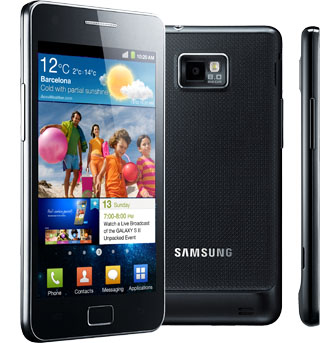
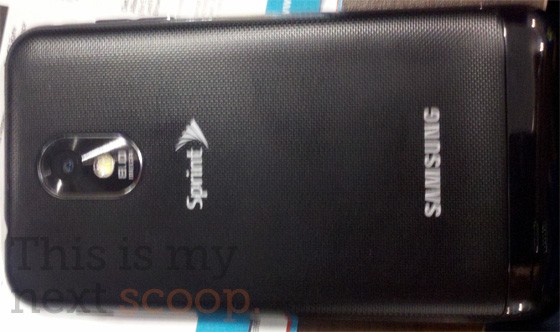
First of US Galaxy S 2 devices to hit Sprint

Site default logo image

According to SprintFeed, the Sprint Samsung Galaxy S2, dubbed Epic Touch 4G phone will be announced by Samsung on Auguust 29th and released by Sprint two weeks later on September 9th.  But that’s not all…

Here’s what we’ve heard about the August 29th US launch:

Verizon will be a no show.  There are likely still some kinks to be worked out in the LTE version of the Galaxy S 2 which will be announced at a later date.

Sprint’s phone called the Epic Touch 4G or the  will be WiMAX and slightly thicker than the others with a grated plastic backing. 4.5 inch screen 480×800

T-Mobile’s version will also be 4.5 inch screen 480×800 and be the first phone to run on its (theoretical) 42Mb radio network.  It will require a Qualcomm dual-core CPU unlike the other devices which will use Samsung’s own dual core processors.

AT&T’s will be the most similar to the international version at 4.3 inches.

All of them will have the Netflix app ready on launch – only some will have it pre-installed however.

Even these incredible phones pale in comparison to the rumors of a 720P Ice Cream Sandwich phone on the horizon however.

The sickest of them all has to be the I9250 superphone. Probably your next handset, it rocks a monstrous 4.65-inch SuperAMOLED display with native 720p resolution (1280-by-720 pixels), the obligatory five megapixel camera (what, no eight-megapixels?) and Android Ice Cream, the latest and greatest version of Android due for release in the fourth quarter of 2011.
Expand
Expanding
Close