Stay up to date on news from Google headquarters. Be the first to learn about plans for Android, Google Plus, Google Apps, and more!
Stay up to date on news from Google headquarters. Be the first to learn about plans for Android, Google Plus, Google Apps, and more!

Tablets powered by Google’s Android software are picking up steam. Even though Apple’s iPad maintained its market lead throughout fourth quarter of last year, Amazon’s dirt-cheap Kindle Fire device that costs just $199 helped Android gain share. This is the gist of the latest survey by research firm Strategy Analytics that was released this morning.
Global tablet shipments reached 26.8 million units in the fourth quarter of 2011— up 150 percent from 10.7 million from the year-ago quarter. Global tablet shipments hit 66.9 million units throughout 2011— a 260 percent increase from just 18.6 million units in 2010. Looking at how tablet vendors performed throughout Q4 2011, the survey recorded a 39.1 percent share for tablets powered by Android. Even though it is a record for tablets driven by Google’s software, Apple sold 15.43 million iPads during the holiday quarter for a healthy 57.6 percent share. This left the remaining 3 percent for tablets outside the Android/iOS tablet duopoly, with Microsoft-driven devices holding onto 1 percent share of the market.
These statistics compare to a Strategy Analytics’ survey for the September 2011 quarter that depicted a 27 percent share for Android tablets in Q3 2011 (up from 2.3 percent in Q3 2010) and 67 percent for iPad (down from 96 percent in Q3 2010). It is fair to assume that Android tablets gained momentum thanks, in no small part, to the success of the Amazon device that launched Oct. 15, 2011. Still, the iPad is still king of the hill as some analysts expect its lead to maintain throughout 2012.
Strategy Analytics Research Director Peter King opined:

[youtube=”http://www.youtube.com/watch?feature=player_embedded&v=Hhgfz0zPmH4″]
Google released updates today to three of its popular Android apps: Google Maps, Goggles, and Listen.
Google Maps was updated with a small new feature called “night mode” that will help you better navigate through tunnels. There is not much word on how exactly this feature will work, but it sounds cool nonetheless.
Google Goggles was updated to version 1.7.1 with a long list of updates. Goggles will no longer store inaccurate locations for queries in search history and it will not crash when loading large bitmaps. The app also features the usual performance enhancements and will now show the description field for user-submitted results.
Lastly, Listen’s update is small. It fixes an issue where Listen would improperly take audio focus from other apps while in the background. You can download these updates from the Android Market. (via Android Central)
Google Offers, the search giant’s deal-of-the-day website that launched six months ago, is now expanding to five new cities in the United States. Beginning today, people in Charlotte, Kansas City, Milwaukee, San Antonio and Tampa can take advantage of the Offers website to subscribe to great deals in the aforementioned cities. According to a post over at the official Google Commerce blog, these deals include $11 for a beer tasting, growler bottle, souvenir glass and soft pretzel at The Olde Mecklenburg Brewery in Charlotte ($22 value), $5 for $10 of food and drink at Arthur Bryant’s Barbeque Restaurant in Kansas City, $5 for $12 toward burgers, brews and more at Sobelman’s Pub & Grill in Milwaukee, $10 for $20 of fine sandwiches, pasta, steaks and more at Liberty Bar in San Antonio, and $5 for $10 of Greek cuisine at Louis Pappas Market Cafe in Tampa. You can subscribe to these and other deals via email at google.com/offers or through the Wallet app on the Galaxy Nexus smartphone on the Sprint network.

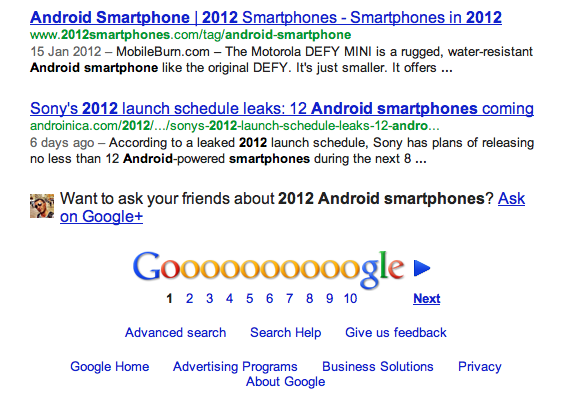
Google is adamant on accelerating work on its Google+ social network. By doing so, the company has already stepped on people’s toes. An upcoming Q&A feature from Google does not seem to be aimed squarely at Quora, a popular question-and-answer website, but the Quora people understandably cann0t be too happy about this development. See, according to VentureBeat, the search company is trying out a new capability called “Ask on Google+” allowing you to ask friends about the topics you are searching for. It is akin to Facebook Questions, with one huge advantage: One accesses it easily at the bottom of one’s search results:
Click the link to ask your friends any question related to restaurants, movies, how to make friends on Google+, or other topics. Your question will automatically be posted to your Google+ stream for your friends to answer.
Granted, it is nowhere near as complete as Quora and it lacks the basic component, a Q&A engine. In its current implementation, asking stuff on Google+ from your search results simply puts up an overlay window with a pre-populated Google+ post related to your search query. For example, if I were searching for “2012 Android smartphones,” clicking the “Ask on Google+” link would create the “Hi there! I have a question about 2012 Android smartphones…” message. You can edit the message, select your audience, or add a location, photo, video or URL. The folks with whom you shared the message will not be able to select from custom choices like with Facebook Answers. Still, it certainly does not mean crowd-sourcing answers from your Google+ friends will not take some allure off Quora and similar services— quite the contrary.


Newsweek‘s Dan Lyons reported today that Apple’s “thermonuclear war” on Android smartphone manufacturers is fading fast, while a new rumor surfaced among the suits’ lawyers claiming the company spent $100 million on its initial set of claims against HTC.
Imagine how much Apple spent on other Android makers, such as Motorola (who is near locking Apple products out of Germany in retaliation) or Samsung (the biggest Mobile Communications patent holder in the world), if it spent so much on just HTC.
“Who knows if it’s true, but if so, Apple didn’t get a lot for its money,” wrote Lyons on his RealDanLyons’ blog Jan. 23.
Apple’s legal claims are abruptly junked left and right, and its only minor victories to date are so inconsequential that Android device makers can dance around the momentary obstacles with just a few minor tweaks to products, explained the Newsweek reporter.
The technology giant’s case against HTC with the International Trade Commission began in February 2010, when the Cupertino, Calif.-based company wanted the ITC to block HTC from importing products into the United States. The case originally had 84 claims based on 10 patents, but it was dwindled down to only four claims by the time a judge became involved, according to Lyons.
The rulings —for the most part— were a score for HTC. One patent was invalid as Apple did not have a rightful claim to it, and HTC did not infringe upon two of the other patents due to Apple apparently not implementing them into its products. In other words, Apple did not have a right to seek an injunction, because ITC injunctions can only occur if it is provable that both parties are “practicing” the patent in question, which Apple could not demonstrate against HTC…
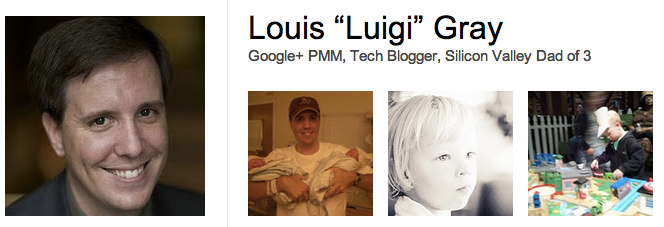
When Google+ first launched, a good majority of people went crazy when they saw you could not use nicknames on the service. Luckily, Google is about to change that. Google’s Bradley Horowitz made a post on Google+ today, announcing that users will soon be able to add a nickname next to their full name in the coming days. You can see this modeled above with blogger Louis “Luigi” Gray.
The setting will appear under Edit Profile, where you can select your name by clicking on “More options.” It is worth noting that this will change your name across all of your Google Profiles.
For names that Google has deemed unacceptable, you can challenge it for personal use by providing the following information to the review team:

Android just announced on Google+ that new songs from artists Drake, Mary J. Blige and the band Maroon 5 are now free in Android Market for all United States users until Jan. 31. Android also reminded users that every track syncs from Android Market to their Google Music accounts, as well.
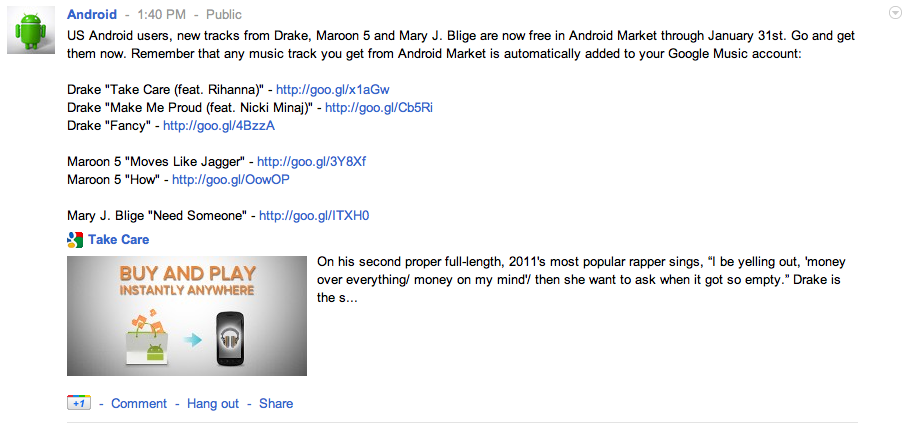
Detailed information regarding the select songs is available below.
[youtube=http://www.youtube.com/watch?feature=player_embedded&v=sHPfc6whaSk]
Each day, Google’s YouTube video sharing service clocks in more than 4 billion views, a blog post over at the official YouTube blog revealed Monday. The figure represents a 25 percent increase in the past eight months as the number of people who visit YouTube soared to 800 million a month. People are now uploading about 60 hours worth of video to the service every minute, a 25 percent increase over the 48 hours of video uploads a minute in May 2011. The video above is a sample of a new interactive collection of “what happens in a YouTube second” available at onehourpersecond.com.
Yet, only 3 billion YouTube videos a week are monetized with various adverts that appear when users click on clips. Google acquired then-young startup YouTube in 2006 for an astounding $1.65 billion. The Mountain View, Calif.-headquartered Internet giant committed considerable resources to making professional content available through the video sharing service to better pursue its broader entertainment strategy centered around Google TV, a software-based project that drives set-top boxes and networked HD TVs from participating partners.

 Google announced last night that it would be discontinuing a number of its services in the coming months because they “replicate other features, haven’t achieved the promise we had hoped for or can’t be properly integrated into the overall Google experience.”
Two things jump out at me regarding these closures:
Most notably for consumers, Picnik, the Cloud photo editing software, will be discontinued in April.
Picnik: We acquired this online photo editor in 2010. We’re retiring the service on April 19, 2012 so the Picnik team can continue creating photo-editing magic across Google products. You can download a zip file of your creations through Picnik Takeout or copy them to Google+. As of now, the premium service is free to everyone. Premium members will receive a full refund in the coming weeks.
We will likely see Picnik’s features reincarnated in Google Plus —where Google wants users to be storing photos anyway. Google did the same thing to Picasa late last year.
Google also announced that it will close Urchin Web Analytics, the company it bought in 2005 to make Google Analytics cloud service. Google kept the offline product available, but it will discontinue updates and sales, then subsequently direct customers to the Google product.
Urchin: helps businesses of all sizes measure their websites and online marketing. We’re fully committed to building an industry-leading online analytics product, so we’re saying goodbye to the client-hosted version, known as Urchin Software. New Urchin Software licenses will no longer be available after March 2012.
Google’s Skymap App project, which was started by some Pittsburgh Googlers in their 20 percent time, will now be Open Sourced and run out of nearby Carnegie Mellon.
A number of other services were also slated for termination…
[youtube=http://www.youtube.com/watch?feature=player_embedded&v=vOSgfvTC35A]
We’re told this campaign will culminate in a Super Bowl advertisement next month. It’s always entertaining to see the big boys slug it out.
Expand
Expanding
Close

Facebook held at least two meetings with Vevo —the most recent one occurring within the last couple of weeks— to discuss moving the music video service from YouTube to the social network’s platform.
However, sources told CNET that the talks are “very preliminary,” and they mentioned there is one year remaining on Vevo’s contract with Google’s YouTube.
Vevo launched in 2009 and offers music videos from Universal Music Group, Sony Music Entertainment and EMI Music. YouTube helped launch the startup, and subsequently Vevo’s videos appear on the partner’s service, with Google and Vevo sharing advertising revenue.
Vevo features the most extensive catalog of premium music content on the Internet, and it is available in the United States, Canada and the United Kingdom through its website, mobile apps, or by way of connected televisions. The service currently powers music videos on artist profiles across Facebook, and its content is syndicates to numerous online websites, including AOL, BET, CBS Interactive Music Group, Fuse.tv and Univision. Moreover, through YouTube, Vevo is accessible in over 200 countries.
Facebook is allegedly interested in an arrangement similar to the one Vevo has in place with YouTube now, which would allow the social network to stream Vevo’s music videos with the two companies sharing profits from advertising revenue…
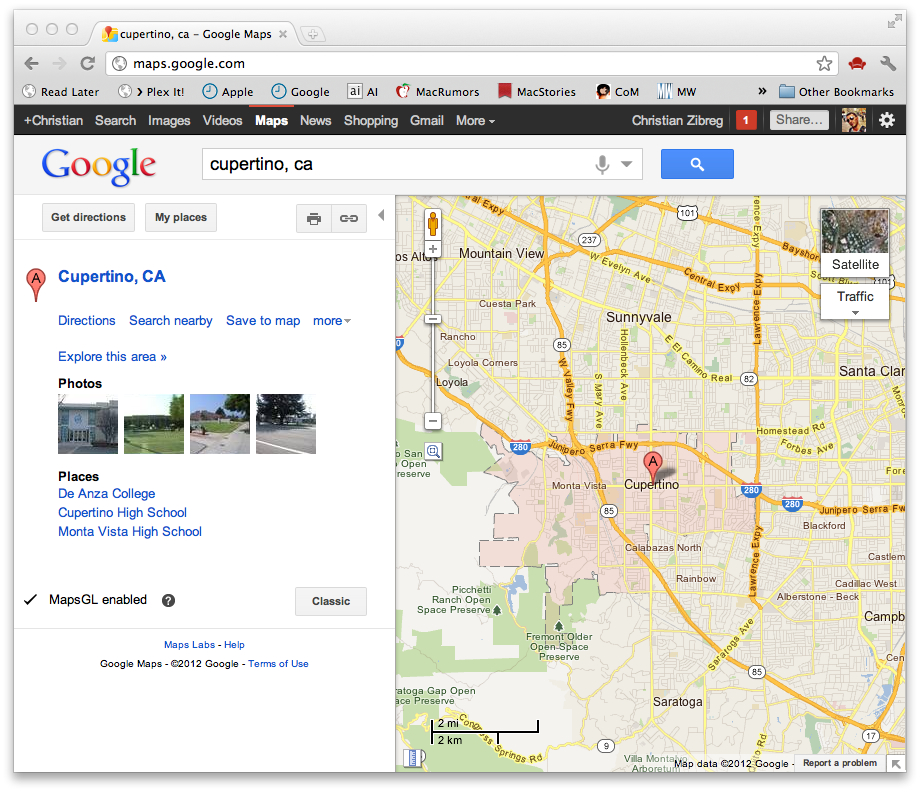
A tipster over at the Google Operating System blog pointed out a small —but welcomed— tweak in Google Maps that lets you highlight areas of interest based on upon search queries:
When you search for a city or a county or a ZIP Code, Google Maps now highlights the boundaries of what you searched for. If you are zoomed out, the whole area is shaded pink. If you zoom in a bit, it has just a big pink border with grey shading. Zoom in even more and it’s a dashed boundary with grey shading.
In the above screenshot, I searched for Cupertino, Calif., and Google Maps automatically highlighted the city’s area inside the map view, allowing me to visually grasp the size of Cupertino. Note that the highlighting feature does not work in other Maps views, such as satellite.
Expand
Expanding
Close

Google just revamped the look of Latitude, its location-aware service akin to Foursquare. According to a post by Google’s community manager for Google Maps, Danial Mabasa, the new Google Latitude interface can be now accessed on desktop browsers at www.google.com/latitude. As you can see from the above screenshot, it is not much different from Google+. However, upon remembering how the old website looked, it is definitely a major makeover that helps achieve consistent user experience across Google’s key properties.
You can now easily access your friends’ list in the left-hand column or click the wrench icon to customize your personal location history and location settings. Whenever you want to manually update your location, just hit the Update button next to your name and approve your browser’s location sharing prompt. Another cool feature lets you playback your location history (should you choose to preserve it) from a select range of dates by pressing the Play button on the bottom left-hand corner of the map.
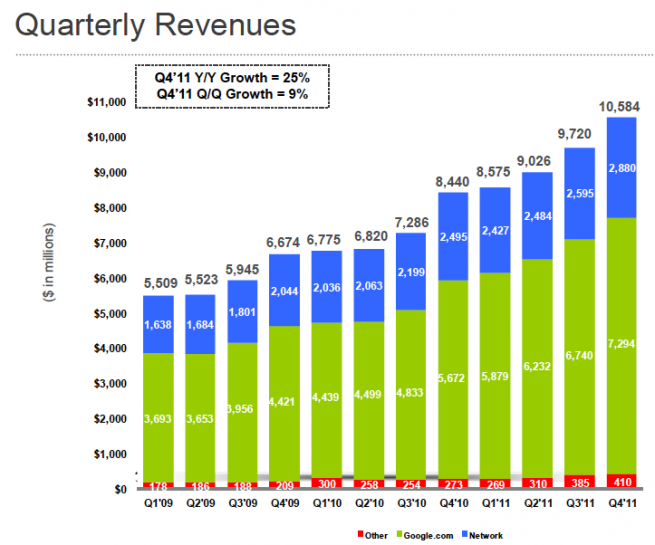
Google just announced its record-breaking fourth-quarter earnings and, within minutes of reporting, the Mountain View, Calif.-based Company dropped a whopping 10 percent in early-after hours trading due to missed expectations.
Google missed analyst expectations for earnings per share during Q4 2011 and its stock immediately plummeted. Analysts predicted the company would produce $10.49 in non-GAAP earnings per share, but it only amounted to $9.50 in earnings per share (versus $8.75 in the Q4 2010).
Nevertheless, the earnings’ upswing surpassed the $9.72 billion revenue reported in Q3 2011. Google revenue hit a record $10.58 billion in Q4 2011, before deducting traffic acquisition costs, which is a 25 percent increase from $8.44 billion a year earlier. Profit also grew to $2.71 billion, compared to $2.54 billion in the Q4 2010.
“Google had a really strong quarter ending a great year. Full year revenue was up 29 percent, and our quarterly revenue blew past the $10 billion mark for the first time,” said Larry Page, CEO of Google, in a press release.
Android, Gmail, and Google+ are also growing. The new social network reached 90 million users globally, which is “well over double what I announced just three months ago,” Page explained. The CEO also announced today that Google saw 250 million Android device activations, and over 11 billion apps downloaded from the Android Market.
“I’m very excited about what we can do in 2012 – there are tremendous opportunities to help users and grow our business,” Page said.
Although Google did not meet analysts’ expectations, the company is trumpeting its first $10 billion quarter.
The Q4 2011 financial summary and highlights are detailed below.
[youtube=http://www.youtube.com/watch?feature=player_embedded&v=Nfgs4EUeTlk]
AnandTech does its typical thorough job of reviewing the Galaxy Nexus and, as you can see above, there is an in-depth analysis of the mobile landscape. The conclusion was not much different from ours, however. Spoiler:
As far as Ice Cream Sandwich is concerned, it really is Android perfected. Everything is smoother, faster and nearly all of our issues with the OS have been addressed. ICS brings Android into 2012 and gives Google a great platform to begin to introduce new features going forward. Android is now very close to UI performance parity with iOS, which eliminates a major tradeoff you had to make in the past. If you were hoping for ICS to be iOS with a Google logo on it, you’ll be sorely disappointed. However if you’re a fan of Android and just wished it were smoother and more polished, Ice Cream Sandwich is what you’ve been waiting for.
The European Commission set a Feb. 13 deadline to restart its antitrust review and decide whether to approve Google Inc.’s proposed acquisition of Motorola Mobility Holdings, Inc.
According to Reuters, the Mountain View, Calif.-based Company came forward with new documents to support its case, so the EU lifted the temporary suspension in order to make a decision next month.
The commission took a “routine” step and hit the pause button on its Jan. 10 deadline last month to gather more information and documents from Google, but the EU still anticipated the deal to close in 2012. It seems as though the commission’s forecast may be correct, as Motorola shareholders already announced their unanimous approval last November…
Google CEO Larry Page is on a mission to remodel his company’s organizational structure and preserve startup mentality that helped create the Internet’s most important asset. He has been on it ever since he took over the reigns from Eric Schmidt in April of last year, and just like Steve Jobs did upon his return from exile —Page mercilessly axed many internal projects while doubling down on a few that do matter. He namely focused on Google’s social thing marketed under the Google+ moniker.
We were promised “moonshots” as Page set out to Jobs-ify the company he cofounded with Sergey Brin. Heck, Page’s already been named ‘CEO of the Year’ by Investors Business Daily. Fortune’s Senior Editor-at-Large Adam Lashinsky sat down with Page to discuss life at Google. His exclusive interview with Page revealed that Google is “more realistic about recruiting” and “kinder about tolerating underperformers.”
As of last year, the company began recruiting at such nonpedigreed institutions as Texas A&M and the State University of New York at Buffalo; interview sessions that often involved as many as 12 screenings now average between four and five.
This is in stark contrast to Apple, a company built on secrets and famous for its relentless pursuit of A-players. Lashinsky profiled Apple extensively in his upcoming book called “Inside Apple: How America’s Most Admired – and Secretive – Company Really Works,” due for release Jan. 25.
Page said Google’s famous perks, such as free food and gym, are remaining (“I don’t worry about the cost”). He also noted Google is going the extra mile to help employees live a healthy lifestyle, which includes helping them quit smoking…

While conducting a search on Google+, a user can only comment on an existing post or share a found item, however, the Google+ team announced a new feature today that lets users start a conversation directly from search results.
Until now, options for interacting with a certain phrase or interest was limited to commenting and posting. The newly announced component suddenly turns a search into a conversation and relieves the pressure from users needing original content to partake in discussions…
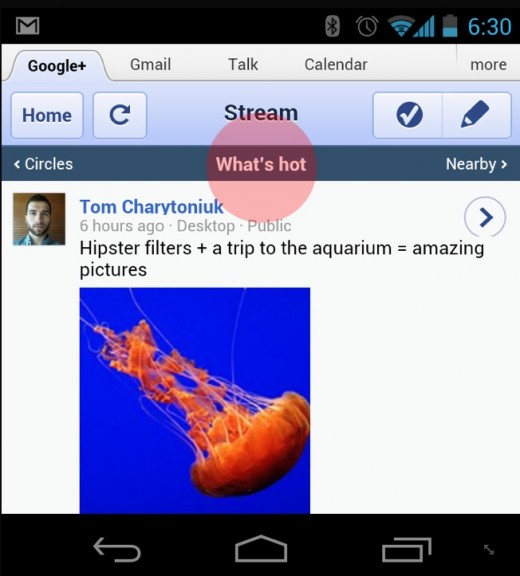
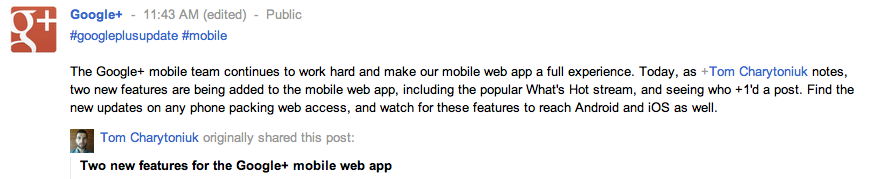
Google announced two new features for Google+, including a “What’s Hot” stream that allows users to see the most interesting content shared throughout Google+, and users can now view who has “+1′d” posts —not just the count.
These minor tweaks display Google’s attempts to make Google+ more interactive and attractive. The “What’s Hot” stream on mobile devices could be a response to Twitter’s “Discover” feature that surfaced last month. It is accessible in the Web app by swiping to the right of the Circles stream, and a constant view of trending posts for Google+ will immediately appear. This ensures a flurry of content, even when people within a user’s Circles are silent for the day…
If you are after an Ice Cream Sandwich tablet you now have exactly two options: the ASUS Transformer Prime which got the update last week, or the Motorola XOOM Wi-Fi that just got ICS, according to Motorola.
Note that only the Wi-Fi version gets ICS. The 3G/LTE versions are coming shortly —we are assuming— due to radio issues.
It is still impressive of ASUS/embarrassing for Google/MOT that ASUS beat the Android tablet reference design to ICS. The press release is available below…
[youtube=http://www.youtube.com/watch?v=j8rSlvS-ZfQ]
Google is renowned for its practice of recognizing important anniversaries and famous people from human history prominently on the main Google homepage. The company calls it Google Doodle —an 11-year-old tradition to educate visitors on historic events and people through the power of search. Clicking a Doodle logo for, say, Nikola Tesla, will simply take one to the search result’s page populated with links to popular articles about the famous inventor.
The first Google Doodle was in recognition of the Burning Man Festival of 1998 and was designed by cofounders Larry Page and Sergey Brin. Subsequent Doodles were designed by outside designers, often by Dennis Hwang who created most Doodles to date. Today, the search company’s Vice President of Product Management Marissa Mayer issued an invitation to all K through 12 students to apply for the fifth annual United States Doodle 4 Google contest…
European regulators are moving early on Google antitrust probe, telling Reuters that a decision on a formal complaint against Google for misuse of its market position will be reached in late March, much sooner than expected. EU Competition Commissioner Joaquin Almunia told the news gathering organization late on Tuesday:
I will receive comments from the case team towards the end of the first quarter. I do not expect anything sooner. Let us see.
Since November of last year, 10 complainants such as Microsoft, VfT, Foundem, Deal du Jour, 1plusV and the Spanish Association of Daily Newspaper Publishers have filed complaints with the Commission, accusing the search giant of misusing its dominance in search. Google’s problem with EU courts could result in a multi-billion dollar fine, as had been the case with EU antitrust probes into Microsoft and Intel in the past.
Expand
Expanding
Close
Software maker Oracle estimated that each day’s worth of Android activations makes Google approximately $10 million in annual revenue while also strengthening its Google+ service, German patent blogger Florian Mueller wrote on his FOSS Patents blog today. Oracle made this claim at a German court in regards to its patent infringement claims against the search giant:
While this case awaits trial, more than 700,000 Android-based devices are activated every day, all fundamentally built around the copyrighted Java APIs and the enhanced performance enabled by Oracle’s patents. Each day’s worth of activations likely generates approximately $10 million in annual mobile advertising revenue for Google.
Oracle did not explain its math, however, leading Mueller to suspect that the figure is based “on the assumption of annual advertising revenues of $14 per Android user.” Interestingly, Oracle wrote in court documents “Analysts have predicted that the number of new Android devices will reach 2.5 million per day within twelve months.” However, it is not just about mobile advertising, the success of Android is benefiting Google’s other properties, namely its Google+ social network…
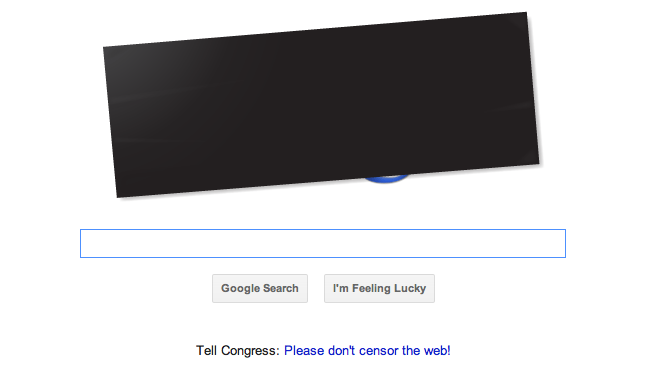 Google and many other websites went black today to oppose the Stop Online Piracy Act (SOPA) in the House and the Protect IP Act (PIPA) in the Senate, but now the globally popular search engine has taken the protest one step further.
Pierre Far, a Webmaster trends analyst at Google, announced on Google+ today that the Mountain View, Calif.-based company slowed its web crawlers to continue support against U.S. anti-piracy bills.

More information is available below.