Stay up to date on news from Google headquarters. Be the first to learn about plans for Android, Google Plus, Google Apps, and more!
Stay up to date on news from Google headquarters. Be the first to learn about plans for Android, Google Plus, Google Apps, and more!

Confirming our report from last night, Google has told The Verge that they have no affiliation whatsoever with Carrier IQ, but rather the OEMs of Android handsets do.
We do not have an affiliation with CarrierIQ. Android is an open source effort and we do not control how carriers or OEMs customize their devices.
Carrier IQ news has blown up this afternoon, after being found on numerous handsets currently offered on the market. While Verizon has said that Carrier IQ can’t be found on their devices, Apple, RIM, Nokia, Windows Mobile, and most Android devices do have the tracking software. For now, if you’re Android device is affected you can install CyanogenMod or just wait for all of this to blow over after an update, in a few days.
Carrier IQ’s statement:

In a move that should make producers and video enthusiasts jump with joy, Google has finally rolled out an improved analytics feature on YouTube, allowing anyone to retrieve detailed reports and see who is watching their videos. The new capability goes beyond the existing Insight feature, which provides only basic analytics.
According to a post at the official YouTube blog, some of the features include a quick overview of how your videos have been doing in terms of view count, more detailed statistics, audience builders that let you discover which videos are driving the most views and subscriptions and audience retention, basically the ability to see “how far viewers are watching through your video”.
You can filter reports by a number of criteria, see line charts, download reports and analyze key metrics in different ways. The new tools should help anyone, especially YouTube’s content partners that share ad revenue with Google, make the most of their videos. The new Analytics feature will be released to everyone on a modern browser over the course of the day, Google said. More information is available in a support document here.
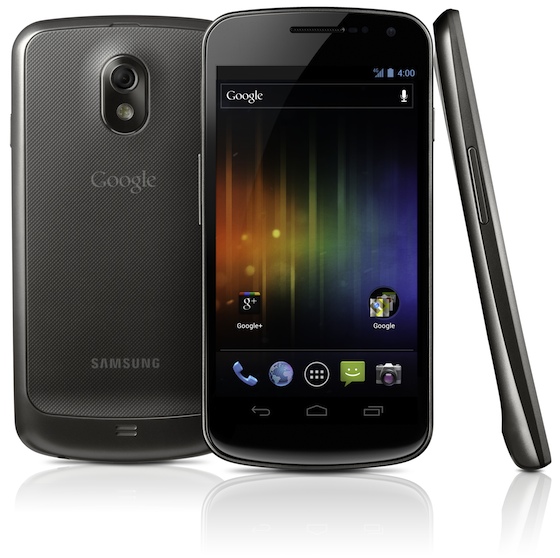
Two months ago, Adobe unveiled Flash Player 11 and AIR 3 for Android devices. As you know, the company changed its mind and said recently it will halt Flash development on mobile after Ice Cream Sandwich. Even though they pledged to continuously support mobile platforms with critical bugs and security flaws, users have gotten confused as to whether or not Adobe will release Flash Player 11.1 and AIR 3.1 for the Galaxy Nexus devices.
The company took to the official blog to explain that some support is in fact in the cards:
We will provide a minor update to the runtimes to support the Galaxy Nexus in December.
However, Adobe reminded users that it’s always been phone vendors’ and carriers’ responsibility to deploy Flash and AIR updates to their customers:
To be clear, the Galaxy Nexus does not initially support Adobe Flash Player 11.1 and AIR 3.1. As we previously communicated in a blog post, devices and software updates from our partners which introduce new technologies are being developed on varied schedules that are different from our own, which means that the Adobe runtimes may not always be optimized or supported on devices until a subsequent release.

According to a report from Politico earlier this month, Google was considering quitting the U.S. Chamber of Commerce due to their support of the Stop Online Piracy Act. Now, a new project known as GoogleQuitTheChamber.org is urging everyone to petition Google and vote for the best reason they should quit the Chamber. The project’s tagline– “The Chamber’s policies are evil, Google– Don’t be evil”.
Together, we will work to hold the world’s corporations accountable to the public interest and move our global economic system towards social equity, democratic principles, and long-term sustainability. By signing our petition to Google, you’ll join SumOfUs’s email list. We’ll send you opportunities to fight corporate power and build a better, safer, more democratic world about once a week.
When visiting the site’s homepage (which looks suspiciously like a Google site), you’ll be greeted with the petition, and you’ll also be able to +1 the most important reasons Google should quit the chamber. Currently the leading reasons to quit include “The Financial Crisis” with 16.83% of votes, and “Corporate Greed” with 14.85%. Other reasons range from intellectual property to climate change, invasion of privacy, and healthcare reform, but the site allows you to submit your own as well. While highlighting some of Google’s work to protect the environment and advance open internet policies, the “Where Google Stands” page notes Chamber of Commerce’s views are in “direct conflict with Google’s mission”.
The project was started by SumOfUs.org, a “global movement of consumers, investors, and workers” who say they stand for “Governments that answer to citizens – not corporations”. They correctly point out that in 2009 Apple quit the Chamber over environmental concerns, while Nike quit the board of the Chamber shortly after, and Yahoo recently quit over internet censorship legislation. So what’s so bad about the chamber? SumOfUs explains their stance:
Expand
Expanding
Close
WordPress, a popular open source blogging tool and publishing platform, launched today its own advertising initiative conveniently dubbed WordAds. Just to make sure everyone is on the same page here, the company began a post on its official blog by saying its users “deserve better than AdSense”. Ouch! In another nod at Google’s AdSense, the WordPress team explained why it took them so long to roll out adverts on their platform:
We’ve resisted advertising so far because most of it we had seen wasn’t terribly tasteful, and it seemed like Google’s AdSense was the state-of-the-art, which was sad.
They are teaming up with Federated Media, which connects top blogs and web sites with leading brand marketers. If you run a WordPress blog, feel free to apply here to begin making money from WordAds. Many established media outlets entrust their online publishing operations to the WordPress engine, including the CNN and Fortune blogs and this site. Yes, Google absolutely dominates the online advertising game, but WordPress is no ordinary company either.
In addition to being the world’s most popular CMS, WordPress powers over 14.7 percent of top one million web sites, according to Alexa, and was found on 22 percent of all new websites as of August 2011, up from 8.5 percent. Also important, 22 out of every hundred active new domains in the United States use the WordPress CMS engine and more than 50,000 WordPress-powered blogs come online every day.
[youtube=http://www.youtube.com/watch?v=SeDZ4Trn_jk]
Calling Cluzee a Siri competitor would be inaccurate as any Siri challenger would have to be built right into the bowels of the operating system, as is the case with Apple’s personal digital assistant. With that off our back, Cluzee looks like an interesting addition to Android’s already strong voice and search features. Developed by Tronton, Cluzee is billed as a new type of virtual assistant specialized in finance and information management.
It sports built-in calendar, reminders, filters, advanced search capabilities, voice recognition, voice synthesis and personal analytics, among other features. Tronton partnered with about 50 service providers that help Cluzee provide personalized services.
You can say stuff like “Cluzee, I’m looking to buy this or that in the next few weeks” and it’ll apply your criteria to filter the incoming deals and advertisers. It also does social filtering so you can say “if I get messages from these people, notify me immediately” or “include them in my daily brief”, which is basically your entire summary for any given day.
Just like Siri, Cluzee too employes machine learning, conversational interface and third-party data sources on the web to deliver the results. Cluzee is available on Android Market and will be coming to iPhone soon and just about any platform via an HTML5 web app. More information is available at the Cluzee web site. Go past the break for SocialTechPop’s interview with Cluzee’s Ashish Patwa from TechWeek in Chicago in July of 2011.
[slideshow]
Expand
Expanding
Close
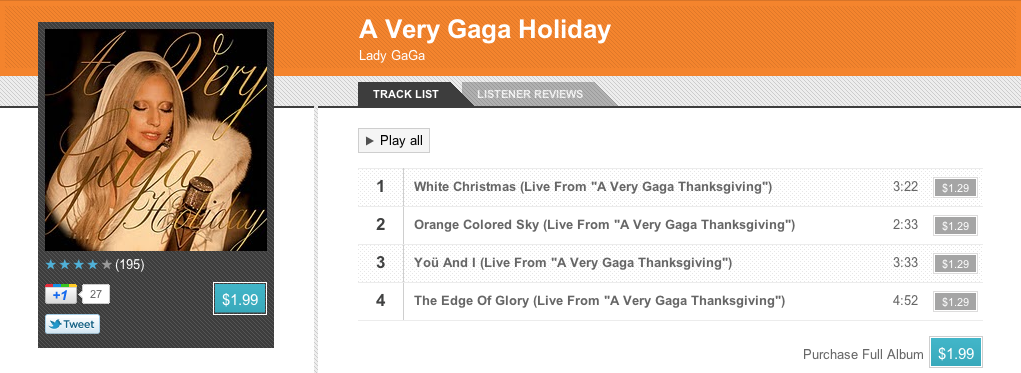
To honor the ongoing Cyber Monday, Google is now offering $1.99 albums for select artists on Google Music for U.S. users. The deal includes albums from top artists like Coldplay, Rihanna, Drake, Justin Bieber, David Guetta, Mary J. Blige, LMFAO, Florence and the Machine, Lady Antebullum, and more. The deal even includes Lady GaGa’s ‘A Very Gaga Holiday’, to start getting you in the Holiday spirit.
Go ahead and take advantage of these deals while you can!
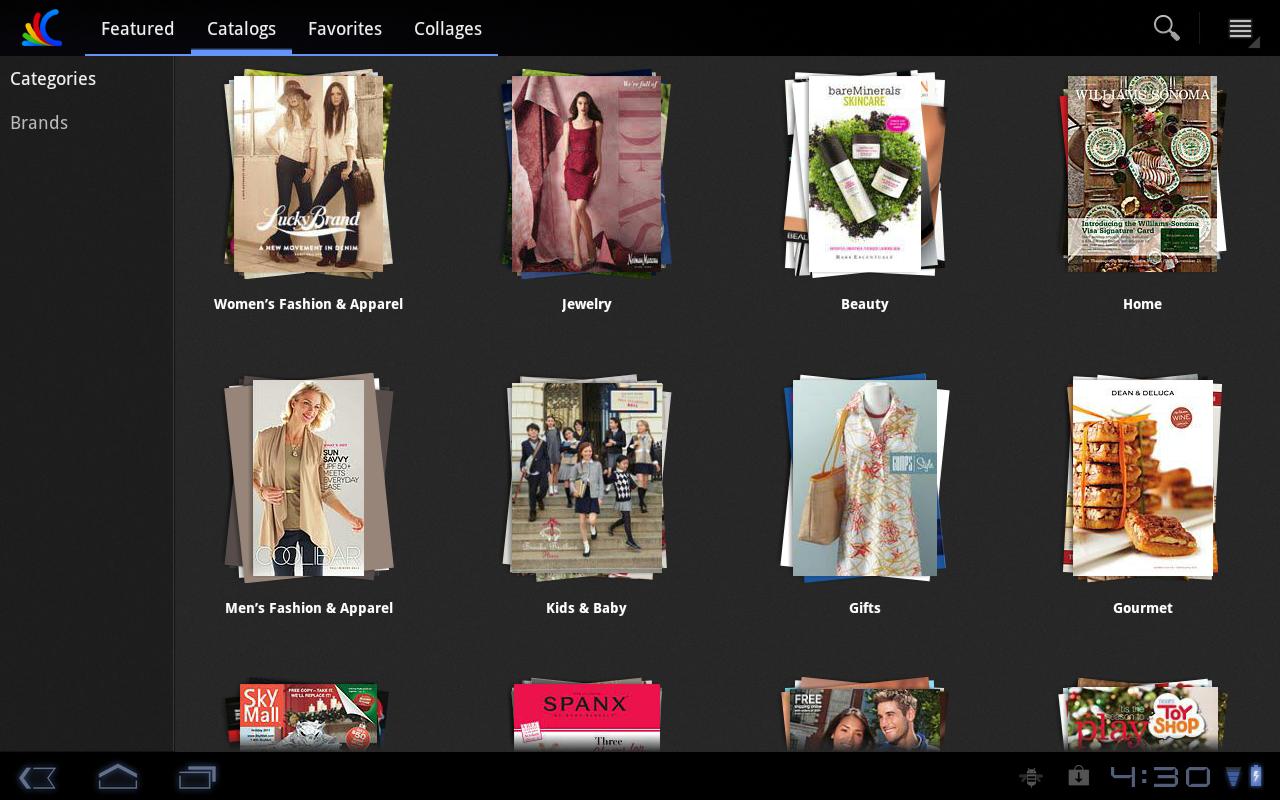
Google Catalogs, an interactive way to browse shopping catalogs on your tablet (currently a U.S.-only thing), is now available for download in Android Market, the company announced in a blog post. Google initially launched this app mid-August on Apple’s iPad and later updated it with more catalogs and six new product categories, including Intimates & Loungewear. The Catalogs app lets you visually browse over 400 digital catalogs sporting your favorite brands such as Nike, Sephora and Nordstrom.
You can flip through the pages in a manner akin to reading electronic books on tablets and find products you’re viewing in nearby stores. Interactive features include pinch zooming images, tapping items to learn more, viewing and creating photo albums, using the unified search box to search across all the catalogs for a specific item and more.
[youtube=http://www.youtube.com/watch?v=FaPgVUJ9A8w]
The search monster’s developer conference dubbed Google I/O has been a runaway success this year, bringing us a series of major product announcements ranging from Chromebooks and the new version of the Chrome browser to Ice Cream Sandwich news and Honeycomb tablet software. Google last month said Google I/O 2012 will be running from April 24-25 at San Francisco’s Moscone West, but they decided to extend the event and push it back two months, citing “an unexpected opportunity to extend Google I/O to three days”.
According to a post over at the official Google Code blog, the company made it known that it is moving the conference to June 27-29, 2012. The event will still take place at Moscone Center West in San Francisco. Surprisingly, the Moscone Center events calendar displayed at press time a two-day rather than a three-day event booked for June 27- 28 and the original ‘corporate meeting’ scheduled for April 24-25 is still up on the site.
Those interested in attending can vote for a Day 3 agenda at this page. The company wrote in the comments of a Google+ post that registration for Google I/O 2011 will open in February.
LG published on their official Facebook page a list of handsets that will get a firmware update with Android 4.0 Ice Cream Sandwich software. Initially, high-end LG smartphones will be eligible for upgrade to Google’s latest Android release, including the Optimus 2X, the Optimus Black, the Optimus 3D and the Optimus LTE. The company did not say when Ice Cream Sandwich will arrive for the aforementioned handsets, noting it will update customers via Facebook in December. As for their other devices:
We are also continuing to evaluate the ICS OS to determine whether it is compatible with the functionality, features and performance of other LG smartphones to make the ICS OS available on as many LG smartphones as possible.
Google’s been serious about requiring phone vendors and carrier partners to support high-end handsets with Android software updates for up to 24 months since the purchase date. Phone vendors recently began announcing lists of devices eligible for Ice Cream Sandwich, including Sony Ericsson and HTC.
Google on its part confirmed that the Nexus S will get an Ice Cream Sandwich firmware update “within weeks”, but not owners of the older Nexus One smartphone. Samsung refrained thus far from public comments, but their flagship Galaxy SII is certain to get the new software and we have no doubt in our mind that the South Korean manufacturer will soon detail an ICS upgrade path concerning their Android devices.
Speaking at a conference in Liverpool (via Develop), Google’s Paul Kinlan revealed a few of the company’s plans in regards to making more additions to Chrome in 2012. The changes he outlined include the browser supporting plug-and-play gamepads, a cool feature that would give gamers a better way to game through Google+ games. Kinland also said the browser would be receiving the open source WebRTC platform.
Google is to add plug-and-play gamepad, webcam and microphone support to its Chrome web browser early next year, Google’s Paul Kinlan has revealed.
Speaking at Develop Liverpool, Kinlan also claimed that the search engine giant would be adding open source video and voice chat application WebRTC to its web browser.
Both additions would allow Google to offer more cloud and gaming services. We’re sure these are the first changes of many for the year of 2012.
[youtube=http://www.youtube.com/watch?v=sVf3UaZePC8]
Google has posted a nice new promo clip for Google+ to their YouTube channel, just in time for the official start of the holiday shopping season. Surprisingly, it isn’t about discounts or deals as Google opted for a different approach.
It’s entitled “Circles Love Story” and illustrates vividly “new ways of sharing the right things with the right people”. So, a guy meets this girl and puts her in the “Love of my Life” circle on Google+. Ring a bell?. She returns the favor by putting him in the Creepers circle, but soon changes her mind and moves him around a bit until he ends up in…
Just watch the clip above. Google also polished up the original Google+ advert and introduced a new tagline. Both the original and new advert are right after the break. Speaking of holidays, have you seen a Thanksgiving Google Doodle that lets you customize a virtual turkey?
Google last month announced that its software powering the Logitech Revue set-top box and Sony’s networked television sets (and soon Samsung’s) will be updated with Android 3.1 Honeycomb code and new features. Today, the first in a series of several software updates is rolling out to Google TV devices, bringing with it enhanced experience for YouTube and Photos apps.
Per the official blog post, the new YouTube app now lets you watch the videos you’ve subscribed to and access your playlists, favorites and the Watch Later queue. It is also possible to add videos to your own channel from your Google TV.
As for the Photos app, you get the new Discover feature, basically a pretty screen saver that animates a collage of all your photos sourced from your Picasa or Flickr accounts. Like the shuffle feature on the iPod shuffle, Discover is a great way to enjoy your long forgotten photos.
Sony’s Google TVs have already received this update, but it’s still pending for Logitech’s Revue box, which has yet to receive a Honeycomb firmware update.
[youtube=http://www.youtube.com/watch?v=buSd7zODi6A]
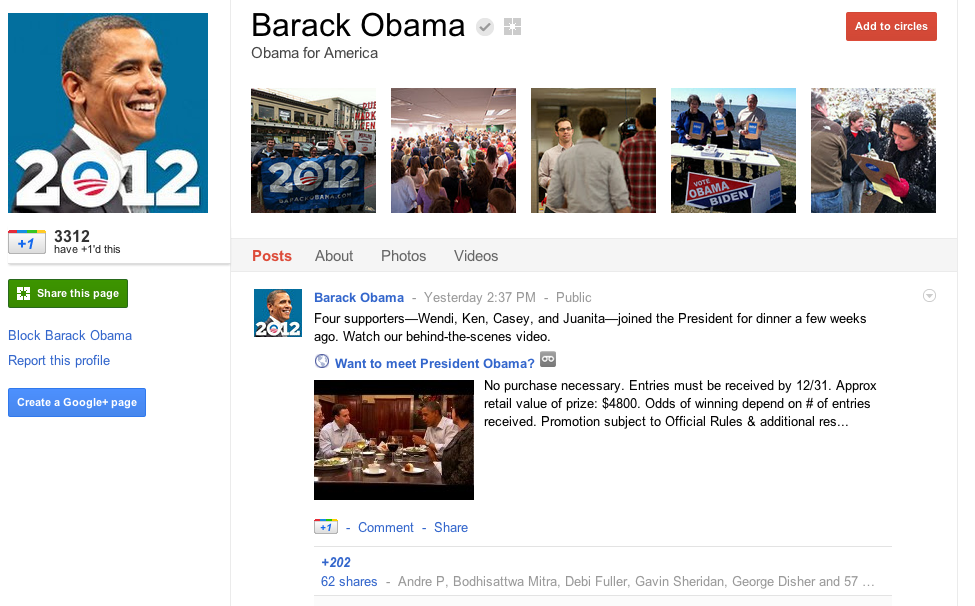
President Barack Obama has officially joined Google+ today. President Obama can already be found on Twitter, where he actively — and his staff — make posts throughout the day. On his first day the President has already made three posts, which is pretty active for day one. As he begins to learns the ropes, the President could use his Plus profile more as a blog than anything. It will be interesting to see if the President uses Google+ Hangouts to communicate with citizens, as some of his opponents already have.
Welcome to the Obama 2012 Google+ page. We’re still kicking the tires and figuring this out, so let us know what you’d like to see here and your ideas for how we can use this space to help you stay connected to the campaign.
Pictured above: A Series 5 Chromebook by Samsung
Chromebooks are currently being produced only by Samsung and Acer, the former having multiple Series 5 models on offer and the latter just one base model, the AC700. Market source from Asia, however, told DigiTimes today that handset maker HTC could be developing a Chrome OS device of its own:
HTC is evaluating the feasibility of combining the advantages of Chrome OS and Android for use in Internet-access devices, products between tablet PCs and netbooks.
The statement is a bit ambiguous in and of itself. Granted, HTC has been rumored to consider alternative operating systems before, but their mission statement-like video posted on YouTube today is a portrayal of a mobile devices company specialized in phones, tablets and personal digital assistants. There’s no reason as to why HTC wouldn’t evolve its product line and throw notebooks/netbooks into the mix.
However, it’ss a crowded space with slim margins offering little incentive unless you’re Apple. On a final note, the “products between tablet PCs and netbooks” part could mean many things, not necessarily a Chrome OS netbook from HTC. Perhaps an Internet-connected portable media player akin to Apple’s iPod touch or Samsung’s Galaxy Player. It could also be a niche gadget such as Samsung’s Galaxy Note as well as a tablet/netbook hybrid with the capability to boot into Chrome OS or Android.
Google Wave is no more.
Google already shut down Android developer forums, closed Labs, phased out Google Desktop, killed off questions and answer site Advark and gave up on a whole lot of other services. With that in mind, the latest batch of Google services heading to the technology graveyard will surprise hardly anyone.
The streamlining of the company continues as the search Goliath announced in a blog post yesterday that Knol, Wave, Bookmarks Lists, Friend Connect, Gears and Search Timeline are goners, too. They are also shutting down the RE<C project which aimed to lower the cost of renewable energy (RE<C is an acronym for “renewable energy” [RE] is cheaper than coal [C]”). This comes after Google’s green arm had poured over $850 million into various renewable energy projects.
Google’s CEO and co-founder Larry Page said his company would kill off a number of smaller products in order to put “more wood behind fewer arrows”. The Jobs-ification of Google is supposed to allow the company to become more agile as it sets its sights on moon shots, ambitious projects which could metamorphose into the pillars of Google’s future growth.
Page took the reigns at Google on April 4, taking over from Eric Schmidt who was promoted the company’s chairman. Head down past the break for the full list of discontinued products and their respective end-of-life dates, per Google’s post.
An issue with the volume control on the Galaxy Nexus handset spontaneously going to zero plaguing some UK users have been addressed and fixed, Google said in an official statement to The Verge:
We are aware of the volume issue and have developed a fix. We will update devices as soon as possible.
This is good news for owners who feared the volume bug was actually a hardware flaw with the device whereas it was actually a software thing. Google will likely squash this bug with a next point Ice Cream Sandwich update delivered over the air. A video clip, included below, outlines the bug which manifests itself as another phone is put near a Galaxy Nexus device, causing it to cycle through the menu in bootloader mode, activated by the volume rocker.
[youtube=http://www.youtube.com/?v=y_mO_K7OYR0]
Mobile advertising and data company Millennial Media is out with a new MobileMix report based on ad impressions across their network. The results are admittedly surprising considering Android’s seemingly unstoppable march: Google’s operating system did not grow in October compared to the summer period. All Android devices combined in October logged twice the ad requests of iOS gadgets, 56 percent versus 28 percent.
Both operating systems recorded same respective shares during the summer, although Android actually fell two percentage points in August before returning to its 56 percent share in October. As for the other players, Research In Motion’s BlackBerry OS did 13 percent ad requests while Symbian, Windows and Other each logged just one percent. In fact, the entire pie chart above is exactly the same as the summer 2011 chart. Also, relative data pitting Android vs. iOS echoes recent surveys by Nielsen and Gartner.
Of the top 15 device vendors, Samsung grew seven percent month-over-month and had six of the top 20 phones on the Millennial Media network. Interestingly, the Samsung Freeform, a feature phone, made the list of top 20 phones led by iPhone (it’s the first feature phone on their list since May 2011). Android devices represented 14 of the top 20 cell phones in October (15 devices in the summer period), with a combined impression share of 24 percent.
Apple remained the leading manufacturer on their platform and Android remained the top OS when combining Smartphone & Connected Device impressions. More surprising than that, nearly three-quarters of ad requests, or 71 percent, came from smartphones. The remaining 15 and 14 percent came from feature phones and connected devices. Other interesting takeaways right after the break…
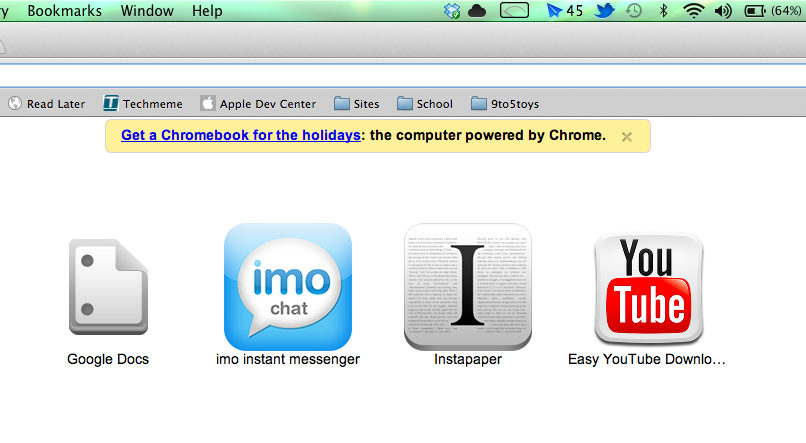
In an interesting move by Google, the company has begun advertising their new Chrome sale right inside of Chrome’s ‘New Tab’ page. The ad, as seen above, says, “Get a Chromebook for the holidays: the computer powered by Chrome.” This comes after Google announced this afternoon a $50 price slash on both their Chromebooks. Things must be really bad in the Chromebook department to push an ad like this..
Am I the only one seeing this?
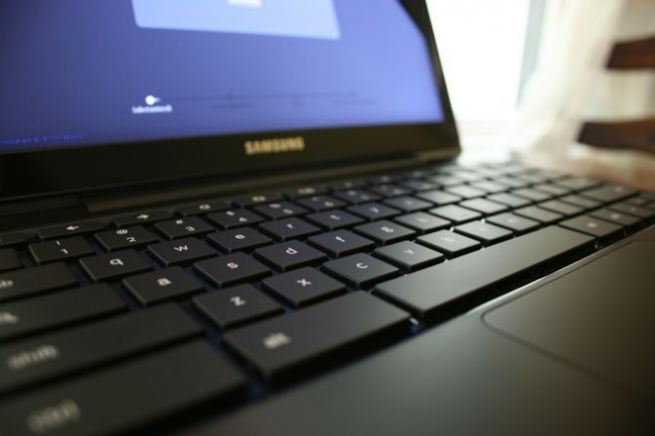
Just in time for the holidays, Google has announced a price drop for both the Samsung Series 5 and Acer AC700 Chromebooks. Both are now being dropped to $299 from $349, which still seems a little steep for what you’re getting. So why the price drop? Most likely Google isn’t seeing the type of sales they were looking for with Chrome OS and hope sales will help boost that.
Shouldn’t Google be going a little lower in price with these?
[youtube=http://www.youtube.com/watch?feature=player_embedded&v=CGvzF56CRwI]
Four days ago, Google released the source code for Ice Cream Sandwich, and it was inevitable hackers would get working on an ICS port for devices. One of the most popular Android handsets to date, the Galaxy S II, is one of the first outside of the Galaxy Nexus to receive Ice Cream Sandwich’s touch. The port is pretty stable, only missing Wi-Fi, Bluetooth, and audio from the mix, but we expect bug fixes to be rolling out soon.
LG’s Optimus 3D is also among the first devices to receive the Ice Cream Sandwich port. The status of this port is unknown right now, but from the looks of it everything seems to be pretty smooth. Check it out after the break. (via Android and Me)
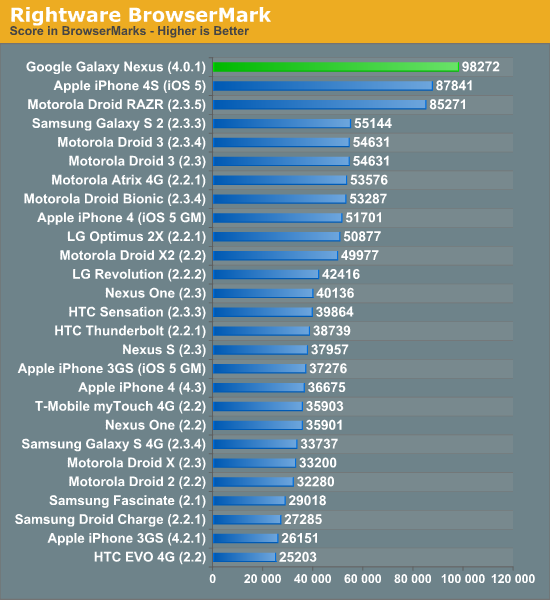
The first Ice Cream Sandwich handset, the Galaxy Nexus, hit the UK this week (US launch coming soon) and AnandTech has benchmarked the ICS/Galaxy Nexus combo vs. the iPhone 4S/iOS 5 combo. The Galaxy Nexus processor/GPU isn’t groundbreaking by any means, but the new software inside is certainly packing a punch beating iOS in a few key areas. As seen in the graph to the right, the Galaxy Nexus has a slightly faster tested browser than the iPhone 4S — a crucial day-to-day necessity for users.
The Galaxy Nexus also comes up with the win in JavaScript loading, bringing faster load times than the Droid RAZR and iPhone 4S. Don’t think the Galaxy Nexus is going to come away with everything, however. Both Apple’s iPhone 4S and iPad 2 outperform the Galaxy Nexus in GPU loading — which is limited by its slower SGX 540 underneath. That’s an important consideration for gaming.
The Galaxy Nexus’s hardware has been dubbed very smooth compared to older versions of Android. Google is activating 550,000 Android devices a day and is still behind iOS in total Activations at 200 million total. Head after the break for more graphs.

If you are looking for some good weekend Google listening, hit up some of the books below. Clicking the link at the right gets you a free Audiobook if you haven’t signed up yet. Our favs:
In the Plex: How Google Thinks, Works, and Shapes Our Lives
UNABRIDGED
I’m Feeling Lucky: The Confessions of Google Employee Number 59
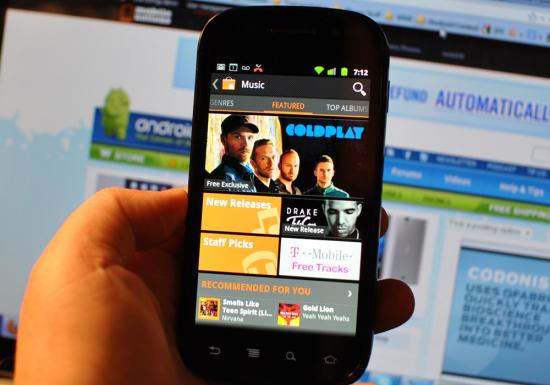
While Google said it would be days for the updated Android Market to roll out to users, users are already seeing the update hit their handsets (we’re not seeing it yet). The Market update includes the new Google Music which allows users to find new music to purchase straight to their handset and backup to their music locker. We’re waiting for the update to hit our handsets to give you guys a hands-on, but in the mean time try checking you’re own devices for the update. If you’re still not seeing the update try clearing your Market’s cache (go to settings>applications and tap on the Android Market app). Interested in seeing the rest of Google Music? Check it out after the break. (via AndroidCentral)