Stay up to date on news from Google headquarters. Be the first to learn about plans for Android, Google Plus, Google Apps, and more!
Stay up to date on news from Google headquarters. Be the first to learn about plans for Android, Google Plus, Google Apps, and more!

[youtube=http://www.youtube.com/watch?v=MQnZe_Iggx0&w=670&h=411]
Voice Search from mobile is now available on your desktop on google.com in English. From the official Google blog:
We first offered speech recognition on mobile search, but you should have that power no matter where you are. You should never have to stop and ask yourself, “Can I speak for this?”—it should be ubiquitous and intuitive. So we’ve added speech recognition into search on desktop for Chrome users. If you’re using Chrome, you’ll start to see a little microphone in every Google search box. Simply click the microphone, and you can speak your search.
And why does Voice Search matter? Well, it’s for showing off, that’s for sure, but you may find it useful for hard-to-spell searches or complex ones that you can speak aloud faster than type. After all, we first learn to talk before we learn how to type, right?
Google mobile search has been revamped for tablets, including Image Search shown above
Google this morning unveiled new search-related features during the Inside Search even at San Francisco where Amit Singhal and other engineers gave an under-the-hood look at Google search. The latest goodies include a revamped search interface that rolled out on mobile. Using Ajax, the new mobile search pulls local results right away. Moreover, query suggestions from your history now appear alongside your live suggestions from Google.
Another example included a search query for hotels in Russia. Typing “Hilton” returns a bunch of suggestion, each with the plus sign. This so-called query builder allows you to tap a suggestion you like in order to drill deeper. We’re just getting started. Go past the fold for more info and nice video tours…
Google Goggles translations are now available in Russian
As of yesterday, Toshiba’s 10-inch Android tablet dubbed the Thrive is available for pre-order from the online Toshiba store and Office Depot, starting at $430 for the entry-level eight gigabyte version. The 16GB and 32GB versions will set you back $450 and $570, respectively.
As we previously informed you, the Thrive runs stock Android Honeycomb 3.1 software and has full-sized USB and HDMI ports allowing you to attach a plethora of USB-compatible peripherals, from thumb drives, mice and keyboard to printers, digital cameras and camcorders. Other features include a microSD card slot, a swappable battery and slim profile measuring just 0.66 inches.
[vodpod id=Video.10981375&w=425&h=350&fv=]
T-Mobile’s G2 with Google, a successor to the wildly popular G1, an inaugural Android smartphone, has been discontinued after short eight months on the market. TmoNews spotted a change in T-Mobile’s inventory system which lists the device as “discontinued” – that is, no longer available for replenishment – since June 6. Released in October of 2010, the G2 featured stock Android experience, a slide-out QWERTY keyboard and HSPA+ modem enabling T-Mobile USA to market the phone as 4G-capable.
IHS iSuppli has dissected and analyzed the Series 5 Chromebook from Samsung Electronics, estimating the cost of components that go into the product at $332.12. The total cost to produce the Chromebook is $334.32 after the $12.20 manufacturing cost. BOM excludes other costs associated with bringing the product to market, such as research and development, packaging, marketing, merchandising, software, licensing, royalties, administrative and transportation costs, cost of sale and what not.
“The Chromebook’s focus on providing a compelling user experience has resulted in the inclusion of some advanced hardware features not typically found in low-cost notebooks”, iSuppli noted. The 12.1-inch computer sports a sealed battery providing eight hours of run time on a single charge. Like the MacBook Air, the Samsung Series 5 Chromebook is designed around 16GB of all-flash storage for instant-on performance and includes 2GB of RAM. A teardown analysis by iFixit revealed a dual-core 1.66GHz Atom N570 processor and Intel’s NM10 graphics chip.
The priciest component?
Google is leveraging Chrome’s extensive support for the latest HTML5 spec to roll out interesting new features that are available first on their own browser first, like dropping file attachments directly onto the Gmail compose window. The latest version of Chrome has enabled another nice perk, the ability to paste images from your system clipboard into the Gmail compose window.
Just copy an image from your favorite image editing program, a web page, another email message or any other source and paste it right into your Gmail message using the standard CTRL + V shortcut (Command + V on Macs). You’ll need to wait a while until the image uploads, depending on your screen resolution. Daniel Cheng, a Google software engineer wrote in a blog post that the new feature is especially handy for passing screenshots…
Gmail was the most widely used Google Apps service for Brown University (above), but Chat tops the customer satisfaction charts (below)
Brown University conducted a telling survey in May, asking some 1,100 students and faculty/staff members to evaluate Brown’s migration to Google Apps for Education eighteen months ago. Like everywhere, Gmail was the service of choice for a whopping 98 percent of the respondents, but satisfaction index for Chat – used by two-thirds of the respondents – topped the charts: 99 percent for Chat versus Gmail’s 90 percent. Nearly five out of five undergraduate, graduate and professional student respondents were “Very Satisfied” or “Satisfied” with Google’s web-based email.
Google Sites was less popular, having been used by one in three respondents. Docs and Calendar were used by the respectable 85 percent and 79 percent of the respondents, respectively. Most frequently used apps on a daily basis? Gmail (97 percent), Calendar (60 percent), Chat (33 percent), Documents (29 percent) and Sites (eight percent). And when issues rose, nearly half the respondents sought answers on Google’s official help pages and Google search.
More food for thought and four additional pretty charts bellow.
You will be soon able to take full advantage of Google Maps Navigation with your Android smartphone while offline thanks to new caching capabilities, the Dutch site All About Phones reported, citing “an informed source”. Of course, Google Maps has had offline caching via HTML5 since last year, but this only remembers map tiles you’ve accessed rather than the whole map. As a result, there’s no easy way to plot a new route without being connected to the network. That will change soon, the source hints…
The new mode should enable full offline navigation, the story goes. In its present incarnation, Google Maps Navigation provides automatic rerouting when outside network coverage, but only after you’ve begun a route. Without going into much detail, the source basically says that Google will remove the requirement for network coverage plus cache more data, allowing you to navigate to a new destination when outside your network coverage. The publication quoted a parts supplier for Android smartphones who told them that Google plans on rolling out the new full offline navigation via a Google Maps Navigation app update, due this summer.
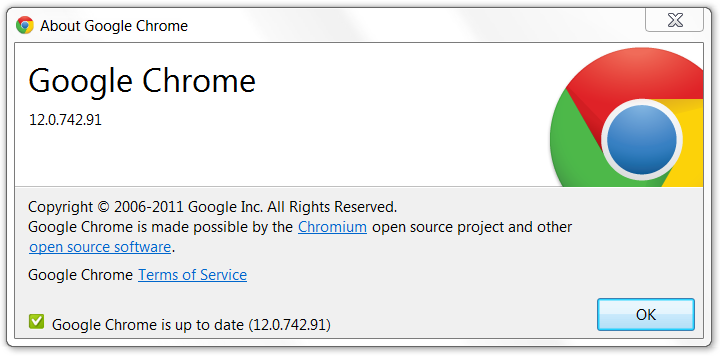
Google has updated the stable Chrome channel with new security, privacy and graphics acceleration enhancement. Carrying a build number of 12.0.742.91, Google’s browser now warns you before downloading certain malicious files “without Chrome or Google ever having to know about the URLs you visit or the files you download”, software engineer Adrienne Walker explained in a post on the Chrome blog.
The team has also advanced Chrome’s GPU-assisted hardware acceleration to include 3D CSS elements on Mac OS X Snow Leopard and Windows Vista or later. Finally, Google has worked closely with Adobe to provide greater control over local storage for Flash Player’s Local Shared Objects directly from Chrome’s settings, without having to visit a special page on Adobe’s site to tweak your settings . Thanks to Chrome’s silent updating mechanism, your copy of Chrome will automatically update itself to the latest stable version available. If not, choose About Google Chrome from the wrench menu.
Cross-posted on 9to5Mac.com
Check out GPU-acceleration improvements in the “Shaun the Sheep” Chrome experiment which lets you rotate and scale the video, disable or enable cool reflections and more.

Google last week updated their mobile search page on Android and iOS devices with visual tweaks, including quick access to multiple searches via handy tabs, enlarged icons that provide an easier access to search silos and more. It looks like another face-lift has been recently rolled out. Now when you run a search at m.google.com, a small magnifying icon appears next to each item on the search results page. Tapping it takes you to full-screen so you can flip through big beautiful thumbnails one screen at a time. Each thumbnail is a live preview of what the site looks like and is accompanied by a shortened description that normally appears on the search page. It looks kinda cool, like a cross between Reader Play and Fast Flip.

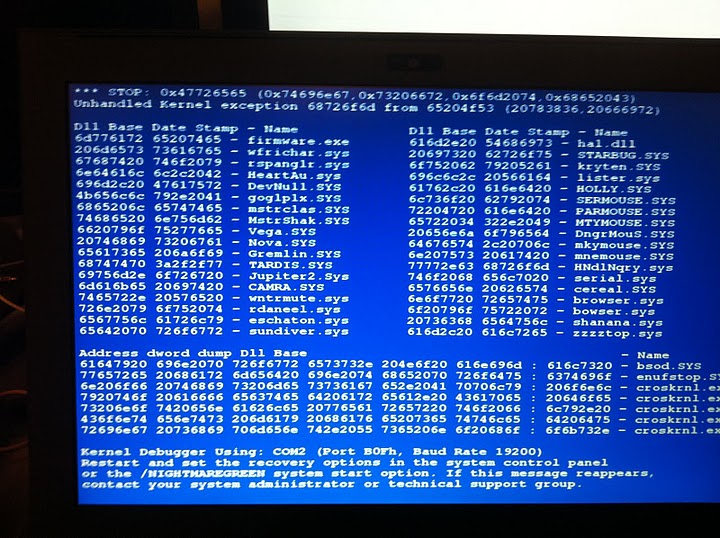
While Samsung and Acer are readying their ChromeOS laptops for release this summer, the CR-48 is still being looked over. One user figured out a Firmware Easter Egg by doing some significant research (and taking a big fat hint laid earlier this week). The Hex message at the bottom converts to ASCII characters and revealing the following message:
Greetings from the Chrome OS x86 firmware team. This message is brought to you by Randall, Bill, Vadim, Gaurav, and Kelly. Also by the letter G and the number 42. If you’ve enjoyed this gadget, please join us at http://www.chromium.org to help make it even better. We now return you to your regularly scheduled program, already in progress. No animals were harmed in the production of this message. Apply only to affected area. Cape does not enable wearer to fly. Contents may have settled during shipment. Use no hooks.
[youtube http://www.youtube.com/watch?v=VChOEvKicQQ?rel=0]
Did you know a Google datacenter uses half the energy of a typical industry data center? The search company has gone to great lengths exploring green energy and it’s not just electric cars for employees. Unlike Google’s, about 70 percent of the world’s data centers are lacking the resources and expertise to go green, explains senior vice president of technical infrastructure Urs Hoelzle. Google’s Hamina, Finland facility depicted in the above clip is an example of such environment-friendliness.
Originally a paper-mill built in the 1950s, it takes raw sea water directly from the Gulf of Finland, pumps it through the existing seawater tunnel and runs it through heat exchangers to dissipate the server load heat from the facility. It than routes the warm water to another building where it’s mixed with the fresh sea water so it could be returned to the Gulf at a similar temperature in order to minimize an impact on environment. Investing in such innovations makes sense from the financial standpoint, too…
TechCrunch reports that Google has paid an undisclosed sum to acquire PostRank, a company specializing in social intelligence. The news has just been confirmed in PostRank’s blog post as well. Their team will be moving to Google’s Mountain View, California-based headquarters.
We are extremely excited to join Google. We believe there is simply no better company on the web today that both understands the value of the engagement data we have been focusing on, and has the platform and reach to bring its benefits to the untold millions of daily, active Internet users.
This should get interesting. PostRank measures popularity of social statuses on Facebook, Twitter and other services, meaning it could be a fit for Google’s social efforts, starting with the +1 button they recently rolled out. A Google spokesperson told TechCrunch that the PostRank acquisition will help make their social analytics “more actionable and accountable” for advertisers.
Some interesting Larry Page quotes coming out of Google’s annual shareholder meeting from yesterday afternoon, courtesy of a Cowen and Company analyst Jim Friedland. Page is adamant to prevent his company from losing focus due to a Soviet-like bureaucracy which destroyed Nokia. The new CEO is going to re-create the startup culture at Google and ensure that the vast majority of resources are poured into search and advertising.
“We’re not betting the farm on speculative technology projects”, he said, adding there was still “a tremendous opportunity” in increasing ad relevance. Page told Wall Street analysts and shareholders that Google is committed to making money from free products, specifically citing Android as an example. He then switched into the “Moon shots” talk:
Our goal is to aim high to achieve important things to continue to grow this company.
So, at Google the Sun is still revolving around search, search, search (and ads, ads, ads). In that respect, Android is increasingly looking like the biggest growth opportunity in the long run…
If you run a blog or own a site that runs Google ads, you are no doubt aware of the frustrations stemming from having to deal with Google’s support staff via email only. And if your living depends on that advertising revenue, getting someone to resolve your issue in a timely manner becomes a matter of life and death. Relax, you will soon be able to pick up the phone and yell at Google.
Fielding questions from Wall Street analysts and investors at the company’s annual shareholder meeting yesterday afternoon, Google’s senior vice president of advertising Susan Wojcicki announced the arrival of customer support for advertisers and publishers via phone:
Within the next quarter we’re moving to allow [publishers and advertisers] to contact Google by phone [for customer support].
She also underscored that Google is one of the largest display advertising providers in China, adding that the company “helps Chinese advertisers reach global markets”.

WebKit – an Apple-developed, open-sourced rendering platform – is picking up steam on desktop. On laptop and desktop computers, WebKit-powered browsers are closing in on Mozilla’s Firefox, which is the world’s second most-popular browser. Look no further than Net Applications’ numbers derived by monitoring more than 40,000 websites in their network (see above chart). Adding May 2011 web usage share numbers for Safari (7.28 percent) and Chrome (12.52 percent) brings us to the combined 19.8 percent market share.
That’s just shy of one fifth of all desktop browsing, putting WebKit within spitting distance of Firefox’s 21.71 market share. Trends do not favor browser vendors who have been pretty much bleeding market share to Google and Apple in past months. Chrome and Safari have managed to grow their user base over the past couple of months at the expense of Mozilla’s Firefox, Microsoft’s Internet Explorer and Opera Software’s Opera. A StatCounter survey supports those findings (see below). Why is Mozilla failing?
Google has rolled out the new +1 button in search results and for webmasters and today brings us the official +1 Chrome extension that lets you +1 any article on the web. From the release notes:
This extension let you +1 any web page. Just simple as one click!
It’s a great new addition to the Google social suite and it works seamlessly. See something you like? Hit the +1 button in Chrome and a link to that story will be created in your Google profile, making it easy to recommend stuff to the web at large. The extension lets you select a Google profile from which you are posting and enable personalization of content and ads across the web based on your and your contacts’ +1’s. This page explains the system in greater detail. While we’re at it, I just +1 this post. Your +1’s appear publicly in search and on ads as well. You can lock your +1’s on your Google profile so only you can see them. Plus (no pun intended), you can delete any +1 privately or publicly listedon your Google profile.
The Asus Padfone has inspired what appears to be a cottage industry of phone-docking tablets in the making. Take a new docking accessory from ECS. Code-named Trinity, it’s the result of joint efforts by ECS and its partner ICE Computer. Unlike the Padfone which is a real tablet, the ECS solution is an intelligent docking station that can house various smartphone brands. It takes your phone’s video and outputs it via HDMI to the built-in display which is of the same 9.7-inch variety and 4:3 format as the iPad’s.
You also get an SD card slot, two USB ports and a front-facing camera. It’s a cross-platform play of sorts due to its ability to work with and house multiple smartphone brands, from Apple’s iPhone to Windows Phone and Android smartphones. Best of all, the gizmo should work with future iOS devices – including iPhone 5 – using “simple upgrades”. Expect the Trinity to hit the market in the fourth quarter costing $200 or less. Go past the break for a video introduction. via ITProPortal
(Cross-posted on 9to5Mac.com)
So Intel has showcased six Honeycomb tablets at the Computex show, all of them engineered around the company’s latest 32-nanometer silicon code-named Medfield, the chip maker’s first system-on-a-chip engineered specifically for tablets and smartphones. Unsurprisingly, the demos fell on deaf ears with the veteran journalists who have seen it all.
Sean Moloney, Intel’s new president for China, flashed six Honeycomb 3.0 tablets and a smartphone during his opening keynote. He said reference designs for Medfield tablets and smartphones include both Android and ill-fated Meego software that Intel and Nokia co-developed for high-end mobile gear.
Intel has been trying for years to penetrate the potent mobile market where ARM-based processors designed by Nvidia, Texas Instruments, Apple and others woe device makers. Be that as it may, we don’t see Intel’s latest technology competing effectively with market incumbents – neither this nor next year. Why?
From 9to5toys.com:
If you want a solid, unlocked Android phone that is sure to get the latest updates, Ebay has a deal for you today. Heights Deals is offering a new in the box Nexus One with Radios for 3G on T-Mobile and EDGE on AT&T for just $260 without a plan and free shipping. The Nexus One was the original Google phone and is still among the first to get the latest builds from Google. This one comes with 4GB of internal storage (Expandable+32GB via MicroSD), 3.7-inch AMOLED display at 480x800px and a 5-megapixel camera.
Since it is new in the box, it comes with Android 2.1 but is immediately upgradable to Android 2.3.3 Gingerbread.
Expand
Expanding
Close
[vodpod id=Video.9929744&w=650&h=400&fv=%26amp%3BembedCode%3DUzNDJoMjpzR4v5RcbxsAczC071d3QOq1]
On the possibility of Apple dropping Google Maps (we’ve heard they aren’t): Mayer says there are 200 million active users of Maps and in June more people will use them on mobile than the desktop. (Although at 100 million iPhones out there, an Apple exodus would put a monster dent in those numbers. Also, new Google Mobile Maps (not iOS) use vector tiles which can be up to 100 times smaller files than the traditional bitmap tiles.
Also, location is getting better as more data is input (learning), especially in big cities like New York with check-ins helping out.
Finally, she expects phones to know what you want before you ask, called ‘serendipity’ or ‘zero-click’.
Full transcript available here.
[youtube=http://www.youtube.com/watch?v=L12sZP22UbI&w=670&h=411]
For all the talk about the graphical prowess of so-called supertablets coming later this year with Nvidia’s Tegra 3 chip inside, we’ll have to do for the time being with the old-fashioned Tegra 2 devices. That may not be such a bad deal, because Nvidia’s dual-core Tegra 2 is a capable piece of silicon that can produce some remarkable visuals.
TouchArcade pointed at Shadowgun, a Madfinger-produced game for Android devices that takes full advantage of the Tegra 2 chip, courtesy of the Unity engine. The video you see above shows console-quality graphics running natively on a Tegra 2-based Android tablet. And yes, Apple fans, it’s coming to the iPad/iPhone near you as well. Another in-game video follows below.
”
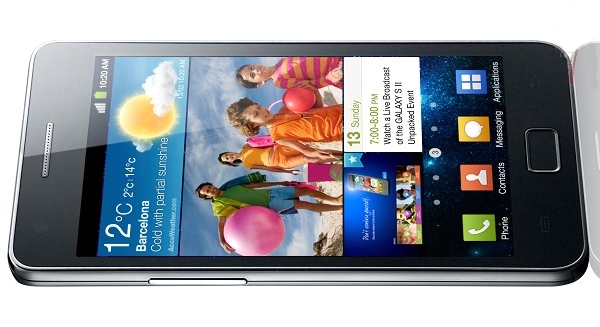
Strategy Analytics ranked Samsung the #1 Android tablet maker and the world’s #2 tablet company behind Apple in Q1 2011. It took them a month to sell a millionth Galaxy S II smartphone in Korea and brag about it on their Flickr account with the above image.
Samsung is content on releasing more Android tablets despite that pending legal spat with Apple, which is accusing them of stealing the iPad’s and iPhone’s design, software features and hardware engineering with the Galaxy-branded tablets and smartphones. The Wall Street Journal quoted this morning Samsung’s J.K. Shin who underscored his company’s determinacy to release more Honeycomb tablets this year as they “continue to work with Android on future tablets”. Their senior vice president of sales and marketing Younghee Lee added:
Android is the fastest-growing platform and the market direction is headed toward Android so we’re riding the wave. When there is a market need for our own software, we will consider it but that’s not our plan at the moment.
Samsung also says it’ll continue offering tablet PCs in multiple screen sizes as a way of distinguishing themselves from Apple. Asked to comment on that pending lawsuit with Apple, Shin responded:
 The first thing that strikes me is that the US is running out of names for Smartphones quicker than even IP addresses.
‘Within’?
Whatever.
The short of it is that the Samsung Galaxy S2, pretty much the most bad ass phone available today, is coming to Sprint, one of the most Android -friendly carriers and will be called the ‘Within’. They could call it the ‘Edsel’ and this would still be a sweet phone.
Top shelf specs include: 32GB internal storage with SD option. Dual Core processor, 4.27-inch display, 1GB RAM, Gingerbread and of course NFC which should make Google and its Wallet efforts pretty happy. Engadget said of this device:
It’s the best Android smartphone yet, but more importantly, it might well be the best smartphone, period.
No timetable for launch exists but we know S2s are already running around Europe and Sprint users want to get their hands on this thing. It would surprise me if this wasn’t out by the end of Summer.