Enable these things on your Android phone now [Video]


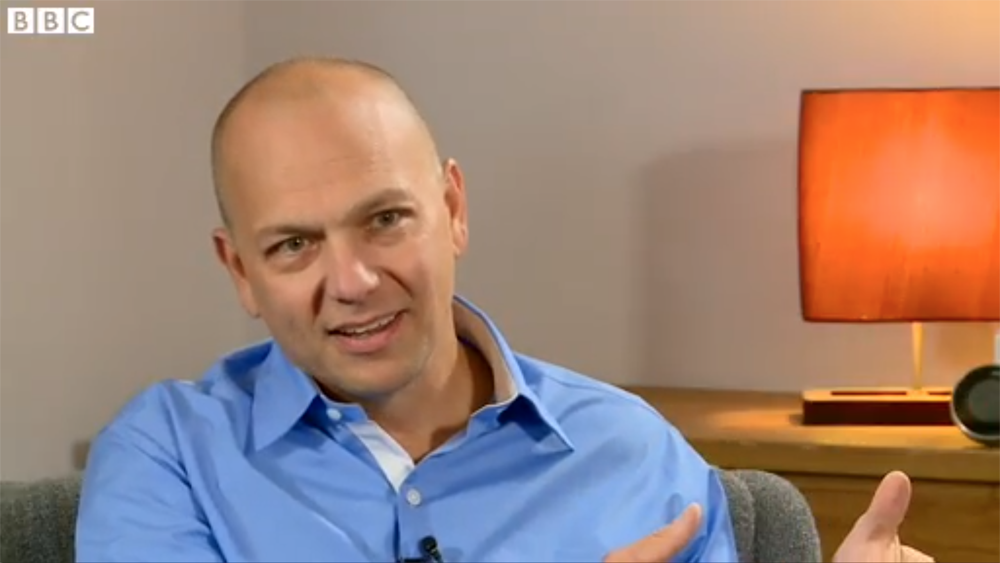
Nest founder and former Apple iPod lead designer Tony Fadell has intimated in a BBC interview that the decision to make an early version of Google Glass available for public sale may have been a mistake.
He said that while Google has always launched beta versions of its products and gathered feedback from users, there was a very big difference between software and hardware.
If you are only doing services based on electrons, you can iterate quickly, test it, and modify it and get it right. But when you are dealing with actual atoms – hardware – and you have to get manufacturing lines and it takes a year or more to develop that product, you better understand what it is and what it’s trying to do and specifically what it’s not going to do.
Customers have to spend money to buy those atoms. They want something that delivers value or you end up with a real disappointment and you can spoil the market.
He was, however, “very bullish” about the product, and believes it has a big future …
Expand
Expanding
Close

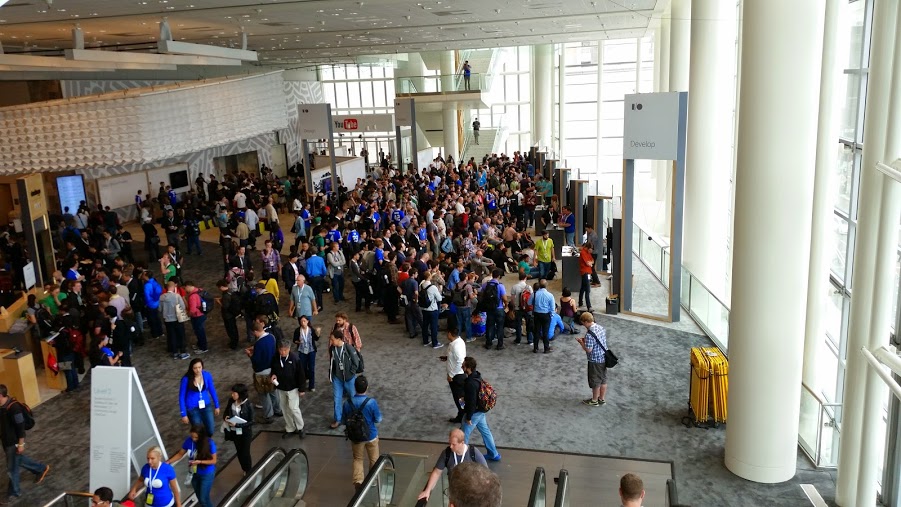
There is both a lot happening at this year’s Google I/O and very little, depending where you look. Obviously, if you are a developer who builds Android and even web apps, you are a kid in a candy store. If you are looking for new hardware, there isn’t much that wasn’t out there already. Neither Google co-founder took the stage this year after successive years where Sergey Brin led the introduction of Google Glass (which is all but absent this year) and Larry Page led an epic Q&A last year.
[protected-iframe id=”ee8f89c8e8a919fbb2f5c26911077925-22427743-8994189″ info=”http://player.theplatform.com/p/PhfuRC/9RGhkvepi1us/embed/select/h_PJWCPpI_2K” width=”640″ height=”360″ frameborder=”0″]
If you love the idea of smart home technology like Nest, but are concerned about the cost of replacing half the appliances and devices in your home, Nest CEO Tony Fadell has some good news. Speaking at the Re/Code conference, he said that while “you need new hardware to allow things to flourish,” there are many things that could be done with software alone.
Just like your smartphone has many many apps on it, we think there [could be] many apps in your home but you don’t necessarily need new hardware …
Those who expressed concern about Google’s acquisition of Nest may have have been right: the company has told the Securities and Exchange Commission that it may choose to serve ads on “refrigerators, car dashboards, thermostats, glasses, and watches, to name just a few possibilities.”
The WSJ reports that Google made the statement in support of its contention that it shouldn’t have to break out ad revenue from mobile devices …
Expand
Expanding
Close

We’re live from New York at HTC’s unveiling of the new HTC One (M8) and the company has now officially unveiled the new flagship smartphone. The company has spent the starting of its presentation talking about the HTC One’s high-quality metal construction that it described as “like a premium watch,” as well as the new Gunmetal Gray Hairline Finish pictured above. It also shared a few specs for the device (below) before moving on to its new customized version of Android, Sense 6 (or 6th Sense).
One of the big announcements for Sense 6 is that HTC is opening up its Blinkfeed homescreen to developers with a new SDK releasing today. Foursquare will be the first partner to support the feature and will publish, for example, lunch recommendations into the Blinkfeed homescreen, while Fitbit will display activity milestones in the feed. HTC is hoping other app developers will follow with support.
We have most of the hardware specs below (no huge surprises), but HTC also spent a lot of time talking about small tweaks you might not see in the specs list like much improved sound quality through a combination of redesigned speaker chambers and software tweaks. HTC also mentioned some big improvements for the camera including a new camera switcher (pictured in the gallery below) with new “dual capture”, “selfie”, and “customizable manual” shooting modes. The M8 also features a 300 millisecond focus time that’s 50% faster than the previous generation.
Sales for the new HTC One (M8) will kick off today in the US and Canada. Details on availability for other countries and carriers are available here.
Check out the official specs from HTC and some shots from the event below:
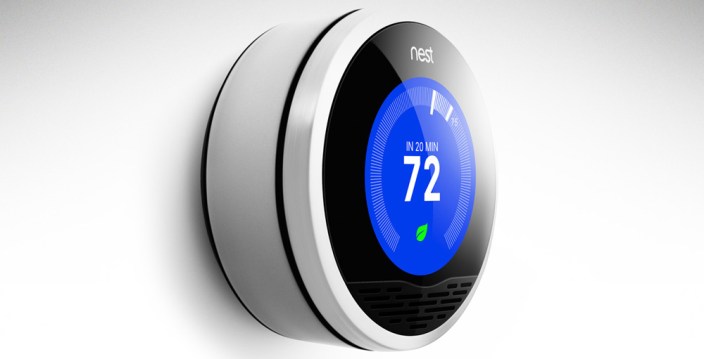
Google has confirmed in a regulatory filing with the SEC that it has completed its $3.2B acquisition of Nest Labs after the deal was officially cleared by the FTC. The company revealed that it had previously held a 12 percent stake in Nest.
It has been rumored that the Nest team will form Google’s core hardware design group, with an unlimited budget. Google has issued only a brief statement on the reason for the buy-out, promising more home devices to follow.
We expect that the acquisition will enhance Google’s suite of products and services and allow Nest to continue to innovate upon devices in the home, making them more useful, intuitive, and thoughtful, and to reach more users in more countries.

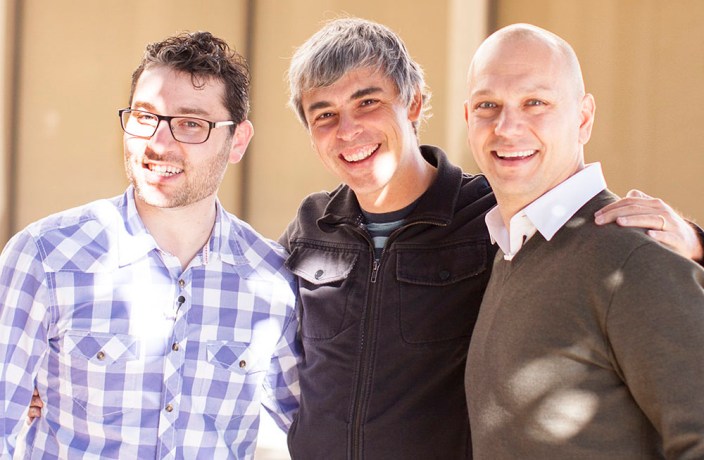
Google CEO Larry Page (centre) with Nest co-founders Matt Rogers amd Tony Fadell (photo: technologyreview.com)
Tony Fadell and the rest of the Nest team will become Google’s “core hardware group,” working on a variety of hardware projects and given access to “as many resources as it needs,” according to an unnamed source cited by TechCrunch.
The new division will still work on hardware devices, but not necessarily thermostats or smoke detectors. In fact, Google would like Fadell to work on gadgets that make more sense for the company. Will it be a phone or a tablet? It’s unclear for now […]
When it comes to budget, Google is willing to let the Nest team use as many resources as it needs. In other words, the company is getting serious about consumer hardware, and Motorola was just a false start …
Expand
Expanding
Close
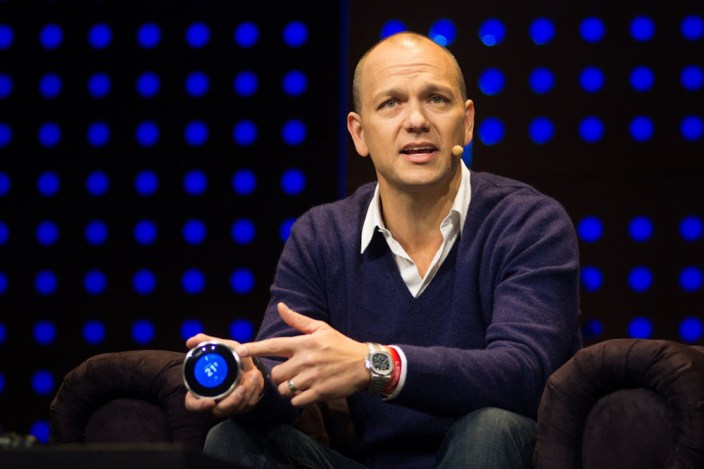
Photo: websummit.net
Nest CEO Tony Fadell has responded to data privacy concerns expressed after the company was acquired by Google, stating that there have not yet been any changes to the data collected by the smart thermostat and smoke detector, and that any future changes would be both transparent and opt-in.
At this point, there are no changes. The data that we collect is all about our products and improving them.
If there were ever any changes whatsoever, we would be sure to be transparent about it, number one, and number two for you to opt-in to it …
Expand
Expanding
Close

Tony Fadell, the Nest CEO who was Senior VP of Apple’s division from 2006 to 2008, says that Apple built prototypes of a similar device to Google Glass but “didn’t have time” to turn them into actual products.
Interviewed as part of Fast Company‘s Oral History of Apple Design series, Fadell said:
At Apple, we were always asking, What else can we revolutionize? We looked at video cameras and remote controls. The craziest thing we talked about was something like Google Glass. We said, “What if we make visors, so it’s like you’re sitting in a theater?” I built a bunch of those prototypes. But we had such success with the things we were already doing that we didn’t have time.
From the description, the prototypes sound rather more like virtual reality headsets than Google Glass, so there may be some exaggeration going on here. But it wouldn’t be a tremendous surprise to find that Apple has toyed with almost every tech idea under the sun: it has the resources needed to experiment at will.
The notion that Apple didn’t pursue the concept for lack of time seems rather more fanciful: it’s not like the company couldn’t have run out and hired a complete team for the project had it wished to do so.
Apple has always had a philosophy of focusing all its efforts on a very small number of products. Back in 2011, iPod, iPhone and iOS product marketing head Greg Joswiak described “saying no” as one of Apple’s four keys to success.
It means saying no, not saying yes. We do very few things at Apple. We are $100bn in revenue with very few products. There are only so many grade A players. If you spread yourself out over too many things, none of them will be great.
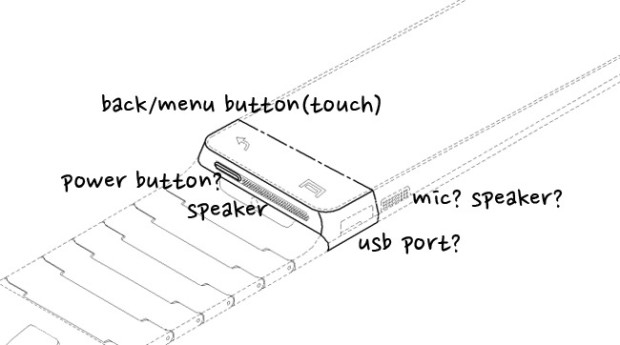
Samsung Gear Patent Filing
Following a report from SamMobile last week sharing some specific specs coming in Samsung’s much rumored Galaxy Gear smartwatch, today GigaOm reports on a few more details from developers with prototypes of the device. On top of confirming a Sept.4 unveiling at Samsung’s events scheduled to take place in Berlin and New York, the report claims Galaxy Gear will include a 2.5 inch OLED display, dual core processor, an accelerometer, speakers, and built-in NFC:
It is said to be around 2.5 inches diagonally (and 3 inches diagonally including the case), is powered by a dual core processor and should have pretty decent battery life. In addition, we are told the watch has a camera that is integrated into the strap and even has tiny speakers in the clasp of the watch, plus built-in NFC to allow for bump-to-sync and authenticate. The watch uses Bluetooth 4.0 LE to connect with smartphones for connectivity… In addition, the watch has a built-in accelerometer that makes it possible to switch it on when it is moved up towards the eye. It could be a great way to wake the watch and also the apps and manage battery power. The watch screen will support the usual touch, swipe and select type gestures but will likely not have text-input.
The report adds that watch will work with a Samsung watch manager app on a smartphone and utilize apps from the Samsung App Store, not Google Play. GigaOm also claims that Galaxy Gear will support Facebook and Twitter integration at launch. The Samsung App Store integration could mean the device will only be available for Samsung device users:
Expand
Expanding
Close
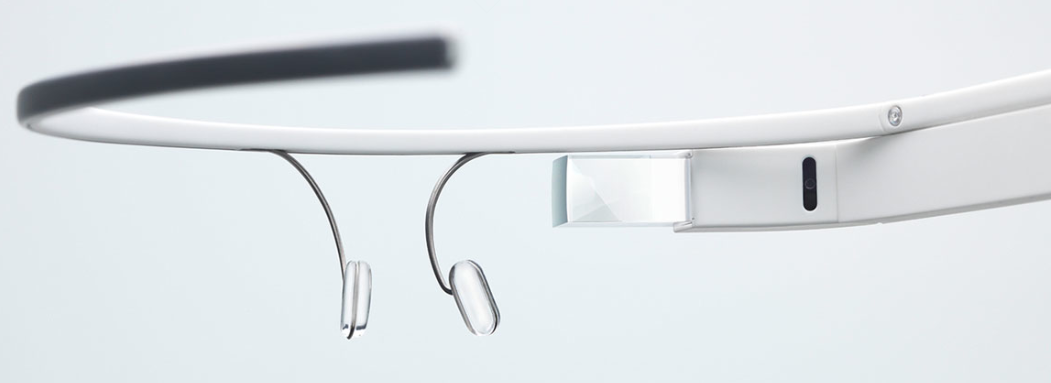 We already knew that Google Glass would be running Android 4.0.4 and got a look at the official tech specs straight from Google, but until now we didn’t know some of the specifics such as how much RAM and what processor the device is using. Today we details via developer +JayLee (via Selfscreens) that Google Glass reports running a OMAP 4430 CPU similar to that used in the original Kindle (although not other details are available on the processor) and 682mb of RAM. Lee speculates Glass might actually pack in 1GB of RAM:
Expand
Expanding
Close
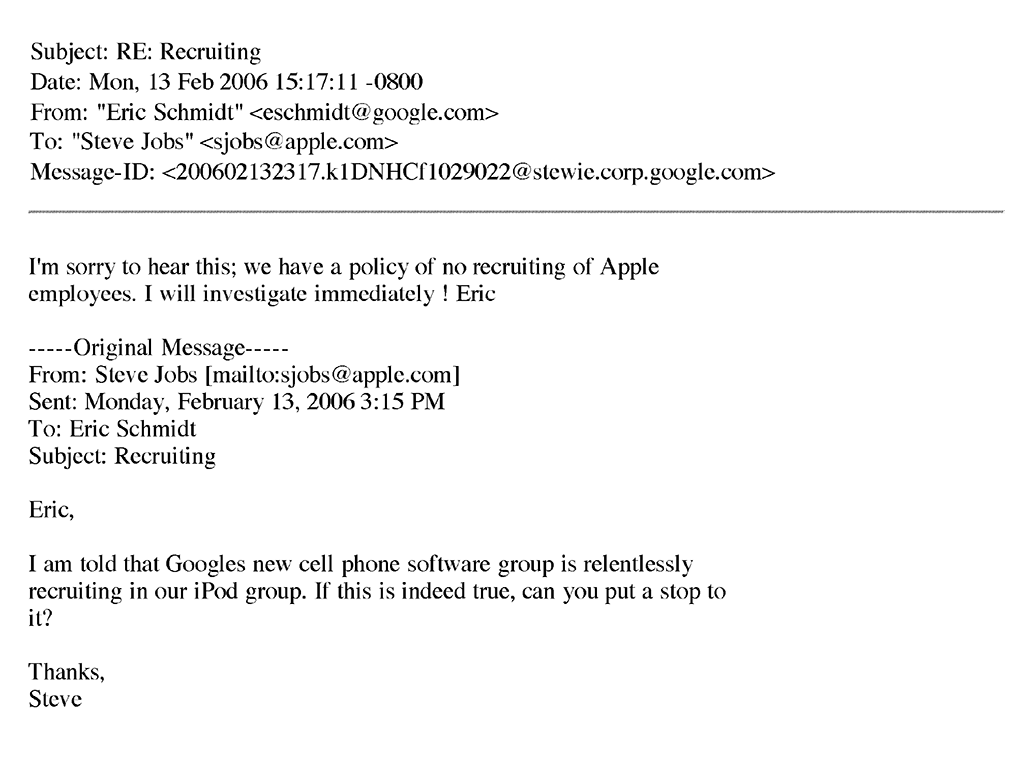
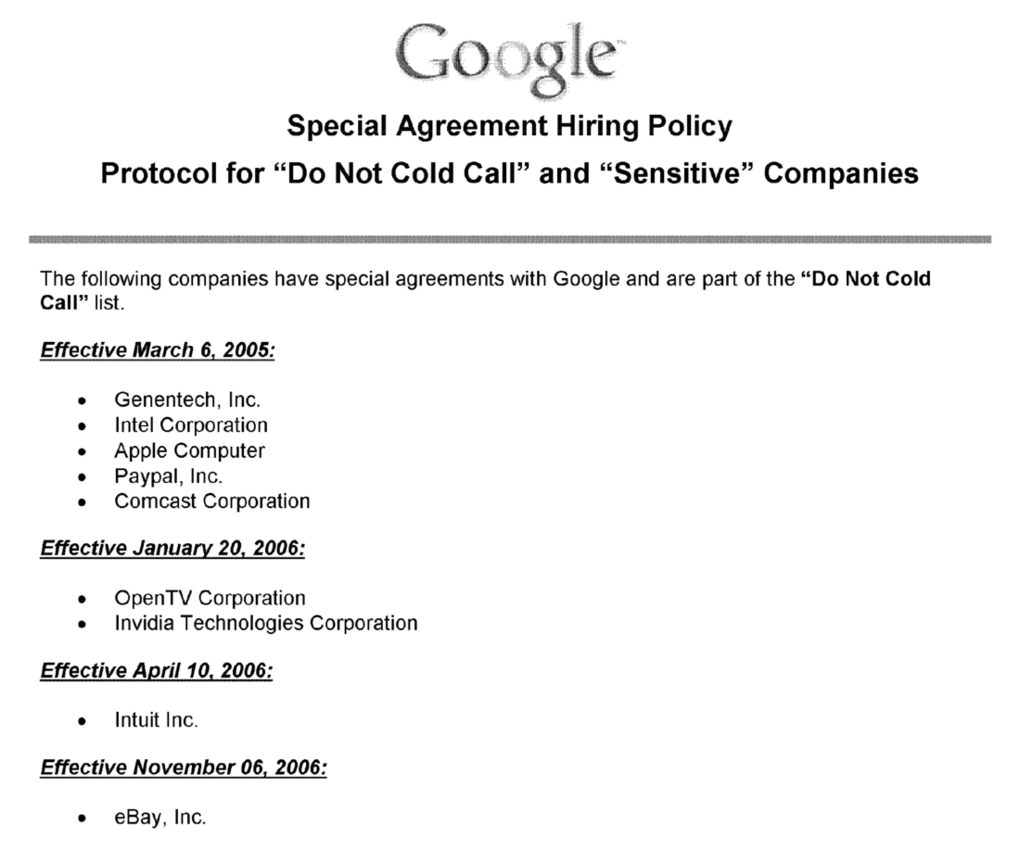
Earlier this month, a U.S. District Judge in California ordered Google Chairman Eric Schmidt, Apple CEO Tim Cook, and others to give depositions in an ongoing private lawsuit. Employees brought on the private lawsuit alleging “no-poach” agreements the companies entered would drive down wages. Today, new details have emerged after a request to keep court documents secrets was denied by U.S. District Judge Lucy Koh.
While emails exchanged between Steve Jobs and former Palm CEO Ed Colligan have been the focus on the documents, The Verge also pointed us to emails exchange between Jobs and Google execs. Below we have an email form Jobs to Schmidt asking to put a stop to Google recruiting employees from its iPod team, as well as one where Schmidt discussed not wanting to create a paper trail:
Expand
Expanding
Close
We have been hearing a lot of rumors about Sony’s unannounced “Yuga C6603” smartphone, and today Russian site Mobile-review.com posted images of the 5-inch, Android 4.1.2 powered device. According to the report, which also includes a number of benchmark tests, the Sony Yuga’s packs in a full HD (1,920 x 1,080) 5-inch display with 440 ppi and Sony’s Mobile Bravia Engine. The display also features on-screen buttons running along the bottom. Other specs include 2GBs of RAM, LTE, a quad-core Snapdragon S4 Pro CPU, Adreno 320 graphics, USB Host support, and micro HDMI and microSD for support up to 128GB. This could definitely be an interesting flagship device for Sony in 2013. It’s also sporting a 12 megapixel camera according to the site.
Head over to Mobile-review for more images and benchmarks. We’ll be keeping our eyes out for the device early next month at CES.
Expand
Expanding
Close

[youtube=http://www.youtube.com/watch?v=wvsboPUjrGc&feature=player_embedded]
 The August issue of Vanity Fair fully dissects “How Microsoft Lost Its Mojo,” but it also gives an interesting glimpse at how the once-reigning tech company foolishly underestimated Google.
The actual article is not online, but BetaBeat obtained a physical copy and found a little nugget buried inside that describes chief executive Steve Ballmer going on a rampage in 2004. After allegedly throwing a chair, the CEO had this to scream say about an engineer who left Microsoft for Google:
“Fucking Eric Schmidt is a fucking pussy!” Ballmer yelled, according to the court document. “I’m going to fucking bury that guy! I have done it before and I will do it again. I’m going to fucking kill Google.”
Ballmer is notorious for his emotional antics and miscalculated quotes about the competition. The video atop is a perfect demonstration of Ballmer going, well, crazy. Meanwhile, the video below shows the executive laughing about the iPhone in 2007, while dismissing its ability to handle business-oriented tasks due to its lack of a tangible keyboard.
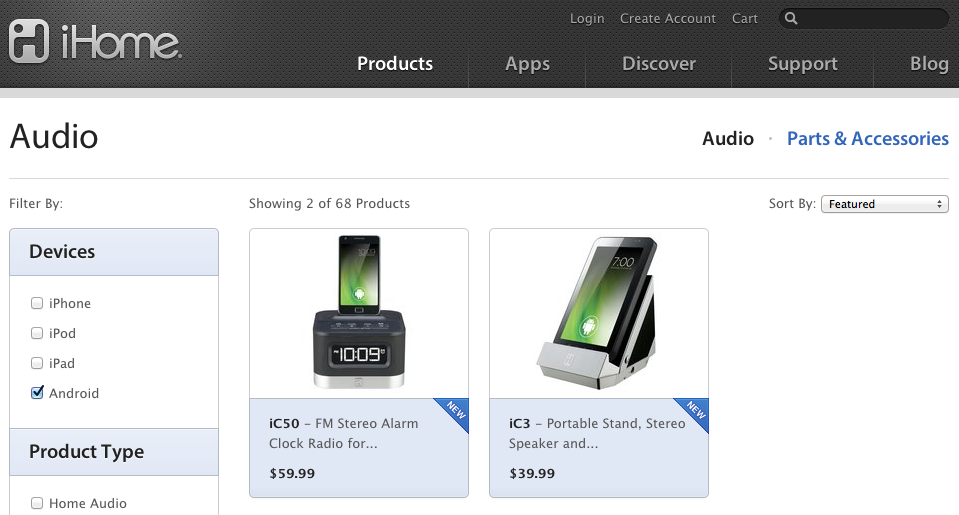
Hold on to your hats, iHome just turned Android.
The long-time iOS accessory manufacturer unveiled a new line of pocketbook-friendly Android trimmings today.
“The size of the worldwide Android audience and lack of current speaker options gives us a significant opportunity to introduce our products to a new group of consumers,” announced iHome’s Director of Marketing Evan Stein in a press release. “Our new SmartDesign products maintain the high quality and innovation that is synonymous with iHome.”
First up is the iC50 for Android smartphones. It is a $59.99 alarm/radio clock with a microUSB charging cable, stereo audio cable, and 3.5 mm plug:
Wake and sleep to radio (you can also wake to tone). Reson8® speaker chambers and EXB bass enhancement provide great sound that’s perfect for your music, games or apps. Works with iHome Sleep app (free download) to wake and sleep to your favorite music and advanced custom alarms. SmartSlide™ dock with custom micro USB cable for smartphone charging regardless of its charging port location/orientation. Also enjoy FM radio with digital tuning. A microUSB charging cable and stereo audio cable with 3.5 mm plug are included.
An image gallery is below.
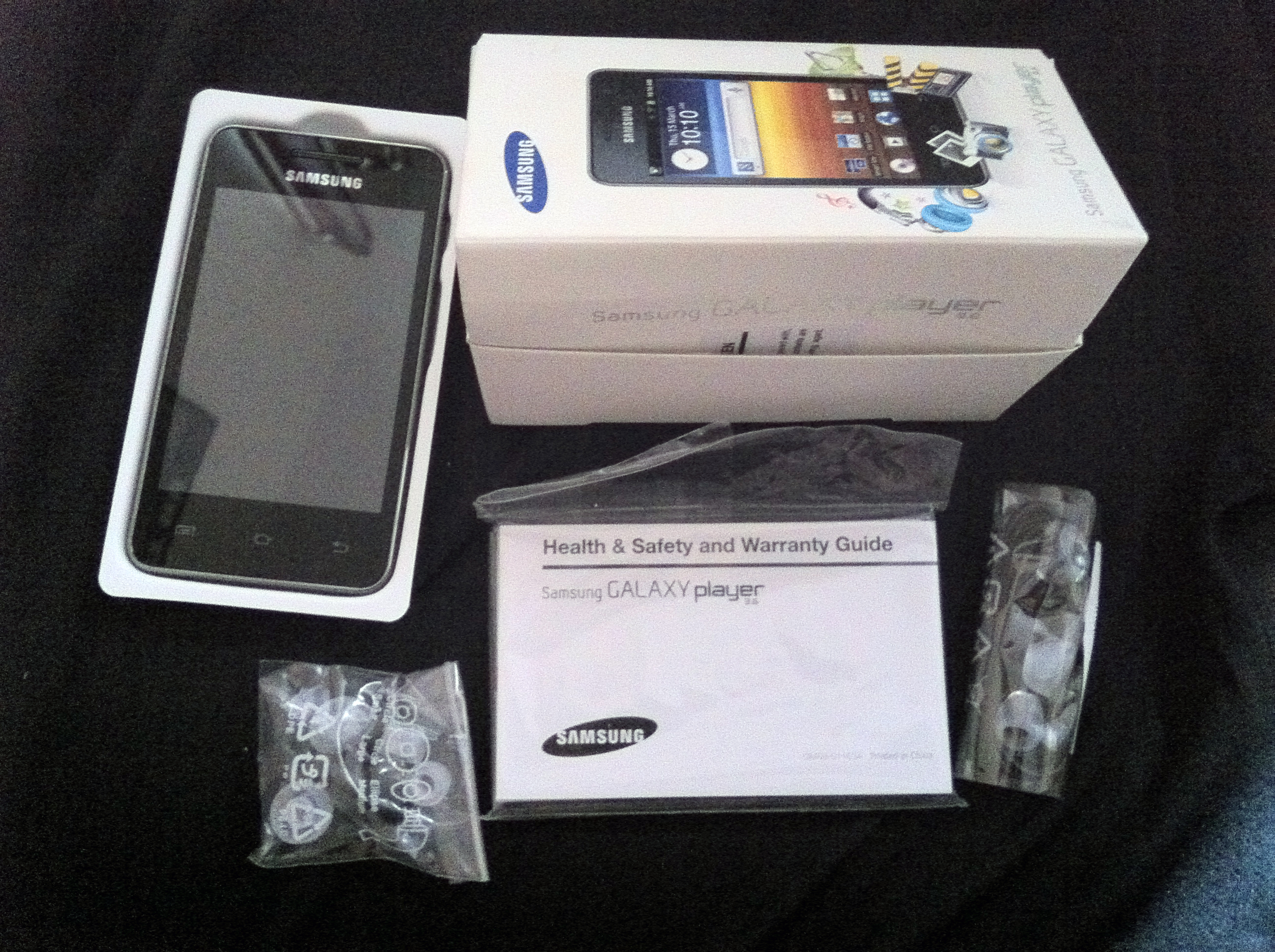
I am an Apple devotee, through and through, so much so that I have not even bothered to look elsewhere to satisfy my tech-junkie needs—and yes, that means I have never played with an Android device in my entire life.
Enter the Samsung Galaxy Player 3.6. This Gingerbread-powered media player landed in my lap earlier this week and taunted something more. Unfortunately, due to my inexperience with Android devices, I am left to compare this offering to the next best thing in my mind: the fourth-generation iPod Touch. This should not be a problem, however, as both devices compete in the same product category.
Galaxy Players 4.0 and 5.0 released in 2011 for $229 and $269, respectively, and this week the South Korean-based firm added to the PMP lineup with its Galaxy Player 3.6 for about $100 less at $150. The price is definitely more attractive, but are users just getting what they paid for? Read more to find out.
A gallery of images is below.
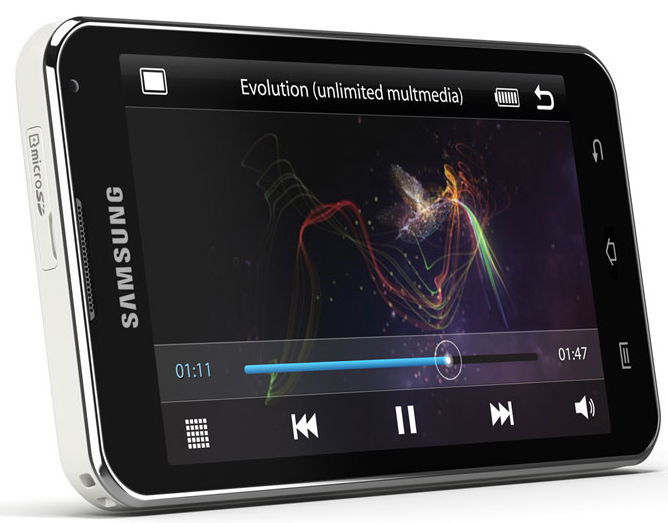
The Samsung Galaxy 5 player is probably exactly what you think it is: a big-ass Galaxy S phone without the “phone part”. That is, it doesn’t have a 3G radio for voice and data, instead relying on Wifi to connect to the Internet. If you are like me, however, you spend 90+ percent of your day around Wifi and during that 90% of the time, it is as good as any 3G or 4G mobile device – the reviewers agree.
 As you’d expect, the screen is huge, especially compared to typical phones. I have a white one and it looks like a comically large white iPhone 3G from afar. The screen also has the standard Samsung 480×800 pixel count, though with the larger screen the fonts aren’t as crisp as a 4-incher. Having gotten my hands on the Samsung Galaxy Note and Galaxy Nexus, I can tell you that this screen isn’t even close to as crisp. But that doesn’t mean it isn’t beautiful, especially for playing Netflix or Youtube content.
This is generally the first Android device that goes up against Apple’s iPod Touch franchise and I believe it does have some compelling differentiators, besides the much larger, but not “Retina crisp” display. I’ll break these down below:

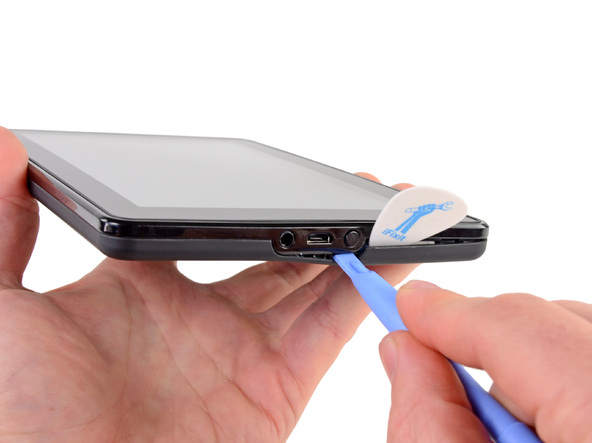
The fine folks over at iFixit have done their honorary teardown of the Kindle Fire, which just became available today. The teardown revealed the device is much easier to open than Apple’s iPad and iPod. Other things to note are its huge battery and shiny metal plates on the back case that help provide protection for the internal components, as well as heat sinking and EMI shielding. Head on over to iFixit for all of the technical details.
Interested in our first thoughts on the $199 Fire? Check them out here. A few more teardown photos after the break:
As you probably know, they Steve Jobs book is now in public hands and there will be lots of coverage. As is also known, Jobs wasn’t a huge fan of Android and Google in general, though he was known to council CEO Larry PAge and cofounder Sergey Brin on more than one occasion. Here are some of Jobs’thoughts on building an iTunes client for Android like they did on Windows:
“We thought about whether we should do a music client for Android. We put iTunes on Windows in order to sell more iPods. But I don’t see an advantage of putting our own music app on Android, except to make Android users happy. And I don’t want to make Android users happy.”
He lumps Google in with the Axis of evil:
“IBM was essentially Microsoft at its worst. They were not a force for innovation; they were a force for evil. They were like ATT or Microsoft or Google is.”
And Jobs’ meeting with Eric Schmidt:
“We spent half the time talking about personal matters, then half the time on his perception that Google had stolen Apple’s user interface designs,” recalled Schmidt. When it came to the latter subject, Jobs did most of the talking. Google had ripped him off, he said in colorful language. “We’ve got you red-handed,” he told Schmidt. “I’m not interested in settling. I don’t want your money. If you offer me $5 billion, I won’t want it. I’ve got plenty of money. I want you to stop using our ideas in Android, that’s all I want.” They resolved nothing.
And then there was the thermonuclear War…
“I will spend my last dying breath if I need to, and I will spend every penny of Apple’s $40 billion in the bank, to right this wrong,” Jobs said. “I’m going to destroy Android, because it’s a stolen product. I’m willing to go thermonuclear war on this.” Jobs used an expletive to describe Android and Google Docs, Google’s Internet-based word processing program.
He did have constructive criticism for Larry Page however:
We talked a lot about focus. And choosing people. How to know who to trust, and how to build a team of lieutenants he can count on. I described the blocking and tackling he would have to do to keep the company from getting flabby or being larded with B players. The main thing I stressed was focus. Figure out what Google wants to be when it grows up. It’s now all over the map. What are the five products you want to focus on? Get rid of the rest, because they’re dragging you down. They’re turning you into Microsoft. They’re causing you to turn out products that are adequate but not great….
I suppose it is better to be hated by Jobs than dismissed (Microsoft).


Apple has made its concerns official. The iPhone maker fears Samsung tablet will lure consumers away from the powerful iTunes ecosystem. Apple’s been successfully leveraging iTunes to tie people to the platform through app and entertainment content sales.
The heated Apple vs. Samsung legal battle over who’s copying who is really about the ecosystem rather than the hardware or the patents. That’s the gist of today’s hearing before the Federal Court in Sydney related to an Apple-requested ban on sales of Samsung’s Galaxy Tab 10.1 tablet in Australia. According to Smh.com.au, lawyers for Apple argued that the launch of the Galaxy Tab 10.1 could take away iPad 2 sales so quickly that buyers may be “seduced” from the iOS platform.
It’s all about the apps and the broader ecosystem, Apple’s legal team told Justice Annabelle Bennett, arguing the Galaxy Tab 10.1 “is vastly the one that is going to be targeting the iPad 2”. IDC numbers released today suggest that that tablet shipments to Australia and New Zealand doubled sequentially in the June quarter, which the research firm attributed to an influx of Android tablets recently released into those markets.
Apple’s lawyers then resorted to the “fire hose” metaphor to make their case:
This is going to be launched on the market with the velocity of a fire hose and it is going to just come in and take away iPad 2 sales so quickly that by the time we get to final hearing the full impact of the patent infringement will be to the detriment of Apple and to the benefit of Samsung.
And this bit about the battle of ecosystems:
They’ll then be Android people and the investment in the apps that they make to purchase on their Galaxy Tab will be something they can’t use on an Apple product.
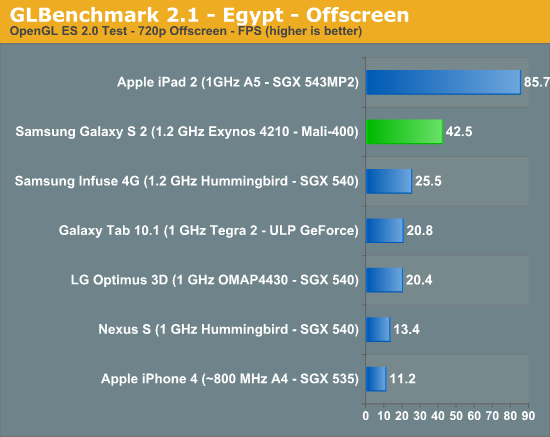
Anandtech has published some interesting findings based on their extensive Samsung Galaxy S II review. It’s the first smartphone to use the graphics processing unit based on the Mali-400 core from ARM Holdings, a fables chip maker from the UK. In fact, Samsung has engineered and manufactured its own system-on-a-chip solution for the handset.
They call it the Exynos 4210 and it combines a dual-core Cortex-A9 CPU core and the aforementioned Mali-400 GPU sporting four cores. The resulting performance, says Anandtech, is comparable to Texas Instruments OMAP 4 chip that incorporates Imagination Technologies’ PowerVR SGX540 GPU core. However, the quad-core 1.2GHz Exynos 4210 probably won’t hold a candle to iPhone 5, which will likely carry the same dual-core processor-GPU combo as the iPad 2’s 1GHz A5 chip:
Samsung implemented a 4-core version of the Mali-400 in the 4210 and its resulting performance is staggering as you can see above. Although it’s still not as fast as the PowerVR SGX 543MP2 found in the iPad 2, it’s anywhere from 1.7 – 4x faster than anything that’s shipping in a smartphone today.
Interestingly, and per the GL Benchmark seen in the above image, the Exynos 4210 is more than twice as fast compared to the Galaxy Tab 10.1 that runs Nvidia’s Tegra 2 chi. It’s also nearly four times speedier than iPhone 4’s 800 MHz A4 chip which has the PowerVT SGX535 GPU core. However, the 4210 falls short in the triangle throughput department.
The publication this this could be a big disadvantage over the iPad 2’s A5 processor that clocks nine times the graphics performance of the original iPad’s A4 chip. Triangle throughput is important in graphics-intensive games and will become key in “future games that may scale along that vector rather than simply increasing pixel shader complexity”. The video of Anandtech’s Samsung Galaxy S II review is right after the break.
Cross-posted on 9to5Mac.com.
[youtube=http://www.youtube.com/watch?v=1ofK7xFhb1k]
Android powered nano-like watch anyone? The video above from I’mWatch, a brand owned by Blue Sky, shows an interesting little Android powered touch screen with wristband, which eerily resembles the many third-party products available for turning Apple’s iPod nano into a similar accessory.
I’mWatch is a device that appears to be focused on connecting to your phone in order to provide quick reference to everything from incoming calls to emails, and Facebook and Twitter notifications. It does this by fastening an iPod nano-like, fully functional touch screen to the traditional wristwatch form factor. The site even mentions the ability to “touch, drag, swipe or pinch”.
Mysteriously, a list of compatible devices mention the I’mWatch is compatible with iPhone 4, in addition to Android devices, BlackBerry, and Windows Phone 7. We haven’t seen an Android device that is able to interact with an iPhone or iOS like I’mWatch claims, so we’re skeptical about this so called iPhone 4 compatibility.
Expand
Expanding
Close


