Chance currently writes for both 9to5Google and 9to5Mac, in addition to 9to5Toys. He has previously written for several other online publications. He uses a Nexus 5, iPhone 5s, iPad Air, Hackintosh, and Macbook Air.
We’re just a week away from Mobile World Congress kicking off in Barcelona, and while the event has been rather quiet for the past couple of years, it looks like that may change this time around. Samsung has already announced a press event for MWC, during which it will unveil its Galaxy S5 flagship. According to two new reports, however, the company also has more planned for the event.
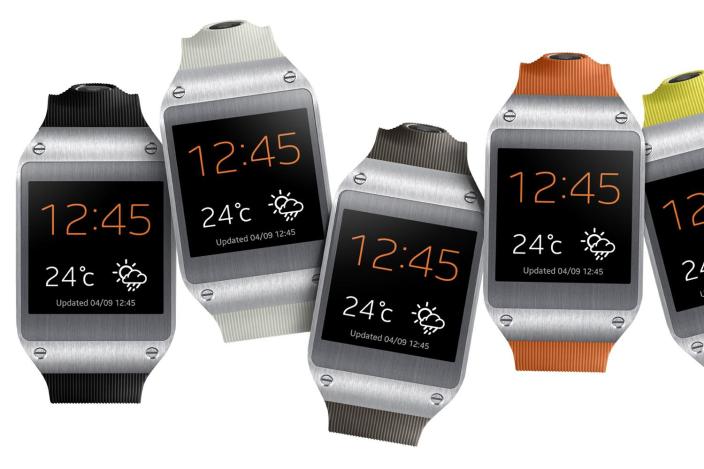
Both USA Today and The Verge are reporting that Samsung will unveil at least one new Galaxy Gear smartwatch variant at its press event next week. The Verge report is sparse on details, simply reporting that Samsung could unveil “multiple new Galaxy Gear” models at the event.
Samsung’s been rather quiet when it comes to its plans to update United States devices to Android 4.4 KitKat. Today, however, the company has finally detailed exactly which devices it plans to update to Android 4.4.2, although it still left out the specific “when” detail.
Samsung says that it currently plans to update the entire Galaxy S4 and Galaxy S III line of devices, in addition to the Note II and Note III. Other various tablets and devices will be updated, as well, including the Note 8.0 and Tab 3. The entire list is below: Expand Expanding Close
Last night, it was reported that Motorola CEO Dennis Woodside would be stepping down from his position to become the chief operating officer at cloud storage company Dropbox. Woodside has now confirmed this decision in a blog post on the Official Motorola Blog, saying that he will step down as CEO at the end of March.
Woodside goes on to announce that Jonathan Rosenberg, who was the SVP of Products at Google from 2002 until 2011, will step in as COO at Motorola Mobility on April 1st. Rosenberg worked closely with Woodside and was “intimately involved” with decisions at Motorola. Google Chief Business Officer Nikesh Arora will remain Executive Chairman of the Motorola Operating Board and continue to oversee strategy at the company. It looks as if Motorola will be going without a CEO after Woodside leaves, leaving Lenovo with a lot of control.
Woodside says he is leaving Motorola Mobility “in great hands” and that he is immensely proud of what the company has accomplished in the past 18 months. He also notes that he is excited for the next chapter for the company under Lenovo, who purchased it for $3 billion last month.
Dropbox CEO Drew Houston has also issued a statement on the news.
“We’ve long admired Dennis’s leadership at Google and Motorola where he ran multi-billion dollar businesses and built amazing organizations around the world. We’re so happy to welcome Dennis to our team — I can’t imagine a better person to help us bring Dropbox to global scale.”
According to a new report from the Wall Street Journal, Dropbox plans to name Motorola CEO and 10-year Google veteran Dennis Woodside as its first chief operating officer. Citing people “familiar with the matter,” the report says that Woodside will focus on further expanding Dropbox services into businesses and schools, as the company faces stiff competition from other services, such as Box Inc.
This is a big loss for Motorola. Even though Woodside didn’t return the company to profitability in his short tenure as CEO, he did release several very well-received smartphones, including the Moto X and its lower-cost sibling the Moto G. It remains to be seen who will take over when Woodside officially steps down from his post at Motorola.
At Dropbox, Woodside will be the business veteran of the team, working under chief executive Drew Houston chief technology officer, Arash Ferdowsi. Dropbox has reportedly been slowing down in terms of growth, with its sales slowing and questions being raised about whether it is profitable or not. Woodside will certainly have his hands full at Dropbox.
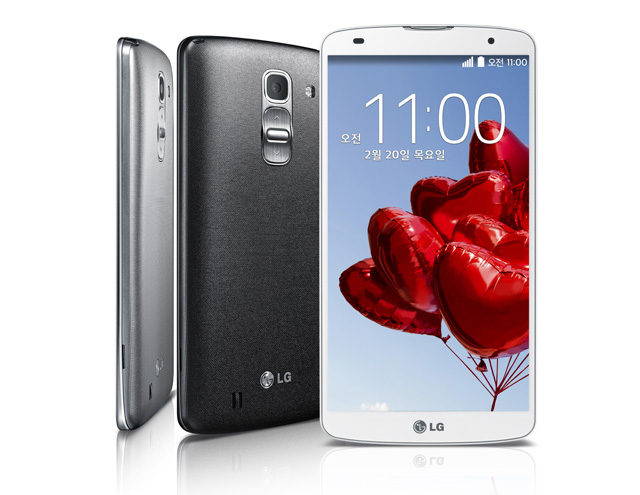
The G Pro 2 also features a 13MP camera that is capable of 12oFPS slow-motion video recording, in addition to standard 4k recording. The camera also includes a variety of shooting modes, including a “Flash for Selfie” mode that offers more “soft” lighting for self-portraits.
In terms of power, the device features a 2.26GHz quad-core Snapdragon 800 processor with an Adreno 330 GPU and 3GB of RAM. It has a 3200mAh battery, as well as a microSD card slot for up to 64GB of additional storage. The G Pro 2 itself will be sold in 16GB and 32GB variants. It will ship with Android 4.4 KitKat.
LG is also touting a new “Knock Code” feature that supposedly makes unlocking and using your phone even easier. Knock Code allows users to unlock their G Pro 2 by simply tapping their screens using one of the 86,367 “knock” combinations.
As far as availability goes, the device is available in Korea now, but LG says it does not know when it will launch in other areas. Full press release after the jump.
The Wall Street Journal has published a new report in which it claims that there are some major “strings attached” for manufacturers when it comes to using Android. According to documents obtained by the publication, Google has imposed strict regulations on companies that wish to have access to YouTube or the Play Store on their devices. The documents show that in order to receive access to those services, companies are forced to feature other Google apps and set Google search as the default search engine on the device.
Companies wishing to gain access to Google services are forced to sign a “Mobile Application Distribution Agreement” with Google. Both HTC and Samsung have signed such agreements, which force them to preinstall twelve Google apps on any device they release. Other details of the agreement include placing the Search and Play Store apps “immediately adjacent” to the homescreen, and that Google apps appear no more than one screen away. Samsung and Google also recently signed a deal to license each other’s patents for the next 10 years.
Google today updated the Play Music app for Android with a handful of new features. The biggest change is the ability to cache radio stations for offline listening, following the update in December that added the ability to save songs to your SD card. This means that you can now create a radio station and be able to listen to it whenever you want, even if you don’t have an active internet connection. It’s unclear how much of a radio station Google will cache, but we’d imagine it’s quite a few songs, so you can listen for a while before hearing a repeat song (via Android Police).
Also new with this update is the ability to manage your authorized Google Play Music devices from directly within the app. There’s a cap of 10 devices, and as many power users now, it doesn’t take long to reach that limit, especially if you share an account with family members.
There are a few other minor tweaks throughout the app with this update, such as a new “Play Next” button on songs, artists, and albums. There’s no official changelog just yet, as this appears to be a staged rollout. Be sure to keep an eye on the Play Store for the update to hit your device.
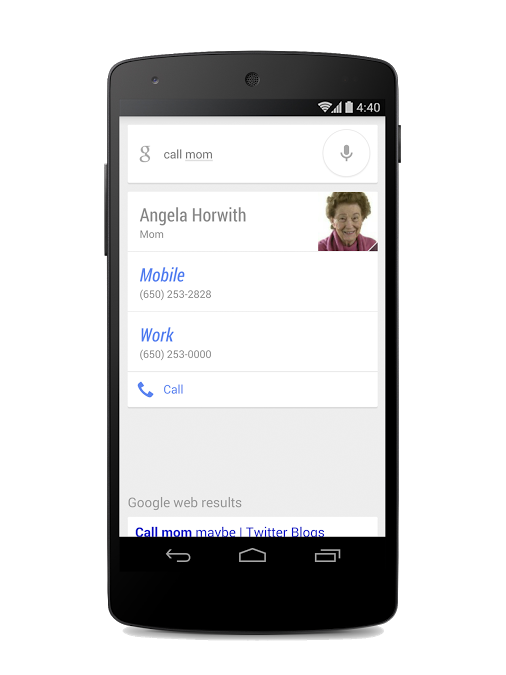
Google today rolled out a minor update to its Search app on Android. The update doesn’t add a lot, but does make the voice recognition functionality even better. With the update, you can now assign titles to people in your contacts. For example, you can say “Ok Google, call Mom” and it will either call the number that you have assigned to your mom, or prompt you to choose who you want to be labeled as your mom and remember that option for future use. The funcationaily also works for texting. Simply say “Ok Google, send a text to my wife” and the Search app will pull up the wife contact. Officially, the app supports the following relationships: father / dad, mother / mom, brother, sister, cousin, niece, nephew, aunt, uncle, grandmother / grandma, grandfather / grandpa, wife, husband, girlfriend, and boyfriend.
Want to save time keeping in touch with your loved ones? Or just not drop your phone or your shopping bags whilst you try to find a number to make a call? You can skip scrolling through your contacts and just say to your Android phone “Ok Google, call Mom” or “Ok Google, send a text to my wife.” Starting now, the Google search app on your Android phone will be able to pull up the right contact for you—and if you don’t have Mom saved as “mom,” it’ll help you set that up quickly.
The update appears to be a staged rollout, so it may take a little while to appear on your device. Keep an eye on the Play Store.
After reaching the top of App Store charts, the hit iOS and Android game Flappy Bird will be removed from the Play Store. According to tweets from the developer Dong Nguyen, the game will be removed from both the iOS and Android app stores in just 22 hours. Nguyen says he “cannot take this anymore” and that the game ruins his “simple life,” which means he now hates it. He says the decision has nothing to do with “legal issues.” Nguyen also says he has no interest in selling the game to anyone.
I am sorry 'Flappy Bird' users, 22 hours from now, I will take 'Flappy Bird' down. I cannot take this anymore.
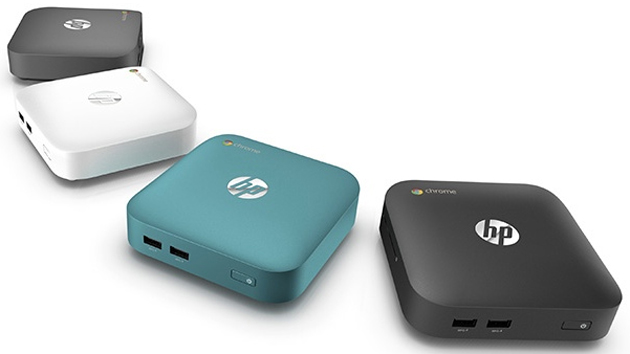
HP previously teased that it would be releasing a Chromebox this spring, but has today announced a few more details about the box, in addition to some images. HP’s Chromebox will come in four colors including white, black, silver, and turquoise. The device will be marketed towards homes and businesses, seeing that it will be more powerful than some of the other Chromeboxes we’ve seen so far this year (via Engadget).
HP’s Chromebox features an HDMI port and DisplayPort, in addition to four USB 3.0 ports. The device will be powered by a fourth-generation Haswell-based Intel Core i7 processor.
Missing from the details announced today is pricing. ASUS’ new box will come in at $179, although it is less powerful. Either way, HP will certainly have some tough competition in the Chromebox space. The company’s box is set to be released in spring.
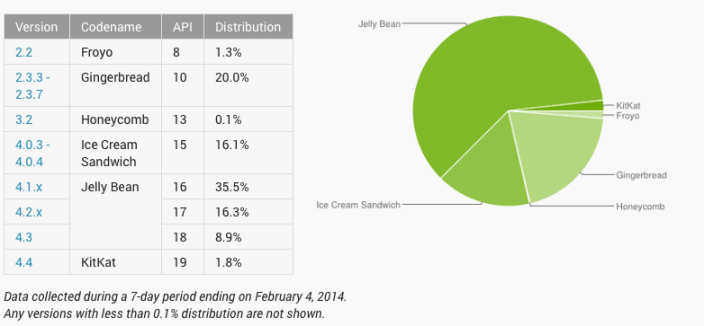
Google has just updated its Android Distribution numbers to reflect data during a one-week period ending on February 4th. This data is collected by recording what version of Android every device that accesses Google Play is running. Most notably, Jelly Bean has surpassed the 60 percent milestone, going from 59.1 percent to 60.7 percent. KitKat saw very minor growth, increasing from 1.4 percent to 1.8 percent.
No other version of Android saw an increase this time around, with Ice Cream Sandwich falling from 16.9 percent to 16.1 percent and Gingerbread dropping from 20 percent from 21.2 percent.
Also noteworthy is the fact that 80 percent of all Android devices are rocking Android 4.0 or higher, meaning that most have the latest design interface and features from Google.
Google has had problems in the past rolling out updates in a prompt manner to devices, but things have definitely improved over the last year or so. It is, however, disappointing to see the latest version, KitKat, only running on 1.8 percent of devices.
Google today announced that it will be changing the way it validates the view counts on YouTube videos. In the past, the company would scan views for spam immediately, but starting today, Google will periodically validate a video’s view count and remove fraudulent views as it finds them. Google says it is doing this to keep YouTube views authentic in order to maintain “the trust” of fans and creators.
While in the past we would scan views for spam immediately after they occurred, starting today we will periodically validate the video’s view count, removing fraudulent views as new evidence comes to light. We don’t expect this approach to affect more than a minuscule fraction of videos on YouTube, but we believe it’s crucial to improving the accuracy of view counts and maintaining the trust of our fans and creators.
Google also advises YouTube creators to be hesitant when working with third-party marketing firms, as some offer to sell fake views. You can read Google’s full blog post on its Online Security blog.
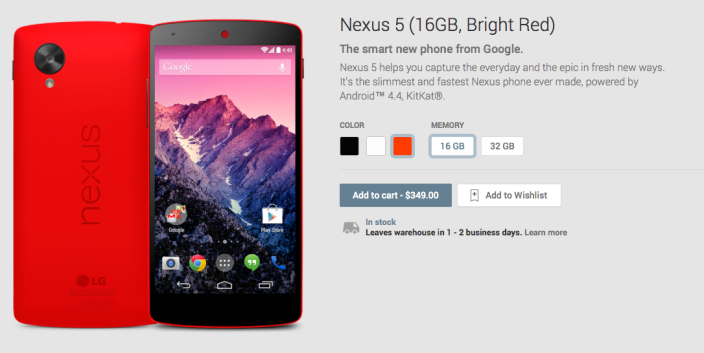
After several weeks of rumors and speculation, a Bright Red variant of the Nexus 5 is now available for purchase on Google Play, as a leak from Sprint last week suggested it would be (via Droid Life). The model has an entirely red back and a black front, with the exception of the front ear speaker, which is also red. As you would expect, the specifications of the red Nexus 5 are identical to the black and white models, which we praised in our review.
Pricing is also the same, coming in at $349 for 16GB and 32GB for $399. The Bright Red Nexus 5 is shipping within 1-2 business days. LG’s PRess release:
LG AND GOOGLE ANNOUNCE FIRST RED NEXUS 5
Popular Nexus 5 Now Available in Three Colors ― Red, White and Black
SEOUL, Feb. 4, 2014 ㅡ The first red Nexus 5 device is now available on Google Play™. Nexus 5 is the first Google phone to be offered in three colors: red, white and black. Launched last October in partnership by LG and Google, Nexus 5 received praise as a stylish, high-performance Google phone. Nexus 5 is equipped with a Qualcomm Snapdragon™ 800 processor, a stunning 5-inch Full HD IPS display and runs Android 4.4, KitKat, the latest version of the Android OS.
“The Nexus line has always been about doing things differently and consumers who share this philosophy have been our most loyal fans,” said Dr. Jong-seok Park, President and CEO of LG Electronics Mobile Communications Company. “We’re carrying this thinking over to the red Nexus 5, which we think will catch the eye of consumers who want to make an even bolder statement.”
The red Nexus 5 will be available on Google Play™ starting this month in the United States, Canada, U.K., France, Germany, Italy, Spain, Australia, Hong Kong, India, Japan and Korea with wider availability across Europe by the end of the month. Customers will also be able to purchase a red Nexus 5 in retail stores in select markets.
I have to say, the device does look pretty slick in a red shade.
We’ve heard quite a bit about Google’s mysterious barge projects over the last few months, but it wasn’t until November that the company confirmed their existence. The SF Examiner now reports that Google is facing some regulatory issues in San Francisco and must move the construction site for its barge from its current island in the middle of the Bay to one of the fully permitted construction facilities in the Bay.
The request was made the San Francisco Bay Conservation and Development Commission, which noticed that neither Treasure Island Development Authority nor the city of San Francisco had the correct permits to allow for Google to be constructing the barge at its current location.
“Obviously the bay is a valuable resource to everybody,” Flanders, program director at San Francisco Baykeeper said. “Requiring people and companies large and small to pass all environmental regulations before using the bay is essential.”
Google says it will use these barges as “an interactive space where people can learn about new technology.” The barges will be able to move around and dock in different cities, as well. Check out a video of the tentative design of the barges after the jump:
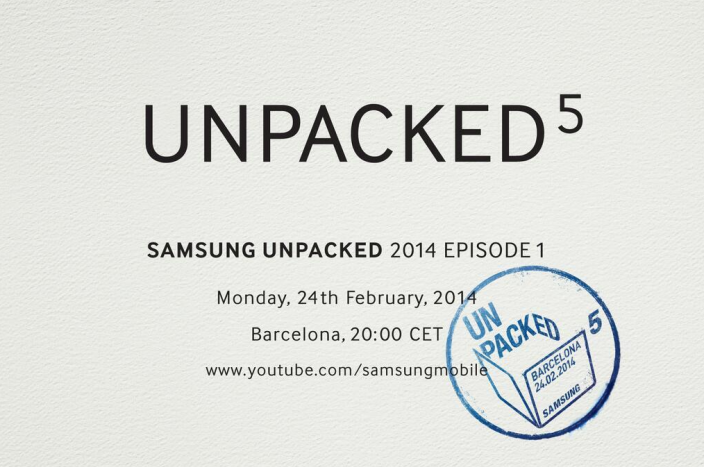
Samsung has just announced that it will be holding an Unpacked 5 press event on the first day of Mobile World Congress in Barcelona. The event will take place on Monday, February 24th at 20:00 CET. The event will be live streamed on YouTube, as well, for those who won’t be in Barcelona for MWC. The invite says that this is Unpacked “Episode 1,” suggesting that at least one more event will be held this year.
For those unaware, Samsung has used its “Unpacked” events to release all of its flagship devices over the past couple of years, including the Galaxy S4 and Galaxy Note III. It’s unclear what Samsung has planned for this specific event, however. It could be that the company will be giving a glimpse at the highly-anticipated Galaxy S5, or it could be something related to the company’s Tizen operating system.
We’ll be bringing you everything you need to know from Mobile World Congress, though, so be sure to stay tuned.
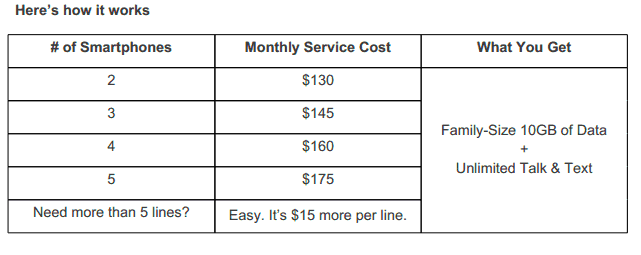
AT&T has just announced a new tier for its family plan customers that ups the amount of data offered. The carrier is now offering a family plan that includes unlimited talk and text, as well as 10GB of data. The 10GB of data is available to anyone that is apart of the family plan.
Here’s an example: Today, Verizon charges $260 monthly for a comparable plan that’s now $160 from AT&T. A family with four smartphones with unlimited talk and text, and a shared 10GB bucket of data, could switch to AT&T from Verizon and save $100 a month. Current AT&T customers can save big with these new plans, too, when they choose a 10GB or larger bucket of data. For example, a family or small business with four smartphones could move to this new plan and save between $40 and $100 per month, depending on their current plan.
This new plan starts at $130 a month for 2 lines and increases in $15 iterations for each additional line.
Back in December, AT&T launched new ‘Mobile Share Value Plans‘ that offered pretty steep discounts to customers to compete with T-Mobile’s Uncarrier offerings. AT&T also began offering $100 credits to new customers, as a preemptive jab at T-Mobile, as well.
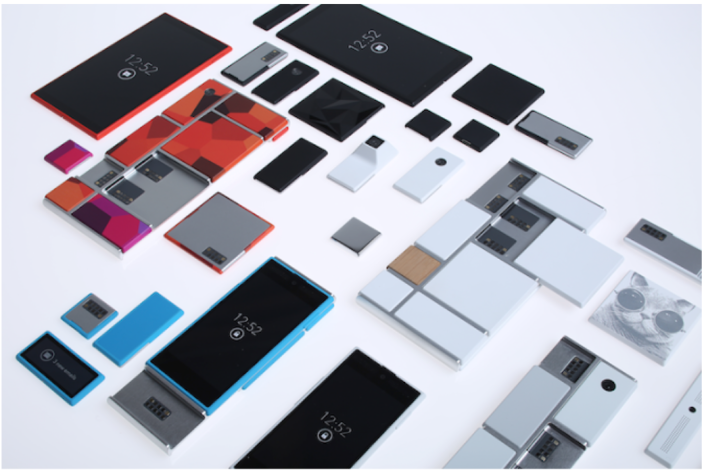
Even after Google announced that it was selling Motorola to Lenovo, there were still many questions surrounding the deal and what exactly Lenovo would be getting for the low price of $2.91 billion. We now know that, not included in the deal, is the Advanced Technology and Projects group led by former DARPA director Regina Dugan. This was revealed during a conference call with Lenovo. The Verge reports that the group will be integrated into Google’s Android team. Dugan will report to Sundar Pichai, but will still run things relatively independently.
This team consists of around 100 people, who will all make the move to Google’s Mountain View office now. The group is most well known for the Project Ara modular phone. This technology allowed for different phone configurations to be constructed from various parts. Google plans to scale the project and use its plethora of resources to speed up the process. Google will also work to accelerate other projects led by Dugan, such as ones pertaining to security tattoos and biotech sensors.
Google will hold onto all of the patents obtained by the Advanced Technology and Projects group, although Lenovo will have a license to them.
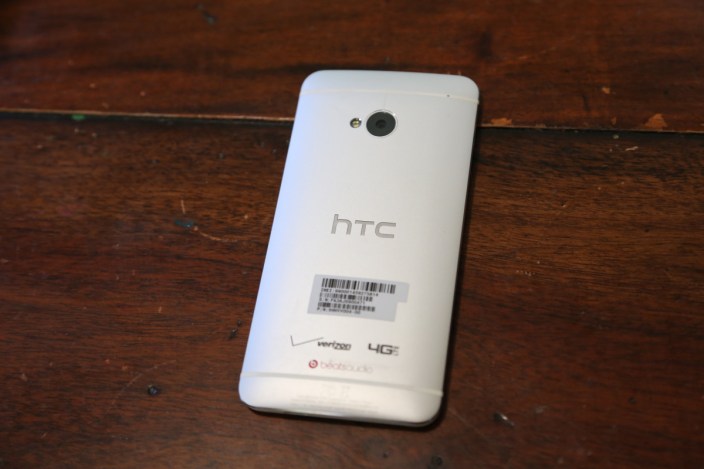
Back when Android 4.4 was originally announced, HTC promised its users that the flagship HTC One device would receive the update within 90 days in the United States and Canada. Today, however, Jason MacKenzie, President of HTC Americas, said the company will miss its deadline, as it still needs a little while to complete the update. “We won’t miss by much,” MacKenzie said, saying that the updates should still only be a few weeks away.
As we approach the 90-day mark, we are getting closer to delivering KitKat and the finish line is becoming more clear. We are currently in the certification phase across all of our carrier partners in North America and they share our enthusiasm for getting this software in your hands. That said, the software development process does not always follow a linear path and we know today that we will miss our self-imposed target. The good news is that we won’t miss by much as it shouldn’t be more than one to two weeks to complete each of the carrier versions of HTC One.
Android update timeframes have gotten quite a bit better over the last year, but they’re still not perfect. Even though this was a self-set deadline, it’s still disappointing to see HTC fail on its flagship device. Motorola has been the best about updating its devices recently, even beating some Nexus devices to the punch with Android 4.4.
The full letter from MacKenzie is below. Hopefully the HTC One’s update is not too far away.
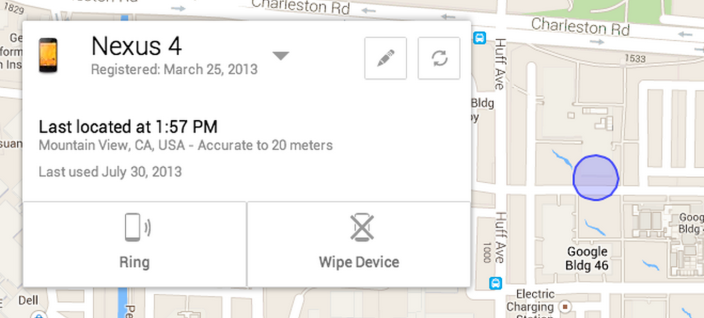
Android Device Manager for Android has received an update this afternoon that makes it even harder for thieves to get inside of your device if you lose it. The update adds a feature that presents a password challenge when you open the app or switch accounts. This extra security measure will make sure no one but the account holder can perform the actions within the app, such as wiping, locking, and ringing a lost device.
Now, on every launch, Android Device Manager will require you to enter your password. Find my iPhone on iOS has had this security measure in place for a while, so it’s certainly nice to see it come to the Android alternative. Although, Google still allows for you to turn off this prompt if you’d like.
Account password challenge at application start and when switching accounts
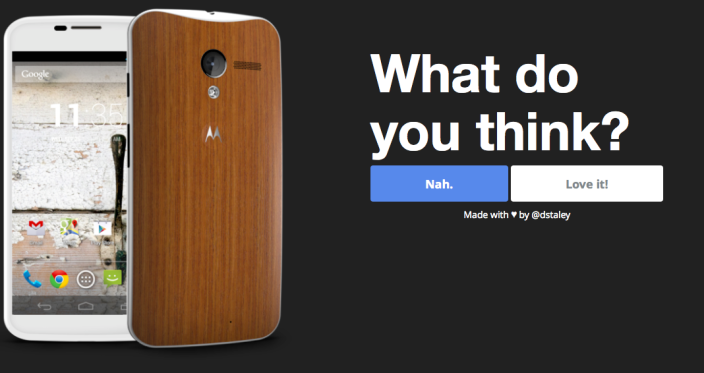
One of the biggest selling points of the Moto X since its launch has been the ability to totally customize the device with Motorola’s MotoMaker website at no additional cost. Of course, with more customization options comes some harder decisions for buyers. Moto Maker presents users with a plethora of color combinations for the back, front, and accents on the device. With all these options, it can be quite confusing for a smartphone buyer.
A new site, however, aims to make the design process a little easier. Moto X Randomizer is a simple site that provides random Moto X designs. You can either choose that you “Love it,” which will take you directly to the Motorola site for that specific design, or you can say “Nah” and move on to the next randomized design.
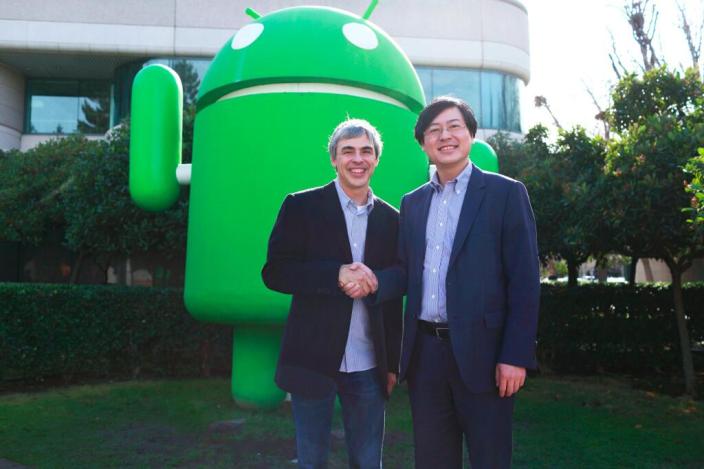
Google CEO Larry Page and Lenovo CEO Yang Yuanqing
Update: Motorola and Google have both confirmed the acquisition of Motorola by Lenovo for $2.91 billion. Google will, however, retain the “vast majority” of Motorola’s patents. Google CEO Larry Page says that Motorola will be better unitized and more beneficial to Lenovo. This will also give Google more time to drive “innovation across the Android ecosystem.” The deal still has to pass regulatory approval in China and the U.S., and until then, Google says it is business as usual for the two companies.
According a tweet from Reuters reporter Gerry Shih, Lenovo is nearing completion on a deal to purchase Motorola from Google for around $3 billion. A report from China Daily news corroborates Reuters, but claims the deal is closer to the $2 billion mark. China Daily claims that the deal will be announced to the public Thursday morning in Beijing, which is just a few hours from now. Google is also holding an earnings call tomorrow, so it’s very possible that the information will officially drop during the call.
TechCrunch has “confirmed reports” of the acquisition, saying the terms of the deal have not yet been revealed, but that it was around $3 billion. It’s also important to note that the deal includes Motorola Mobility, which Google paid $12.5 billion for, not the entire Motorola company.
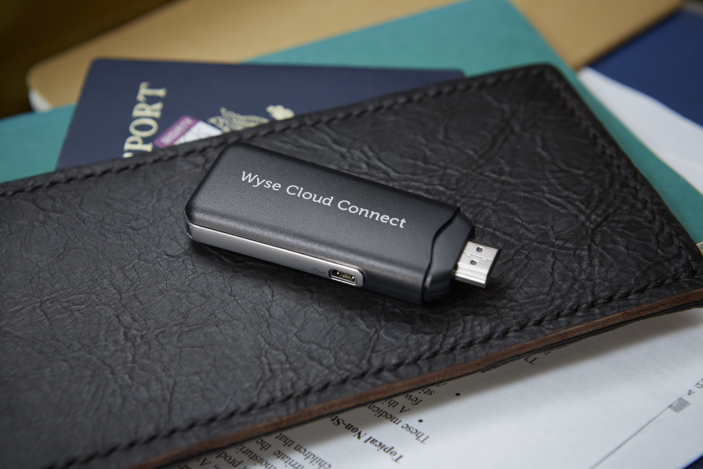
After witnessing the success of dongles like the Chomecast, Dell has just unveiled its latest accessory, the Wyse Cloud Connect dongle. This accessory will run $130 and be able to connect to any display that offers an HDMI or MHL port. Once the Cloud Connect is connected to the display, users can connect keyboards and mice to it via BlueTooth or mini USB. There’s also a microSD card slot with support for up to 32GB of local storage. The big selling point, however, is that its powered by Android, Jelly Bean to be exact, and offers the full experience on the connected display. Users will have access to the Play Store and all compatible apps within it.
Dell is also touting that the Cloud Connect dongle can remotely access Mac OS X and Windows PCs via Citrix, Microsoft or VMWare virtualization technologies. This option will offer the same experience that we’ve expected with remote access services, but on a larger display and only a small, flash-drive sized dongle. Both the Android and OS X/Windows interfaces will be presented in 1080p quality.
Although, it’s important to note that Dell is main market with the Cloud Connect is businesses and schools. The Cloud Connect management dashboard allows IT administrators to set permissions and easily control what the end user can and cannot access. So this means that things like the Play Store could be heavily restricted for users.
Twitter for Android has received a pretty sizable update this evening that includes improvements to photo sharing, as well as realtime news stories at the top of your timeline. New to photo sharing is the ability to easily @ mention people when tweeting a photo. While editing a photo, the app will now remind you to @ mention the people or places that are in your photo.
Also new are realtime stories at the top of your timeline after you pull-to-refresh. This stories aren’t specific to each user, but rather based on the most popular links and headlines shared on Twitter. The app will only show these stories if no new tweets are loaded.
Twitter also touts better login verification and improvements to photo editing. The full change log is below:
This release includes enhancements to Tweet replies and the photo viewer.
Easily mention other users when you Tweet a photo.
Improvements to the photo cropping and image rotation
Better login verification.
When you’ve read all the latest Tweets, pull to refresh and see recommendations for new content on Twitter.
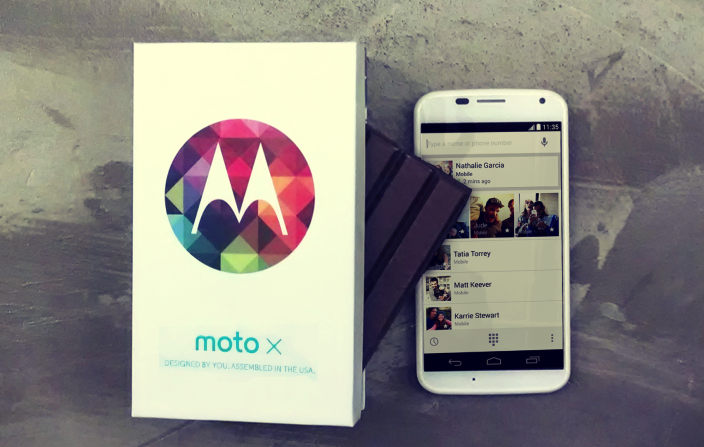
Motorola has just announced via its Twitter account that it will be offering the Moto X without contract for $100 on January 27th. The deal will apply to any Moto X, meaning that the 16GB will run just $299 and the 32GB will cost $349. That’s just $100 more than Moto G. The catch, however, is that the deal will only run for one hour and “while supplies last.” The offer will be available from 3PM ET to 4PM ET on the 27th of January.
Xtra sweet deal alert: Jan 27 3-4PM ET $100 off any #MotoX w/o contract while supplies last… (1/2)
Motorola also notes that, until Valentine’s Day (February 14th), the Moto X will be available for $70 off, should you miss out on the $100 off offer. That means that the 16GB model will be available for $330 and the 32GB for $380 It looks like that offer will kick in after the $100 off offer sells out on the 27th.
If you miss out, you can still get $70 off any #MotoX w/o contract until Valentine’s Day. (2/2)