
Author

Avatar for 9to5 Staff

9to5 Staff

Strategy Analytics: Android Market to eclipse App Store in eighteen months

Site default logo image

CBROnline relays a new Strategy Analytics report that spells another victory for Google as its mobile bazaar is projected to become bigger than Apple’s App Store in terms of items available before the end of the next year:

According to Strategy Analytics’ new application storefront forecast the Android Market is poised to overtake the Apple App Store in quarterly volume by the end of 2012.

This shouldn’t be a problem considering that Google’s Android Market is getting additional assistance from third-party app stores such as the Amazon Appstore for Android, GetJar, Nook and others. Apple as of July 7 reported 425,000 apps on the App Store that have been downloaded 15 billion times on 200 million iOS devices, generating $3.6 billion in revenues. A week later Google said Android Market saw six billion downloads across the 130 million Android devices sold to date and more than 500,000 device activations per each day.

Paid downloads on mobile app stores should drive nearly $2 billion per quarter by the end of next year, the research firm said. “Applications are a multi-billion dollar industry on their own and are playing an increasingly important role in the phone purchase process, and play a key role in augmenting platform stickiness, after the operating decision has been made”, says the report.

Expand
Expanding
Close

HTC: We will not adopt mobile chips from Samsung

Site default logo image


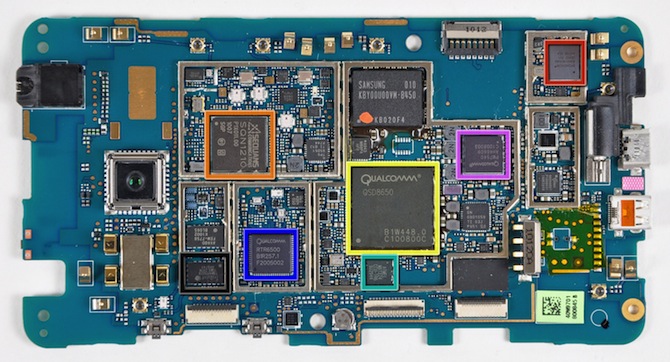
An iFixit teardown of HTC’s Evo 4G reveals a 1GHz Qualcomm Snapdragon processor. HTC denied jumping ship to adopt Samsung-manufactured chips.

Recently, there has been talk of Taiwanese handset maker HTC adopting mobile processors from Samsung in an effort to reduce manufacturing costs and royalty fees, the move that would be called a major blow to HTC’s current chip supplier, Qualcomm. Responding to the rumors, HTC denied the reporting, Taiwanese trade publication DigiTimes reports.

Having procured memory products and display panels from Samsung, HTC is unlikely to add procurement of mobile processors to heavily rely on Samsung, the sources analyzed. In addition, adoption of Samsung’s mobile processors would not help decrease royalty payments because HTC still has to pay royalty to owners of patents concerned, such as Qualcomm, Nokia and Microsoft, the sources pointed out.

The source also noted that HTC “has adopted ST-Ericsson’s U8500 platform for entry- to mid-level smartphone models to be launched in the first half of 2012”. HTC is paying an estimated $5 per each Android handset sold as part of their patent protection agreement with Microsoft. Obviously, the company knows better than to become trapped with a sole supplier like Samsung…

Look at what happened to Apple, Samsung’s biggest buyer of various components, including custom-designed A4/A5 processors for iPhones, iPods and iPads and NAND flash chips for computers and mobile gadgets. Following increased competition from Samsung’s Galaxy Tab tablet and Galaxy S smartphone families, Apple and Samsung become frenemies. The California gadget maker is now suing “copyist” Samsung and reportedly taking its billions of dollars in orders elsewhere, including next-generation A6 processor manufacturing to TSMC.


Expand
Expanding
Close

The US General Services Administration has gone Google

Site default logo image


GSA shares Google’s love for electric cars so they helped launch Electric Vehicle Pilot Program in May. Pictured above: GSA’s administrator Martha N. Johnson behind the wheel of a patriotically painted electric car.

Another day, another big enterprise, education institution or government agency goes Google. Today, it’s the US General Services Administration’s (GSA) turn. The search company has made public on the Google Enterprise blog that in just six months GSA has managed to migrate over 17,000 employees and contractors to Google Apps for Government.

“By moving to the cloud, GSA hopes to serve as a model for other federal agencies”, Google writes. Just the move to Gmail-hosted email will save them $15 million over five years. The switch was gradual as hundreds of early adopters at GSA later provided assistance to their colleagues in making the switch. This is in start contract to the traditional approach involving a large IT department, outside consultancy firms and expensive support and training staff.

GSA teams are now enjoying the Google Chrome for Business browser to run web apps such as Google Docs, Gmail, Calendar, Sites, Google-hosted videos and other custom-built applications running off the Google Apps infrastructure. Last month,  the state of Wyoming transitioned all 10,000 state employees onto Google Apps for Government.


Expand
Expanding
Close

LG Thrill 3D arrives in the coming weeks for $99, AT&T confirms

Site default logo image

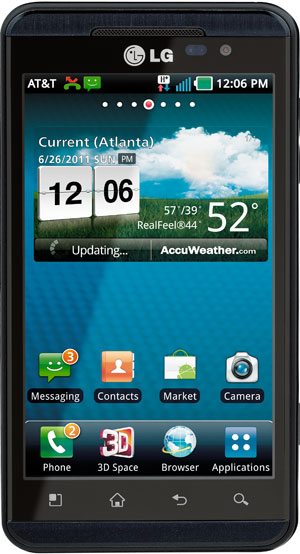
Carrier AT&T informed 9to5Google.com that they will be bringing the LG Thrill 3D to their network “in the coming weeks”, priced at just $99. The handset is also referred to in AT&T’s press release as LG Thrill 4G. That’s a really competitive price and LG Thrill is a pretty amazing phone. It features a glasses-free 3D display, a 1GHz dual-core processor with dual-channel RAM and five-megapixel stereoscopic cameras for capturing 3D footage in 720p and stills, among other things. The device will run Gingerbread out of the box and AT&T confirmed in a separate statement this morning that they will be updating all post-paid Android smartphones released in 2011 to Gingerbread, including Motorola’s Atrix 4G that received an update this morning, HTC’s Inspired 4G which is due to get it “in the coming weeks” and four other phones.


Expand
Expanding
Close

AT&T promises to upgrade all of its 2011 phones to Gingerbread

Site default logo image

In an industry-first, AT&T issued a statement pledging to update all post-paid Android smartphones released in 2011 to Android 2.3 Gingerbread. Motorola Atrix 4G owners will get a Gingerbgread update beginning today and HTC Inspire 4G users will get it “in the coming weeks”, AT&T confirms. As for the Atrix, Gingerbread will enable the ability to download applications from third-party stores. Other smartphones in AT&T’s lineup pinned for Gingerbread include LG’s Phoenix, Pantech’s Crossover and Samsung’s Captivate 4G and Infuse 4G.

Delivery method will vary by device, the carrier said. That AT&T is taking updating Android phones seriously is a welcome sign for consumers and the Android ecosystem at large, often criticized for platform fragmentation. Google said at their annual developer conference in May that they will be tackling fragmentation woes by imposing strict requirements on their carrier and handset partners. Upgrade details are right below the fold.

Expand
Expanding
Close

Acer’s ex-CEO rumored to join Samsung and help boost Chromebook sales

Site default logo image

As you know, Acer lost its CEO Gianfranco Lanci who resigned in March for his inability to produce an answer to Apple’s iPad which ushered in the post-PC era. At the same time, Samsung’s notebook shipments are declining due to weak netbook sales affected by, you guessed right, the iPad and tablets in general. It doesn’t come as a surprise then that Lanci is rumored to be joining Samsung Electronics in August to “help the Korea-based electronics giant expand its notebook business, especially in Europe”, per DigiTimes’ article:

Unconfirmed reports indicate that Dell and Samsung have both contacted Lanci, aiming to leverage the former Acer CEO’s expertise in the management of channel sales in Europe. Acer, Asustek Computer as well as Hewlett-Packard (HP) which all count Europe as one of their leading markets, reportedly have been on high alert on Lanci’s move, said the sources.

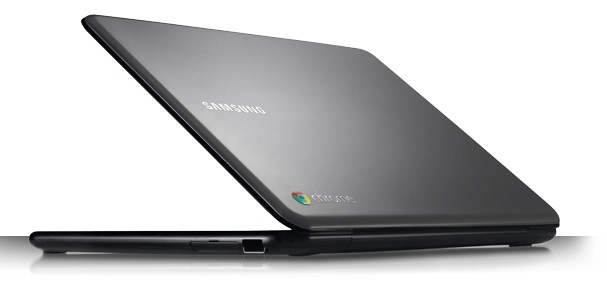
One possible issue: Lanci signed a one-year non-compete agreement with Acer when he resigned on March 31. This, the sources assert, should be settled easily between Samsung and Acer should Lanci take the job. Samsung is the world’s seventh-largest notebook vendor by units and sixth in Europe. They shipped 9.9 million notebooks in 2010, IDC estimated, and are one of the premium partners authorized to manufacture Chromebooks. On top of inexpensive netbooks and notebooks, Samsung is also increasingly rivaling Apple with flagship offerings such as the Series 9, an ultrathin notebook The Wall Street Journal columnist Walt Mossberg likened to the MacBook Air. That machine is also on T3’s Gadget Awards 2011 shortlist in Computer of the Year and T3 Design Award categories. In addition to Samsung, Acer stumbled, too…
Expand
Expanding
Close

For low-cost smartphones and tablets, two fingers instead of ten

Site default logo image

As high-end mobile devices such as Samsung’s Galaxy Tab tablet and Galaxy S smartphone, Apple’s iPad family or gadgets from newcomers like Acer – which is expected to ship up to 400,000 tablet PCs in the third quarter – all bring mobile computing to mainstream, the mass market is clearing way for inexpensive mobile gadgets aimed at emerging markets, folks with low income and price-conscious consumers. Increasing demand is stretching thing premium suppliers such as Wintek, which provides touch panels for Apple’s mobile devices and the upcoming Amazon tablet. In fact, Wintek’s third-quarter capacity is now booked up, reports DigiTimes. In response to demand, Wintek has won adoption of Touch on Lens technology that uses single-glass-sheet touch modules aimed at HTC, Samsung Electronics and Nokia for their entry- to mid-range smartphones, sources claim.

“Because Touch on Lens has the advantage of lower production costs, higher light transparency and shorter production time, it is expected to be adopted by many vendors of tablet PCs in the second half of 2011”, sources indicated. At the same time, small suppliers see their chance with even cheaper solutions aimed at $100 smartphones and tablets. From the likes of Elan Microelectronics, ITE Tech, Weltrend Semiconductor, Sitronix Technology, Egalax-empia Technology and ILI Technology come low-cost touch-panel solutions that – unlike high-end touch panel modules – recognize only two fingers at the same time instead of ten. This is fine for pinch-zoom and should do the trick for China and emerging markets, another DigiTimes report asserts, noting that the Amazon tablet will adopt two-finger solutions to keep the price down.


Expand
Expanding
Close

comScore: Three weeks in, Google+ has a global audience of 20 million visitors, goes big in India

Site default logo image

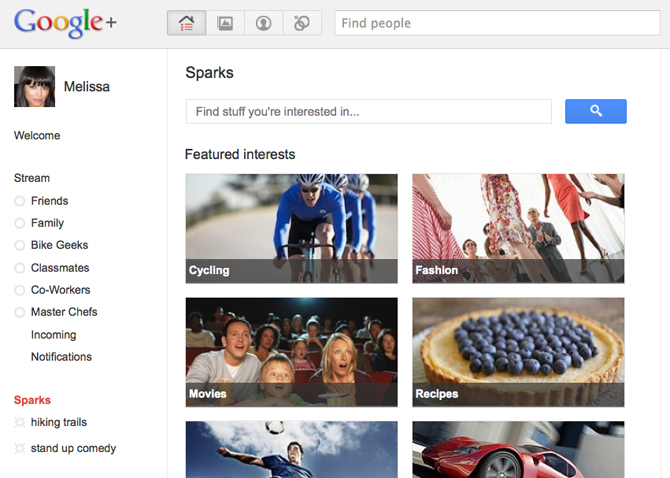
Following Ancestry.com founder Paul Allen’s estimate that Google+ amassed ten million accounts in just two weeks and the subsequent confirmation from Google, comScore is out today with fresh stats derived from cumulative unique visitor data from around the world. While the research firm did not attempt to estimate the number of unique user accounts, they found out that about 20 million unique visitors worldwide loaded Google+ pages as of July 19, just three weeks after the service debuted:

The evidence shows that Google+ is off to a strong start in its first few weeks with a global audience of 20 million visitors. It has clearly captured the attention of the technorati and as usage incubates among this crowd it will likely continue to proliferate to a more general audience. That number represents an increase of 82% from the previous week and 561% vs. two weeks prior. The U.S. audience recently surpassed 5 million visitors, up 81% from the previous week and 723% from two weeks earlier.

Their data is based on unique visitors and includes visits from both Google+ users and non-users who may have visited plus.google.com pages. Bear in mind that the numbers exclude visits from mobile devices and usage that occurs through the Google+ bar at the top of most Google pages. Google+ seems to be off to a great start everywhere, with 63 percent visits from abroad. The top five non-US markets include India with 2.8 million visitors, the UK (867,000 visitors), Canada (859,000 visitors) and Germany (706,000 visitors). More interesting data points right below the fold.


Expand
Expanding
Close

Interact with the Alexander Calder Google Doodle today

Site default logo image

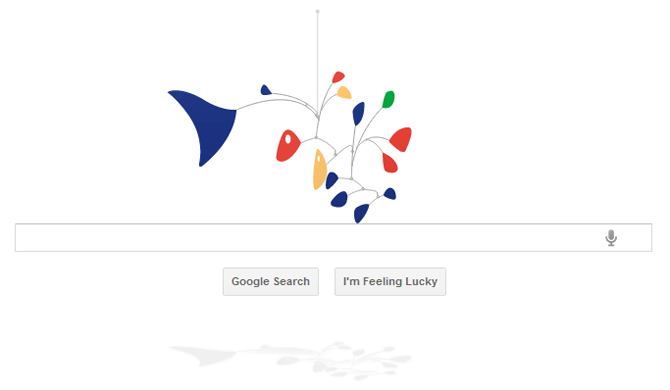
Google is celebrating the 113th birthday of sculptor Alexander Calder (Wikipedia article) with an interesting Google Doodle on the main search homepage. Conveniently, it is a digital take on one of Calder’s famous mobile sculptures and interactive, too: You can rotate it around in three dimensions by pointing your mouse at one of the edges until the pointer changes to the drag handle.

The digital sculpture reacts differently depending on which piece of it you “grab” to rotate the whole thing. Notice how it also casts a realistic shadow below the search box, in real-time. Calder is well-known for the Cirque Calder, a miniature sculpture of a working circus he created to fit inside a suitcase. He went later on to perfect the art of mobile sculpting using common materials such as wire, string, pull toys and more.

via the official Google blog


Expand
Expanding
Close

Verizon: Ivan Seidenberg is out, Lowell McAdam is new CEO

Site default logo image


Give it to Verizon’s new CEO, Lowell McAdam (right), who takes over from
Ivan
 Seidenberg (left) August 1

Verizon Wireless just announced their second-quarter earnings, reporting a 2.8 percent revenue growth on revenues of $27.5 billion and consolidated earnings of 57 cents in diluted earnings per share. The carrier also announced in a separate statement that its current CEO Ivan Seidenberg will step down to be replaced by 57-year-old president and COO Lowell McAdam, effective August 1. The change is part of Verizon’s CEO succession process under way since 2010. Seidenberg will retain his chairman of the board position. Lowell has been a member of Verizon’s executive team since 2000 and COO over the last ten months.

Prior to joining Verizon, McAdam served as president, COO and CEO of PrimeCo Personal Communications, a joint venture owned by Bell Atlantic and Vodafone AirTouch. He was also vice president of AirTouch Communications and lead technical partner for cellular ventures in Spain, Portugal, Sweden, Italy, Korea and Japan plus he held various executive positions with Pacific Bell. The executive earned his bachelor’s degree in engineering from Cornell University and a master’s degree in business administration from the University of San Diego. McAdam also spent six years in the US Navy’s Civil Engineer Corps and is a licensed professional engineer.


Expand
Expanding
Close

It’s Apple vs. Google again as T3 unveils Gadget Awards 2011 shortlist

Site default logo image

British monthly Tomorrow’s Technology Today, better known as T3, which specializes in gadgets, gizmos and other technology, is out today with its shortlist of technology products, brands and personalities for 2011. T3 Gadget Awards, one of the biggest tech awards in the UK informally recognized as the “technology Oscars”, already has over 350,000 user votes.

A strong Apple showing is evident, with some interesting Apple vs. Google battles shaping up. The Cupertino, California-based consumer electronics powerhouse has fifteen nominations, only trumped by eighteen nods for Google and its Android operating system. Samsung comes in third with eight spots on the shortlist, while Sony picks up six.

Kieran Alger, editor of T3.com, comments for 9to5Google:

The rise of Google in the past twelve months continues to impress and has really benefited the tech industry with increased competition. In the smartphone market alone we’ve seen HTC and Samsung adopt the Android platform and team it with hardware that’s really challenging the dominance of Apple. We’re yet to see that cross properly into tablets but it’s surely only a matter or time. It’s great for the industry and we’re expecting the finals of the T3 Gadget Awards to be the hardest fought yet.

Apple’s iPad 2 and iPhone 4 face off Amazon’s Kindle and Samsung’s seven-inch Galaxy Tab for the Commuter Gadget of the Year award. With Android tablets taking up 30 percent of the tablet market in June, anything is possible in the Tablet of the Year category which includes Apple’s iPad, Motorola’s Xoom, Samsung’s Galaxy Tab, Asus’s Eee Pad Transformer and LG’s Optimus Pad.

Google’s Android Honeycomb operating system for tablets is also up for a vote in the Innovation of the Year category. There is plenty of time to vote up your favorites at the official website – the winners will be announced at the star-studded awards ceremony at Old Billingsgate, London on Monday, October 10. The full list of entrants and award categories is right past the break.


Expand
Expanding
Close

Strategy Analytics: Android tablets finally giving iPad some proper competition

Site default logo image

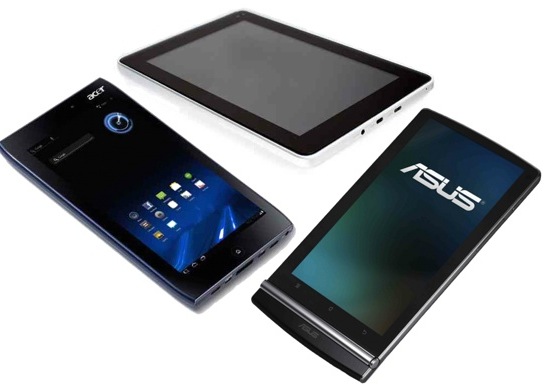
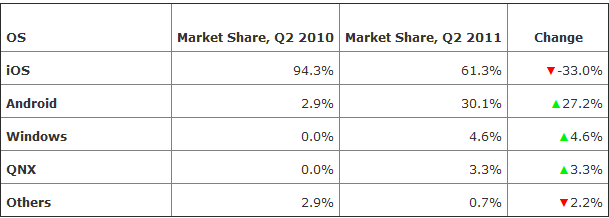
Research firm Strategy Analytics discovers that shipments of Android-driven tablets are finally beginning to make a meaningful impact on the overall tablet market. Yes, Android slates are making their presence known, even though iPad is still king of the hill. According to the research firm’s survey, June quarter tablet shipments topped 15.1 million units, a material increase over the 3.5 million units from the year-ago period. Apple seized the #1 slot with 9.25 million iPads the company reported for the June quarter, representing a 61.3 percent share of the tablet market overall.

At the same time, Android tablets have gone from 2.9 percent market share in June 2010 to 30.1 percent in June 2011, a surprising 27.2 percentage points increase based on sales of 4.55 million units. In the year-ago quarter Apple enjoyed a 94 percent share, so iPad’s 33 percentage points drop is substantial no matter how you look at it. GSM Arena observes that “in terms of market share, the iOS lead in the past quarter is nearly three times smaller than it was in the same period of last year”.


Expand
Expanding
Close

Lenovo debuts Honeycomb tablet with Netflix, another one for business

Site default logo image

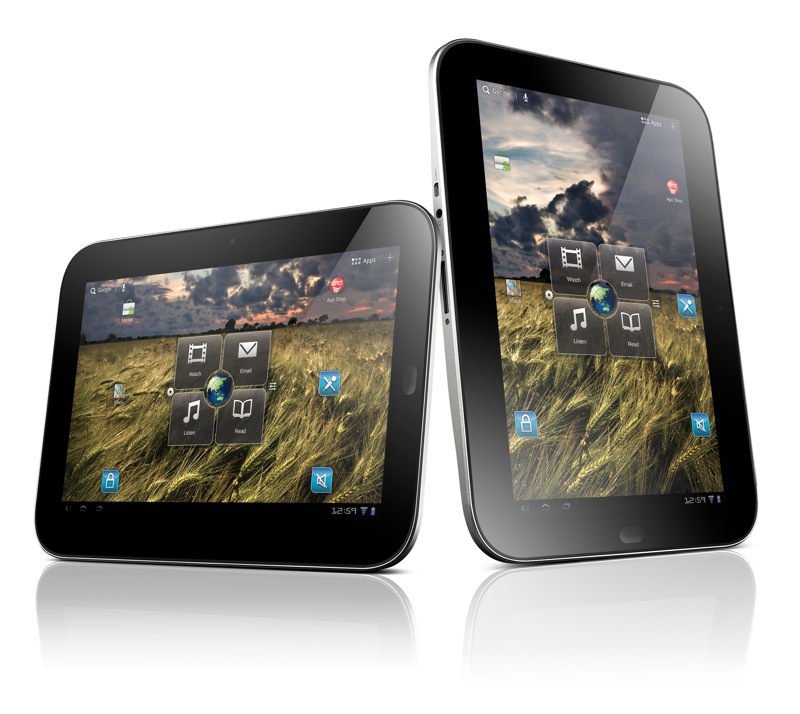
Lenovo announced two new Honeycomb 3.1 tablets: The consumer-focused IdeaPad K1 and the ThinkPad, which is being pitched as a tablet for business pros. Both devices come preloaded with the Netflix app that streams Hollywood entertainment, a first for Honeycomb tablets, in addition to Lenovo’s Launch Zone Android 3.1 skin, a bunch of enterprise apps and other software such as Zinio, Kindle and mSpot programs.

The business-focused ThinkPad tablet sports a 10.1-inch display with a 1280-by-800 pixel resolution and IPS, a premium display technology for wide viewing angles. The device is 0.55-inch thick and weighs in at 1.6 pound versus 1.24 pound for the Samsung Galaxy Tab. It runs a 1GHz Tegra 2 chip from Nvidia, features WiFi and 3G options and has a 24.1Wh battery, mini-HDMI, full-size USB 2.0, micro USB ports, SIM tray and SD card slots. The 16GB ThinkPad will retail for $499, or $30 more with the digitizer pen included. A 3G version will be offered “at a later date”, says LG.

The IdeaPad K1 rocks the same display (sans IPS) and processor as its business counterpart, but in a slightly slimmer package due to the use of mini ports.  Priced at $499, the 32GB IdeaPad will be available in the US beginning July 20 on Lenovo’s online store and through select business partners and retail stores nationwide. General availability in the US is pinpointed for August 2011 and worldwide during the third quarter 2011. This is my next has more details plus this nice video below.

[youtube=http://www.youtube.com/watch?v=kv8e7GBgzXs]

Expand
Expanding
Close

PlayBook exec leaves for Samsung

Site default logo image

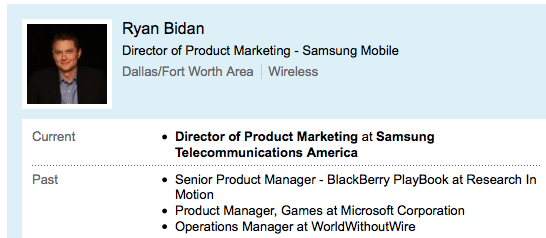
Brain drain at Research In Motion continues with the news that the PlayBook senior product manager Ryan Bidan left for greener pastures at Samsung. Bidan is third high-ranked RIM executives to defect for Samsung following the departures of the company’s vice president of digital marketing and media Brian Wallace last month. CrackBerry reports that Bidan is now Director of Product Marketing at Samsung Telecommunications America and Bidan’s LinkedIn profile confirms this. Prior to joining RIM in October 2008, Bidan was Product Manager at Microsoft’s Games division and Operations Manager at WorldWithoutWire. Two weeks ago Samsung’s chief product and technology officer Omar Khan resigned and went on to work for Citigroup, but it’s unclear whether Bidan will fill his shoes.


Expand
Expanding
Close

Schmidt: Android will conquer Asia, you’ll see Google protect HTC from Apple

Site default logo image


Google’s Eric Schmidt chats with the Wall Street Journal columnist Walt Mossberg at D9 conference in May 2011. Photo: Asa Mathat | All Things Digital

Interesting comments by Google’s executive chairman and former CEO Eric Schmidt at Google’s Mobile Revolution conference here Tuesday. 9to5Mac, our parent site, already reported how Schmidt bashed Apple for suing Android backers out of – in his view – pure jealousy at Android’s success and what he called “lack of innovation” on Apple’s part. However, Schmidt is “not too worried” about Apple’s patent infringement claim against HTC, but stressed his company will “make sure they don’t lose”ZDNet follows-up with more noteworthy tidbits concerning Android and Google’s view of the mobile landscape.

Asia will be the next gold mine as Android devices become more affordable to the mass consumer, he said, countering claims by DigiTimes that an ITC ruling favoring Apple in its crusade against HTC had white-box vendors such as Huawei Device and ZTE, two of China’s fastest growing Android-device makers, reconsider Microsoft’s mobile operating system at the expense of Android. Asia is the world’s largest and most populous continent with the population of 3.88 billion people.

Within a decade consumers will enjoy 30 times “cheaper, better, faster” connection speeds on mobile devices. Google’s mobile first approach will prove key:


Expand
Expanding
Close

Schmidt: Apple is jealous of Android’s success, that’s why they’re suing

Site default logo image

Google’s executive chairman Eric Schmidt has gone on the offensive and bashed Apple over patent infringement claims the company had filed against high-profile Android backers such HTC and Samsung. In what could be viewed as an effort to sway the public perception, he launched a nasty attack speaking at Google’s Mobile Revolution conference in Tokyo. To Schmidt, Apple’s taking rivals to court sends a strong signal, that of the lack of innovation and jealousy:

The big news in the past year has been the explosion of Google Android handsets and this means our competitors are responding. Because they are not responding with innovation, they’re responding with lawsuits. We have not done anything wrong and these lawsuits are just inspired by our success.

Schmidt re-iterated sales of 135 million Android phones since 2008 and highlighted more than 550,000 daily activations that exclude tablets and non-smartphone devices, which is up from 400,000 a day in May. He said Google will support HTC’s legal battle against Apple’s copyright accusations, but wouldn’t elaborate.

Whether or not Apple’s legal pressure stems from jealousy is up for debate, of course. Cynics might argue Schmidt’s comment draws from nervousness on Google’s part because Android backers are increasingly discovering hidden costs as Microsoft and Apple emerge as holders of patents crucial to Google’s mobile operating system. Apple’s victory over HTC may set what RBC Capital Markets analyst Mike Abramsky painted as a high royalty precedent for Android devices that could further shrink the already slim margins on Android phones.

As if that wasn’t enough, Microsoft is already taking money from five Android vendors for patent protection, including HTC which is said to pay five bucks each time it ships an Android handset and General Dynamics Itronix. Microsoft is also understood to have targeted Samsung, seeking royalties in excess of hundreds of millions of dollars annually. The Cupertino, California-headquartered gadget giant quoted Steve Jobs in a statement announcing the HTC lawsuit March last year:


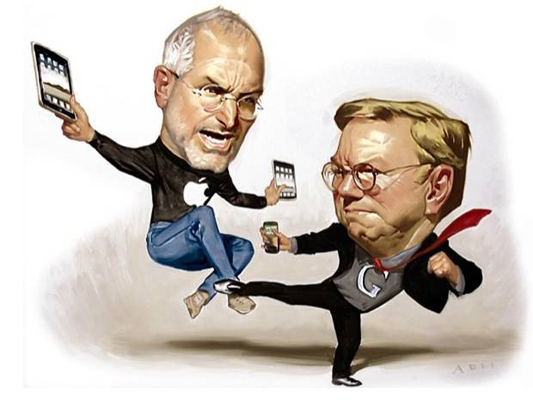
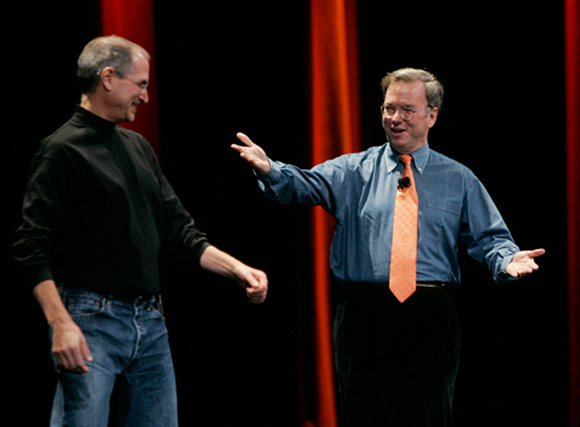
Then Google CEO Eric Schmidt shares the stage with Steve Jobs at the January 2007 iPhone unveiling. The times of happiness would abruptly come to an end amid Android whispers, culminating with Apple announcing Schmidt’s resignation from its board August 3, 2009.


Expand
Expanding
Close

Amazon rolls out Kindle Textbook Rental program

Site default logo image

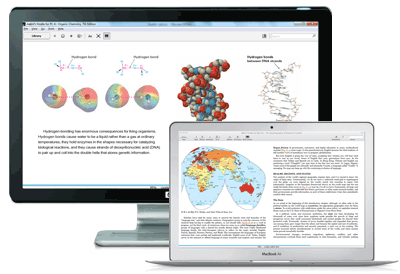
Great news for students from Amazon today. You can now save up to 80 percent off the list price of the print textbook by renting Kindle Textbooks on the Kindle or Kindle-compliant devices such as Windows and OS X PCs, iPads, iPhones and BlackBerry, Android and Windows Phone 7 devices. “Tens of thousands of textbooks” are available for rent across those platforms, reads an Amazon page promoting the deal. You can choose a rental length between 30 and 360 days and extend your rental for as little as one day. What’s best, regardless of your chosen rental period, Amazon will charge you only for the exact time you need a book. From Amazon:

Kindle Textbook Rental is a flexible and affordable way to read textbooks. You can rent for the minimum length, typically 30 days, and save up to 80% off the print list price. If you find you need your textbook longer, you can extend your rental by as little as 1 day as many times as you want and just pay for the added days.

You can tell whether  a Kindle edition is available for rent in the Textbooks Store section of the Kindle app or from the search bar. The ability to rent textbooks in fair terms is good for students, but it ain’t like they were going to keep them anyway.


Expand
Expanding
Close

Droid 3 has a SIM card, tear down tells

Site default logo image

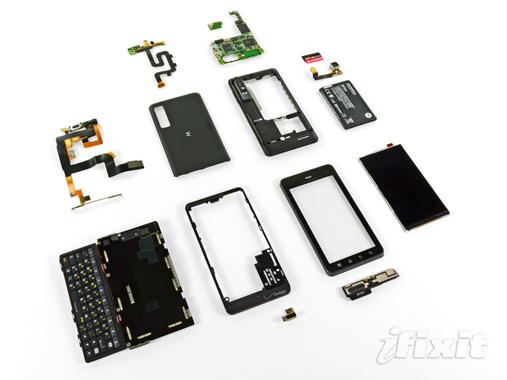
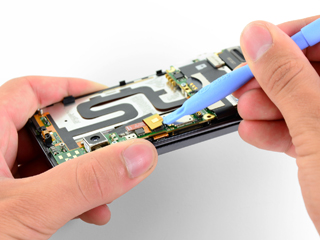
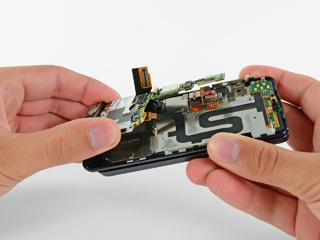
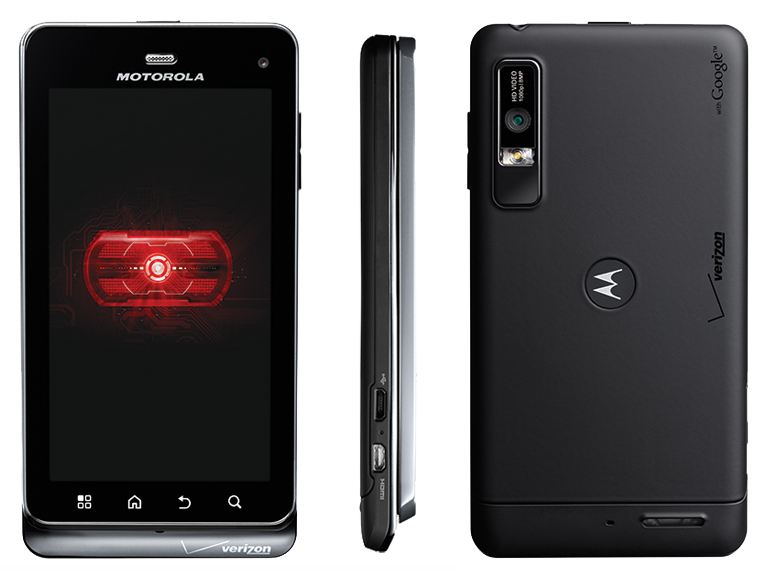
Motorola’s Droid 3, now being offered in a Verizon BOGO scheme, has been torn apart by our friends over at iFixit. The latest incarnation of the Droid family (at least until the Droid Bionic arrives this August), packs some serious bang for your buck. Running on a a dual-core 1GHz OMAP processor from Texas Instruments, the handset sports a four-inch qHD display, a five-row slide-out full QWERTY keyboard and an eight-megapixel back camera that can record 1080p clips. The Droid 3’s dual-core 1GHz ARM Cortex A9 processor with 512MB RAM is clearly an improvement over an ARM Cortex A8 core from the original Droid and Droid 2. Unfortunately, iFixIt notes, Motorola paid no attention to the repairability of the handset because “you still have to take apart the whole phone in order to access the display and glass, a procedure hampered by Torx screws and glue that are used to hold everything together”, prompting them to give the Droid 3 a mid-pack 6 out of 10 repairability score.

While the Droid 2 World edition has a SIM card tray in select markets, the Droid 3 includes one by default, making it easy to use the phone internationally. “This SIM enables the Droid 3 to be used almost anywhere in the world”, reads the analysis. Other noteworthy design choices by Motorola: screws and latches are hidden beneath labels (good for the looks, bad for servicing the device), a hole through the motherboard allows sound to pass through for better transmission to the outside of the phone and a five-row slide-out QWERTY keyboard gives you more control, even with the keys feeling “cheaper in quality than the original keyboard”. The innards include an Atmel MXT224E capacitive touchscreen controller – the same chip powering touch-based input on the Samsung Galaxy Tab – a Qualcomm MDM6600 baseband chip for HSPA+ speeds of up to 14.4 Mbps, another Qualcomm-branded chip (PM8028) that works in conjunction with the MDM6600 to provide wireless data connection, 16GB of SanDisk-branded NAND flash, a Hynix memory controller and more.


Disconnecting the eight-megapixel rear camera (left) and removing the motherboard (right)


Expand
Expanding
Close

Motorola Droid 3 does the BOGO dance

Site default logo image

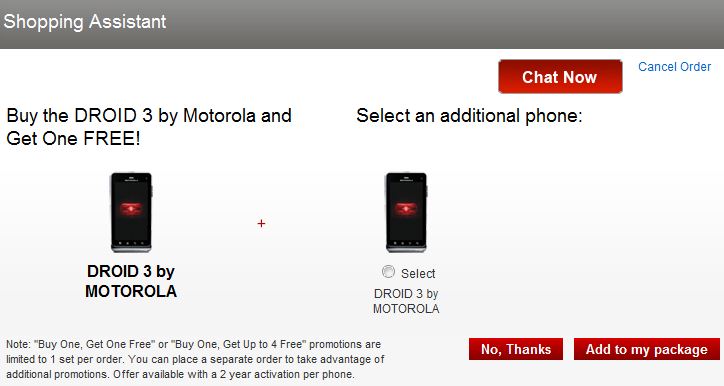
BOGO, an acronym for “Buy-One-Get-One”, is a marketing tactics some (perhaps iOS fans) are adamant helped boost daily Android activations to over 550,000 handsets. The strategy is again at play at Verizon Wireless, the nation’s leading carrier which put Google’s platform on the map with the original Droid. And now, less than two weeks since the Droid 3’s arrival on the Verizon Wireless network, the carrier is offering the device in a hard-to-resist BOGO deal, reports The Phone Arena. You can take advantage of the offer at Verizon’s web site.

The reason? We’ve heard that there is another 4-inch slider coming to Verizon, but with some LTE’s in the very near future.

The carrier is also taking sign-ups for the Droid Bionic, a Motorola LTE phone which could launch August 4. The Gingerbread-powered Droid 3 features a four-inch qHD display, a slide-out full QWERTY keyboard, a back camera that can record 1080p clips, all thanks to a dual-core 1GHz OMAP processor from Texas Instruments. It costs $200 after a two-year service agreement or $460 contract-free. Would-be buyers should remember that Verizon no longer offers unlimited data plans.


Expand
Expanding
Close

HTC announces $760 million share buy back ahead of ITC import ban ruling

Site default logo image

>

Shares of the Taiwanese Android phone maker HTC fell 6.5 percent this morning following the ruling by the International Trade Commission (ITC) that the company violated two patents held by Apple. The company’s shares have been pretty much free-falling throughout last week. The agency’s commissioners still have to support the ruling, but investors are already panicking over fears that the ruling will favor the California-based gadget maker. This, in turn, would open doors to ITC’s ban on imports of HTC’s phones into the United States. In response to the crisis, HTC announced a share buy back program worth up to $760 million in an attempt to stabilize its share price and restore investor confidence, reports Financial Times:

The attempt to prop up HTC’s share price appeared to have little effect as the stock fell below HTC’s minimum purchase price of T$900 to close down 3.9 per cent at T$871. The sell-off highlights investor fears that the legal battle could have wider implications for the competitive balance between Apple and Google Android-based phonemakers like HTC, Samsung and Motorola.

HTC is thought to have recently acquired S3 Graphics for $300 million in a bid to secure a stronger ground in its legal dealings with Apple, which filed its patent infringement complaint against the Taiwanese company back in March 2010. Apple accused HTC of violating up to twenty patents related to the iPhone’s hardware, software and its user interface. ITC recently ruled in favor of S3 Graphics, deciding the iPhone maker infringed on two patents held by S3 Graphics. They also acquired a portfolio of 82 patents from US-based ADC Communications for $75 million and signed an Android protection pact with Microsoft. HTC is expected to use all of this in the hope of relieving some of the pressure from Apple’s legal sharks. If ITC decides to ban import of HTC phones into the US and the company does not reach a timely settlement with Apple, its stock price could free-fall further.

Cross-posted on 9to5Mac.com


Expand
Expanding
Close

The Jobs-ification of Google: How Page is putting more wood behind fewer arrows

Site default logo image


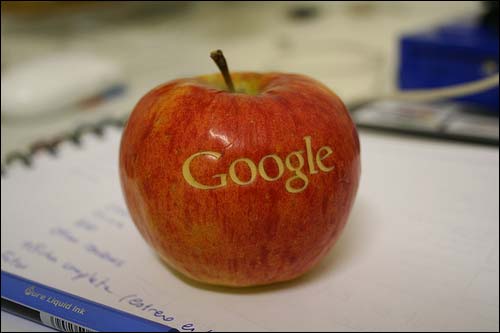
Google gave all employees moving into the Zurich office apples with the Google logo engraved.
Source: Webilus.fr

It is hard to escape the buzz flying around Google+, the search monster’s latest social thing. It raised red flags at Facebook where Mark Zuckerberg summoned a hastily organized news conference that fell on def ears with general public. The presser was a classic case of over-promising and under-delivering as Zuckerberg’s “awesome announcement” turned out a yet another dull unveiling of way overdue features, such as group chat and Skype integration. But who would have though just a month ago that Google would put the fear of God into Facebook with what many consider an unusual take on social networking?

Nobody saw it coming when co-founder Larry Page took the reigns April 4 from Eric Schmidt. What a difference a few weeks make. An invite-only service closed for public in two weeks since launch signed up more than ten million users. And when it opens for everyone later this year, the hundred million milestone will be well within reach. Page, who once famously called Steve Jobs a liar, put the pedal to the metal from his first day as CEO by tying executive bonuses to their contributions to the company’s social strides. The move quickly earned him notoriety among tech watchers and his own employees.

But unlike Mark Zuckerberg – who may try to be, but is certainly no Steve Jobs on stage  (see why in the below YouTube clip) – Page has notably been keeping low profile while cunningly taking clues from Apple’s iconic leader. We were told about “moon shots”, to the dismay of many watchers (this author included). Page was stiffing innovation and focusing too much on corporate bureaucracy, many cried…

[youtube=http://www.youtube.com/watch?v=EYYfvf40ZVc]

Expand
Expanding
Close

Android Honeycomb 3.2 due this month, Motorola’s Xoom gets it first

Site default logo image

According to “industry sources” who spoke to Taiwanese trade publication DigiTimes, Google is about to release Android Honeycomb 3.2 to select tablet makers at the end of July or early August:

Google is expected to release its Android 3.2 OS to production partners at the end of July or early August, according to industry sources. Asustek has indicated it will launch Android 3.2-based tablets soon, while Huawei Technologies also said it will roll out a 7-inch Android 3.2 tablet in the third quarter.

Meanwhile, CNET confirms that Google is already pushing out the Honeycomb 3.2 update to the Motorola Xoom, hoping to bring the software to other tablets “in the near future”.

Android 3.2 is a minor update that will improve hardware acceleration and bring optimization for Qualcomm’s Snapdragon processors that power many top-selling Android smartphones and tablets. The software update will also bring improvements in Google-created apps, including Movie Studio, Movies, Music and Widget. It will also have a new compatibility mode for apps called zoom-to-fill. “Imagine viewing your app at the size of a phone screen then zooming in about 200 percent,” Google explains on the Android Developers blog. And as we explained earlier, this Honeycomb version also takes into account the popular seven-inch tablet form factor, which continues to be in abundance…


Expand
Expanding
Close

DigiTimes: Foxconn to make Amazon tablet?

Site default logo image

Taiwanese trade publication DigiTimes quotes unnamed industry sources who claim Foxconn, the world’s largest contract manufacturer for gadgets, will produce a rumored Android-driven tablet from Amazon, said to sport a 10.1-inch display, with shipments to begin in 2012 at the earnest. Quanta Computer, another contract manufacturer from Asia, has already begun shipping a smaller seven-inch device to Amazon, the report notes:

Foxconn Electronics (Hon Hai Precision Industry) has reportedly landed orders for 10.1-inch tablet PCs from Amazon with shipments to begin in 2012, while Quanta Computer has begun shipping a 7-inch model to Amazon. Foxconn declined to comment on market speculation.

Foxconn of course is Apple’s long-time manufacturer so it comes as a surprise that Apple did not exercise its influence and billions to block rivals from tapping Foxconn’s manufacturing potentials. That’s not entirely unheard of, however…


Expand
Expanding
Close

Sony Ericsson reports net loss of €50 million, 11% Android market share

Site default logo image

Sony Ericsson revealed in its most recent filing it sold 16 million Xperia smartphones to date

Sony Ericsson today reported earnings for the quarter ended June 30. Revenues topped €1.19 billion, a 68 percent annual decline from €1.76 billion a year ago. Smartphone sales accounted for more than 70 percent of the company’s total sales during the quarter and they estimated their share of the Android market at eleven percent by both volume and value. The company shipped 7.6 million handsets during the June quarter, 31 percent less units on an annual basis and well below the low-end consensus of eight million units.

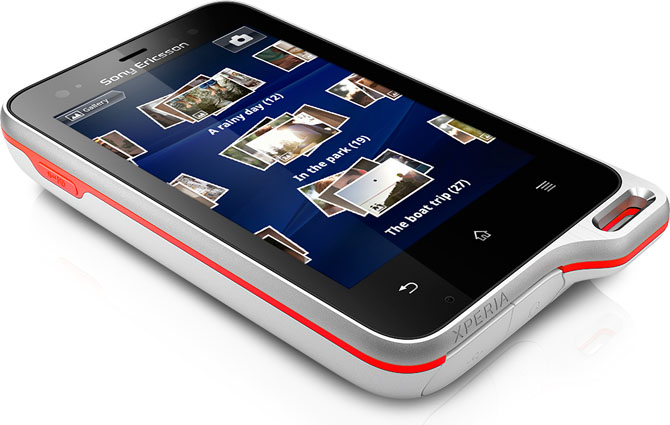
However, they reported a net loss of €50 million, which is especially troubling given a more modest loss of €11 million in the previous quarter and a net profit of €12 million in the year-ago quarter. Moreover, Sony Ericsson’s cash position has gone from around $2.2 billion prior to the iPhone launch to -250 million now. On a brighter note, Sony Ericsson said it shipped more than sixteen million Xperia smartphones to date, with eight new models rolled out in this year alone, including the Xperia Active pictured above. President and CEO Bert Nordberg attributed the declining business to the Japan earthquake in a statement accompanying the earnings report:

Sony Ericsson’s second quarter profitability was affected by the March 11 earthquake in Japan. We estimate that the impact of earthquake-related supply chain constraints on our portfolio was close to 1.5 million units, with most of the effect in the early part of the quarter.

The full press release is right after the break.


Expand
Expanding
Close