Stay up to date on news from Google headquarters. Be the first to learn about plans for Android, Google Plus, Google Apps, and more!
Stay up to date on news from Google headquarters. Be the first to learn about plans for Android, Google Plus, Google Apps, and more!

Another instalment in Microsoft’s “Scroogled” smear campaign attempting to point out the downsides of using Google services. While Microsoft has released many ads attacking Gmail, search and other Google products as part of the 7 figures it plans to drop on the campaign, this one was apparently supposed to be an internal video for employees anyway.
Whether it was a controlled leak or not, the ad, which takes cues from one of Google’s own Chrome ads, has happened to make its way online right in the middle of Google I/O and it doesn’t appear that a take down notice is getting issued.
Google has responded to the ads several times calling Microsoft’s approach ‘misleading and intellectually dishonest.’
Expand
Expanding
Close

Google announced its new cross-platform messaging service called Hangouts at Google I/O yesterday, which prompted many users to wonder if Google had plans to bring SMS and messaging unification to the Hangouts inbox.
Droid Life points us to comments by Dori Storbeck, who manages the Hangouts and Chat Google+ community, which confirm integration with SMS is highly requested and coming soon.
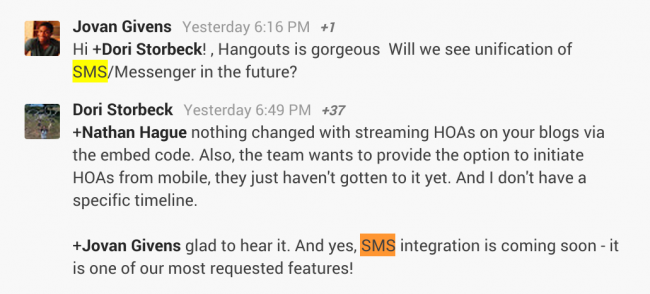
We expect SMS integration will only be available on Android as iOS doesn’t allow the necessary hooks to pull off the feature, which makes the platform that much more appealing for fans of the Hangouts service.
Hangouts launched on the Play Store for Android and App Store for iOS yesterday, as well as Google+ or Gmail on the desktop.
Expand
Expanding
Close

If you weren’t able to follow along live earlier today, Google’s just posted an archive of today’s event. So block out your next 4 hours or just skip to CEO Larry Page’s impromptu Q&A at the end like me.
Expand
Expanding
Close
https://www.youtube.com/watch?v=TNOsB8tRmWU
Lost in the shuffle of today’s events is that Google TV is getting significant updates today.
Today, Google TV is moving to the latest version of Android (Jelly Bean, 4.2.2), and we’ve refactored Google TV so that our TV OEM partners can update to future versions of Android in a matter of weeks rather than months. For developers, this means you can build TV experiences using the latest Android APIs, including the NDK.
Today Google TV is also moving to the latest version of Chrome, and from now on Google TV benefits from Chrome updates on the same six week cycle that you’ve come to expect from Chrome. In Chrome on Google TV, we’ve added support for hardware-based content protection, enabling developers to provide premium TV content in HD within their web apps.
Google TV has always been a(t least a) generation behind Android phones and you have to wonder if Andy Rubin’s move away from Android is allowing the YouTube group that runs GoogleTV more access to core Android features. Word on the Street is that Rubin and YouTube boss “couldn’t be in the same room together”.
Speaking of YouTube, the GoogleTV Youtube App got a facelift today with the following additions:
– New home screen interface.
– Enhanced video playback controls.
– Support for paid subscriptions.
Update: LG is on board. Press release and 4.2.2 demo below
Expand
Expanding
Close
via CNN
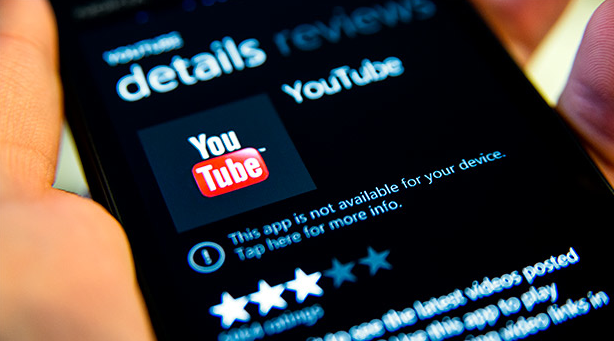
Last week we showed you the native YouTube app Microsoft built for Windows Phone 8, but it appears today that Microsoft never had Google’s consent to produce the app.
Google reportedly sent Microsoft a cease and desist letter today, which The Verge has obtained, citing the lack of ads on the YouTube app for Windows Phone.
“Unfortunately, by blocking advertising and allowing downloads of videos, your application cuts off a valuable ongoing revenue source for creators, and causes harm to the thriving content ecosystem on YouTube.”
Windows Phone users will have to rely on third-party YouTube apps in the meantime until Microsoft and Google work things out.
https://www.youtube.com/watch?v=THxJHcR1D2c&feature=player_embedded
We showed you significant updates to Google Maps which leaked early this morning, and Google just announced updates to Maps at Google I/O.
Google also announced that its Maps API is used by over 1 million active sites and accessed by 1 billion unique visitors weekly.
Maps will now feature a 5 star rating system for locations across all platforms. Users can now swipe across results in a simple, gesture user interface. Zagat reviews are now more prominent with badges and cards simplifying its appearance. These cards now include a new Offers experience with partners including Starbucks.
Google Maps for Mobile also includes improvements to rerouting in transit and explore features. Google Maps for iPad was demoed during the keynote, which we expect to see this summer, and all of the updates will come to the iPhone and Android as well.
Maps on the desktop now includes a new fly-in view for supported locations, which is like a street view for specific landmark interiors. Public transit information on the desktop is now comparable side-by-side with standard transit and now features a new schedule view.
Some pretty incredible new features of Google+ Photos today that will probably be burying Picasa once and for all. Using their algorithms, they will enhance and help sort photos saving time and energy with the net result being incredible photo albums.
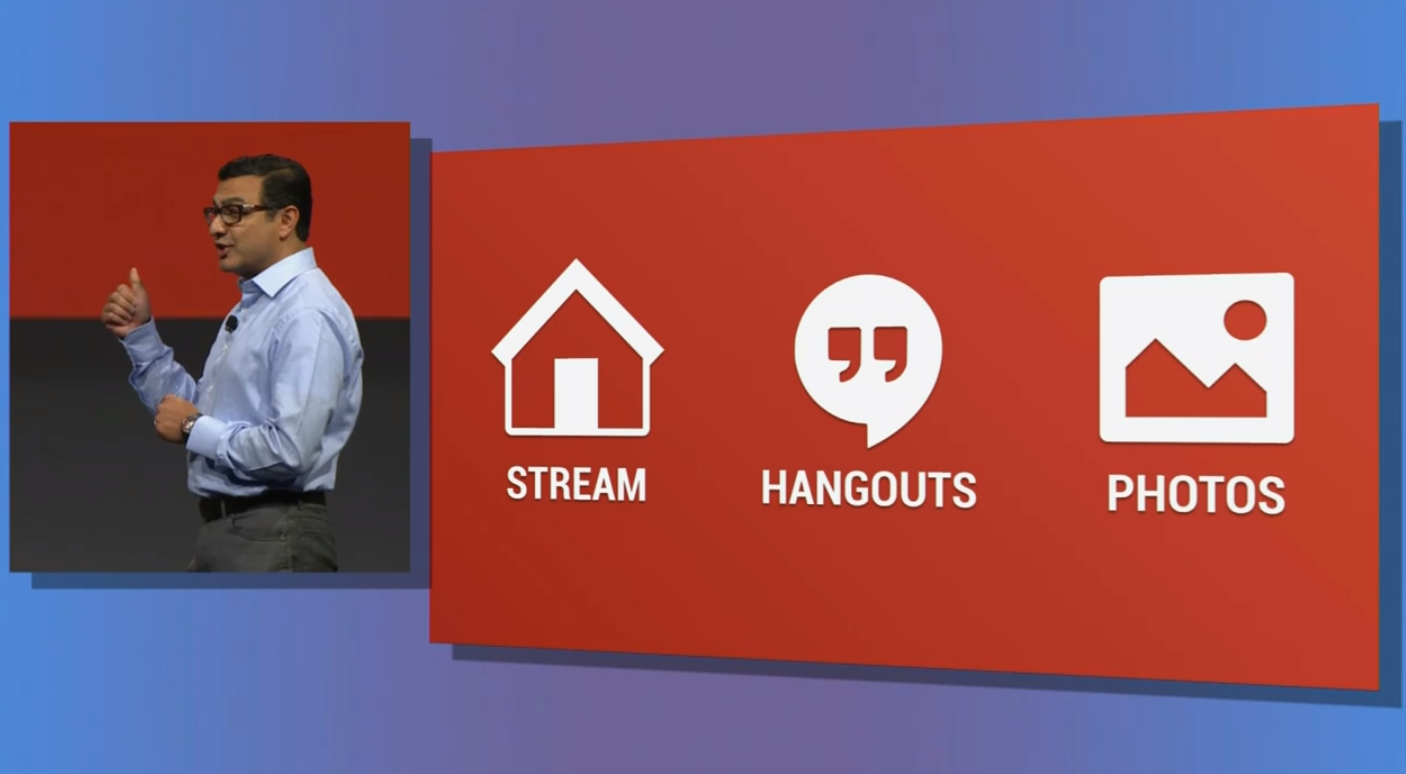
Google+ will receive a card-based interface redesign featuring a new three column view. The new interface is responsive to the user’s display size. The new multi-column view is customizable meaning you can toggle back to the previous single column view if you prefer.
Google+ will also begin rolling out intelligent hashtags for photos, meaning if you post a photo of the Eiffel Tower, Google+ can automatically recognize the subject and appropriately tag it for you.
Users will now be able to view related photos by clicking on the current photo and seeing related hashtags on the flip side of the photo. A video below highlighting the related hashtag feature is below.
Update: The apps are now live on Google Play and the App Store.
Google today launched its much rumored messaging service live on stage at its I/O keynote and announced the service would be coming to multiple platforms today. While some thought the service would be dubbed “Babel,” Google instead rolled out a standalone app called simply “Hangouts” that will be coming to iOS, Android and desktop later today.
Google execs provided a demo of the app running on Android today, but also gave us a glimpse of the iOS version as pictured above. The demo mostly focused on showing a list of conversations (not contacts) as well as one-on-one and group messaging, photo albums stored in the cloud, and the ability to start text conversations and video calls with contacts in one tap.
As for Gmail:
What does this mean for your Gmail? You now have the option to switch from the current version of chat to Hangouts. Simply click “Try it out” next to your chat list to switch to Hangouts and give your chat an instant facelift (literally!). You’ll now see the profile photos in the order of your most recent conversations. With Hangouts, you’ll also be able to quickly send messages, have video calls with up to ten people at once, and share photos. You can start a conversation with just one friend or even a whole group.
Google made a point of noting that conversations are stored and saved in the cloud, allowing users to have long-lasting conversations and browse a full history that dates back months or years. The app will unify and replace the Google Talk, Google+ Messenger, and the Google+ Hangout apps that currently make up Google’s messaging services.
The service will be launching as a new standalone app called Hangouts for iOS devices, Android, and on the desktop some time today.
Google today announced a new service called Google Play for Education that allows schools to easier find and distribute Google Play content to Android devices in schools.
The Google Play Education store will allow schools to search for content by subject matter and grade level and provide content that has been recommended by other educators. Google is teaming up with partners such as NASA and PBS for content but it will also begin accepting app submissions from developers this summer before the education store launches this fall.
Rather than using credit cards in an education environment, teachers will be able to purchase bulk quantities of apps and charge licenses against a balance from the school’s purchase order. The Google Play for Education service will also allow school’s that use Google Apps to instantly distribute an app to multiple devices in a school by setting up a Google Group
Google Play for Education will be launching this fall. You can learn more at https://developers.google.com/edu/.
At its I/O keynote taking place right now, Google is going over improvements it’s made to Chrome and to kick things off the company announced that the browser is now home to over 750 million active users across all platforms. That’s means the company has added over 300 million users since it announced 450 million active users at its I/O event last year.
Chrome is the most-used browser worldwide with over 750 million users globally.#io13 #keynote #io13chrome
— Google for Developers (@googledevs) May 15, 2013
It isn’t a Nexus but it might as well be. Google announced a special version of the Samsung Galaxy S4 that will run stock Android, has an open boot loader and get updates straight from Google. You can buy 16GB (with open SD card slot) for AT&T and T-Mobile at the Play Store for $649 starting on June 25th.
Google just announced its much rumored new music service that it is calling Google Play Music “All Access” live on stage at its Google I/O event keynote presentation.
Google execs focused on showing off curated playlists but also made a note of pointing out a “radio” feature that will automatically create an endless radio station based on the song you’re currently listening to. The service will also allow users to search for a particular song or view the “playlist” of a radio station to remove unwanted songs.
The service also includes a feature called “Listen Now” that will provide quick access to recently listened to songs, customized radio stations based on your preferences, and recommendations for new releases from artists you like.
The service will be available on the web, tablets, and phones and cost users $9.99 per month with a 30 day free trial in the US. Those that sign up before the end of June will be able to get the subscription for just $7.99/month and Google said the service will land in other countries soon.
Google today announced new features coming to the Google Play Developer Console that will make it easier for developers to track and optimize apps across markets.
Perhaps one of the biggest features that will soon be available to developers is the ability to manage beta testing and staged rollouts right from within the Developers Console. The tool will allow developers to select a percentage of users for a stage rollout and easily beta test their apps among small amounts of users.
Among the new features, Google will be rolling out a new APK translation feature built into the console that allows developers to purchase translations through various providers directly through the console.
Other features headed to the developer console include optimization tips, referral tracking, and detailed revenue graphs. Check out a full gallery of the new features below:
Expand
Expanding
Close
We knew from leaks in the weeks leading up to I/O that Google was planning some gaming related announcements and today the company has officially announced the service in a press release ahead of its Google I/O keynote taking place now. Not only will the service allow Android developers to build in real-time multiplayer, social features, achievements, and leaderboards while storing game saves and settings in the cloud, the SDK for Google Play game services will also be available to iOS and web developers.
Google noted a few titles for Android have already been updated with the feature including World of Goo, Super Stickman Golf 2, Beach Buggy Blitz, Kingdom Rush, Eternity Warriors 2, and Osmos.
Not surprisingly, the cross-platform gaming service will also build in Google+ integration to track high scores, achievements and more:
-Achievements that increase engagement and promote different styles of play.
-Social and public leaderboards that seamlessly use Google+ circles to track high scores across friends and across the world.
-Cloud saves that provide a simple and streamlined storage API to store game saves and settings. Now players never have to replay Level 1 again.
-Real-time multiplayer for easy addition of cooperative or competitive game play on Android devices. Using G+ Circles a game can have up to 4 simultaneous friends or auto-matched players in a game session together with support for additional players coming soon.
Google’s full press release below:
Expand
Expanding
Close
Investors seem pretty optimistic about today’s events even though hardware and OS expectations have been tempered somewhat.
What might be interesting here is that if you negate Google and Apple’s cash on hand, the Market caps of the two companies are pretty close.
Expand
Expanding
Close
In March, Fortune reported that Google had signed up Warner Music for an online music service similar but not identical to the popular Spotify service. Today, Greg Sandoval at The Verge is reporting that Universal and Sony Music have also signed on and the service will be launched tomorrow at Google I/O:
When Google rolls out the new services tomorrow at I/O, it will mean that it gets the jump on Apple, which is also trying to launch a new streaming-music service. According to reports, Google’s subscription services would resemble Spotify, and offer on-demand songs that would be streamed to their PCs and mobile devices. In contrast, Apple is working on an online radio service that is said to be more akin to Pandora, the top webcaster.
Google comes to these negotiations as a powerful player in music. While Google Play is still a relatively new service, insiders say YouTube is a juggernaut. The user-generated video site sees more than 800 million unique visitors a month and music videos are among the most popular fare.
I may not have exotic taste in music but I’ve never not been able to find whatever I want to listen to on YouTube. Google already owns the space and an advertising-based version of YouTube streaming is just a GUI change in my book.
Expand
Expanding
Close

Microsoft is rolling out Google Talk integration to its online email service Outlook, which is something that could tempt Gmail users try out the less popular competing service.
Microsoft, which owns its own chat service by way of its Skype purchase, is using Google’s public API to include Google Talk integration on Outlook.com. The timing is interesting as we expect Google to announce its new messaging service at Google I/O this week.
Expand
Expanding
Close
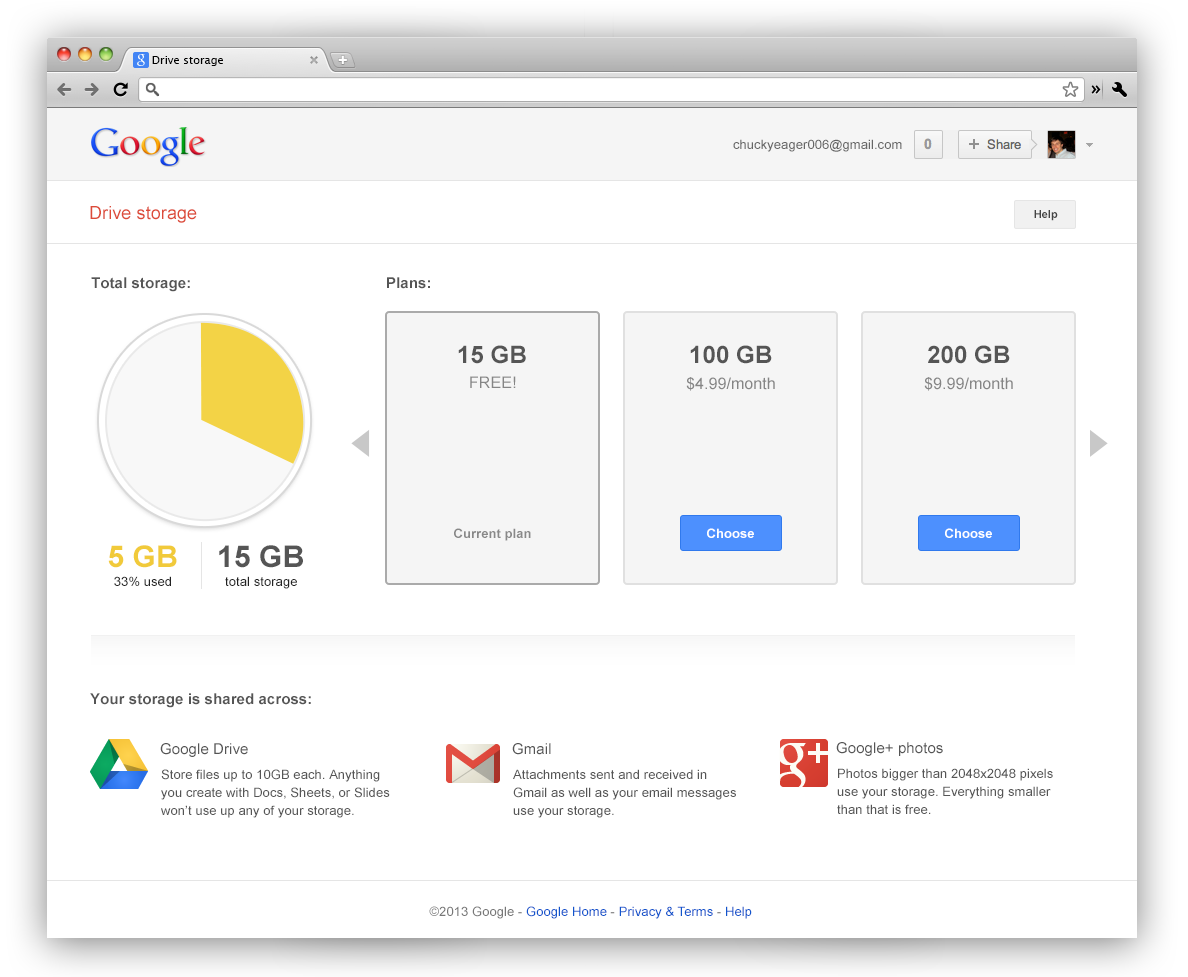
A nice little pre-I/O surprise today from Google: Everyone who uses Gmail, G+ Photos and Google Drive now gets 15GB of free space across all three platforms instead of the previous 10 GB for Gmail and another 5 GB for Drive and Google+ Photos. That’s a lot of combined space
We’ll also be making updates to the Google Drive storage page, so you can better understand how you’re using storage space. Simply hover over the pie chart to see a breakdown of your storage use across Drive, Gmail, and Google+ Photos. And if you need more storage, this is your place to upgrade, with plans starting at $4.99/month for 100 GB.
Pro tip: This change means you’re no longer limited to a 25 GB upgrade in Gmail—any additional storage you purchase now applies there, too.
These changes to Google Drive storage will roll out over the next couple of weeks. Google Apps users will also be getting shared storage, so visit the enterprise blog to learn more.
Enterprise users get 30GB between the three platforms.
Expand
Expanding
Close
When talking about potential applications for Google Glass, the ability to use facial recognition is one area that we’ve seen discussed in many patents and projects from Google and others. Today, SelfScreens.com points us to perhaps the first facial recognition Glassware available with info on a new app dubbed MedRef for Glass that was recently created at a medical hackathon. The app, which was designed to allow doctors to pull up info on patients with Glass by simply recognizing their face, is being made available to download by its creators who also discussed the app in detail on their blog.
The app lets you find and create patient folders by voice, add photo and voice notes, view previous notes, and also find patient folders by facial recognition! Very exciting.Some people I talked to said hospitals are full of very busy people, often with their hands full, working with a lot of information – so Google Glass making it wearable is especially looked forward to there!”
One of the developers also gives us a walkthrough of an early build of the app in the video above showing how doctors can quickly notes about a patient that will be called up later when Glass recognizes the patient’s face.
Expand
Expanding
Close
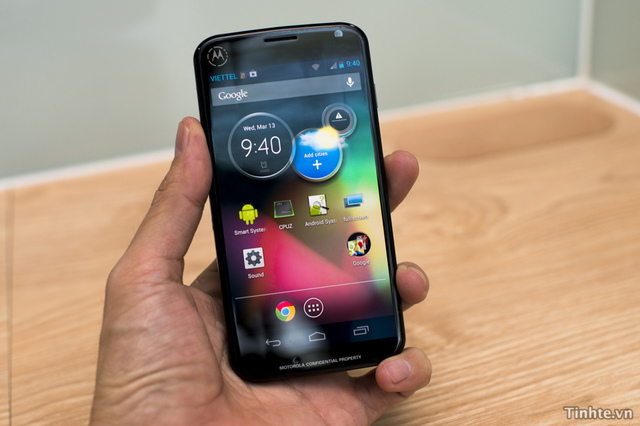
We recently delivered a comprehensive summary of everything we know about Google’s rumored Motorola X Fon, and today is looks like a device labeled Motorola XT1058 has appeared in official FCC filings as discovered by AndroidGuys.com.
Google today is showing off a new way for content creators online to provide content recommendations to readers viewing their site through mobile devices. The new content recommendations feature is not so surprisingly powered by Google+ and will allow users to access related content for the page they are currently visiting through a small notification that appears as they browse. To access the recommendations, users can enable the feature on Android devices running 2.3.3 and above and also on iOS devices running Chrome or Safari on iOS 5 or later. Site owners can implement the feature by dropping in a single line of code.
Google explained how it creates the recommendations based on Google+ activity and also showed the new feature in action in the video above posted to its Developers YouTube channel:
Expand
Expanding
Close

(Businessweek / Peg Korpinski)
In our continuing series Talking Schmidt we bring you the most insightful lines from Google Chairman Eric Schmidt.
Schmidt, who is promoting his new book The New Digital Age, spoke with NPR over the weekend on the Wait Wait… Don’t Tell Me! program in a rather lighthearted appearance.
NPR host Peter Sagal asked the executive chairman how much Google knew about its users at the top of show, which prompted Schmidt to admit, “Well, as much as you’ll let us know.”
Schmidt also mentioned that the company really doesn’t quite know the definition of evil, from its famous slogan “Don’t Be Evil,” and that he thought it was “the stupidest rule ever” when he joined the company.
I’m not going to lie, this is a bit depressing. Among other boilerplate-type of answers to good questions that Wired’s Steven Levey threw at him, Sundar Pinchai said:
What can we expect from I/O this year?
It’s going to be different. It’s not a time when we have much in the way of launches of new products or a new operating system. Both on Android and Chrome, we’re going to focus this I/O on all of the kinds of things we’re doing for developers, so that they can write better things. We will show how Google services are doing amazing things on top of these two platforms.
We’ll be on hand this week to see exactly what that means.
Some other tidbits from the interview: On Firefox OS: “It isn’t surprising. If we don’t do ChromeOS, someone else will”. On Google-branded hardware: “Any hardware projects we do will be to push the ecosystem forward”.
Expand
Expanding
Close