Stay up to date on news from Google headquarters. Be the first to learn about plans for Android, Google Plus, Google Apps, and more!
Stay up to date on news from Google headquarters. Be the first to learn about plans for Android, Google Plus, Google Apps, and more!

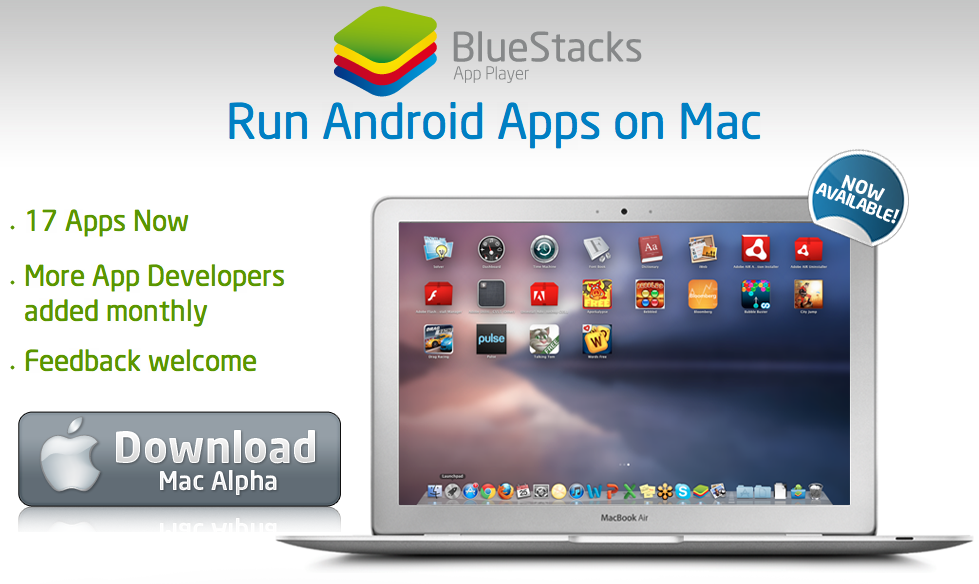
BlueStacks, the tool that allows Android apps to run on Windows, is now available for Macs.
The software, which is often touted as the “Parallels for Android”, now supports 17 Android apps on OS X. Pulse and Words With Friends are two of the more notable apps packaged in the launch, while high-resolution support for Retina Macs and additional apps are on the horizon.
The company attempted to court more developers—and celebrate the launch of its Mac Alpha —with a mock wedding for Android and Apple at Google I/O yesterday. The free download is available on the BlueStack’s website.
This aside is cross-posted on 9to5Mac.

[youtube=http://www.youtube.com/watch?v=Ujh0_61uYuk&feature=player_embedded]
 Both the Google Earth and Google Maps for Android apps were updated with several new features. Google outlined the new features available in the latest release of Maps on its Lat Long Blog. A couple of the notables include offline maps for more than 150 countries and a new Compass Mode for Street View:
Today we’re also releasing a smoother and faster Compass Mode for Street View within Google Maps for Android. It’s the next best thing to being there, because your device becomes a window into a 360-degree, panoramic view of the outdoor or interior location through Business Photos. To experience the improved qualities of this feature you need a device with Google Maps for Android, Android 3.0 or higher and a gyroscope sensor plus version 1.8.1 of Street View on Google Maps.
As for Google Earth, Engadget noted version 7.0, available on Google Play now, implemented the new 3D tech that Google showed off at its Maps event a few weeks ago.
Google confirmed on the Google Chrome Releases blog today that Chrome for Android is now a Stable Channel release and officially out of Beta. The download is available now on Google Play for devices running Android 4.0 or later.
This update picks up important stability and performance fixes since the last Beta, along with some minor UI adjustments, especially for tablets. Known issues are available on the Chrome support site.
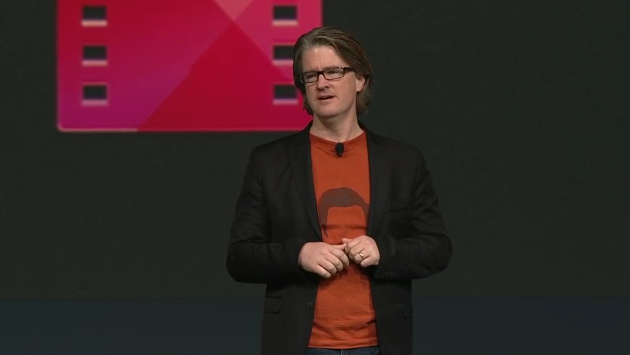
Google’s Chris Yerga is on-stage now to announce Google Play numbers: The marketplace boasts over 600,000 apps and games, roughly 1.5 billion installs every month, and 20 billion total app installs to date.
The executive also said magazine subscriptions and television rental options are coming to Google Play. The magazine-reading experience is premium, Yerga touted, while explaining new interactive aspects to magazine thumbing on the newly unveiled Nexus 7. Television viewing is also exceptional due to download options for offline access. A few of the big television partnerships, Yerga said, include Disney, ABC, Sony, and Paramount.
The 2012 Google I/O Developers Conference starts today at the Moscone Center West in San Francisco, Calif., with events continuing until June 29 at 4:30 p.m. PST.
A picture gallery is below.
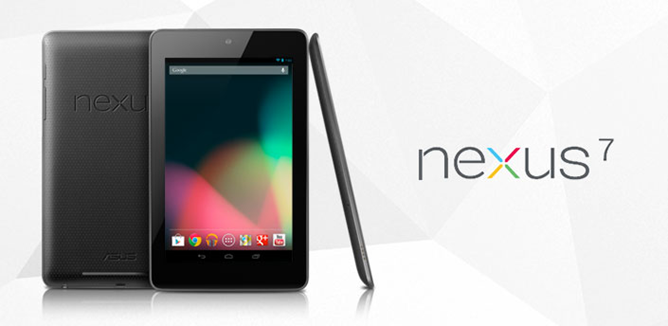
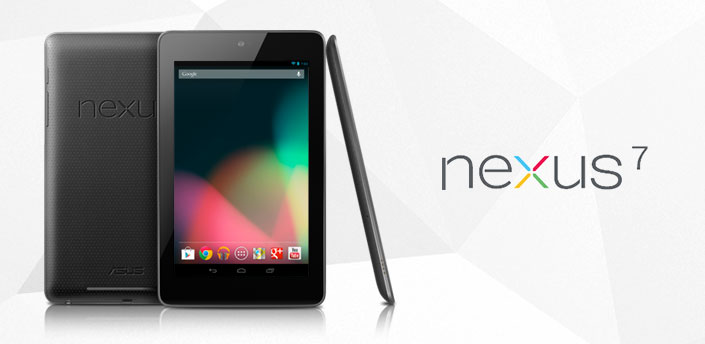
The above leaked image is of the widely rumored Nexus 7.
Reports about the Google tablet have circulated for months, but now we have solid evidence of its existence through a first look on Google’s Play Store servers. The live image surfaced just ahead of Google I/O this morning, and it only begs more questions to be answered.
The 2012 Google I/O Developers Conference starts today at the Moscone Center West in San Francisco, Calif., with events continuing until June 29 at 4:30 p.m. PST. We should have some more information about the Nexus 7 within the next hour during the event’s opening keynote.
The Asus-branded Nexus 7 tablet might run Jelly Bean, which is the latest version of Android expected to unveil at some point today. The user-interface in the leak resembles a tweaked Ice Cream Sandwich layout. The dock looks familiar, but notice it houses six apps now instead of four.
[tweet https://twitter.com/stroughtonsmith/status/217751034037141505]
Twitter is abuzz with folks spotting Sergey Brin donning a pair of Google Glasses at Google I/O this morning. There are no pictures of the Google co-founder with the headset yet—but stay tuned.
The 2012 Google I/O Developers Conference starts today at the Moscone Center West in San Francisco, Calif., with events continuing until June 29 at 4:30 p.m. PST.
[youtube=http://www.youtube.com/watch?v=i_QAAP2AtPo]
We told you yesterday that Google was carrying on the tradition of placing a large monument on the lawn in front of Building 44 at the Googleplex. This time, the statue represented the upcoming new version of Android 4.1 Jelly Bean. The image yesterday showed a transparent jar tipped over with jellybeans spilt out, but today we get a look at the finished sculpture in the video above. The jar is actually the Android mascot’s torso. TechCrunch went behind the scenes to find out how the Android jelly bean jar was made.
The Google’s I/O event is kicking off today, where we are all expecting to see much more of Jelly Bean. We will bring you live updates as they happen when the keynote address kicks off at 12:30 p.m. EST (9:30 a.m. PST). We are also expecting to see some major Google TV announcements.

Google X Laboratory scientists have worked on a simulation of the human brain for the last few years, and now they are using it to indentify cats.
According to The New York Times, Google researchers created “one of the largest neural networks for machine learning by connecting 16,000 computer processors, which they turned loose on the Internet to learn on its own.” More specifically, Google turned the “brain” to 10 million images found in YouTube videos about cats:
The neural network taught itself to recognize cats, which is actually no frivolous activity. This week the researchers will present the results of their work at a conference in Edinburgh, Scotland. The Google scientists and programmers will note that while it is hardly news that the Internet is full of cat videos, the simulation nevertheless surprised them. It performed far better than any previous effort by roughly doubling its accuracy in recognizing objects in a challenging list of 20,000 distinct items.
The research is representative of a new generation of computer science that is exploiting the falling cost of computing and the availability of huge clusters of computers in giant data centers. It is leading to significant advances in areas as diverse as machine vision and perception, speech recognition and language translation.
Google’s brain eventually constructed a digital patchwork of a cat by cropping general features from the millions of images that it identified. The method could eventually prove useful in image search, speech recognition, and language translation. The Googlers maintained caution, however, about whether their research is, as The New York Times put it, “the holy grail of machines that can teach themselves.”
The research project is no longer a part of Google X laboratory, but rather search business and related services.
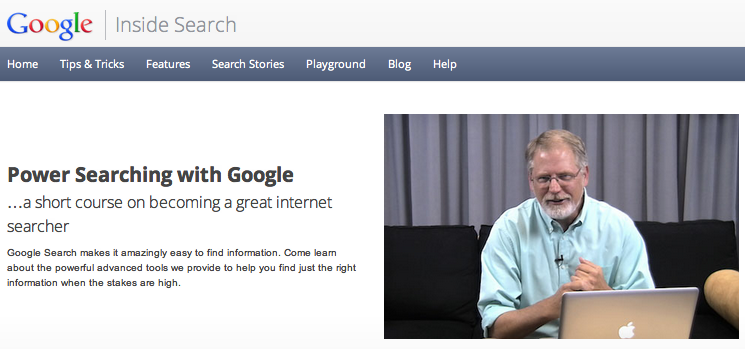
Google just introduced a new online course for those interesting in “power searching” with its search engine.
The free course offers:
“Google Search makes it amazingly easy to find information. Come learn about the powerful advanced tools we provide to help you find just the right information when the stakes are high,” explained Google Senior Research Scientist Daniel Russell on the registration page.
Course registration opens today and closes July 16, but the first class starts July 10. New classes begin Tuesday, Wednesday, and Thursday, and all course-related activities end July 23.
Check out the schedule below:
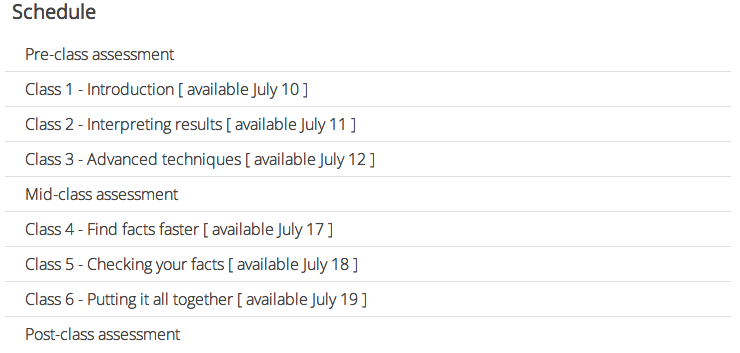
For more information about becoming a “great Internet searcher,” visit the course page at Google Insights.

The next Kindle Fire is eyeing a July 31 launch date.
CNET just reported that Amazon’s next version of the widely popular Kindle Fire, otherwise dubbed the “Kindle Fire 2” or the second-generation Kindle Fire, would unveil next month. The publication cited “a credible source” but could not confirm the summer date, and it pointed to DigiTimes for specs, which claimed the rumored 7-inch eReader will release with a $199 price tag and 1,2800-by-800 pixel display at the beginning of the third quarter.
According to CNET:
The DigiTimes article cited the usual sources in the “upstream supply chain” and talked about how Amazon would reduce the price of the current Kindle Fire to $149. It also speculated that Amazon’s long-rumored larger tablet is still on hold but that new e-ink Kindles with integrated lighting were expected to be released alongside the Kindle Fire 2 (or whatever Amazon chooses to call it).
Our source didn’t mention the higher resolution display but did say that the new tablet would have a camera and physical volume-control buttons (many users complained that the Kindle Fire only has on-screen volume controls).
[youtube=http://www.youtube.com/watch?v=uKqyxhEUrBg&feature=player_embedded#!]
Mozilla refreshed its Firefox for Android app today and promised an “a snappy and dynamic upgrade” that will improve everything from page load times to performance of web apps. On top of the performance upgrades that Mozilla claimed make Firefox “two times faster” than the stock Android browser, the newly updated app also received a few new features.
First, you will notice the UI has been streamlined, and it now includes a “personalized start page” called the “Awesome Screen.” The new start page, as highlighted in the video above, allows you quick access to bookmarks, browsing history, passwords, and data from your device that are stored in Firefox Sync. Mozilla also gave us an update on changes to the web platform:
While we already got a look at its Google TV plans during the 2012 Consumer Electronics Show earlier this year, Vizio made things official today for its “Co-Star” Google TV streaming box by giving it a $99 price tag and pre-order date set for July. The Co-Star goes a little bit beyond the typical Google TV experience, providing a skinned UI with HTML5 Chrome browser, Netflix, Amazon Instant Video, and iHeartRadio apps built-in. It also has OnLive for the first time ever on a Google TV set-top box. The box will come with a double-sided Bluetooth remote with a full QWERTY keyboard on one side and a number and touchpad on the other. We do not have specifics on a release date, but Vizio plans to start taking preorders next month.
“Our focus to deliver the best consumer experience continues with today’s announcement of the Co-Star, which delivers a superior smart TV interface that anyone can add to their existing HDTV,” said Matt McRae, VIZIO’s Chief Technology Officer. “We combined the powerful features of Google TV™ with an intuitive and easy to use interface, giving users the power to enjoy an entire world of entertainment.”
Reports claimed yesterday that Google is getting ready to unveil some new updates to the Google TV platform tomorrow at its Google I/O keynote, including: combined content browsing for Netflix, DVR, and TV content, and AirPlay-like features for sharing content between devices.
Expand
Expanding
Close

It would not be too far-fetched to claim Google TV is a lackluster affair— even after it has been on the market for close to two years. Executive Chairman Eric Schmidt said one of the issues with Google TV is that it is not embedded in enough set-top boxes. That could be the problem—or maybe it is just the software. I guess that is up-to personal interpretation. However, at this year’s Google I/O conference, we may get a closer look at a totally revamped Google TV platform that could change the direction of the platform.
Clayton Morris of Fox News, who cited “people familiar with the keynote,” reported that Google would announce a slew of updates for the platform. Morris pointed to the biggest announcement being a joint live TV, DVR, and Netflix interface that will allow you to see all of your content in one place. It is said to let you watch the content you want anywhere without having to dig to find it. Other features that will be shown-off include an AirPlay-like interface for watching content between the smartphone and TV, with a focus on getting third-party apps on the Google TV platform. It should certainly be interesting, along with the tablet and Jelly Bean news expected to unveil.
Last December, Schmidt made some bullish comments. He claimed Google TV will be “embedded in the majority of new TVs by summer of 2012. ″ Time is certainly running out on that promise, Mr. Schmidt. In February, GigaOm said Google TV device sales only looked to be in the 500,000 to 1 million-unit range. Ouchies. Google also launched a new Google TV website design this evening:
[tweet https://twitter.com/zerohedge/status/217362407469748224]
Update: A report from Bloomberg Businessweek confirmed with some clarification. As we reported in April, the ITC will have to review Judge Pender’s previous ruling that Apple infringed on one Motorola patent related to industry standard 3G and wireless technologies. The date for that hearing is now scheduled for August 24 and could result on a block of iOS devices from Asia to the United States:
The U.S. International Trade Commission said it will review ITC Judge Thomas Pender’s findings that Apple was violating one of four Motorola Mobility patents. The commission is scheduled to issue a final decision on Aug. 24, and has the power to block devices made in Asia from entering the U.S.
According to several tweets from financial analyst @zerohedge, Google is apparently attempting to block shipments of the iPhone and iPad in the U.S. related to 3G patents. We do not have any more information at the moment, but we will keep you updated as the story unfolds…
[tweet https://twitter.com/zerohedge/status/217362478374457345]
CNBC reported a Reuters story of the same nature.
[tweet https://twitter.com/CNBC/status/217364425290686464]
(Developing)
Expand
Expanding
Close
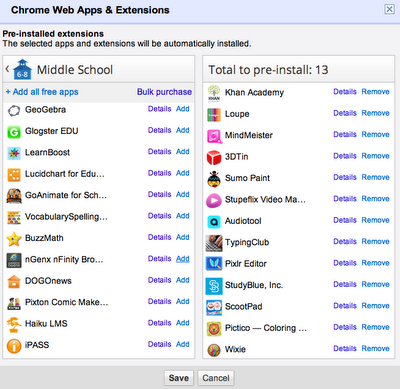
Google just revealed over 500 school districts in the United States and Europe use Chromebooks on a regular basis, while also naming a few new districts to adopt the technology in both North Carolina and Wisconsin.
In a post on the Official Google Blog, which is appropriately titled “In schools, all you need is web,” Google talked about the functionality of Chromebooks coupled with Google Apps and educational apps available on the Chrome Web Store. The company clearly wants the world to know its marketplace and lineup of notebooks are ideal for teaching, learning, and exploring the Web.
“There are tens of thousands of apps in the Chrome Web Store, and today we’re adding some new ones: ST Math, VoiceThread and Acheive3000,” wrote Chromebooks for Education Product Manager Vidya Nagarajan. “To give you an idea of what’s possible on the web: Leyden High School District from Illinois is rolling out Chromebooks to their 3,500 students and are using apps like WeVideo,EasyBib, Vernier Labquest2, SlideRocket, Geogebra and Pearson’s OpenClass as part of their 1-to-1 learning initiative.”
We all know Google I/O is just around the corner with yet another Nexus tablet leak today and news of some fresh Google TV products hitting the market soon. We will be on hand this week with live coverage of the event, and Google will make things even easier this year thanks to a new blogging tool it is unleashing specifically for the conference. As noted on Google’s developers website, you can now create your own embeddable Google I/O keynote live blogging gadget that will pull the event’s live video stream, and then it will post from your Google+ account:

Google is marking any LGBT-related query this month with a rainbow-colored banner under the search box.
The Mountain View, Calif.-based Company is once-again celebrating LGBT Pride Month, as it has down for the last five years in a row, by adding a bit of color to its search.
U.S. President Barack Obama declared June as LGBT Pride Month for 2012. The month-long stance is against discrimination and violence toward the lesbian, gay, bisexual, and transgender community, with promotion for equal and civil rights.
Gizmodo AU claimed this morning to have reviewed a training document related to Google’s upcoming tablet that is set to be unveiled at Google I/O this month. While we have had several leaks in the months leading up to the event, today’s report —if legitimate—provides us with some exact specs for the Nexus-branded, Asus-built slate. According to Gizmodo, the tablet will hit at least Australia in July and be the first to run Jelly Bean with the following specs:
Expand
Expanding
Close
[youtube=http://www.youtube.com/watch?v=cvDoGt1tJy8&feature=player_embedded]
Google unveiled its “Project Re: Brief” ad campaign in March, which re-imagined four classic commercials, and now the company has published an hour-long documentary of its marketing venture on YouTube.
The four re-imagined classic commercials are Coca-Cola’s “Hilltop” from 1971, Alka-Seltzer’s 1972 commercial, Volvo’s “Drive it like you hate it” from 1963, and Avis’ “We try harder” campaign from 1962. Google’s in-house advertising team and several other agencies— including the creators of the original campaigns—re-created all the ads. Each video is available on Google’s Project Re: Brief website.
“Re: Brief is not just about the ads themselves. It’s also about the creative process behind them: bringing ‘old school’ advertising legends and technologists into the same room to create digital ads that consumers love as much as they loved the iconic campaigns of yesterday,” explained Project Re: Brief Lead Aman Govil on the Official Google Blog. “To share this experience, today we premiered the documentary film Project Re: Brief, directed by Emmy winner Doug Pray, at the Cannes Lions International Festival of Creativity—also available on YouTube.”
Govil continued:
The documentary follows the story of the five art directors and copywriters who made the original ads as they come out of retirement to “Re: Brief” their classic campaigns: Harvey Gabor (Coca-Cola’s “Hilltop); Amil Gargano (Volvo’s “Drive it like you hate it”); Paula Green (Avis’ “We try harder”); and Howie Cohen and Bob Pasqualina (Alka-Seltzer’s “I can’t believe I ate the whole thing”). While major shifts in technology have reshaped the advertising business, as we learned from our heroes of the past, the basic tenets of storytelling haven’t changed. We found these icons’ ideas, wisdom and passion for great advertising inspiring and hope you do as well.
[youtube=http://www.youtube.com/watch?v=fEfzwsPRk2k&feature=youtube_gdata]
One Wall Street analyst is calling into question Google’s co-founder, Larry Page, and his health, due to the executive’s notable absence from the company shareholders’ meeting on Thursday.
Google Executive Chairman Eric Schmidt, who bequeathed his CEO title to Page in April 2011, told shareholders that the chief executive “lost his voice.” Schmidt further revealed Page would not attend the Google I/O developer conference next week or Google’s Q2 earnings call next month (as seen in the video above). Page will, however, maintain his post duties and continue an active role at Google while his voice recuperates over the next few weeks.
According to Canada.com, a Google representative explained that Page was “asked to rest.” No more information on the CEO’s mysterious voice condition is available at this time, but JP Morgan analyst Doug Anmuth debated Google’s excuse for Page in a note to investors today:
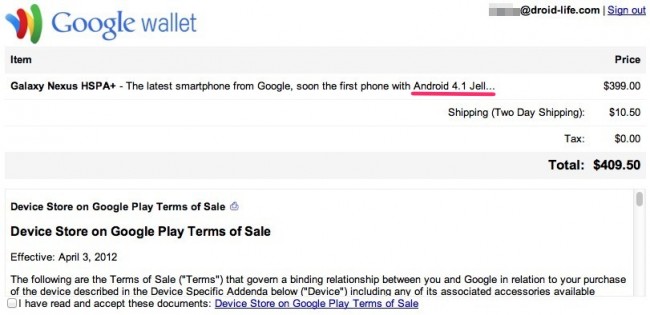
DroidLife just posted the above screenshot that confirms “Jelly Bean,” otherwise known as Android 4.1, as the next candy-flavored version of Google’s mobile operating system.
The website first spotted the news in the XDA Developers forum, where a user posted a similar image for the unlocked Galaxy Nexus available on Google Play. One cannot help but wonder if Jelly Bean will unveil at the Google I/O conference that is just around the corner.

In a post on the Android Developers blog, Google today outlined how it will be improving the ability for developers and app users to connect with one another through Google Play. Starting with an initial rollout today for Top Developers, devs will now have the ability to reply to user reviews from within the Google Play Android Developer Cosnole:
Developers can gather additional information, provide guidance, and — perhaps most importantly — let users know when their feature requests have been implemented…We’ll also notify the user who wrote the review via email that the developer has responded. Users can then contact the developer directly if additional followup is needed or update their review.
Google noted it will begin to offer the feature to additional developers as it gathers feedback on the feature from developers and users.
Expand
Expanding
Close
[youtube=http://www.youtube.com/watch?v=Bn2QbwcjmOI&feature=player_embedded]
In a post on the Official Google Blog, Google today outlined the work it has done on a new initiative called the “Endangered Languages Project.” In partnership with the Alliance for Linguistic Diversity, Google put together a new website with the goal of allowing people to “find and share the most up-to-date and comprehensive information about endangered languages.”
Documenting the 3,000+ languages that are on the verge of extinction (about half of all languages in the world) is an important step in preserving cultural diversity, honoring the knowledge of our elders and empowering our youth. Technology can strengthen these efforts by helping people create high-quality recordings of their elders (often the last speakers of a language), connecting diaspora communities through social media and facilitating language learning.
As part of the project, the website will allow people to upload content to help document over 3,000 languages that are on the brink of extinction. Google gave an example of materials that have already been uploaded to the website, including: “18th-century manuscripts to modern teaching tools like video and audio language samples and knowledge-sharing articles.” The post also noted the project will aid people in creating and uploading “high-quality recordings of their elders (often the last speakers of a language),” which allows communities to connect through social networking and provide tools to facilitate language learning.
Going forward, Google will allow a number of organizations already involved in preserving the dying languages to run its project:
Expand
Expanding
Close
[youtube=http://www.youtube.com/watch?v=BCTjgbEtYKY&feature=player_embedded#]
Nuance just released a significant update to its Swype keyboard software that it acquired last year.
The entire UI is revamped. Users can still quick-swipe for input, but the keyboard now offers multimodal support with the option to press keys and initiate Nuance’s “Next Word Prediction” technology. Swype’s built-in dictionary actually learns over time and crops words from emails and texts for easier communication. Users also have the ability to handwrite or trace letters, words, or symbols, or they can click the Dragon Diction button to launch integrated voice-recognition.
The latest version of Swype is now in beta, but it is not compatible with all Android devices.
Visit beta.swype.com for more information.