Microsoft released an entire suite of MSN apps for Android today, which includes MSN News, Money, Health & Fitness, Food & Drink, and Sports, and Weather.
The Health and Fitness app allows users to track their diet and fitness goals, keep track of health-related news, view an interactive map of the human body. The Food and Drink app will include videos and articles on cooking from top culinary sources. It also provides a shopping list feature and wine guide.
Google announced on Monday that it has expanded Windows support for Google Cloud Platform by releasing three enhancements to Google Compute Engine for running Windows-based workloads. The additions will make it easier for Windows users to leverage the performance and scale of Google data centers. Expand Expanding Close
A couple of months ago, Microsoft released a Bing-powered voice assistant app called Torque, and now the same app—which was previously only for Android Wear devices—can be activated at any time on your Android phone itself. The app works very similarly to Google’s own “OK Google” offering, but with a twist. Literally, you twist your wrist to activate the assistant rather than using your voice. But beyond that activation gesture, the app offers much the same information as OK Google, like weather updates, sports scores, information about nearby restaurants, stock prices, and more.
Google is planning to offer higher commissions to resellers who sign up enterprise customers for its Google Apps for Work packages, reports the WSJ.
Google plans to boost the commissions it pays some outside firms to sell its workplace software, signaling a more serious challenge to Microsoft’s dominance at larger companies, according to people familiar with the matter.
Google currently pays a 20% commission, typically earning resellers $10 per user per year, but is planning to offer a bigger cut to its most successful resellers in order to encourage companies to further boost sales. The exact details of the new commission structure are not yet known.
The company recently announced that Sprint had become a reseller for mobile-focused business apps. High-profile companies that have adopted the Apps for Work suite include auditors PwC, Squarespace and WordPress.
While Microsoft remains the dominant player in office productivity software, the two companies have been on a converging path for some time, Google expanding its apps suite while Microsoft focuses more on the cloud.
In a post on the official Drive Google+ account, Google today announced that Gmail web users can now easily open and edit Microsoft Office attachments. Google previously introduced the ability to edit Office files in Drive, but today’s update makes the process considerably easier for Gmail users. Now when a user receives a Microsoft Office file in an attachment, they can simply click the “edit with Google Docs” pencil icon to instantly open and edit the file.
Microsoft announced today that it acquired Acompli, an email client for Android and iOS, in an effort to own more productivity apps on each mobile platform:
This acquisition is part of our company-wide effort to help people accomplish more with their mobile devices. This year we brought Office to the iPad and the iPhone, and we recently announced that we’re bringing Office to Android devices. These are significant steps in our work to deliver the best productivity experiences across mobile platforms, and we’re continuing to push forward.
Acompli also wrote about the acquisition news while discussing support for various file services:
Soon after launch we started working with a number of enterprise IT departments who believed, like we do, that great products need to be “Loved by Users, and Trusted by IT.” Right around this time we began conversations with the folks at Microsoft about how we could go farther by integrating the capabilities of their Office 365 platform into our product while continuing to provide amazing support for email and file services from Apple, Dropbox, Google, and Box. Those conversations led to today, where we have decided the opportunity to join forces in pursuit of a better, faster, more powerful email experience is something we can do better as one company.
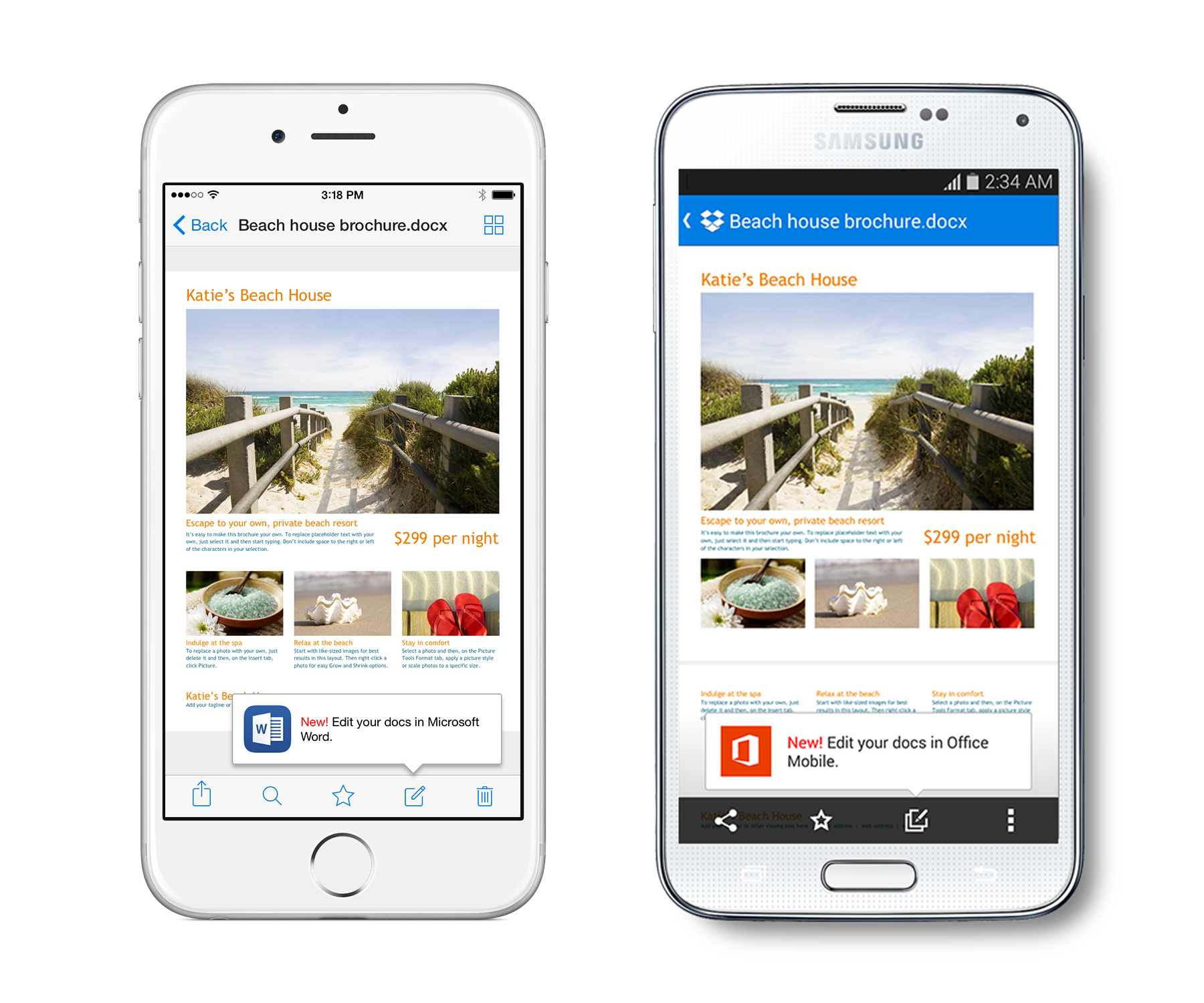
Following an announcement earlier this month that Microsoft was adding Dropbox integration for syncing and sharing to the Office mobile apps, Dropbox announced today that the feature is now available in its latest app updates for Android and iOS.
The integration essentially allows users to tap into Dropbox storage directly from within the Office mobile apps, but it will also include the ability to send links to files from Office using Dropbox, open documents from Dropbox in Office, and more. Dropbox has instructions on how to use the new integration with Microsoft’s Office apps on its website.
To get started, make sure your Dropbox app is up to date on your iPhone, iPad, or Android phone, then open any Office doc, spreadsheet, or presentation in your Dropbox. Tap the new Edit icon (shown above) to start editing in the latest Office apps. When you’re done, your changes will be saved back to Dropbox automatically.
Earlier this month the Microsoft Office Mobile for Android app was updated with its part of the integration allowing users to “open, edit, and save documents from Dropbox.”
Nokia has today announced its first new product since selling its devices and services division to Microsoft, the Nokia N1 tablet – a device bearing more than a passing resemblance to Apple’s iPad mini 3.
Aimed initially at the Chinese market, the $249 Android-powered tablet has decent specs, with a 2048×1536 resolution display, a 2.4GHz quad-core Intel Atom Z3580 CPU, 2GB RAM, 32GB storage, 8MP main camera and 5MP front-facing camera. It’s also one of the first devices to support the new reversible USB-C connector. Impressively, the company has managed to make it both slimmer and lighter than the iPad 3 it resembles.
Today Microsoft announced that Skype is starting to roll out as a service on the Web. Skype for Web will allow users to chat, video call, and manage contacts from a web browser without having to download the Skype app. Microsoft is currently offering Skype for Web as a beta to select users. Expand Expanding Close
Microsoft and Dropbox announced a new partnership between the two companies today and a commitment to bring integration between Dropbox and Office apps on Android and iOS. Currently Office users rely on local storage for saving files or Microsoft’s own OneDrive service for saving and syncing files, but the newly announced partnership will allow Office users to use the popular Dropbox service as an additional storage and syncing option and introduce new features between the productivity apps and syncing service. Expand Expanding Close
Microsoft hasn’t officially announced its wearable device, but it seems the company has accidentally published its desktop syncing client to the Mac App Store early. Whoops. The device is called the Microsoft Band (possibly Lumia Band, according to some currently non-functional support URLs).
The Microsoft privacy policy for the app lists some of the Band’s features: “Microsoft Band sensors help you keep track of things like your heart rate, steps, calories burned, and sleep.” Links in the document claiming to lead to a page with additional data, such as a list of sensors, currently lead to a 404 page.
Other key feature include the ability to get phone notifications on the Band, create reminders using Cortana, and more:
Microsoft recently rolled out an update for its OneDrive mobile app and the software maker managed to show its Android variant some love in the process. The latest version of the company’s cloud storage software ships with support for the recycle bin, so users can now restore deleted files from the comfort of their compatible smartphone or tablet.
Microsoft on Monday announced that it will be eliminating its top-tier cloud storage plan and offering unlimited cloud storage to Office 365 subscribers at no additional cost. The change will begin rolling out today for Office 365 Home, Personal and University customers and will continue over the coming months. Expand Expanding Close
Microsoft quietly added a beta version of its Remote Desktop Android app to Google Play, that introduces some unreleased features that have yet to hit the software’s stable build. Like the company’s other pre-release applications, this new software is likely being used an easy way to collect user feedback.
According to Forbes, Microsoft will soon enter the wearable market with a competing smartwatch device. The report says the device will track heart rate for fitness, like other Android and Apple smartwatches.
Behind the Mic: The Science of Talking with Computers
Language. Easy for humans to understand (most of the time), but not so easy for computers. This is a short film about speech recognition, language understanding, neural nets, and using our voices to communicate with the technology around us.
Just in case you didn’t get the memo, Google is really big on voice search. The company’s voice command-friendly Google Now tech is available across multiple platforms and according to some recent research, teenagers are crazy about talking to their smartphones, but how does it all work?
Speaking to your mobile devices are starting to become more commonplace, however there’s a lot of behind the scenes work that goes into developing speech recognition.
Microsoft has just joined the ranks of companies looking to capitalize on the success of ephemeral messaging apps like Snapchat. Through its Skype division, the company has launched a new cross-platform app for iOS, Android, and (of course) Windows Phone called Skype Qik. The premise of the application, as can be seen in the video above and screenshots below, is simple: you can record a quick video, and then share it to either one person in your address book or multiple groups of people.
By default, videos will expire after two weeks, and you can also un-send messages at any time. A cool feature of Skype Qik is the ability to pre-record various 5 second GIFs that you can send as instant replies. So, if you don’t have the ability to send a live video reply, you can just choose one of your pre-record defaults. The app is free today on the aforementioned platforms, and Microsoft says that updates, such as one for blocking iPhone contacts (that feature is available today on Android and Windows Phone), will come often to enhance the feature-set.
You can view some screenshots of the Android app in action below:
Samsung and Microsoft initially inked an Android patent licensing deal back in 2011, but since then, Samsung’s dominance in the smartphone has grown incredibly fast. The South Korean company, according to court documents that become public on Friday, is now saying that it no longer wants to pay the royalties to Microsoft.
Microsoft updated OneDrive for Android today with some new features that change the way users view photos saved to the company’s cloud storage service. Bringing the app up to speed with its counterparts, the software maker added All Photos View to its mobile application, along with some new search features that make it easier for business customers to locate specific files.
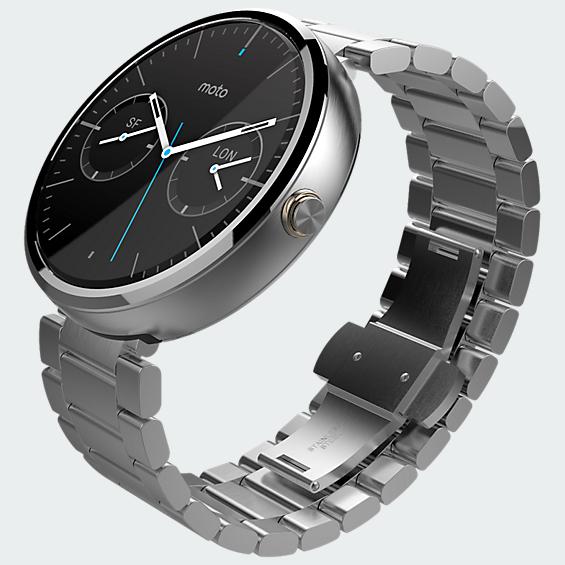
Today, Microsoft announced that its OneNote application is now available for Android Wear smartwatches. This means that owners of devices like the LG G Watch, Samsung Gear Live and Moto 360 can now install the 3.2MB software and start recording notes with their wearable by saying “OK Google, take a note.”
CyanogenMod—which is probably the most well-known fork of Android—lets users customize their phone beyond what Google intends, and touts having as many as 12 million active installs across a variety of devices. But the company behind the famed alternative operating system is reportedly getting a lot of attention, notably from companies that would consider themselves some of Google’s biggest rivals.
Microsoft’s OneDrive cloud storage mobile app received an update today across multiple platforms. The Android flavor of the new software push mixes work with play, giving users access to their personal and business files at the same time without having to switch accounts.
If you want to learn what happened behind the scenes in the tumultuous world of Motorola in the past decade, Chicago Mag does an excellent in-depth feature of the company that is awaiting approval of its sale from Google to Lenovo. Some excellent bits:
Meanwhile, in arguably one of the worst decisions ever made by a major corporate CEO, Zander struck a deal with his Silicon Valley friend Steve Jobs, the CEO of Apple. Together their companies created a Motorola iTunes phone, the first phone connected to Apple’s music store. “We can’t think of a more natural partnership than this one with Apple,” Zander said at the time. Named the Rokr, the phone launched in the fall of 2005. Jobs, who introduced it, called it “an iPod Shuffle right on your phone.”
Dropbox has today slashed its pricing and doubled the maximum storage space from 500GB to 1TB. Up until yesterday, you’d have been paying $500/year for 500GB; today you can pay just $120/year (or $99/year when paying annually) for a terabyte.