Android

See All Stories

Breaking news for Android. Get the latest on apps, carriers, devices, and more!
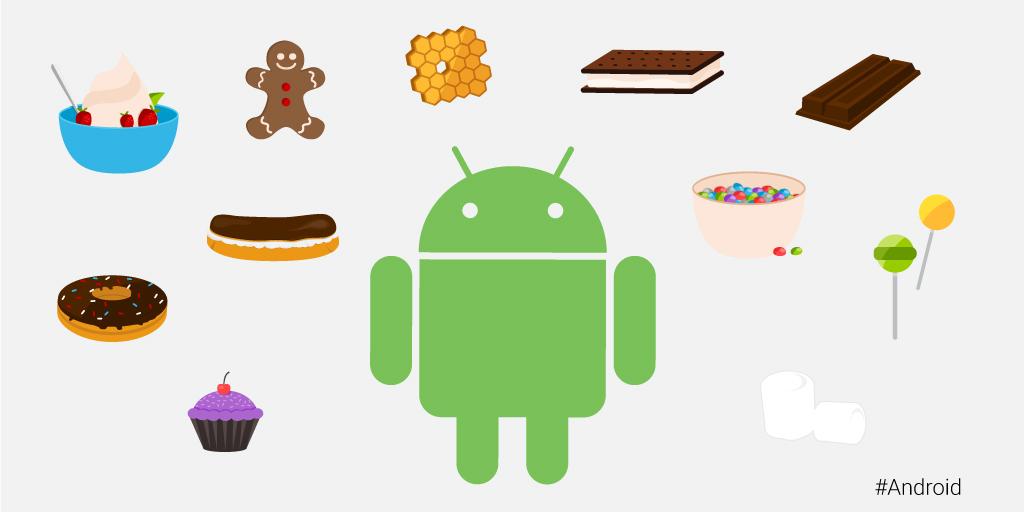
Android is Google’s mobile operating system, launched in September 2008, although its history technically began with the release of the Android alpha in November 2007. To this day, Android powers the majority of the world’s smartphones and comes in several different flavors across many phone makers.

What is Android?

Android Inc.

Android, before it was Android, was a company called Android Inc. That company was founded in Palo Alto, California, in 2003 by a crew of four: Andy Rubin, Rich Miner, Nick Sears, and Chris White. The company and its project was acquired by Google in 2005 for a sum of more than $50 million, although the exact number is unknown. The company’s founders joined Google as part of the deal.

In its infancy, Android was an operating system built not for touch screen smartphones like the iPhone, but rather BlackBerry-like devices with physical keyboards. It’s well documented that after Apple shocked the world with the iPhone, ahead of its nearest competition by at least a couple years, Google and Android Inc. had to go back to the drawing board to build something competitive.

Adoption by third-party makers

It didn’t take long after the launch of the iPhone for various manufacturers to enter the market with their alternatives — and Google’s Android immediately became the obvious platform of choice for just about everyone except Microsoft. HTC was the first manufacturer on board, and introduced the T-Mobile G1 running Android in September 2008. Soon after, HTC, Motorola, Samsung, and carriers like Sprint and T-Mobile jumped on board to form the Open Handset Alliance.

Android makers across the world

Iconic Android handsets

There have been thousands of Android phones released since Android’s inception, but some have been more important to the platform’s history than others. There was the original T-Mobile G1, as mentioned, but there was also the HTC One Google Play Edition, Moto G, Samsung Galaxy S4, and others. Some of the most iconic Android handsets include:

  • HTC G1
  • HTC Nexus One
  • Samsung Galaxy S, S2, S3, S4, and their successors
  • HTC Incredible S
  • Samsung Nexus S
  • Samsung Galaxy Nexus
  • Samsung Galaxy Note
  • Nokia 8
  • BlackBerry KeyOne
  • Google Pixel and its successors

In more modern times, there are several Android smartphones makers that popped up across various niches and in several international markets. Huawei is a dominant Android maker in China and many European markets, while Samsung is by far the most popular maker in the United States by far — effectively creating a duopoly with Apple. Today, there are dozens of major device makers contributing to the Android ecosystem.

Full list of Android OEMs

History of major Android versions

Android has seen countless software revisions over the course of its life, but in modern times the OS usually sees a major release on an annual cadence. In the earlier days, Google famously gave its major software releases dessert-themed codenames, but retired that practice in 2019 with the release of Android 10.

VersionNameReleaseDevices
2.3GingerbreadFebruary 9, 2011Nexus S
4.0Ice Cream SandwichOctober 19, 2011Galaxy Nexus
4.1Jelly BeanJuly 9, 2012Nexus 7
4.2Jelly BeanNovember 13, 2012Nexus 4, 10
4.3Jelly BeanJuly 24, 2013Nexus 7 (2013)
4.4KitKatOctober 31, 2013Nexus 5
5.0LollipopNovember 3, 2014Nexus 6, 9
5.1LollipopMarch 9, 2015Android One
6.0MarshmallowOctober 5, 2015Nexus 5X, 6P
7.0NougatAugust 22, 2016Nexus 5X, 6P
7.1NougatOctober 4, 2016Pixel, Pixel XL
8.0OreoAugust 21, 2017Pixel, Pixel XL
8.1OreoDecember 5, 2017Pixel, Pixel XL
9PieAugust 6, 2018Pixel 2, Pixel 2 XL
1010September 3, 2019Pixel 3, 3a
1111September 8, 2020Pixel 4

List of major Android OS platforms

While Android proper is certainly the most widespread of Google’s Android operating systems, the company has also launched many offshoots of the main OS over the years. There’s Android Auto, Android Wear (now Wear OS), Android TV (now rebranded to Google TV), as well as versions of Android built for tablets and Android Things (now defunct).
Site default logo image

Opera for Android updated to include new version of Chromium, speed improvements, more

The Opera Browser for Android has been updated with a host of new features this morning. Earlier this month the browser officially switched from Opera’s Presto engine to Google’s Chromium, and with version 15, the app now includes the newer Chromium 28. The start up time has also been improved with this version of Opera, as has general page loading. You can also now download video files from within the browser.

The full change log follows:

  • Based on Chromium 28
  • Improved startup-time
  • Download video. Possible to download video files that can be played in Opera
  • Set download location (where your files are downloaded to)
  • Improved tab-UI animations
  • Opening files from external SD Card now possible
  • New “open in private tab” context menu
  • Cookie clearing mechanism improved
  • Fix for bug causing Opera to be uninstalled from selected Samsung devices
  • Memory leaks plugged and general stability improvements.

The update is available on the Play Store now
Expand
Expanding
Close

Samsung overtakes Apple for first time in global smartphone web usage

Site default logo image

Samsung’s share of smartphone-based web-browsing has increased substantially in the last year, reports StatCounter, edging just ahead of Apple for the first time.

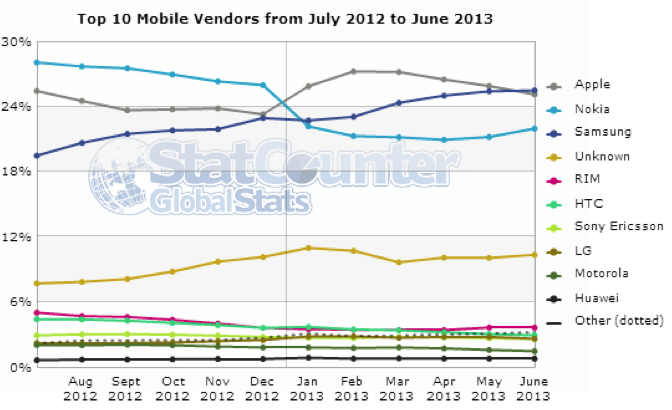
The big winner over the year has been Samsung, which, for the first time in June 2013, marginally passed Apple on a worldwide basis to take number one spot in terms of internet usage. Samsung has seen its internet usage rise to 25.47%, just ahead of Apple (25.09%) … 
Expand
Expanding
Close

Redesigned Google Maps for Android begins rolling out to Android 4.0.3+ users

Site default logo image

As previewed at Google I/O 2013 in May, Google has just begun rolling out the latest version of Google Maps for Android to Android 4.0.3+ users. The update, which is available now for download at Google Play, will provide users with a new design (both on tablets and smartphones), live traffic updates, improved navigation, incident reports, and a new Explore function. This Explore feature is a “new way to browse and discover popular local places to eat, drink, shop, play and sleep,” per Google’s release notes. While the update is out today, the new features will arrive gradually for end-users. Phandroid provides a link for side loading on the complete update today.


Expand
Expanding
Close

Leaked video and images show LG G2 with thin design, rear volume controls

Site default logo image

While LG is not officially set to unveil its G2 flagship until August 7th, Engadget has just gotten its hands on clear, detailed images of the device, as well as a video that basically take all the suspense out of LG’s official event next month. According to the leak, the device will feature a 5.2-inch 1080p display with an incredibly small bezel that makes it appear edge-to-edge. Visually the G2 looks a lot more like the Nexus 4 than the original Optimus G. It has a more rounded design, as opposed to the blocky design on its predecessor. On the back is the volume rocker, which we saw in leaked images last month.


Expand
Expanding
Close

Site default logo image

Yahoo! Mail updated with support for Dropbox attachments

Earlier this afternoon we reported on a new feature from Dropbox called “Drop-ins” that lets developers seamlessly upload and download files from Dropbox within their apps. Yahoo! has now announced that its Mail app for Android has been updated for support with the feature.

From within the Yahoo! Mail app, simply tap the attachment icon and choose “Share from Dropbox” to share files from the cloud with your emails.

In the app, start a new email, tap the attachment icon and choose “Share from Dropbox.” If you’ve already linked your Dropbox account, then you can start choosing files to share right away. If you don’t have an account, just sign up from within the app.

The update should be available very soon on the Play Store.

Dropbox lets third-party devs sync app data w/ new API, now at 175M users

Site default logo image

Dropbox kicked off its developer conference in San Francisco today and with it came a few updates including new tools for devs and the announcement that the service now has 175 million users. That’s up about 75 million users from just last November.

The developer conference also included some announcements about new tools coming to let third-party app and website developers easier integrate Dropbox. The company is introducing a platform for developers that includes a new API called Datastores, allowing app devs to store and sync data from their apps across multiple devices and platforms. It’s something developers have been doing on their own for a while (for example 1Password), but now Dropbox is making easy for all:

The Datastore API provides developers a new way to sync data beyond files across a variety of devices and platforms. The Datastore API allows developers to save their app’s structured data (e.g. contacts, to-do items, and game state) on Dropbox and handles all the magic necessary to sync it quickly and reliably. Users of a Datastore-enabled app can be sure their data will be up-to-date across all their devices whether online or offline.

It also showed off new “Drop-ins” that will let devs easily integrate the ability to open and save from Dropbox within their apps:
Expand
Expanding
Close

Samsung concept video shows its vision for future display tech and wearables

Site default logo image

http://www.youtube.com/watch?feature=player_embedded&v=PiYolKRuY7Q

There’s been a lot of interest surrounding the wearable computing market recently, with Apple going on an iWatch trademarking binge and the Pebble being released to Best Buy locations around the country. Samsung, who you have to figure is interested in the wearable market, showed off its vision for the future of wearables at the MobileBeat conference in San Francisco (via AllThingsD).

Samsung chief strategy officer Young Sohn showed a video full of concepts for wearable devices. Specifically, the video focused on the health benefits of wearable computing. It shows a women using her device to quickly send health test results to her doctor. “We think the health area is a really key area of innovation,” Sohn later said. Samsung things that, though the market for wearable devices is small at the moment, it will rise quickly when the technology is further integrated into watches, glasses, and more. The video also shows Samsung’s vision for  displays and how you could be able to easily expand and compress your device to get a larger or smaller form factor.

We haven’t heard too much about a Samsung wearable device, but we have to imagine that it is in the forecast, as both Google and Apple are reportedly eying the market.
Expand
Expanding
Close

Rumored Galaxy Note III confirmed by User Agent Profile on Samsung’s website

Site default logo image

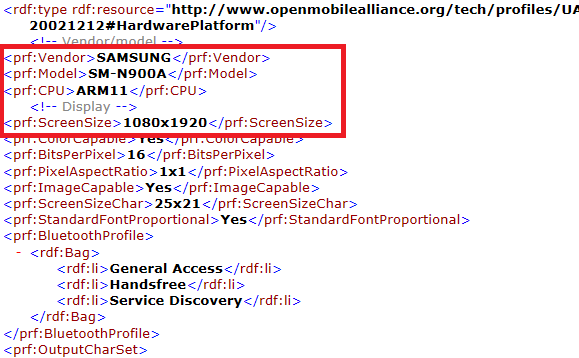
Rumors of a Galaxy Note III, dating back to March, appear to have been confirmed by a User Agent Profile on Samsung’s website, reports SamMobile.

Samsung’s own UAPROF confirms the Galaxy Note III, model number SM-N900T and SM-N900A showed up. The model corresponds to Galaxy Note III and confirms the rumoured screen resolution of 1080×1920 … 
Expand
Expanding
Close

Site default logo image

Tumblr for Android updated with new discovery options

Hot on the heels of an iOS update this morning, Tumblr for Android has been updated with some new search and discovery features. You now have the ability to search for tags and blogs, as well as explore trending tags and blogs, and follow recommended blogs. Various bugs have been fixed, as well.

  • Search tags and blogs
  • Explore trending tags and blogs
  • Follow recommended blogs for any tag you search

The update is available now on Google Play.

Site default logo image

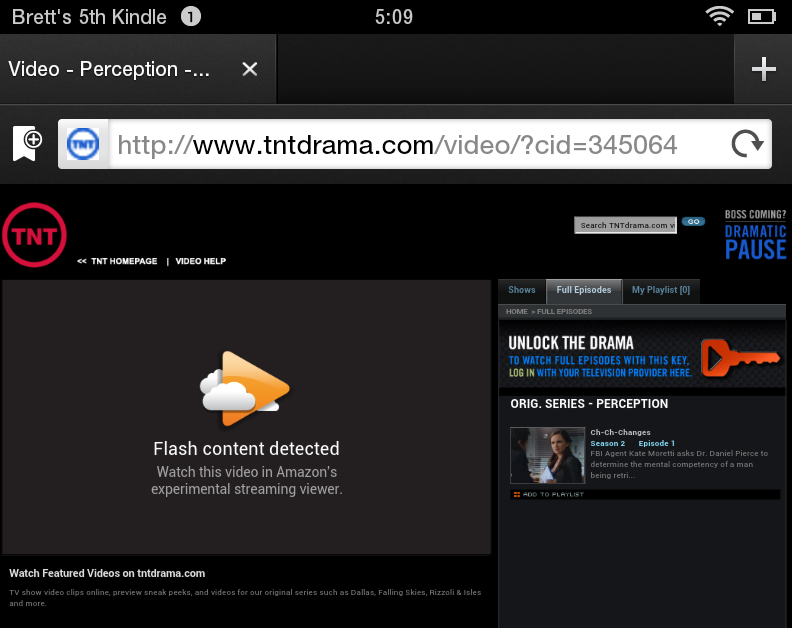
Flash video comes to (some) Kindle Fire tablets as Amazon tests streaming viewer

AllThingsD reports that Amazon has been quietly testing a way to offer Flash video on Kindle Fire tablets.

Since February, some Kindle Fire owners have been seeing an option to use an “experimental streaming viewer” when trying to watch video on sites such as NBC.com, CBS.com and Fox.com.

The effort is made possible by the fact that the Kindle Fire browser, known as Silk, divides work between the device and Amazon servers in the cloud.

Adobe stopped supporting Flash on mobile devices back in 2011, with Ice Cream Sandwich (Android 4.0)  the last version to offer Flash. While most sites have now switched to HTML5 for mobile video, there are still some that require Flash, causing frustration for those accessing the sites on smartphones and tablets.

Although getting a server to convert Flash video to a format that can be viewed by a device without Flash is an approach used by a number of browsers, it has so far mostly been the preserve of geeks. If Amazon opens the service to all Kindle users – as seems likely from the company’s comments – it will turn it into a mainstream option.

“Because this feature is built on the AWS cloud, expanding our list of available sites is as simple as a configuration change that immediately propagates to customer devices and we can scale out elastically based upon customer demand,” said Kufeld, who heads Amazon’s Silk browser team. “It’s still early days but we’re very excited about this feature.”

Site default logo image

Moto X Phone not launching on July 10-11, according to Motorola

Last week, tech pundit Leo Laporte announced that he had been invited to an event on Google’s campus on July 10th by Motorola’s Guy Kawasaki. According to him, only a small number of journalists were invited, with the same event being held on July 11th for another group of people. Many people speculated that this was where Motorola would unveil the highly anticipated X Phone. According to a report out of AllThingsD, however, the event is not for any product announcements and is purely a “private event” being held by Kawasaki.

The X Phone will be Motorola’s flagship device for the remainder of the year and will be highly customizable and feature a lot of sensors and awareness features, according to several reports. At the D11 conference, Motorola CEO Dennis Woodside stated that it would be made in the United States and be available this fall.


Expand
Expanding
Close

Site default logo image

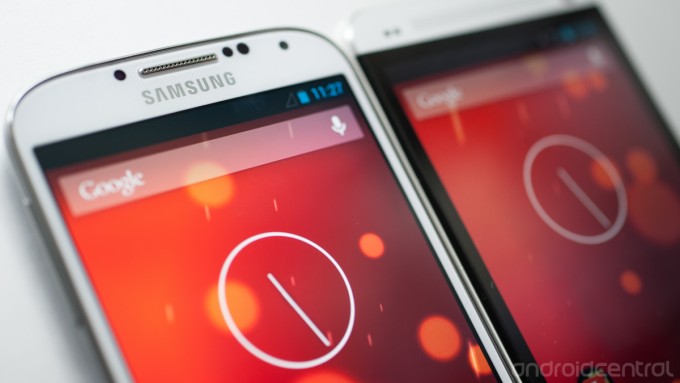
Google now shipping stock Android S4 and HTC One handsets

The Google Edition Samsung S4 and HTC One handsets which went on sale for pre-order last month started shipping today as promised, reports Android Central.

In case you’ve been living under a rock the past couple weeks, these are the (mostly) “stock Android” versions of the phones. Same hardware, with the software as God and Google (HOLOYOLO) intended, for better or for worse. They’re SIM-unlocked, with full LTE support here in the U.S., and with just a superficial control over the bootloader, so they’re developer-friendly.

Our preference is for pure Android goodness every time, buy if you’re still wondering whether one of these handsets is the right choice for you, check out our review roundup.

Site default logo image

Google patches Android to block application signature vulnerability

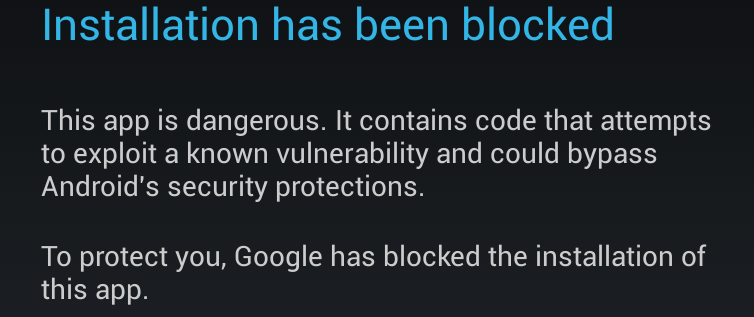
Google has issued a patch to handset manufacturers to block a security hole that could, in theory, allow almost any Android application to be turned into malware, reports ZDNet.

It doesn’t get much scarier than this. Bluebox Security claimed to have discovered a vulnerability in Android’s security model that could allow attackers to convert 99 percent of all applications into Trojan malware. Google has told ZDNet that the hole has been patched and that it has been released to original equipment manufacturers (OEM)s.

Handset and tablet owners will have to rely on the manufacturer to push the patch to their device, but the vulnerability isn’t as scary as it sounds. While it would in principle allow an attacker to change almost any application to malware without Android detecting the change, Google reports that there is no evidence of the exploit having actually been used.

“We have not seen any evidence of exploitation in Google Play or other app stores via our security scanning tools. Google Play scans for this issue – and Verify Apps provides protection for Android users who download apps to their devices outside of Play,” said Gina Scigliano, Google’s Android Communications Manager.

Via Techmeme

Android distribution numbers updated for July, Jelly Bean now the most used version

Site default logo image

As it does every month, Google has just updated the Android distribution data to reflect the month of July. Jelly Bean is now running on 37.9 percent of devices, with 32.3 percent of those running Android 4.1.x. That’s up from 33 percent this time last month. Gingerbread fell from 36.5 percent to 34.1 percent, which makes Jelly Bean the most used Android operating system. Ice Cream Sandwich is now at 23.3 percent, down from 25.6 percent last month.

Froyo is now at 3.1 percent (was at 3.2 percent), Eclair has fallen to 1.4 percent (was at 1.5 percent), Honeycomb and Donut are both now at just 0.1 percent.

Google collects this data during the first week of each month by logging the devices that access the Play Store. It use to be that the data was collected when the device simply checked-in to Google servers.
Expand
Expanding
Close

Twitter for Android updated with direct message syncing, more

Site default logo image

Alongside the iOS and Mac update that rolled out earlier this afternoon, Twitter for Android has also been updated with several new features. Most notably, direct messages now sync across all of Twitter’s official apps (Mac, iPad, Web, Tweetdeck, mobile web, Android). Before today, if you read a direct message on your desktop, it would still be marked as unread on your phone.

  • Now when you read a Direct message it will be marked as read in all of your official Twitter apps (including twitter.com, mobile.twitter.com, Twitter for Mac, Twitter for iPad and TweetDeck) and vice versa.
  • As you search you can now see user avatars and clear past searches from the dropdown menu
  • Richer search results indicate when there are new Tweets for your query and show account results with bios and social context

Missing from this update is the new reply field that iOS devices got, but hopefully that feature comes sooner rather than later. 
Expand
Expanding
Close

Company selling makeshift plastic iPhone hardware running Android [video]

Site default logo image

Over the weekend, Techdy released high quality video of a makeshift budget iPhone with glued together parts, and now the same company has released a video showing the device running Android. The company is selling the device, dubbed the Basic Bear, for just $199. It features a 1.7GHz quad-core Snapdragon 600 processor and the same 4-inch 1136×640 Retina display as the iPhone 5. The device is made from a polycarbonate material and feels much sturdier than the Galaxy S line of devices, according to the company.

Based on the design of Apple’s budget iPhone, we have made an Android
version called the Basic Bear. It rocks a 4 inch display (1136 x 640),
1.7GHz quad-core Snapdragon 600 CPU, 2GB of RAM, 16GB storage, 8
megapixel rear camera with LED flash, 2 megapixel camera w/ 1080p HD
video recording, Qi-wireless charging expansion slot, 2300 mAh
battery, Android 4.2 Jelly Bean, and much more. The best part? It
costs just $199, and comes in 5 vibrant colors.
For more information, visit our Techdy store: http://techdy.com

For what it’s worth, the company also sells a Bear Pro, with a design similar to the HTC One for $249.
Expand
Expanding
Close

LG releases video teasing G2 flagship ahead of August press event

Site default logo image

Update: LG has sent out another invite to the same event, this time with an image the same as the one in the video.

Last month, LG sent out a press invite to an event on August 7th and given all the leaks and rumors, almost everyone assumed the event would be for the LG G2, a successor to the Optimus G flagship. LG has now released a video teaser for the event that essentially confirms that it will be for the G2.

Throughout the entire video, a man walking through New York City sees “To me, you are perfect. From G…” posted everywhere, from benches to taxis to graffitied walls. The video ends with a slide reading “Great 2 have you” with the date and time for the event listed below.

We’re still about a month away from the August 7th event, but we’ll be sure to bring you everything you need to know regarding LG’s next flagship.
Expand
Expanding
Close

DLP technology can turn Nexus 7-sized tablets into projectors without changing form factor

Site default logo image

One of the problems with the Samsung Galaxy Beam and its anticipated successors is that the projector and batteries that need to go along with it make the phone a bit of a brick.  You carry a phone with you every day and trying to sell a device that double the thickness and weight for a function (projecting) that you only use on rare occasions is tough.

But, with new DLP and LED technology that is reducing the battery drain and a bigger form factor (read: tablets) you can almost miss the additional weight and size required to add a projector to a portable device.  TI gave me a SmartDevices U7 projector-tablet to play around with for a few months to see how I liked the form factor.

Taking it out of the box, it feels like a more dense Nexus 7. While the form factor is largely the same, this SmartDevices tablet contains a 35 Lumen DLP projector that comes out of one of the sides of the tablet. That’s up for 15 Lumens on the Samsung Beam and a very noticeable improvement. While the beam requires a lowering of the lights, this projects to the 50-inch size in well-lit rooms. We’re not talking real projector quality but certainly viewable…
Expand
Expanding
Close

Motorola holding press briefings next week, but is it for the Moto X? (updated)

Site default logo image

Update: According to a source speaking with CNET, Motorola does not plan to unveil the X Phone at the press briefings next week, saying the event is about “something else.”

We already know a lot about the upcoming Moto X Phone. Motorola CEO Dennis Woodside announced it at the D11 conference earlier this year, and since then, we’ve seen images, specs, and details regarding customization options leak. The main thing we need to know is when it will be announced and when it will be released. On an episode of his This Week in Google show, podcaster Leo Laporte stated that he has been invited to an event at the Google campus on July 10th by Motorola employe Guy Kawasaki. It’s a small event, according to Laporte, with only 50 journalists being invited. The same event will also be held on July 11th with another group of reporters.

There are all sorts of things Moto/Google could have up its sleeves for this event, but Laporte seems pretty adamant about it being the Moto X Phone. It could also be something simple, such as Motorola wanting to further introduce its new strategy with reporters. Given the fact that it will be held on the Google campus, it could also be something entirely unrelated to Motorola, such as Android 4.3. As Google has said before, Motorola is supposed to be operated entirely separate with no direct access to Google.

On the ad released by Motorola earlier this week, two people were jumping into a lake forming “XI” with their bodies. In Roman numerals, X1 is obviously the number 11, which further leads to the possibility of the X Phone being announced at these small events. However, that’s a lot of speculation on top of very little information, so we’ll just have to wait and see.

For all of the details from Leo Laporte (not many) jump to the 40 minute mark in the video below:


Expand
Expanding
Close

Samsung goes after iPhone’s lack of language support in new Icelandic Galaxy S4 ad

Site default logo image

http://www.youtube.com/watch?v=uhM-DuM2WgE

Above we see a new ad that Samsung recently aired for its flagship Galaxy S4 in Iceland. The ad itself is a little on the strange side, but what’s not surprising is the fact that Samsung is once again not so subtly going after Apple. The point of the ad, in case you don’t speak Icelandic, is to drive home the fact that Apple doesn’t yet support the language for Siri or dictation features. Samsung’s YouTube description for the ad notes that the S4 allows users to dictate emails and messages in Icelandic, while the tagline for the ad reads “Get a phone that understands you.” We’re not exactly sure where the ninjas fit into that message, however. 
Expand
Expanding
Close

HTC posts $41.63 million in profit for Q2, down 83% over last year

Site default logo image

Following Samsung’s monster profits from yesterday, HTC has now released its unaudited results for Q2 2013 (via TechCrunch). The company reported total revenues of $2.35 billion (NT$70.7 billion) and profits of just $1.63 million (NT$1.25 billion). While the profit is up over the NT$85 million it reported in Q1 2013, it’s still lower than analysts expected and down 83% year over year.

Many were expecting HTC to have a good quarter, as its One flagship is finally available on three major United States carriers and the device was well-received by critics. Sales in May for HTC were up 48.03%, but things nose dived in June, falling 23.88% month-on-month and 26.43% year-on-year.

HTC had hoped that a unified line-up of devices could help it better compete with Samsung, who posted over $8 billion in profit for Q2, but it looks like the struggles for the Taiwanese company are deeper than we thought. 
Expand
Expanding
Close

Samsung estimates record profit of $8.3 billion in Q2

Site default logo image

Samsung has released its estimated earnings for Q2 2013, with a full announcement scheduled for later this month. The company estimates profits of $8.33 billion (9.5 trillion won), up nearly $2 billion over Q1’s $6.4 billion profit.

Reuters reports, however that this number was less than the 10.16 trillion won South Korean Analysts were expecting, which they blame on slowed momentum in Samsung’s smartphone division.

“The slowdown in its handset business appears to be worse than expected and the disappointing result simply reindorses the market view that Samsung’s smartphone growth momentum is slowing,” said Lee Sei-chul, an analyst at Meritz Securities.

Samsung’s component division, however, showed solid growth in Q2.

“But it’s got the component side of the business, which is showing solid improvements, and new handset product lineups for the third quarter, so (overall) earnings are likely to grow again in the current quarter.”


Expand
Expanding
Close