Stay up to date on news from Google headquarters. Be the first to learn about plans for Android, Google Plus, Google Apps, and more!
Stay up to date on news from Google headquarters. Be the first to learn about plans for Android, Google Plus, Google Apps, and more!

We told you last week that Google was readying physical gift cards for Google Play content, and the company made things official today by announcing the cards will roll out to Target, GameStop, and RadioShack retail outlets in the coming weeks. The cards will be available in $10, $25, and $50, and they will initially only be available in the United States at the retailers mentioned above and through Walmart.com later this month.
-Explore millions of songs from top artists, thousands of your favorite movies and TV shows, the world’s largest selection of eBooks, and much more. Play your purchases instantly on the web or on the go — no need for wires or syncing.
-Shop for all the Android apps and games you love with your Google Play gift card. You can even use it to purchase extra levels, add-on packs, and virtual currency.
Over on the Chrome Blog today, Google highlighted some of the new features in this week’s stable release of Chrome OS with the most notable being a redesigned apps list that includes an omnibox search bar at the top:
Notably, we made the apps list much more compact, so you can access your apps without interrupting your browsing experience. We also added a search box at the top of the apps list, which you can use like an omnibox to search the web, specific websites, or the apps on your computer.
Other improvements included in the release: custom wallpapers, a redesigned Cloud Print dialog, and the ability to save files directly to your Google Drive. Google also noted the release includes”audio support for USB and HDMI, additional sandboxing security features, and many more bug fixes.”
Expand
Expanding
Close

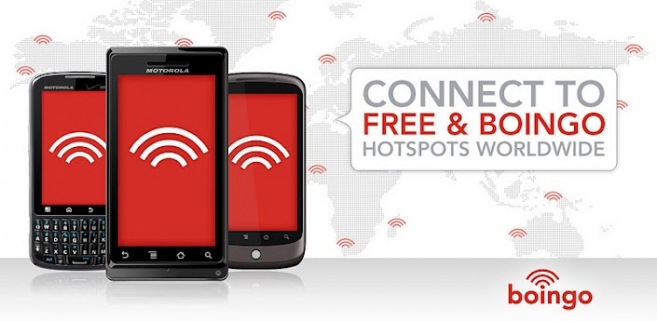
We reported in June that Google Offers is sponsoring free Wi-Fi in New York City until September, and now the discounted service will extend to more nationwide locations.
The sponsorship is possible through an agreement with Boingo Wireless. New Yorkers and tourists currently access free Internet at six subway stations and over 200 Boingo hotzones in the borough of Manhattan due to the partnership. The free Wi-Fi coverage, which even reaches below street level, will end Sept. 7. However, another 24 locations across the country will soon have access to the wide-reaching, complimentary service.
Starting today, the sponsored Wi-Fi will cover eight malls and 16 airports throughout New York, Chicago, Houston, Los Angeles, Washington, D.C., Seattle, and other major cities. Google Offers, which is an infant deal-of-the-day website piping localized savings to huge geographic markets in the U.S., is the first sponsor of Boingo Wi-Fi in New York subway stations.
The full press release is below (via BusinessWire):
Shortly after becoming available in the United States and Canada at various retailers and Google Play in mid-July, we reported Google suspended orders of the 16GB version while reports claimed the company had simply sold out of initial supplies. It would take Google weeks to restock the device, according to reports, but the 16GB model was again available on the store just a week later. Today, we get a look at just how many Nexus 7 tabs Google might have sold with analyst Sameer Singh estimating 6- to- 8 million units sold by the end of 2012 (via ComputerWorld):
Google could sell between six million and eight million of its $199 Nexus 7 tablets by year’s end, according to a new estimate… That’s more than double the three million Google expected to sell by the end of 2012, after putting the device on sale in July and seeing the 16GB version sell-out briefly… The estimate, based on projections using expected shipments of four million touch panels for the Nexus 7 in the third quarter 2012,
Google has not released any sales data related to the device and declined to comment on the estimates. Singh’s estimates definitely blow by the “1.5 million units in five weeks” estimated by Gartner. The estimate of 8 million units by year’s end is also significantly higher than Gartner’s estimates. According to Singh, “Google and Asus may have roughly doubled their [sales] estimates and cranked up the production volume.” Singh explained how he used panel orders to come up with his estimates:
Expand
Expanding
Close

.
OneSaleADay offers the “Google Android Pandigital Planet 7″ Touchscreen Tablet with Android 2.2 OS, 2GB & MicroSD Expansion Slot!” for just $49.99 with $5 for shipping. That’s a pretty insane price even if this thing is just a 2GB photoframe. But it isn’t. It is an Android 2.2 tablet with front AND BACK cameras, SD card slot (take that Nexus 7!), and 802.11N networking.
You are not going to love reading on this, with a 800-by-600 resolution, but it might make a good Google Hangout/web browsing/ general-use Android tablet for those without a lot of cash. Amazon’s reviewers were not very kind, but “you get what you pay for.” The full specs are below:
Expand
Expanding
Close
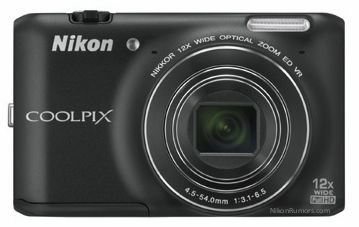
NikonRumors just posted leaked press shots of the Android-based Coolpix “s800c” camera.
The pictures reveal a touchscreen menu on the backside, apparently running a Gingerbread flavor, with apps for a camera, email, browser, music, etc. Additional specs labeled on the front of the camera detail a “12X Wide Optical Zoom ED VR” in HD and a 4.5-54.0mm stock lens.
NikonRumors, which has a decent track record in scooping Nikon, said the official announcement will occur “on or around” Aug. 22. The website first discovered the s800c in a filling with the Indonesian Communication Agency, and it originally noted the camera touts a 3.5-inch OLED screen, Android 2.3 with Google Play apps, and built-in GPS and Wi-Fi.
A full gallery is below.
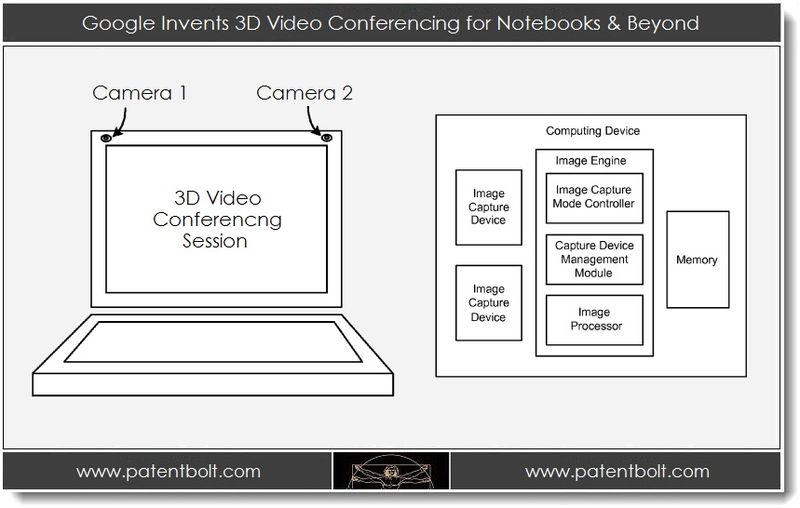
The U.S. Patent and Trademark Office published a patent application from Google that illustrates the search giant is developing technology for a computing device, such a laptop, that will boast dual cameras with 3D video conferencing as the main function.
Patent Bolt explained:
- Google’s specific example goes like this: the computing notebook with the dual cameras could be used by a first user to produce a stereoscopic image of, for example, the first user during a video conference session when while in the notebook’s stereoscopic mode. In some instances, the stereoscopic image could be displayed locally and/or sent to a remote computing device via the video conference session.
- If a second user joins the video conferencing session in the same room as the first user, the notebook could be changed from a stereoscopic mode to that of a multi-image mode so that separate images of the first user and the second user could be used during the video conferencing session.
It is worth noting stereoscopy is otherwise known as 3D imaging. Most stereoscopic techniques present two offset images independently to the left and right eye of the viewer, but the brain combines them to give the perception of 3D depth.
Patent Bolt further contextualized the multi-image mode:
- In Google’s example of this invention used in a video conferencing context, two people in one office could be both using the same notebook during the conference for the sake of simple communications. They could be sitting across the table from each other with one camera facing one participant and the other camera pointed to the back of the notebook to view the second participant. The party on the other end of the conference would simply see two side-by-side boxes on their screen as if the individuals were actually sitting side by side. For home users it could be handy application when there’s only one household notebook.
Get the full report and more images at Patent Bolt.
Google announced today on the Lat Long Blog that it added even more Street View imagery to Google Maps; this time for Brazil and pre-hispanic Mexican cities. While there was already Street View imagery available for the locations, the latest additions include panoramic imagery for 70+ cities throughout Brazil including “colonial cities like Fortaleza, architecturally compelling cities like Brasilia and coastal landmarks like Recife, Natal and Salvador.”
You can even virtually travel to the west side of Brazil and visit Foz de Iguaçu, or if you’re planning an upcoming trip, preview the the area around your hotel as well as nearby shopping malls, historic monuments, restaurants and more. With so many upcoming events, like the 2014 World Cup and the 2016 Olympics, we’re excited to share the riches of Brazil’s cities not only with tourists from around the world, but also with locals who might want to visit a city, neighborhood or landmark they’ve not yet experienced.
Also included in today’s update is 30 Mesoamerican archaeological areas in Mexico, including the 1,100-year-old Kukulkan’s Temple pyramid, and other sites such as Teotihuacan, Chichen Itza, and Tulum.
 It must be a cold day in Hell. Google and Samsung are consorting with Apple, LG Electronics, and various ventures and firms to bid as a group on Kodak’s intellectual property.
Kodak filed for bankruptcy protection in January, according to The Wall Street Journal, and it is looking to auction its patents to raise money for surviving a Chapter 11 court protection. Kodak could barter all 1,100 digital photography-based patents or end the auction without a deal, as the company announced it would name the winning bidders on Monday but eventually pushed the deadline upon talking with creditors.
The Wall Street Journal explained:
- Negotiations and the bidding group’s composition are fluid, the people said. If the consortium reaches a deal to buy some or all of Kodak’s patents, they would essentially be kept out of any one company’s hands and could prevent consortium members from using them in litigation against each other. A deal, however, could also attract attention from federal antitrust regulators.
- A deal for the entire portfolio—one of many options under discussion— could fetch more than $500 million based on recent negotiations, people familiar with the process said. That is well above opening bids when the auction started last week, but far below the $2.2 billion to $2.6 billion Kodak at one point said the patents could be worth.
- In a statement Thursday, Kodak said discussions with buyers are active and that it isn’t ready to announce a result. The company added that it might decline to sell some or all of the patents, depending on how the auction progresses.
Photography and cameras are obviously a main feature of mobile devices. Competitors in the tech arena have joined forces in the past to snatch up attractive patents, but The Wall Street Journal noted it is “unusual for them all to join the same camp.”
Patent law whiz Michael Carrier, of Rutgers University in Camden, said the companies would not suffer antitrust issues if the tech giants commit to licensing on reasonable rates. Otherwise, an action such as dividing the patents without sharing the rights to use them could likely meet legal trouble down the road.
Get the full report at The Wall Street Journal.
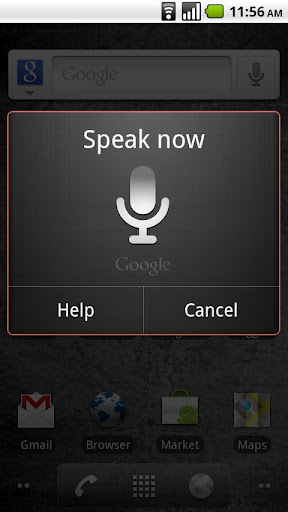
Google’s Voice Search is now available in 42 languages in 46 countries.
The search giant added 13 new languages to its app; so over 100 million worldwide speakers can now use Voice Search. The new languages include, according to the official Google blog, Basque, Bulgarian, Catalan, European Portuguese, Finnish, Galician, Hungarian, Icelandic, Norwegian, Romanian, Serbian, Slovak, and Swedish.
“Each new language usually requires that we initially collect hundreds of thousands of utterances from volunteers and, although we’ve been working on speech recognition for several years, adding these new languages led our engineers and scientists to tackle some unique challenges,” explained Product Manager Bertrand Damiba in Google’s post.
This update is rolling out over the next week. Those with an Android 2.2 or later device can use Voice Search by way of a microphone icon on the Google Search widget from the homescreen. Otherwise, a user must install the Voice Search app from Google Play.
Google rolled out its Google Wallet web app at the beginning of the month and introduced support for all major credit cards, including Visa, MasterCard, America Express, and Discover, at the same time. Today, the company announced on the Google Commerce blog that Discover Card is the first to implement the new “Save to Wallet” API for credit and debit card issuers.
Discover securely transmits all required information directly to Google Wallet. You can then select your Discover Card to be the primary method the Google Wallet app will use for in-store purchases, or when shopping online from Google Play or other merchants that accept Google Wallet. You’ll continue to earn rewards on every purchase you make. Discover has also provided Google Wallet with card imagery for the Discover More® Card, so you can easily identify your virtual Discover card in your mobile wallet.
Google demoed the new API during its full Wallet session at Google I/O in June. The feature allows card issuers and eventually other partners to provide a “Save to Wallet” or “Add Your Card” option in their website or application to securely transfer card and account information to Google Wallet. Google said the API would eventually extend to saving Offers in addition to payment cards.
To save a Discover Card to Google Wallet, follow the instructions below:
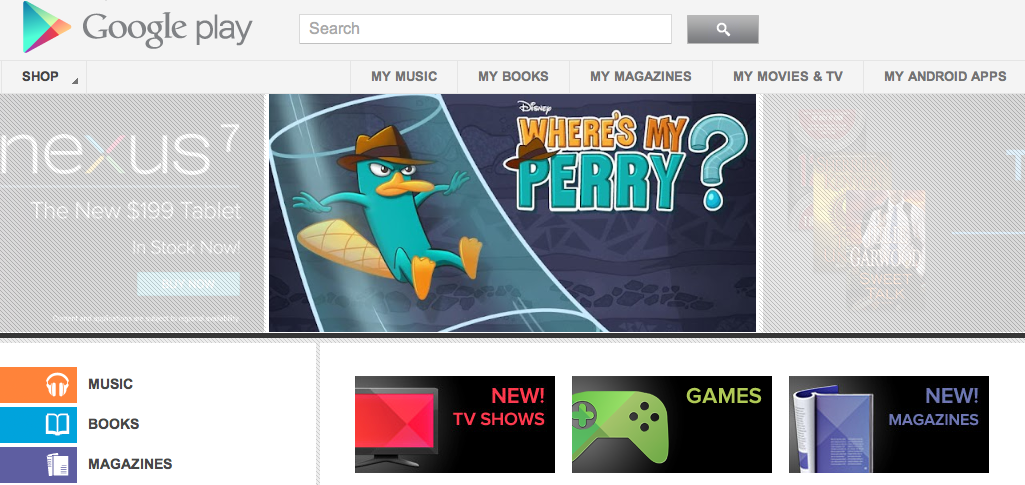
The folks at AndroidPolice are on a roll today, as they just discovered, after examining the new Google Play Store APK, that the revamped Android marketplace now takes advantage of “smart updates.”
The 300 KB APK code previously revealed a wishlist and gift cards coming down the pipeline, and now it shows incremental downloads are live in version 3.8.15 of the Play Store. Those who need to keep an eye on their data consumption will revel in the update, because it means they no longer have to re-download an entire APK to get the latest version. Hereafter—Android devices will only download the changes between versions.
That is not all, according to AndroidPolice:
Here’s the good news: it should also work with earlier Play Store releases, like 3.7.15, as the change seems to be retroactive and server-side.
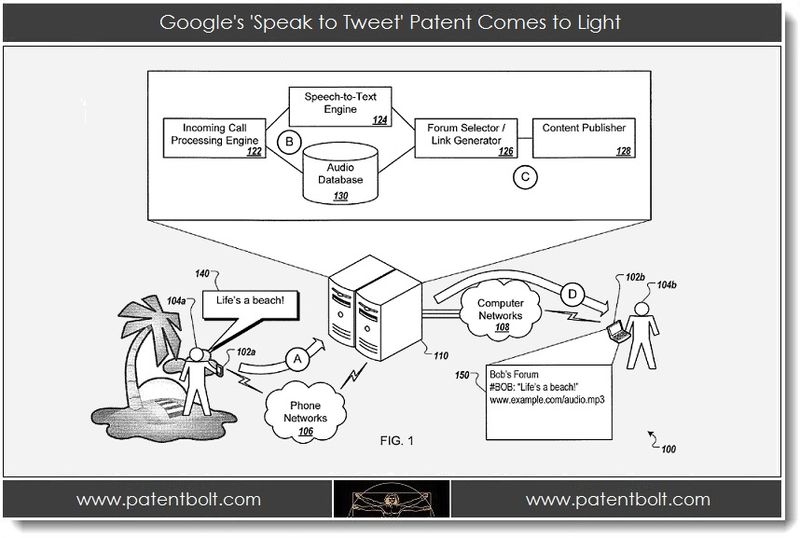
The U.S. Patent and Trademark office just published a Google patent for “Speak to Tweet,” which is a service that allows users to communicate on Twitter by dialing an international phone number and then leaving a tweet by way of voice message. Google developed “Speak to Tweet” in response to the 2011 Egyptian revolution Internet shutdown.
Patentbolt explained:
In January 2011 Google acquired a small company called SayNow. Google, with the assistance of their newly acquired SayNow team worked night and day with Twitter so as to quickly develop a product called “Speak to Tweet.” The service was developed to help people stay connected in times when they were unable to find a viable Internet connection. The inspiration for this application was born during the Egyptian revolution. As a reaction to protests in Cairo, the Egyptian government shut down the Internet throughout that country on January 26, 2011. Technically, Speak to Tweet (or speak2tweet) is a communications service that allows users to leave a “tweet” on Twitter by calling a designated international phone number and leaving a voice message. Recently, the US Patent Office published the patent that’s behind the Speak to Tweet service.
Head of the Google Cultural Institute Steve Crossan originally filed the patent application in Q1 2012. Check it out here.
[Image via Patentbolt]

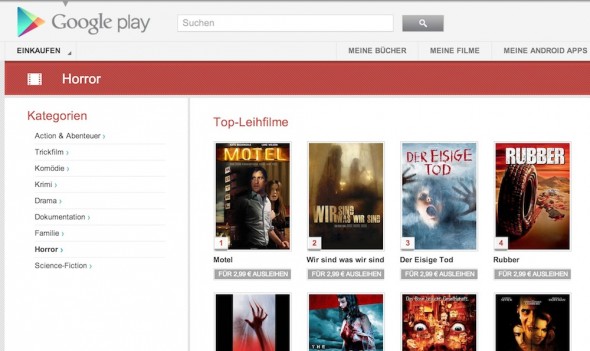
Our friends in Germany reported that the local Google Play Store is now showing movies for both purchase and renting. This already surpasses Amazon’s reach and makes a bit of headway in matching Apple’s iTunes Store reach. Usually the Play Store follows rentals in YouTube. German users: Ja or nein?
From 9to5Toys.com:
Staples now offers the Google Nexus 7 16GB 7″ Android Tablet, model no. NEXUS7/1B16, bundled with a $25 Google Play Credit for $249. Coupon code “99618” cuts it to $234. With free shipping, that’s the lowest total price we’ve seen. (It’s a current low by $15.) Sales tax is added where applicable. This 12-oz. tablet features a 7″ 1280×800 touchscreen display, scratch-resistant Corning glass, Tegra 3 quad-core processor, 1GB RAM, 16GB memory, Bluetooth, GPS, front-facing camera, 802.11n wireless, Google Android 4.1 OS (Jelly Bean), and more
[youtube=https://www.youtube.com/watch?v=1JagF4t0tJk&feature=player_embedded]
Google updated its Google+ for Android app today, and the most notable tweak allows users to join Hangouts on Air from their mobile devices.
That is not all: Teens can now create and join Hangouts from their mobile devices too. Apparently, they could not before, but Google now lets them take advantage of the social network’s premier video-chat feature on an Android-based smartphone or tablet.
Additional updates include:
- – Floating timestamp in photos view
- – Shortcuts for post creation
- – Ability to report abuse in Events
Screenshots of the updated app are below.

Google — Left: Mobile map with all modes of public transit shown; Right: Transit Lines layer in Subway mode
Google Maps now offers schedules for over 1 million public transportation stops in nearly 500 cities worldwide, while its Android counterpart updated today to make the abundance of new transit data more convenient.
Christopher Van Der Westhuizen, a Google Maps software engineer, announced version 6.10 of the Google Maps for Android app on the Official Google Blog:
We’ve made some changes to the Transit Lines layer, so that you can select a specific mode of public transportation (train, bus, tram or subway) to display on the mobile map, hiding the other modes. This is helpful in areas where there is a tight concentration of several types of public transit.
Google offers a list of supported cities at its Transit page.
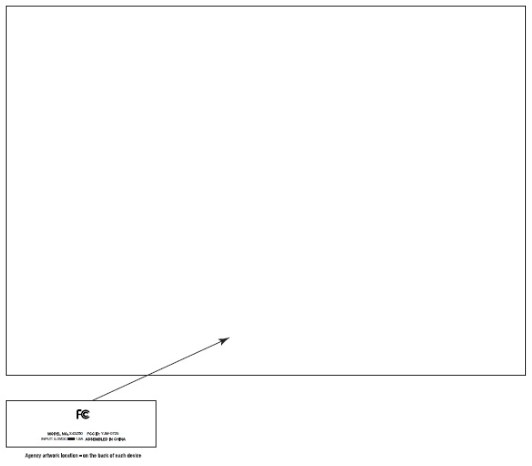
Label
Amazon’s next-generation Kindle Fire could land in the fall with a larger display.
At least that is what Nate Hoffelder of The Digital Reader reported after receiving a tip about a new Kindle Fire clearing the Federal Communications Commission yesterday:
A friend of mine has tipped me to an anonymous set of FCC documents which were posted yesterday. They don’t show any useful detail, but they do lead somewhere interesting. Like Amazon’s past FCC submissions, this paperwork belongs to a new front company. This time around the company is Harpers LLC.
Hoffelder did not find any details in the FCC filing beyond the eReader’s label, but he reviewed the dimensions given and said it looked like a 9.7-inch or 10-inch tablet:
The general screen geometry is likely going to be 4:3 (like the iPad), and not widescreen like many Android tablets. And since some of the hidden parts of the FCC paperwork will be revealed in December, this device will clearly be launched this fall.
The original Kindle Fire is a version of Amazon’s popular Kindle eReader. It announced in September 2011 with a color 7-inch multi-touch display and a forked version of Google’s Android operating system.
Go to The Digital Reader for the full report.
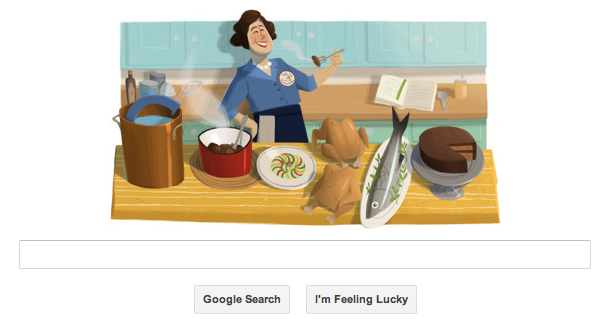
Google is celebrating Julia Child’s 100th birthday today.
The American chef, author, and television personality died at the age of 91 on August 13, 2004, as first noted by SearchEngineLand, but she is notable for seamlessly bringing the art of French cuisine to the American home with her first —and massive—cookbook, “Mastering the Art of French Cooking”, and later through her television programs, such as “The French Chef”, which began airing in 1963.
Child is now a part of American and worldwide culture, as she is the subject of many films and parodies in television and radio skits, and she is very well known for her striking height and memorable voice, personality and appearance.
Click here to Google search “Julia Child”.

Mercedes-Benz Superdome
My, how time flies. It has been nearly seven years since Hurricane Katrina wreaked havoc on Louisiana, but a fresh look through Google’s Street View imagery shows New Orleans and the surrounding area has come a long way.
“The Street View imagery in Google Maps, which has just been updated today, more accurately reflects the major construction and renewal that’s underway,” announced New Orleans Mayor Mitch Landrieu on the official Google Lat Long blog.
A few of the important, renewed locations in New Orleans now available via Google Maps include a special collection of Tulane University, as well as Woldenberg Park, Audubon Park, Louis Armstrong Park, Mercedes-Benz Superdome, and Lafayette Square. The Louisiana cities of Baton Rouge and Lafayette also feature “refreshed, more accurate Street View imagery.”
Go to Google Lat Long for more information.
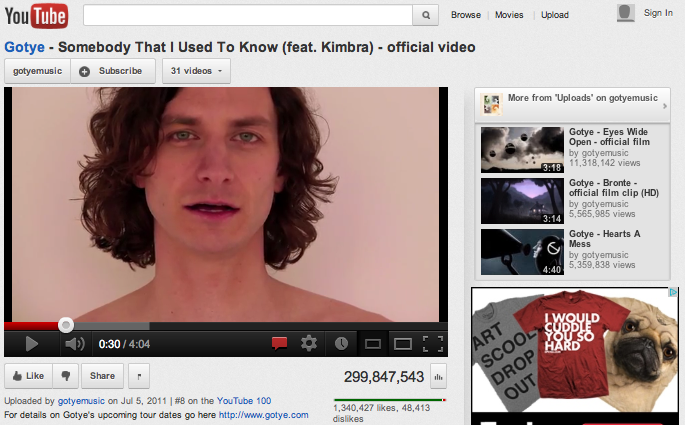
The majority of American teens prefer YouTube to iTunes, radio, online radio, and CDs when it comes to finding and listening to music.
Approximately two-thirds of 18-and-younger U.S. teenagers, according to a “Music 360” survey from research firm Nielsen (via The Wall Street Journal), claimed they sidestepped other music-listening mediums for Google’s video-sharing platform.
YouTube snagged 64 percent of 13-to-17 year olds, while radio came in second at 56 percent. iTunes held 54 percent, with CDs and Pandora rounding the top five at 50- and- 35 percent respectively.
The Wall Street Journal noted young folks regard YouTube as a “de facto free music service,” but adults do not take full advantage of the site’s complimentary content. The survey showed 67 percent of them actually preferred radio for music consumption, but another 61 percent still gave CDs a whirl. Meanwhile, YouTube stole 44 percent, Pandora landed the No. 4 spot at 32 percent, and iTunes sat at fifth with 29 percent.

The Galaxy Tab 10.1 Wi-Fi just received an update to Android 4.0.4 in the United States.
According to SamMobile:
- Some details about this firmware
- This firmware is specially for USA (Android 4.0.4)
- Build date August
- Changelist: 818980
- PDA: P7510UELPL
- CSC: p7510XABLPL
Many U.S.-based Galaxy Tab 10.1 Wi-Fi owners allegedly woke up to Ice Cream Sandwich this morning, as seen in AndroidCentral’s Forums (below). Rumors circulated heavily that the tablet would get the push sometime this summer, and it now seems like those reports are panning out. Some users have noted the flavor is missing for them, however, so the rollout appears to be gradual.
The update is available via Samsung KIES or OTA.

As first reported by the New York Times, Google-owned Motorola is cutting 4,000 jobs, or roughly 20-percent of its workforce, in the hopes of becoming profitable again. The news was confirmed in a U.S. Securities and Exchange Commission filing released this morning just before the markets opened. Google/Motorola further noted in the filing that it would consolidate 30 of its 90 facilities and “shift its emphasis from feature phones to more innovative and profitable devices.” Two-thirds of the job cuts will occur outside of its U.S. facilities.
Google’s $12.5 billion acquisition of Motorola was officially completed in May, after news of the acquisition was announced in August 2011. The deal went through many regulators before becoming official. Google is said to have acquired the company for its large portfolio of over 17,000 patents, and the company has reassured time-and-time again that it will keep Motorola running as a separate entity but will use Motorola’s large patent portfolio to protect its Android operating system.
Fueling the job cuts, Motorola has not been profitable the last 14 out of 16 quarters—even with popular smartphones like the Motorola DROID RAZR and RAZR HD on the market. Since the acquisition was completed in May, Motorola’s CEO Sanjay Jha stepped down from his post with as many as five other Motorola executives. Motorola also announced last week that it is moving its headquarters from suburban Illinois to downtown Chicago, signaling a major overhaul in the company. As major company changes occur, Google warned “investors should expect to see significant revenue variability for Motorola for several quarters” and the company will lose roughly $275 million from the cuts and closures.
However, Motorola hopes to someday turn to profitability. [WSJ via NYT]
According to a report on TheNextWeb, Google appears to be testing a new Gmail login page that will make it much easier to log in and out of multiple accounts. The current Gmail login page requires users to enter their login information each time they sign in from the login page. The new Gmail page will allow you to add login information for multiple accounts and easily select any account with one click. Keep an eye out for a link at the bottom of the login page to try the new feature.