YouTube
YouTube is Google's massive video streaming platform, accepting videos from creators large and small
YouTube is a major video platform owned by Google — and it has grown to be one of the most famous social media destinations on the web.
YouTube is Google's massive video streaming platform, accepting videos from creators large and small
YouTube is a major video platform owned by Google — and it has grown to be one of the most famous social media destinations on the web.

http://www.youtube.com/watch?v=dzYKvEMJ79w
Just a month after the Apple YouTube app was removed from developer betas, Google has replaced it with its own version complete with many features of which the Android version has had for a while now. More over at 9to5Mac.

[youtube=http://www.youtube.com/watch?v=C9VWge-Q_08&feature=player_profilepage]
YouTube just announced to the world that it is live streaming the 2012 London Summer Paralympics.
The news comes roughly 48 hours after the games actually began, however. Better late than never I guess. Over 500 hours of live content and 1,000 hours of on-demand and behind-the-scenes footage will run until the Paralympics end Sept. 9, according to the YouTube Global Blog:
Whether your favorite sport is powerlifting, sitting volleyball or wheelchair basketball, you can catch all the action on the International Paralympic Committee’s YouTube channel at youtube.com/paralympicsporttv. The channel will feature 500 hours of live competitions accompanied by a real-time commenting feature for viewers in the United States and Canada. Additionally, others around the world have access to over 1000 hours of on-demand catch-up footage of current and previous games, interviews with Paralympic athletes and other behind-the-scenes footage.
The Paralympic Games is the second-largest international multi-sport event for physically disabled athletes. Folks can also watch original game content on YouTube by the United States Olympic Committee at youtube.com/teamusa.
YouTube also partnered with NBC earlier this summer to broadcast the 2012 London Summer Olympics online.
[youtube=http://www.youtube.com/watch?v=mO1963mat9M&feature=plcp]
Google posted two new videos on its YouTube channel last night that demonstrate Google Wallet’s online service and tap-and-pay capabilities. The above video details how users can pay online by signing into their account anywhere Google Wallet is accepted, where as the video below shows how they can pay in-store by tapping a Google Wallet-enabled smartphone anywhere “contactless” NFC payments are accepted.
[youtube=http://www.youtube.com/watch?v=cVDyd4G0uTU]
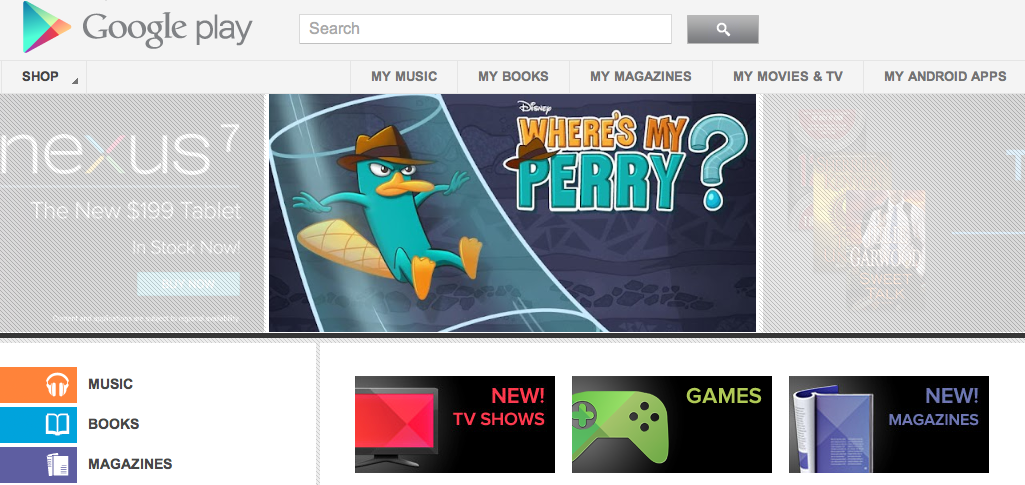
The folks at AndroidPolice are on a roll today, as they just discovered, after examining the new Google Play Store APK, that the revamped Android marketplace now takes advantage of “smart updates.”
The 300 KB APK code previously revealed a wishlist and gift cards coming down the pipeline, and now it shows incremental downloads are live in version 3.8.15 of the Play Store. Those who need to keep an eye on their data consumption will revel in the update, because it means they no longer have to re-download an entire APK to get the latest version. Hereafter—Android devices will only download the changes between versions.
That is not all, according to AndroidPolice:
Here’s the good news: it should also work with earlier Play Store releases, like 3.7.15, as the change seems to be retroactive and server-side.

The Moving Picture Experts Group, otherwise called MPEG, announced a draft of a new video compression standard known as High Efficiency Video Coding, or H.265, that will be twice as efficient as the current H.264 standard. Ericsson Research Manager for Visual Technology Per Fröjdh, who also serves as chairman of the Swedish MPEG delegation, explained the standard could hit commercial products by 2013:
“There’s a lot of industry interest in this because it means you can halve the bit rate and still achieve the same visual quality, or double the number of television channels with the same bandwidth, which will have an enormous impact on the industry”… Fröjdh believes that the HEVC format discussed by MPEG in Stockholm could be launched in commercial products as early as in 2013… “It will take time before it’s launched for a TV service, but adoption is much quicker in the mobile area, and we’ll probably see the first services for mobile use cases next year,” he says.
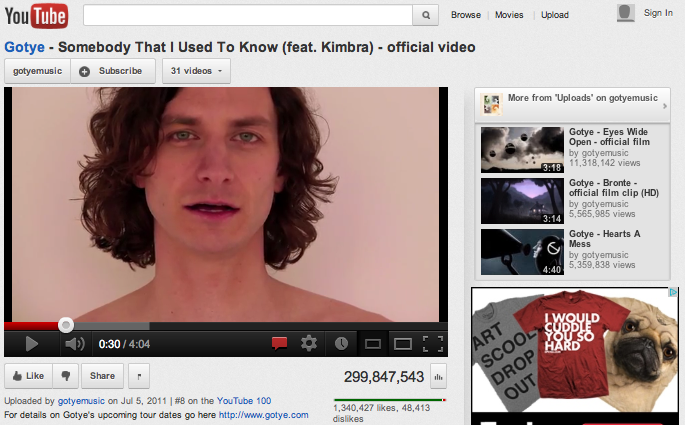
The majority of American teens prefer YouTube to iTunes, radio, online radio, and CDs when it comes to finding and listening to music.
Approximately two-thirds of 18-and-younger U.S. teenagers, according to a “Music 360” survey from research firm Nielsen (via The Wall Street Journal), claimed they sidestepped other music-listening mediums for Google’s video-sharing platform.
YouTube snagged 64 percent of 13-to-17 year olds, while radio came in second at 56 percent. iTunes held 54 percent, with CDs and Pandora rounding the top five at 50- and- 35 percent respectively.
The Wall Street Journal noted young folks regard YouTube as a “de facto free music service,” but adults do not take full advantage of the site’s complimentary content. The survey showed 67 percent of them actually preferred radio for music consumption, but another 61 percent still gave CDs a whirl. Meanwhile, YouTube stole 44 percent, Pandora landed the No. 4 spot at 32 percent, and iTunes sat at fifth with 29 percent.
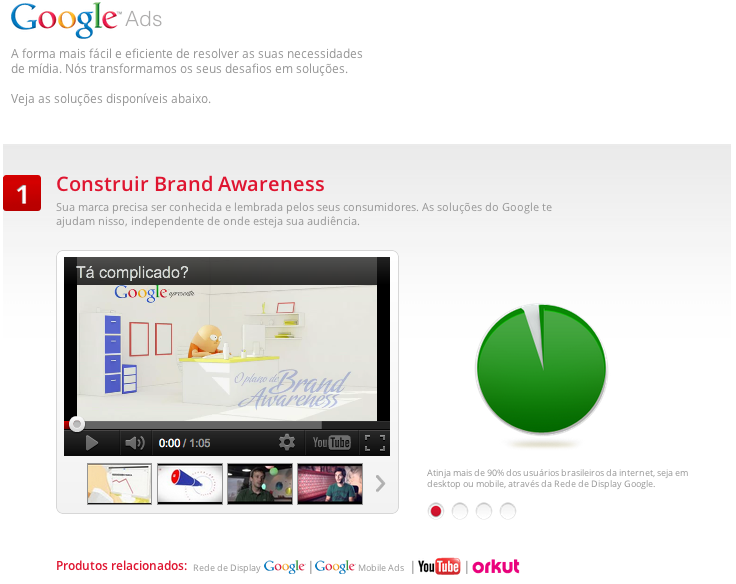
Google is using witty animation to enlighten folks in Brazil about the conditions of online advertising and how its service helps streamline those operations.
The Internet giant recently hosted five animated videos on YouTube as part of a Brazil-based campaign for Google Ads products. According to TheNextWeb (via Brainstorm9), agencies Pepper Melon and Ño Empire co-created the farcical advertisements that focus on brand awareness, audience engagement, efficient technology use, target selection, and new product launches.
The commercials are in Brazilian Portuguese with English subtitles, check ’em out:


iOS 6 beta 4 has removed the YouTube application that existed on iOS since the first version in 2007. We’re not entirely sure what to make of this, but this could have to do with Apple trying to break away from dependence on Google services. iOS 6 drops Google Maps in favor of Apple’s own 3D Maps program. We’re looking into this. Of course, this just could be a bug or an error for this beta. YouTube is gone from the iPhone and iPad, but it is still present on the Apple TV (below).
Update: After we broke this major news, Apple confirmed to The Verge that YouTube is gone from iOS 6. Google is apparently building its own app.
Our license to include the YouTube app in iOS has ended, customers can use YouTube in the Safari browser and Google is working on a new YouTube app to be on the App Store.
Google just acquired social media marketing company Wildfire.
AllThingsD reported “people familiar with the transaction” estimate Google bought the social ad business for $250 million, “plus earnouts, employment agreements, etc.”
Wildfire currently serves 16,000 customers, including 30 of the top 50 brands, and it reportedly raised $14 million since founding in 2008. Google will likely merge Wildfire into its ever-expanding social and advertising services to better entice marketers into buying either traditional or display ads for a variety of platforms— even direct rival Facebook.
Both companies took to their respective blogs today to confirm the buyout (below).
[protected-iframe id=”016966f59b9b1a83e76afccc1a4627d7-22427743-18874939″ info=”http://live.wsj.com/public/page/embed-D841AA1C_4DE4_4746_94F0_482A75583F54.html” width=”650″ height=”288″ frameborder=”0″ scrolling=”no”]
After announcing it would invest around $100 million in original TV quality content for YouTube last year, Google added almost a 100 new channels offering high-quality content. Today, we get some updates on the progress of the project from a report in The Wall Street Journal. According to WSJ’s sources, advertisers already committed over $150 million in ads on the channels for this year alone. Google also plans to throw another $200 million at the effort going forward. Google will also apparently fund content for international viewers:
YouTube plans to expand its channels initiative to Europe by funding a couple dozen video channels for British and French viewers by next year, according to people familiar with its initiative.
[youtube=http://www.youtube.com/watch?v=cEMqxcfIqp4&feature=player_embedded]
Google just unveiled its “YouTube Creator Space” in London.
The high-tech studio will essentially allow YouTubers to create premium content for Google’s video-sharing platform. They will have access to technical equipment, and other YouTube content producers, which will undoubtedly encourage quality videos based on fresh, collaborative ideas.
“We’re delighted to announce that in the next few weeks we’ll be opening the doors to our new creator space, housed in the offices of Google London’s Soho office,” announced the company on its YouTube Creator Hub channel.
According to the above video’s description:
Our partners from all over Europe, Middle East and Africa will be able to book time in the space to create and collaborate with other creators, learn new techniques, as well as gaining access to state-of-the-art audio visual equipment, to help them generate great new content for their channels. The creator space is complete with the latest equipment such as DSLRs and cinema cameras, two studios including a green screen and fully staffed editing suites.
The YouTube Next Lab, which is a team “focused on accelerating the growth and development of channels and creators on YouTube,” will oversee the London studio.
[youtube=http://www.youtube.com/watch?v=OQkC3C73Rk0&feature=player_embedded]
We told you last month that the Vizio Co-Star received a $99 price tag, but the set-top box is now officially available for pre-order starting today.
Those who are interested in the Google TV-streaming box can go to www.vizio.com/costar to pick it up. It is exclusively sold on Vizio’s website for $99.99 USD with introductory free-shipping while supplies last. The current estimated shipping date is pegged around August 14.
The Co-Star goes beyond the typical Google TV experience by providing a skinned user-interface with an HTML5 Chrome browser, Netflix, Amazon Instant Video, iHeartRadio, and OnLive built-in. The box even comes with a dual-sided Bluetooth remote that boasts a full QWERTY keyboard and a touchpad.
Vizio took to its blog today to make the announcement:
- VIZIO Co-Star Available for Pre-order Today
- We are happy to announce that the VIZIO Co-Star is available for pre-order today. Visit VIZIO.com to pre-order the Co-Star for $99.99 (US) and take advantage of the limited-time offer of free shipping.
- The VIZIO Co-Star turns any HDTV into the ultimate smart TV. With 1080p and 3D support; Co-Star offers the distinct advantage of connecting to a cable or satellite box. This feature allows viewers to enjoy full screen web browsing with Adobe® Flash® Player and HTML 5, access to entertainment apps such as the OnLive® Game Service, Netflix®, YouTube® and more3 without switching inputs or remotes thanks to the universal touchpad remote with keyboard.
- The VIZIO Co-Star is the first stream player to offer video games on demand. Through OnLive,® users can demo, watch and play hundreds of top-tier video games directly from the “cloud,” eliminating the need for an independent game console. In addition, the VIZIO Co-Star offers popular apps such as Amazon Instant Video, YouTube®, iHeartRadio and more – all available for download through the Google Play Store.
The Vizio Co-Star’s first commercial—which debuted yesterday—is atop.
The press release is below.
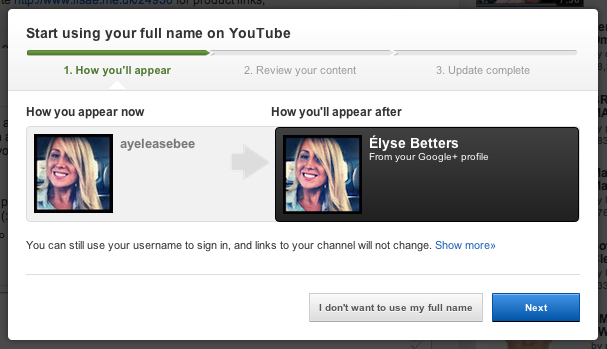
As BetaBeat first noticed, Google is attempting to peel back the anonymity cloak that surrounds YouTube.
The search engine, which seems to dabble in all things Web, mobile, and tech, now displays a pop-up box to YouTubers who try to leave a video comment. The notice prompts users to start surfing the video-sharing platform with their full name instead of a username or pseudonym.
Google appears to crop names from Google+ profiles, which is likely a byproduct of the Google+ integration from last year that required all YouTubers to login with their Gmail account credentials.
[youtube=http://www.youtube.com/watch?v=nnhJ1841K-8&feature=player_embedded]
I suspect that—a lot like both YouTube and museums— this project will benefit from a great deal of curation.
Expand
Expanding
Close
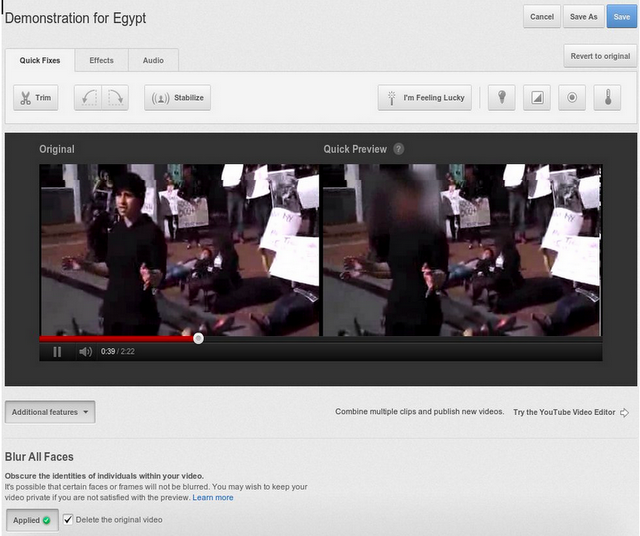
YouTube just launched a face-blurring feature for when “footage requires anonymity.”
The new addition to the video-sharing platform is self-explanatory. It is a tool that allows users to muddle faces in videos with just the click of a button.
“Whether you want to share sensitive protest footage without exposing the faces of the activists involved, or share the winning point in your 8-year-old’s basketball game without broadcasting the children’s faces to the world, our face blurring technology is a first step towards providing visual anonymity for video on YouTube,” explained the official YouTube Blog.
To blur faces: Go to Additional Features under Video Enhancements, and then click the “Apply” button below Blur All Faces. Users can see a preview before publishing, and a new copy is created with the blurred faces when saved. Users have the option to delete the original video.
YouTube warned that the tool is an “emerging technology,” so Face Blur may have difficulty auto-detecting faces.
Get the full breakdown at the official YouTube Blog.
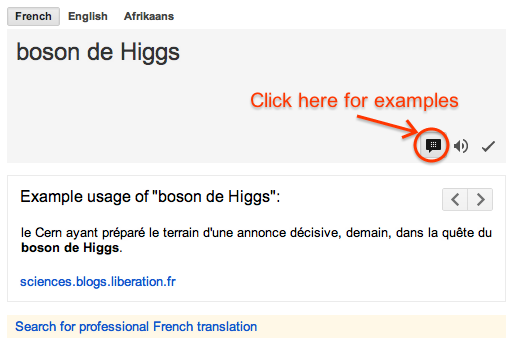
About 5,000 new words are created each year.
Of course, that is Google’s own statistic. The folks in Mountain View took to the official Google Translate blog to explain how its, well, Google Translate tool now offers example sentences for those newly created words. The examples are aggregated from “fresh new stories around the web,” wrote Google Associate Product Manager Etienne Deguine.
To use the feature, type into the left-hand text box of Google Translate, and then click on the example sentence icon on the bottom right (screenshot above).
[youtube=http://www.youtube.com/watch?v=AlrJ5AteH8Q&feature=plcp]
Last spring, as part 2012’s 24 Hour Film Race presented by HTC One, Director Frank Hannah shot a four-minute film with the manufacturer’s popular Android-powered smartphone.
The challenge occurred from May 18 to May 19, where over 750 teams around the world were given the following criteria:
Create an original short films (4 minutes max) in just 24 hours based on a theme (one), action (listening to music), and prop (the number one).
Hannah interpreted and completed the challenge, and then HTC honored his work by recently posting the short film on YouTube (above). A second video even documents the behind-the-scenes footage (below). Check ’em out!
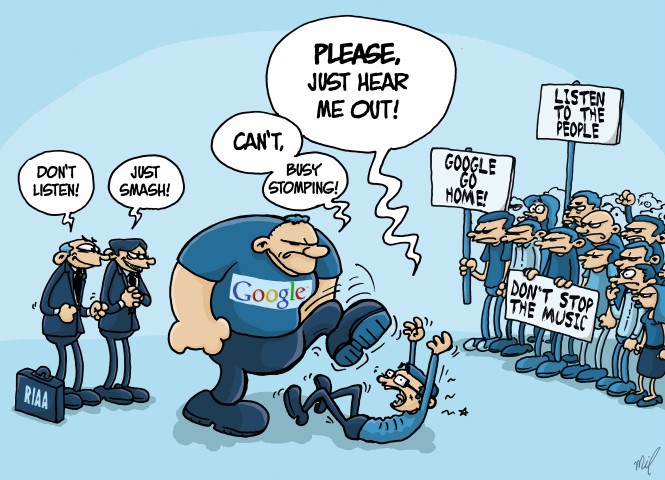
Google wanted to stop YouTube-MP3.org last month from ripping audio embedded in YouTube’s videos, but the conversion website’s 21-year-old owner is not ready to roll over and admit defeat.
YouTube-MP3.org received a letter from the Mountain View, Calif.-based Company last month that threatened to take legal action. Google’s video-sharing platform is free and provides content that is embeddable or accessible through its API, while YouTube-MP3.org is also free and pulls audio from YouTube videos. The website then converts those files into downloadable MP3s. Apparently, despite the API that gives developers access to many features, pirating any sound directly violates YouTube’s Terms of Service agreement.
The June 8 “cease and desist” letter from YouTube’s Associate Product Counsel Harris Cohen addressed the website’s Germany-based owner, Philip Matesanz. Cohen cited the platform’s terms for API in the legal notice, and he noted separating, isolating, or modifying “the audio or video components of any YouTube audiovisual content made available through the YouTube API” is strictly prohibited. Cohen warned of “legal consequences” for YouTube-Mp3.org, and he gave the website a week to comply. However, Google immediately blocked the website’s servers from accessing YouTube.
Matesanz took to his website yesterday, conveniently on the United States’ Independence Day, to give a “Situation Update” on the, well, situation:
After numerous reports questioning the legality of this service I have decided to get case studies from two highly reputable lawyers in Germany to prove the difference. I have asked them to create English reports about the legal situation of this service and the accusations Google has made. They agree that there are no copyrights of a third party violated by providing this service and it has to be considered legal. It might be surprising to some but they also agree that all claims Google has brought up so far are not justified: There is no TOS violation. They even question if Google can take action against so called “YouTube Converters/Recorders” since they seem to be protected by federal law. Google would have to make massive changes to their public broadcasting service to demand that such services shut down e.g. no more embedded videos, restrict access to registered users who have agreed to the TOS[..]. There are also doubts about the legitimacy of the section Google is accusing me to violate: Section 6.1K is designed to abandon a fundamental right all German citizens have. According to federal law you have the unquestionable right to create a private copy of certain media; including YouTube. Google’s attempt to abrogate the rights of the public in their TOS has to be considered as illegal and is in a strong contrast to their public self-representation.
Matesanz further disclosed to readers that YouTube-mp3.org is officially operated through PMD Technologie UG, which is a company registered in Germany, and he has tried to contact Google “multiple times,” but all of his attempts have failed. A recent call to Google’s main legal head was even blocked by an assistant, Matesanz wrote, who claimed Google would only communicate in written form but allegedly did not respond to three e-mails sent.
“I don’t have any marketing or public relations experts […] I am just an IT guy with no experience whatsoever,” Matesanz added, while referring to the case as a “David vs. Goliath situation.”
The computer science student-turned-Google arch nemesis is now attempting to level the playing field with a petition on Change.org, where he asks Google to permit third-party recording services to access YouTube. The petition has over 343,000 signatures.
Google announced that it will shut down five services today, and two of the most noteworthy include Google Video and iGoogle.
Google Video has been on its way out for a while now having stopped accepting uploads in 2009, and most users hosting content on the service already received notifications to move their content to YouTube. The Google Video team has since worked on video search, and Google even outlined in a blog post today its plans for the service. Google Video will officially close “later this summer”:
Later this summer, all remaining hosted video on Google Video will be moved to YouTube. Google Video stopped taking uploads in May 2009 and now we’re moving the remaining hosted content to YouTube as private videos. Google Video users can rest assured that you won’t be losing any of your content as it will be fully available on YouTube, and you can choose to make those videos public on YouTube if you’d like.
Google explained users will have the opportunity to manually migrate or delete their content by August 20:
Expand
Expanding
Close
[youtube=http://www.youtube.com/watch?v=t99BfDnBZcI]
Google launched Search by Image last year, and then updated algorithms for it almost every week since, but now the search engine will use its Knowledge Graph to power the popular feature.
Search by Image allows users input an image, and then Google offers images and search results related to that image. Users select an image through the ‘ole drag-and-drop, and then uploading, or even inputting a URL. Meanwhile, the Knowledge Graph is new technology that allows Google to provide search results for concepts linked between words, rather than showing results for just the query term.
Software Engineer Sean O’Malley explained the inclusion on Google’s Inside Search blog today:
With the recent launch of the Knowledge Graph, Google is starting to understand the world the way people do. Instead of treating webpages as strings of letters like “dog” or “kitten,” we can understand the concepts behind these words. Search by Image now uses the Knowledge Graph: if you search with an image that we’re able to recognize, you may see an extra panel of information along with your normal search results so you can learn more. This could be a biography of a famous person, information about a plant or animal, or much more.
Google wants to improve its image search. When a user uploads an image of a specific type of flower, for instance, Google would previously give general flower search results. Now, Google will try to guess the exact type of flower. Google will also show the most recent content in search results, which is helpful for news images.
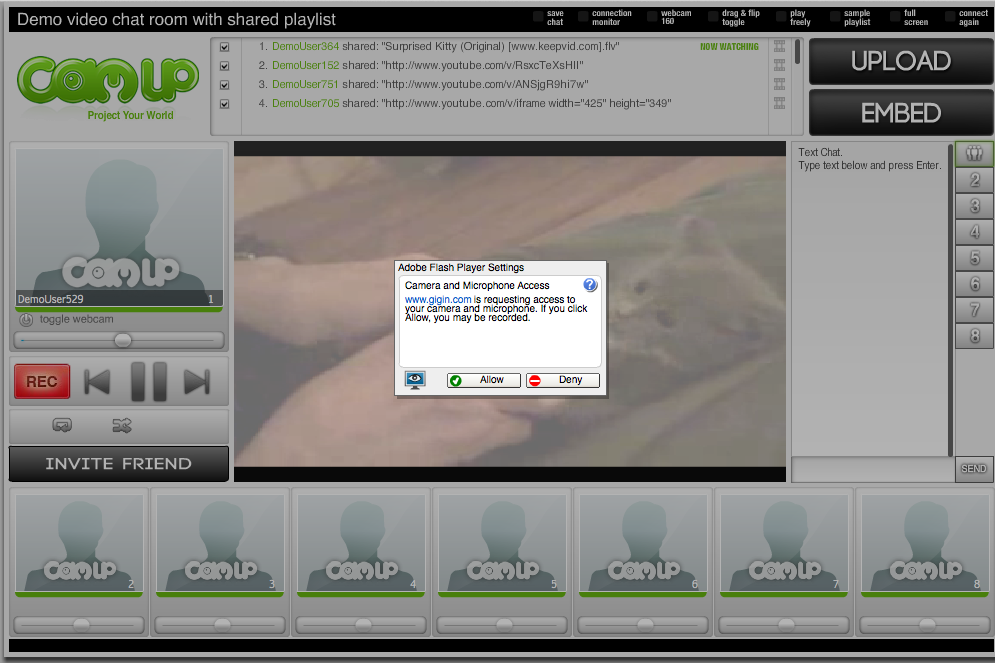
CamUp filed a lawsuit late last week that claimed Google ripped its video-chat feature for Google+ and YouTube.
The lawsuit filing revealed Marissa Mayer, Google’s vice president, along with a few Mountain View engineers, approached the New York-based startup at the South by Southwest Festival in March 2011. They later met in London to negotiate adding a Hangout-like button, called “Watch with your friends on CamUp,” to Google’s popular video-sharing platform, YouTube. Despite receiving accolades on its product, CamUp did not hear from the Googlers after the meeting.
By May 2011, CamUp detected an alarming amount of visits from Google’s headquarters in California. The startup suggested that the traffic is evidence of Google beginning to examine its product for copying purposes. Google launched Hangouts with a “Watch your friends” button just one month later, which were allegedly indistinguishable from CamUp’s offerings.
CamUp is seeking damages, an injunction to remove Hangouts on YouTube and Google+, and it is suing Google UK’s Director of Business and Markets Richard Robinson.
The filing (via GigaOM) is embedded below.

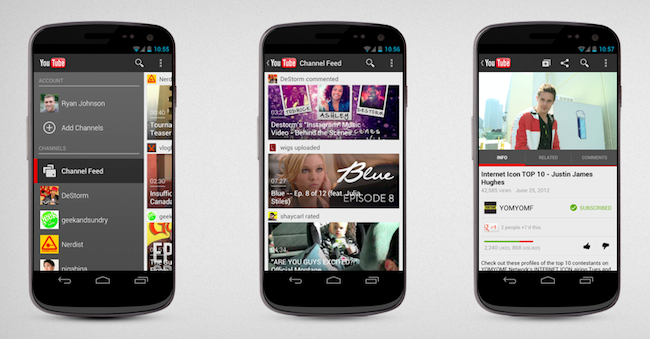
Along with a ton of other updates today, the crew in Mountain View pushed out their latest update: YouTube for Android version 4.0. Announced on the YouTube Blog this evening, the update includes a load of new features. Most notably, YouTube for Android has a new, sleek user-interface. There is a guide on the left side of the app that lists your favorite channels, including a “feed constantly updating with new videos,” called the “Channel Feed.” There you will find the latest videos from your subscriptions, so you will never miss a beat. Another big feature in today’s update is the ability to cache videos over Wi-Fi, which allows for smoother playback and less loading time for later. The feature can easily be turned on through the Settings menu by enabling “Preloading.” The YouTube team made it clear that you will still need a connection to playback the video. This is not offline by any means, but load time should be noticeably improved.
Another cool feature the YouTube app gained is a remote functionality that allows you to send videos and control playback on your TV. There is no information about which TVs are now supported, but Google told us to “stay tuned for updates.” Hopefully we get a clear list soon, but we would say most Google TVs are supported for now. Are you ready to check the update out yourself? You can now hit up the update button right from the Web. Check out the full release note after the break.

Google X Laboratory scientists have worked on a simulation of the human brain for the last few years, and now they are using it to indentify cats.
According to The New York Times, Google researchers created “one of the largest neural networks for machine learning by connecting 16,000 computer processors, which they turned loose on the Internet to learn on its own.” More specifically, Google turned the “brain” to 10 million images found in YouTube videos about cats:
The neural network taught itself to recognize cats, which is actually no frivolous activity. This week the researchers will present the results of their work at a conference in Edinburgh, Scotland. The Google scientists and programmers will note that while it is hardly news that the Internet is full of cat videos, the simulation nevertheless surprised them. It performed far better than any previous effort by roughly doubling its accuracy in recognizing objects in a challenging list of 20,000 distinct items.
The research is representative of a new generation of computer science that is exploiting the falling cost of computing and the availability of huge clusters of computers in giant data centers. It is leading to significant advances in areas as diverse as machine vision and perception, speech recognition and language translation.
Google’s brain eventually constructed a digital patchwork of a cat by cropping general features from the millions of images that it identified. The method could eventually prove useful in image search, speech recognition, and language translation. The Googlers maintained caution, however, about whether their research is, as The New York Times put it, “the holy grail of machines that can teach themselves.”
The research project is no longer a part of Google X laboratory, but rather search business and related services.
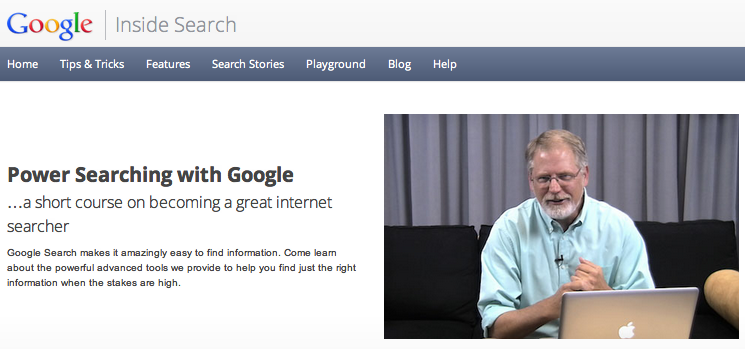
Google just introduced a new online course for those interesting in “power searching” with its search engine.
The free course offers:
“Google Search makes it amazingly easy to find information. Come learn about the powerful advanced tools we provide to help you find just the right information when the stakes are high,” explained Google Senior Research Scientist Daniel Russell on the registration page.
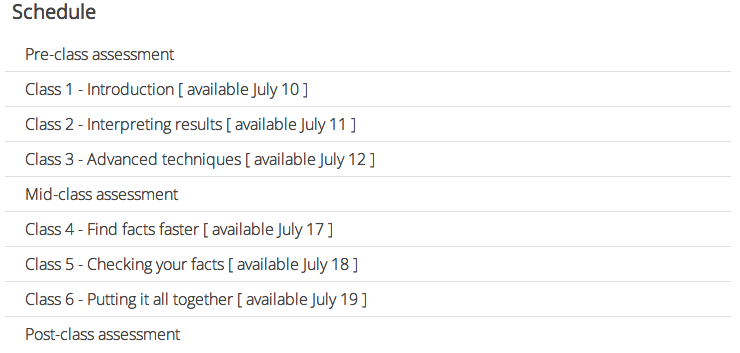
Course registration opens today and closes July 16, but the first class starts July 10. New classes begin Tuesday, Wednesday, and Thursday, and all course-related activities end July 23.
Check out the schedule below:
For more information about becoming a “great Internet searcher,” visit the course page at Google Insights.