Court docs reveal email exchange between Eric Schmidt and Steve Jobs over poaching employees

apple2_verge_super_wide
google2_verge_super_wide

Earlier this month, a U.S. District Judge in California ordered Google Chairman Eric Schmidt, Apple CEO Tim Cook, and others to give depositions in an ongoing private lawsuit. Employees brought on the private lawsuit alleging  “no-poach” agreements the companies entered would drive down wages. Today, new details have emerged after a request to keep court documents secrets was denied by U.S. District Judge Lucy Koh.

While emails exchanged between Steve Jobs and former Palm CEO Ed Colligan have been the focus on the documents, The Verge also pointed us to emails exchange between Jobs and Google execs. Below we have an email form Jobs to Schmidt asking to put a stop to Google recruiting employees from its iPod team, as well as one where Schmidt discussed not wanting to create a paper trail: Read more

On eve of US elections, Google’s Sergey Brin makes plea to end political parties

Late last night, Google’s Sergey Brin took to his Google+ account to post his thoughts on the eve of the U.S. elections and offer a plea to the winner. Brin explained he is “dreading today’s elections,” while describing government as “a giant bonfire of partisanship”:

I must confess, I am dreading today’s elections…Not because of who might win or lose…Not because as a Californian, my vote for President will count 1/3 as much as an Alaskan (actually it won’t matter at all — I’m not in a swing state)…Not because my vote for Senate will count 1/50 as much as an Alaskan…But because no matter what the outcome, our government will still be a giant bonfire of partisanship

His request for the winner? Withdraw from any political party and govern independently:  Read more

Google invests in state lobbying to make markets for driverless cars of the future (Video)

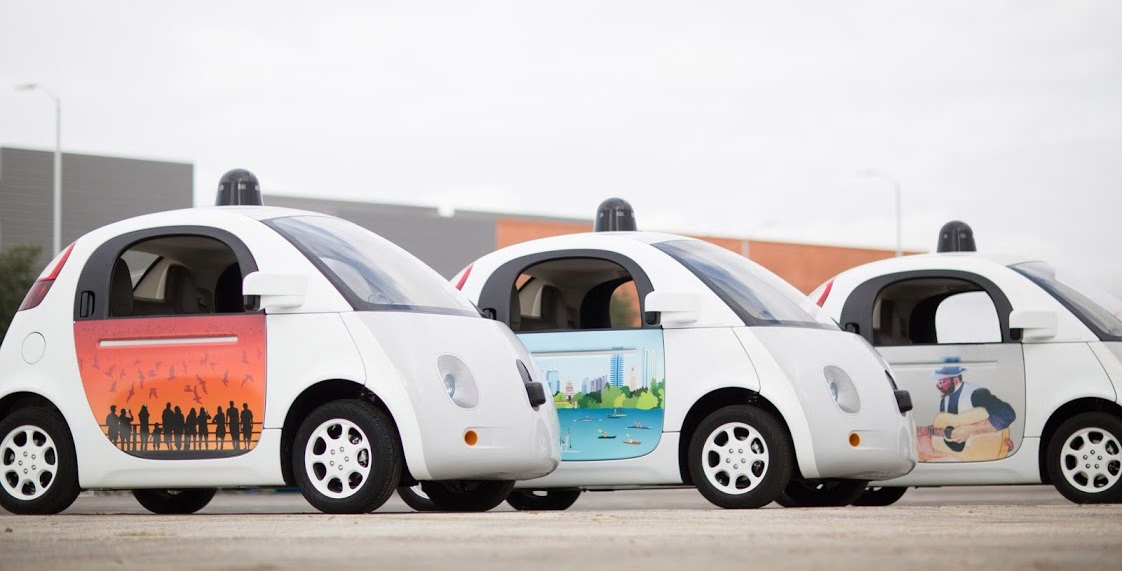
The Wall Street Journal just published a lengthy report detailing how Google convinced Nevada state assemblywoman Marilyn Dondero Loop, as well as other states’ transportation committees, to introduce legislation that would help legalize its driverless cars for streets.

“This will save taxpayers countless millions of dollars and revolutionize driving as we know it. No more being distracted, no more accidents, and not another DUI attorney again.”

The Mountain View, Calif.-based company persuaded lawmakers, according to The Wall Street Journal, with “demonstrations and rides in its exotic cars,” and it subsequently earned “legislative wins” in Nevada, California, and Florida. There are even bills pending before legislators in Hawaii, New Jersey, Oklahoma, and the District of Columbia:

In the process, the Mountain View, Calif., company is building its credentials as an astute political operator. Google has been “pretty savvy” at navigating state capitols, said Frank Douma, a transportation-policy author and associate director at the University of Minnesota’s Humphrey School of Public Affairs. With its self-driving cars, Google “knew what they were doing by moving forward in Nevada” before approaching bigger states, he said. “If you blow it in the first state, you’ve really got problems.”

Success at legalizing self-driving car technology has broader implications for Google. Skills learned from lobbying state lawmakers could aid other endeavors that will require local policy-making, including the potential expansion of its Google Fiber Internet and TV service into markets dominated by cable companies.

Google spent roughly $9 million during the first and second quarters of 2012 lobbying in Washington and coaxing lawmakers and U.S. Department of Transportation officials, but Google did not disclose how much went toward lobbying state officials.

Read more

US court reverses Apple’s injunction on Samsung Galaxy Nexus

U.S. Judge Lucy Koh granted Apple’s request for a preliminary injunction against Samsung’s Galaxy Nexus smartphone in June, and the decision resulted in the temporary removal of the device from Google Play pending a software fix with Android 4.1. Today, Reuters reported that Apple’s U.S. injunction on the Galaxy Nexus has been reversed. 

TheNextWeb got its hands on the official order. Samsung argued that its product would ”sell almost as well without incorporating the patented feature” :

Samsung argued, somewhat humiliatingly, that the sales of the Galaxy Nexus were so poor that they didn’t pose a threat to Apple’s iPhone and that the unified search feature was not essential to the success of its device. The appeals court apparently agrees, as it states in its official order:

…it may very well be that the accused product would sell almost as well without incorporating the patented feature. And in that case, even if the competitive injury that results from selling the accused device is substantial, the harm that flows from the alleged infringement (the only harm that should count) is not.

According to Reuters, the U.S. Court of Appeals for the Federal Circuit ruled the court “abused its discretion in entering an injunction” and will send the case back to the California court for consideration.
Read more

Nissan unveils self-driving ‘NSC-2015′ concept car that responds to Galaxy S III [Video]

Uh-oh, Google better step on the pedal: Automaker Nissan recently unveiled a self-driving car at the Combined Exhibition of Advanced Technologies tradeshow in Tokyo.

The concept car, dubbed “NSC-2015, can park or drive up to a passenger when commanded by a smartphone. In the Nissan press video above, a demonstration at CEATEC 2012 shows the modified Nissan Leaf responding to an Android-powered Samsung Galaxy S III.

Nissan specifically said the car could search for an empty space and park itself after a driver has left the vehicle and then the driver could later summon the car with just a simple smartphone tap.

Read more

California Gov. Brown to sign Google’s self driving autonomous car legislation, watch live at 1pm PT

Update: During a Q&A following the signing of Google’s autonomous car bill today, Sergey Brin was asked how long until the public would be using the vehicles. While noting he plans for a broader subset of employees to test the vehicles in the near future, Brin noted he expects the public to begin using the vehicles within 5 years. Sergey also noted the company has had conversations with many car manufacturers but Google doesn’t currently have plans to build cars itself.

“Self driving cars do not run red lights” -Sergey

In a tweet from the Google Public Policy Twitter account, Google noted today that California Gov. Jerry Brown will be signing its autonomous vehicle bill supporting Google’s effort to bring its self-driving cars to public roads. Google will be streaming the signing at 1pm PT on the Google YouTube Channel (embedded above).

The Bay Citizen reports Google is now only awaiting approval from Gov. Jerry Brown as its driverless car bill passed 37-0 in the Senate and 74-2 in the Assembly. The bill, which was put together by legislative staffer Howard Posner and sponsored by state Sen. Alex Padilla, would allow Google and other companies to test their driverless cars on public roads and require new laws governing the operation of the vehicles in public:

Padilla’s bill, SB 1298, would allow companies to test self-driven cars on public roads and require the DMV to draft rules governing use of the vehicles by the public. The measure also would define a car’s “operator” as the person sitting in the driver’s seat, or if there’s no one in the driver’s seat, the person who “causes the autonomous technology to engage.”… In its final form, the bill would give the DMV authority to reject the use of driverless cars that did not meet its standards. The measure also would require that owners be notified about what data their car is collecting, but it did not resolve questions of liability.

Google provided a statement to The Bay Citizen in an email:
Read more