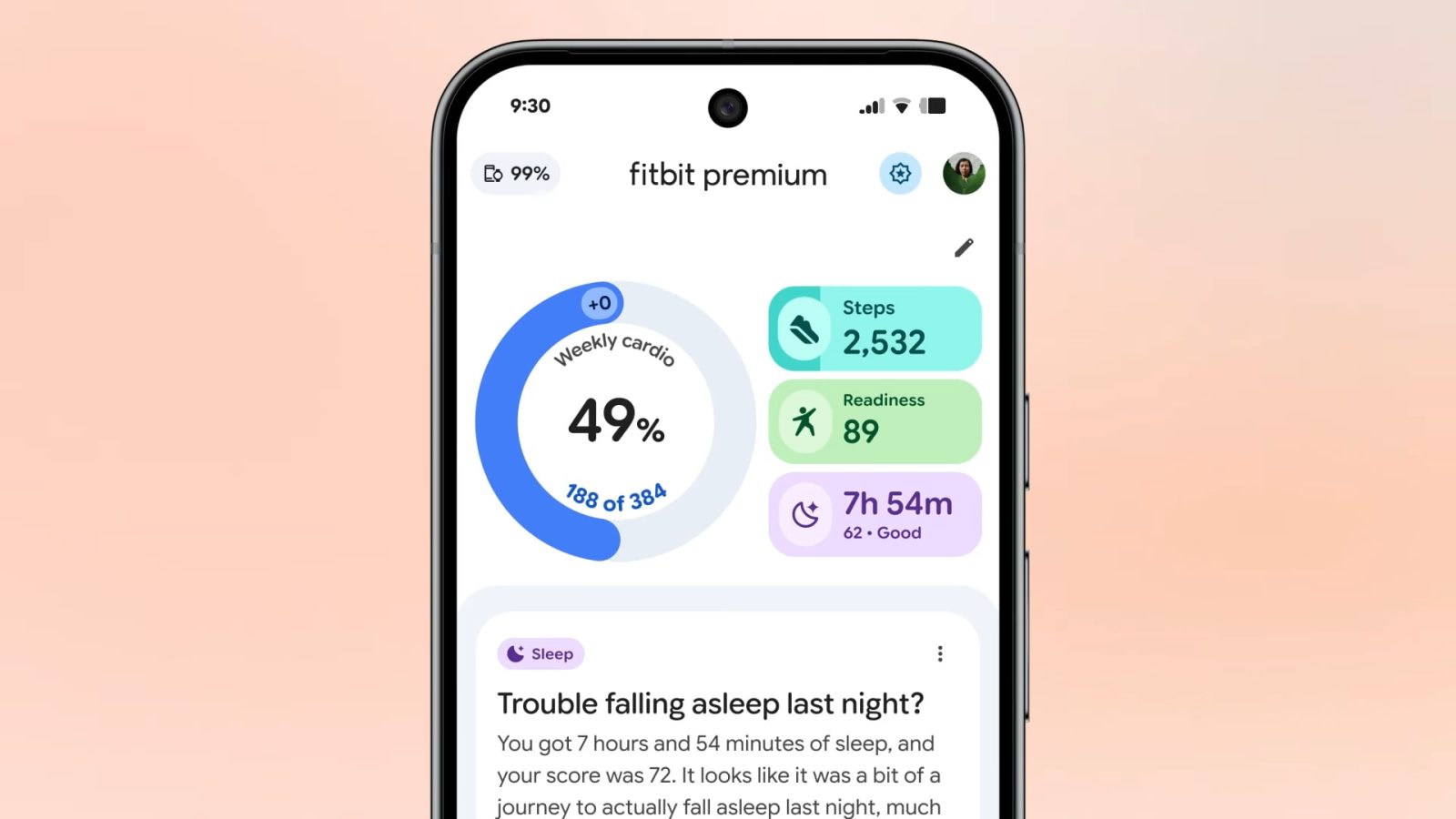
Fitbit Public Preview adds food & water logging, more as app redesign comes to free users


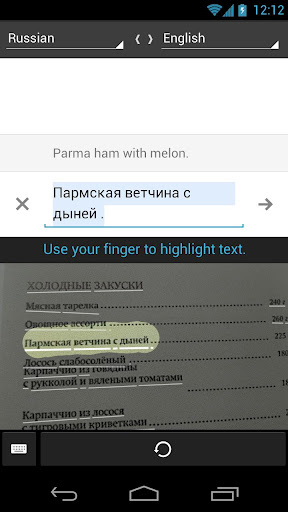 Google updated its Google Translate Android app today to version 2.5, and it added a number of notable features including the ability to translate text from images. When snapping an image of a street sign or anything else containing text and highlighting the text within the image using your finger, Google Translate will instantly provide a translation for devices running Android 2.3 and above (as shown in the screenshot to the right).
Other features added in the update for all users include instant translation results while typing, the ability to select a dialect preference for speech input, and support for multiple characters at once for Japanese handwriting. Google also noted it added “access network state permission to check network availability when sending requests.”
As always, the updated Google Translate app is available on Google Play now.
Expand
Expanding
Close

[slideshow]
Sometimes it is fun to take a break from reviewing the newest high-end Android phones out there to see what the other end of the spectrum has to offer. Virgin announced its new low-end phone, the PCD Chaser, which is just $79.99 without signing up for a plan.
Virgin offers unlimited data 3G plans starting at $35 a month. So, you are looking at just under $500 for a year of this phone with unlimited data. That is an incredible deal for an Android 2.3 device that does not totally suck. The Chaser comes with many of the same specs as the previous Virgin-base model, the Optimus V, including a 3-megapixel camera, 800MHz processor, 3.2-inch display, and hardware buttons. The Chaser adds the new, lower $80 price tag and Android 2.3, which the low-cost folks will welcome. However, those who want to see Ice Cream Sandwich or Jelly Bean on their devices will lament (Virgin never updated the Optimus V, so do not expect this one to get an upgrade either).
It is still a remarkable little device that once retailed for $149 (but lately it is often on-sale for much less). The Optimus included a 2GB Micro-USB card, but the Chaser does not, which frankly is pretty petty. Although the phone has a low-end camera, you cannot take videos or still images until you buy a Micro-SD card. Lame. I was able to take some borderline decent pictures and movies once I popped in an SD Card. Therefore, this might actually be a step down from the Optimus V.
Otherwise, this fine Android device will be a good step up for feature phone users. Some notes:

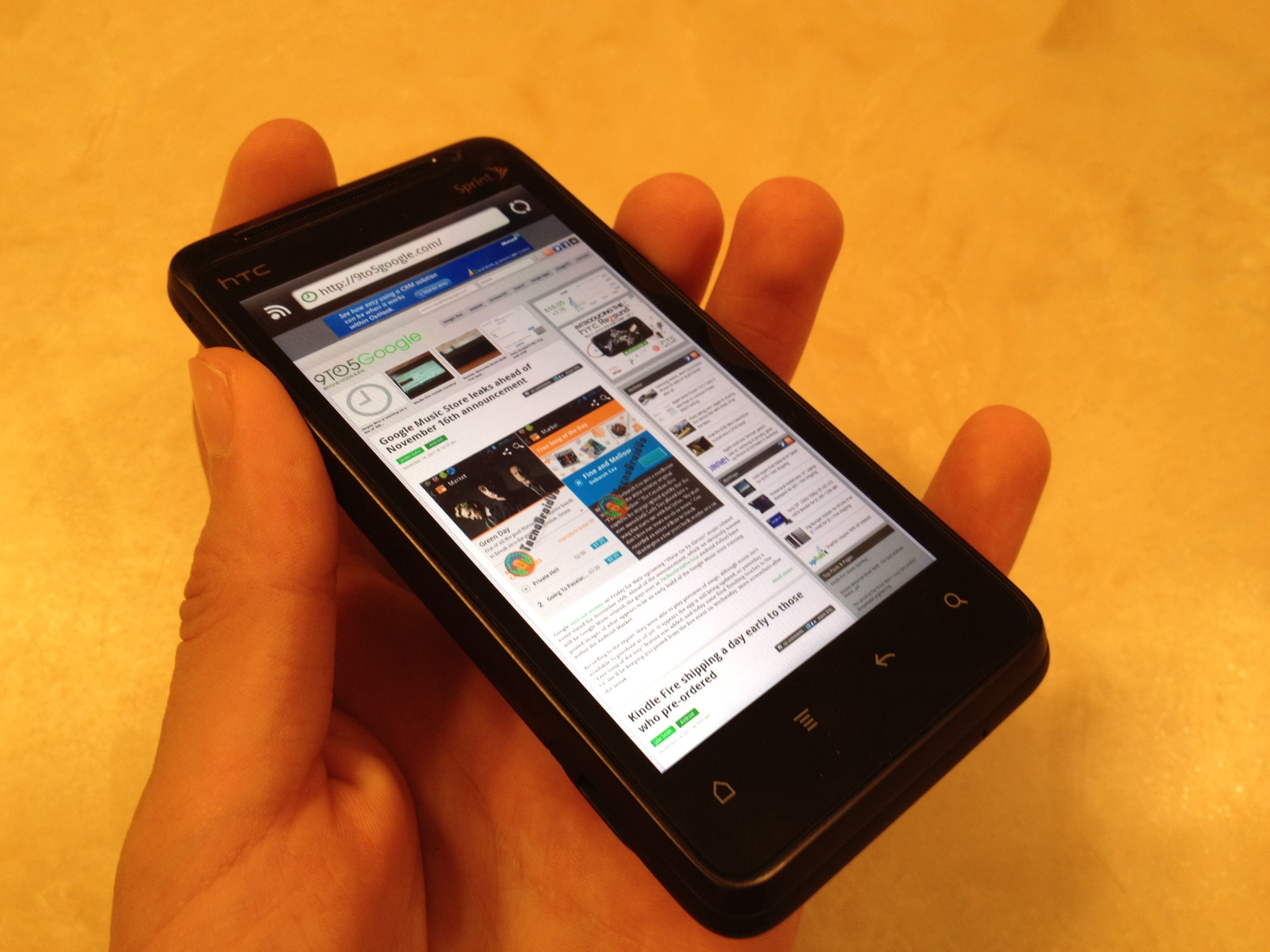
I’ve been playing with the EVO Design 4G for the better part of a month now, after showing off the hardware and software quickly in October. Today, we’re back with our full review of the device to answer a few questions. Is this the premier mid-range Android device on Sprint? Does it live up to its EVO name? Is this the world phone you’re looking for? But first, let’s go over some specs.
The Design 4G is packing Android 2.3 (Gingerbread) HTC Sense, a 1.2 GHz processor, 4-inch qHD display, 5-megapixel rear-camera, 1.3-megapixel front-camera, Wi-Fi, and World Phone capabilities. So how does this hardware hold up with the software? Head on after the break for our full review.
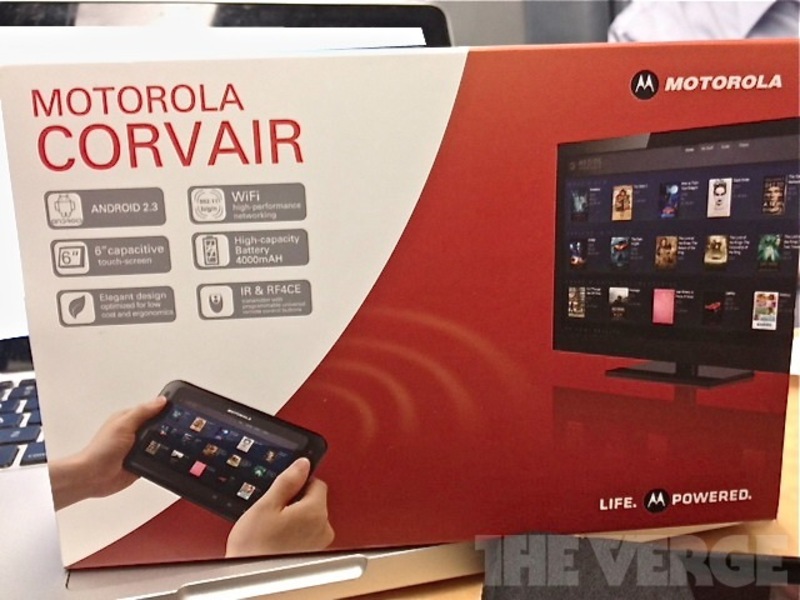
You have to wonder if someone is playing a a joke on the Verge. Someone sent in a box cover that purports to hide a 6-inch Android 2.3 tablet that does double time as a remote control for your cable box. If this isn’t a Punk’d-ing, the device is with cable company testers right now and will be used to control the cable box, GoogleTV be damned.
The box calls it a “dedicated controller,” but it also seems to show the tablet wirelessly displaying its entire UI on the TV, so we’re guessing it can be used to watch and stream content in addition to serving as a remote control for one of Motorola’s cable boxes. (That would also explain the hardware power and volume buttons next to the display.)
We don’t know much specs-wise, but the box says the design is “optimized for low cost,” so we wouldn’t expect anything high-end inside. It also looks like it says something “OS” in the upper left, so it seems like a fairly custom version of Android. There’s also IR control and RF4CE, which is a ZigBee-based RF control protocol, as well as a high-capacity 4,000mAH battery
 Of course “Corvair” is also a car that Chevy built in the early 60s that makes every “worst car ever” list and was the subject of the Ralph Nadar book, Unsafe at Any Speed. We’re hoping that Motorola’s naming/branding department is playing a joke on us in this case.
Also, as Motorola gets folded into Google, this will likely get folded into GoogleTV, which is to say, cancelled…just like its namesake.
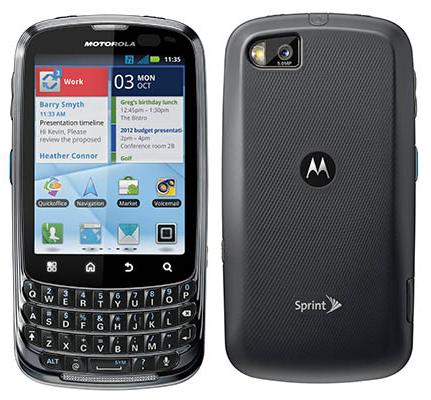
Sprint has announced the Motorola Admiral this afternoon, a 3.1-inch device running Android 2.3 with a design to withstand rugged environments. The device features a 3.1-inch VGA display (Gorilla Glass), full QWERTY keyboard, 1.2 GHz processor, 4GB of internal memory, 5-megapixel camera, Wi-Fi, and Android 2.3. That Gorilla Glass and full QWERTY keyboard are definitely a selling point for some.
The Motorola Admiral launches October 23rd for $99. We’ll have a full review then, so stay tuned.

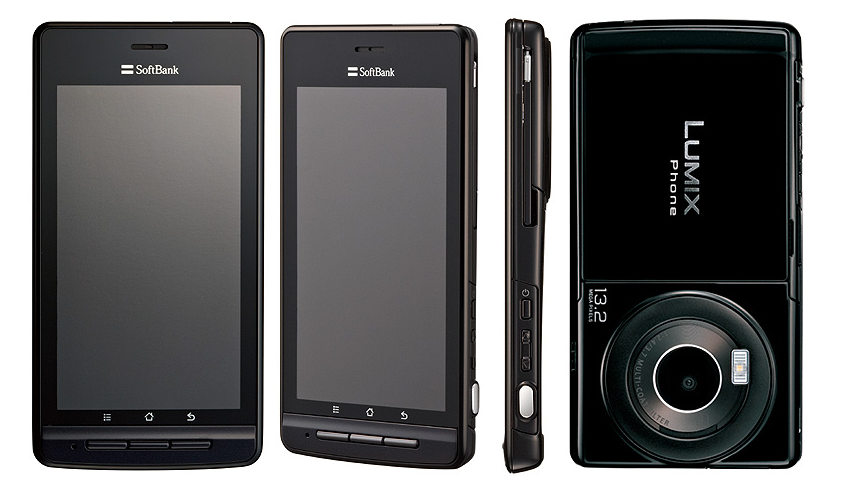
You’d be right to argue that most smartphones double as digital cameras these days, but Panasonic’s upcoming Android handsets is in an entirely different league when it comes to snapping photos on the go. Their four-inch Gingerbread device dubbed the Lumix Phone 101P has a high-resolution camera with a 13.2-megapixel CMOS Lumix sensor with Mobile Venus Engine and water-proof body.
Lumix is Panasonic’s brand of digital cameras, ranging from pocket point-and-shoot models to digital SLRs. Other specs include a QHD display with a 960-by-540 pixel resolution, a 1GHz OMAP4430 dual-core chip from Texas Instruments, e-wallet features and digital TV tuner. The Lumix Phone 101P should launch on SoftBank’s network in Japan in November.
via TechCrunch
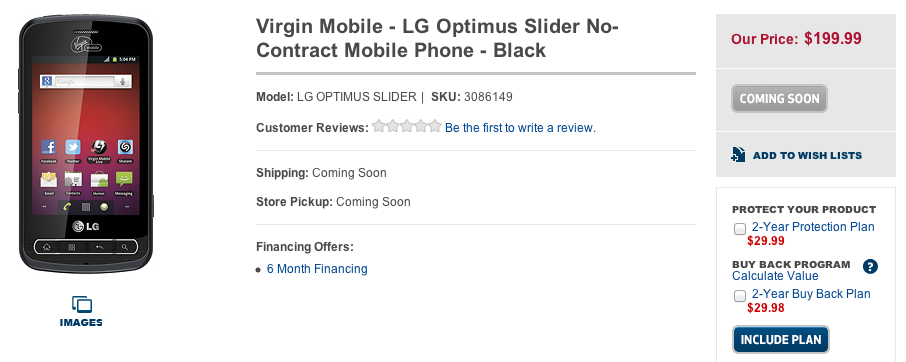
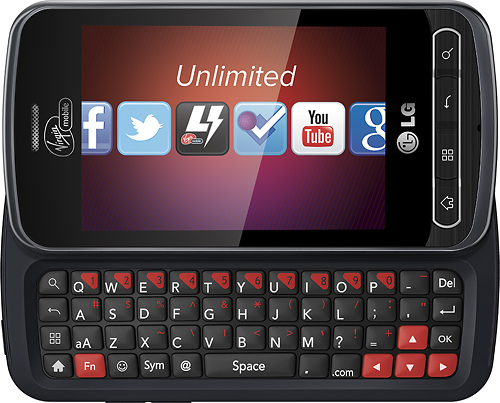
Wondering why that Virgin Optimus V is being marked down to $99 at Best Buy? Having a little look at their inventory system shows the answer. The 4 oz. Virgin Optimus Slider, a physical keyboard-enabled version of the Optimus V phone is coming soon to Virgin Mobile. The Slider is the roughly same phone as the Verizon LG Enlighten which went on sale for $79 with a two year plan.
 .
.
The specs (below fold) look largely the same as the Optimus V with the edition of Android 2.3 and obviously a physical Keyboard (shown above).
We’ve separately heard that Virgin has a Gingerbread update for the Optimus V in the works and at half the price, we could so without the sliding keyboard –but to each, their own. Expect this to be formally announced in the coming weeks and in stores shortly (before or ) after.
Expand
Expanding
Close
[youtube=”http://www.youtube.com/watch?v=qTxFjBTfqZg”]
Motorola has announced a successor to its earlier Droid Pro, the Pro+. The Pro+ features a full QWERTY keyboard on the front of the device, Android 2.3, 1 GHz processor, 3.1-inch screen, and hotspot capabilities. Sadly, the device will not be making its way to the U.S. — rather, hitting Europe and Asia in October.
Motorola is filling a gap that Apple hasn’t yet attacked. Users who are tired of BlackBerry, but still need the business feel, now have a more viable option. We look forward to this hitting the states hopefully by the end of the year.
Full press release and gallery after the break:

In the battle for mobile supremacy, Apple and Google are winning as competitors continue to lose ground, finding it increasingly difficult to compete with the strong iOS and Android ecosystems (can you say ‘duopoly’?), per latest survey from the NPD Group. The results came by tracking U.S. consumers aged 18+ who reported purchasing a mobile phone and exclude corporate purchases. In the June quarter, iOS grabbed 29 percent of the U.S. smartphone share versus Google’s 52 percent share. Both tech behemoths have grown their platform share at the expense of BlackBerry maker Research In Motion.
Cross-posted on 9to5Mac.com
RIM’s been on a serious decline amid poor sales and delays related to their QNX-based superphones. Their BlackBerry OS software share fell to just eleven percent in the U.S. Meanwhile, Hewlett-Packard’s webOS is in a state of limbo as the world’s leading computer maker announced intentions to exit the hardware business. Microsoft’s Windows Phone 7 and Windows Mobile grabbed five percent of the market each.
The emerging prepaid market is the next battelground for iOS and Android. Google, however, has the first mover advantage here…
Expand
Expanding
Close

Vizio has announced the VIZIO 8″ Tablet, available at retailers for $299. The tablet is aimed at being a tool to control your home theater with the ability to be paired with many of Vizio’s TVs and Blu-Ray players. Besides the controls, the tablet features the normal set of Android 2.3, featuring the Android Market and pre-loaded Google Apps.
Hardware on the device includes a 8-inch display, 1GHz processor, 802.11n Wi-Fi, 16GB SD card, and a front-facing VGA camera. To interact with your home theater setup the tablet features a HDMI output, an infared transmitter, universal remote app, and HDCP streaming. Check it out over at Vizio.
Press release after the break:
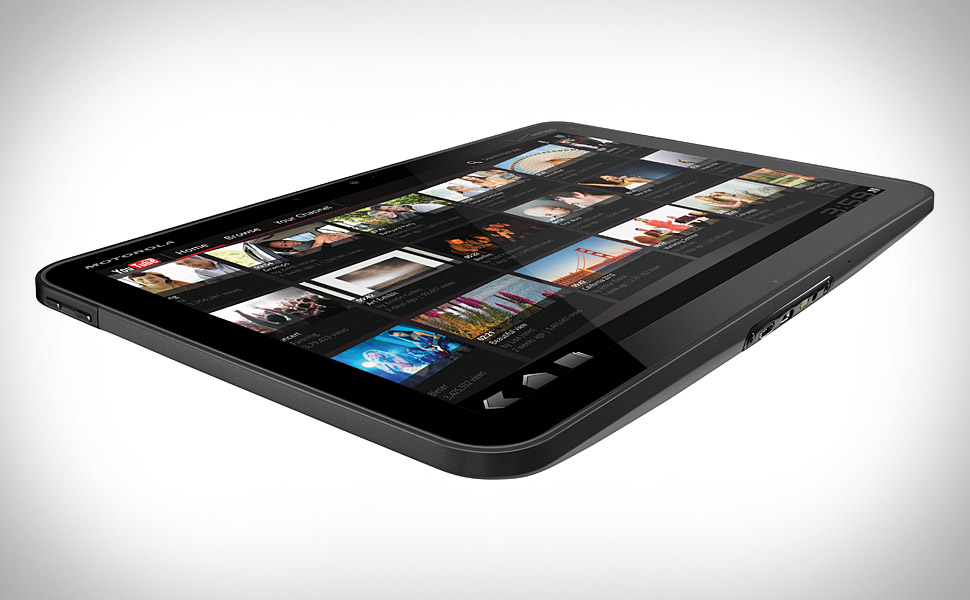
Motorola Mobility reported June quarter earnings today, nearly hitting Wall Street estimates with the reported GAAP net loss of $56 million, 19 cents a share. Revenues for the quarter topped $3.3 billion and non-GAAP earnings were nine cents a share. One of the noteworthy highlights includes shipments of 400,000 Xoom tablets, although the company wouldn’t divulge actual sell-through numbers. Xoom shipments amount to some 2.65% June tablet market share, per Strategy Analytics’s cumulative figures.The company also shipped eleven million mobile devices in total, including 4.4 million Android smartphones. Analyst Tomi Ahonen wrote on Twitter that Android shipments amount to an eight percent market share, making Motorola “8th biggest smartphone maker and 5th biggest Android”.
Xoom aren’t bad at all, actually a bit higher than the 300,000 units investors were expecting. Furthermore, the Xoom, Motorola’s inaugural Honeycomb tablet, arrived to market with little or no support from third-party developers plus devices from rivals ensued soon thereafter. Motorola benefited from an expanded distribution of the Atrix 4G smartphone and Motorola Xoom tablets in Latin America, China, Korea and Europe. They also rolled out four new smartphones in China. Moving forward, the company previously pledged to launch ten new devices in 2011 with Sprint, including Motorola Photon 4G which launches this weekend. Other tidbits right below…
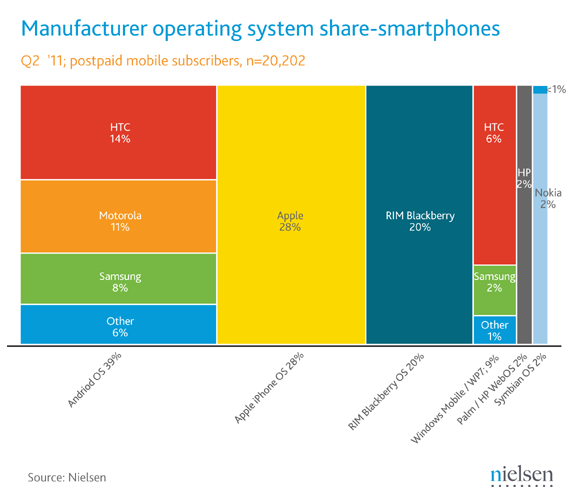
Research firm Nielsen chimed in today with a survey that puts Apple as the leading handset maker in the United States whilst Android is portrayed as the top mobile operating system in the country. Those findings follow a recent analysis which had Apple overtaking Nokia to become the world’s leading smartphone vendor in July, also corroborated by IDC figures. According to Nielsen’s June data, Google’s Android remains the nation’s top phone platform with a 39 percent of the country’s consumer smartphone market. Apple’s iOS follows with 28 percent and BlackBerry maker Research In Motion continues to bleed share, down to 20 percent in the second quarter of 2011. Windows Mobile and Windows Phone combined grabbed nine percent, webOS and Palm OS were barely a blip with two percent, as was Nokia’s dying Symbian OS.
Apple on the other hand is the top smartphone maker in the United States that controls 28 percent of the market (excluding iPods and iPads). That’s partly “because Apple is the only company manufacturing smartphones with the iOS operating system”, Nielsen argues. HTC shares second spot with Research In Motion with a fourteen percent share of Android devices and six percent of Windows Phones for a total of 20 percent share of the whole market, same as the BlackBerry maker. HTC is also the nation’s leading Android and Windows Phone vendor with 14 percent and six percent share, respectively. No wonder Apple is suing HTC and seeking to ban import of their phones into the US…

In an industry-first, AT&T issued a statement pledging to update all post-paid Android smartphones released in 2011 to Android 2.3 Gingerbread. Motorola Atrix 4G owners will get a Gingerbgread update beginning today and HTC Inspire 4G users will get it “in the coming weeks”, AT&T confirms. As for the Atrix, Gingerbread will enable the ability to download applications from third-party stores. Other smartphones in AT&T’s lineup pinned for Gingerbread include LG’s Phoenix, Pantech’s Crossover and Samsung’s Captivate 4G and Infuse 4G.
Delivery method will vary by device, the carrier said. That AT&T is taking updating Android phones seriously is a welcome sign for consumers and the Android ecosystem at large, often criticized for platform fragmentation. Google said at their annual developer conference in May that they will be tackling fragmentation woes by imposing strict requirements on their carrier and handset partners. Upgrade details are right below the fold.
Expand
Expanding
Close
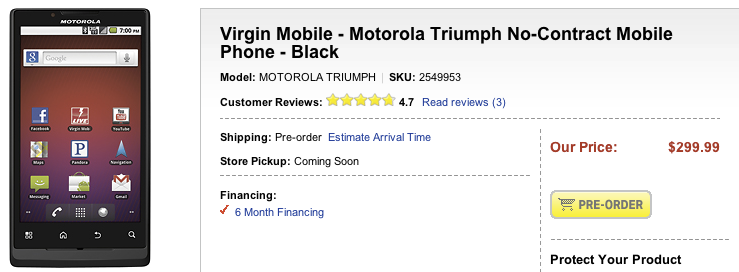
If you are a mid/high-end Android lover in the US, but want unlimited data and don’t want to pay high monthly fees, it is hard to beat the Motorola Triumph. It hits a lot of sweetspots:
The best news is that it is hitting Best Buy ahead of its supposed July 20th launch date. Reddit users (via Phandroid) are reporting on walking into the stores right now and picking them up.
The Optimus V launch was the same with people picking them up before the launch at Radio Shack.
You can buy it online here.
Expand
Expanding
Close
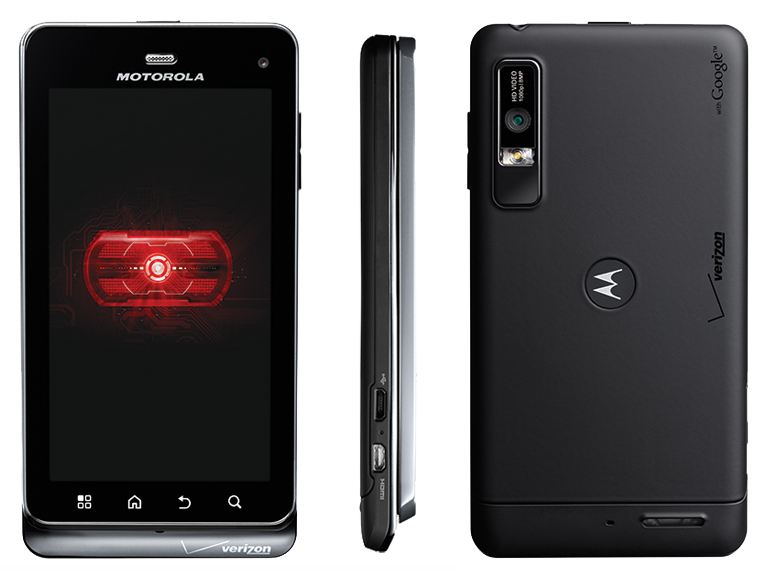
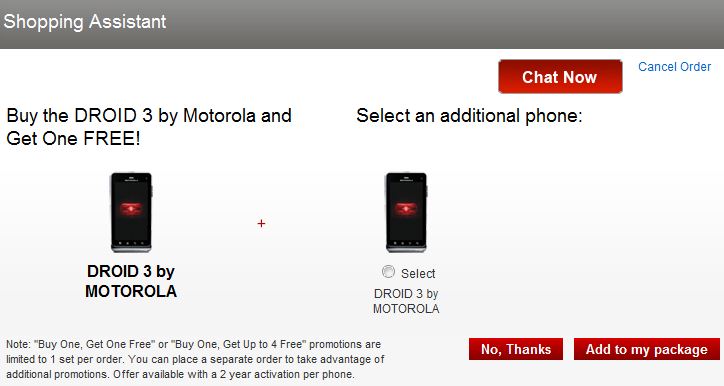
BOGO, an acronym for “Buy-One-Get-One”, is a marketing tactics some (perhaps iOS fans) are adamant helped boost daily Android activations to over 550,000 handsets. The strategy is again at play at Verizon Wireless, the nation’s leading carrier which put Google’s platform on the map with the original Droid. And now, less than two weeks since the Droid 3’s arrival on the Verizon Wireless network, the carrier is offering the device in a hard-to-resist BOGO deal, reports The Phone Arena. You can take advantage of the offer at Verizon’s web site.
The reason? We’ve heard that there is another 4-inch slider coming to Verizon, but with some LTE’s in the very near future.
The carrier is also taking sign-ups for the Droid Bionic, a Motorola LTE phone which could launch August 4. The Gingerbread-powered Droid 3 features a four-inch qHD display, a slide-out full QWERTY keyboard, a back camera that can record 1080p clips, all thanks to a dual-core 1GHz OMAP processor from Texas Instruments. It costs $200 after a two-year service agreement or $460 contract-free. Would-be buyers should remember that Verizon no longer offers unlimited data plans.
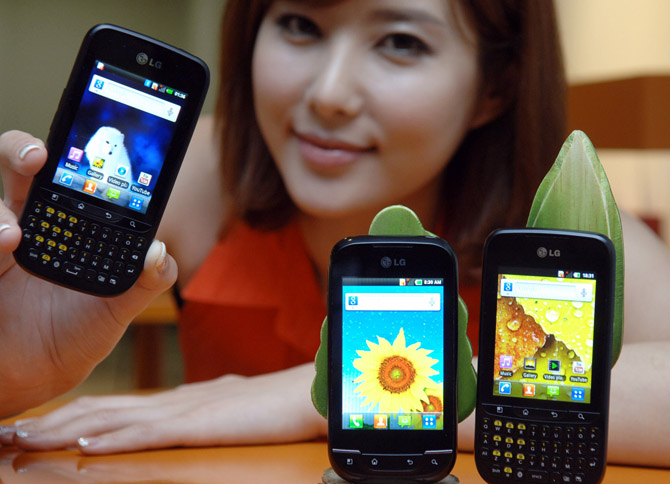
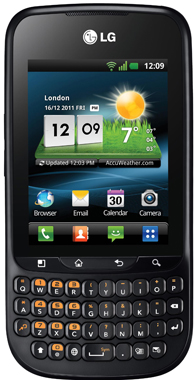
LG this morning announced two new phones engineered around Android 2.3 Gingerbread. The LG Optimus Pro (LG-C660) and Optimus Net (LG-P690) smartphones – both rolling out in 30 markets this summer beginning in Europe – feature a 1500mAh battery – “the largest in their class”, says LG – and an 800MHz processor. The phones are clearly aimed at the social generation. The Optimus Pro hasa QWERTY keyboard that will appeal to fast typists, a 2.8-inch touch display and dedicated hardware hotkeys for email and scheduler. The device will be available in white, titan and black.
The Optimus Net, available in black and white, sports a bigger 3.2-inch 320-by-480 pixel resolution display and LG Social+, the company’s own widget that acts as a hub to popular social networks. It lets you read your friends’ social media feeds, update Facebook and Twitter status, share photos across multiple social media accounts and more. LG wrote another application, SmartShare, that enables the phone to share media with other DLNA-compliant devices.
The North American version will include a QWERTY keyboard and in Brazil, China, Asia and the CIS region, the Optimus Net will be dual SIM-compatible. Also, some European carriers will get a version of the device with an NFC chip for mobile payments. More images and full release after the break.
[youtube=http://www.youtube.com/watch?v=5Pbo-d62ivY]
Google has announced that a new Android Market is coming to Android phones. Along with an overall redesign, the new Market will be receiving a Book and Movie tab. The updated Market is available for phones running Android 2.2 and up, and will be rolling out in the coming weeks.
Movies will be available in the U.S. for $1.99, where they can be downloaded right on the Android phone. We assume Books will be priced book-to-book, like almost all e-book stores. Movies and Books will be linked to your Google account, so all of your Android devices will be in sync. Check out screenshots after the break.
The new Android Market will be rolling out in the coming weeks to Android 2.2 and higher phones around the world. You don’t need to do anything – the update is automatic on supported phones. If you’re in the U.S., you’ll also be able to download the Videos app, rent movies, and buy books once you receive the new Android Market.
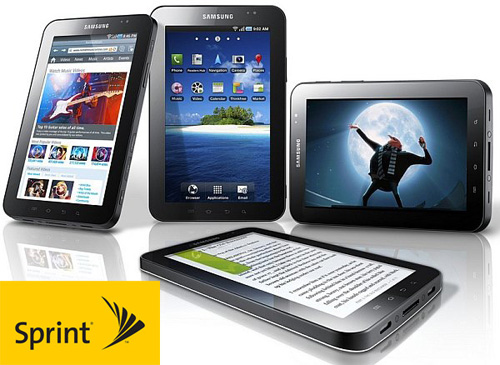
Early adopters that bought into the tablet craze by picking up a Samsung Galaxy Tab as then the only viable iPad alternative will be delighted to know that carrier Sprint has begun pushing the Android 2.3 Gingerbread software update over-the-air. Their gadget girl Michelle Leff boasted on Twitter that Sprint is the first carrier to roll out Gingerbread for the Samsung Galaxy Tab. The new firmware brings HID Bluetooth and it updates the device’s baseband software to version S:P100.08 S.EF17 (build GINGERBREAD.EF17).
As you know, Gingerbread is technically a phone operating system. Google was strongly discouraging vendors from building tablet products until Honeycomb arrived. Samsung, of course, didn’t listen. As the iPad had taken everyone by surprise, the Korean gadget maker went on to launch the Galaxy Tab in September of last year. Despite Steve Jobs’ claims that the seven-inch tablets will be dead on arrival because users would need to sandpaper their fingers down to hit the tiny on-screen controls, the form factor has actually been quite compelling, at least among the Android community.
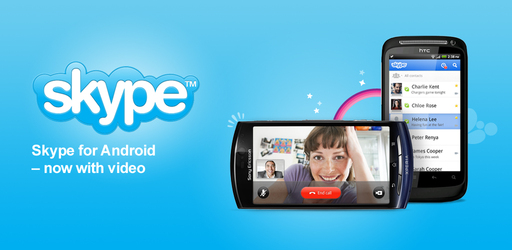
As Apple fans have been anxiously awaiting the native Skype app for iPad for days, the company has updated its Android app with one-to-one video calls over both wireless and cellular networks. According to a post over at the Skype blog, the Skype for Android 2.0 app sports a complete redesign of the user interface:
There’s a new main menu on the Skype app for Android where you can navigate easily through your contacts, access your Skype profile to change personal details, use the dial pad to make calls, see the balance of your Skype Credit and, of course, make video calls. A new mood message box at the top of the Skype app menu makes it easier than ever to share how you are feeling, what you’ve seen or what you’re up to.
You will need a supported Android Gingerbread device with a forward-facing camera, which at the time of this writing included the HTC Desire S, Sony Ericsson Xperia neo, Sony Ericsson Xperia pro and Google Nexus S (more handsets coming soon, Skype says). To download the updated Skype app, simply visit skype.com/m from your Android device or grab it from Android Market.
[youtube=http://www.youtube.com/watch?v=1o6TBezfSpU]
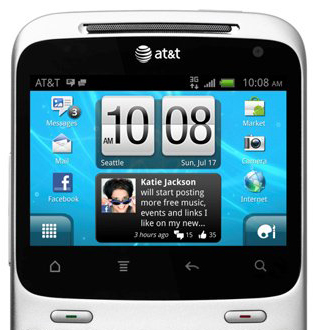
Of course, it ain’t the first phone to be called a Facebook phone. But if you’re fan of Zuckerberg’s social network, you should give this one a chance. What’s the number one thing for Facebook (excluding photos)? Yes, status updates. That’s what guided HTC to put a dedicated Facebook share button on the aptly named Status handset, to cater to the Facebook generation that cannot fathom letting an hour go by without firing up a couple of status updates.
Apart from the button and the BlackBerry-style physical QWERTY keyboard that sits below the screen, the Status packs in an 800MHz chip, a five-megapixel camera on the back and a VGA camera out the front, a 1,250 mAh battery and a 2.6-inch touchscreen with a 480-by-320 pixel resolution – all driven by Android 2.3 Gingerbread. AT&T wouldn’t say when the phone would be available. Full release and t he complete front shot of the device right below.
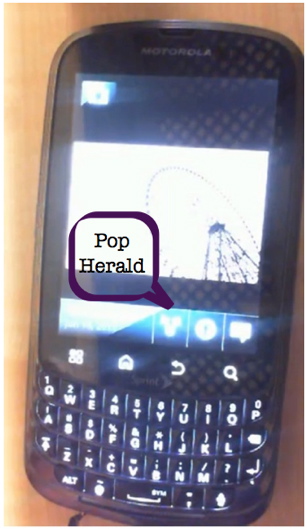
An image leaked yesterday by The Pop Herald suggests a possible successor to the Motorola Droid Pro, which Sprint marketed as the XPRT. In a nod at business users, the yet-to-be-named device packs in a physical QWERTY keyboard, in addition to both capacitive touchscreen and buttons, a possible Sprint 4G WiMax network connectivity and Android 2.3 Gingerbread out of the box:
According to the tipster, the next QWERTY Motorola smartphone is curvier compared to the Motorola XPRT. The tipster added that the physical QWERTY keyboard of the unannounced phone was slightly modified, now with a “smile pattern,” compared to XPRT’s “ruler pattern.”
Considering that Sprint began offering the business-centric XPRT on June 5 of this year, full six months following its November 18, 2010 debut on the Verizon network, here’s to hoping we won’t have to wait that long for this handset.
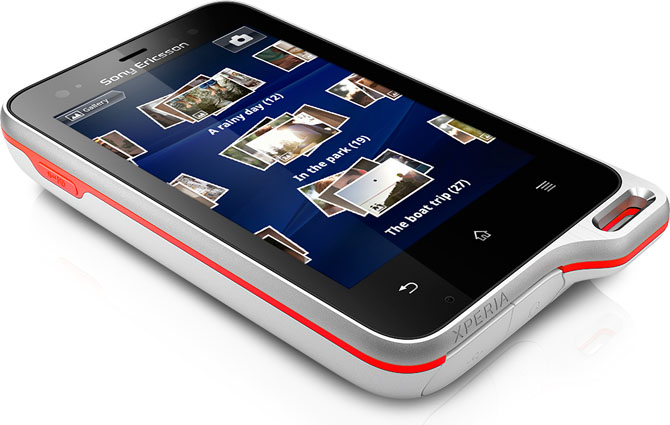
At CommunicAsia 2011 in Singapore, Sony Ericsson launched a new compact smartphone that runs Gingerbread, the newest Android 2.3 release available for phones. Just 55mm wide, 92mm tall, 16.5mm deep and weighing in at 110 grams, it easily slips into your back pocket. The “It’s the ultimate phone for your active life” tagline is not without its merits: The device features dust-proof and water-resistant design with scratch-proof multitouch display that accepts touch input even when either the screen or your fingers are wet.
And you gotta love this line from the promo clip (below the fold) coming from the mouths of tennis player Maria Sharapova who endorsed the Xperia active while trashing Apple’s handset indirectly by alluding to Antennagate:
I don’t feel I have to be TOO SAFE with my phone, almost be a little rough and I know I’ll be able to take it and throw it in my bag, can get water on it, dust antyhing – and I know that I’ll be able to make a phone call.
Additionally, it comes preloaded with sports apps, has built-in GPS, barometer and compass and can monitor your heart rate and pulse in real time using ANT+ wireless networking. The impressive hardware (given its size) includes a three-inch display 320-by-480 display with Mobile Bravia Engine, a 1GHz processor and a five-megapixel back camera that shots 720p clips and has a bunch of intelligent features.
Plus, it ships with two interchangeable covers and a bunch of sports accessories, including an arm case, wrist strap, sport stereo headset. soft touch back cover and detachable ear hooks for the handsfree active headset. The Xperia active should hit select global markets by the third quarter of this year. More juicy press shots, full release and the Maria Sharapova clip right below.
[youtube=http://www.youtube.com/watch?v=t05991f5WlY]
Expand
Expanding
Close
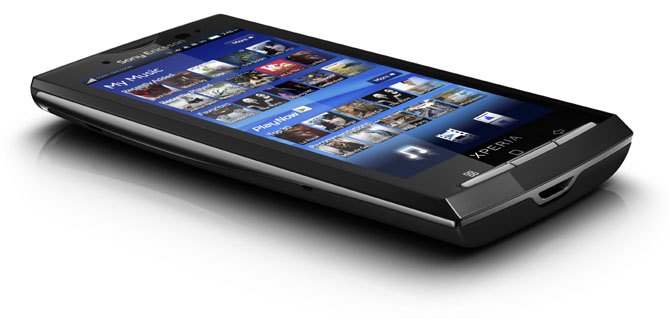
Sony Ericsson yesterday confirmed that its Xperia X10 will be getting the Android 2.3 Gingerbread update in early August. In addition to a detailed feature list from March, Gingerbread software will keep the original camera interface as in the Eclair version and enable Facebook integration that the company rolled out to 2011 handsets, sans this caveat:
With regards to the roll-out plan, as said back in March, this will first and foremost be made available to generic trade kits. Even if there will be some operator kits getting this upgrade, as said before – some of you will not be able to upgrade your customized version of Xperia X10.
Also, DLNA functionality won’t be supported at this time. With bad news out of the way, here’s more features to be excited about plus a nice video of Gingerbread on the Xperia X10 in action…
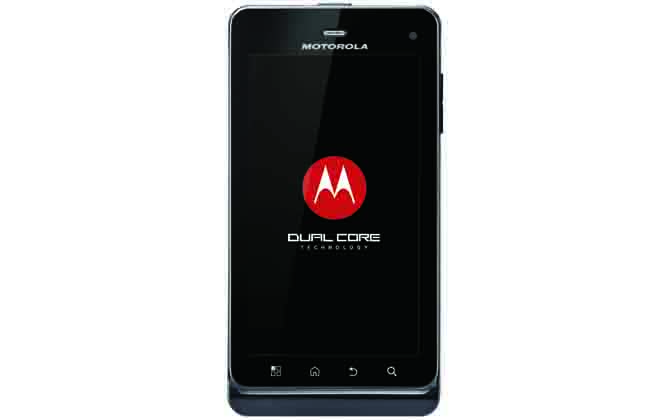
Motorola’s Droid, the successful smartphone family which put Android on the map, this year enters its third-generation incarnation with the anticipated Droid 3. Surprisingly, Motorola Mobility chose to launch the handset in China under the Milestone 3 moniker, which is a non-US name for the Droid.
Per Motorola’s press release, the handset known as the XT883 will be carried by China Telecom, the country’s CDMA wireless operator. The Android 2.3 Gingerbread device runs on China Telecom’s Surfing 3G cellular network and WiFi networks and supports Android World Phone capabilities in more than 200 countries. The innards are quite beefy…


