Android

See All Stories

Breaking news for Android. Get the latest on apps, carriers, devices, and more!
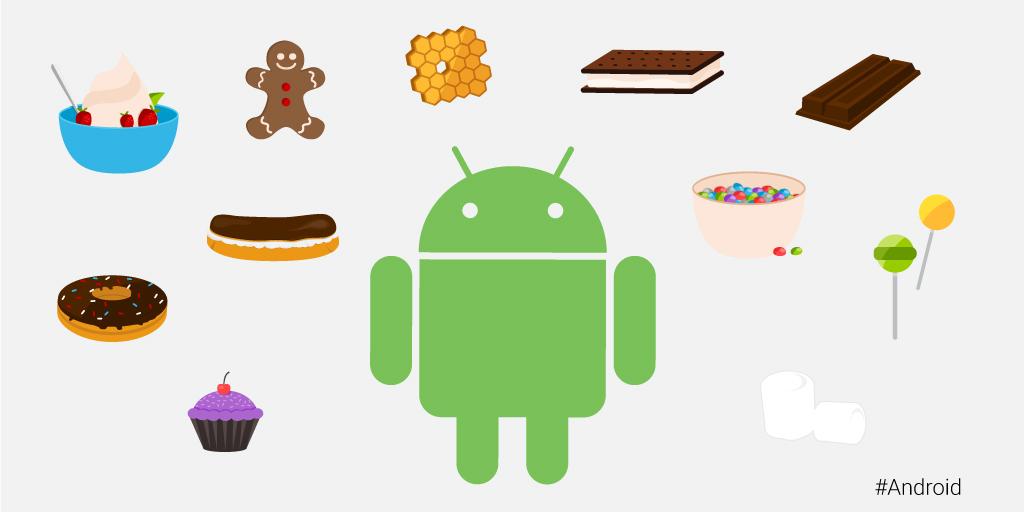
Android is Google’s mobile operating system, launched in September 2008, although its history technically began with the release of the Android alpha in November 2007. To this day, Android powers the majority of the world’s smartphones and comes in several different flavors across many phone makers.

What is Android?

Android Inc.

Android, before it was Android, was a company called Android Inc. That company was founded in Palo Alto, California, in 2003 by a crew of four: Andy Rubin, Rich Miner, Nick Sears, and Chris White. The company and its project was acquired by Google in 2005 for a sum of more than $50 million, although the exact number is unknown. The company’s founders joined Google as part of the deal.

In its infancy, Android was an operating system built not for touch screen smartphones like the iPhone, but rather BlackBerry-like devices with physical keyboards. It’s well documented that after Apple shocked the world with the iPhone, ahead of its nearest competition by at least a couple years, Google and Android Inc. had to go back to the drawing board to build something competitive.

Adoption by third-party makers

It didn’t take long after the launch of the iPhone for various manufacturers to enter the market with their alternatives — and Google’s Android immediately became the obvious platform of choice for just about everyone except Microsoft. HTC was the first manufacturer on board, and introduced the T-Mobile G1 running Android in September 2008. Soon after, HTC, Motorola, Samsung, and carriers like Sprint and T-Mobile jumped on board to form the Open Handset Alliance.

Android makers across the world

Iconic Android handsets

There have been thousands of Android phones released since Android’s inception, but some have been more important to the platform’s history than others. There was the original T-Mobile G1, as mentioned, but there was also the HTC One Google Play Edition, Moto G, Samsung Galaxy S4, and others. Some of the most iconic Android handsets include:

  • HTC G1
  • HTC Nexus One
  • Samsung Galaxy S, S2, S3, S4, and their successors
  • HTC Incredible S
  • Samsung Nexus S
  • Samsung Galaxy Nexus
  • Samsung Galaxy Note
  • Nokia 8
  • BlackBerry KeyOne
  • Google Pixel and its successors

In more modern times, there are several Android smartphones makers that popped up across various niches and in several international markets. Huawei is a dominant Android maker in China and many European markets, while Samsung is by far the most popular maker in the United States by far — effectively creating a duopoly with Apple. Today, there are dozens of major device makers contributing to the Android ecosystem.

Full list of Android OEMs

History of major Android versions

Android has seen countless software revisions over the course of its life, but in modern times the OS usually sees a major release on an annual cadence. In the earlier days, Google famously gave its major software releases dessert-themed codenames, but retired that practice in 2019 with the release of Android 10.

VersionNameReleaseDevices
2.3GingerbreadFebruary 9, 2011Nexus S
4.0Ice Cream SandwichOctober 19, 2011Galaxy Nexus
4.1Jelly BeanJuly 9, 2012Nexus 7
4.2Jelly BeanNovember 13, 2012Nexus 4, 10
4.3Jelly BeanJuly 24, 2013Nexus 7 (2013)
4.4KitKatOctober 31, 2013Nexus 5
5.0LollipopNovember 3, 2014Nexus 6, 9
5.1LollipopMarch 9, 2015Android One
6.0MarshmallowOctober 5, 2015Nexus 5X, 6P
7.0NougatAugust 22, 2016Nexus 5X, 6P
7.1NougatOctober 4, 2016Pixel, Pixel XL
8.0OreoAugust 21, 2017Pixel, Pixel XL
8.1OreoDecember 5, 2017Pixel, Pixel XL
9PieAugust 6, 2018Pixel 2, Pixel 2 XL
1010September 3, 2019Pixel 3, 3a
1111September 8, 2020Pixel 4

List of major Android OS platforms

While Android proper is certainly the most widespread of Google’s Android operating systems, the company has also launched many offshoots of the main OS over the years. There’s Android Auto, Android Wear (now Wear OS), Android TV (now rebranded to Google TV), as well as versions of Android built for tablets and Android Things (now defunct).

Google ready to raise its TV profile by spending $1B+ on NFL streaming deal?

Site default logo image

AllThingsD reports that Google may be in discussions with NFL to buy the rights to the Sunday Ticket package when DirectTV’s contract runs out at the end of the 2014 season.

Today, according to sources, Google CEO Larry Page, along with YouTube content boss Robert Kyncl, met with a delegation from the NFL led by commissioner Roger Goodell. And the Sunday Ticket package was among the topics of discussion, according to people familiar with the meeting … 
Expand
Expanding
Close

Site default logo image

Outputting 4k video from smartphones to TVs? It’s here, but only via USB so far

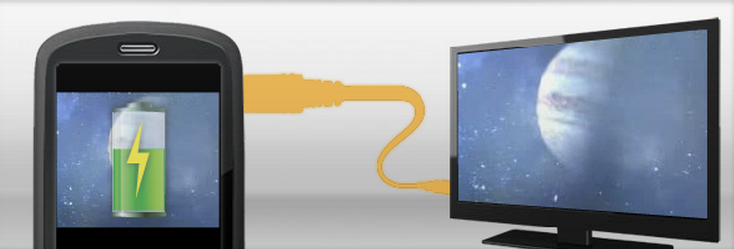
MHLtech has just announced an upgrade to the Mobile High-Definition Link (MHL) standard which will allow smartphones and tablets to output 4k video to a TV or monitor over USB cables, rather than the 1080p of the current standard. Devices will be able to transmit 3840×2160 at up to 30 frames per second.

MHL is likely to have a short-lived future, however. While it’s supported by the likes of Nokia, Samsung, Toshiba and Sony, and will likely be the only 4k solution in the short-term, wired connections feel rather quaintly old-school. Powering the phone via USB may be a small bonus, but the future is undoubtedly in video over wifi, with both Miracast and Apple’s Airplay standards getting all the love. Neither supports 4k as yet, but it can only be a matter of time.

The updated MHL standard will be available to manufacturers from next month.

Via arsTechnica

Site default logo image

Pixel density race starts to get silly as LG smartphone display hits 538ppi

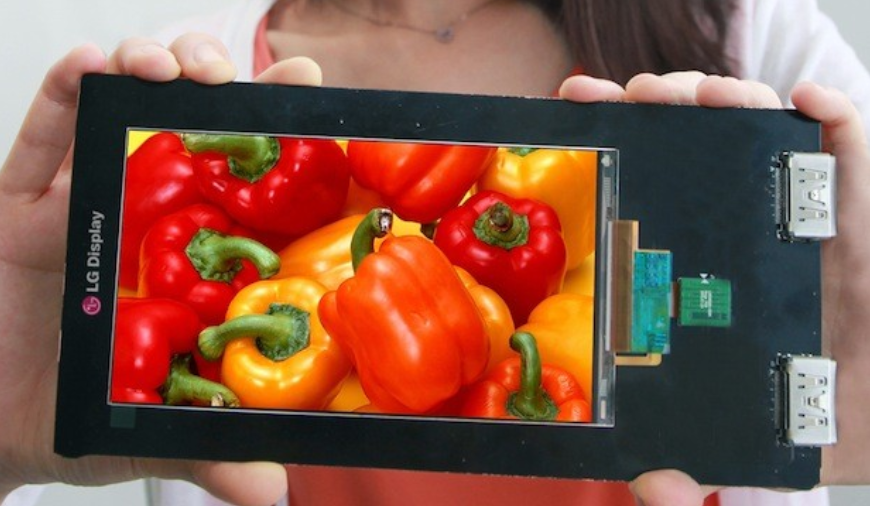
We may all be eagerly awaiting affordable 4k displays for our computers and TVs, but things are starting to get just a little silly in the race for ever higher resolutions in small-screen devices. LG has just announced a 5.5-inch screen with a 2560×1440 resolution, giving it a pixel density of 538ppi.

It’s an impressive technological achievement, but the question we have to ask is: why? Once you get much beyond 300ppi, pixels essentially become invisible at any sane viewing distance. 538ppi is over-kill. Of course, one could ask ‘Why not?’, but there’s a simple answer in mobile devices: both the display itself, and the beefier graphics processor needed to drive it, consume power. Pointless resolution equals pointless reduction in battery-life.

The sad thing is that non-tech-savvy consumers will likely lap it up. Bigger numbers are better, right? It’s the same phenomenon we’ve seen with cameraphones, with manufacturers boasting higher and higher megapixel numbers when any photographer will tell you that cramming masses of pixels into a tiny sensor actually results in worse image quality, especially in terms of low-light performance. It’s why DSLRs have much larger sensors than smartphones.

There’s only one reason you might want ultra-high resolution in a phone: the ability to push the display to a large-screen device.

As an aside, LG refers to the 2560×1440 resolution as ‘Quad HD’. It would be more accurately described as ‘Quad 720p HD’ as it’s the same number of pixels as four 1280×720 displays.

Full press release below … 
Expand
Expanding
Close

Site default logo image

Google Play Services 3.2 now rolling out to all devices

Google today announced its finishing its roll out of Google Play Services 3.2, the latest version of its platform for delivering updates to its own apps and third-party apps using Google APIs. Version 3.2 includes a number of notable new features that end-users will benefit from, including a new compass mode for PhotoSphere that lets users navigate through PhotoSpheres by moving their device, and an improved InstantBuy UI that supports offers and loyalty data.

A few of the new features available for developers include improvements to location based services and hardware-based GPS geofencing:

The Fused Location Provider now supports the selection of a low-power mode option when requesting location updates, and the ability to inject mock locations — allowing you to more efficiently test your apps in a variety of simulated conditions.

The geofencing APIs have been updated to support hardware-based GPS geofencing on devices that have supporting hardware, such as the Nexus 4. Hardware geofences consume significantly less battery, and best of all your app will automatically take advantage of this feature on supported hardware without you having to make any changes.

Google also noted that a new Snapshot feature for the maps API will let devs “capture a bitmap image of the current map in order to improve performance when an interactive map isn’t necessary.” A simplified sharing control feature in the latest release will let developers using Google+ sign in (which also receives a shiny new animation) to simplify sharing to the social network.

The Google Play Services 3.2 release is now available for developers to test through an updated Google APIs emulator image in the Android SDK Manager. More info is available on the Android developers blog here.

Chrome adds smarter omnibox suggestions, WebRTC support on Android

Site default logo image

Google announced today on its Chrome Blog that it is beginning to roll out smarter omnibox suggestions for Chrome users that it says will provide “more timely and contextually relevant suggestions.” The feature has been available for a while in beta and Google noted the improved suggestions are based on websites users recently visited. The new features come alongside the release of the Chrome 29 stable release for Windows, Mac, and Linux, which also brings support for new apps and extensions APIs.

Another new feature coming in Chrome 29 is the ability to reset Chrome back to its original state, disabling all added extensions, through an easy to access option located in Settings:
Expand
Expanding
Close

Site default logo image

Facebook’s Android SDK updated with share dialog and new login interface

Outlined in a new Developer Blog post, Facebook has updated its Android SDK with an easy-to-integrate Share Dialog and new login UI.

Rich native sharing experiences

The Share Dialog offers a lightweight and consistent way to enable sharing to significantly enhance people’s sharing experiences from your app.

People now have the option to share activity from your apps without needing to login to Facebook first, eliminating up to 3 extra steps required for login when sharing via the feed dialog. With just one line of code, you can enable people to start sharing in an engaging way that lets them tag friends and share where they are. In addition, the Share Dialog includes support for publishing Open Graph actions to make it easier for people to tell their stories.

Improved Login UI:

The updated Facebook Login UI not only looks better, but our tests also show it converts at a higher rate. We’ve refreshed the design in the LoginButton control and changed the default text to read – “Log in with Facebook.” Your apps gain the benefit of the redesigned UI without any code changes, and you can still override the default text via localization.

The new tools will allow developers to more easily take advantage of the social network’s sharing and user-information features.

Meanwhile, the company’s “Home” application for Android devices has continued to receive updates as Facebook aims to re-imagine the home screen experience.

Site default logo image

Barnes & Noble changes its mind, will stay in the tablet business

(Cross-posted on 9to5mac.com)

Just two short months ago, Nook manufacturer Barnes & Noble was telling the world that it was moving out of the tablet business and focusing on content. Now it appears the company is scrapping that new strategy and going full-speed ahead with their original plans (memories of Netflix’s Qwikster plans are brought to mind).

Although the Nook business has been hurting Barnes & Noble’s bottom line since its inception – and the revenue continues to decline – CNET is reporting that B&N president today stated the company “intends to continue to design and develop cutting-edge Nook black and white and color devices” and one new Nook will be launched before the end of the year.

With the company losing nearly $87 million in the last quarter and lack of CEO (former CEO William Lynch resigned back in June and the company isn’t currently looking for a successor) paints a sad picture for the ailing company.

Google adds Waze’s real-time incident reporting to Maps on iOS & Android, integrates search/StreetView into Waze apps

Site default logo image

Real-time-waze-reporting-google-mapsGoogle announced today on its Google Maps blog that it’s finally tapping into the talent and technology it picked up with its acquisition of Waze back in June to integrate real time incident reports from Waze into Google Maps. The new integration means that when Waze users report incidents for everything from accidents to road closures, Google Maps users on both iOS and Android will now be able to benefit:

Users of Google Maps for Mobile will now benefit from real time incident reports from Waze users. This means when Wazers report accidents, construction, road closures and more on Waze, the updates will also appear on the Google Maps app for Android and iOS.

The features will initially be limited to users in certain locations, including: Argentina, Brazil, Chile, Colombia, Ecuador, France, Germany, Mexico, Panama, Peru, Switzerland, UK and the US. In addition, as Google first hinted back in June, the company will also be integrating Google Search into the Waze apps on iOS and Android, while the Waze Map Editor now has access to Google Street View imagery:
Expand
Expanding
Close

Samsung’s 12.2-inch tablet seemingly confirmed, rumored for October launch

Site default logo image

Photo: knowyourmobile.com

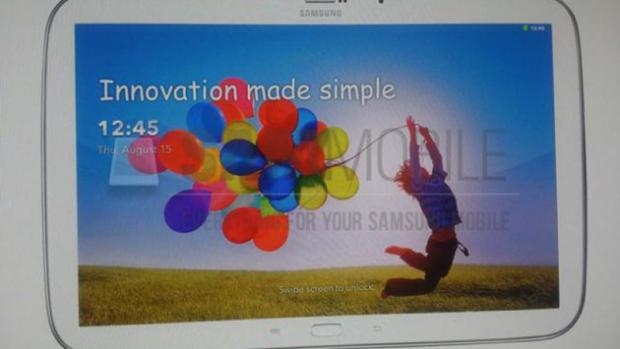
Not content with offering the world’s largest smartphone, The Korea Economic Daily (via BGR) seemingly confirms the rumor we reported last month that Samsung is now planning to launch a 12.2-inch tablet in October, possibly alongside the Galaxy Gear smartwatch … 
Expand
Expanding
Close

Site default logo image

Moto X won’t include engraving through Moto Maker at launch

One of the over 2000 customization options offered through Motorola’s “Moto Maker” online ordering tool for its new flagship Moto X was the option to engrave the device. We noted last week that the beta for the online Moto Maker tool was censoring profanity and competitor’s brand names for engraving, but today the company has confirmed engraving won’t be an option for users at launch. PCWorld’s JR Raphael got word from Motorola:

This just in from Motorola: Custom engraving won’t be available on the Moto X at launch. During beta testing, the company determined the quality of the printing wasn’t meeting its standards and decided to pull the plug on it for now. Spokesperson tells me they hope to work out the kinks and start offering the option to consumers soon.

The Moto Maker online ordering tool allows a long list of color and customization options for Moto X customers. While the customization features are the big selling point for many users, most carriers are only offering black and white versions of the phone initially. AT&T will customers will have exclusive access to Moto Maker when it launches on the carrier on August 23. Other carriers are expected to get access later this year.

YouTube 5.0 update begins rolling out to Android devices, features brand new interface, in-app multitasking

Site default logo image

Google has just began rolling out version 5.0.21 of its YouTube app to Android devices (via Android Police). The update is arguably the biggest the app has ever seen and includes a brand new interface, as well as much more. The interface is now entirely based on cards, much like the Google+ app. The slide-out navigation has also been changed, though only slightly. Finally, you can now give videos a thumbs up or thumbs down, or flag it, without having to expand the video description.

Also new is in-app multi-tasking. Now, you can minimize any video to a tiny window in the corner and continue to let it play, even when navigating through other portions of the app. You can bring it back to the forefront by tapping or dragging the window back to the center and dismiss it by swiping away the card. 
Expand
Expanding
Close

More details on Samsung’s Galaxy Gear smartwatch surface ahead of expected Sept.4 unveiling

Site default logo image

Samsung Gear Patent Filing

Following a report from SamMobile last week sharing some specific specs coming in Samsung’s much rumored Galaxy Gear smartwatch, today GigaOm reports on a few more details from developers with prototypes of the device. On top of confirming a Sept.4 unveiling at Samsung’s events scheduled to take place in Berlin and New York, the report claims Galaxy Gear will include a 2.5 inch OLED display, dual core processor, an accelerometer, speakers, and built-in NFC:

It is said to be around 2.5 inches diagonally (and 3 inches diagonally including the case), is powered by a dual core processor and should have pretty decent battery life. In addition, we are told the watch has a camera that is integrated into the strap and even has tiny speakers in the clasp of the watch, plus built-in NFC to allow for bump-to-sync and authenticate. The watch uses Bluetooth 4.0 LE to connect with smartphones for connectivity… In addition, the watch has a built-in accelerometer that makes it possible to switch it on when it is moved up towards the eye. It could be a great way to wake the watch and also the apps and manage battery power. The watch screen will support the usual touch, swipe and select type gestures but will likely not have text-input.

The report adds that watch will work with a Samsung watch manager app on a smartphone and utilize apps from the Samsung App Store, not Google Play. GigaOm also claims that Galaxy Gear will support Facebook and Twitter integration at launch. The Samsung App Store integration could mean the device will only be available for Samsung device users:
Expand
Expanding
Close

Report claims new leaked photo shows ‘HTC One Max’ with fingerprint sensor

Site default logo image

We’ve been hearing more and more rumors about the ‘HTC One Max’, a variant of the company’s flagship HTC One that will sit on the high end of the family with a 5.9-inch display and compete in the oversized smartphone market with Samsung’s Galaxy Mega and others. While it sports the same overall design of the HTC One, new images of the device’s backside show some unique hardware features. ePrice today posted the image above that shows the HTC One Max next to the HTC One and HTC Mini. Curiously, the HTC One Max appears to have an extra sensor underneath the rear camera. The report claims it’s a fingerprint sensor, but there’s always a possibility it could be an IR blaster or a different sensor. The image also appears to show what looks like a pin connector on the lower right corner that could allow for wireless dock charging.
Expand
Expanding
Close

Report says Galaxy Note III to ship in Sept followed by Galaxy Gear smartwatch in Oct.

Site default logo image

Following several reports hinting that we’d be seeing Samsung’s rumored Galaxy Note III, Galaxy Tab III and the new Galaxy Gear smartwatch early next month at the IFA trade show in Berlin, today new reports share more details on the devices. Bloomberg backs up earlier reports that the Note III and Galaxy Gear unveiling will happen on September 4th at IFA, and also adds that the watch won’t have a flexible display. Another report from the often reliable SamMobile, who also recently reported the Sept.4 unveiling date for the devices, today claimed to have details on release windows for the Note III and Galaxy Gear:
Expand
Expanding
Close

Site default logo image

HTC One mini coming to AT&T August 23 for $100 on contract

HTC One mini compared to the HTC One

AT&T will be the exclusive carrier for the HTC One mini handset and you’ll be able to get your hands on one August 23 for just $99.99 on contract (or $21/month using AT&T’s Next program). This is in line with Bloomberg’s original report back in June that the device would be available this month.

The device boasts many features of the original HTC one, but the smaller 4.3″ 720p display may appeal to those who want the functionality without the huge screen.

[youtube=http://youtu.be/aAwBZryO47w]

From AT&T’s press release:

Shorter, thinner and lighter than the original HTC One, the new HTC One mini boasts a striking aluminum body with a 4.3-inch Super LCD 2 HD 720p display, a powerful Qualcomm® Snapdragon™ 400 dual-core 1.4 GHz processor, and HTC’s UltraPixel Camera with backside illuminated sensor that captures 300 percent more light than traditional smartphone camera sensors, so you can take better photos in low light and bright light.

The HTC One mini packs all the great features you love about HTC One including:

  • HTC BlinkFeed™ puts your favorite content at the center of your mobile world, delivering social updates, news updates and photos directly to your home screen. It aggregates the freshest content, with more than 10,000 feeds served up daily from the most relevant and interesting sources. Enjoy all the information at a glance, without the need to jump between multiple applications and websites.

  • HTC Zoe™ brings special moments to life in three-second videos, enabling a range of advanced editing capabilities and creative flexibility. Photos, videos and Zoes can also be featured as part of automatically edited 30-second Video Highlights with pre-selected themes with music or using sound tracks from your personal music library.

  • HTC BoomSound™ provides dual front-facing speakers and a built-in amplifier to bring music, movies and games to life with minimal distortion, as well as the authentic sound experience you expect from built-in Beats Audio ™.

Site default logo image

Sketchy photos claim to show LG-made Nexus 5 prototype

With conflicting reports related to which company will be producing Google’s next-generation Nexus smartphone, today TechTastic (via Nowhereelse) posted the images above showing what they claim is the upcoming Nexus 5. There are two rumors floating around when it comes to the Nexus 5: one claims that Google’s Motorola will build the phone, and another claiming Nexus 4-maker LG will reprise its role. The images above don’t exactly follow the look of the glass Nexus 4, but it would line up with rumors that the Nexus 5 will be based on LG recently announced G2. It’s also worth noting that this is apparently a prototype, which might explain the less than polished exterior in the images. It doesn’t exactly seem to be sporting the “thinner design” compared to the G2 that we’ve been hearing about.

The Nexus 5 is rumored to have similar specs to the 5.2-inch display and Snapdragon 800 processor found on the LG G2, but previous reports said it will receive a downgraded Snapdragon 600 CPU and 10 megapixel camera.

Site default logo image

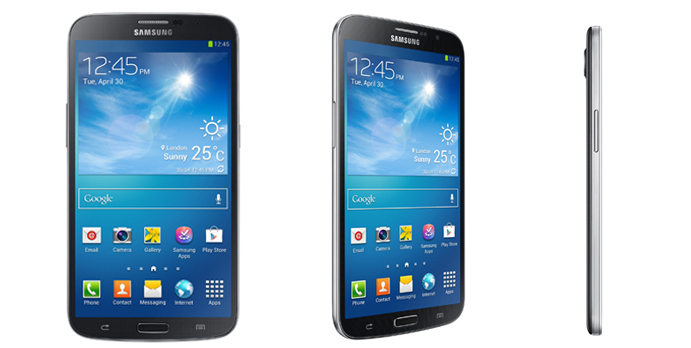
Samsung Galaxy Mega – the smartphone that thinks it’s a tablet – finally arrives in USA

The Samsung Galaxy Mega, the crazily-sized smartphone that was launched in Europe back in May, is arriving in the U.S. this month at AT&T, Sprint and US Cellular.

The ultimate option for those who really can’t work out whether they want a smartphone or a tablet, the device has a massive 6.3-inch screen, a 1.7Ghz dual-core processor, LTE, dual cameras (8MP on the rear, 1.9MP on the front) and is available with 8Gb or 16Gb storage (with a microSD slot supporting up to 64Gb). It is shipping with Android 4.2.2.

AT&T claims it will be the first U.S. carrier, offering the Mega for $24 per month with AT&T Next or $149.99 with a two-year agreement. Sprint will offer the Mega with unlimited 4G data on its Unlimited, My WaySM or My All-inSM plans. Full Samsung press release below …


Expand
Expanding
Close

Site default logo image

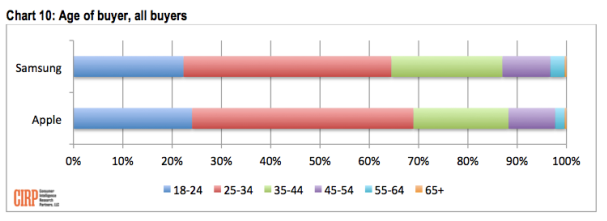
Samsung beats Apple in acquiring first-time smartphone owners, while Apple wins in conversions

New figures from CIRP reported in Fortune show that both Samsung and Apple get the bulk of their smartphone sales from existing users of their respective platforms, but Samsung does better at attracting featurephone buyers while Apple does better at converting Samsung owners.

Samsung gets 43 percent of its customers from existing Android users (a mix of Samsung loyalists and customer acquisitions from HTC and Motorola), virtually identical to Apple’s figure of 42 percent for existing iPhone users.

Samsung’s low-end Android handsets helped it acquire 37 percent of its customers from featurephone owners, against 26 percent for Apple. The bad news for the company was that Apple wins three times as many smartphone customers from Samsung as Samsung does from Apple: 20 percent switched from a Samsung handset to an iPhone, while only 7 percent switched in the opposite direction.

Samsung’s Next Big Thing ad campaign, aimed specifically at younger users, also hasn’t been as successful as the company might have hoped, with Apple maintaining its younger age-profile.

Report claims LG, not Motorola, will make the Nexus 5

Site default logo image

Following a report from usually reliable sources that Google would be using Motorola, not Nexus 4 manufacturer LG, to make its next-generation Nexus smartphone, conflicting reports today claim that isn’t the case. Vietnamese website Tinhte, which we know from previous Apple and Moto X related leaks has quite a solid track record, is claiming that Google will once again work with LG for the Nexus 5 and that the device will be based on the company’s recently announced LG G2.

According to the report, the Nexus 5 will include a 5.2-inch display, Snapdragon 800 processor– the same as the G2– but will sport “a thinner design” similar to the new Nexus 7. Earlier this month, a post from Taylor Wimberly, who happen to be correct with a few Moto X leaks, said that Motorola is working on the next-generation Nexus to be released in Q4 of this year. Google’s been known to weigh its options with several manufacturers prior to the release of a new Nexus device, but we’ll have to wait for more solid details before we know for sure. 
Expand
Expanding
Close

Site default logo image

Verizon HTC One coming August 22 for $199

https://twitter.com/VZWnews/statuses/368366543379247104

Verizon has finally announced a release date for the HTC One via its official Twitter account today. The device will become available on August 22 and will sell for $199 on the usual two year contract. There’s no word yet on an announcement for the new Moto X, but perhaps we’ll get confirmation before the release of the HTC One for those trying to decide between the two devices. AT&T confirmed this morning that the Moto X would arrive on August 23. 
Expand
Expanding
Close

AT&T confirms Moto X w/ Moto Maker customizations available on August 23

Site default logo image

AT&T just made things official for its release of Motorola’s recently introduced Moto X flagship smartphone. Starting August 23rd, AT&T will make the device available in black and white through its stores, but also online using the Moto Maker customization tool that will allow users to apply over 2000 different customization and color options. As a reminder, AT&T is currently the only carrier that is offering the Moto Maker customizations, which for many people is the big selling point for the Moto X. Other carriers and retailers are expected to get access to Moto Maker sometime later this year, but as of yet we haven’t received confirmation on specific dates.

The 16 GB Moto X will be available or $199.99 and the 32 GB Moto X for $249.99 on the usual two year contract. AT&T also noted that it will be carrying the Motorola Skip accessory that we told you about earlier today and will also offer one for free to everyone who purchases the device through Moto Maker.


Expand
Expanding
Close

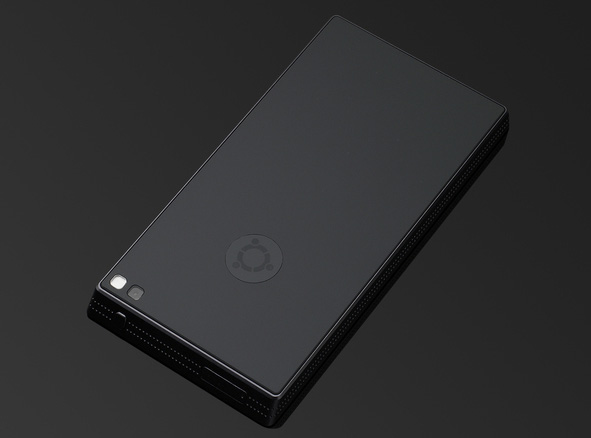
Dual-OS Android/Ubuntu handset sets new crowdfunding record – but probably still won’t be built

Site default logo image

The Ubuntu Edge, a handset developed by Linux enthusiasts to run both the Linux-based Ubuntu OS and Android, has beaten Pebble to set a new crowdfunding record of $10.3M, reports TNW.

The Indiegogo page has now accrued over $10.3 million in pledges, toppling the Pebble smartwatch as the highest every fixed crowdfunding campaign. The United States is the highest contributing nation, followed by the United Kingdom – where Canonical also has offices – and Germany … 
Expand
Expanding
Close

Motorola Skip accessory now available for the X Phone, unlocks the device with a single tap

Site default logo image

Update: It has now been officially announced – full blog entry below

Even though the device is not yet availability to the public, Motorola has just put a new X Phone accessory up for sale on its website. The “Motorola Skip” is described as a wearable accessory that you can use to  “unlock [your] phone with a single tap.” Details are still a bit scarce, but it looks as if the device is attached to a clip and simply gives you the ability to tap it to unlock your phone. According to the support document, the device will work via NFC. The Skip starts at $19.99, which seems a tad pricey for something that saves you all of a few seconds.


Expand
Expanding
Close