Stay up to date on news from Google headquarters. Be the first to learn about plans for Android, Google Plus, Google Apps, and more!
Stay up to date on news from Google headquarters. Be the first to learn about plans for Android, Google Plus, Google Apps, and more!

Continuing the pre-Android 5.0 Lollipop update extravaganza, Google this evening announced that it has updated the public AppCompat library to version 21. For those unfamiliar, this essentially means that it will allow for a more Material Design look and feel in apps on devices running pre-Lollipop versions of Android. This concept is exactly what we’ve been seeing in recent Google app updates, giving us the look of Material Design without running Android 5.0.
AppCompat (aka ActionBarCompat) started out as a backport of the Android 4.0 ActionBar API for devices running on Gingerbread, providing a common API layer on top of the backported implementation and the framework implementation. AppCompat v21 delivers an API and feature-set that is up-to-date with Android 5.0

Chardan Capital Markets analyst Jay Srivatsa believes that a combination of two Google investment decisions could signal that the company is planning to take “a different direction” with Google Glass, reports StreetInsider.
Srivatsa noted that Google had decided against further investment in Himax, a company specialising in controllers for conventional head-mounted micro-displays, at the same time as investing in virtual reality startup Magic Leap …
Expand
Expanding
Close


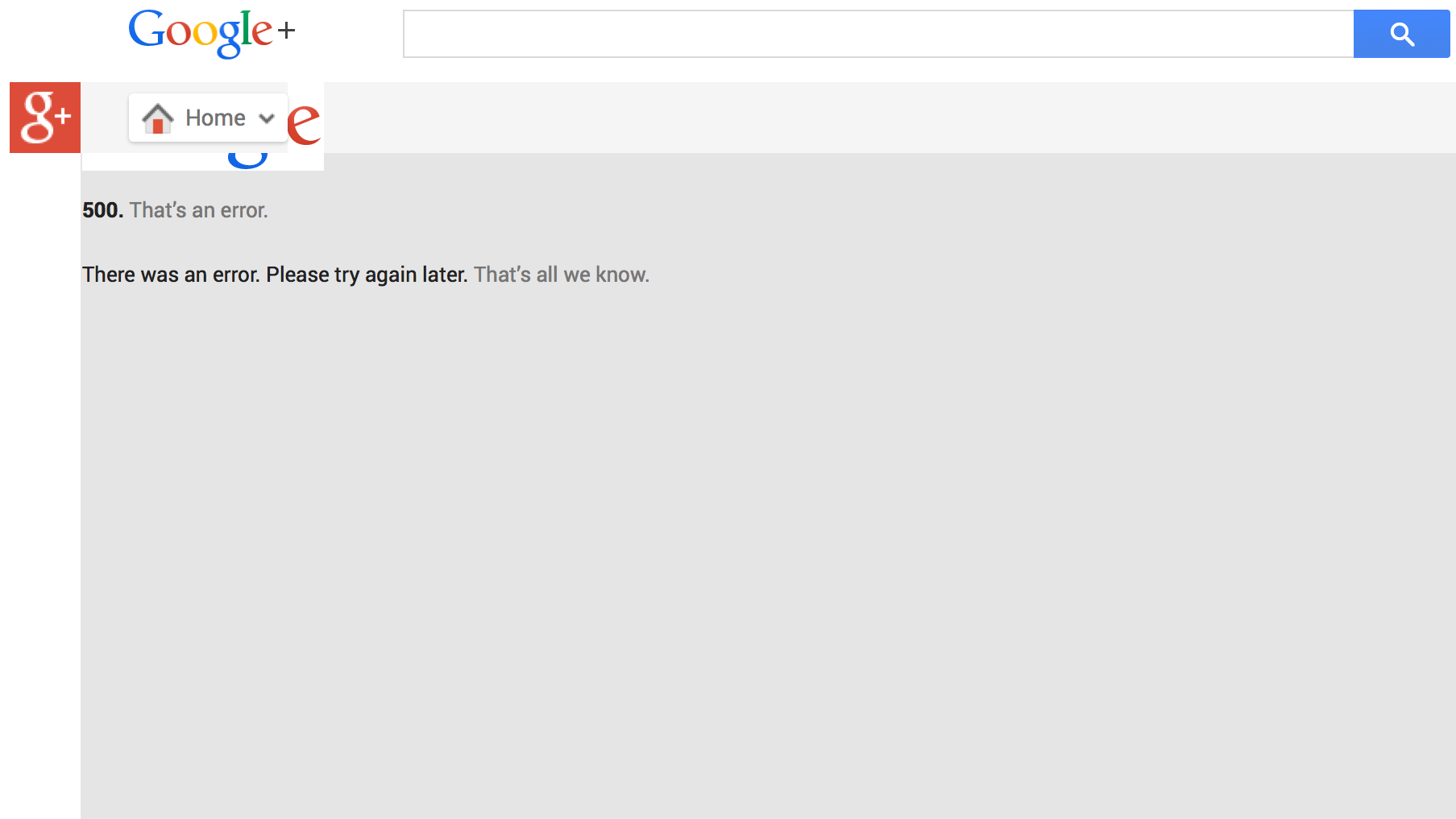
It appears that Google Plus and related services are down at the moment. This issue was recently discovered by 9to5Google and has been confirmed by several users on Twitter. Because Google Plus is down, it seems to be affecting any other connected services such as Hangouts and even YouTube comments…

Google announced as part of its acquisition of Songza in July that it would bring some of the music streaming service’s features that users love to Google Play Music. Three months later, the company has followed through with those plans by integrating Songza’s “Concierge” feature with Play Music, enabling users to create contextual expert-curated playlists for an improved listening experience across all platforms.
Expand
Expanding
Close
[protected-iframe id=”7770eb70df41976815fdd008a9ff8e18-22427743-8994189″ info=”https://vid.me/e/yx3″ width=”368″ height=”490″ frameborder=”0″ scrolling=”no”]
If you were wondering why Google hasn’t yet introduced an updated version of the Gmail app on Android to match its Material Design guidelines, the answer appears to be that it has something big in store. Gmail 5.0, which will be introduced as part of Android 5.0 Lollipop, will for the first time allow you to access all your email accounts within the same app, Gmail and non-Gmail alike …
Expand
Expanding
Close
Google has updated its How Google Fights Piracy report with details of its latest moves to remove pirate sites from its search results. A key element is improved automated demotion of sites that have received high numbers of DMCA takedown notices.
In August 2012 we first announced that we would downrank sites for which we received a large number of valid DMCA notices. We’ve now refined the signal in ways we expect to visibly affect the rankings of some of the most notorious sites. This update will roll out globally starting [this week].
The “most notorious sites” are likely to include rapidgator.net, filestube.com and dilandau.eu, each of which has, notes Gizmodo, received at least 11 million individual takedown requests …
Expand
Expanding
Close

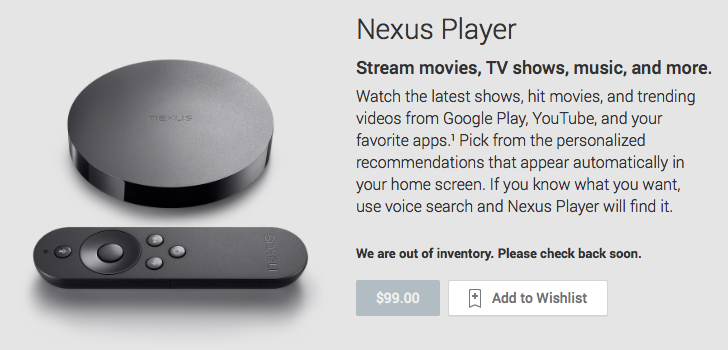
Shoppers hoping to get one of Google’s recently-unveiled Nexus Players may need to wait a little longer. A change to the product listing on the Play Store (via Android Police) now lists the device as being out of stock. A notice hidden in the fine print on the Player website points out that the Android TV box has not yet been approved for sale by the FCC.
Until the FCC gives Google the greenlight, the device won’t be able to be sold in the United States, though international markets will have different criteria that may or may not already be met. Understandably, Google hasn’t been able to give a time frame for when this approval might come, as the entire process operates on the FCC’s schedule.

Sol Republic, makers of a wide variety of speakers and headphones, announced in August 2013—alongside the announcement of the Moto X—that it would be partnering with Motorola “to redefine the music experience,” and “change the way music fans experience and share music.” 9to5Google has learned, however, this partnership may not have worked out so well. According to people familiar with the partnership, Motorola will soon be dropping its affiliation and contract with Sol Republic.
Sergey Brin has said in the past that Chrome and Android were likely to one day conjoin, but that it was likely going to be a slow process that occurred over time. According to a report this afternoon from The Wall Street Journal, Hiroshi Lockheimer, Google’s VP of engineering for Android, has now been put in charge of overseeing the Chrome engineering team as well.

https://www.youtube.com/watch?v=yxxRAHVtafI&feature=youtu.be
Behind the Mic: The Science of Talking with Computers
Language. Easy for humans to understand (most of the time), but not so easy for computers. This is a short film about speech recognition, language understanding, neural nets, and using our voices to communicate with the technology around us.
Just in case you didn’t get the memo, Google is really big on voice search. The company’s voice command-friendly Google Now tech is available across multiple platforms and according to some recent research, teenagers are crazy about talking to their smartphones, but how does it all work?
Speaking to your mobile devices are starting to become more commonplace, however there’s a lot of behind the scenes work that goes into developing speech recognition.
Following this morning’s report that Android Wear 2.0 would drop on November 3rd, Android Police now reports that Google is planning to release Android 5.0 Lollipop to a trio of Nexus devices on that same day. The report claims that Lollipop will hit the 2012 WiFi-only Nexus 7, the 2013 WiFi-only Nexus 7, and the Nexus 10 on November 3rd.
Google Fiber is about ready to launch in its third city, according to The Wall Street Journal. The service is apparently about 3 months behind original schedule, and sign ups will be launched this December focusing on the south and southeastern parts of the city. The company’s original announcement touted “mid-2014” for launch, but it looks like laying groundwork for a fiber internet service isn’t exactly an easy task.

As is tradition, Google now has a Loli statue in its Android statue garden commemorating the 5.0 L release of Android. Via +AlexRuiz.
Update: Here’s the video unveil
https://www.youtube.com/watch?v=vTxTLyLUjP4&feature=youtu.be
[youtube=https://www.youtube.com/watch?v=oq1wl5jQO8s]
Google has announced that Glass owners will soon be able to immediately view any notification from their Android phone using a new feature, Notification Sync.
Max sent you a WhatsApp message, marycam81 tagged you in a photo, your Lyft has arrived… these are just some of the reasons for pulling out your phone. You want to know about the things that matter to you, but you don’t want to be distracted by your phone when you could be enjoying the moment.
Today we’re launching Notification Sync on Glass, which means you can see your Android phone app notifications at a glance …
Earlier today it was reported that Google would finally unveil the Nexus 6 for all to see tomorrow, October 15th. Thanks a variety of leaks, including one of our own, we already know almost everything about it except for pricing and carrier availability. This evening, however, AT&T appears to have inadvertently outed the device on its website, revealing some of that information.
According to a new report out of Forbes, Google will announce both the Nexus 9 tablet and Nexus 6 smartphone tomorrow. The report claims that Google had originally planned to hold an event for the devices, but decided it against it due to it wanting to continue to fine tweak Android “L” until the last-minute. Instead, both of the devices will be announced via a blog post.


Update: Resolved.
Google Drive is currently experiencing a service disruption for many users. Google first confirmed the problem earlier this morning noting that it’s “investigating reports of an issue with Google Drive.” Users trying to access various Google Drive services might receive a “500 errors and latency,” according to Google’s App Status Dashboard.
Google’s latest update on the outage through its Google Apps status website said the company is continuing to investigate and will provide an update later today with more information on the issue.
The service isn’t down for everyone, but we’ll update here when Google resolves the problem or provides any further updates. You can check the status of Google Apps through its Apps Status Dashboard here.

FBI Director James Comey isn’t backing down from his position that Google and Apple are wrong to encrypt customer smartphone data preventing law enforcement agencies the possibility of access if requested. After last month sharing that the FBI was in talks with the two companies to discuss concerns with marketing devices as being inaccessible to third-parties including the government, the FBI Director spoke with CBS News in an interview where he continued to make the case against such encryption…
Expand
Expanding
Close
Google has confirmed to Engadget that it is trialling a feature which detects when someone is searching for symptoms of an illness, and proactively offers a video chat with a doctor.
The message states that “all costs are covered by Google during this limited trial,” suggesting that the service will be a paid one if and when it launches …
Expand
Expanding
Close
Google has updated its Play Store app with a more comprehensive Material Design makeover, and a What’s New section that is both clearer and easier to use.
Version 5.0.31 sees a new, flat Play Store logo, together with flatter icons in the sidebar, and the categories now use the bright colors of the Material Design palette …
Expand
Expanding
Close
Google has updated its transparency report for the controversial ‘right to be forgotten‘ ruling, requiring it to remove links to sensitive information about individuals when it is considered out-dated or irrelevant.
The company revealed that it has now received 144,907 requests to evaluate almost half a million links, and that it has so far removed 41.8% of those. Links to facebook topped the list, with 3,331 URLs removed from search results …
Expand
Expanding
Close
The Wall Street Journal has published a new report claiming that Google plans to release the Nexus 6 at some point this month. The article, citing three sources, is incredibly sparse on details, but does corroborate all of what we exclusively reported last month.
Most likely a nod to Google’s recent investment in Polar, Google+ members can now create interactive polls for their friends and followers on the company’s social network. Polls are limited to five choices and can be decorated with photos to make them unique and appealing. Topics can be just about anything you can dream up, but we’re expecting to see a lot about food, sports, pop culture and of course technology.
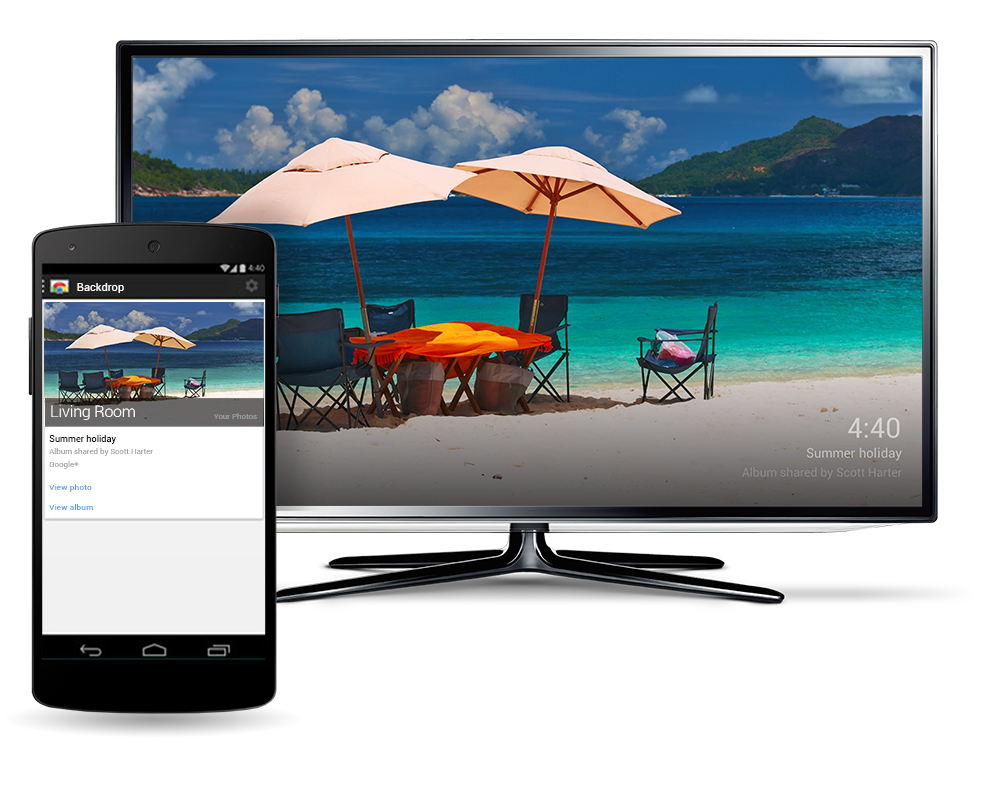
(<a href="http://chrome.blogspot.ca/2014/10/turn-your-tv-screen-into-beautiful.html" target="_blank">via Chrome blog</a>)
Google today updated the Chromecast app for Android users adding a feature announced earlier this year at Google I/O called Backdrop. When the Chromecast HDMI streaming stick isn’t playing content like Netflix or Pandora Radio through your TV, it already displays the current time and featured photos as a screen saver, but now Chromecast users can display additional content like weather conditions and news headlines on Chromecast-connected TVs. Chromecast also now supports using your own photos from Google+ albums as the backdrop.
Expand
Expanding
Close