Lenovo


The original Moto 360 in champagne gold
The Moto 360 leaks just won’t stop. We’ve seen images front, back and all-around of the smaller Moto 360S and larger Moto 360L, but now Evleaks (by the way, didn’t he retire or something?) has shared images of what could be one of the more expensive Moto 360 variants. They’re probably not Apple Watch Edition-level expensive, but more likely close to the price range of the Huawei Watch (another Android Wear device that’s slated to have its availability and pricing detailed at IFA).
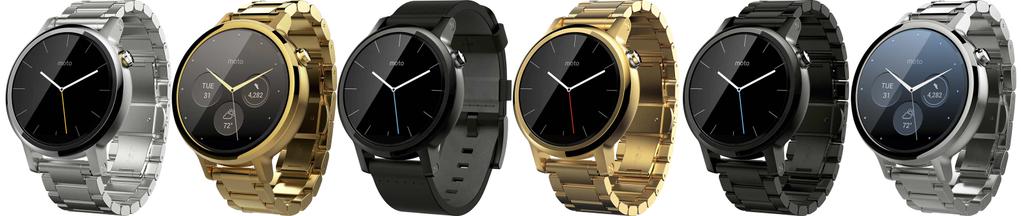
As you can see above, there looks to be at least a couple of what are assumably gold-plated models in both the “small” and “large” sizes. As we told you yesterday, the small device is slated to have a 42mm body, while the large is expected to sport a 46mm case. All of the above watches have link bracelets,but Motorola could still offer these with a leather band, perhaps through Moto Maker. We saw a lot of watches leaked in renders yesterday, but none of them looked quite like the gold ones above.
Based on an image we shared with you earlier today, it seems Motorola is prepping to show off the Moto 360 on September 8th. We’re on the ground in Berlin already, and we’ll be keeping you up to the minute on the latest in the world of Android, Android Wear, and anything else that might catch us by surprise over the next week.

Take out your salt shakers, but new images have made their way onto Reddit picturing what is purportedly the case of Motorola’s next iteration to the Android Wear-powered Moto 360.
Motorola and its parent company Lenovo recently opened a new manufacturing facility in India that is predicted to output as many as 6 million smartphone units annually. Motorola India published a video to YouTube today showing off the plant — in it you can see some of the individual steps that go into putting together a 2015 Moto E, much of which still seems to be done by hand.
The new plant has been created in support of a “Made in India” campaign that the government there has been pushing in order to get more companies manufacturing in India. The campaign so far has attracted big names including Microsoft, Xiaomi, LG, ASUS, and several others. India’s government hopes increased manufacturing investment in a handful of sectors including electronics will spark job creation and GDP growth, a good measure of living standards that is still low in the country. Lenovo earlier today tweeted a picture from a press event celebrating the company’s new plant.
Maybe this means India will finally get access to Moto Maker?
Two products with the model numbers 360S and 360L have passed through the telecommunications agency Anatel in the past week. While much information has been omitted from public eyes, a couple details lead us to believe that Motorola is reaching the launch of a successor to last year’s Android Wear-powered Moto 360 smartwatch — and in two sizes.


While Apple’s iPad continues to lead the tablet market, according to new data from IDC, its marketshare has dropped a few points year-over-year, and the overall market for tablets saw negative growth, based on units shipped globally. That’s according to second quarter 2015 unit shipments and marketshare over the same quarter a year ago, as Apple shipped 10.9 million units versus 13.3 million units during the second quarter of 2014. While the iPad continues to lead in the tablet space, IDC’s data shows Apple’s market share dropping nearly 3 points from 27.7% to 24.5%.
Samsung, the number two player in the tablet space, similarly saw declines in both units shipped and market share from Q2 2014 to Q2 2015. The Korean company slipped by a million tablets during the quarter year-over-year, falling from 8.6 million units to 7.6 million units, while its market share dropped a point from 18% to 17% …
Expand
Expanding
Close

It’s early but we’re here at the Moto ‘Choose a Better Relationship” event in NYC. We’re obviously expecting a new Moto X and Moto G but we’re really excited to see what a better mobile relationship entails. We’re live! Head below for the latest.

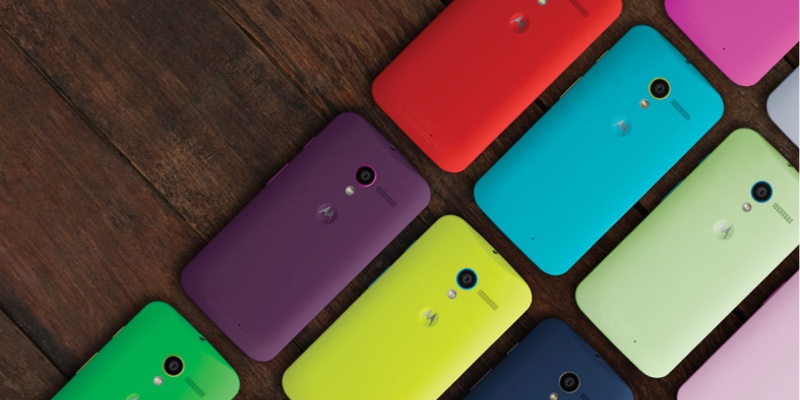
A new report claims that Motorola will be launching its next budget-friendly Moto in stores on July 29th, just one day after its launch event. But that’s not the most exciting part of the story. If the leaked retail memos are genuine, customers will be able to walk in to stores and order their personalized Moto Maker device from a physical, brick-and-mortar store…
Expand
Expanding
Close
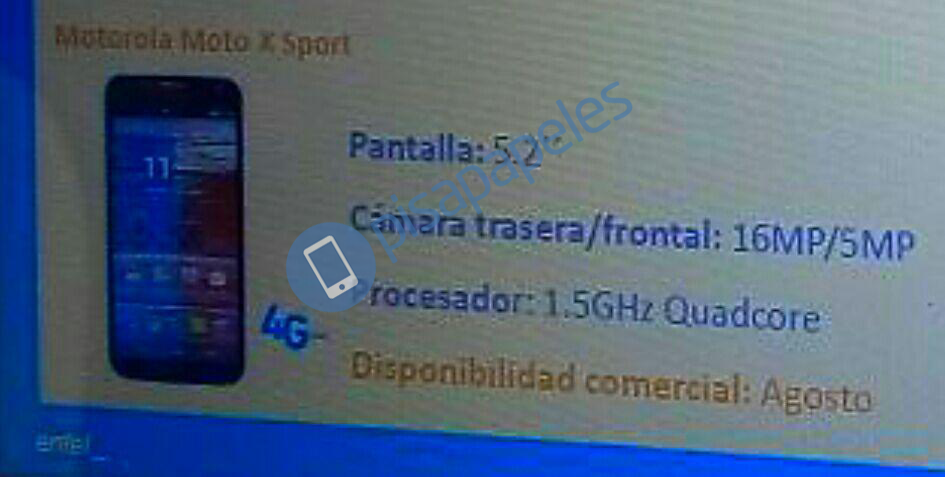
If a recent — slightly sketchy — report is anything to go by, Motorola could be set to announce new versions of its popular stock Android phones. A new Moto X “Sport” and a new Moto G have shown up in leaks which come from Chilean operator, Entel.
Expand
Expanding
Close

Lenovo has today shown off a couple of product prototypes that fall somewhere on the scale with ‘interesting tech’ at one end and ‘batsh*t crazy’ at the other… Buck Rogers style.
The first is Magic View, a smartwatch with a second display – a really tiny one – embedded in the strap. The idea appears to be that when the main display alerts you to new content, you hold the tiny screen up very, very close to your eye to view that content on the second display. I’m just waiting for someone wearing Google Glass and someone with their smartwatch in front of their nose to walk into each other …
Expand
Expanding
Close
Lenovo’s first full quarter since it completed the acquisition of Motorola from Google brought good news and bad: smartphone shipments and revenue up, but profits down.
TechCrunch reports that Lenovo shipped a record 18.7M smartphones in the final quarter of 2014, reported now, with year-on-year revenues up 21% – but profits fell 37% …
Expand
Expanding
Close
An image was supposedly posted today by Lenovo CEO Yang Yuanqing on Chinese microblogging site Weibo (via MyDrivers), showing what looks to be an unreleased prototype of the Moto 360 smartwatch. It’s not clear whether or not this is indeed an upcoming version of the device (it’s almost surely a prototype), but it definitely looks to be a bit different than what’s currently available…
Expand
Expanding
Close
Qualcomm, which licenses 3G and 4G communications patents to smartphone manufacturers, has been fined almost a billion dollars by the Chinese government in an anti-trust case. The company was found to have abused its dominant position in wireless chip technology by charging “unfairly high” licensing fees to manufacturers of smartphones and tablets.
The 6B Yuan ($960M) fine is the largest fine ever imposed on a foreign company, reports the Guardian. China’s National Development and Reform Commission (NDRC) said that the fine was calculated as 8% of Qualcomm’s 2013 revenue in China. China is responsible for around half of Qualcomm’s total revenue.
Chinese regulators said that Qualcomm bundled together patent licenses, forcing Chinese companies to buy unwanted licenses in order to get the core 3G and 4G ones they needed. Qualcomm said that it was disappointed by the ruling, but has agreed to separate out its licenses to allow companies to purchase only the ones they need.
The ruling should reduce costs for Chinese smartphone makers, but it isn’t known how significant the saving may be, and it’s unlikely to show up as a price-reduction for consumers.
Photo: Mike Blake/Reuters

Lenovo this evening has reported its calendar Q4 2014 earnings, and as is well-known, Motorola is now a part of the company, so the earnings are bit more interesting this time around. According to the earnings release, Motorola Mobility sold 10 million smartphones last quarter, which is up 118 percent compared to the year ago quarter.

IDC is out today with its numbers on tablet shipments for Q4 2014 showing Apple & Samsung remained on top of the market both last quarter and throughout 2014 despite a slight drop in overall market share.
Apple sold 21.4 million iPads during the holiday quarter last year, which gave the company around 28% market share compared to 33% with 26 million units sold during the same quarter last year. Apple beats out number two Samsung, according to IDC, which grabbed 14.5% of the market in Q4 with 11 million units shipped. Samsung also dipped in overall market share from 17.2% with 13.5 million units shipped in the year ago quarter.
Expand
Expanding
Close
At CES 2015, Lenovo has unveiled a handful of new Android-powered devices, including both phones and tablets. First off, the company has announced the Vibe X2 Pro (seen above, left), which is an updated version of the Vibe X2 we saw back at IFA. The X2 Pro features a 5.3-inch 1080p display and is powered by a 64-bit 1.5GHz octa-core Snapdragon 615 processor. There are also two 13MP cameras on the device, one on the front and one on the back. The Vibe X2 Pro launches in April outside the U.S. and is powered by Android 4.4 with Lenovo’s custom skin on top.
Many Samsung employees are expected to lose their jobs in the next week or two as the company is set to announce its annual personnel changes early next month. The company recently reported a 74% drop in mobile profits and is planning to produce 30% fewer smartphone models next year in the face of increasing competition from Chinese brands Xiaomi, Lenovo and Huawei.
Dramatically slowing sales of its flagship handset led the company to shore up its share price with a $2B stock buyback …
Expand
Expanding
Close
While Google confirmed the $2.9B sale of Motorola way back in January, it is only today that the last piece of paperwork was signed and the formerly American-owned Motorola officially became a wholly-owned subsidiary of Chinese electronics manufacturer Lenovo.
Announcing the completion of the acquisition on the Motorola blog, the company said that its headquarters would remain in Chicago, along with its offices in Silicon Valley …
Expand
Expanding
Close

Almost a year ago, Lenovo announced that Ashton Kutcher was one of its newest product engineers. At first, the move felt like another bogus celebrity title with a major company (remember when BlackBerry named Alicia Keys its creative director?), but the Dude, Where’s My Car? star actually has some tech cred. Invested in a large number of successful startups, Kutcher also studied biochemical engineering at the University of Iowa.
Chinese company Lenovo, which is in the process of buying the Motorola brand from Google, has reported a 23 percent year-on-year increase in first-quarter profits to $214M, reports Reuters. The company also said that worldwide phone sales were up 39 percent, in line with recent IDC numbers.
While Lenovo recently became the market leader within China, CEO Yang Yuanqing said that the company will in future be focusing on more profitable overseas markets …
Expand
Expanding
Close
As Lenovo’s acquisition of Motorola nears closing, today Motorola shared some updates on changes to its leadership. Announced in its press release is a promotion for Charlie Tritschler to Senior Vice Present of Product Management overseeing product development on all the company’s products. Tritschler joined Motorola in March of 2013 from Amazon’s Kindle team. Motorola notes that “Charlie has been one of the leading forces behind Moto G and Moto E.”
The company also announced it’s adding regional sales heads as three new members of its senior leadership team and also making Adrienne Hayes the SVP of Marketing and Communications of a new marketing and communications team responsible for the company’s brand and advertising worldwide.
These changes ensure that our leadership team accurately reflects our priorities and organization structure, and put us in the best possible position to continue growing our success. Congratulations to all the leaders in new roles, and my thanks to everyone who helped bring us this far.
Missing from Motorola’s new executives page is Bill Morgan who was previously the company’s Senior Vice President of Marketing overseeing the brand, advertising, and communications role that now seems to be filled by Adrienne.
A report earlier this week claimed Google and Motorola are beginning work on a 5.9-inch Nexus device codenamed Shamu as Motorola transitions to its new home at Lenovo.
Following releasing its second quarter data for tablet shipments worldwide, IDC today released its Q2 2014 report for smartphone shipments during the three month period that ended in June. The numbers line up with Apple’s fiscal Q3 earnings call that took place earlier this month where the company reported iPhone sales of 35.1 million units for the quarter. With 295.3 million units shipped total during Q2, IDC notes that both Samsung and Apple lost share to the smaller Chinese manufacturers:
Expand
Expanding
Close
Over the weekend, a report was published claiming that Google and Motorola were working together on a 5.9-inch Nexus device codenamed the Shamu. This afternoon, The Information published a separate report corroborating this weekend’s source.
Lenovo’s $2.91 billion purchase of Motorola Mobility from Google is still pending regulatory approval, however it looks like the company is already mapping out a new strategy. Despite being one of the world’s largest PC makers, Lenovo is halting the development of Windows tablets under 10 inches in size and migrating its remaining inventory to markets like Brazil, China and Japan where there’s more of a need for low-cost slates.
Reuters reports that almost 200 Samsung managers have “voluntarily” handed back a quarter of their first-half bonuses in anticipation of what is expected to be the company’s worst quarterly profit for two years.
The decision to return some of the bonus was partly a gesture to demonstrate that managers are taking responsibility for the earnings decline, and partly a way to show that management will work harder, the source told Reuters on Friday, declining to be identified due to the sensitivity of the matter.