Stay up to date on news from Google headquarters. Be the first to learn about plans for Android, Google Plus, Google Apps, and more!
Stay up to date on news from Google headquarters. Be the first to learn about plans for Android, Google Plus, Google Apps, and more!

Google Play is offering a spontaneous collection of deals today for apps, music, and books through its “Longest Day of the Year” sale.
Today is more commonly known as “Summer Solstice” for the Northern Hemisphere, which is when the longest period of daylight occurs, and Google is celebrating by slashing prices. A slew of popular apps are now just 99 cents each, “beach reads” are $1.99 a piece, and many famous albums are marked at $2.99 a title.
A selection of the discounted apps includes Draw Something and Shazam Encore, while albums span everything from the Rolling Stones’ “Brussels Affair” to Rihanna’s “Loud.” Books are more sparse, however, with “Endure” by Carrie Jones and “Summer Days” by Susan Mallery. But, hey—a deal is a deal.
Check it out:

[youtube=http://www.youtube.com/watch?v=eYEtiWUHCRM&feature=player_embedded]
Google just announced new custom themes will come to Gmail that allows users to upload their own background images (or select from Google+ photos), browse from a selection of “Featured Photos,” or enter a URL of any image. The video above pretty much speaks for itself, but Google noted it would roll out the new themes for users over the next couple of days with both Light and Dark options.
You can upload your own images directly, select from your Google+ photos or simply paste any image URL. Or, if you don’t have a particular image in mind, you can browse our searchable Featured Photos section to find one that speaks to you. With so many great options, it may be hard to choose, so to get a sense of the images available, try searching for ‘hdr scenery’ or ‘bokeh wallpaper’ in the Featured tab.
Google just announced on the official Google Mobile Blog that it is releasing a Google Offers app for iPhone. The app is available on the App Store now for United States users, which is just in time to take advantage of today’s Netflix deal that offers movie theatre tickets for $1 to new subscribers (free one-month trial available here). Google outlined the available cities and some features for the iPhone app below:
Cities available (US only): Atlanta, Austin, Baltimore, Boston, Brooklyn, Charlotte, Chicago, Columbus, Dallas, Denver, Detroit, Fort Worth, Houston, Indianapolis, Kansas City, Long Beach, Los Angeles, Miami, Milwaukee, Minneapolis, NYC, Philadelphia, Phoenix, Pittsburgh, Portland, Oakland / East Bay, Oklahoma City, Omaha, Orlando, Sacramento, Salt Lake City, San Antonio, San Diego, San Francisco, San Jose, Seattle, St. Paul, St. Louis, Tampa and Washington D.C.
[youtube=http://www.youtube.com/watch?v=8oPRJh3eCjA&feature=youtube_gdata]
The U.S. Patent and Trademark Office just granted Project Glass a patent that protects the trackpad feature of Google Glasses.
 Google co-founder Sergey Brin appeared with his wife, Anne Wojcicki, on California Lieutenant Governor Gavin Newsom’s Current TV show last month to briefly let the politician demo a pair of Google Glasses. During “The Gavin Newsom Show” interview (above), Brin gave the world a glimpse as to how the space-age spectacles work.
Viewers immediately noticed a trackpad-like control on the right side of the augmented-reality glasses, but the USPTO just protected the feature by granting Project Glass a patent for the trackpad. The patent covers a sensor device, for either side, that tracks gestures and finely controls the heads-up display. The Mountain View, Calif.-based Company also detailed several gestures that work with the trackpad—such as scrolling, tapping, or flipping—to provide visible, semi-transparent options.
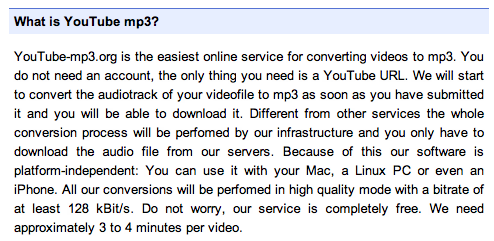
Google wants to stop YouTube-MP3.org from ripping audio within YouTube’s videos.
TorrentFreak obtained a June 8-dated letter where the Mountain View, Calif.-based Company threatened to take legal action against the conversion website, which, according to Google’s numbers, rakes 1.3-million daily visitors.
Google’s video-sharing platform is free and provides content that is embeddable or accessible through its API, while YouTube-MP3.org is free, pulls audio from YouTube videos, and then converts those files into downloadable MP3s. Apparently, despite the API that gives developers access to many features, pirating any sound directly violates YouTube’s Terms of Service agreement.
The leaked letter addresses the website’s owner, Philip. In the warning, YouTube’s Associate Product Counsel Harris Cohen cited the platform’s terms for API, where he maintained that separating, isolating, or modifying “the audio or video components of any YouTube audiovisual content made available through the YouTube API” is strictly prohibited.
Cohen threatened “legal consequences” for YouTube-Mp3.org, and he gave the website a week to comply. TorrentFreak spoke with Philip, who said YouTube does not want to negotiate. He also mentioned Google immediately blocked his website’s servers from accessing YouTube.
[youtube=http://www.youtube.com/watch?v=ZfQrhMb18dY]
Google’s Vice President of Product Management Bradley Horowitz announced a Google+ partnership with Flipboard and teased an enterprise version of the social network at Le Web 2012 in London this morning, but he also demonstrated Hangouts…on an iPad.
According to TheNextWeb, the Flipboard partnership will stream Google+ feeds into the app as part of the Mountain View, Calif.-based Company’s new Google+ APIs that now sport limited availability for developers. The integration will also allow Flipboard users to get access to posts, media, and other data without visiting Google+ directly. Other social networks on Flipboard include Facebook, Twitter, Instagram, and Tumblr.
Horowitz further demonstrated Google+ Hangouts at the conference with an iPad. TheNextWeb’s Jamillah Knowles was on-hand to ask the executive why he chose Apple’s tablet over an Android device for the conference, but his response was vague (as heard in the audio clip above).
The Googler was also obscure in regards to numbers. He noted the 170 million-user base for Google+ as a “stale” estimate, and he would not give specific stats on whether Google+ apps prod interaction. He did mention, however, that Google has dreams for its social network in the enterprise.
We heard several reports in the past that Google was working on various evolutions of its Voice Actions platform for Android. We heard of “Project Majel” in December, which, according to reports, is the codename for a new voice-controlled assistant app similar to Siri. In March, TechCrunch reported on a similar project dubbed “Google Assistant.” According to a new report from the Wall Street Journal, Google is accelerating its plans to launch a competitor to Apple’s Siri:
Google, meanwhile, has accelerated plans to launch its own Siri competitor that would work on Android-powered devices, people familiar with the matter have said.
The report does not offer any additional details on the project, but it noted: “In coming weeks, Google is expected to unveil a lower-priced Android tablet that it developed with Asustek Computer.” Google recently acquired Clever Sense, the makers of popular local recommendations app Alfred, and some have speculated the technology could be included in Google Siri competitor. Many expect the Google tablet, mentioned by WSJ, to unveil later this month at Google I/O, where we could also possibly see some of Jelly Bean and this rumored assistant feature.
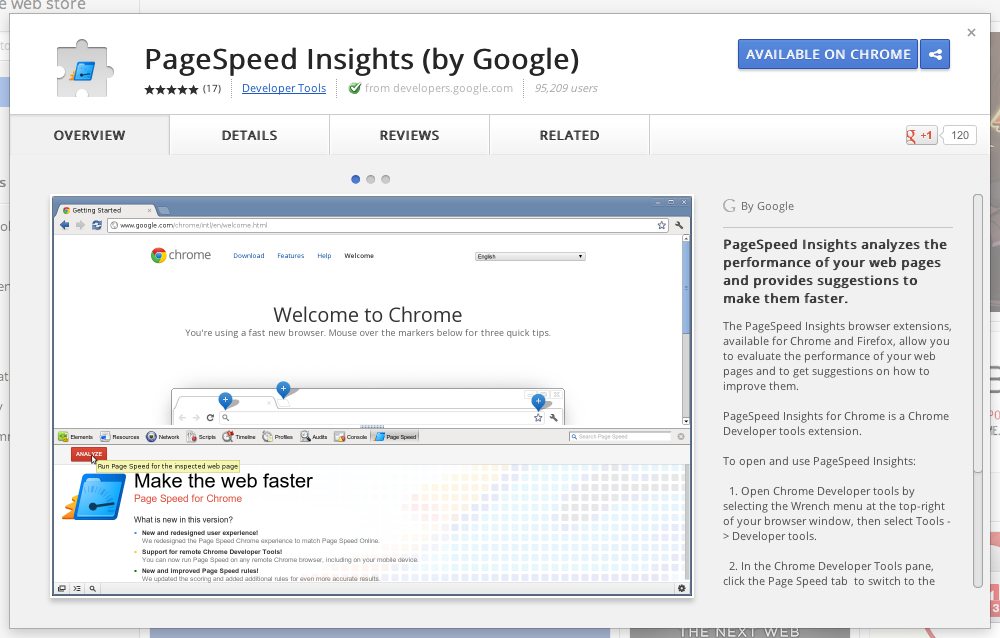
Google launched a preview of its PageSpeed Insights Chrome Developer Tools extension last year, but it just released version 2.0 today.
The add-on analyzes web page performance and offers specific suggestions on how to make them load faster. Google Software Engineers Libo Song and Bryan McQuade gave an example on the Official Developers Blog:
For instance, PageSpeed Insights can inform you about an expensive JavaScript call that blocks the renderer for too long, remind you about that new photo on the front page of your web site that you might have forgotten to resize or optimize, or recommend changing the way you load third-party content so it no longer blocks the page load. PageSpeed Insights for Chrome is a Developer Tools extension that analyzes all aspects of the page load, including resources, network, DOM, and the timeline. If you’re already familiar with the Developer Tools, you’ll find that PageSpeed Insights integrates with a toolset you’re already using.
PageSpeed Insights also runs the open-source PageSpeed Insights SDK securely to optimize images, CSS, JavaScript and HTML resources on a website. The PageSpeed Insights extension is available now on the Chrome Web Store.
According to a press release from New Jersey-based Magnolia Broadband (via TNW), Google acquired the company’s more than 50 patents related to its “Mobile Transmit Diversity beam forming technology.” The cost of the IP acquisition was not disclosed, but Magnolia noted it has invested more than $60 million in patenting and developing the technology. The acquisition was rumored earlier this month but just confirmed by Magnolia today.
As for what Google will get, the press release said the patent portfolio consists of over 10 years of R&D, testing, and development of “methods for increasing spectrum utilization (network capacity), expanding coverage, improving uplink transmission speeds at the cell edge, and improving device battery life.” Google will have access to the technology through the deal, but Magnolia will own the patents and continue to license them to other companies.
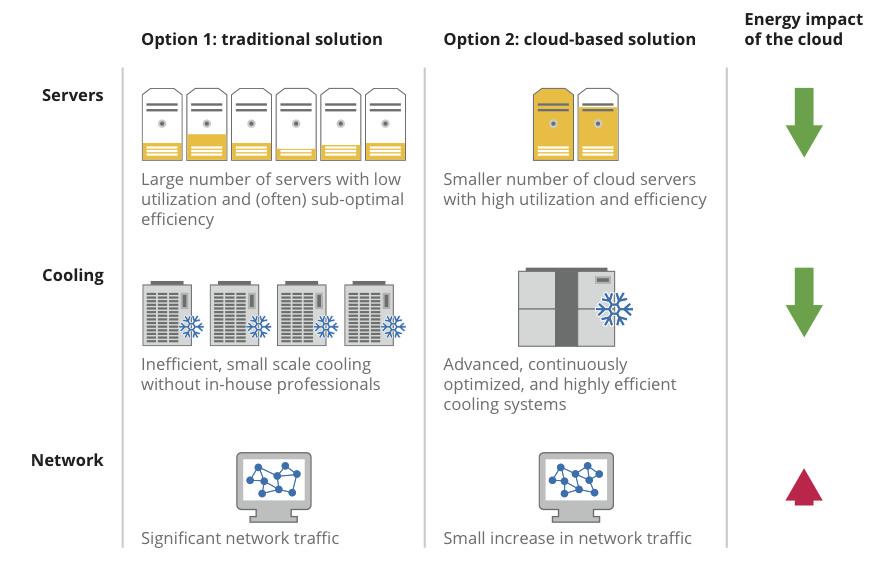
Google’s reduction of energy use for servers and server cooling.
Google wants businesses to make Google Apps their primary productivity suite, so the company is recruiting at full swing today with a new blog post that discloses a few stats about its energy efficiency.
Google Apps is a Google service that features several Web applications like traditional office suites. The services vary per edition but generally include Docs, Gmail, Calendar, Talk, Sites, Groups, Video, and Marketplace. Its popularity among businesses and academicians is rapidly increasing due to enhanced sharing features, accessibility, and cost.
According to Senior Vice President for Technical Infrastructure Urs Hoelzle on the Official Google Blog:
At Google, we’re obsessed with building energy efficient data centers that enable cloud computing. Besides helping you be more productive, cloud-based services like Google Apps can reduce energy use, lower carbon emissions and save you money in the process. Last year, we crunched the numbers and found that Gmail is up to 80 times more energy-efficient than running traditional in-house email. We’ve sharpened our pencils again to see how Google Apps as a whole—documents, spreadsheets, email and other applications—stacks up against the standard model of locally hosted services. Our results show that a typical organization can achieve energy savings of about 65-85% by migrating to Google Apps.
Hoelzle further explained how lower energy use equals less carbon pollution. The executive supported this statement with an anecdote about the U.S. General Administration. It switched to Google Apps for Government to save $285,000 annually at a 93 percent cost reduction, and it reduced energy consumption by 90-percent and carbon emissions by 85-percent.
As noted in a recent post on the Official Google Blog, Google recently made changes to the Transparency Report that launched a couple of years ago to report data on “government requests.” The interactive reports, which are available here, already included user data requests from courts and government agencies, real-time and historical traffic from various Google services worldwide, and removal requests from both governments and copyright owners. Google is adding data related to government requests today for user information and the removal of blogs posts and videos made from July 2011 to December 2011:
Today we’re releasing data showing government requests to remove blog posts or videos or hand over user information made from July to December 2011… Unfortunately, what we’ve seen over the past couple years has been troubling, and today is no different. When we started releasing this data in 2010, we also added annotations with some of the more interesting stories behind the numbers. We noticed that government agencies from different countries would sometimes ask us to remove political content that our users had posted on our services. We hoped this was an aberration. But now we know it’s not… For the six months of data we’re releasing today, we complied with an average of 65% of court orders, as opposed to 47% of more informal requests.
An example of some of the requests is outlined by Google’s Senior Policy Analyst Dorothy Chou:
Expand
Expanding
Close
Speaking at the Reuters Media and Technology Summit yesterday, YouTube chief Salar Kamangar talked about the video service’s desire to include subscription-based offerings that would possibly rival traditional cable channels. Reuters explained:
Cable channels with smaller audiences will in the future migrate to the Web and become available on an “a la carte” basis, Kamangar said at the Reuters Media and Technology Summit on Thursday… Some of those channels, which Kamangar said receive little or no affiliate fees from cable distributors, could be one of the viable offerings for Google-owned YouTube as it weighs selling subscriptions to some of the hundreds of millions of people who watch videos on the website every month.
The report also noted YouTube is thinking about charging a fee for access to some of its recently launched partner content channels:
Expand
Expanding
Close
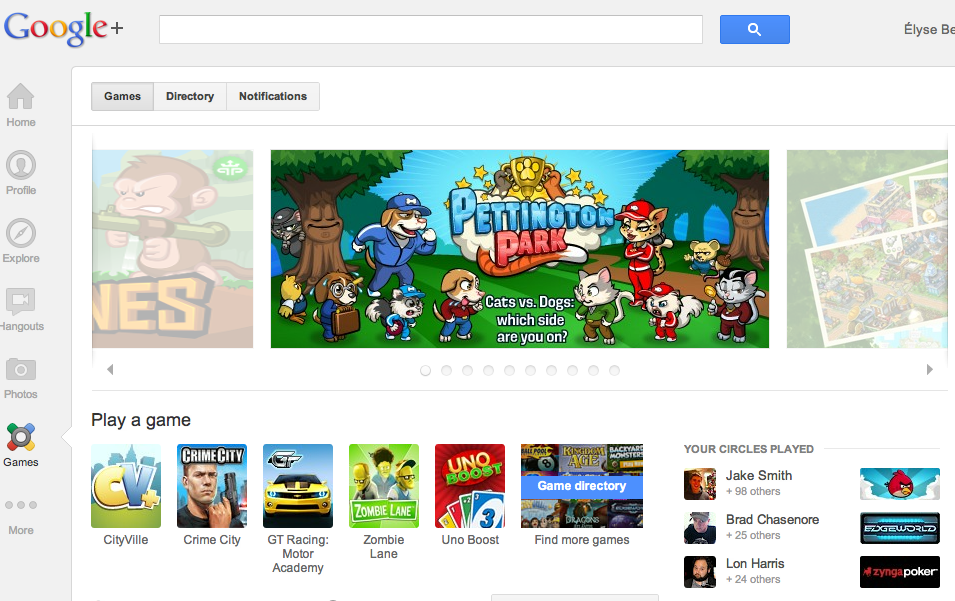
Developers Wooga and PopCap recently announced that they are pulling a few games from Google+.
Wooga develops free-to-play browser-based games for social networks and is currently the world’s fourth-largest game developer by monthly active users on the Facebook platform as of April. The Berlin, Germany-based firm confirmed that it took down Monster World from Google’s social network offerings and said more removals are coming.
“We decided to remove certain games from Google+ because we have a much larger following on Facebook and they are active users,” said a Wooga representative to AllThingsD.
According to Social Games Observer, Wooga will further cut Bubble Island and Diamond Dash on July 1. Meanwhile, PopCap Games is a Seattle, Wash.-based subsidiary of Electronic Arts that also confirmed it is eliminating titles from Google+. The company revealed its Bejeweled game would no longer be live starting on Monday.
“PopCap has decided to suspend Bejeweled Blitz on Google+ to redeploy our resources to other adaptations of Bejeweled. Certainly, Google is a valuable gaming partner for PopCap and EA, and we’ll continue to develop for Google platforms,” explained a PopCap spokesperson to AllThingsD.
Hangouts on Google+ are often touted as one of the social networks flagship features, which is why it is not too surprising that Google has now integrated YouTube into the feature. Available through a “YouTube” link at the top of the Hangouts screen, after users have allowed access to the app, members of the hangout can add videos for everyone to view in a familiar YouTube playlist on the right. The playing video airs in the large part of the screen above the active members, while everyone sees and can edit the same videos or playlist. Google explained:
Everyone can add videos in the Hangout through a search tool in the app, or remove the videos you don’t like. All your friends in the Hangout can drag and drop videos to sort the order in the playlist, or skip forward or backward to play the next one. Click the “Push to talk” button to chat with the group to give props to the best curator, or to hand out reprimands to the friend who keeps adding the 10-hour Nyan Cat video.
As noted by BGR, Google’s own Matias Duarte announced on his Google+ page that Android, specifically Ice Cream Sandwich, has been awarded the Gold Prize for best platform at the Parsons School of Design’s 2012 User Experience Awards:
Ice Cream Sandwich won the Gold Prize for best platform experience at Parsons’ 2012 User Experience Awards! Way to go team!
Thanks to Parsons for hosting a great event and thanks to IXDA, NYC UPA, and NYC CHI. We need more celebrations of UX like this!
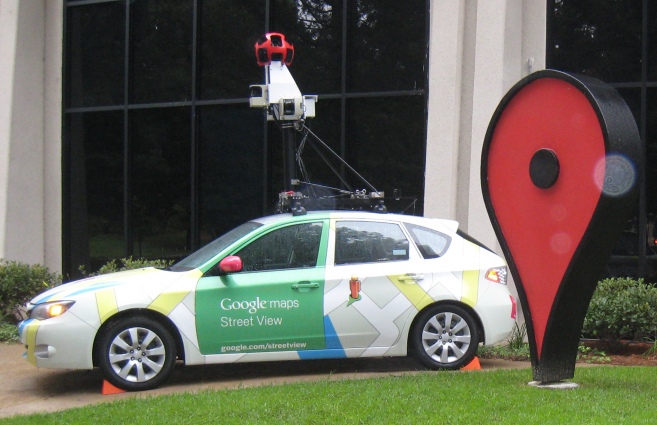
Google released sworn denials (PDF) on Tuesday from nine Googlers who claimed they had no knowledge about data mining in the Street View mapping project.
Google Street View is a service highlighted in Google Maps and Google Earth that offers panoramic views of streets. It launched in 2007 in the United States and expanded to many cities and rural areas worldwide. The project ambitiously maps the world’s streets with photographs, but the plotting venture allegedly cropped unencrypted Internet data from wireless networks for roughly three years until 2010.
Google’s Street View automobiles gathered sensitive information, including private dispatches, as it roamed many boulevards, avenues, roads, highways, lanes, and thoroughfares across the globe. Tuesday’s unveiled declarations by nine Google engineers featured redacted names and titles, while it explicitly disclosed that the Mountain View, Calif.-based Company employees did not know about the misconduct. The Googlers were in the dark, because either content collection was not a part of their job, or they did not assess given project documentation.
It eventually became publicly clear that Street View gathered unencrypted information, like emails and Internet searches beamed between personal computers from within homes, thanks to German regulators who began to probe the mapping service in their country. When the findings came to light, Google fingered a nameless engineer as being solely responsible for the action, which resulted in a Federal Communications Commission inquiry.
The search engine did not break any laws, the regulatory body found, but it did obstruct the investigation. The F.C.C. fined the company $25,000, despite the sworn documents having been originally provided as part of the inquiry into Street View.
In a recent post on the Chromium Blog, Google detailed some new features and improvements that have recently been implemented for developers in the Chrome Web Store.
The first announcement was the addition of six new countries developers can now sell apps to, including: Turkey, Ukraine, Egypt, Saudi Arabia, Morocco and the United Arab Emirates. The new additions bring the total up to 42 countries that currently have access to the store. Next Google noted it has added a new “Offline Apps” category that will allow developers to better promote apps that include offline functionality. The post explained how devs can get their apps included in the new section:
If you are a developer, getting your app listed in this collection is as simple as adding theoffline_enabled flag to your app’s manifest file (note: to avoid negative user feedback, please ensure that your app does indeed work well offline before you do this).
The third new enhancement announced by Google is better insights into how apps are performing from within the developer dashboard:
To help you with your data needs, we’ve created a new graph view to help you understand the performance of your apps. To make this data more accessible, you can easily download it as a CSV file. Currently, we provide 90 days of history information.
Google said it plans to provide even more data to developers in the near future to help them understand how their apps are being used.

Google just announced that it revamped its Hot Searches feature under Google Trends to better hone results for the most searched and popular news.
Googler Nimrod Tamir described Hot Searches on the Official Google Blog:
With Hot Searches in Google Trends, you can see a list of the fastest rising search terms in the U.S. for a snapshot of what’s on the public’s collective mind. To create the Hot Searches list which is updated on an hourly basis, an algorithm analyzes millions of searches in the U.S. and determines which queries are being searched much more than usual.
The updated section now highlights the key word for queries with rich images and links to related reports for the most searched news in the United States. It also details how many folks Googled each spotlighted tidbit during the last day, while scaling back the amount of content it shows. Google previously displayed 20 results, but now it only shows a few Hot Searches (as indicated in the top image).
According to a post on Google’s European Public Policy Blog, the company is forging groundbreaking partnerships with French publishers that it believes “will put France ahead of the rest of the world in bringing long lost out-of-print works back to life.” The agreements, Google claimed, will put an end to roughly six years of legal disputes with several publishers and authors in the country. The deals will also allow Google to continue ahead in its goal to bring the almost 75 percent of books that are currently out of print and unavailable to most. The result is publishers working with Google to “promote and commercialize” scanned copies of out-of-print works:

Google attempted to “set the record straight” today with a blog post aimed to dismantle rising anti-competitive claims against the world’s leading search engine.
The Wall Street Journal published a scathing post yesterday—penned by the CEO of online retailer Nextag—that essentially painted Google as a monopoly. No—Jeff Katz did not paint; he declared:
Google has enjoyed this unrivaled position for nearly a decade. It is the most popular search engine in the world, controlling nearly 82% of the global search market and 98% of the mobile search market. Its annual revenue is larger than the economies of the world’s 28 poorest countries combined. And its closest competitor, Bing, is so far behind in both market share and revenue that Google has become, effectively, a monopoly.
The company has used its position to bend the rules to help maintain its online supremacy, including the use of sophisticated algorithms weighted in favor of its own products and services at the expense of search results that are truly most relevant. […]
At my company, Nextag, a comparison shopping site for products and services, we regularly analyze the level of search traffic we get from Google. It’s easy to see when Google makes changes to its algorithms that effectively punish its competitors, including us. Our data, which we shared with the Senate Judiciary Committee on Sept. 21, 2011, shows without a doubt that Google has stacked the deck. And as a result, it has shifted from a true search site into a commerce site—a commerce site whose search algorithm favors products and services from Google and those from companies able to spend the most on advertising.
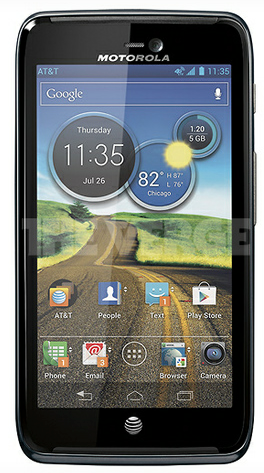
Motorola announced its Dinara smartphone— officially known as the “xT928” – for China Telecom last November, but a supposed press leak of the AT&T variation just surfaced stateside.
The Verge received a media shot of the rumored device today (above). As the report noted, the assumed Atrix 2 successor boasts a 720p display, Android 4.0 Ice Cream Sandwich, and 4G LTE. The notable feature, however, is not really a feature at all: the Dinara lacks physical home buttons on the front display. Much is unknown about the smartphone this point; even its name is not set in stone. However, the “July 26” stamp within the date widget might finally give a hint as to when this device will launch.
Google closed its $12.5 billion Motorola Mobility acquisition last Month when China gave the merger an overdue go-ahead. Motorola promptly filed an 8-K form with the U.S. Securities and Exchange Commission, and the deal’s transaction finalized shortly after. It appears the Dinara’s software and user-interface is unaffected by the recent Google buyout and will likely sport a Motoblur flavor.
The United Nations is considering a new internet tax for U.S. websites and content providers including Google and Apple, according to leaked proposals from the European Telecommunications Network Operators Association:
The United Nations is considering a new Internet tax targeting the largest Web content providers, including Google, Facebook, Apple, and Netflix, that could cripple their ability to reach users in developing nations…The European proposal, offered for debate at a December meeting of a U.N. agency called the International Telecommunication Union, would amend an existing telecommunications treaty by imposing heavy costs on popular Web sites and their network providers for the privilege of serving non-U.S. users, according to newly leaked documents.

A jury decided this last month that Google did not infringe upon Oracle’s patents, but it has recently come to light that Oracle must pay Google’s steep legal fees accrued during the trial.
Oracle, a database software giant based in Redwood City, Calif., sued Google in August 2010, while alleging the Android operating system violated a number of patents and copyrights within Java, which Oracle acquired through Sun Microsystems. Android currently powers more than 150 million mobile devices. Google, based in Mountain View, Calif., adamantly denied Oracle’s contention, and claimed the Android team was unaware of Sun’s patents before the suit.
Google spokesperson Jim Prosser told Business Insider that Oracle did not succeed in landing a $6 billion settlement from Google, but it did win the responsibility of paying Google’s $300,000 in legal expenses.
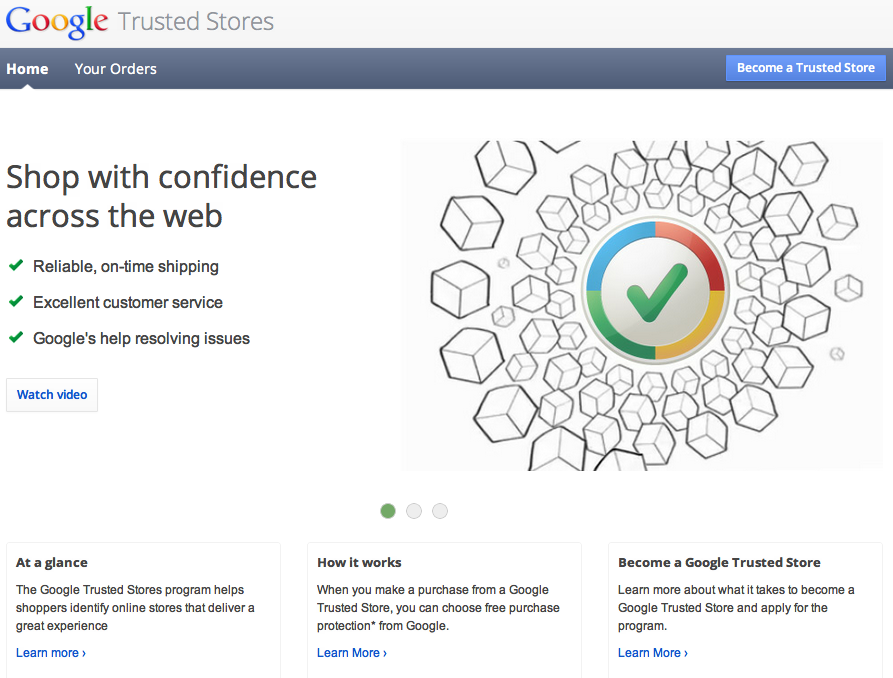
Google opened its Trusted Store program today to all United States merchants who apply.
The news comes in lieu of Google’s KikScore acquisition from earlier this week. The buyout is rumored to bulk the Trusted Stores program that helps online shoppers find stores with a safe and superior online shopping experience.
KikScore is a similar service that also offers seals for non-online retailers and local businesses. It foremost guarantees online businesses, however, and aggregates information about management, website history, and details on customer service satisfaction. The financial aspects of the acquisition were not revealed.
Google’s Product Manager Tom Fallows took to the Official Google Blog this afternoon to explain how the once-beta Trusted Store Program generated feedback from 50 online merchants and more than 10 million orders since last fall to develop a premium—yet free—shopping service:
Over the last nine months of the pilot, our tests show that participating in this program can help merchants big and small. For example, Wayfair, the largest online-only retailer of home goods and one of the top 50 largest online retailers as ranked by Internet Retailer, increased sales* on its site by 2.3 percent with Google Trusted Stores. And Beau-coup, a specialty online favors and gifts retailer, saw an 8.6 percent increase*. Take a look at our merchant success stories to learn more about how Google Trusted Stores has had a positive impact on website conversion rates and average order sizes for online retailers.
Google explained that when shopping online, the Google Trusted Store badge might appear. Shoppers can view a report card with grades for that merchant when they hover over the badge. The badge is only given to online stores that “deliver a great overall experience.” This helps shoppers to identify trustworthy and reliable online retailers.