Stay up to date on news from Google headquarters. Be the first to learn about plans for Android, Google Plus, Google Apps, and more!
Stay up to date on news from Google headquarters. Be the first to learn about plans for Android, Google Plus, Google Apps, and more!

One major barrier to adoption of new hardware and software solutions in the workplace is a top-down requirement that all communications are encrypted, secured from the prying eyes of today’s brazen hackers. It’s the reason why there are still thousands of businesses out there shockingly still issuing Blackberry phones. With more and more consumers and companies alike clamoring for a bring-your-own-device future, how can employees ensure their devices are as secure as chief information officer’s would like? Google has an idea.
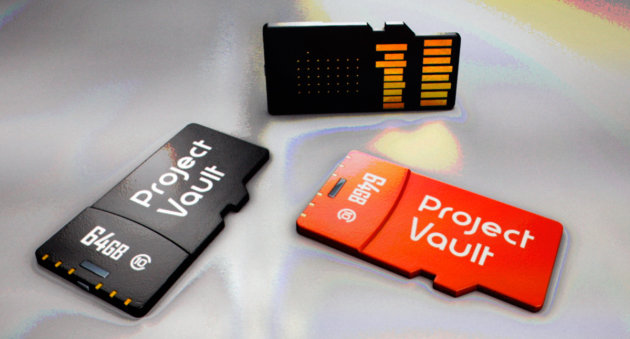
Project Vault, shown off today at Google’s I/O conference, is a microSD card with full operating system, ARM-based processor, NFC chip, and antenna packed inside of it. Oh, and 4GB of storage. While that’s pretty incredible in and of itself, what really makes this microSD card special is that the OS it runs is known as a Real Time Operating System (RTOS), and is packed with a suite of cryptographic solutions for keeping data secure and messaging with others using Project Vault microSD cards encrypted. An RTOS is different from the operating systems most of us are used to (i.e. Unix) that can’t run every process we throw at them simultaneously but switch between tasks rapidly, ensuring at the very least that the computer is still responsive to its user (i.e. doesn’t freeze). Real-time operating systems have stricter deadlines to complete the tasks that are thrown at them.
The main function of Project Vault will be super-secure messaging so hackers, or the NSA, cannot snoop (which also explains why Vault uses an RTOS – all resources are dedicated to encrypting and sending/receiving messages quickly). The encryption only works when both the sender and the receiver are using Project Vault SD cards, however, but it’ll work on any device with a microSD slot – so laptops, smartphones, tablets, etc. are supported. Google says the microSD card can also be used to encrypt video and as an alternative to passwords (where the card could generate cryptographic key pairs and store them securely). The company has an SDK up on Github for it that developers can use to build applications for the new project. Maybe the next Snowden will send confidential documents to journalists using his smartphone?


We told you yesterday that Google’s ATAP team is working on a couple new projects dubbed Soli and Jacquard, and today the group of self-proclaimed “pirates” came out to officially announce (and demo) them both on stage at their much-anticipated Google I/O session. They’re both about reimagining how we interact with technology, but both projects attempt to do so in different ways…
Expand
Expanding
Close
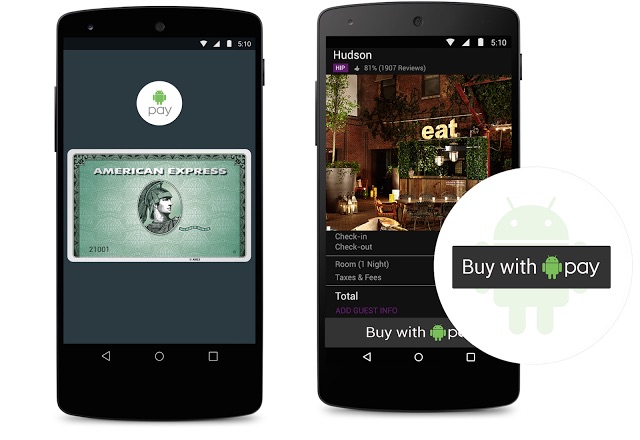
The newly-announced Android Pay is pretty cool – it allows you to pay at retail stores and inside mobile apps without having to take out your wallet or punch a bunch of card details into your glass-screened phone. But the logical conclusion to reducing the friction of paying for things is not tapping my phone against an NFC reader, but rather just not having to take out my phone at all! Well, without the same fanfare that was given to Android Pay, Google said they’ll have a solution for just that.

Update: Google is holding an “Ask the Experts” session today, June 3rd, at 2PM PDT where Sebastian Thrun, Peter Lubbers, and Jocelyn Becker from Udacity and Google will be answering user-submitted questions about the Android Nanodegree program. The Q&A session will be live-streamed on YouTube and there’s also a form where you can submit any questions you may have.
Yesterday Google’s Sundar Pichai said on stage at the company’s I/O conference that 8 out of every 10 phones that shipped worldwide last year were running Android, and that 600 million new smartphone users came online over the past year. That’s a lot of devices running the company’s smartphone OS, and they really want developers to realize the potential of their apps reaching that many people. So much so that they spent over $4 million developing an extensive Android development course in partnership with Udacity.
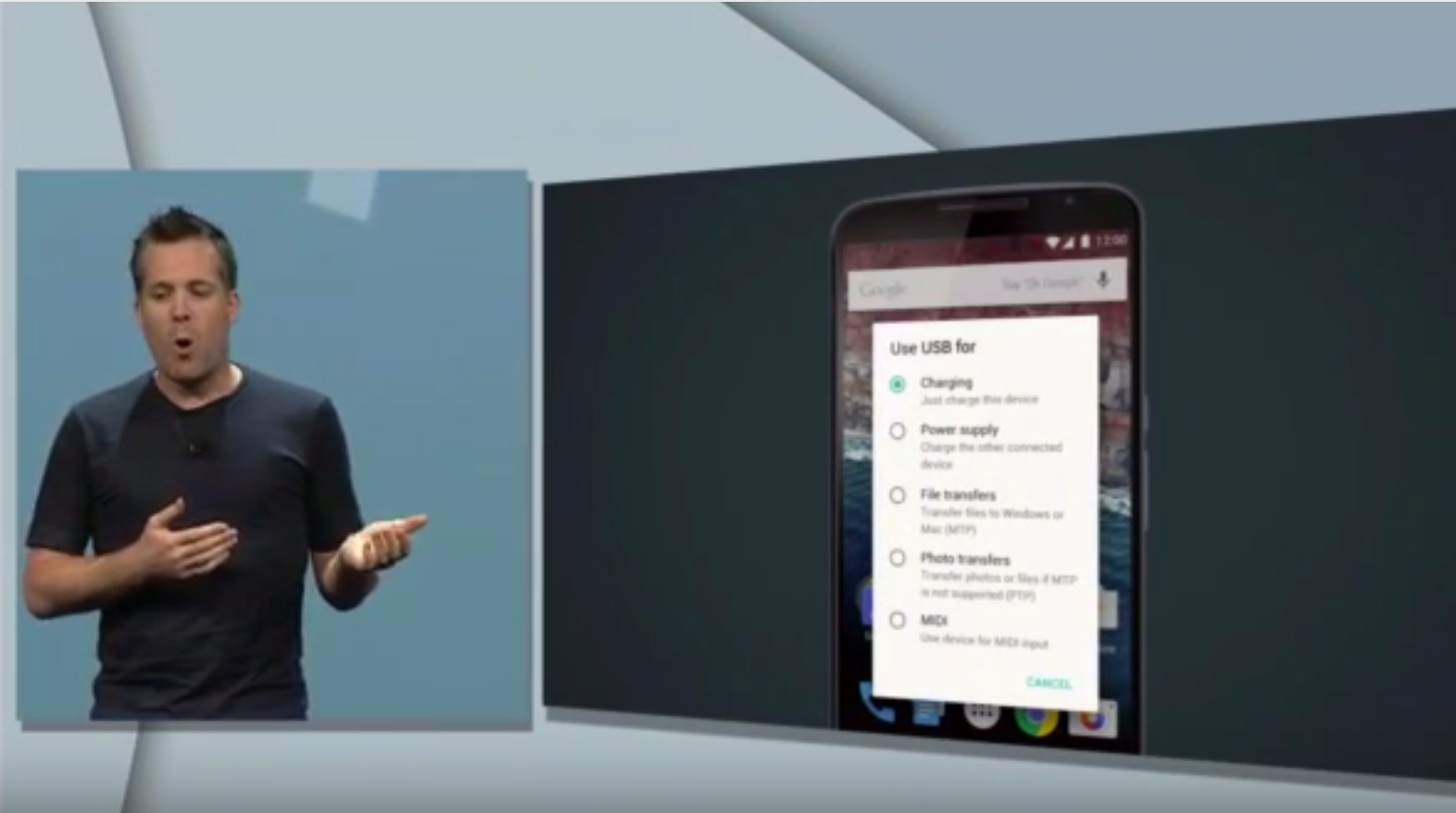
Android VP of Engineering Dave Burke’s presentation on Android M yesterday saw quite a few huge new additions coming to the OS from granular app permissions to improved battery standby management and, of course, Android Pay (check out our roundup). But one thing that might have got lost in the noise for some of you was Google’s newfound embrace of the USB Type-C standard and what it will actually do for you in practice.
USB Type-C is both flippable and bi-directional. That first attribute means that you won’t have to fiddle in the dark with plugging the USB cable connector into your phone the right-side up, because there isn’t a right-side up with Type-C.
More interesting, though, is the bi-directional ability of USB Type-C and Android M’s new interface support for it. What this means in theory is that, while this wouldn’t be practical, you could connect your Android phone to your laptop and charge your laptop with your phone instead of the other way around. You can also send files in either direction as was obviously possible before, but the new interface you see above for managing all these abilities in one place looks quite convenient.
Finally as you might be able to make out from the image above, Google is ready to welcome in more musicians with the warm embrace of MIDI support. This is big because while because 5.0 Lollipop brought support for some audio devices like USB microphones and amplifiers, it left out a lot of musical instruments that use the MIDI standard to send data back and forth between other devices. Maybe this will encourage more musicians and music app developers to consider Android again.
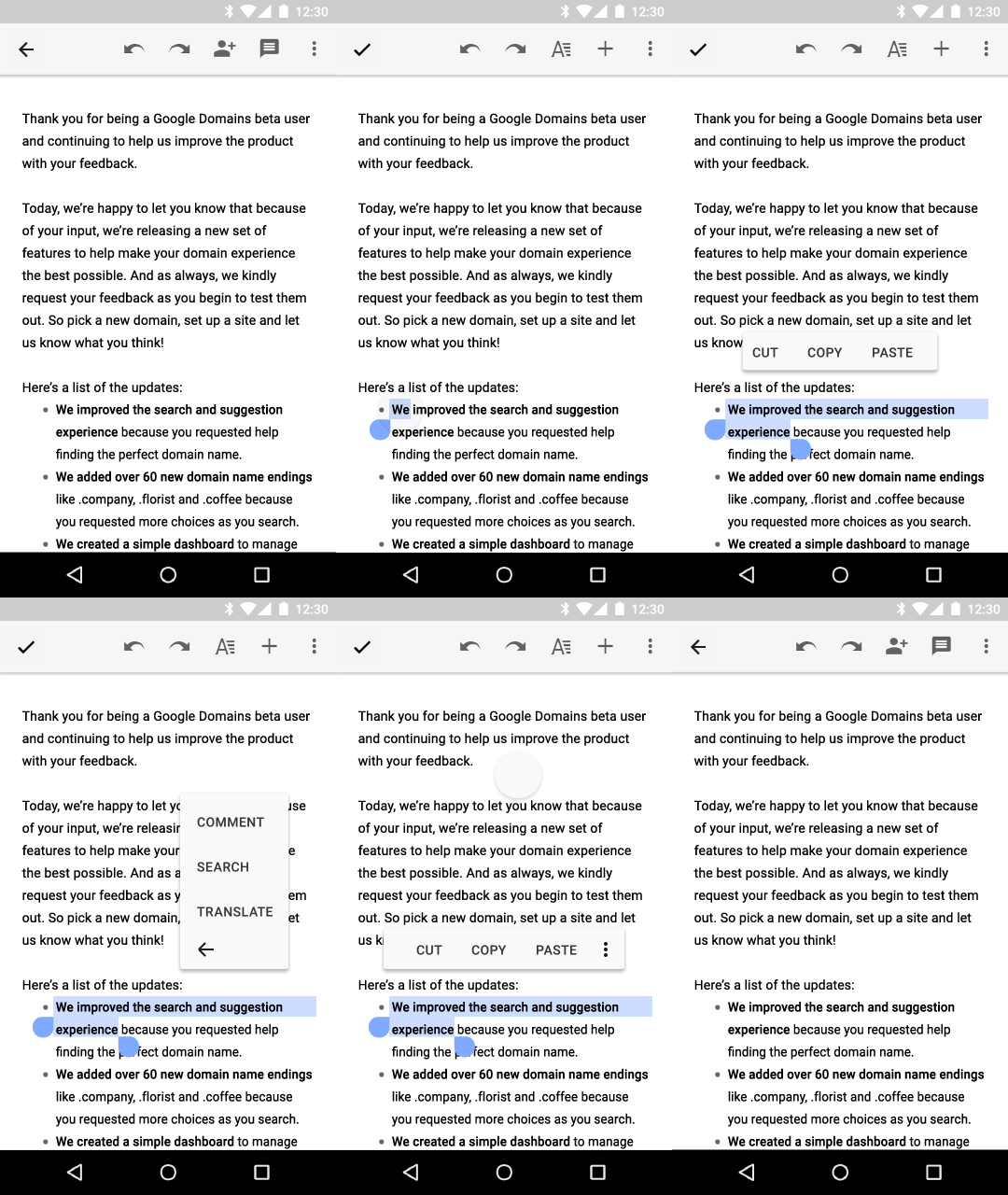
There was a lot to digest in today’s Google I/O keynote but one small, interesting new behavior change of note going into Android M is a new text selection floating toolbar, as you can see in the GIF above.
Whereas in the past primary actions of Cut, Copy, Paste, as well as other app-specific actions related to selecting text would probably be saved for a contextual action bar (an example of which is below), developers who want to keep their apps up-to-date with platform changes will now utilize this new toolbar which appears just above the text selection area. As you can see above, pressing the More icon will reveal a secondary menu where developers can add their own extra actions; the company in its design documents provides the example of Share, Search, and Translate actions appearing within the secondary menu in Gmail.
Another interesting system behavior change in Android M is a battery management tool called “Doze,” which we detailed in our Android M roundup, that disables most background activities when the OS detects that the device has gone unused for an extended period of time. The company says this has resulted in upwards of 2x longer standby time for Android devices running M versus those running Lollipop.

Originally revealed at Google I/O 2015 earlier today, Google Play Services 7.5 adds a handful of new capabilities for developers to take advantage of. In an effort to further break down what’s new in Play Services 7.5, Google has published a blog post detailing all of the new features. First off, Play Services 7.5 adds Smart Lock for Passwords. This feature builds on the Chrome Password Manager and adds a new API and UI for Android users that saves credentials for later use on other Android devices and browsers.
We’ve already done a roundup of the core changes coming in the next big release of Android, simply called “M,” so you should check that out. But we haven’t yet covered what additions and changes Android M brings to Google’s Internet TV platform, Android TV.
Dodocase has long been a supporter of Google’s Cardboard initiative, and at I/O this morning a variety of new features were announced concerning the VR platform. Dodocase has now revealed two new virtual reality viewer designs this evening following Google’s announcements earlier. Dodocase is now offering the G2 Viewer and the P2 Viewer for $24.95 each.
Hidden among the other news announced at Google I/O today, Google has also added the ability for developers to use the Google Maps API directly on Android Wear. The feature, which comes as part of Play Services 7.5, aims to offer users a wearable-designed Google Maps experience and was detailed in a blog post.
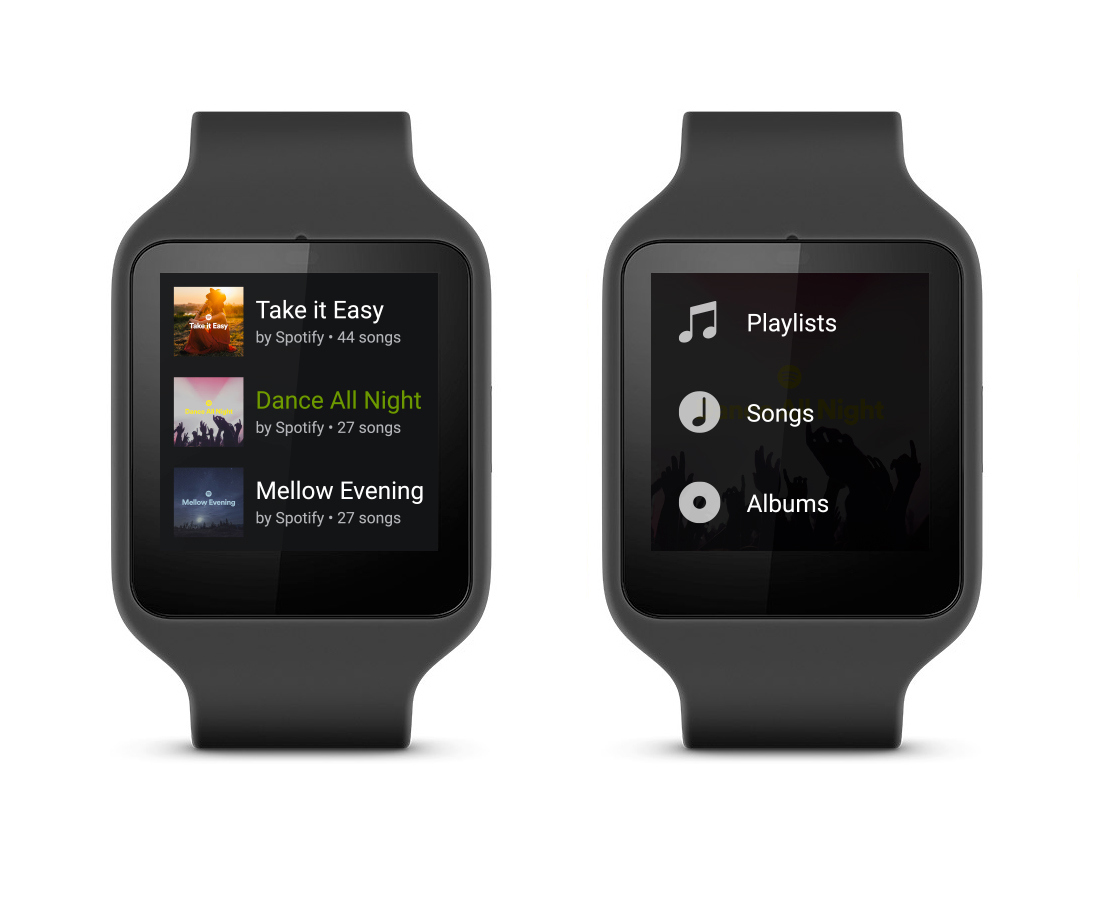
Spotify users, rejoice. Starting with a gradual rollout next month, the popular music streaming app will be available on Android Wear watches.
According to the company’s blog post, you’ll be able to navigate through and select something to play from all the music you’ve saved to Your Music as well as find new stuff in Browse. We don’t have much information on the Wear app yet as it hasn’t been released and the image above is the only one Spotify provided, but we’ll post more as soon as we get it.
As a big Spotify fan and power user I’m curious to see what the Browse section will look like on such a small screen, as Browse on smartphones contains sections for mood-based playlists, new releases, top charts, and more. Are you excited to get Spotify on your Wear watch?
Almost a year after Google took the wraps off of Material Design at I/O 2014, the Mountain View company has today updated its Developers website with a visual overhaul to bring its appearance in line with that of Android Lollipop. This isn’t the first of Google’s properties to get the new design (as we saw Google Play Music get a redesign in May), but it’s yet another one of Google’s properties that is falling in line with the new look.
Expand
Expanding
Close

Life is about seeing the wonders of the world for yourself, but Google thinks that the experience you get from reliving these moments later on through the tiny windows that today’s cameras produce is pretty limited. Which is why the company today at its I/O conference announced the release of an open-source VR camera rig specification called “Jump” which will make it much easier for creators to capture, process, and share 360-degree virtual reality video for the whole world to enjoy.

Google revealed today at the I/O conference that its Cardboard viewer for creating virtual reality experiences easily from Android apps will now support the iPhone for the first time.
The added support for the iPhone comes as Google has added support for iOS to its Cardboard SDK for developers. This means that iPhone apps can now include virtual reality experiences when paired with the Cardboard viewer.
In addition to adding support for iOS, Google is releasing an updated version of its Cardboard view that supports larger phones with up to 6-inch displays. The new version also features an improved input button and can be assembled in just three steps rather than twelve.
Google Cardboard for iPhone is available on the App Store. Cardboard Viewer is available to buy from $19.99 through Google, although the company also offers instructions for building your own viewer.
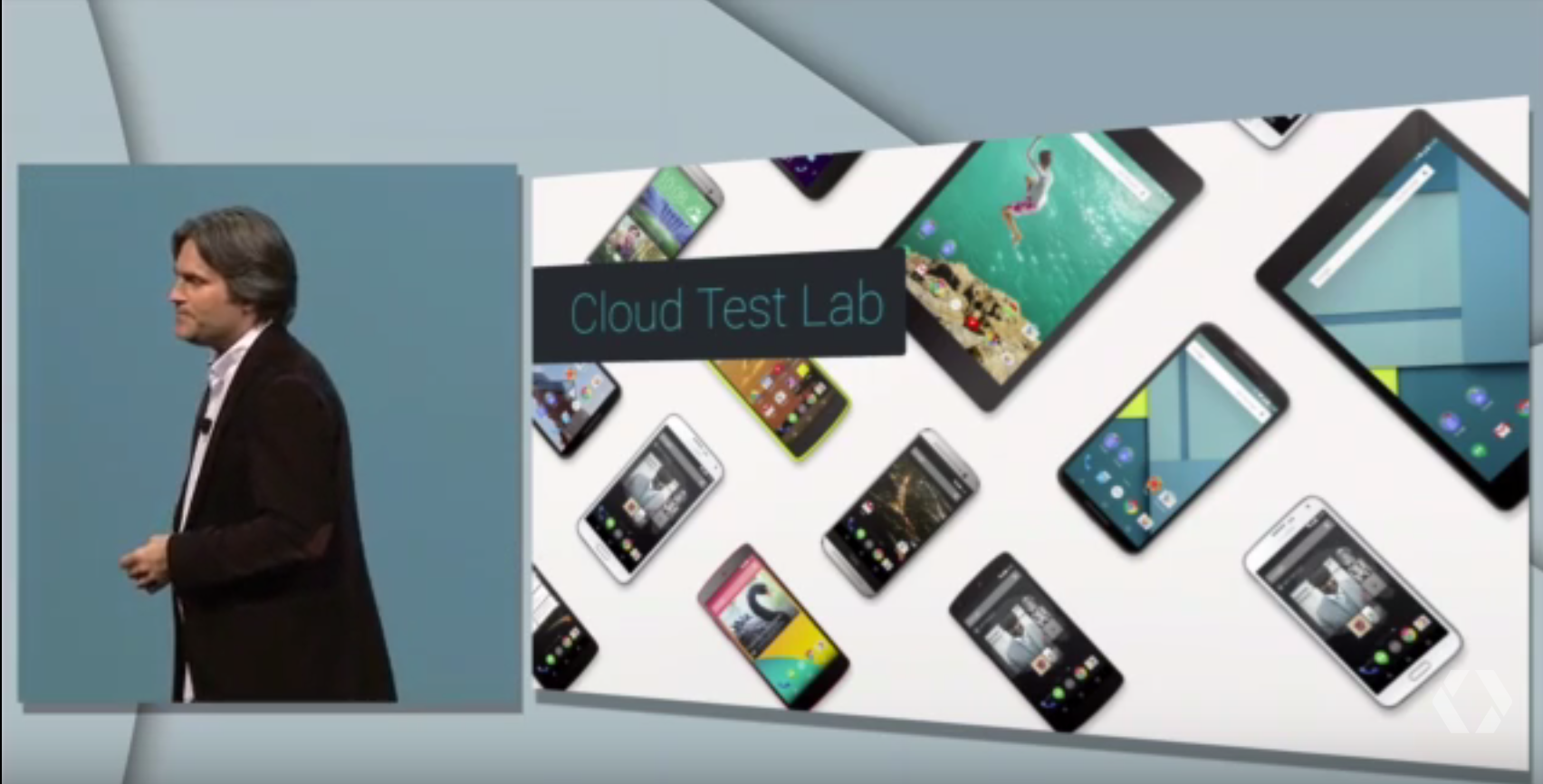
Google knows that most developers building mobile apps only have one or two devices in their possession to actually perform real-world tests of their apps on, which is why at Google I/O today it announced the launch of the Cloud Test Lab platform to automate the testing of mobile apps.
All developers need to do is upload their Android application to Cloud Test Lab and Google will run tests against it across the top 20 Android devices from around the world. When Google is finished running the tests, developers will receive a free report with screen videos of the app running on these devices as well as crash logs.
Cloud Test Lab will be coming to the Google Developer Console “soon.”

[youtube=https://www.youtube.com/watch?v=VCo3zZ0P4vU]
After first launching its new Inbox app as an alternative email experience to its main Gmail service last year, Google today announced that Inbox is now open to all sans the original invite system while it also introduces a number of new features for the service.
As for features, Google highlighted a new “Trip Bundles” feature that keeps emails related to travel in one place, and improved controls for things like Undo Send, Signatures, and Swipe to Delete:
Expand
Expanding
Close
Google has taken the wraps off its new Google Photos product at its I/O conference today. Google says Photos is a private single home for your personal photo and video collection that you can access from any device. Photos boasts the ability to automatically organize your photos for you as well as built-in sharing capabilities.
Expand
Expanding
Close

Update: Developers can find the preview images of Android M for Nexus 5 (GSM/LTE), Nexus 6, Nexus 9, and Nexus Player on the Preview SDK page. Google has said updates to the preview version will roll out regularly and that they’ll come down over-the-air, so you won’t have to flash your phone again each time it’s updated.
Google has announced the next major iteration of Android, called Android “M,” which Android VP of Engineering Dave Burke emphasized has a “focus on quality end to end.” Here are the six core changes coming to Android with this release.
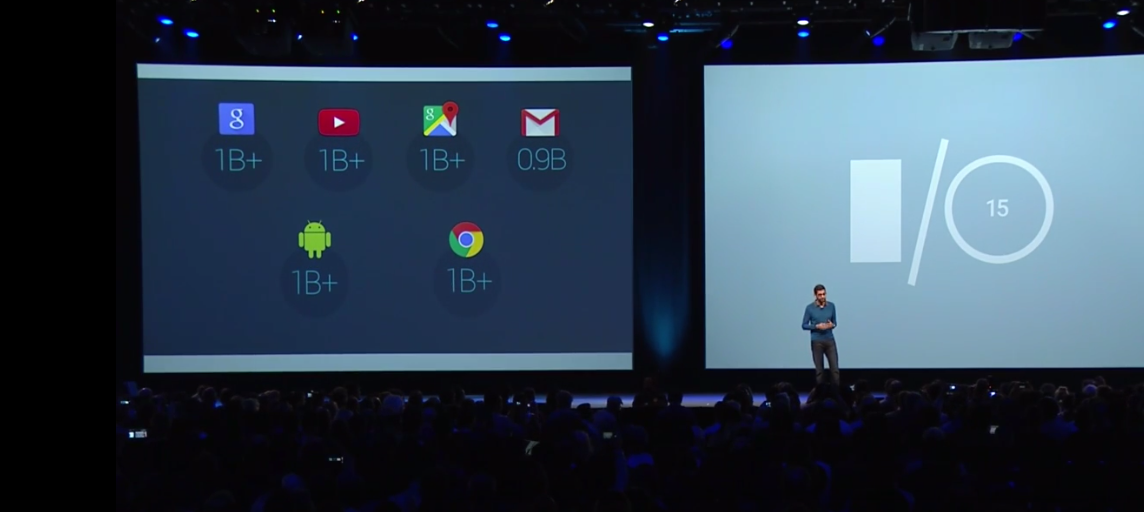
Google is kicking off its I/O developer conference today with its usual keynote presentation. The focus this year was the future of Android with a lot of stage time dedicated to Android Wear smartwatches, Android M, its new Android Pay service, and much more. Below we’re rounding up some of the stats and numbers shared by Google execs on stage including updates on the user base for its core services and how its new Android platforms have grown over the last year:
Expand
Expanding
Close
Google’s annual I/O developers’ conference kicks off in San Francisco, California in just about an hour, and the Mountain View company is providing a livestream of the event to keep you in the loop on what’s being announced. As is always the case with the first day of I/O, we’re expecting a lot of announcements from the two-hour (plus) keynote, including Android ‘M’, a new Chromecast, some surprises from Google’s ATAP, Cardboard, and more.
Expand
Expanding
Close
<a href="http://recode.net/2015/05/27/google-confirms-buy-button-is-coming/">Image via Re/code</a>
Speaking at the Code Conference in California, Google’s chief business officer Omid Kordestani confirmed that the company is in fact planning on adding a “buy” button to search results. This feature has been rumored for several months and is a way for Google to compete more seriously with the likes of Amazon and eBay.
We told you this morning that Google is now rolling out iOS app indexing in search, but now the Mountain View company has come out to make another, related, announcement. As of today, goo.gl short links can now work as a single smart link to your content, capable of sending users to your Android app, iOS app, or your website…
Expand
Expanding
Close
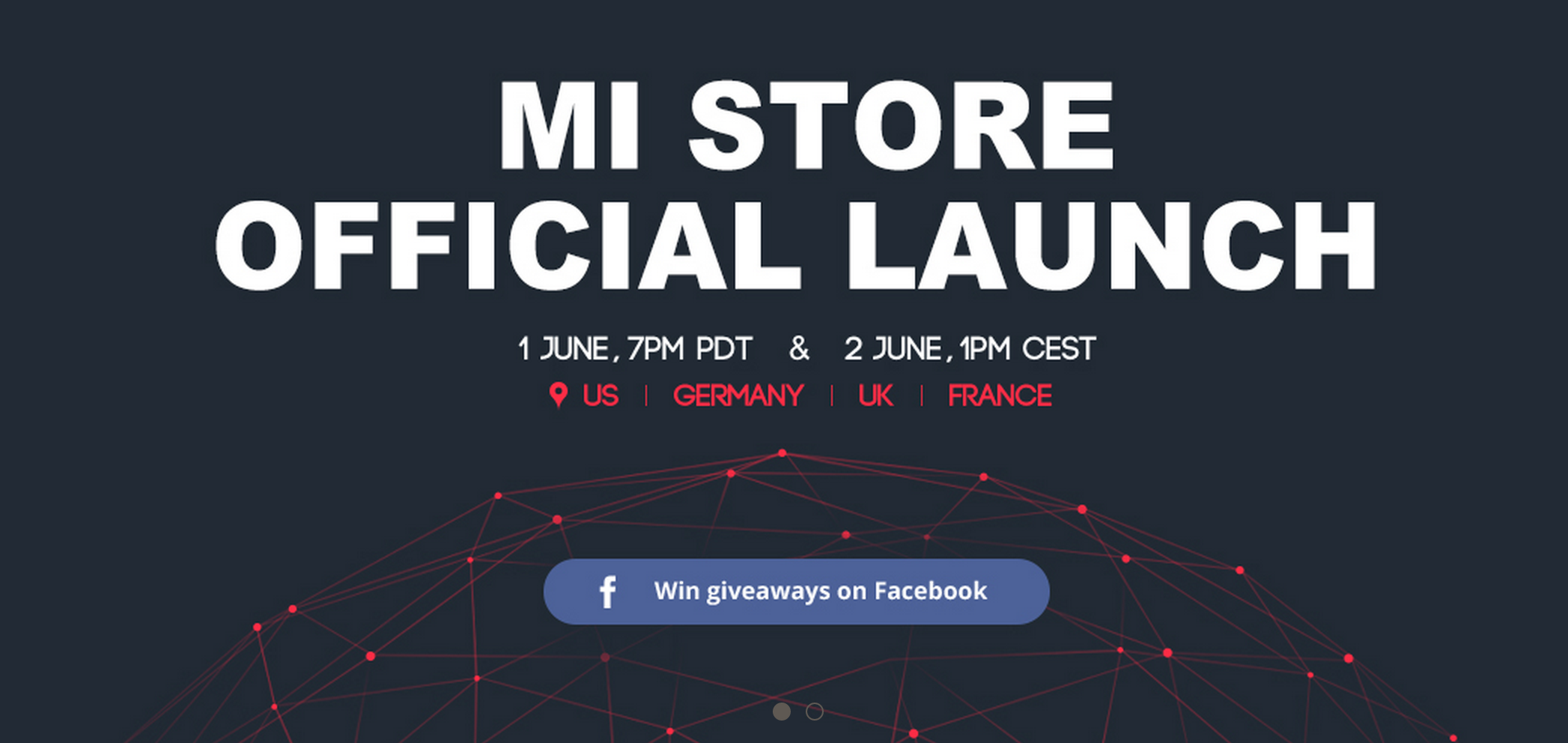
After a “beta test” earlier this month, Xiaomi today announced on its Facebook page that its Mi.com online store will officially launch in the US on June 1st at 7pm PDT and in Europe (UK, Germany, France) on June 2nd at 1pm CEST.
Before Xiaomi introduced its store to the US and Europe on May 19th, Hugo Barra in a Q&A session at a Xiaomi press event in San Francisco said that the company’s tablets and smartphones would not be coming to the US later this year, but was considering bringing Mi.com and some of its accessories stateside. That of course happened, although this time it seems that the store will stay live indefinitely or at least have more than the “very limited quantities” from last time.
Developing…
Gartner today released the results of a report on worldwide smartphone marketshare in Q1 2015 (first three months) which most notably found that Android’s hold on the smartphone OS market dropped 1.9% while Apple’s iOS saw it’s third consecutive quarter of gains. The research firm attributed Android’s loss largely to Apple’s newfound success in China – where Android saw a 4% decline over its share of that market last year – on the back of the larger-screened iPhone 6 and 6 Plus, as well as increased differentiation and ecosystem lock-in through offerings like Apple Pay and Apple Watch.
Expand
Expanding
Close