Stay up to date on news from Google headquarters. Be the first to learn about plans for Android, Google Plus, Google Apps, and more!
Stay up to date on news from Google headquarters. Be the first to learn about plans for Android, Google Plus, Google Apps, and more!


During a panel discuss during Mobile World Congress in Barcelona today, Motorola senior vice president Rick Osterloh revealed the hardware company is working on a smartwatch with plans to ship later this year, CNET reports.
Osterloh didn’t reveal much more in terms of specifics about what Motorola’s offering will present, but did hint that its smartwatch would consider fashion in its presentation:
“Right now, there are non wearable products you actually want to wear, and it’s because they’re all extremely ugly,” Osterloh said at an event at Mobile World Congress on Tuesday.
Google, which recently announced a deal to unpack Motorola onto Lenovo in a multibillion dollar deal, is also reportedly working on its own smartwatch offering through a partnership with LG.
While Motorola offered no specifics on when to expect its smartwatch aside from later this year according to CNET, Google is expected to reveal its smartwatch next month before it’s launch in June at Google I/O.

Gmail is about to get a new feature that should help users cut down on the spammy mass emails in their inboxes. Coming this week, PC World reports that Google will be automatically adding a big, beautiful “unsubscribe” button to the headers of such emails, allowing you to quickly opt-out of these types of unwanted messages.
Google hopes this will cut down on something we’re all probably guilty of at some point or another: users who sign up for a mailing list or service, then decide they don’t want the messages. Instead of unsubscribing, many users are marking these emails as spam to quickly block them from showing up in the inbox.

While we’ve yet to get official word on the machines from Samsung, it looks like two new Samsung Chromebooks will be going on sale shortly as retailer B&H begins accepting preorders for the new models. The listings were spotted by OMGChrome (via GigaOM) but since removed.
Presumably replacing the original 11.6-inch Samsung Chromebook model that sells for $249 ($329 with 3G) is an 11.6-inch model starting at $299 featuring a Samsung Exynos 5 SoC and a $399 model with a 13.3-inch display. There isn’t much more information on the new Chromebooks at the moment, but we expect Samsung will announce them once it wraps up its big smartphone announcements at MWC this week.
Expand
Expanding
Close

Rumors of Nokia launching an Android phone seemed unlikely for a company acquired by Microsoft, but the company today announced not just one Android device, but three: the Nokia X, X+ and XL. The company’s flirtation with Android does, however, appear to be a token one – not that Microsoft is pleased.
The three budget phones are effectively hybrid devices. Not only have they been given an overlay designed to make them look like they are running Windows Phone, they aren’t even running a standard version of Android and won’t be able to run apps from the Google Play store …


Photo: ibtimes.com
Customers buying Samsung devices at Samsung retail stores will soon receive a personalized experience based on their job, hobbies and other traits, 9to5Google has learned.
This includes contextually preloading third-party apps at point of purchase. For example, banking, finance and spreadsheet apps will be targeted at people working in corporations or self-employed businessmen. Similarly, students in higher education will get office suites and note-taking apps preinstalled. Casual games are also in the pool of possible apps, particularly aimed at satisfying younger buyers.
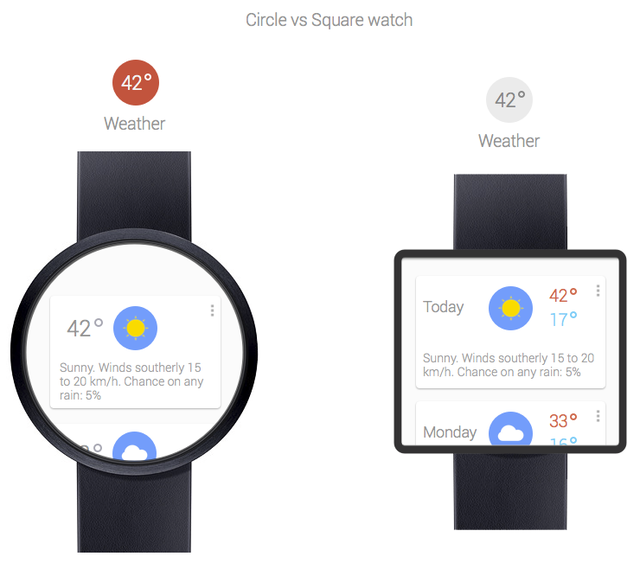
CNET is reporting that Google is set to announce a smartwatch next month, manufactured by LG (who also manufactured the two most recent Nexus phones). The device is described as the Nexus of smartwatches, with Google controlling the design of software and hardware.
Although Google will announce the product in March, the watch will not be released until June at Google I/O. As 9to5Google reported last year, Google’s smartwatch will revolve around Google Now’s assistant features with voice playing a major role in how users interact with the product.

Back in November of 2012, Google acquired the then 2-year old startup BufferBox. BufferBox was a service that provided customers with temporary lockers in certain locations to accept packages at from online retailers. At the time of the acquisition, Google said that BufferBox would “keep doing BufferBox,” but today, Google has announced that it is shutting the service down.
The BufferBox team now says it will work to “bring the learnings, technology and expertise of the team to future Google Shopping products.”
For those that are BufferBox customers, the company says it will stop accepting packages on March 31st, 2014 and that the last day to pickup packages is April 21, 2014. More details can be found on BufferBox’s FAQ page.
Since being acquired by Google, BufferBox has spread from its home Waterloo, Ontario to other cities such as San Francisco. We can only assume that Google will still continue to expand the self-serve pickup idea, but without the BufferBox branding.
Streaming TV is heating-up. Amazon looks set to launch its TV box in March, we’re expecting Apple to announce a new Apple TV box in April, and Google is reputed to be not far behind with a Nexus-branded box.
So-called cord-cutting – people who give up their cable TV subscriptions in favor of streaming content over the web – is growing in popularity. Mobile TV viewing on tablets is increasingly common.
All of which makes me wonder whether we’re witnessing the beginning of the end of live TV … ?
Expand
Expanding
Close

[youtube=http://www.youtube.com/watch?v=y42eQJmGbxk]
A lot of clues in the above ad, but obviously nothing is guaranteed. The waterproof angle would be a major blow to Sony’s Z line which is the only major phone than can get dunked. Samsung’s S4 Active is water resistant, but not very rugged. I’ll be waiting for the Google Play edition, personally.

Image: digitaltrends.com
Amazon’s TV box, which the company is believed to have been working on for around a year, is to be launched next month, according to unnamed content distribution sources cited by re/code. It had originally been expected to be launched in time for last year’s holiday sales.
People I’ve talked to who are partnering with Amazon believe the company is aiming for a March rollout […]
Sources tell me Amazon’s box will be powered by Google’s Android operating system, which is also not a surprise — Amazon’s Kindle Fire tablets use a “forked” version of Android …
Expand
Expanding
Close

Engadget reports that Google has been testing a new iOS and Android app at its Mountain View campus recently that would allow users to automatically join public WiFi hotspots without going through the usual log-in process. Google is apparently considering using the app in connection with its recently announced deal to provide WiFi to 7000 Starbucks locations in the US:
According to our sources, the search giant has built Android and iOS versions of an app that automatically authenticate and connect to its free hotspots inside Starbucks stores or wherever they are available. Google is currently trialling the Android app at its Mountain View HQ and has plans to offer an iOS app too.
Perhaps more interesting is Engadget’s claim that Google has “specific plans” to roll out more Google WiFi hotspots in the US and Canada as part of the ongoing “Google WiFi” effort it first launched in Mountain View back in 2006.
The report adds that the app could link to a user’s Google account and “install a dedicated security certificate on their device to automatically authenticate devices when a connection is available.” Engadget says an expanded partnership with Boingo is also a possibility:
Google may also expand its partnership with Boingo, extending logins to locations where it’s footing the bill for free wireless.
Google plans to have its WiFi rolled out at all 7000 Starbucks locations by the end of the year.
With Chromecast supported by an increasing number of apps, Google has created an official support forum for the $35 device.
Judging by the number of posts made on the first day (assuming they’re not all made by Google employees), it looks like it could prove a popular resource. Though a good starting-point for anyone new to the dongle is our own how-to setup guide.
Image: mobilegeeks.de
Update: TheInformation is reporting that Google was willing to beat Facebook’s $19 billion offer. More behind a paywall here.
Google tried to buy messaging service WhatsApp for $10B prior to Facebook’s successful $19B bid, according to two separate sources cited by Fortune. It has also been reported that Google had earlier offered WhatsApp “millions of dollars” simply for the right to be informed if WhatsApp received an offer from anyone else, an offer the messaging company turned down.
The size of the offers seem almost incredible given that the app is free and has no ads. Its entire revenue stream depends on users signing up to a 99c annual subscription after their first year, giving it – at present – a revenue ceiling of $450M a year.
But it’s likely that WhatsApp’s real appeal was it provides access to a core market for the future: mobile-first users in developing markets …
Expand
Expanding
Close
Back in November, Google announced that Currents news service would slowly be transitioned into a new Google Play Newsstand app, and today, the company has finally taken the final step. Google today released an update for the Currents app that makes it nothing more than a pathway to Play Newsstand (via Android Police).
When users launch the Currents app after updating, they will be presented with a screen telling them to download Google Play Newsstand. Newsstand will be able to automatically import all Currents subscription, making the transition as easy as possible for users. Once users agree to make the switch to Newsstand, the app icon for Currents will disappear, making it impossible to ever return.
iOS users are still waiting for Google’s Newsstand app, but there’s something with an eerily similar name preinstalled on all iOS devices already…
We’re just a week away from Mobile World Congress kicking off in Barcelona, and while the event has been rather quiet for the past couple of years, it looks like that may change this time around. Samsung has already announced a press event for MWC, during which it will unveil its Galaxy S5 flagship. According to two new reports, however, the company also has more planned for the event.
Both USA Today and The Verge are reporting that Samsung will unveil at least one new Galaxy Gear smartwatch variant at its press event next week. The Verge report is sparse on details, simply reporting that Samsung could unveil “multiple new Galaxy Gear” models at the event.

Alas, we’re one step closer to an App Store not filled with iOS 6 keyboards. Google released Translate 2.1 today, bringing support for the iOS 7 keyboard released last September to the iPhone and iPad.
The update also expands support for its new handwriting input method to a number of additional languages including Arabic, Esperanto, Gujarati, Hebrew, Javanese, Maltese, Maori, Marathi, Persian, Punjabi, Telugu, and Zulu.
Google first introduced its handwriting input method last September. Google Translate 2.1 is available now on the App Store.
Expand
Expanding
Close
Image: ggpht.com
For those who may be waiting to choose between the Samsung S5 and the new HTC flagship handset code-named the M8, HTC has a little sweetener for you: a free, one-time replacement of the screen if you break it within the first six months of ownership. The company is also promising to offer Android updates for two years.
Now when customers buy any HTC One they can rest assured their device will be future proofed, with major Android updates for 2 years from launch. And it’s nearly accident proof too, because we will replace a broken screen for free once within the first 6 months you own it—let’s face it accidents do happen and we want to keep your device in great condition …
Expand
Expanding
Close
SlickLogin launching at TechCrunch Dusrupt five months ago
TechCrunch reports Google has acquired the startup company SlickLogin, which appears to live up to its name with a whole bunch of clever ways of allowing you to login to a website without using a password. The key ingredient is sound.
To verify a user’s identity and log them in, a website would play a uniquely generated, nearly-silent sound through your computer’s speakers. An app running on your phone would pick up the sound, analyze it, and send the signal back to the site’s server confirming that you are who you say you are — or, at least, someone who has that person’s phone …
Expand
Expanding
Close
With so much of what is offered on Valentine’s Day feeling contrived and commercial, today’s U.S. Google doodle provides a rather heartwarming antidote, allowing you to listen to real-life love stories from This American Life.
Click on any of the hearts to play the story, narrated by Ira Glass. If you enjoyed those, you can subscribe to the free weekly This American Life podcast on iTunes …
Expand
Expanding
Close
Last night, it was reported that Motorola CEO Dennis Woodside would be stepping down from his position to become the chief operating officer at cloud storage company Dropbox. Woodside has now confirmed this decision in a blog post on the Official Motorola Blog, saying that he will step down as CEO at the end of March.
Woodside goes on to announce that Jonathan Rosenberg, who was the SVP of Products at Google from 2002 until 2011, will step in as COO at Motorola Mobility on April 1st. Rosenberg worked closely with Woodside and was “intimately involved” with decisions at Motorola. Google Chief Business Officer Nikesh Arora will remain Executive Chairman of the Motorola Operating Board and continue to oversee strategy at the company. It looks as if Motorola will be going without a CEO after Woodside leaves, leaving Lenovo with a lot of control.
Woodside says he is leaving Motorola Mobility “in great hands” and that he is immensely proud of what the company has accomplished in the past 18 months. He also notes that he is excited for the next chapter for the company under Lenovo, who purchased it for $3 billion last month.
Dropbox CEO Drew Houston has also issued a statement on the news.
“We’ve long admired Dennis’s leadership at Google and Motorola where he ran multi-billion dollar businesses and built amazing organizations around the world. We’re so happy to welcome Dennis to our team — I can’t imagine a better person to help us bring Dropbox to global scale.”
Read the full resignation letter after the jump:
According to a new report from the Wall Street Journal, Dropbox plans to name Motorola CEO and 10-year Google veteran Dennis Woodside as its first chief operating officer. Citing people “familiar with the matter,” the report says that Woodside will focus on further expanding Dropbox services into businesses and schools, as the company faces stiff competition from other services, such as Box Inc.
Woodside joined Google in 2003 and was tasked with helping manage the search giant’s relationships with partners and advertisers internationally. He became the CEO of Motorola Mobility when the company was acquired by Google in 2011. Of course, Google just sold its Motorola Mobility unit to Lenovo last month for $3 billion, meaning that Woodside’s rein at Google would be coming to an end.
This is a big loss for Motorola. Even though Woodside didn’t return the company to profitability in his short tenure as CEO, he did release several very well-received smartphones, including the Moto X and its lower-cost sibling the Moto G. It remains to be seen who will take over when Woodside officially steps down from his post at Motorola.
At Dropbox, Woodside will be the business veteran of the team, working under chief executive Drew Houston chief technology officer, Arash Ferdowsi. Dropbox has reportedly been slowing down in terms of growth, with its sales slowing and questions being raised about whether it is profitable or not. Woodside will certainly have his hands full at Dropbox.
The Wall Street Journal has published a new report in which it claims that there are some major “strings attached” for manufacturers when it comes to using Android. According to documents obtained by the publication, Google has imposed strict regulations on companies that wish to have access to YouTube or the Play Store on their devices. The documents show that in order to receive access to those services, companies are forced to feature other Google apps and set Google search as the default search engine on the device.
Companies wishing to gain access to Google services are forced to sign a “Mobile Application Distribution Agreement” with Google. Both HTC and Samsung have signed such agreements, which force them to preinstall twelve Google apps on any device they release. Other details of the agreement include placing the Search and Play Store apps “immediately adjacent” to the homescreen, and that Google apps appear no more than one screen away. Samsung and Google also recently signed a deal to license each other’s patents for the next 10 years.
Google today updated the Play Music app for Android with a handful of new features. The biggest change is the ability to cache radio stations for offline listening, following the update in December that added the ability to save songs to your SD card. This means that you can now create a radio station and be able to listen to it whenever you want, even if you don’t have an active internet connection. It’s unclear how much of a radio station Google will cache, but we’d imagine it’s quite a few songs, so you can listen for a while before hearing a repeat song (via Android Police).
Also new with this update is the ability to manage your authorized Google Play Music devices from directly within the app. There’s a cap of 10 devices, and as many power users now, it doesn’t take long to reach that limit, especially if you share an account with family members.
There are a few other minor tweaks throughout the app with this update, such as a new “Play Next” button on songs, artists, and albums. There’s no official changelog just yet, as this appears to be a staged rollout. Be sure to keep an eye on the Play Store for the update to hit your device.
An interesting story from the BBC goes behind the scenes with the satellites that are used to take imagery of earth that eventually land in Google Maps and Google Earth.
Behind a long rectangular window, in a high white room tended by ghostly figures in masks and hats, a new satellite is taking shape. Once in orbit later this year, WorldView-3 will be one of the most powerful Earth observation satellites ever sent into space by a private company. Spinning around the planet some 600 kilometres (370 miles) above us, it will cover every part of the Earth’s surface every couple of days.
Google gets the majority of its imagery from DigitalGlobe and Ball Aerospace is currently constructing new satellites for the company, as highlighted in the BBC report. The new WorldView-3 satellite will be capable of capturing objects 25cm (10 inches) across, but the report notes Google and customers other than the government only get access to “images with a resolution of 50cm (20 inches).” It’s likely much of the updated imagery you see on Google Maps and Earth over the next year will come from the new satellite once in orbit. The whole article is worth a read if you’re interested in learning more about how the satellites are built and capture imagery once in space.