Stay up to date on news from Google headquarters. Be the first to learn about plans for Android, Google Plus, Google Apps, and more!
Stay up to date on news from Google headquarters. Be the first to learn about plans for Android, Google Plus, Google Apps, and more!

 Google today rolled out a minor update to its Search app on Android. The update doesn’t add a lot, but does make the voice recognition functionality even better. With the update, you can now assign titles to people in your contacts. For example, you can say “Ok Google, call Mom” and it will either call the number that you have assigned to your mom, or prompt you to choose who you want to be labeled as your mom and remember that option for future use. The funcationaily also works for texting. Simply say “Ok Google, send a text to my wife” and the Search app will pull up the wife contact. Officially, the app supports the following relationships: father / dad, mother / mom, brother, sister, cousin, niece, nephew, aunt, uncle, grandmother / grandma, grandfather / grandpa, wife, husband, girlfriend, and boyfriend.
Want to save time keeping in touch with your loved ones? Or just not drop your phone or your shopping bags whilst you try to find a number to make a call? You can skip scrolling through your contacts and just say to your Android phone “Ok Google, call Mom” or “Ok Google, send a text to my wife.” Starting now, the Google search app on your Android phone will be able to pull up the right contact for you—and if you don’t have Mom saved as “mom,” it’ll help you set that up quickly.
The update appears to be a staged rollout, so it may take a little while to appear on your device. Keep an eye on the Play Store.

Photo: GSA
NASA has announced that Google subsidiary Planetary Ventures has taken over the lease of its massive Hangar One at Moffet Field. While the hangar was built for dirigibles, and Google is working on balloon-based Internet access, the hangar is likely to be used for the more mundane purpose of storing a bunch of executive jets belonging to Google execs. And these planes will likely have pilots unlike the Drones google is also working on.
Wired reports that the landmark hangar has been a problem for NASA since 1997.
NASA took over Hangar One in 1994, but it’s been a thorn in the space agency’s side. In 1997, NASA discovered toxic PCBs in the hangar, and it has been mothballed and off-limits to humans ever since. As part of the lease agreement, Google will not only fix up Hangar One, but it will also rehabilitate two other Moffett Field hangars, build an on-site educational facility, and even upgrade NASA’s golf course.
Google is already building a 1.2 million square foot R&D facility on land leased from NASA, and is working with the agency on testing the world’s first quantum computer.
The hangar can be seen below in its original role.

In what would be a rather amusing twist, future iPhones could be built by Google robots as Google’s robotics division assists Foxconn to “speed up robot deployment” at its factories.
The WSJ reports that Foxconn was looking for assistance in automating its production lines, while Google is aiming to introduce robots to manufacturing processes that have so far been largely manual – electronics assembly being a key example. It takes around 600 people to make each iPhone.
Foxconn has been working with former Android executive Andy Rubin since last year to carry out the U.S. company’s vision for robotics.
To speed up robot deployment at its own factories, Foxconn Chairman Terry Gou met with Rubin in Taipei recently and they discussed new robotic technologies, they said.
At the meeting, Gou expressed excitement over new automation technologies demonstrated by Rubin, they said. Rubin also asked Gou to help integrate a technology company that Google is acquiring as Foxconn’s strength lies in mechanical engineering.
Google has acquired eight robotics companies over the course of the past year, and is believed to have ambitions to create a robotic operating system that would be to manufacturing what Android is to smartphones. Foxconn is looking to reduce operating costs and boost efficiency.
“Foxconn needs Google’s help to step up automation at its factories as the company has the lowest sales per employee among the contract makers, given its large workforce,” said Wanli Wang, an analyst at CIMB Securities.

Samsung has updated its blog with what appear to be nine new-look icons, each with a superscript 5 hinting at the possibility of an earlier-than-expected first look at the Galaxy S5 at the company’s Unpacked event at Mobile World Congress in Barcelona on 24th February. Samsung had previously suggested that the S5 would be launched “by April.”
It’s possible that Samsung could officially announce the Galaxy S5 on the 24th but not make it available for sale until April …
Expand
Expanding
Close

With Google Glass finally available to just about anyone willing to sign up and throw down the $1500 purchase price, we’re seeing more and more professionals take advantage of the handsfree, head-mounted computer to make daily tasks more efficient. The latest to trial Glass, according to a report from TheDailyMail, is Virgin Atlantic airlines in a test at London’s Heathrow airport. Staff of Virgin’s Upper Class lounge are apparently using Glass to identify passengers in order to greet them by name and pull up relevant trip information:
Expand
Expanding
Close

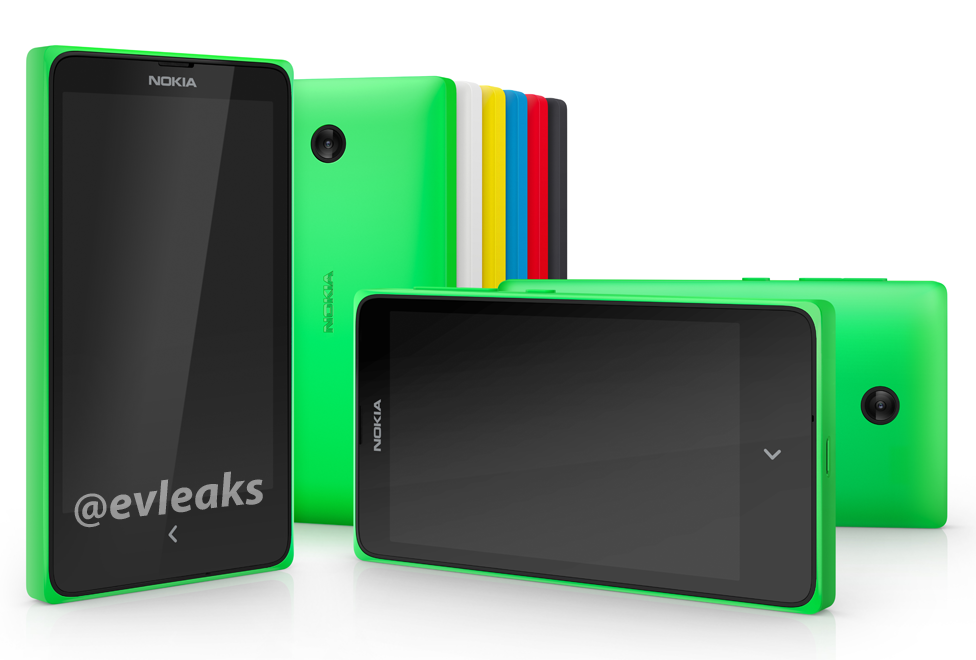 Nokia could finally show off those Android-based “Normandy” smartphones we’ve been seeing surface lately. The company will debut its rumored fork of Android later this month at Mobile World Congress, according to The Wall Street Journal. The event kicks off in two weeks in Barcelona, Spain, and runs through February 27th.
Nokia, whose devices and services division was acquired by Microsoft last fall, had been working on the Android phones ahead of the acquisition, WSJ says. Nokia has been the primary handset maker for Windows Phone OS-based smartphones since dropping its own OS years ago, and even its Android fork borrows heavily from the signature Windows Phone design as seen in recent leaks.
Expand
Expanding
Close
Update: It’s official:
[tweet https://twitter.com/vzwnews/status/432969002441129984]
DroidLife is reporting that the Verizon version of the Nexus 7 has finally received its certification, and that stocks of the device are currently in the back-room storage areas of at least some Verizon stores.
Yesterday, we received word from sources that the Nexus 7 had finally received certification from Verizon and would be sold through the carrier as early as February 13. We also saw some cases for the device, with Verizon branding, arrive in stores for the launch. Today, we are now seeing the actual device hit back storage rooms of stores, but reps are told that it can’t be sold just yet …
Expand
Expanding
Close
Google has announced that the UK will be the second market to get access to the Chromecast dongle when it goes on sale in the electrical chain store Currys on or around 1st March.
No price has yet been announced, nor is it yet known whether the device will go on sale in other retailers. Chromecast costs $35 in the US, suggesting a likely price of £25 in the UK (Britain rarely gets price parity with the U.S.).
In addition to streaming content from Chrome tabs, Chromecast support is now available in a wide range of apps, that include YouTube, Netflix, HBO GO, Hulu Plus, Pandora, Plex and many others. Google also just announced a Chromecast SDK, making it easier for developers to add support for additional apps.
DigiTimes, a site whose supply-chain-based rumors have a rather variable record of reliability, claims that Asustek is working on a new 8-inch Nexus, to replace the Nexus 7 at the end of April.
Google is no stranger to the form factor having just recently Play-editioned the LG 8.2″ G Pad which has gotten some stellar reviews.
It’s suggested that Google feels the 7-inch market is too crowded, especially with 5- and 6-inch phablets cannibalising some of the 7-inch market …
Expand
Expanding
Close
HP previously teased that it would be releasing a Chromebox this spring, but has today announced a few more details about the box, in addition to some images. HP’s Chromebox will come in four colors including white, black, silver, and turquoise. The device will be marketed towards homes and businesses, seeing that it will be more powerful than some of the other Chromeboxes we’ve seen so far this year (via Engadget).
HP’s Chromebox features an HDMI port and DisplayPort, in addition to four USB 3.0 ports. The device will be powered by a fourth-generation Haswell-based Intel Core i7 processor.
Missing from the details announced today is pricing. ASUS’ new box will come in at $179, although it is less powerful. Either way, HP will certainly have some tough competition in the Chromebox space. The company’s box is set to be released in spring.
Finding a playable music video can sometimes involve a bit of trial-and-error, where the top link might be only a short clip, or indeed something unrelated that was mislabelled. To solve this, Google is now offering prioritised links to the first playable music video in a separate box above the remaining search results …
Expand
Expanding
Close
Now that Google’s Glass Explorer program is open to just about anyone in the U.S. that wants to signup for the $1500 head-mounted computer, we’re bound to see more and more people test the product in new scenarios. Today we get word from a VentureBeat report that The New York City Police Department has invested in a few pairs of the wearable in order to test Glass as a surveillance tool during patrols.
Expand
Expanding
Close
Photo: makers.com
The Information is reporting that the head of Google’s advertising products team, Susan Wojcicki, is likely to replace Salar Kamangar as the head of YouTube.
The move would send a clear signal that Google CEO Larry Page wants to zero in on the site’s ad products. While YouTube’s growth has continued, the site has struggled to charge more for its ads as the supply of videos continues to outstrip advertiser demand across the Web …
Expand
Expanding
Close
Photo: npr.org
After more than three years of investigations and negotiations, Google and the European Union anti-trust authorities have finally settled the case in which the company was accused of abusing its dominant position in search.
The tl;dr version of the dispute was that Google search results were giving undue prominence to its own services – such as Google News and Google Shopping – and freezing out rivals. Google was eventually given a deadline of 31st January last year to submit proposals on how it would resolve the problem …
Expand
Expanding
Close
Google has just updated its Android Distribution numbers to reflect data during a one-week period ending on February 4th. This data is collected by recording what version of Android every device that accesses Google Play is running. Most notably, Jelly Bean has surpassed the 60 percent milestone, going from 59.1 percent to 60.7 percent. KitKat saw very minor growth, increasing from 1.4 percent to 1.8 percent.
No other version of Android saw an increase this time around, with Ice Cream Sandwich falling from 16.9 percent to 16.1 percent and Gingerbread dropping from 20 percent from 21.2 percent.
Also noteworthy is the fact that 80 percent of all Android devices are rocking Android 4.0 or higher, meaning that most have the latest design interface and features from Google.
Google has had problems in the past rolling out updates in a prompt manner to devices, but things have definitely improved over the last year or so. It is, however, disappointing to see the latest version, KitKat, only running on 1.8 percent of devices.
Google today announced that it will be changing the way it validates the view counts on YouTube videos. In the past, the company would scan views for spam immediately, but starting today, Google will periodically validate a video’s view count and remove fraudulent views as it finds them. Google says it is doing this to keep YouTube views authentic in order to maintain “the trust” of fans and creators.
While in the past we would scan views for spam immediately after they occurred, starting today we will periodically validate the video’s view count, removing fraudulent views as new evidence comes to light. We don’t expect this approach to affect more than a minuscule fraction of videos on YouTube, but we believe it’s crucial to improving the accuracy of view counts and maintaining the trust of our fans and creators.
Google also advises YouTube creators to be hesitant when working with third-party marketing firms, as some offer to sell fake views. You can read Google’s full blog post on its Online Security blog.
ASUS has announced that the new Chromebox it promised last year will go on sale next month, priced from $179. The device – looking rather like Intel’s NUC ultra-compact desktop PC – is both the smallest and most powerful Chromebox to date, with a choice of three processors.
$179 will get you the base model, powered by a Celeron 2955U. Next model up is a Haswell Core i3 model, capable of driving a 4K monitor – and there will be an i7 version sold only outside North America. No pricing has yet been announced for the more powerful models.
“The Asus Chromebox offers the simplicity, security, and speed of Chrome OS in the most compact and powerful Chrome device to date,” said Felix Lin, director of product management at Google. “Perfect for home, the classroom or the office, Chromebox is designed for the way we use computers today” …
Expand
Expanding
Close
After several weeks of rumors and speculation, a Bright Red variant of the Nexus 5 is now available for purchase on Google Play, as a leak from Sprint last week suggested it would be (via Droid Life). The model has an entirely red back and a black front, with the exception of the front ear speaker, which is also red. As you would expect, the specifications of the red Nexus 5 are identical to the black and white models, which we praised in our review.
Pricing is also the same, coming in at $349 for 16GB and 32GB for $399. The Bright Red Nexus 5 is shipping within 1-2 business days. LG’s PRess release:
LG AND GOOGLE ANNOUNCE FIRST RED NEXUS 5
Popular Nexus 5 Now Available in Three Colors ― Red, White and Black
SEOUL, Feb. 4, 2014 ㅡ The first red Nexus 5 device is now available on Google Play™. Nexus 5 is the first Google phone to be offered in three colors: red, white and black. Launched last October in partnership by LG and Google, Nexus 5 received praise as a stylish, high-performance Google phone. Nexus 5 is equipped with a Qualcomm Snapdragon™ 800 processor, a stunning 5-inch Full HD IPS display and runs Android 4.4, KitKat, the latest version of the Android OS.
“The Nexus line has always been about doing things differently and consumers who share this philosophy have been our most loyal fans,” said Dr. Jong-seok Park, President and CEO of LG Electronics Mobile Communications Company. “We’re carrying this thinking over to the red Nexus 5, which we think will catch the eye of consumers who want to make an even bolder statement.”
The red Nexus 5 will be available on Google Play™ starting this month in the United States, Canada, U.K., France, Germany, Italy, Spain, Australia, Hong Kong, India, Japan and Korea with wider availability across Europe by the end of the month. Customers will also be able to purchase a red Nexus 5 in retail stores in select markets.
I have to say, the device does look pretty slick in a red shade.
What do you think? Will you be picking one up?
We’ve heard quite a bit about Google’s mysterious barge projects over the last few months, but it wasn’t until November that the company confirmed their existence. The SF Examiner now reports that Google is facing some regulatory issues in San Francisco and must move the construction site for its barge from its current island in the middle of the Bay to one of the fully permitted construction facilities in the Bay.
The request was made the San Francisco Bay Conservation and Development Commission, which noticed that neither Treasure Island Development Authority nor the city of San Francisco had the correct permits to allow for Google to be constructing the barge at its current location.
“Obviously the bay is a valuable resource to everybody,” Flanders, program director at San Francisco Baykeeper said. “Requiring people and companies large and small to pass all environmental regulations before using the bay is essential.”
Google says it will use these barges as “an interactive space where people can learn about new technology.” The barges will be able to move around and dock in different cities, as well. Check out a video of the tentative design of the barges after the jump:

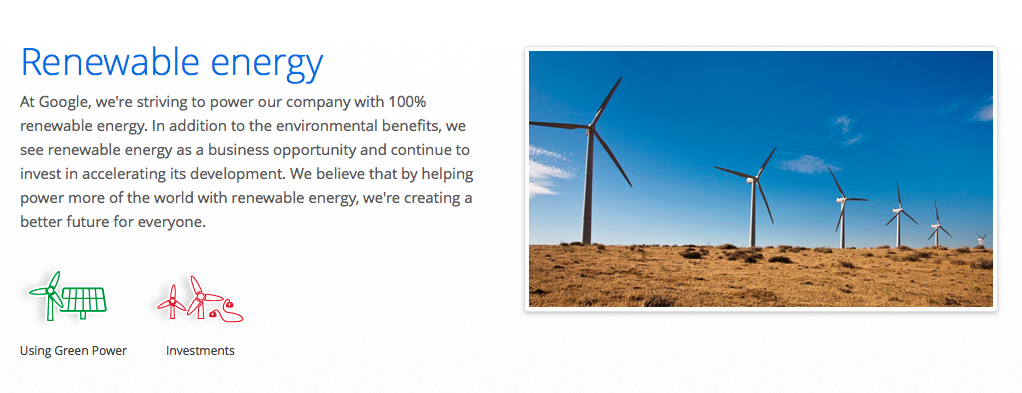
The Environmental Protection Agency has published its list of the top 30 tech and telecom companies in the U.S. that take advantage of the most renewable energy sources, placing Google near the top of the bunch at third place. Google’s green power consumption reached 737,364,727 kWh, according to the EPA’s report.
Only Intel and Microsoft managed to beat Google in total green power usage.
The study also notes that around 32% of Google’s total power usage comes from “green” sources, such as wind and solar, while the other 68% comes from non-green sources. Many companies easily beat the 32% statistic, but Google’s total power consumption, including non-green sources, is the highest of any other company on the list.

Android phone makers are running out of ways to differentiate their devices from the crowd. It’s all coming down to a rectangular screen, as little chrome around the edges as possible and a curved round back. Pretty much every smartphone looks the same at this point with slight varying dimensions.
So that’s why LG’s curved Flex is an interesting newcomer. The LG Flex actually makes a somewhat flexible 6-inch display that defaults to a slight curve. What are the supposed benefits of that?
I’m a huge fan of the Nexus 5 and G2 and even AT&T’s 4G LTE network of late so I was genuinely looking forward to see what this could do…
Expand
Expanding
Close

The Kickstarter-funded, Android-based Ouya debuted last year to some so-so reviews, but gaming console isn’t giving up just yet. Ouya, which retails for $99 for an 8GB unit, is making the limited edition, white 16GB unit now a permanent addition to the lineup and making it black according to TechCrunch.
Ouya will maintain the $129 price tag for the storage-increased model, but both versions will see some iteration to the hardware…
Expand
Expanding
Close
While technology hasn’t quite reached the stage of allowing us to watch the Winter Olympics from within Google Street View, you can now take a virtual wander through the host city of Sochi. The games are scheduled to take place there from 7th to 23rd February.
Street View coverage in Russia also now includes Vladivostok, Irkutsk and Yakutsk – though you may want to put on your coat for the latter: as the city with the greatest seasonal temperature swings on Earth, the lowest recorded winter temperature was a bracing -83.9F (-64.4C).
Google also added its first imagery in Slovenia, making the central European nation the 56th country to be added to Street View.
Check out some other cool (not all of them quite so literally) places you can visit on Street View with our roundup here.
More than three years after Google founders Larry Page and Sergey Brin first proposed it, a controversial stock split has finally been scheduled for 2nd April after a shareholder lawsuit opposing the move was settled. The split will see the number of shares doubled and their value halved.
The controversy stemmed from the form the new shares will take. Google currently has two types of stock: Class A and Class B. Class A stock is what most shareholders own, and gives them normal voting rights. Class B stock, held by Page and Brin, gives them ten times the voting rights per share, which gives them 56 percent of the voting rights despite owning only 15 percent of the company.
The stock split will create a third type of share, Class C, which have no voting rights. This will enable the company to issue additional shares to reward employees without Page and Brin losing control of the company. Existing shareholders will get one Class C share for each Class A share they own. The lawsuit alleged that Class C shares would trade for less, and that their existing shareholding would therefore be reduced in value.
Under the terms of the settlement, Google has effectively agreed to make good any losses as a result of a gap opening up between the values of A and C shares, with up to $7.5 billion set aside. Class C shares will trade under Google’s existing ticker code GOOG, while Class A shares will get a new code, GOOGL.
Via Mercury News