Stay up to date on news from Google headquarters. Be the first to learn about plans for Android, Google Plus, Google Apps, and more!
Stay up to date on news from Google headquarters. Be the first to learn about plans for Android, Google Plus, Google Apps, and more!

Aardvark has announced in a blog post this afternoon that Google has shut them down. For those of you who don’t quite remember Aardvark, a question and answer site, was acquired by Google for $50 million in 2010. Today, Aardvark is being closed, and the team will be moved to Google+ and other products.
We’ve been excited to share these lessons within Google over the past year, especially as part of the effort behindGoogle+. It has been gratifying to see how well this project is doing — even in these early stages, Google+ has already become a great place to share knowledge online, eclipsing the original vark.com! — and there is much more to come very soon. In this and other projects at Google, the Aardvark team remains committed to developing powerful tools for connecting people and improving access to information.
The closure of Aardvark comes along with Google’s closure of Labs we reported on last month. Google’s CEO Larry Page has gone on record saying Google is killing off smaller products, in order to put “more wood behind fewer arrows”. This is evident when Google killed Labs, Slide, and now Aardvark.
Update: Google has also announced the closing of Google Desktop.
Update x2: Google has posted the full run-down of what is being closed.
Continue after the break..
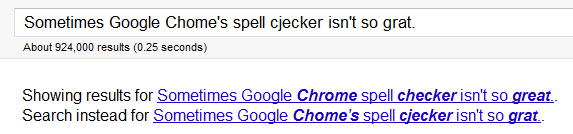
As reported by Google Operating System, Google will release a “smarter” spell checker in a future update of Chrome. Currently, Chrome only uses the dictionary to spell check, not taking context into consideration. The future update, however, will work like Google Search’s “did you mean” feature.
Google has been hesitant to add the updated spell checker citing privacy concerns. As Google Operating System explains, a JSON-RPC request is sent to the “did you mean” service in the background, where the context-menu will then be updated. It will be interesting to see how fast Google can get results to come back.
Announced by the company in a blog post, Google is now partnering with FedEx to offer Google Docs uploading inside of Print Online. Print Online is FedEx’s service that allows users to upload documents to be printed at a local FedEx stores for pickup. But what happens when you write your documents inside of Google Docs, and not Pages or Word? With the companies new partnership, you will now be able to upload files directly into Print Online from the cloud.
Tuesday, Google also announced in a blog post that support for one click Cloud Print has been added — along with the ability to add page numbers. As you can see in the screenshot after the break, Cloud Print is easy — with just one click you can print to any printer (as long as its setup) from any device or OS. The Cloud Print feature is currently available only in documents and spreadsheets. Furthermore, the new page numbers feature is a must for those of us who use the MLA format on a daily basis. The ability to add page numbers is definitely a feature Docs has been lacking..
[youtube=http://www.youtube.com/watch?v=REsEgrhmMjc]
With the last manned mission to the Space Shuttle, Google announced in a blog post that the company accompanied two Nexus S smartphones to venture into space — for the second time. As seen in the video above, the two devices will remain on the Space Station to help robots perform tasks for astronauts.
A couple of our engineers built an open source sensor logging app that NASA decided was perfect for running diagnostics with the SPHERES. You can download the same app yourself from Android Market. NASA was interested in Android because it’s an open source platform, which makes it easy to customize the software on the phone to meet the specifications required to fly in space and work with the SPHERES. Nexus S was also a good fit because of its various sensors and low-powered, but high-performing, processor.
NASA chose Android because of its open source platform, which is pretty understandable because for the most part NASA is pretty open. Check out the app if you’re interested.

Like politics, smartphone wars come down to two major parties – Google and Apple – embroiled in a never-ending fight for consumers, especially those who have not made up their mind as to which operating system they’d like in their next smartphone. According to July 2011 data from Nielsen survey, “these ‘undecideds’ will be the ones device makers will be hoping to win over”. Interestingly, the Late Adopters among likely smartphone upgraders are the ones most likely to be undecided about their next phone platform.
The research firm discovered that forty percent Americans aged 18+ now have smartphones. Android leads the pack with a forty percent OS platform share and iOS came in second with 28 percent. Compared to Nielsen’s June 2011 study, Android grew its share by one percentage point while iOS growth fell flat. The BlackBerry platform lost one percentage share and now stands at nineteen percent.
Of those buying a new smartphone next year, one third would opt for an iPhone and another third would go Android. This leaves other manufacturers outside the Android-iOS duopoly to fight for the remaining 33 percent of buyers.
Android, however, is the preferred platform of choice for the earliest of early adopters:
Among those who say they are usually the first to embrace new technologies, “Innovators” or the earliest of early adopters, Android leads as the “Next Desired Operating System” – 40 percent for Android compared to 32 percent for iOS. (Survey respondents were asked several questions to determine their attitudes toward new technologies.)
Moreover, the smartphone is clearly on the rise…
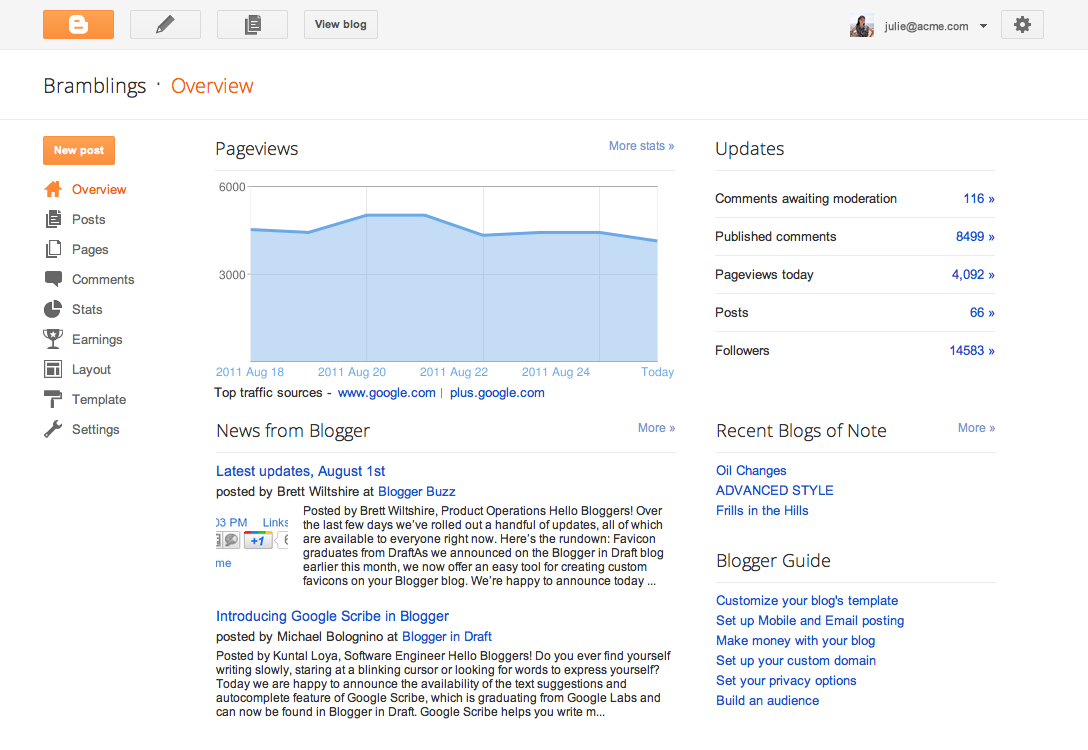
Google embarked on a Blogger redesign back in July, part of a broader push to update the look and feel of their many services that now resemble the clean, elegant appearance of the Google+ service. The revamped UI today went live for everyone, the first in a “series of major updates” due over the course of the coming months, Blogger product manager Chang Kim wrote in a blog post.
Thorough changes are evident in all parts of the Blogger interface, from the post editor to Dashboard. Code has also been optimized and parts of it rewritten from scratch, mainly the editing and management experience.
We here at 9to5Google are all for Google’s new design language stemming from the work of the original Macintosh designer, Andy Hertzfeld. Design-wise, Blogger never felt like a Google service. Updating the Blogger interface to conform to the broader design changes in other Google’ products makes sense from the usability point of view, and especially if you live in a Google world. The new design has to be enabled manually in your dashboard, mind you.
[youtube=http://www.youtube.com/watch?v=Dt5sMxYMkGs]
Google’s environmental strides have inspired a flurry of Silicon Valley copycats to go green. The vast majority, unfortunately, just for the sake of it, mostly to look cool and hip in the public eye. Even though many tech giants are missing out on the big picture, there are a few notable exceptions, such as Apple. The iPhone maker is famously building a stunning spaceship-like campus that will have an underground parking lot with solar roof and they reportedly gave employees “iBikes” to ride between campuses.
But commuting to work without driving, meeting with someone on another continent without flying and riding cars without gasoline has long been “a way of life at Google”, their transportation manager Kevin Mathy wrote in a blog post. In case you didn’t know, Google runs the largest corporate shuttle services in the country.
The system spawns a thousand GBikes Googlers use to travel between campuses, an electric vehicle car share program dubbed GFleet, an on-campus taxi service called GRide and much more. Heck, Googlers even earn credits each time they get to work via non-engine means, which they can later convert into dollars to donate to their charity of choice. All this, plus other amazing facts, in a cool corporate YouTube video.

Strangely enough, offline mode in Gmail is a standalone web app (pictured above) rather than being baked into Gmail directly. Click for larger.
Google announced in a post over at the official Gmail blog that it is bringing offline functionality back to Gmail, Calendar and Docs. The feature had initially been enabled in select Google services via Gears, the company’s proprietary browser extension that was later retired in favor of HTML5. It took longer than expected to re-write the offline functionality in HTML5, though. This was in part because Google had to wait until the World Wide Web Consortium ratified new HTML5 features that allow for local browser storage and other technologies that make it possible for developers to write web apps which sync seamlessly between offline and always-on modes of operation.
Gmail offline will be available today, Google said, and offline for Google Calendar and Google Docs will be rolling out over the next week, starting today. In the case of Gmail, offline functionality is enabled via a Chrome Web Store app dubbed Offline Google Mail. As for Calendar and Docs, clicking the gear icon at the top right corner and choosing the Offline mode lets you view events from your calendars and RSVP to appointments while offline, as well as view your Google documents and spreadsheets. Offline Docs editing isn’t supported yet, but Google is “working hard to make it a reality”.
The question is, will you care about working offline now that mobile/broadband Internet and wireless hotspots have become ubiquitous? (YES!)

When Google+ was launched, users were pretty receptive, to say the least. After Experian Hitwise reported a 3% decrease in traffic, the site went on to become the fastest growing in history. Today, a new report from Hitwise (via Bloomberg) shows the social network may struggle to catch up to 750 million+ strong Facebook.
While users spent an average of 5 minutes and 47 seconds on the service the week ending on August 27 (a 4% increase from the week before), U.S. visits to the site fell 5.5 percent to 1.6 million. The real story here is the fact that use of Google+ seems to have peaked backed in July.
July 16th seen the average time spent on the service peak at 5 minutes and 50 seconds, while U.S. visits to the site were up 283 percent that week. It’s necessary to note that these numbers can’t be taken as a truly accurate reflection of the service’s growth.
Expand
Expanding
Close
[youtube=”http://www.youtube.com/watch?v=qTxFjBTfqZg”]
Motorola has announced a successor to its earlier Droid Pro, the Pro+. The Pro+ features a full QWERTY keyboard on the front of the device, Android 2.3, 1 GHz processor, 3.1-inch screen, and hotspot capabilities. Sadly, the device will not be making its way to the U.S. — rather, hitting Europe and Asia in October.
Motorola is filling a gap that Apple hasn’t yet attacked. Users who are tired of BlackBerry, but still need the business feel, now have a more viable option. We look forward to this hitting the states hopefully by the end of the year.
Full press release and gallery after the break:

comScore has just released their ‘U.S. Mobile Subscriber Market Share’ report for the three month period ending in July. The report once again sees Apple’s market share increasing, this time up 1 percentage point to capture 27% of the market. This is in comparison to Google, who came in at an impressive 15% increase to top the chart at 41.8% market share. They are of course followed by the usual suspects, RIM in third at 21.7% (down 5%), and Microsoft at 5.7% (down 1%).
Apple’s market share among mobile OEMs is also on the increase, growing 1.2% to capture 9.5% of the market. Of course, Samsung (who also increased 1%), still dominates among OEMs with 25.5% of the market. LG comes in at second with 20.9%, followed by Motorola, and Apple.
Expand
Expanding
Close
Boy Genius Report claims it has learned that carrier Verizon Wireless landed an exclusive deal with Samsung for the upcoming Droid Prime, the next Google-branded superphone. It is said to carry a model number SCH-i515 and launch on the Verizon network in October:
Apparently, “Verizon doesn’t think the Samsung Galaxy S II will be competitive with the iPhone 5 when it launches.” Instead, not only is Verizon launching the Samsung DROID Prime, a device that is sure to be the new flagship Android phone ahead of the holidays, but the company will have the handset as an exclusive.
What’s best, the Droid Prime should be the first smartphone to run Google’s Ice Cream Sandwich software, basically Android 4.0 with a unified set of features on both smartphones and tablets. The publication previously wrote that the Droid Prime should sport a Super AMOLED HD display, probably 720p, and Texas Instrument’s OMAP4460 processor rather than Samsung’s own dual-core chip.
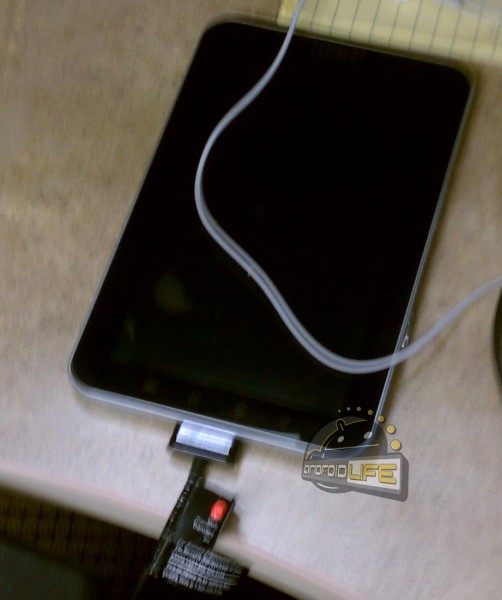
An.droid Life has exclusively leaked the first images of the new Galaxy Tab 7.7, which is expected to be announced at IFA next week. There aren’t many details on the new device, except the fact it uses a 30-pin connector to charge like the Galaxy Tab 1o.1. How can we tell the difference between this and the 10.1? The 7.7 is charging on the side/small panel, while the 10.1 is on the bottom. Also, the device is rumored to be packing a Super AMOLED screen. Only time will tell, so stick with us next week as we cover IFA. Yeah, we’ll be there!
Check out the other shot after the break:

AllThingsD is reporting this evening that Google will shutdown Slide, a company they acquired for $200 million last year. All of Slide’s products will be shutdown — except Prizes.org (via TechCrunch). While the rest of the Slide team will continue to work at Google, Slide’s found Max Levchin is leaving. A Google spokesperson told AllThingsD:
“Max has decided to leave Slide and Google to pursue other opportunities, and we wish him the best. Most of the team from Slide will remain at Google to work on other opportunities.”
Before being shutdown by Google, the Slide team was hard at work on Photovine, a photo sharing app that was released by Google just one week ago. The app was focused on sharing photos specific to a certain category, or vine, with the community. Sadly, Photovine will receiving the axe over the next few months — along with Slide’s other products like Disco and Pool Party. So why would Google kill off a part of their company that released something just a week ago.. and paid $200 million for?
Updated: Slide’s official blog post has gone up. Continue after the break..

Google has pushed an update this afternoon for Google+ for Android. The update is pretty minor featuring a few bug fixes, but the update now gives users the ability to reshare posts made by the people they follow. The update also adds the support for up to 38 languages. Check out the full change log after the break: (via PhanDroid)
<
Joining other reactions on the web to Steve Jobs’ sudden resignation as the CEO of Apple yesterday, Google’s vice president of engineering Vic Gundotra recalled on Google+ a particular Sunday in January 2008 when Apple’s boss asked him to call his home. The reason? The Google logo on the iPhone:
So Vic, we have an urgent issue, one that I need addressed right away. I’ve already assigned someone from my team to help you, and I hope you can fix this tomorrow. I’ve been looking at the Google logo on the iPhone and I’m not happy with the icon. The second O in Google doesn’t have the right yellow gradient. It’s just wrong and I’m going to have Greg fix it tomorrow. Is that okay with you?
The following day, the world’s greatest product developer followed-up with an email message with the subject “Icon Ambulance”, directing Vic to work with Greg Christie to fix the icon. MacRumors dug up the Google logo icon back from those days, shown below. Of course, Steve Jobs’ penchant for calling people in the middle of the night is legendary. Gondotra acknowledges that “it was customary for Steve to call during the week upset about something”. A 2004 Bloomberg interview quotes Jobs’ approach to product design and calling unexpected ad hoc meetings:
Innovation comes from people meeting up in the hallways or calling each other at 10:30 at night with a new idea, or because they realized something that shoots holes in how we’ve been thinking about a problem. It’s ad hoc meetings of six people called by someone who thinks he has figured out the coolest new thing ever and who wants to know what other people think of his idea.
Vic, who is in charge of engineering at Google and as such had been in direct competition with Apple’s former boss on multiple fronts, has more praise for Jobs’ leadership qualities:
Google engineer Ido Green just made comment on This week in Google that offline mode for Gmail and Calendar are on their way by the end of the summer. There was talk of these features at this year’s Google I/O, but it’s nice to know offline mode is still on track. Besides Gmail and Calendar, Green also said there are a few more offline features coming.
[youtube=”http://www.youtube.com/watch?v=iJaowSisMGs”]
As the launch of the Motorola Droid Bionic comes closer, more and more information regarding the device is leaking — almost daily. Today’s leak is the Droid Bionic’s teaser, and boy is this quite a production. Besides the great theatrical entertainment, it confirms a September drop. Boy this must have been expensive — enjoy! For those of you who didn’t see, check out the Bionic’s boot sequence after the break. (via Droid Life)
The Register is reporting that Google has shut down the Android developer forums, a place where Android developers could once get support on the apps they were building — in a public manner. The one downfall to the forums was the fact there was no official help from Google, but this new way will certainly remedy that. Developers who need help will now be required to email Google directly for support.
The Register points out this move could have been made by Google in order to save face. One example they give is when developers were complaining on the forums for not receiving payments owed to them. Google eventually resolved the issue, but the complaints would remain there forever. At any rate, Google’s new way will probably suffice.
[youtube=”http://www.youtube.com/watch?v=kRXVyEoaeQw”]
Earlier today, Google released update 3.1.3 to the Android Market. The update is pretty minor, but does pack a couple of new features. First off, users can now use Google’s +1 button as a way of liking apps and games. More importantly, Google has introduced the ability to set a pin number for making purchases — like you’re used to doing when you awake your device.
Other minor updates include an updated Market icon, settings menu, and the size of the app is now in plain view (noted by Android Police). Check out another screenshot and how to get your hands on the update after the break. (via AndroidCentral)
[youtube=http://www.youtube.com/watch?v=3j_2srh7o3M]
Google is anything but the dominant force in Asia, where local search engine Baidu is number one. Also, Asia, the world’s largest and most populous continent with the population of 3.88 billion people, is just beginning to discover Android, but the continent is poised to become the next gold mine for Google as smartphones become more affordable to the mass consumer. One exemption that proves the rule: Korea, a poster child for the latest tech.
People wield the latest gadgets there and use them more often and in ways that put to shame their counterparts from the Western world. Google’s mobile ad team went out into the streets of Seoul to ask smartphone users how they use their devices. The professionally produced footage is, of course, yet another showcase of the numerous ongoing marketing activities meant to convince people to stay under the Google fold.
In this case, Google wants potential advertisers to place adverts on web sites and inject them inside mobile apps using their technology. By the way, notice a bunch of Galaxy S phones everywhere (to our Apple readers: iPhone 4 spotting on mark 1:15).
But who could blame the Internet’s #1 search company for promoting the use of smartphones? With a whopping 97 percent of Google’s revenues coming from advertising, no wonder they did not spare any expense producing this testimonial. Still, worth your time so sit back, relax and enjoy the three and a half minute ride. Also, go past the fold for interesting takeaways from a Google survey in collaboration with Ipsos of over a thousand South Korean smartphone users…
In its never-ending battle against annoying spammers who pollute our search results, the Dublin, Ireland arm of the Internet search giant published job openings for spam fighters who are fluent speakers of Arabic, German, Russian and Spanish, indicating the rising spam threat in those markets. The job listing requires would-be candidates to have BA/BS degree, “preferred with a strong academic record”, excellent web research and analytical skills and experience with HTML and working for an Internet company.
If terms such as ‘WHOIS’ or ‘DNS’ mean nothing, don’t even apply as understanding of firewalls, IP addresses and name servers is a must as you’ll be directly impacting the quality of Google’s search results through search quality evaluation. Here’s from Google:
You will be working on the cutting edge of search and the forefront of the web ensuring quality information is provided to millions of internet users, and you will be expected to keep pace with constant change in a fast-paced work environment, bringing innovative ideas to improve access to relevant information on the web. You are a web-savvy individual who is a take-charge team player, as well as a quick learner and strongly interested in providing a better search experience for Google users.

 Wired‘s got some good news for Amazon, Google, Dropbox and anyone else who stores music in the Cloud. The practice is legal and doesn’t infringe on record company rights. Additionally, Cloud companies need not store multiple copies of the same song, so long as each users file is the exact same copy, including MD5 hash (same bit rates, album art, etc).
In a complicated federal court decision Monday (see Threat Level’s write-up), a New York federal court judge ruled that the practice was legal — but only insofar as the single storage method is done for exactly unique copies. So for instance, all people who bought “Stairway to Heaven” as an MP3 from Amazon would have the exact same file (as determined by an MD5 Hash) and MP3tunes could just store a single copy.
However, the ruling makes clear that if MP3tunes scanned a customer’s music collection and found “Stairway to Heaven” ripped from a CD with a slightly different file size, the company could not simply substitute a master copy. Instead, that customer would have to upload the file.
The decision also said that allowing “sideloading” of songs was legal. That was the feature of MP3tunes that let users add songs they’d found on webpages, such as music blogs, directly to their online locker.
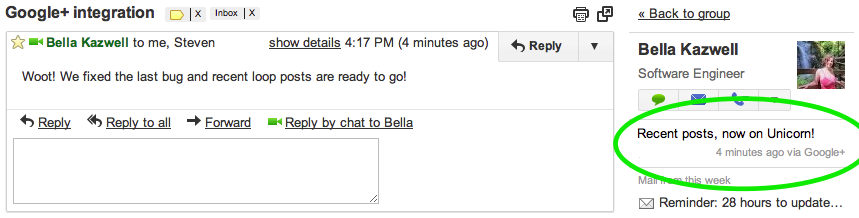
Google’s Mark Striebeck noted on Google+ tonight that in Gmail you can now see the most recent Google+ post made by the sender. Hopefully, those are only public posts or posts meant to be shared with the recipiant or oh, boy another privacy stink coming.
Be on the lookout for this in your inbox.
Expand
Expanding
Close