Qualcomm

Qualcomm is currently hosting the 4G/5G summit in Hong Kong and has announced three new Snapdragon processors: the 653, 626, and 427. These three new chips come with Qualcomm’s brand new X9 LTE modem, which opens up the ability for devices to run on two additional radio bands (Category 7 capable of 300Mbps download speeds and Category 13 capable of 150Mbps upload), Qualcomm Quick Charge 3.0, and adds support for dual cameras in devices.


After Android 7.0 Nougat made its official debut earlier this week, it became official that the beloved Nexus 5 had reached the end of its official support. While the device continues to live on thanks to developers, Google has dropped it after nearly 3 years, not that we should be surprised. With major releases of Android, plenty of older smartphones become officially outdated, even if they can still handle the new platform.

Qualcomm has today announced its latest mobile processor, the Snapdragon 821. This new chip turns the dial up to 11 compared to its older brother, the Snapdragon 820. Qualcomm says that this processor is not a replacement for that chip, but simply a newer, faster iteration…

Xiaomi‘s Mi5 flagship has arrived not too long ago on the market, and has been greeted with generally positive reviews. Its praises come from good build quality matched by mostly high specs, and, in typical Chinese fashion, an affordable price.
However, the firm does not want to trail behind come the last quarter of the year. In order to hack it against the likes of Samsung (with its Note 7) and Apple (and the iPhone) among others, it looks like Xiaomi is prepping to launch a higher-end version of its top phone…
The rumor mill for Samsung‘s next flagship seems to be unstoppable. Be it for its size, specs or configurations, it is undoubted that the Galaxy Note 6 — or Note 7, as we have now come to expect it — is polarizing a lot of interest.
Today, thanks to two of the most famous leakers in the tech space, we may have new information regarding its launch date as well as a detailed look at the device itself…

In the myriad of flagship devices that get announced almost every month, we tend to forget that a big chunk of Android customers comprises people that care little about all the fancy features higher-end devices carry, and mostly need a tool to get a few things done.
That’s the market Sony is targeting with its latest handset. After quickly retracting all mentions of the Xperia E5 from social media briefly after unveiling it last week, the Japanese firm is officially announcing the device today…
Over the past few years, a common trend in the smartphone world saw a myriad of OEMs pushing out a multitude of flagships. As demand for bigger-screened devices arose, so did the request for smaller handsets, often leading to at least two versions of the same device.
Asus is today pushing those boundaries even further, presenting us with not two but three flagship devices, part of the new Zenfone 3 family…
As it often happens with new technologies — especially the ones that aim to replace fundamental, widely used parts of our digital devices — the early implementations are often challenged by a series of missteps and various other problems.
The latest concrete example of this is the promising-yet-troubled USB-C, which led to a few controversies as of late. However, it seems, with its latest G5 flagship, LG may be one of the few manufacturers that got it right (via gtrusted)…

In an announcement which could deal a further blow to Qualcomm’s slowing processor business, Xiaomi is seemingly about to reveal plans to build its own CPUs in-house. In a report published by Korea Times, it’s claimed that the major Chinese smartphone maker will use the industry-standard ARM license technology to make its own ‘Rifle’-branded SoCs.
Earlier this week we brought you news that Google engineer, Benson Leung suggested quite strongly that the LG G5 and HTC 10 (and any other device using Quick-Charge technology and a Type-C connector) was technically not compliant with USB Type-C specification. Because of the way Quick-Charge 2.0 and 3.0 delivers the charge, it restricts some of USB Type-C’s functions by taking up the data lines.
While we’re yet to hear any kind of response from LG or HTC, Qualcomm has (sort of) answered the criticism by half suggesting it’s up to manufacturers to choose how they implement the technology, and that there have been no complaints so far from customers.
The spring hardware refresh seems to be on a roll, and this year, in addition to the usual Samsungs, LGs and HTCs, a slew of Chinese manufacturers are making their way to the market with improved, highly-specced and often premium designed high end handsets.
While not all of them make it to the West, at least initially — like the just unveiled LeEco “superphones” — these devices are certainly worthy of consideration. One of them is the Zuk Z2 Pro, the new flagship of the Lenovo-backed Chinese brand that wrapped up the presentation earlier today…
HTC has been publishing its own revealing teasers for the upcoming flagship smartphone over the past few weeks. The HTC 10 is going to have ‘the best BoomSound yet‘, a ‘compelling camera‘, and a shiny, polished chamfer on the back according to the manufacture’s past tweets. Now Qualcomm has joined in with the pre-launch games…
The Galaxy S7 and its curved-screen sibling are fast phones. Incredibly fast. Despite the demanding QHD panels, 4GB of RAM paired with a snappy processor keep things consistently smooth. However, unlike last year’s entire Galaxy S6 family – which mounted the Samsung-made Exynos 7420 – for 2016 Samsung decided to restore some faith in Qualcomm, whose faulty Snapdragon 810 processor gave certain devices more than one issue last year. In the United States, in fact, both Galaxy S7s use a Snapdragon 820 SoC; a choice which of course needed to lead to some controversy…
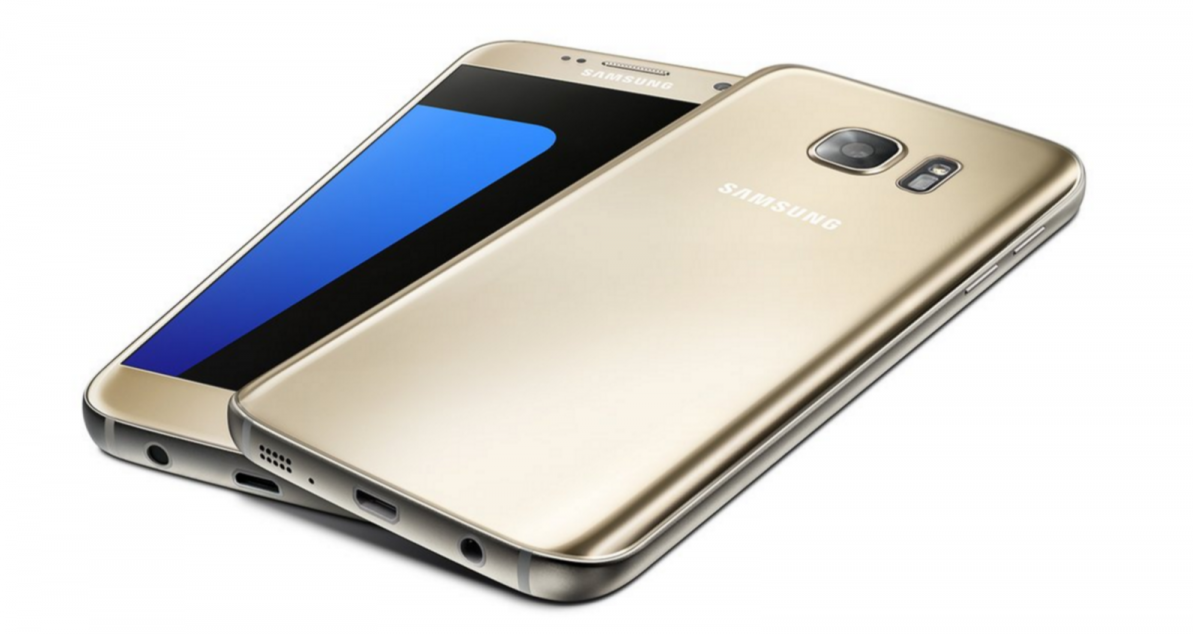
Among the numerous changes made by Samsung with last year’s pair of Galaxy S6 flagships, the decision to stick with the Exynos 7420 everywhere the device was shipped stood out particularly. Common practice for the South Korean giant was to manufacture its high-end handsets with Snapdragon chips in the mainstream markets of Europe and the United States, while delivering an Exynos-powered experience in Asia.
Given the Snapdragon 810’s notorious over-heating problems, however, it was probably a good decision; but Qualcomm set to come back in full swing this year, obtaining a deal that sees US-bound Galaxy S7s equipped with their SoC. This, however, seems to have created major discrepancies between the two models’ performances; according to AnTuTu tests, a negligible 5% difference sets the two models apart as far as CPU power goes, while up to a massive 32% gap separates the greatly superior Snapdragon 820 from the seemingly under-performing Exynos 8890 in GPU-related benchmarks…
A couple of days back, it came to light that Samsung had opted not to include Qualcomm’s latest fast-charging technology in the Galaxy S7 or S7 Edge. This decision was made despite the fact that US, China and Japan’s models are equipped with the Snapdragon 820 processor, which we know is capable of supporting Quick-Charge 3.0. Sony, likewise it seems, has opted not to include Quick Charge 3.0 support in any of its new Xperia X phones.

Battery life is undoubtedly one of the major pain points most consumers have with their smartphones. Because of technological limitations, OEMs often have to find workarounds for squeezing out as much screen on (and off) time as possible, often working on software optimizations or simply trying to fit a larger unit inside the body of the device – at times making it removable.
Another way of circumventing such limitation took form in the way of making batteries recharge much faster, thanks to technologies such as Qualcomm‘s ‘Quick Charge’, which has now arrived at its v3.0. Expected to hit the majority of 2016 flagships, – like the LG G5, which does indeed support it – the latest iteration didn’t however make it to the Samsung Galaxy S7 (and S7 edge), which stuck with last year’s 2.0…

The race to allow us to rapidly charge our smartphones got a big boost last year when Qualcomm announced that the Quick Charge 3.0 tech in its Snapdragon 820 chip would allow a typical smartphone to be charged to 80% capacity in 30 minutes. Oppo is now claiming that you’ll be able to recharge some of its devices in just 15 minutes, reports Engadget.
Oppo says that’s about how much time it’ll take to charge a dead 2,500mAh battery to 100%, and that the technology will work over traditional MicroUSB and USB Type-C cables …
Following up its Snapdragon Wear 2100 announcement, Qualcomm has introduced three new low/mid-tier processors to power the next wave of affordable smartphones. The latest additions are the Snapdragon 625, 435 and 425, and all include a notable improvement on previous generation SoCs.

Samsung announced today that they will be manufacturing Qualcomm’s upcoming Snapdragon 820 chip. In particular, the Korean company cites how the Snapdragon chips will take advantage of a new 14-nanometer process and that it will be available on devices being released during the first half of the year.
Qualcomm promised when it launched the Snapdragon 820 that it’s next processor would offer a huge jump in performance and efficiency over its predecessor. If a benchmark result on Geekbench is anything to go by, those claims look like they’ll be true. Those worried by the fact it’s ‘only’ quad-core should stop worrying now.
Samsung has begun development on the firmware for both versions of the upcoming Galaxy S7, according to reports (via SamMobile). Development on both G930FXXU0AOK6 and G935FXXU0AOK6 started this month, perhaps signaling the phone could arrive earlier than usual. Last year, the same development work didn’t start until December, and the phone was announced at the beginning of March, at MWC in Barcelona. If there’s a similar gap between development and release this time around, we could see a phone announced as early as January or early February…
After months of testing, and pre-release teasers, Qualcomm has finally taken the wraps off its next generation flagship Snapdragon processor. The Snapdragon 820 has a number of capabilities and features which should mean all parts of your phone experience are fast and efficient. Surprisingly, the chip features half the number of cores found in the 810 chip, but promises to boost performance across the board…

According to a new report from Amir Efrati of The Information, Google has recently been in discussions with microchip manufacturers about having a deeper involvement in the design of chips used in Android devices. Google hopes to help create a more uniform offering of Android phones by taking part in the chip design process with a company like Qualcomm.
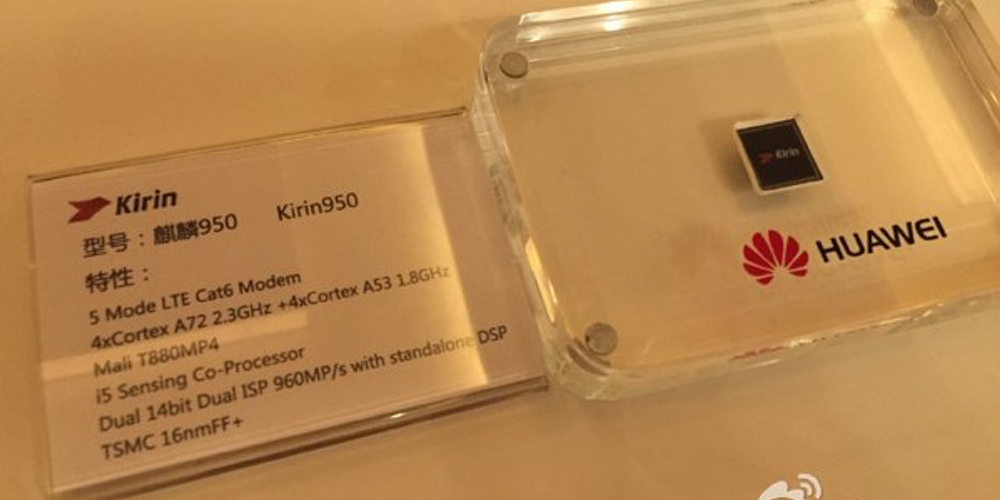
Right on schedule, Huawei took the wraps off its next generation mobile processor at an event in Beijing this morning. The Kirin 950 packs in some impressive specs and looks set to give Qualcomm’s already-troubled Snapdragon 820 chip some stiff competition…