Fitbit Public Preview adds food & water logging, more as app redesign comes to free users



It’s no secret that Google has struggled to get people to upgrade the software on its phones (but perhaps more accurately, the software on other companies’ phones). It’s one of the most blatant examples of an area that Google and its OEMs are just so far behind, especially compared to the adoption rates of iOS on Apple’s devices. And with every passing month, it just doesn’t seem to be getting any better.
It’s been about 8 months since its release, and the latest Android distribution numbers reveal that the newest version of Google’s mobile OS, Marshmallow, has just now passed 10% adoption. Google’s most popular version of Android at this point, Lollipop, lost 0.2 percentage points this month and KitKat, which was announced in 2013, still holds more than a 30% share…
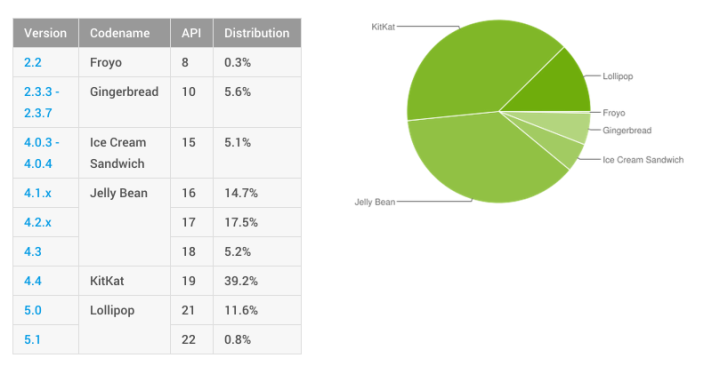
It’s the top of the month, and that means it’s time for another update from Google on Android’s adoption numbers. Lollipop, the latest release, has just in the last 30 days crept up to pass 12% adoption, following an overall market share of 9.7% that 5.0 and later had at the beginning of last month. Specifically, Android Lollipop now has 12.4% of the Android market.
Expand
Expanding
Close

Dell announced today at CES 2015 that its Venue 8 7000 Android-powered tablet is now available. The device—originally announced back in September at an Intel event—costs $400 and is available now in the US from Dell.com and Best Buy stores. It will launch in Canada later this week and in Australia, New Zealand, China, Hong Kong, Japan, Singapore, India, Germany and the UK during early 2015.
The Dell Venue 8 7000 is “the world’s thinnest tablet,” according to the company, coming in at just 6mm. Dell also touts that the device features an “infinity display” with very little side bezel, making the display nearly edge-to-edge. The 8.4-inch display comes with a QHD 2560 x 1600 resolution, as well.
Expand
Expanding
Close
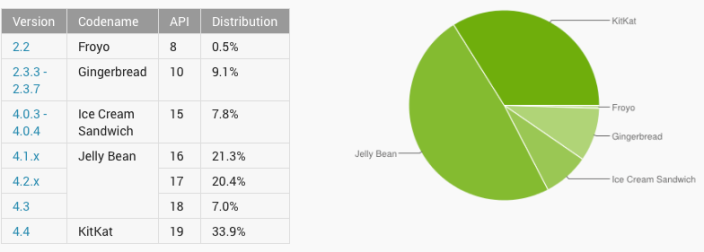
Google, as it does at the beginning of every month, has updated the Android distribution data this time reflecting data collected during the last week of November. KitKat continues its slow climb up this month, rising to 33.9 percent from 30.2 percent last month. Every other Android version, as a result, fell in usage.

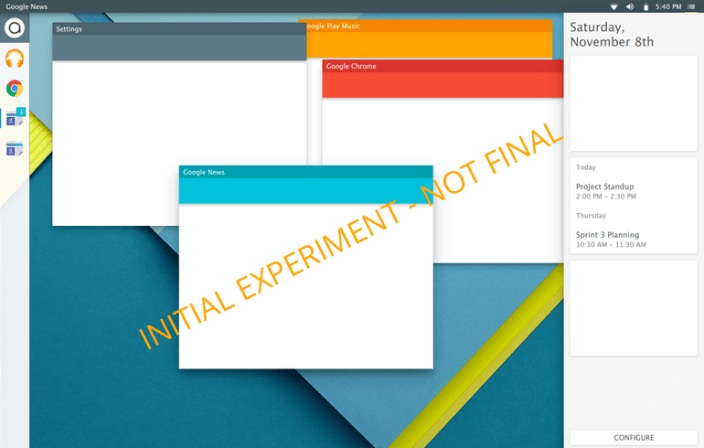
Google ushered in a new design language called Material Design as one of the biggest new elements of Android Lollipop, and an upcoming Linux distribution called Quartz OS aims to bring the clean and simplistic user interface to the desktop. Quartz OS is essentially the marriage of Material Design and Linux, aiming to harness the flexibility and power of the JavaScript-based markup language QML.
Expand
Expanding
Close
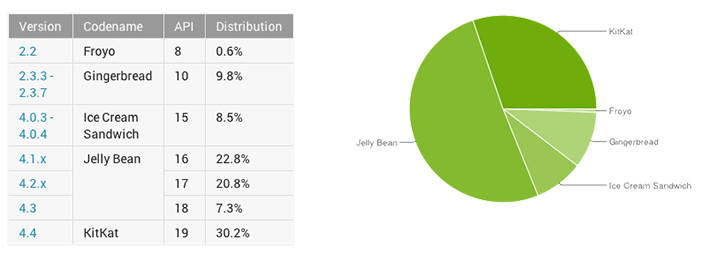
The latest Android distribution numbers for a seven-day period ending November 3rd reveal that KitKat is installed on 30.2% of devices that accessed the Play Store during the last week. Meanwhile, the distribution of the over two-year-old Jelly Bean version continued to decline, but remains the leading platform, with a 50.1% share.
Expand
Expanding
Close

Google has updated the Play Store Developer Distribution Agreement (DDA) with a few notable changes that developers will likely want to pay attention to (via Android Police). First on the list, developers are now required to respond to customer service requests for paid apps and in-app purchases within 3 days.
For paid Products or in-app transactions, you must respond to customer support inquiries within three (3) business days, and within 24 hours to any support or Product concerns stated to be urgent by Google. Failure to provide adequate information or support for your Products may result in low Product ratings, less prominent product exposure, low sales, billing disputes, or removal from the Store.
Secondly, a huge change to how European VAT is handled is definitely going to make developers’ lives much easier. While developers have long been expected to handle the VAT tax for EU sales, Google is going to take over this task as of January 1st, 2015. Determining, charging, and remitting this tax is going to all be up to the fine folks in Mountain View.
Where Google, the Payment Processor or the Authorized Carrier is required by applicable (local) legislation to determine, apply and pay the applicable tax rate, Google, the Payment Processor or the Authorized Carrier (and not Developer) will be responsible for applying and collecting and remitting the taxes to the appropriate taxing authority. If Google collects and remits value added taxes on customer payments (where required of Google by applicable local law) and this remittance fulfils the applicable requirements for value added taxes on those customer payments, such taxes will not be passed on to Developer by Google. Where Google is required to collect and remit taxes as described in this section, Developer and Google will recognise a supply from Developer to Google for tax purposes, and developer will comply with the relevant tax obligations arising from this additional supply.

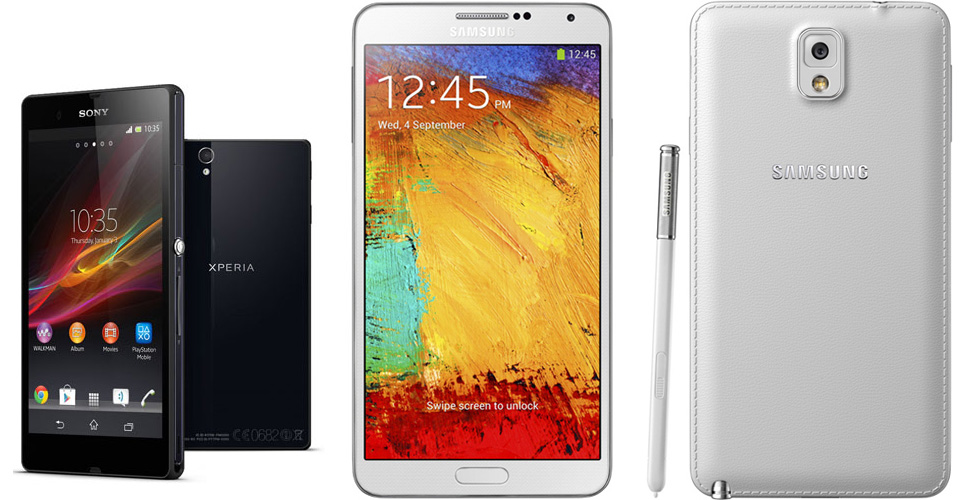
Sony has confirmed in a tweet that it is rolling out the Android 4.4.4 update its older Z-series devices.
[tweet https://twitter.com/SonyMobileNews/status/509297533328584704]
Sony says there are “many improvements” in the upgrade, with better battery performance in background applications and improved email stability & performance singled out for particular note. The company recently unveiled the newest incarnations in the line, the Z3 and Z3 Compact.
SamMobile also notes that Galaxy Note 3 owners on the Sprint network should also receive a 4.4.4 update today.
The Android 4.4.4 update will bring international Wi-Fi calling, version 2.0 of KNOX, and the Kids Mode feature that debuted on the Galaxy S5, along with bug fixes and security patches from Google.
Samsung of course recently launched the Quad HD Galaxy Note 4.


Following an update to Android 4.4 for the Xperia E1 and E1 Dual, Sony today announced the same update is now rolling out for the Xperia M2 and M2 Dual. Like the update has done for other Sony devices, Android 4.4 also brings Sony specific features including a new Status Bar and Quick Settings features, animations and live wallpapers similar to the PlayStation 4, and much more:
Expand
Expanding
Close

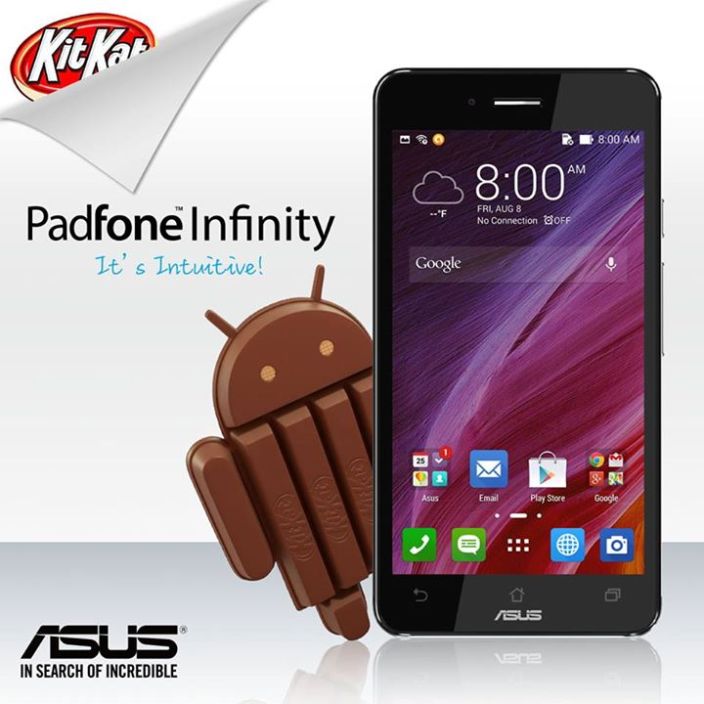
Sure, Android L is on its way, but that doesn’t mean that people still aren’t waiting for software version 4.4. Perhaps better late than never, the ASUS Padfone Infinity and Fonepad Note 6 have made the jump to KitKat. If you haven’t received an over-the-air notification, the software can be manually installed by visiting the Padfone’s or Fonepad’s support pages.
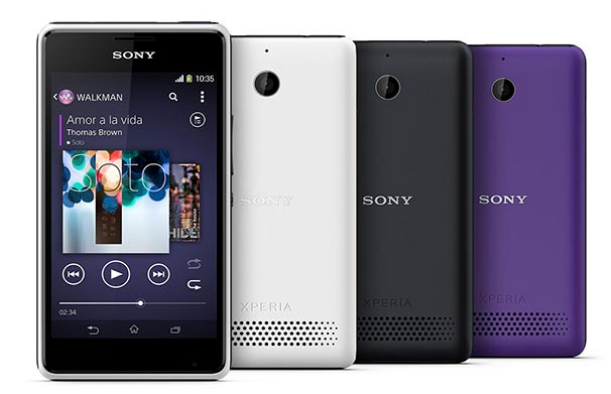
Sony just announced that users of its Xperia E1 and Xperia E1 Dual smartphones will soon get access to Android 4.4 KitKat as the update begins rolling out today. As it has already done with some of its other devices, the update to KitKat also comes with other Sony specific features including new Status Bar and Quick Settings features, animations and live wallpapers similar to the PlayStation 4, and much more:
Sony notes that its next device to get the update will be the Xperia M2 & M2 Dual. As always, the update will hit users at different times depending on your carrier and market.
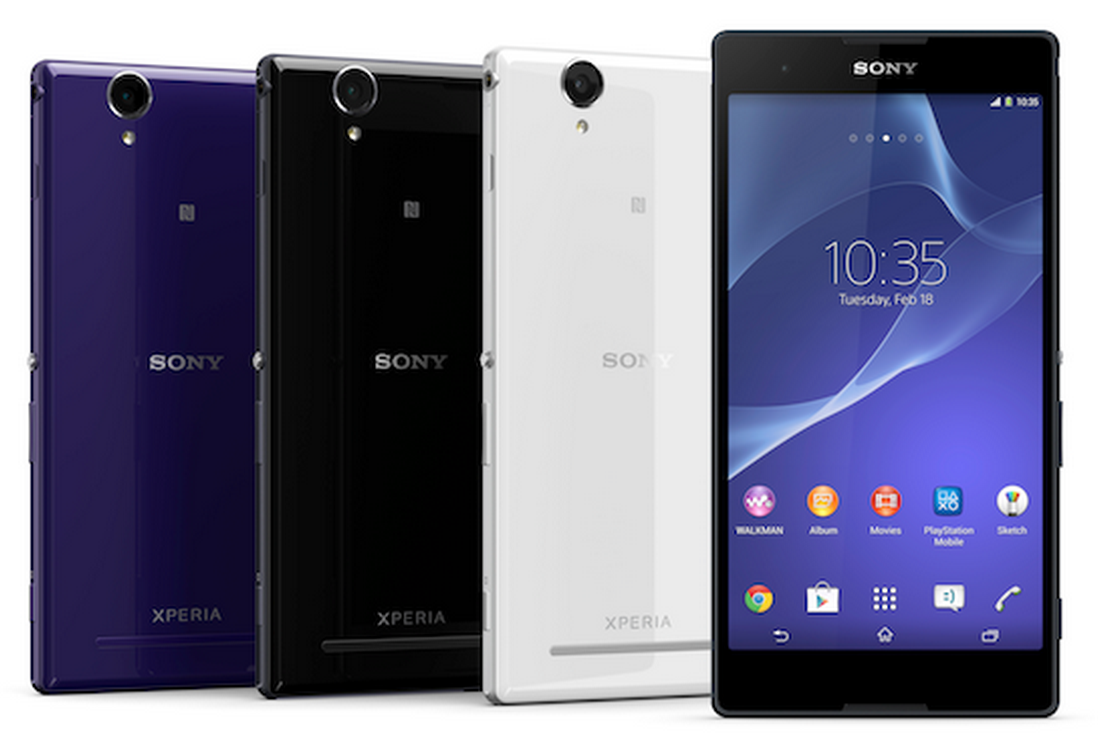
Sony today announced it’s rolling out a new software update for the Xperia T2 Ultra & Xperia T2 Ultra Dual that brings Android 4.4 KitKat alongside other features to the devices.
You’ll also notice a few other goodies in the update aside from KitKat, including: Sony’s newly tweaked Status Bar and customizable Quick Settings, a new UI and animations similar to those on the PS4, Xperia Themes, and a number of improvements to some of the company’s stock apps:
We’re also uplifting Sony’s entire native app portfolio to the latest versions – bringing tweaked / improved / current experiences for (to name but a few): Messaging, MyXperia, Smart Connect, Small apps, TrackID, TrackID TV, Sony Select, Smart Social Camera and…Sony’s Media apps: WALKMAN, Album and Movies, with Sony Entertainment Network cloud service integration* – a more converged and full Sony entertainment experience – Sony Entertainment Network & PlayMemories integration with a more intuitive UI, better download speeds, and more!
The update also brings support for Sony’s “SmartWear Experience” with the SmartBand SWR10 and Lifelog app.
A full list of what’s new in today’s update is below:
Sony says you can expect the update to arrive for other devices, including Xperia E1 and Xperia M2 (& M2 dual variants), in the near future.
Dish and The Walt Disney company announced today that they have reached a multi-year distribution deal that will see Dish subscribers gain access to a ton of Disney content including its ABC and ESPN networks. That means if you subscribe to Dish, you’ll now be able to access the WATCH ABC, WATCH ABC Family, WATCH Disney Channel, WATCH DisneyXD and WatchESPN apps through your computer, smartphone, tablet and other connected devices like game consoles and set top boxes. The deal will also see Dish launch a number of Disney and ESPN networks while pending litigation between the two companies comes to an end:
The agreement will result in dismissal of all pending litigation between the two companies, including disputes over PrimeTime Anytime and AutoHop. As part of the accord, DISH will disable AutoHop functionality for ABC content within the C3 ratings window. The deal also provides a structure for other advertising models as the market evolves, including dynamic ad insertion, advertising on mobile devices and extended advertising measurement periods.
DISH will make available Disney Junior, Fusion, ESPN Goal Line, ESPN Buzzer Beater, as well as Longhorn Network and the upcoming SEC ESPN Network upon its launch. In addition, DISH, ESPN and ESPN Deportes customers will have access to the live and video-on-demand channel ESPN3… As part of the agreement, DISH will launch ESPNEWS, ESPNU, Disney Channel and ABC Family in high definition. ESPN Classic will be reintroduced as a video-on-demand channel.
For Android device users, the majority of the content is available through dedicated iOS and Apple TV apps including WatchESPN, WatchABC, and WatchDisneyChannel.
Expand
Expanding
Close
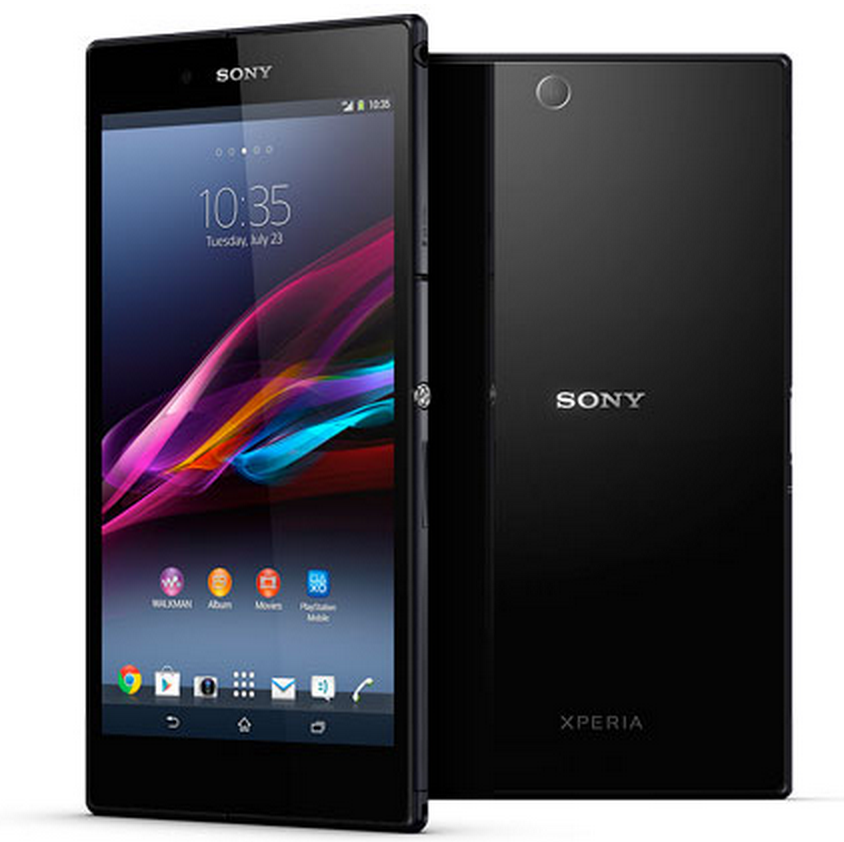
Sony announced today on its mobile blog that the rollout of Android 4.4 KitKat for a few of its new devices has officially kicked off. That means that Xperia Z Ultra, Xperia Z1, and Xperia Z1 Compact owners can expect the upgrade soon, although we’ve yet to get reports that the update is available. As always, the timeframe for the update hitting your device will vary by market and carrier.
Expand
Expanding
Close


As the clock continues to click away to January 1st, we’re taking a look at our last top 9to5Google subject post of 2013. This time around we’ve saved the best for last as we look back at the last year in Android and the top 5 most read stories as determined by you, the 9to5Google reader. Perhaps the inevitable news is that 3 out of 5 or 60% of the top stories surround KitKat and its release. There were quite a few happenings in Android this year, but none more notable than the launch of the latest version of Android which has long been known as Key Lime Pie. Ultimately, Google decided on KitKat and announced the release with a partnership with the KitKat candy bar…which is exactly our kind of partnership. Facebook took its own stab at Android this year with Facebook Home and the HTC First, a story we’ll get to a little later on. I think it’s safe to call 2013 more of an evolutionary year in Android more so than revolutionary, but still another year where the platform surged in growth and adoption.
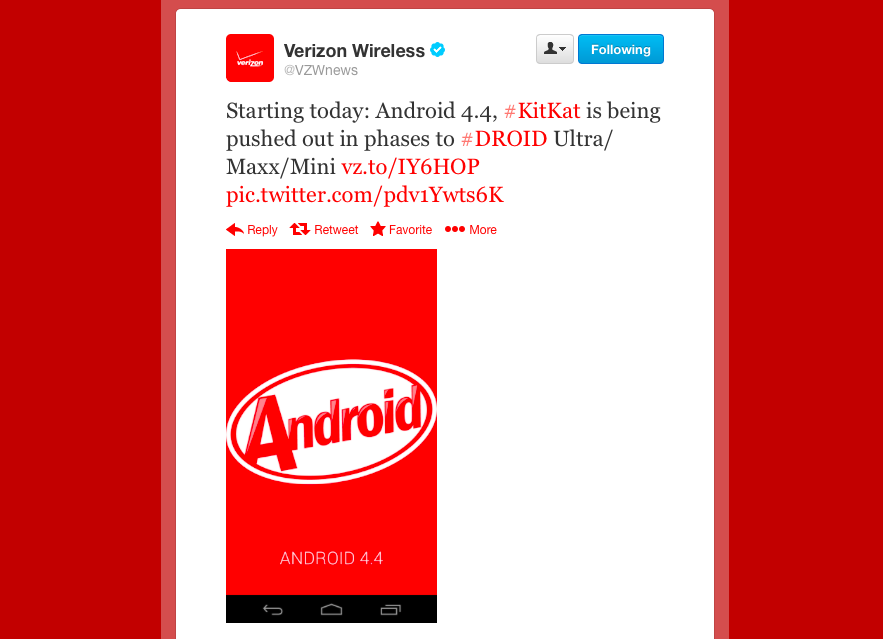
You get KitKat, you get KitKat, you get KitKat! Well, Verizon isn’t the Oprah sure but with Verizon’s announcement via Twitter this morning that Android 4.4 is on its way to the DROID Ultra, Maxx and Mini it sure feels like a Oprah giveaway episode.

Just in time for the holidays and peak travel season, Google is adding some awesome features to Gmail on Android. Just announced via Google+, Gmail on Android now includes a vacation responder, attachment support for any file type and print capability for hard copies of emails for users on Android 4.4 KitKat.
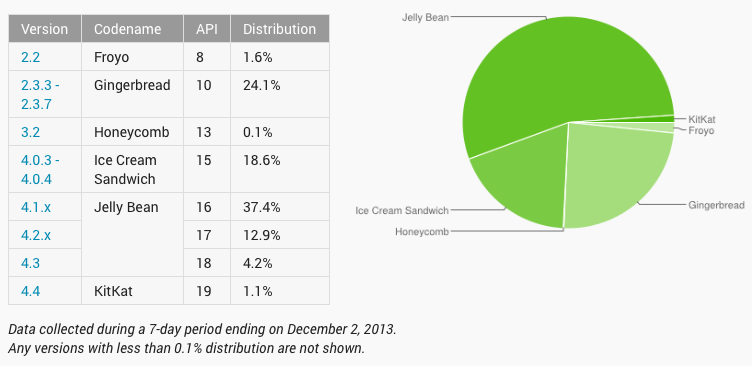
As Google releases its newest platform version numbers for December we’re giving a warm welcome to Android 4.4 KitKat and its first appearance. Arriving on the board at 1.1%, it’s an impressive feat for Android’s newest software considering it’s still only on a handful of the devices it’s actually available for outside of the Nexus 5. When Ice Cream Sandwich debuted back in December of 2011, it was only at 0.6% at the end of January. Jelly Bean saw a similar result as it released in August of 2012 and made its debut at 0.8%.

We hear a lot about adoption of iOS updates vs the fragmentation that Android users are forced to deal with, but just how far behind are the top Android devices compared to iPhone when it comes to getting support? To answer that question, Fidlee.com has updated a chart that it first put together a couple years back in order to see if things have become any better for Android in recent years. It hasn’t.
In the chart above we see that many once flagship Android devices— the Galaxy Note 2, Galaxy S3, LG G2 etc— have still not received the latest Android 4.4 KitKat update and in some cases are even further behind. Most of the devices on the list have been an upgrade or two behind since launch or not long after. In comparison, only the iPhone 3GS fives years after its release doesn’t support iOS 7. We also get a look at how much longer Apple devices generally stay available for sale and continue receiving support, nearly twice as long as Android in most cases.
Not only did Apple claim iOS 7 was “the fastest software upgrade in history” with more than 200 million devices installing the OS less than a week after launch, but analytics firms tracking adoption also noticed adoption was much higher than previous releases. Currently iOS 7 sits at about 77% of users, according to the latest data from Fiksu’s iOS Usage Monitor. While the chart above is only for devices released last year, things aren’t much better for newer Android devices. In comparison to iOS 7 adoption, Google reports that its latest release, Android 4.4 KitKat, is at just 1.1% weeks into launch. The previous release, Android 4.3, is at just 4.2%, while the majority of users remain on Android 4.1 Jelly Bean first released in July 2012. Currently KitKat is only available for Nexus devices and slowly trickling out to Moto X and Google Play Edition devices.
A couple more charts below from Fidlee showing just how bad things are on Android compared to iOS:
Expand
Expanding
Close
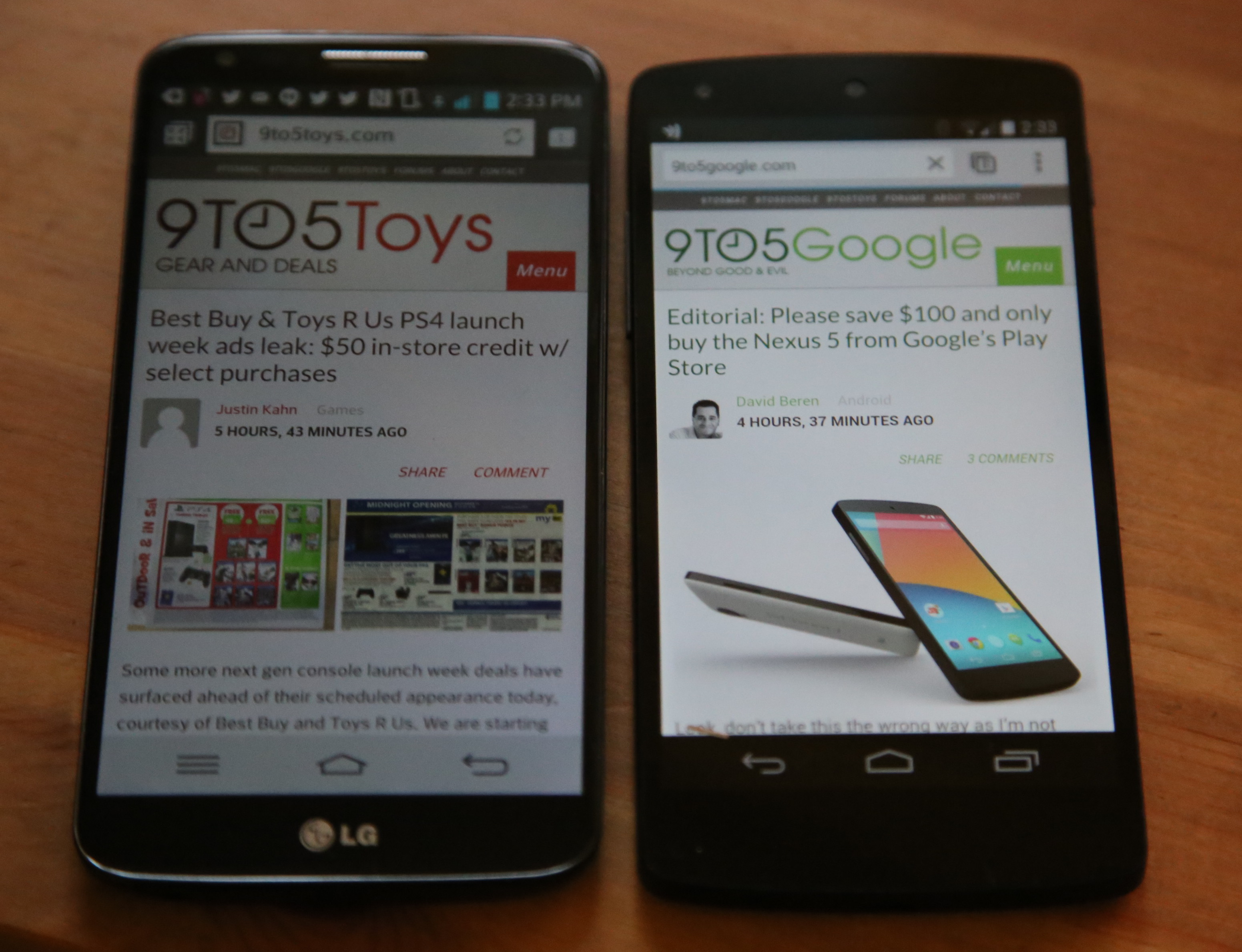
A new report courtesy of the folks at ReadWrite is shining light on the steps and process Google’s engineers undertook to optimize Android 4.4 KitKat before its introduction to the world.
As Google’s engineers believed they reached a “feature parity” point, they turned their attention to performance and optimization, something that began with Android 4.1 Jelly Bean and “Project Butter.” The hope was that Android would be faster, more reliable and devoid of the crashes that plagued many Android users.
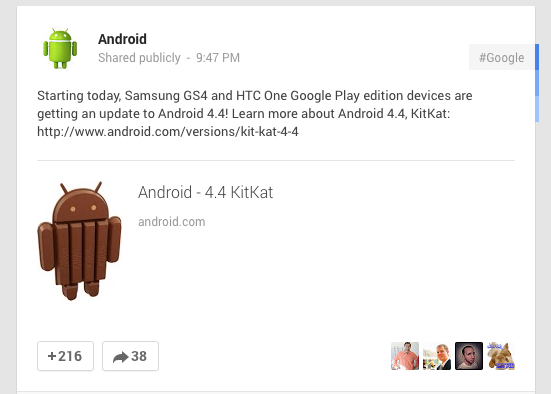
Oh Google, you’re so good sometimes when you let the world know that the HTC One Google Play edition isn’t the only device receiving KitKat today. According to the +Android page on Google+, the Samsung Galaxy S 4 Google Play edition is also beginning its Android 4.4 KitKat rollout.
[tweet https://twitter.com/fakeninjitsu/statuses/403014466767691776]
Thanks to a tipster tweet, the boys at Android Central are reporting Android 4.4 KitKat is now en route to Nexus 4 smartphones. The update weighs in at a manageable 238MB and will of course add all the candy-tasting goodness Android 4.4 brings to the Android world.
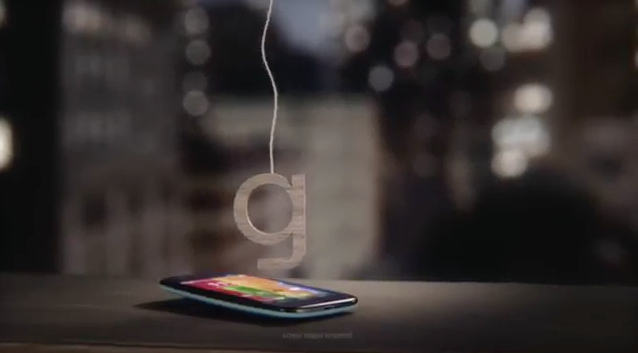
With the US being a part of the second wave of Moto G launches, we’ve now learned being in the later group has an intrinsic benefit. According to Motorola SVP Mark Randall speaking to Omio, “Wave 2, products that we ship after Christmas will start with KitKat…Wave 2 is in the US, there’s South East Asia, and other countries.”
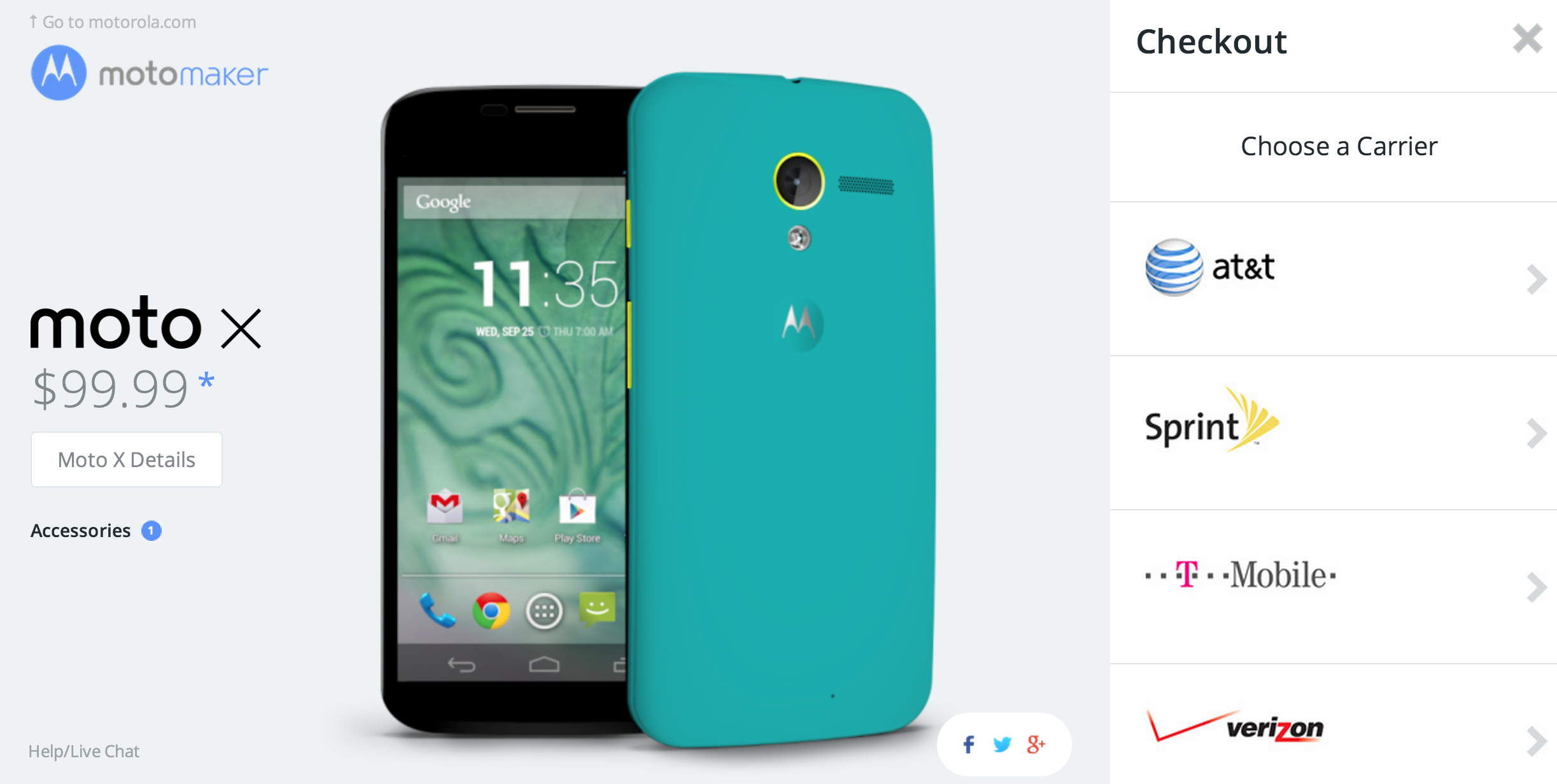
Motorola’s live-stream announcement of the Moto G is taking place as I type these very words, but a special announcement for Moto X users was just announced. Dennis Woodside, CEO of Motorola since its acquisition by Google in May of 2012 just told the world his company will be updating all Moto X devices to Android 4.4 KitKat in a “matter of weeks.”


