Author

Avatar for Ben Lovejoy

Ben Lovejoy

benlovejoy

Ben Lovejoy is a British technology writer who started his career on PC World and has written for dozens of computer and technology magazines, as well as numerous national newspapers, business and in-flight magazines. He has also written two novels.

He thinks wires are evil and had a custom desk made to hide them, known as the OC Desk for obvious reasons.

He considers 1000 miles a good distance for a cycle ride, and Chernobyl a suitable tourist destination. What can we say, he’s that kind of chap.

He speaks fluent English but only broken American, so please forgive any Anglicised spelling in his posts.

Connect with Ben Lovejoy

Google marks the 70th anniversary of D-Day with massive collection of photos, letters & more

Site default logo image

main

Google has created a new Cultural Institute collection to mark the 70th anniversary of the D-Day landings that were instrumental in the allies winning World War 2.

The massive collection of hundreds of photos, letters and documents helps bring to life the largest seaborne invasion in history, with 130,000 British, American and Canadian troops landing on the beaches of Normandy, France. Almost one in ten of them were killed.

The collection includes Franklin D. Roosevelt’s prayer, complete with handwritten amendments, and top-secret progress reports from Eisenhower to Marshall … 
Expand
Expanding
Close

Google Street View time machine images show the sad decline of Detroit from 2009 to 2013

Site default logo image

before

after

WebUrbanist drew our attention to a Tumblr blog that captures the sad decline of Detroit from 2009 to 2013 using images captured from Google’s Street View time machine.

Back in April, Google added a clock icon to the top-left corner of images, which opens out into a slider that allows you to see the same image photographed at different times … 
Expand
Expanding
Close

Site default logo image

Future PCs could lose the cables as Intel demos next-generation wireless charging, docking & displays

intel

If you’re like me and love technology but hate the rats nest of cables it requires, we could be in for some good news. Intel has demonstrated a system that could be incorporated into future computers that allows wireless connectivity for power, displays and connection to accessories like external drives.

Wireless charging is nothing new, of course, but existing systems are something of a mess. They rely on inductive charging, which is ultra-short range and only suited to low-power devices like smartphones, and there are several competing and incompatible systems in use.

The new system demo’d by Intel uses magnetic resonance charging, which can cope with the power demands of laptops, and works through up to two inches of wood – meaning that the charging plate can be hidden out of sight under a desk. The same charging plate can also charge multiple devices simultaneously, so a single installation under your desk could potentially power your PC, tablet, phone and iWatch.

For wireless connection to displays and accessories, Intel uses the Wireless Gigabit Alliance system WiGig, which allows speeds of up to 7Gbps over a distance of a few feet – good enough for a completely wireless desk.

The technology will be supported by Skylake, a chip that is currently two generations down the road, and likely to first appear in laptops in 2016. Asus, Dell, Fujitsu, Lenovo, Logitech, Panasonic and Toshiba are on board so far, with other manufacturers likely to follow.

Via CNET

Site default logo image

Satirical Conan video suggests Google’s self-driving car has a few bugs

[protected-iframe id=”e03354dba6c1b69417ffc4c258ab9702-22427743-8994189″ info=”http://teamcoco.com/embed/v/82656″ width=”640″ height=”415″ frameborder=”0″]

After Google demonstrated a prototype of a purpose-built self-driving car, Conan made a few edits …

Google wanted to show what an autonomous car might look like without any manual driving controls, and to see what people made of it. What Conan made of it was this one-minute amusing video.

The reality, of course, is that Google’s self-driving cars have clocked up 700,000 accident-free miles without anyone having had to use the emergency stop button.

The DMV is looking at the issue of how driving infringements by autonomous vehicles might be handled, and California is close to issuing the cars with driver’s licences.

Site default logo image

Police investigate when someone reported an apparent axe-murder spotted on Google Street View

axe

Police in Edinburgh, Scotland, were called out to investigate when someone using Google Street View thought they’d spotted an axe-murder, reports the Independent. The series of images apparently showed someone being struck with an axe and the assailant walking away from the lifeless body on the ground.

The scene turned out to be a prank by a couple of quick-thinking mechanics who said they had 20 seconds to think of something to do when they spotted the Google car approaching.

“It was in the spur of the moment,” Dan Thompson said. “It seemed like the obvious thing to do so I threw myself on the ground and Gary [Kerr] grabbed a pick-axe handle from the garage.

“We only had about 20 seconds – it was all we could think of.”

The way that Google stitches Street View images together, which often leave visible breaks, added to the illusion, seeming to show a chopped-off hand.

The pair of jokers said that fortunately the two police officers who turned up to check it out saw the funny side.

They were already pretty certain it was a joke because one of their colleagues gets their car serviced here. They thought it was a really good laugh and in five minutes they were gone.

Certainly beats mooning or a couple getting amorous.

Samsung announces its first Tizen phone, the Samsung Z – a hint of the future?

Site default logo image

z

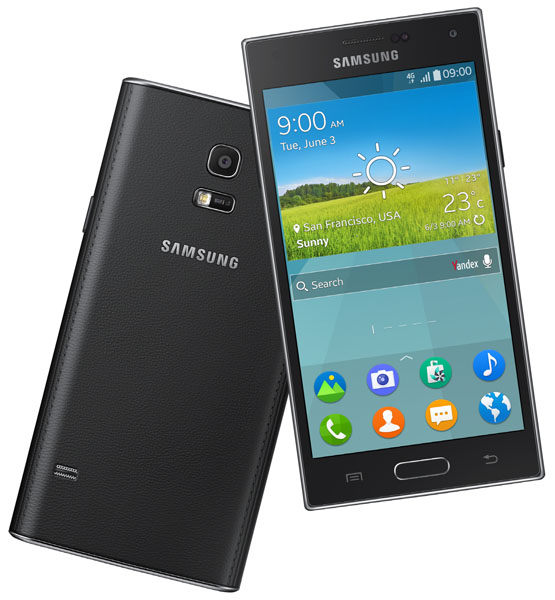
About a year later than first expected, Samsung has finally announced its first smartphone running Tizen instead of Android, the Samsung Z.

While this particular handset is only launching in Russia initially (sometime in Q3), it’s notable in a couple of ways. First, the spec – while not cutting edge – is pretty decent. Powered by a 2.3GHz quad-core processor and 2GB RAM, it has a 4.8-inch HD Super AMOLED display (though only in 1280×720 resolution) and the fingerprint sensor that has so far been exclusive to the S5. It’s not the low-end spec many had expected from Tizen … 
Expand
Expanding
Close

Site default logo image

Google Play Music app now allows you to edit & share playlists; Rdio gets gapless playback

gpm

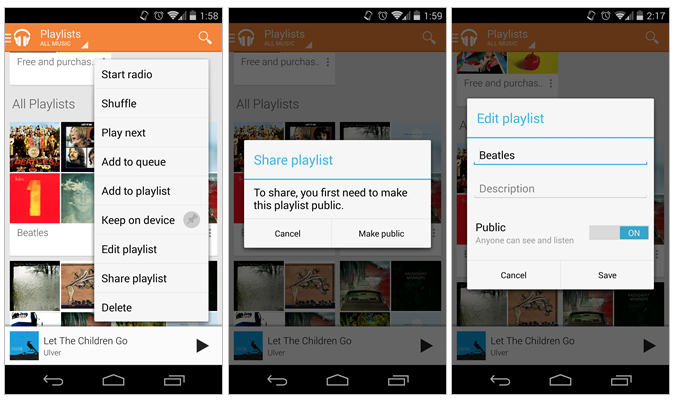
Two Android music apps have received small but useful updates. Google Play Music now allows you to edit the name and description of your playlists, and to share them with others, you can now do this from within the app rather than having to login to the website. You can also pin subscribed playlists and dismiss items from Listen Now, and the Thumbs Up playlist is sorted by recency.

Rdio, meantime, gets gapless playback – a feature many had requested for live concerts, classical music and comedy shows. Some UI improvements have been made along the way.

Both Google Play Music and Rdio are free downloads from Google Play.

Site default logo image

Crowd-sourced crime-reporting and safety app Tapshield goes public

tap

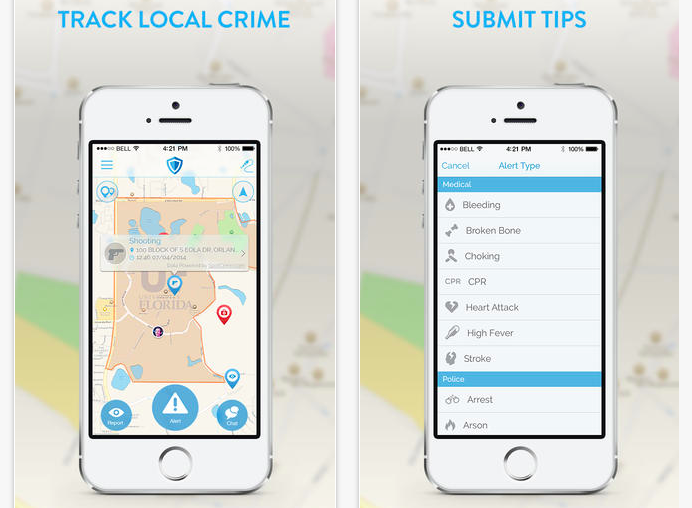
A crowd-sourced crime-reporting and safety app trialled on selected university campuses has now been rolled out to everyone. Tapshield allows real-time viewing of crime stats and suspicious activity in an area, and allows you to summon help when in trouble.

An award-winning mobile safety app and response dashboard, TapShield uses collaboration and crowd-sourcing to build safer communities & improve response times. Think of TapShield as your social safety network with you wherever you want to go.

The way the app works is that users can report crimes in progress and anything else they spot that concerns them, and those locations and incidents are then automatically shown to other Tapshield users in the area.

When a crime is reported, Tapshield sends a message to campus security when used within one of the participating colleges, and dials 911 when used elsewhere. You also have the option of sending a non-emergency alert to police when you see something that concerns you but which doesn’t justify an immediate emergency response – such as a bunch of street lights out, leaving a path in darkness.

If you have to make a journey that concerns you, you can specify your route and ETA and allow family and friends to follow your journey remotely, raising the alarm if you go off-route or don’t reach your destination when expected.

Finally, the app has a ‘yank’ mode, which automatically sends an alert if headphones are forcibly pulled from the device, such as when your phone is snatched by a thief.

Tapshield is a free download from Google Play.

Via TheNextWeb

Future Nest products may not need new hardware, could be just apps, says Fadell

Site default logo image

[protected-iframe id=”ee8f89c8e8a919fbb2f5c26911077925-22427743-8994189″ info=”http://player.theplatform.com/p/PhfuRC/9RGhkvepi1us/embed/select/h_PJWCPpI_2K” width=”640″ height=”360″ frameborder=”0″]

If you love the idea of smart home technology like Nest, but are concerned about the cost of replacing half the appliances and devices in your home, Nest CEO Tony Fadell has some good news. Speaking at the Re/Code conference, he said that while “you need new hardware to allow things to flourish,” there are many things that could be done with software alone.

 Just like your smartphone has many many apps on it, we think there [could be] many apps in your home but you don’t necessarily need new hardware …


Expand
Expanding
Close

Key leader of Egyptian revolution rejoins Google in preparation for possible business venture

Site default logo image

gv

Former Google marketing exec Wael Ghonim, who was one of the key leaders of the Egyptian revolution, has rejoined Google as an entrepreneur-in-residence in Google Ventures as preparation for a possible new business venture, reports Fortune.

Ghonim realized the power of social media to mobilize protestors in Egypt, and was a strong voice for the power of peaceful protest and non-violent civil disobedience. He is best known for creating the We Are All Khaled Said Facebook page to draw attention to a young Egyptian tortured to death by the country’s police.

Following the successful removal of Hosni Mubarak and the former regime in Egypt, Time named him one of the 100 most influential people of 2011 … 
Expand
Expanding
Close

Site default logo image

Google uses artificial intelligence to boost efficiency of its data centers

google-datacenter-tech-05

Google has been using artificial intelligence for a wide range of tasks, ranging from delivering search results to speech recognition, so perhaps it should come as no surprise that Google’s latest AI product was figuring out how to improve the energy efficiency of the very servers used to do all that other stuff.

A Google blog entry spotted by Engadget describes how a Google engineer used his 20 percent time to apply machine learning to predict the real-time energy efficiency of its data centers. Google uses a measure known as Power Usage Effectiveness (PUE): a ratio of total power used to power actually used for computing. In simple terms, if cooling used as much power as computing, the PUE would be 2. The closer to 1 Google can get, the more efficient the energy usage.

Google has already got its PUE down to 1.12 – about twice as efficient as a typical data center – but is using the AI project to try to further reduce the number. By using machine learning to predict the impact of variables like outside air temperature, Google can tweak the setup to minimize power usage.

The days of self-aware machines grow ever closer …

‘Right to be forgotten’ ruling in Europe won’t apply to Google in U.S. say commentators

Site default logo image

google

A ruling by Europe’s top court that individuals have a right to require Google to remove sensitive information from search results is unlikely to apply in the USA, according to a number of commentators quoted in an Associated Press piece.

But across the Atlantic, the idea that users should be able to edit Google search results in the name of privacy is being slammed as weird and difficult to enforce at best and a crackdown on free speech at worst …


Expand
Expanding
Close

Site default logo image

Samsung & LG planning to use sapphire-covered screens on premium smartphones – rumor

sapphire

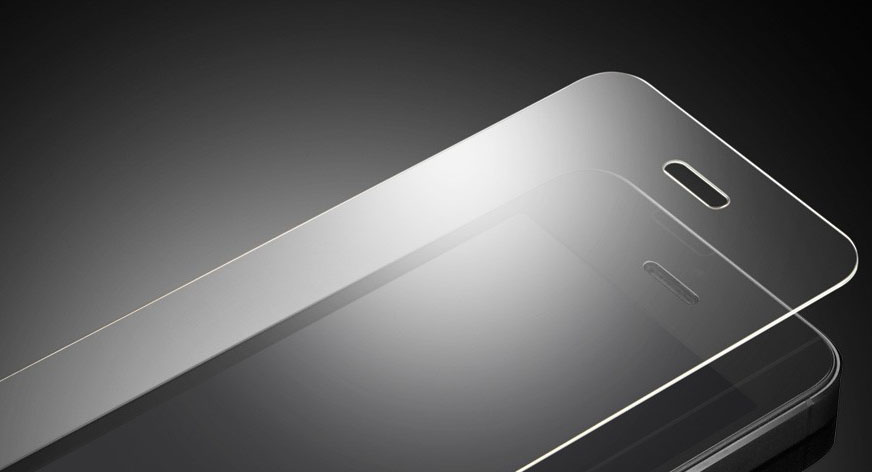
There’s been much speculation about Apple’s plans for its sapphire glass plant, with many suggesting it will use it as a replacement for the Gorilla Glass coatings used on current iPhones when it launches the iPhone 6.

Samsung and LG reportedly plan to follow suit, with Korean site ET News citing unspecified industry sources as saying that both companies have asked suppliers to provide samples of sapphire covers for its screens.

According to the industry on May 22, Samsung Electronics and LG Electronics recently asked ingot and wafer makers to submit samples in an effort to adopt the sapphire cover glass […]

“As late as last year, cell phone makers tried very hard to lower the price of sapphire,” said a sapphire ingot industry insider. “But this year as the mood swung toward using good materials to get premium prices, related industries are responding to the market more actively.”

As rumors go, this one is pretty thin. Samsung is known to have explored the use of sapphire in the past, dismissing it as too expensive, and it is likely the decision remains under constant review. Inviting manufacturers to submit samples would therefore not be in any way surprising, and doesn’t necessarily tell us anything about either company’s plans.

But with Apple investing heavily in sapphire, it is likely that Samsung and LG don’t want to be left behind, so the rumor can at least be chalked up as ‘thin but credible.’

Drone equipped with Project Tango smartphone flies accurately to within 1cm

Site default logo image

[youtube=https://www.youtube.com/watch?v=RE1YHlI1XHo#t=56]

Google’s Project Tango 3D interior mapping technology, which will shortly be appearing in a tablet, is also taking to the air. A team from University of Pennsylvania led by Professor Vijay Kumar are using a Tango-equipped smartphone to enable a quadrocopter to navigate the interior of a building … 
Expand
Expanding
Close

Google explains how Fiber supports both co-location and net neutrality

Site default logo image

fiber

There’s been a great deal of discussion recently about net neutrality: ensuring that all Internet traffic is treated equally, rather than big players paying for so-called fast lanes into our homes. Google was one of 100 tech companies to sign a letter to the FCC in support of net neutrality.

It may thus come as something of a surprise to find that Google Fiber offers what’s known as co-location or peering options to companies like Netflix and Akamai, allowing those companies to house content-delivery servers inside Google’s own facilities. Isn’t this exactly what the company claims to oppose … ?


Expand
Expanding
Close

Samsung Music shutting up shop, 1st July deadline to download purchases

Site default logo image

music

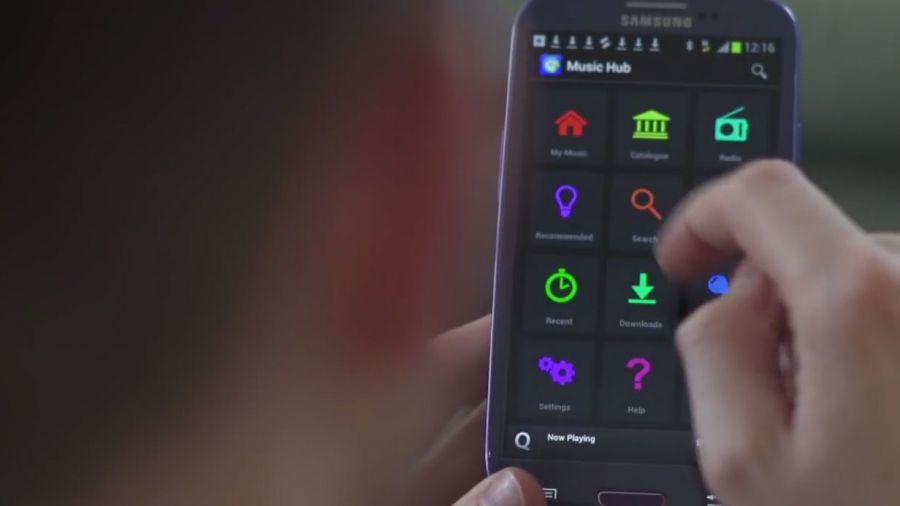
TechRadar reports that Samsung is closing its Samsung Music Hub service on 1st July, with the company advising users to download all purchased content and use any vouchers before that date. Music Hub was based on a cloud-based system the company acquired when it purchased the Californian company mSpot.

The service was part of Samsung’s attempt to get into content sales, with the company having similar hubs for books, videos and apps. It’s not known whether those will also close. Samsung issued a somewhat confusing statement reading … 
Expand
Expanding
Close

Google tells the SEC it could soon be serving ads on thermostats and other devices (Update: Google says no ad-based Nest)

Site default logo image


nest

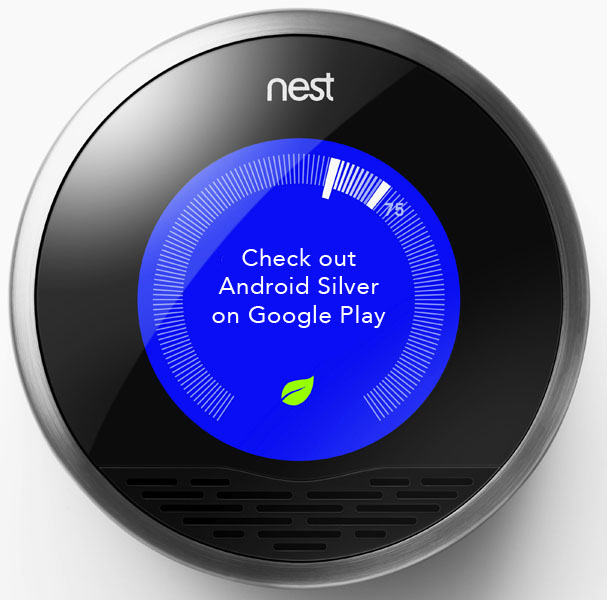
Those who expressed concern about Google’s acquisition of Nest may have have been right: the company has told the Securities and Exchange Commission that it may choose to serve ads on “refrigerators, car dashboards, thermostats, glasses, and watches, to name just a few possibilities.”

The WSJ reports that Google made the statement in support of its contention that it shouldn’t have to break out ad revenue from mobile devices … 
Expand
Expanding
Close

Site default logo image

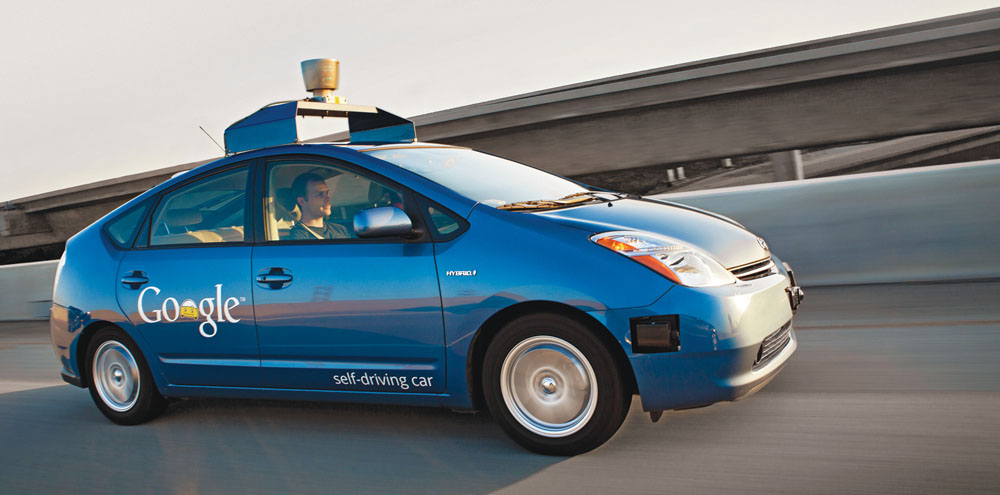
Google argues it, not the person in the driver’s seat, should receive any tickets for its self-driving cars

Google-Self-Driving-car

Google argues that should any of its self-driving cars get a ticket for a traffic violation, that ticket should go to the company and not to the person in the driver’s seat, reports The Atlantic.

“Right now the California Vehicle Code reads that the person seated in the driver’s seat is responsible for the movement of the vehicle,” Mountain View PD’s Jaeger tole me in an email […]

“What we’ve been saying to the folks in the DMV, even in public session, for unmanned vehicles, we think the ticket should go to the company. Because the decisions are not being made by the individual,” said Ron Medford, safety director for Google’s self-driving car program, and the former deputy administrator of the National Highway Traffic Safety Administration.

None of Google’s self-driving cars have yet been ticketed, but the possibility could have significant implications in states like California that apply points to driving licenses as well as handing out fines.

Surprisingly, the DMV is already addressing the issue, having held four public meetings to examine the way the driving code might need to be adapted to cope with autonomous cars.

The assistant chief counsel for the California DMV, Brian Soublet, opened the most recent meeting asking, specifically, if anyone had comments on the definition of operator in the legal code. “The vehicle code defines an operator as the person seated in the driver’s seat,” Soublet said, “or if there is no one seated in the driver’s seat, the person who causes the autonomous technology to engage.” […]

“[In law] a person includes a corporation and a partnership and other forms of entities. So when we think of a vehicle being operated, is it that inclusive? Is the operator that person, that could be a corporation?”

So if your self-driving car decides it is safer to run a light than to brake hard, it could be Google who picks up the tab.

Site default logo image

Italian authorities give Google & others 20 days to submit defence to “unfair” in-app purchase claims

play

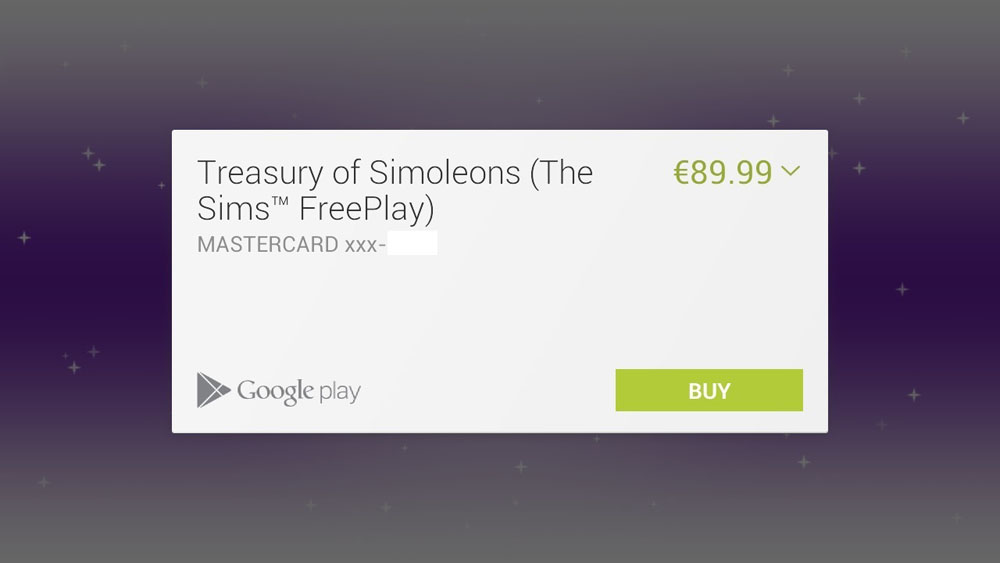
An Italian competition organization has given Google, Apple, Amazon and Gameloft twenty days to submit a defence to its investigation into in-app purchases or face a fine of up to €5M ($6.9M), reports ZDNet.

The companies now have 20 days to comply with the requests for information that came with the letter, and to respond with their defences to the allegations. If the alleged violations proved to be true, the three internet giants and the European game developer could each face a fine up to €5m — although the Italian watchdog told ZDNet that the punishment would be proportional to each company’s size.

The complaint is based on two concerns. First, whether consumers are clear about the likely total cost of the app at the time they download it. Second, whether sufficient information is provided about how to prevent or limit in-app purchases, especially in games played by children.

Google and Amazon have come under particular fire for allowing in-app purchases without any need to enter a password.

Google offers fully-automated (but basic) digital photo albums & movies

Site default logo image

[youtube=https://www.youtube.com/watch?v=26A6-RO5MoI]

If you’ve ever been on a trip, taken tons of photos and then done nothing with them afterwards, or shot a bunch of video that is still just sitting on your phone, Google has launched a couple of new services aimed at you: Google+ Stories and Google+ Movies.

No more sifting through photos for your best shots, racking your brain for the sights you saw, or letting your videos collect virtual dust. We’ll just gift you a story after you get home. This way you can relive your favorite moments, share them with others, and remember why you traveled in the first place.

Stories will be available this week on Android and the web, with iOS coming soon …


Expand
Expanding
Close

Don’t plan to get too much work done today – today’s Google Doodle is a working Rubik’s Cube

Site default logo image

rubik

Update: In keeping with the square theme, Google has taken this anniversary as an opportunity to join Instagram, hooray! First post is the Rubik’s Cube in video.

This may just be the best Google Doodle yet: a fully-functional Rubik’s Cube! Click on the small cube to open up the interactive version. Click and drag any row or column to rotate it, and do the same underneath or alongside the cube to turn the entire cube … 
Expand
Expanding
Close

Site default logo image

The four largest carriers now support texting 911, but most emergency call centres don’t

911-Call

When the FCC set a voluntary deadline of yesterday for putting in place technology to allow people to text 911, all four of the main national carriers complied. But since most emergency call centres aren’t yet equipped to receive texts, don’t expect to be using it any time soon.

The FCC said that the ability to text 911 could be a life-saver for those with hearing or speech impairments, as well as in situations where it might be dangerous to make a phone call – while a crime is in progress and the perpetrator within earshot, for example.

But the wireless trade association, the CTIA, warned that even where 911 texting is supported, it’s still impossible to guarantee immediate delivery of texts. We’ve all experienced examples of texts that arrive the next day, so the advice remains to make a voice call wherever possible.

The FCC has uploaded a list of emergency call centres accepting 911 texts. If you attempt to text 911 in an area where the service is not supported, you’ll get a text bounce-back. Needless to say, please do not test the service.