Android

See All Stories

Breaking news for Android. Get the latest on apps, carriers, devices, and more!
Android is Google’s mobile operating system, launched in September 2008, although its history technically began with the release of the Android alpha in November 2007. To this day, Android powers the majority of the world’s smartphones and comes in several different flavors across many phone makers.

What is Android?

Android Inc.

Android, before it was Android, was a company called Android Inc. That company was founded in Palo Alto, California, in 2003 by a crew of four: Andy Rubin, Rich Miner, Nick Sears, and Chris White. The company and its project was acquired by Google in 2005 for a sum of more than $50 million, although the exact number is unknown. The company’s founders joined Google as part of the deal.

In its infancy, Android was an operating system built not for touch screen smartphones like the iPhone, but rather BlackBerry-like devices with physical keyboards. It’s well documented that after Apple shocked the world with the iPhone, ahead of its nearest competition by at least a couple years, Google and Android Inc. had to go back to the drawing board to build something competitive.

Adoption by third-party makers

It didn’t take long after the launch of the iPhone for various manufacturers to enter the market with their alternatives — and Google’s Android immediately became the obvious platform of choice for just about everyone except Microsoft. HTC was the first manufacturer on board, and introduced the T-Mobile G1 running Android in September 2008. Soon after, HTC, Motorola, Samsung, and carriers like Sprint and T-Mobile jumped on board to form the Open Handset Alliance.

Android makers across the world

Iconic Android handsets

There have been thousands of Android phones released since Android’s inception, but some have been more important to the platform’s history than others. There was the original T-Mobile G1, as mentioned, but there was also the HTC One Google Play Edition, Moto G, Samsung Galaxy S4, and others. Some of the most iconic Android handsets include:

  • HTC G1
  • HTC Nexus One
  • Samsung Galaxy S, S2, S3, S4, and their successors
  • HTC Incredible S
  • Samsung Nexus S
  • Samsung Galaxy Nexus
  • Samsung Galaxy Note
  • Nokia 8
  • BlackBerry KeyOne
  • Google Pixel and its successors

In more modern times, there are several Android smartphones makers that popped up across various niches and in several international markets. Huawei is a dominant Android maker in China and many European markets, while Samsung is by far the most popular maker in the United States by far — effectively creating a duopoly with Apple. Today, there are dozens of major device makers contributing to the Android ecosystem.

Full list of Android OEMs

History of major Android versions

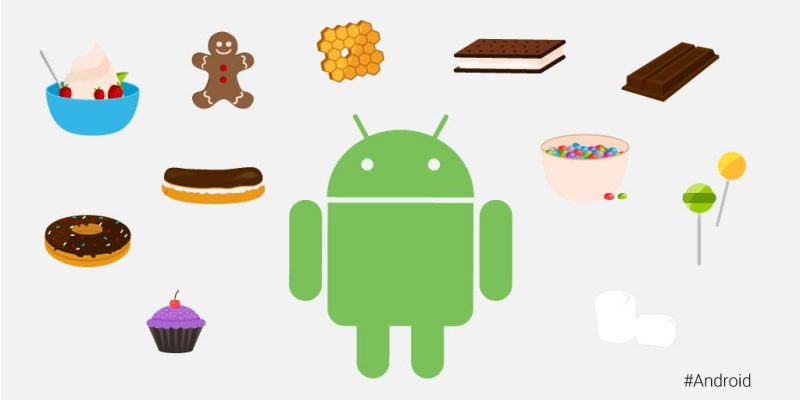
Android has seen countless software revisions over the course of its life, but in modern times the OS usually sees a major release on an annual cadence. In the earlier days, Google famously gave its major software releases dessert-themed codenames, but retired that practice in 2019 with the release of Android 10.

VersionNameReleaseDevices
2.3GingerbreadFebruary 9, 2011Nexus S
4.0Ice Cream SandwichOctober 19, 2011Galaxy Nexus
4.1Jelly BeanJuly 9, 2012Nexus 7
4.2Jelly BeanNovember 13, 2012Nexus 4, 10
4.3Jelly BeanJuly 24, 2013Nexus 7 (2013)
4.4KitKatOctober 31, 2013Nexus 5
5.0LollipopNovember 3, 2014Nexus 6, 9
5.1LollipopMarch 9, 2015Android One
6.0MarshmallowOctober 5, 2015Nexus 5X, 6P
7.0NougatAugust 22, 2016Nexus 5X, 6P
7.1NougatOctober 4, 2016Pixel, Pixel XL
8.0OreoAugust 21, 2017Pixel, Pixel XL
8.1OreoDecember 5, 2017Pixel, Pixel XL
9PieAugust 6, 2018Pixel 2, Pixel 2 XL
1010September 3, 2019Pixel 3, 3a
1111September 8, 2020Pixel 4

List of major Android OS platforms

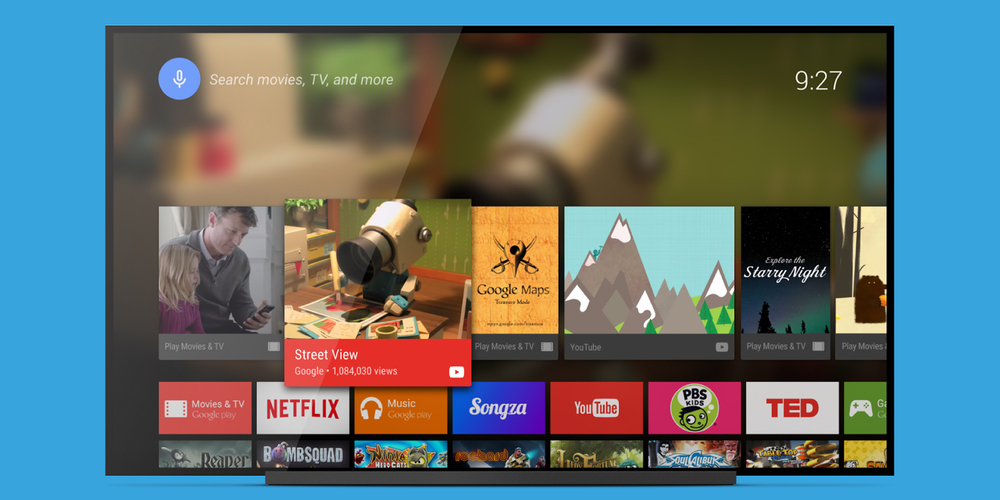
While Android proper is certainly the most widespread of Google’s Android operating systems, the company has also launched many offshoots of the main OS over the years. There’s Android Auto, Android Wear (now Wear OS), Android TV (now rebranded to Google TV), as well as versions of Android built for tablets and Android Things (now defunct).
Google’s Ubiquity developer summit kicks off at 10 AM PT, tune in here [Updated]

Update: You can now view full video from the Ubiquity dev summit on YouTube here.

As we told you a couple of weeks ago, Google’s Ubiquity internet of things-focused dev summit is kicking off today at around 10 AM PT. Google has several technologies including Brillo and Weave that are geared for this trend in computing (which we will surely hear about), but the official schedule mentions everything from Chromecast to CloudSpin to Android Auto…
Expand
Expanding
Close

Google’s Ubiquity dev summit schedule mysteriously mentions a product called ‘Living Room’

Update: A Googler from the event says that this was a typo—someone did a find/replace and accidentally replaced the word “Android TV” with “Living Room”. There is no product called “Living Room”.

Google’s Ubiquity developer summit is scheduled to kick off later today, but the event’s schedule of events is already available for your perusing. After a quick perusal ourselves (tipped off via Reddit), we noticed that the schedule (as Google I/O schedules have in the past) reveals a Google product we haven’t yet heard about. It’s called “Living Room,” and it’s mentioned on the schedule as a consumer product alongside Chromecast…


Expand
Expanding
Close

AT&T brings back unlimited data plans, but there are some major catches …

Site default logo image

If you’re feeling jealous of any friends grandfathered into an existing AT&T unlimited data plan (especially since ‘unlimited’ was redefined from ‘5GB before throttling kicks in’ to ’22GB before throttling if congested’), the company has good news: it is launching a brand new version of unlimited data tomorrow.

Pricing starts at $100/month for a single line, plus $40 for each individual line. Unfortunately, there’s bad news too. As The Verge notes, there are some pretty big catches – the biggest of which is that you need to be a DirecTV or U-Verse subscriber to be eligible, which of course adds to the cost if you don’t already have a subscription …


Expand
Expanding
Close

Unreleased Sony Xperia smartphone leaks with nearly bezel-free design, likely C6 model

Surprisingly few smartphone makers used CES as a platform to announce, or even tease, new Android products this year. Arguably, only Huawei took the opportunity to show off its new products at the biggest US-based trade show this year. With that said, Mobile World Congress is shaping up to be really busy this year. The conference kicks off at the end of next month, and many manufacturers are expected to unveil their spring/summer portfolios at the Barcelona event. Sony being one of them…


Expand
Expanding
Close

Xiaomi’s $46B valuation questioned as company misses sales target, faces greater competition

Investors are “beginning to question” Xiaomi’s $46B valuation after the company reportedly failed to hit its sales target of 80M smartphones in 2015, reports the WSJ. That target was itself reduced from 100M last summer, and the company has also not yet delivered on its promise of substantial revenue from Internet services.

Xiaomi has faced tougher competition from more established brands like Huawei.

Huawei’s engineering strength and brand image, built up over decades, make it difficult for Xiaomi to compete in China, analysts say.

“The competition in China’s smartphone market has intensified tremendously this year,” said a Xiaomi spokeswoman, who declined to comment on the company’s valuation or say whether it met its 2015 sales target.

Huawei comfortably overtook Xiaomi to become the Chinese market leader in October of last year …


Expand
Expanding
Close

galaxy s6

Galaxy S7 Edge specs allegedly leaked on AnTuTu Benchmark, suggest 12MP camera, 5.1-inch screen

Recent rumors surrounding the upcoming Galaxy S7 have indicated that we’re expecting to see two different sized smartphones. Whether it’s going to be a 5.1-inch and 5.7-inch, or 5.2-inch and 5.5-inch screen (or combination of) depends on which rumors you’ve been reading. One seemingly constant rumor has been that the Galaxy S7’s dual-curve variant, the S7 Edge, will have a larger screen than the regular S7. Today’s leak suggests those rumors might be inaccurate.

A Weibo user published an AnTuTu Benchmark information screenshot for a device with model number SM-G935A. For those unaware, the upcoming Galaxy S7 allegedly has two model numbers: SM-G930 and SM-G935. The latter of those is the Edge variant. The ‘A’ at the end of this model could indicate that it’s an AT&T variant, or at least, a particular variation built for specific carriers/markets.

Looking at the specs above, the benchmark suggests the S7 Edge will indeed have a 5.1-inch screen, not 5.5″ or 5.7″. If true, this could mean Samsung is releasing two phones with the same sized-screens which makes a lot more sense than releasing a competitor to the S6 Edge Plus so soon after it landed. It could also mean that Samsung is releasing more than two variants of the S7. There has been vague speculation that the Korean tech giant will release 3-4 different models this year, but none of it has been even close to concrete.

Other claimed specs include the Snapdragon 820 processor, Quad HD resolution screen, 4GB RAM and 64GB storage. Perhaps most interesting, however, is the 12MP camera. It’s a significantly lower resolution camera sensor than the one found in the S6 and Note 5, which boasts 16 million pixels. That said, it’s widely expected that this 12MP sensor will use Samsung’s new BRITECELL technology which produces much better quality photos, in a sensor that’s much smaller. This would make more room for other components, like the larger battery. It would also mean the protruding camera housing on the back would be visibly smaller.

As with any leak, it’s worth noting that even those which look legitimate come with the caution that they might not be genuine. File this under ‘sketchy, but interesting’ for now.

Lenovo chief: Google Play Services will be in China this year

According to a report by Tech.Sina, Google will finally bring its services in to China. Lenovo chief, Chen Xudong claims Google is on track to bring its Play Services to the nation at some point in 2016, and that its desire to do so isn’t a secret. Google wants its services back in China, but has faced strong opposition from the government in the past, heavily restricting its presence there.

While Android has long been the dominant smartphone platform in China, Google’s presence there is still very limited. In fact, Google Play Services are practically non-existent. Before the Nexus 6P was built, it was rumored by a reliable publication that Google had chosen Huawei specifically because of its influence in China. With Huawei being a Chinese brand, and the biggest seller of smartphones in the country, its influence is huge. What’s more, Google also recently partnered with (and took a minor stake in) Mobvoi, one of the most widely-used and advanced Chinese AI and voice recognition companies.

Clearly, with Android being the most widely-used smartphone OS in China, Play Services aren’t required or critical to the platform’s success. Bringing Play Services in to China would mostly be an effort to help end fragmentation in a country where multiple app stores exist for Android.

No specific timeframe was given in terms of when we might see Google Play back in China. One can only assume getting the service approved takes multiple jumps over political hurdles and cutting through endless miles of red tape. We’ll keep you updated when/if there’s any more to share on the issue.

Xiaomi Redmi 3 official, features compact diamond-patterned metal body, huge 4,100mAh battery, costs just $105

Having been teased by the manufacturer a few days ago, the new Redmi 3 has finally been unveiled by Xiaomi. The company took to its Facebook page to announce the new phone this morning. As with all things made by Xiaomi, it punches well above its price-point, offering a premium look and feel combined with decent specs, at an affordable price…


Expand
Expanding
Close

Google Now’s new weather cards are colorful and way more useful (Update)

Update: Google has officially announced the refresh, as well as the ability to add and save multiple locations.

It seems Google is testing a new version of its weather cards in Google Now. Rather than seeing the usual, plain white Material-designed card that we’re used to seeing, some users are noticing a brand new richer design. The cards are colorful, and have far more functionality…


Expand
Expanding
Close

PSA: Make sure you haven’t installed any of the 13 malicious apps now banned from the Play store

ArsTechnica reports that Google has pulled 13 malicious apps from the Play store after they were found to make unauthorized downloads. The apps (listed below) are particularly dangerous in that they attempt to gain root privileges that would allow them to remain installed even after a factory reset.

The malware used a clever technique to make the apps appear safe, giving them high download numbers and positive ratings.

The apps are capable of using compromised devices to download and positively review other malicious apps in the Play store by the same authors. This helps increase the download figures in the Play Store.

Although the family of malware known as Brain Test has been around for a while, affected apps have previously only been found in third-party app stores. This is the first time Brain test apps have been found in the Google Play store …


Expand
Expanding
Close

Xiaomi Redmi 3 teasers reveal huge 4,100mAh battery in a 5-inch smartphone, launches on January 12

Just a couple of days back, Xiaomi‘s SVP revealed on Weibo that his company is ramping up full-capacity production ahead of a February launch for its next flagship, the Xiaomi Mi 5. What he didn’t say is that the company is also planning to launch a smaller, more fashion-focussed phone very soon. Xiaomi has revealed two teasers for the Redmi 3 which will be unveiled in just a few days time, on January 12…


Expand
Expanding
Close

Samsung issues Q4 2015 guidance, profit up 15% year-on-year

Samsung has issued its earnings guidance for the fourth quarter of 2015, and things look to be heading in the right direction, albeit slowly. Samsung estimates that its profit for the quarter reached 6.1 trillion Korean Won, or roughly $5.1 billion US Dollars. That was based on estimated sales worth 53.0 trillion Korean Won ($44B USD).

While other Android smartphone makers are struggling to make any progress financially, Samsung’s Q4 estimates (if accurate) will see them beat last year’s final quarter profits by 0.8 trillion Korean Won, or approximately $666 million USD. That’s an increase of 15% year-on-year.

If anything, it shows that Samsung’s 2015 focus on creating fewer, but higher quality handsets is working. A big part of that focus was moving away from the plastic flagships of the past to make solid, glass and metal handsets with market-leading specifications.

Rather unusually, however, Samsung did see a quarter-on-quarter drop from Q3 2015, in which it made 7.4 trillion Korean Won. Holiday sales are usually stronger than any other quarter for most tech companies, so Samsung may be a little worried to see the 18% drop from Q3 even if Q4 was an improvement on the same quarter in 2014. One explanation, of course, is that Samsung released its last high-end flagship smartphone right in the middle of Q3, while many other competitors waited until October/November.

As 2016 rolls in, the competitive landscape is only going to get tougher for Samsung. Companies like Huawei and Xiaomi are expected to renew their focus on markets where Samsung is normally very strong. And, if Huawei’s 2015 performance is anything to go by, Samsung should definitely be keeping an eye over its shoulder.

Lenovo and Google reveal the first consumer Project Tango device is coming this summer

At CES today, Google and Lenovo announced a partnership to bring the first consumer Project Tango device to the market. The Lenovo-made smartphone will be the first Project Tango offering that consumers will have the chance to try. Google touts that Project Tango transforms your smartphone into “a magic lens that lets you place digital information on your physical world.”


Expand
Expanding
Close

Lenovo is phasing out the Motorola brand name

Update: Motorola has provided us with an official comment on the new branding.

In an interview with CNET, Motorola COO Rick Osterloh said that the storied Motorola brand will be phased out for Lenovo. Purchased by Google in 2011 and then sold to Lenovo in 2014, Motorola has had varying level of successes. While praised for stock Android, Moto devices on the high-end have not been successful in dethroning Samsung or LG.


Expand
Expanding
Close

Motorola offering $100 discount when you purchase new Moto X Pure and Moto 360 together

Running up to the holidays, Motorola was offering some great discounts on its older Android and Android Wear products. Sadly, those same deals didn’t apply to the newer and rather fantastic Moto X Pure and Moto 360 from 2015. That changes this month, as the Lenovo-owned company begins offering money off for customers buying both products together.

Anyone buying the new Moto X Pure Edition (2015) and 2nd gen Moto 360 together will get $100 off at checkout. There’s no promo code to remember, just add the two products to your basket at Motorola.com in the US and the discount applies automatically. That means a package deal combining the two devices will cost you $599 for the base models, rather than the usual $699. Of course, adding extra storage to your phone or choosing a more premium material for the phone’s back or the Moto 360’s watch strap will cost extra.

This is the first time we’ve seen either of the new products with a significant discount anywhere in the US. The deal is available until January 12th, 10:59 Central Time.

BlackBerry will only release Android phones this year

John Chen has to be one of the most likable CEOs in the business. His honest-talking and humble character has won him many fans in the tech industry. What’s more, BlackBerry fans across the globe will credit him for saving the company at a point when it looked doomed. Or, at the very least, stopped it from going extinct. Sadly however, his latest comments might not go down so well with some of the BlackBerry-faithful…


Expand
Expanding
Close

Detailed Samsung Galaxy S7 renders published as Spigen cases land on Amazon

With the Galaxy S7 expected to make its first official appearance next month at MWC in Barcelona, the number of leaks has increased, as has the quality of those leaks. We recently saw what claimed to be the schematics for the upcoming Android-powered flagships. More recently, some high quality renders were published by uSwitch, in collaboration with @OnLeaks.

As we’ve heard and read many times already, the S7 is unlikely to depart from the current design language of Samsung’s smartphones. It’s an all metal and glass affair, with a back which curves towards the edges a lot like the Galaxy Note 5. Not including the protruding camera, the phone is expected to measure 7.9mm thin, 142.5mm tall and 69.5mm wide. If accurate, the phone will be shorter, narrower, but slightly thicker than the Galaxy S6, more than likely to make space for the rumored bigger battery.

[youtube=https://www.youtube.com/watch?v=sDd8_NrkH7I]

As well as these detailed renders which claim to accurately show the dimensions and design of the next Samsung flagship, a number of cases have already turned up for sale on Amazon, including a bunch from well-known manufacturer, Spigen. Some — like the transparent Ultra Hybrid — are available to order now with an expected release date of April 1, 2016. Cases from other manufacturers claim to be available from as soon as next month.

With the phone(s) not being official yet, it’s unlikely any of the images with the case listings are accurate. In fact, most appear to be renders of the current crop of Galaxy smartphones. What’s more, there’s always a chance the manufacturers haven’t received accurate schematics yet. We expect that once the phones are official, manufacturers will update the images.

While we expect many of these rumors and leaks to be accurate, it’s always reading with a helping of caution. Nothing is official until Samsung confirms it.