Android

See All Stories

Breaking news for Android. Get the latest on apps, carriers, devices, and more!
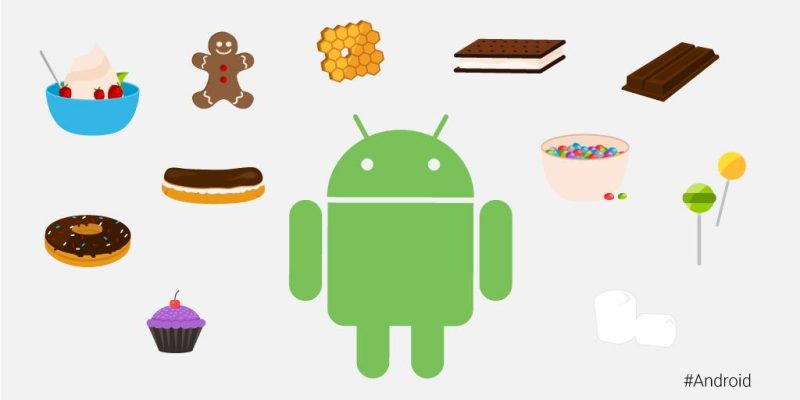
Android is Google’s mobile operating system, launched in September 2008, although its history technically began with the release of the Android alpha in November 2007. To this day, Android powers the majority of the world’s smartphones and comes in several different flavors across many phone makers.

What is Android?

Android Inc.

Android, before it was Android, was a company called Android Inc. That company was founded in Palo Alto, California, in 2003 by a crew of four: Andy Rubin, Rich Miner, Nick Sears, and Chris White. The company and its project was acquired by Google in 2005 for a sum of more than $50 million, although the exact number is unknown. The company’s founders joined Google as part of the deal.

In its infancy, Android was an operating system built not for touch screen smartphones like the iPhone, but rather BlackBerry-like devices with physical keyboards. It’s well documented that after Apple shocked the world with the iPhone, ahead of its nearest competition by at least a couple years, Google and Android Inc. had to go back to the drawing board to build something competitive.

Adoption by third-party makers

It didn’t take long after the launch of the iPhone for various manufacturers to enter the market with their alternatives — and Google’s Android immediately became the obvious platform of choice for just about everyone except Microsoft. HTC was the first manufacturer on board, and introduced the T-Mobile G1 running Android in September 2008. Soon after, HTC, Motorola, Samsung, and carriers like Sprint and T-Mobile jumped on board to form the Open Handset Alliance.

Android makers across the world

Iconic Android handsets

There have been thousands of Android phones released since Android’s inception, but some have been more important to the platform’s history than others. There was the original T-Mobile G1, as mentioned, but there was also the HTC One Google Play Edition, Moto G, Samsung Galaxy S4, and others. Some of the most iconic Android handsets include:

  • HTC G1
  • HTC Nexus One
  • Samsung Galaxy S, S2, S3, S4, and their successors
  • HTC Incredible S
  • Samsung Nexus S
  • Samsung Galaxy Nexus
  • Samsung Galaxy Note
  • Nokia 8
  • BlackBerry KeyOne
  • Google Pixel and its successors

In more modern times, there are several Android smartphones makers that popped up across various niches and in several international markets. Huawei is a dominant Android maker in China and many European markets, while Samsung is by far the most popular maker in the United States by far — effectively creating a duopoly with Apple. Today, there are dozens of major device makers contributing to the Android ecosystem.

Full list of Android OEMs

History of major Android versions

Android has seen countless software revisions over the course of its life, but in modern times the OS usually sees a major release on an annual cadence. In the earlier days, Google famously gave its major software releases dessert-themed codenames, but retired that practice in 2019 with the release of Android 10.

VersionNameReleaseDevices
2.3GingerbreadFebruary 9, 2011Nexus S
4.0Ice Cream SandwichOctober 19, 2011Galaxy Nexus
4.1Jelly BeanJuly 9, 2012Nexus 7
4.2Jelly BeanNovember 13, 2012Nexus 4, 10
4.3Jelly BeanJuly 24, 2013Nexus 7 (2013)
4.4KitKatOctober 31, 2013Nexus 5
5.0LollipopNovember 3, 2014Nexus 6, 9
5.1LollipopMarch 9, 2015Android One
6.0MarshmallowOctober 5, 2015Nexus 5X, 6P
7.0NougatAugust 22, 2016Nexus 5X, 6P
7.1NougatOctober 4, 2016Pixel, Pixel XL
8.0OreoAugust 21, 2017Pixel, Pixel XL
8.1OreoDecember 5, 2017Pixel, Pixel XL
9PieAugust 6, 2018Pixel 2, Pixel 2 XL
1010September 3, 2019Pixel 3, 3a
1111September 8, 2020Pixel 4

List of major Android OS platforms

While Android proper is certainly the most widespread of Google’s Android operating systems, the company has also launched many offshoots of the main OS over the years. There’s Android Auto, Android Wear (now Wear OS), Android TV (now rebranded to Google TV), as well as versions of Android built for tablets and Android Things (now defunct).
Site default logo image

Sprint adds Uber to bloatware lineup on new Android handsets, offers $20 credit to new users

Sprint announced today that it will be adding a new app to its lineup of pre-installed software on “most” new Android phones: Uber. Sprint subscribers new to Uber in the month of December will also get a credit of up to $20 from Sprint to be used on their first ride through the service.

The ridesharing app will now be loaded on new devices from two of the four major US carriers, following AT&T’s similar announcement this summer.


Expand
Expanding
Close

Official Android Wear, Google Wallet, and Chromecast apps get minor updates

Google has slowly but surely been updating its apps to fit its own design guidelines, and even as late as yesterday updated the Hangouts application (and that one’s still not quite there). Today, both the Android Wear and Chromecast apps have been updated to sport the Material look and, while not many other drastic changes have come to either app, it’s nice to have a bit of consistency between Google’s first-party offerings.

The Android Wear app companion app was suitably updated today amidst the release of Android Wear 5.0.1 Lollipop, providing support for the new version of the operating system. But the new version, thankfully, packs a redesign that brings it more in line with Material. The Chromecast app also got an update today, and on top of the fact you can now use the screen casting feature on any Android phone running 4.2.2 or higher, it now sports Material as well.

Google Wallet was also updated today, with its main new feature mentioned on Google+ as being the fact you can now manage your gift cards and loyalty programs from just one section of the app. As you can see above, under the “Loyalty and gift cards” section, you now have three sub-sections: Active, Expired, and Featured. The app also got a slightly tweaked appearance, bringing the app closer in line with the Material Design guidelines.

You can get the latest versions of Android Wear, Google Wallet, and Chromecast on the Play Store soon.

Google releases new app with live channel support for Android TV

Site default logo image

Google, without any sort of announcement or waning, has released a new app to the Play Store this evening called “Live Channels for Android TV.” The app isn’t compatible with any current phone or tablet running Android, but rather with Android TV powered devices. The app is meant to offer an interface with which users can navigate live TV channels. It is currently only compatible with the Nexus Player.


Expand
Expanding
Close

DeviantArt releases an official Android app for the first time

DeviantArt is one of the largest creative hubs on the net, but until today, you were stuck with choosing between half a dozen third-party unofficial apps if you wanted to browse the site on your Android device. Now you can do so via DeviantArt’s brand new official app, and while it doesn’t come anywhere close to following the trendy Material Design scheme (because it didn’t want to), the app definitely gets the job done.


Expand
Expanding
Close

Google posts Android 5.0.1 factory images for Nexus 4 and Nexus 6

Site default logo image

Google last week released Android 5.0.1 to AOSP (Android Open Source Project) and published factory images for WiFi-only Nexus devices, including the Nexus 7, Nexus 9, and Nexus 10. Today, however, Google has posted the factory images for Android 5.0.1 on the Nexus 6 and Nexus 4. The factory images are labeled as build LRX22C.


Expand
Expanding
Close

Facer updated to support Android Wear 5.0 and watch face API

Facer, a popular Android Wear app that lets you create your own watch faces, has today been updated (via Phandroid) to support the official watch face API part of the newly-released 5.0 update to Google’s wearable OS. The new API, which this update takes advantage of, allows faces to act more like a native watch face and less like a hack, which is going to make them just a bit more functional, efficient, and easier to manage.


Expand
Expanding
Close

Google announces Android/Unity SDKs for Cardboard VR headset, dedicated Play Store section

Site default logo image

Google today announced some updates for its Google Cardboard virtual reality experience that it says is now in the hands of around 500k people since launching in June (not including unofficial versions). The main updates include new SDKs for developers building experiences on Android and Unity and a dedicated section for virtual reality Cardboard apps in the Google Play store.
Expand
Expanding
Close

Site default logo image

Developers: Official Android Wear watch face API now available

Following the announce of the next major version of Android Wear this morning, Google has today announced that the official API for Android Wear watch faces is available to developers. The company has also published a video to  help give some guidelines to developers on how to take advantage of the API and help them get started.

We’re pleased to announce that the official Android Wear Watch Face API is now available for developers. Watch faces give users even more ways to express their personal style, while creating an opportunity for developers to customize the most prominent UI feature of the watches. Watch faces have been the most requested feature from users and developers alike, and we can’t wait to see what you build for them.

Google asks that developers have their watch faces transitioned to the new API by January 31st, 2015, after which point Google says they plan to completely remove support for watch faces that aren’t built with the API.

You can check out the official watch face API over at the Google Developers website. You’ll need Android Studio 1.0.0 or higher, an Android device with version 4.3 (API level 18) or higher, and an Android Wear watch with version 5.0 (API level 21) or higher to start building faces.

Major Android Wear update with watch face API support, other improvements rolling out now

Google has begun rolling out an update (we assume version 5.0, but we won’t know for sure until we have our hands on it) for its Android Wear platform and, as expected, the update focuses primarily on the launch of the official watch face API while also bringing a handful of useful improvements to the wearable operating system.


Expand
Expanding
Close

Facebook bringing ‘Trending’ section to Android, improves web version

Facebook introduced a new “Trending” section on the web in January to display trending stories that are frequently shared and discussed on the social network. Today, the company announced that it has improved this feature by organizing trending topics into five categories so that it’s easier for people to explore stories from different sources.
Expand
Expanding
Close

Instagram hits 300M monthly actives, rolls out verified user badges & deactivates spammy accounts

Site default logo image

Instagram announced today that it’s now at 300 million monthly active users, up from 200 million users that it announced approximately nine months ago. The company is announcing the new milestone on its website alongside other update user stats.

In addition, Instagram is today rolling out verified badges for brands and public figures while announcing it’s making a “significant effort to remove spammy and fake accounts”:
Expand
Expanding
Close

Site default logo image

Nokia releases HERE Maps for Android w/ offline navigation & real-time traffic updates

https://www.youtube.com/watch?v=k9P3xf85R1w

After brief availability as a beta version, Nokia has now released the full version of HERE Maps for Android on the Play Store. The mapping app enables you to search, navigate or get directions around the world, with the ability to download interactive maps to your smartphone or tablet for offline navigation.
Expand
Expanding
Close

Site default logo image

Shazam for Android updated w/ redesigned home screen, all-new ‘Play All’ button & more

Shazam for Android received a major update on Wednesday with a redesigned home screen and music player for more conveniently keeping up to date with the latest artists you have identified, finding out what songs friends are listening to and accessing the latest Shazam charts. A brand new Shazam.com was also launched with a Hall of Fame for artists and other new features.
Expand
Expanding
Close

There’s a new title-holder in the world’s slimmest smartphone race – and it’s just 4.75mm thick

Site default logo image

Just when you wondered how much slimmer smartphones could get, Chinese brand Vivo has set a new record with the X5Max at just 4.75mm thick, beating the 5mm thin iPhone 6 clone Gionee Slim 5.5. Astonishingly, it has achieved this while still managing – just – to fit in a standard 3.5mm headphone socket. It does, though, the now-standard cheat of allowing the camera to protrude by 2mm.

It’s also no slouch in the specs department, with a 64-bit octacore Snapdragon 615 processor, 5.5-inch 1080p display, 13MP main camera, 5MP front camera, 2GB RAM and 16GB internal storage – with a clever dual-SIM tray that allows you to substitute a microSD card of up to 128GB for one of the SIMs … 
Expand
Expanding
Close

Google begins notifying users of $19 million settlement with FTC over in-app purchases

Site default logo image

Google has started notifying users of its Play Store about a $19 million settlement it reached with the FTC in September. The company is being required to pay out refunds for in-app purchases made by children on their parents’ credit cards after one of Apple’s lawyers brought the case to the FTC’s attention.

Users will have until December 2nd, 2015 to log into their Play Store accounts and mark any in-app purchases that were made by a minor in order to qualify for a refund. The total refund isn’t limited to $19 million, as that number serves only as a minimum required by the FTC.


Expand
Expanding
Close

Wikipedia for Android Beta gets Material UI overhaul, support for Android Lollipop

Update 1/15/15: The non-Beta version of the app was updated today with the same features that came to the beta version last month.

Wikipedia is definitely one the more used Android apps, and today the app’s beta channel has been updated with a plethora of new features. Most notable of them is the fact that today’s release packs a Material design revamp (including a new drawer and overflow menu), and support for Android 5.0 Lollipop. Other features, like the return of the search bar and other layout improvements, are just a couple of the more than a dozen changes made in this version.

The new version also features improvements to search order, Wikidata descriptions under page’s titles in search, and  swipe to refresh on pages and on the “Nearby” tab. You’ll also notice, at the bottom of an article you’re reading, that this new version adds a new section called “Read more” where you’ll find various related articles. Finally, rounding out the more obvious changes, there’s now an option in the “More” section for disabling image loading (helpful if you are strapped for data).

As noted on the app’s Play Store listing, here’s the complete list of changes:

– Material design icons and 5.0 support
– Search bar is back
– Search order improvements
– Wikidata descriptions in search results, similar pages, under pages titles
– Swipe to refresh on pages and for Nearby
– Collapsed infoboxes
– Better tablets layouts
– Read more section
– Allow disabling images
– Basic syntax highlighting of templates while editing
– Hide IPA
– ToC drawer always on
– Similar pages, page issues, reference info display changes
– Display MathML images
– Remove pinch-zoom
You can get Wikipedia Beta for free on the Play Store.

Project Ara marketplace in the works will be like Google Play for hardware modules (Updated)

Site default logo image

Project Ara is still slowly but surely making its way toward being a commercial product, and today one of the mysteries of the device–how people will buy and sell various interchangeable hardware modules–has been answered. Globant, a company focused on delivering “innovative software” has announced that they’ve partnered with Google’s Advanced Technology & Projects (ATAP) group on the development of a marketplace made specifically for Project Ara.


Expand
Expanding
Close

Lamborghini unveils luxurious Tauri 88 gold and leather smartphone for $6,000

If you can afford to spend upwards of $200,000 on a brand new Lamborghini, then chances are you are doing quite well for yourself. If that is the case, then look no further than the luxury car maker’s new Tauri 88 smartphone in gold and leather. For just $6,000, you are getting an Android-based smartphone with some impressive specifications under the hood. You can’t miss this deal.
Expand
Expanding
Close

Google search in Chrome for Android gets 100-150 milliseconds faster thanks to reactive prefetch

Google has today announced that a new feature called reactive prefetch has been rolled out to mobile search, making searches somewhere in the realm of 100 to 150 milliseconds faster—a notable improvement if you’re on a fast enough internet connection. Sadly, the feature is limited to those using the Chrome app for Android at the current time because, according to Ilya Grigorik, “it is the only browser that supports (a) dynamically inserted prefetch hints, and (b) reliably allows prefetch requests to persist across navigations.”

This is a powerful pattern and one that you can use to accelerate your site as well. The key insight is that we are not speculatively prefetching resources and do not incur unnecessary downloads. Instead, we wait for the user to click the link and tell us exactly where they are headed, and once we know that, we tell the browser which other resources it should fetch in parallel – aka, reactive prefetch!

How does the feature work? Unlike other prefetch methods, reactive prefetch will wait for the user to click a link so that Google knows exactly where they intend to go, at which point the search engine will tell the browser to fetch certain parts of the page in parallel—namely, resources that Google has determined are likely to slow page load times. This is possible due to Google search crawlers getting an idea, for every page on the web, what parts should be “hinted” at to prefetch reactively.

You may or may not notice the improvement, but it’s rolling out to mobile search for Chrome on Android today.

Blackphone announces major 1.1 update to PrivatOS, new privacy-focused app store

Blackphone, the Android-powered smartphone that aims to be the most secure handset in the world, has announced a slew of new features for an upcoming revamp of its PrivatOS operating system. Most notable is the addition of “Spaces,” which will provide users an easy way to separate apps and secure accounts & data between multiple “environments.” Blackphone has also announced the launch of what it claims is the world’s very first privacy-focused app marketplace…


Expand
Expanding
Close

New Samsung Galaxy Note 4 variant with Snapdragon 810 reportedly in testing

The Galaxy Note 4, Samsung’s current flagship phablet, is already available in two variations: one with a Samsung Exynos 7 processor (SM-N910C), and one with a Snapdragon 805 (SM-N910S). The difference between them is almost negligible, but a rumor this morning out of the fairly-reliable-for-Samsung-rumors SamMobile suggests that Samsung is testing another variation of the Note 4, this time with Snapdragon’s upcoming 810 system-on-a-chip.


Expand
Expanding
Close

Marques Brownlee picks his smartphones of the year (and we agree…mostly)

Site default logo image

[youtube=https://www.youtube.com/watch?v=f6pPIG3EvAs]

One of my favorite Youtubers (along with Dom and Detroit Borg), @MKBHD did his year end Smartphone of the year roundup and can say I agree with almost every choice he made here. Almost.

Some small gripes however: He didn’t ding Samsung enough for its overlay in the ‘Big Phone’ category (IMO), I might have given LG more props for their camera and One Plus One shouldn’t have beat the Moto G 2014 as best budget. You can get 2 Moto Gs for the price of a One Plus – if you can even find one! That’s not to say the OnePlus isn’t a great budget phone and running Cyanogen mod almost makes it more of a game changer than the Sharp Aquos Crystal.

One other thing: I’m OK with the HTC One M8 as phone of the year as long as it is the GPE. Otherwise Moto X gets the nod

Like I said, I’m almost completely in agreement!

Spoilers below:


Expand
Expanding
Close