Stay up to date on news from Google headquarters. Be the first to learn about plans for Android, Google Plus, Google Apps, and more!
Stay up to date on news from Google headquarters. Be the first to learn about plans for Android, Google Plus, Google Apps, and more!

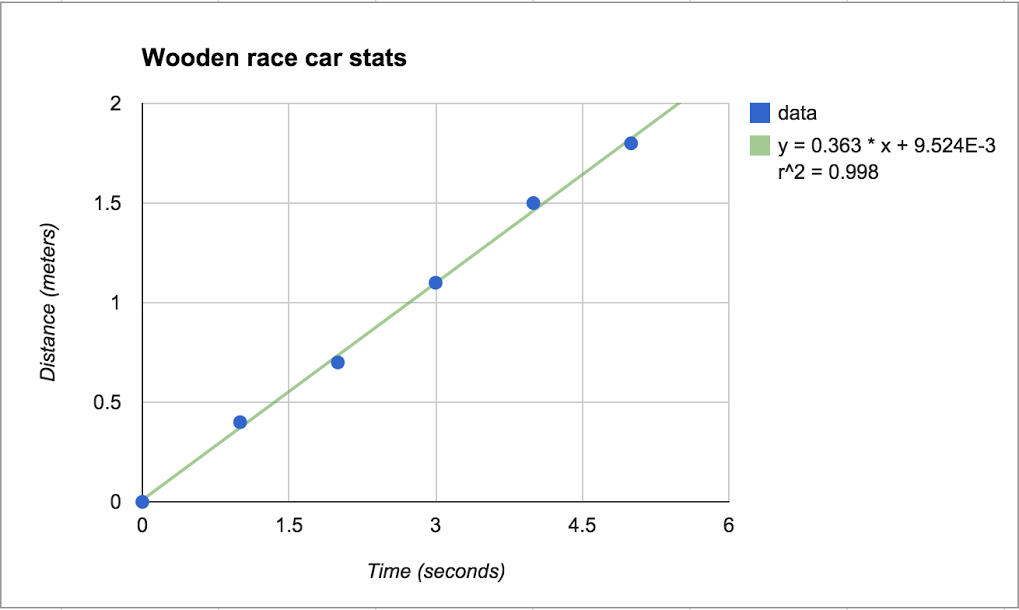
A couple nice new features for Google Sheets users are rolling out today including the ability to copy and paste charts and a new trendlines feature.
Sometimes it’s helpful to recognize and track patterns of data in your spreadsheets, so that’s why today we’re launching trendlines to scatter plot, bar, column, and line graphs in Google Sheets. Trendlines are commonly used to analyze financial and scientific data, but they can even be useful in the classroom or for personal needs like budgeting.
There are a bunch of ways to customize trendlines in Sheets, like:
-Choose between exponential or linear trendlines
-Add a variety of labeling options
-Customize your trendline
Today’s update also brings the ability to copy and paste charts in Sheets between other sheets or spreadsheets.
Google has more info on adding trendlines to charts here.

Samsung and Apple will largely own the smartwatch market between them, predicts Jackdaw Research chief analyst Jan Dawson in a report being issued later today and seen by Re/code.
Dawson said that new players should “stay out of the market,” and existing players should scale back their plans.
“We do not recommend that existing vendors should maintain current levels of investment when market growth and the overall revenue opportunity remain poor,” Dawson said. “It is unlikely that more than one or two small vendors will be able to make a sustainable business out of smartwatches in the face of competition from Samsung and […] Apple” …
Chinese company Lenovo, which is in the process of buying the Motorola brand from Google, has reported a 23 percent year-on-year increase in first-quarter profits to $214M, reports Reuters. The company also said that worldwide phone sales were up 39 percent, in line with recent IDC numbers.
While Lenovo recently became the market leader within China, CEO Yang Yuanqing said that the company will in future be focusing on more profitable overseas markets …
Expand
Expanding
Close
[youtube=https://www.youtube.com/watch?v=M6YXllIqD_E]
Small businesses looking to take occasional card payments without paying monthly fees now have a third option as Amazon has launched Local Register to compete with Square and PayPal Here – as we predicted last month over on 9to5Mac. The $10 card-reader is currently only compatible with the Samsung Galaxy S3, S4 and S5, along with the Kindle Fire HD and HDX tablets, but more devices are expected to be added.
Amazon is undercutting both competitor services with a flat fee of 2.5 percent per transaction (vs 2.7 percent for PayPal Here and 2.75 percent for Square). Not enough? Amazon is sweetening the deal with a special introductory rate of 1.75 percent until the end of 2015, and will also credit the $10 cost of the cardreader in full against transaction fees …
Expand
Expanding
Close

Just a few weeks ahead of IFA in Berlin, an alleged image of Samsung’s virtually reality headset has been leaked. According to The Verge, Samsung is set to unveil this headset, alongside the Galaxy Note 4, at its Unpacked event in Berlin next month. The report claims that the headset, codenamed Project Moonlight, is similar to Google Cardboard in how it allows you to pair it with a smartphone display to transport you “into an immersive world” with its lenses.
Like it always does during the first half of a new month, Google this evening updated its Android Distribution data to reflect a 7 day period ending on August 12th. The data shows the most recent version of Android, KitKat, reach an all-time usage high at 20.9 percent, up from 17.9 percent this time last month. Jelly Bean continued its steady decline, falling from 56.5 percent to 54.2 percent.
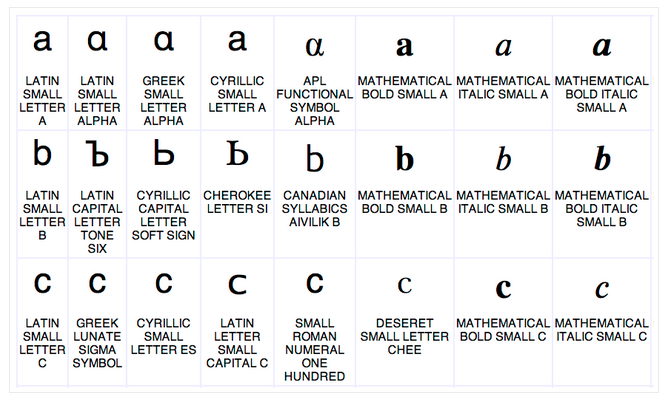
Google announced today that it’s adding a new feature to its spam filtering support in Gmail that will help it protect against possible scams and spam as it introduces support for non-latin characters. Google announced earlier this month that it was adding support for the non-latin characters in email addresses (like accented characters and those written in a script like Chinese), and that it hoped the rest of the industry would follow to offer a seamless mail experience in various languages. Google said today, however, that with the new feature comes the possibility of new scams taking advantage of similarities in characters:
Scammers can exploit the fact that ဝ, ૦, and ο look nearly identical to the letter o, and by mixing and matching them, they can hoodwink unsuspecting victims. Can you imagine the risk of clicking “ShဝppingSite” vs. “ShoppingSite” or “MyBank” vs. “MyBɑnk”?
To protect against these possible scams, Gmail will now block emails with suspicious letter combinations based on an open standard from the Unicode Consortium:
To stay one step ahead of spammers, the Unicode community has identified suspicious combinations of letters that could be misleading, and Gmail will now begin rejecting email with such combinations. We’re using an open standard—the Unicode Consortium’s “Highly Restricted” designation—which we believe strikes a healthy balance between legitimate uses of these new domains and those likely to be abused.
Google says the changes are rolling out to Gmail users starting today.
After announcing a preview of “Google Classroom” back in May, today Google has opened up the tool for educators to all Google Apps for Education users. Classroom offers teachers a slick platform to plan lessons, assignments, and work alongside students, and today Google also announced some new features its implemented on advice from educators that have been previewing the software. Google is adding new collaboration tools that allow teachers to work with students while they work on assignments:
Expand
Expanding
Close

The Chromecast’s capabilities just keep expanding, and today—as a special treat for those of us who actually use Google’s social network—you’ll find that you can now cast your Google+ feed directly to a Chromecast-connected device. The app has long been able to cast your photos, but apparently you can now send your entire feed full of posts and images to your TV to be viewed in their full glory (via iTechTriad).
After selecting your destination device, the app can automatically pan through all of your posts and you can just sit back and watch. But of course, if you’d rather have control, you can also flip through posts at your own pace. The updated app is supposedly being pushed through Google Play, but it appears that the feature is being flipped server-side. But once it’s on for you, you’ll be able to view photos, videos, and text via Chromecast at the tap of a button.

[youtube=https://www.youtube.com/watch?v=GwBJnzgTx10]
Google, Staples, and DonorsChoose.org teamed up to surprise teachers in Chicago by #flashfunding all of their projects. Mayor Emanuel gives the good news to Dawes Elementary School teachers and students.
Google appears to be experimenting with new “Listen Now” ads in search results for streaming music services including its own Google Play Music and competitors like Apple’s Beats Music. The Wall Street Journal first noticed the ads and confirmed the new format with Google:
Expand
Expanding
Close
Rumors of when we can expect a Moto X successor have been around for a while now, but now Droid Life is reporting that the device will be released on Verizon in late September. The blog claims that its sources are currently hearing that Verizon is planning to launch the device on September 25th.

Image via <a href="http://www.businessweek.com/articles/2014-05-01/tech-hubris-the-silicon-valley-antitrust-hiring-conspiracy#p2" target="_blank">Bloomberg</a>
A judge has rejected a settlement that was reached earlier this year between employees of Google, Intel, Apple, and Adobe and their respective companies, CNBC reported today. According to reports from the courtroom, Judge Lucy Koh ruled that the settlement was not high enough and should actually be $380 million.
The lawsuit was brought against the tech giants in question by current and former employees who believed (correctly) that their employers had created agreements to avoid attempting to hire engineers from one another. The idea was that if no competitors were making offers, each company was free to pay its employees whatever it wanted without having to worry about them jumping ship for a better offer.
Google yesterday kicked off what it’s calling the #PlaySale in 17 countries, and with it comes some fantastic deals across the marketplace. Tons of movies are going on sale to be available for less than $10, tons of apps are going free, and hit games are getting some steep discounts.
Be sure to check out Google’s discounted movies feature page, where you’ll find titles like Anchorman 2, Gravity, Son of God, and The Hobbit: The Desolation of Smaug, all for less than $10. Likewise, Google is touting “up to 85% off and more!” on a huge selection of apps and games, where you’ll find everything from indie games to popular third-party apps. Also, as an added bonus, you’ll find that many apps are offering discounts on in-app purchases as well.
17 countries are about to get the lowest prices of the year on new titles. Check out #PlaySale http://t.co/0rhDnZfUu9 pic.twitter.com/T8xE1sktPp
— Google Play (@GooglePlay) August 8, 2014
Google today rolled out an update to its Android Device Manager app that bumps it to version 1.3.8. For those unfamiliar, Android Device Manager is Google’s solution for those who have lost or misplaced their phone or tablet and need to locate it. Today’s update is relatively minor, but there is one feature that will be incredibly e helpful, should you misplace your device.

Google says it has been testing changes to its search algorithms that will give secure, encrypted websites — as shown by HTTPS in their URL — ranking preference over those that do not. Google as a company prioritizes security, and as more and more webmasters are adopting HTTPS, the company hopes that this change will push more webmasters to do the same.
There will be some nervous faces in Amazon’s headquarters as Google today partners with rival booksellers Barnes & Noble to extend the Google Shopping Express service to books, reveals the New York Times.
Starting on Thursday, book buyers in Manhattan, West Los Angeles and the San Francisco Bay Area will be able to get same-day deliveries from local Barnes & Noble stores through Google Shopping Express, Google’s fledgling online shopping and delivery service …
Google this afternoon, as part of its Update Wednesday regiment, started rolling out an update to the Play Music app on Android. The update bumps the app to version 5.6.1616 and includes several interface tweaks and new features. For one, the update adds a newly-skinned 4×1 widget, as well as a new 1×1 widget that allows you to instantly listen “I’m Feeling Lucky” radio. For those unfamiliar, the “I’m Feeling Lucky” feature provides an infinite stream of music that Google thinks you will like.

Google announced today that it’s adding a new “unsubscribe” link at the top of emails in Gmail making it easy to unsubscribe from mailing lists. Most of us have hunted for the unsubscribe button in an email that marketers often bury at the bottom and make hard to find. Some users might have noticed the feature rolling out in recent weeks, but it appears Google has now made it live for all.
Making the unsubscribe option easy to find is a win for everyone. For email senders, their mail is less likely to be marked as spam and for you, you can now say goodbye to sifting through an entire message for that one pesky link.
This new Gmail feature will get rid of that problem by detecting emails that include an unsubscribe link and putting an easy to access button right next to the sender’s email address. You’ll notice the option in Gmail’s Promotions, Social, and Forums inboxes.
Things are getting interesting for Google on the legal front. Not long after the ‘right to be forgotten‘ ruling and the messy fallout from that, a Hong Kong court has ruled that the company is responsible for auto-complete suggestions where they could be said to defame.
MyBroadband (via The Loop) reports:
A Hong Kong court has ruled that a local tycoon can sue Google Inc for defamation because searches for his name on Google suggest adding the word ‘triad’, Hong Kong’s notorious organized crime groups.
Searches in both English and Chinese for Albert Yeung Sau-shing, the founder and chairman of Hong Kong-based conglomerate Emperor Group, will automatically suggest phrases related to organized crime using Google’s ‘autocomplete’ function.
On Tuesday, the High Court of Hong Kong dismissed Google’s argument that it was not responsible for the autocomplete suggestions related to Yeung and that the court did not have personal jurisdiction over the U.S. search giant …
Photo: ibtimes.com
Samsung and Apple just announced that they have agreed to drop all patent suits against each other in countries outside the United States, Bloomberg reports. The two companies will drop suits against each other in Australia, Japan, South Korea, Germany, Netherlands, the U.K., France and Italy. This agreement does not include any licensing agreements, though. This has no effect on United States battles either.
During the summer of 2013, the line-up of Google Play Edition devices grew incredibly quickly, with devices available from HTC, Motorola, Samsung, and Sony. Last month, however, the selection of devices dropped to just three: the Moto G, Galaxy S4, and HTC One (M8). Now, this evening, Google has removed the Galaxy S4 Google Play Edition from the store without any replacement in sight.
Google announced today that it’s adding support for non-Latin characters in email addresses in Gmail. That means that email address names that contain accented characters or those that are written in a script like Chinese can now be both sent and received from Gmail:
Expand
Expanding
Close
As first reported by the Kansas City Star, several cable companies have started bumping up their internet speeds for customers, free of charge, in order to better compete with Google Fiber in Kansas City. Both Comcast and Time Warner announced changes for their internet packages.