Stay up to date on news from Google headquarters. Be the first to learn about plans for Android, Google Plus, Google Apps, and more!
Stay up to date on news from Google headquarters. Be the first to learn about plans for Android, Google Plus, Google Apps, and more!

According to a new report from GigaOm, Google is in the process of rolling out an update to higher quality 720p HD video for Google+ Hangouts and Google’s Vic Gundotra later confirmed the roll out will continue over the coming weeks. The report explains that the move is part of Google’s transition to new plug-in free standards including the switch from the H.264 video codec to VP8:
One of the key advantages of VP8 is that it will enable Hangouts in HD, something that Chew said simply wasn’t possible with H.264, because handling HD streams from 10 participants would have required too much processing power. The new video format also makes it possible for Google to serve up better-looking streams at low bit rates, which is especially important when it comes to mobile video chats.
Google’s Vice President of Engineering Chee Chew told GigaOm that the company plans to move Hangouts to the open standard WebRTC standard, which it just implemented support for in Chrome, to provide a plug-in free experience for users and other improvements:
“We will eventually move over to WebRTC,” said Chew, but this process may take several more months. However, eventually, WebRTC could actually provide an even more immersive video chat experience, explained Chew. That’s because when the video becomes a native HTML element, it will be even easier to add overlays and other, more subtle improvements.
More details available in the full report here.
YouTube has announced on its YouTube Creators blog that it will be retiring the video response feature that allowed users to leave a video response in the comment field instead of the usual text comment. It’s likely not something that many users will even notice, as YouTube notes that video responses currently only have a click-through rate of about .0004%. That means only around 4 out of every 1 million users that see a video response actually click it. The feature will officially come to an end on September 12, but YouTube says it has plans to implement even better fan engagement tools in the near future:
So, on September 12 we’re going to retire this little-used feature as we work to develop more effective fan engagement tools for creators. The team is focused on enabling you to share video links in comments. Doing this in comments will let creators and viewers add more context to a video, and more context should drive more engagement.
Until the new fan engagement features for video comments roll out, YouTube provides a couple tips for finding and sharing video responses from fans:
In the meantime, you can continue to encourage fans to upload videos with specific titles, hashtags or descriptions (e.g., Video Response To Taylor Swift’s Video “22”), so you can find these by searching for them. If you want to highlight them, you can use playlists and channel sections instead of displaying these videos below yours. Any video responses you or your fans have made will still be available and discoverable.

Google has just announced that it is cutting the price of its Nexus 4 in Australia, Canada, Germany, Spain, Korea, the United States, and the UK. The device now runs just $199 for 8GB of storage and $249 for 16GB in the United States. Previously, it was priced at $299 for 8GB and $349 for 16GB.
We've lowered the price of #Nexus4. Get it for 25% off or more in Australia, Canada, Germany, Spain, Korea, US, UK: http://t.co/g8vIKtBC9N
— Google Play (@GooglePlay) August 28, 2013
Even though the Nexus 4 was released nearly a year ago, it’s still very solid smartphone, and will continue to get updates directly from Google for a long time to come. The device is powered by a 1.5GHz Quad-Core Qualcomm Snapdragon S4 Pro processor with 2GB of RAM and an 8MP camera.
Google is expected to announce a new Nexus device sometime this fall, though exact details still remain up in the air. Some rumors point to Motorola manufacturing the device, while others claim that it will be LG again.
At the same price as many phones are on-contract, the $199 off-contract Nexus 4 is a great deal. It’s available on Google Play now and will ship within 1-2 business days, though that may change depending on demand.
Expand
Expanding
Close

A novel new use for Google Glass: In the operating room, a surgeon does an operation wearing Google Glass and shares the procedure real time with his colleagues and students in a far off classroom via Google Hangouts.
“It’s a privilege to be a part of this project as we explore how this exciting new technology might be incorporated into the everyday care of our patients,” said Dr. Christopher Kaeding. “To be honest, once we got into the surgery, I often forgot the device was there.”
Google Glass has a frame similar to traditional glasses, but instead of lenses, there is a small glass block that sits above the right eye. On that glass is a computer screen that, with a simple voice command, allows users to pull up information as they would on any other computer. Attached to the front of the device is a camera that offers a point-of-view image and the ability to take both photos and videos while the device is worn.
It seems like only last week Doctors were using iPads for surgeries.
Expand
Expanding
Close

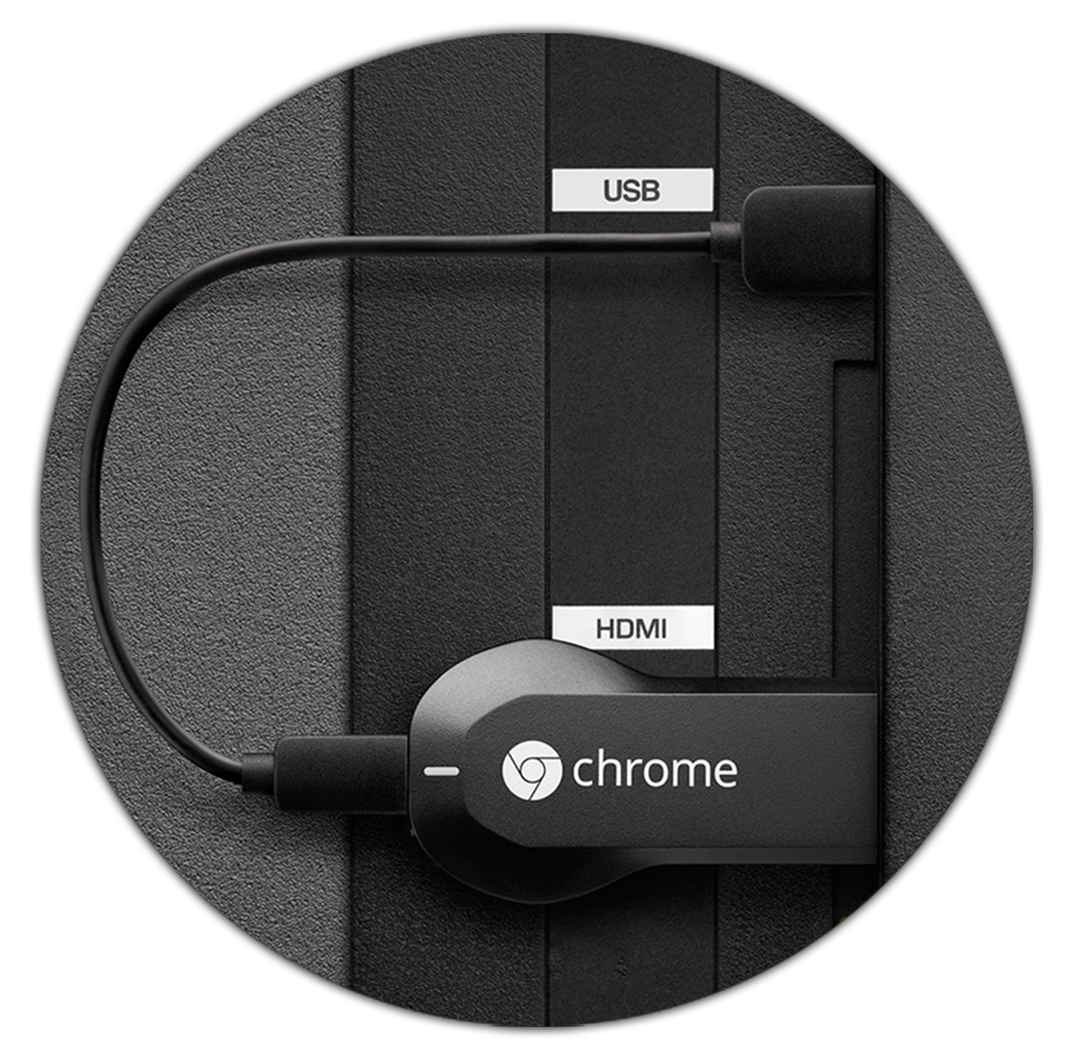
Image: Amazon
There were suggestions yesterday that Google had deliberately blocked the Chromecast stick from playing local content after an update blocked the functionality.
Google today confirmed in a statement that this was a glitch with a particular SDK, and that it remains committed to allowing the stick to play all types of content.
We’re excited to bring more content to Chromecast and would like to support all types of apps, including those for local content. It’s still early days for the Google Cast SDK, which we just released in developer preview for early development and testing only. We expect that the SDK will continue to change before we launch out of developer preview, and want to provide a great experience for users and developers before making the SDK and additional apps more broadly available.
There may of course be suggestions that it was a hasty rethink rather than a glitch; if so, it was done very swiftly.
Developer of the third-party AllCast Android app, Koushik Dutta, says that Google’s latest software update for Chromecast blocks the app’s ability to stream local files to Google’s new $35 streaming device. The app had not yet made its way to Google Play, but Dutta claims (via TheVerge) that Google intentionally disabled support for AllCast in the latest Chromecast software update:
Heads up. Google’s latest Chromecast update intentionally breaks AllCast. They disabled ‘video_playback’ support from the ChromeCast application.Given that this is the second time they’ve purposefully removed/disabled[1] the ability to play media from external sources, it confirms some of my suspicions that I have had about the Chromecast developer program:
The policy seems to be a heavy handed approach, where only approved content will be played through the device. The Chromecast will probably not be indie developer friendly. The Google TV team will likely only whitelist media companies.
So far Google’s Chromecast only officially supports YouTube, Netflix, and content from Google Play, and to help it make deals with other big media companies it looks like it might have to limit access to streaming capabilities for third-party apps. The other side to that of course is that Chromecast allows users to stream a tab from the Chrome browser, which allows users to stream local content from their own devices anyway. Google hasn’t commented on the AllCast situation, but we’ll update you if we hear anything.
Samsung originally planned to open up registration for its first developer conference earlier this month, but after a short delay, the company has finally announced today that it’s accepting sign-ups for the event. This will be the first time Samsung comes to San Francisco to host a developer conference, something Google and Apple have been doing for years and commonly use to introduce new products and upcoming developer facing features. Samsung too plans to unveil some new services and features for developers:
Samsung’s event will feature over 40 technical sessions and industry sessions from leading influencers in the mobile, consumer electronics and digital content industries. Samsung will also unveil a number of new SDKs and tools that will help developers maximize the latest innovations, features and capabilities found in Samsung devices.
Registration is open now on Samsung’s website for the event scheduled to take place on October 27-29 at Westin St. Francis Hotel in San Francisco. Tickets cost $299 and will provide access to all keynotes and developer sessions.
We still don’t know what exactly we’ll be seeing at the conference, but Samsung does plan to show off some new tools and APIs for developers, including:
* First-look at new Samsung SDKs and tools including S Pen and new features
* Deep dive into Samsung Service Platform and services APIs including ChatON, Group Play,
Samsung AdHub, Context Aware and much more
* Best practices for developing Smart TV application in multi-screen environments spanning,
mobile, tablet and TV
* Cross-platform development case including HTML5, Web app and more
* Special sessions for B2B developers which cover the Samsung mobile partnership program,
building certified applications, KNOX, Enterprise SDK, and more
* Development opportunities in emerging categories such as gaming and much more
Event takes place in San Francisco from October 27-29 and includes over 40 working sessions, insight to new Samsung tools and SDKs and guest talks from industry luminaries
SAN JOSE, Calif.― August 26, 2013 ― Samsung Electronics Co. today announced that registration for its first annual Samsung Developers Conference has officially opened. The event, to be held at San Francisco’s St. Francis Hotel, from October 27-29, will feature insight into new tools to help developers create exciting, innovative applications and services across Samsung devices and best practice demonstrations.
Samsung’s event will feature over 40 technical sessions and industry sessions from leading influencers in the mobile, consumer electronics and digital content industries. Samsung will also unveil a number of new SDKs and tools that will help developers maximize the latest innovations, features and capabilities found in Samsung devices.
“Samsung is excited to offer developers a single place to learn how to develop, market, and monetize applications and services that may span smartphones, tablets, and televisions,” said Dr. WonPyo Hong, President of the Samsung Media Solution Center. “As convergence of user experiences and as consumers utilize more devices, even at the same time, the opportunity for developers to be innovative has never been better.”
Technical sessions and presentations from industry thought-leaders will cover key topics, including:
* First-look at new Samsung SDKs and tools including S Pen and new features
* Deep dive into Samsung Service Platform and services APIs including ChatON, Group Play,
Samsung AdHub, Context Aware and much more
* Best practices for developing Smart TV application in multi-screen environments spanning,
mobile, tablet and TV
* Cross-platform development case including HTML5, Web app and more
* Special sessions for B2B developers which cover the Samsung mobile partnership program,
building certified applications, KNOX, Enterprise SDK, and more
* Development opportunities in emerging categories such as gaming and much more
Tickets to the Samsung Developer Conference cost $299 and include access to keynotes, working sessions and an exclusive developer event on the evening of Monday, October 28. Additional information about the conference, including details on how to register, can be found at www.samsungdevcon.com.
Earlier this month, Oracle CEO Larry Ellison claimed that Google and its CEO Larry Page were “absolutely evil” and used Oracle’s “stuff” through its use of Java in Android. Oracle originally sued Google for the supposed stolen code, but Oracle lost the $6 billion legal battle. After Ellison’s latest comments, however, Google executive chairman Eric Schmidt has finally decided to respond to the claims.
In response to claims that Google “took [Oracle’s] stuff,” Schmidt proclaimed those as “simply untrue” and that the U.S. District Court agrees with him.
We typically try to avoid getting dragged into public battles with other companies. But I’ve gotten a lot of questions about Larry Ellison’s claims that Google “took [Oracle’s] stuff”. It’s simply untrue — and that’s not just my opinion, but the judgment of a U.S. District Court.
Schmidt went on to give the backstory of the lawsuit, saying that “you cannot copyright an idea, like a method of operation” and the ruling in the Google vs Oracle battle “protects a principle vital to innovation.”
Expand
Expanding
Close
According to a report from AllThingsD, Google’s investment arm, Google Ventures, just invested around $250 million into Uber, the private car delivery service that lets users order vehicles through mobile apps. The investment comes as Uber raises $360 million at a valuation of around $3.5B:
Though pricey, the latest scramble to be in the Uber funding round was apparently very competitive. Sources said Google won the investment because of direct intervention by CEO Larry Page, who met with Uber CEO Travis Kalanick.
While it would be a bit stretch to guess what plans Google might have for Uber down the road, there are a few Google services in development that could benefit. Some have speculated that Uber could help power a future driverless car service from Google, but perhaps more realistic for the short term would be deliveries. Since last year Google has been testing a same-day delivery service in and around San Francisco, and it reportedly planned to use driverless cars to do so.
As noticed by Droid-Life, Google has responded in its product forums to complaints related to multitouch issues for its new Nexus 7 and is rolling out an update to address the problems. The update will bring the Nexus 7 up to Android 4.3 build JSS15Q and a Googler confirmed the update should fix the touchscreen issues:
As a couple of you have mentioned, there’s a new system update that’s started rolling out for your Nexus 7s. This update does address the touchscreen issues discussed in this thread. If you’re one of the people experiencing touchscreen issues, please let us know how it’s going after you’ve received and installed the update.
We also heard earlier this month that Google was investigating reports of GPS problems with new Nexus 7.
According to a report from plugged-in technologist Robert Scoble, Google might have plans to rent out around 6,000 square feet inside every Best Buy location to begin selling Google Glass by as early as next year.
Scoble does note that this is still a rumor at this point, but hopefully we’ll get some more details soon. While previous reports claimed that Google Glass could be available for everyone to purchase by the end of the year, Google confirmed earlier this week that Glass will not begin shipping to consumers until at least 2014.
Google Glass is currently still available to those invited to Google’s Glass Explorer program, but the company recently started experimenting with a Gmail style invite-a-friend strategy for the product.
While we heard previously that Google had plans to open its own retail stores, it wouldn’t be the first time its used the store-within-store model as it already operates smaller spaces within Best Buy and Dixons.
Expand
Expanding
Close
We noted yesterday that the release of Chrome 29 on Windows, Mac, and Linux would be followed by an update to the Chrome app for Android that brings support for the WebRTC standard and scrolling improvements. Google has just released the update on Google Play and also noted that it includes support for the WebAudio API allowing developers to “process and synthesize audio” in web apps. WebRTC support, as we’ve noted previously, is typically used by developers to implement voice calling, video chatting, and peer-to-peer file sharing in their web apps without the ned of a plugin. Google also says the update includes enhancements to “scrolling responsiveness and visual indication when reaching the end of a page.”
The updated Chrome for Android app also brings a new UI for the color picker in web forms and improved startup performance.
Google announced today on its Google Drive blog that it’s rolling out a new update to its Google Keep note taking app that will introduce both time and location based reminders. After updating to the latest version of the app, users will be able to select a small reminder icon at the bottom of each note and select from a time reminder to set a specific date and/or time of day, or a location-based reminder that provides suggestions for nearby destinations as you type. The feature will let users ‘snooze’ the reminders if they choose, and the update also brings a new and improved navigation drawer for the app:
Of course, sometimes plans change. If you get a reminder you’re not ready to deal with, simply snooze it to a time or place that’s better for you. It’s now even easier to get to all of your notes using the new navigation drawer, which includes a way to view all of your upcoming reminders in one place. And for people who want more separation between their home and work lives, the drawer also lets you easily switch between your accounts.
Google Keep will also now allow users to attach photos from their device’s photo gallery opposed to just being able to snap a new picture:
Expand
Expanding
Close
Google is today rolling out its Field Trip app, previously available only on Android and iOS, to those lucky enough to be part of its Google Glass explorers program. While the Google Glassware version of the app appears to offer a slightly stripped down version of the virtual tour guide experience, the hands-free experience with Glass seems to be a natural fit for Field Trip. John Hanke, who is in charge of the Niantic Labs project at Google told Cnet that Field Trip was actually “conceived with Glass in mind, but Glass wasn’t ready.”
Expand
Expanding
Close
Google now has a landing page of a closed beta of a novel new system of monetizing tutoring over Google+’s Hangouts conveniently called Helpouts. The service was first reported a month ago. The idea is pretty simple. If you have a skill area that you think other people can benefit from, you sign up as an expert. Then on the other end, people who need tutoring in that area find an expert in that area that is online for the right price. Google takes care of the transactions. IT will be
I know people who do their counseling and tutoring over Skype or iChat already, so there is certainly a need in this area.
But the devil will be in the details. Reputation building and scoring will be important as well as keeping it clean from porn (or segregated if that’s what Google wants). Right now Google is inviting people who might be interested. I’m keeping an eye on this one – I hope it makes it through Google Purgatory.
Expand
Expanding
Close
Google today announced its finishing its roll out of Google Play Services 3.2, the latest version of its platform for delivering updates to its own apps and third-party apps using Google APIs. Version 3.2 includes a number of notable new features that end-users will benefit from, including a new compass mode for PhotoSphere that lets users navigate through PhotoSpheres by moving their device, and an improved InstantBuy UI that supports offers and loyalty data.
A few of the new features available for developers include improvements to location based services and hardware-based GPS geofencing:
The Fused Location Provider now supports the selection of a low-power mode option when requesting location updates, and the ability to inject mock locations — allowing you to more efficiently test your apps in a variety of simulated conditions.
The geofencing APIs have been updated to support hardware-based GPS geofencing on devices that have supporting hardware, such as the Nexus 4. Hardware geofences consume significantly less battery, and best of all your app will automatically take advantage of this feature on supported hardware without you having to make any changes.
Google also noted that a new Snapshot feature for the maps API will let devs “capture a bitmap image of the current map in order to improve performance when an interactive map isn’t necessary.” A simplified sharing control feature in the latest release will let developers using Google+ sign in (which also receives a shiny new animation) to simplify sharing to the social network.
The Google Play Services 3.2 release is now available for developers to test through an updated Google APIs emulator image in the Android SDK Manager. More info is available on the Android developers blog here.
Google announced today on its Chrome Blog that it is beginning to roll out smarter omnibox suggestions for Chrome users that it says will provide “more timely and contextually relevant suggestions.” The feature has been available for a while in beta and Google noted the improved suggestions are based on websites users recently visited. The new features come alongside the release of the Chrome 29 stable release for Windows, Mac, and Linux, which also brings support for new apps and extensions APIs.
Another new feature coming in Chrome 29 is the ability to reset Chrome back to its original state, disabling all added extensions, through an easy to access option located in Settings:
Expand
Expanding
Close
Google’s Staff Research Scientist Ed Chi first announced on his Google+ last night that the company is rolling our a new translation feature directly in Google+. The Google Translate integration means posts and comments on Google+ will now include a “Translate” link for text that isn’t in the user’s language:
Whenever there’s a public post or comment that isn’t in your language, you’ll now see a “Translate” link underneath the text. Clicking the link translates the text in-line, and clicking again returns to the original. (You can set/check your language prefences here: www.google.com/settings/account ).
Chi says the new feature is rolling out to Google+ on the desktop gradually.

Google Glass is generating a lot of interesting ideas lately. A couple of new ones that caught my eye are an app from Mutualink designed to assist emergency services personnel, and a Glass version of Amazon’s Price Check app.
Mutualink’s app, spotted on TechCrunch, is designed to enable emergency responders to get access to key documents on-scene. Examples they give are a firefighter being able to see layout plans before entering a burning building, a police officer being able to tap into live CCTV feeds from the surrounding area and medical personnel being able to access medical records and transmit video footage back to a hospital for review by specialists …
Expand
Expanding
Close
 Google announced today on its Google Maps blog that it’s finally tapping into the talent and technology it picked up with its acquisition of Waze back in June to integrate real time incident reports from Waze into Google Maps. The new integration means that when Waze users report incidents for everything from accidents to road closures, Google Maps users on both iOS and Android will now be able to benefit:
Users of Google Maps for Mobile will now benefit from real time incident reports from Waze users. This means when Wazers report accidents, construction, road closures and more on Waze, the updates will also appear on the Google Maps app for Android and iOS.
The features will initially be limited to users in certain locations, including: Argentina, Brazil, Chile, Colombia, Ecuador, France, Germany, Mexico, Panama, Peru, Switzerland, UK and the US. In addition, as Google first hinted back in June, the company will also be integrating Google Search into the Waze apps on iOS and Android, while the Waze Map Editor now has access to Google Street View imagery:
Expand
Expanding
Close
One of the over 2000 customization options offered through Motorola’s “Moto Maker” online ordering tool for its new flagship Moto X was the option to engrave the device. We noted last week that the beta for the online Moto Maker tool was censoring profanity and competitor’s brand names for engraving, but today the company has confirmed engraving won’t be an option for users at launch. PCWorld’s JR Raphael got word from Motorola:
This just in from Motorola: Custom engraving won’t be available on the Moto X at launch. During beta testing, the company determined the quality of the printing wasn’t meeting its standards and decided to pull the plug on it for now. Spokesperson tells me they hope to work out the kinks and start offering the option to consumers soon.
The Moto Maker online ordering tool allows a long list of color and customization options for Moto X customers. While the customization features are the big selling point for many users, most carriers are only offering black and white versions of the phone initially. AT&T will customers will have exclusive access to Moto Maker when it launches on the carrier on August 23. Other carriers are expected to get access later this year.
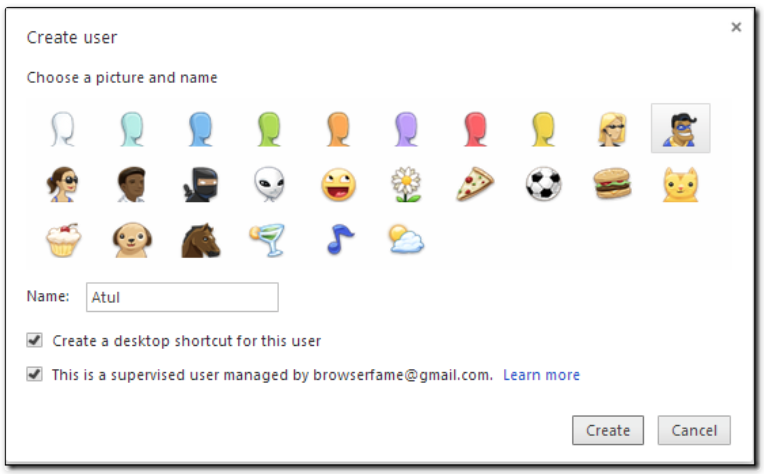
BrowserFame spotted a feature in the Canary (development) version of Chrome that would allow parents and schools to created ‘supervised user’ accounts whose access to the web can be controlled by a master account.
The approach is an extension of the standard accounts available in Chrome, allowing different users to have different settings and to be automatically signed-in to Google services …
Expand
Expanding
Close

One of the cornerstones of Google’s reputation for innovation – its 20% Time scheme – is now effectively gone, according to a report by Quartz, citing anonymous Google employees.
Google’s 20% Time allowed engineers to spend the equivalent of one day a week working on a personal project without having to justify it to anyone. Gmail, Google maps, Adsense, Google Talk and many other products were born from this scheme. Adsense alone is responsible for around 25 percent of Google’s annual revenue.
Now, says the report, it is all but dead …
Expand
Expanding
Close