
New Play Store policy will help prevent Android call and text data leaks

Google is implementing a new Play Store policy to combat abuse and potential leakage of sensitive call and text logs by third-party developers.
Google is implementing a new Play Store policy to combat abuse and potential leakage of sensitive call and text logs by third-party developers.

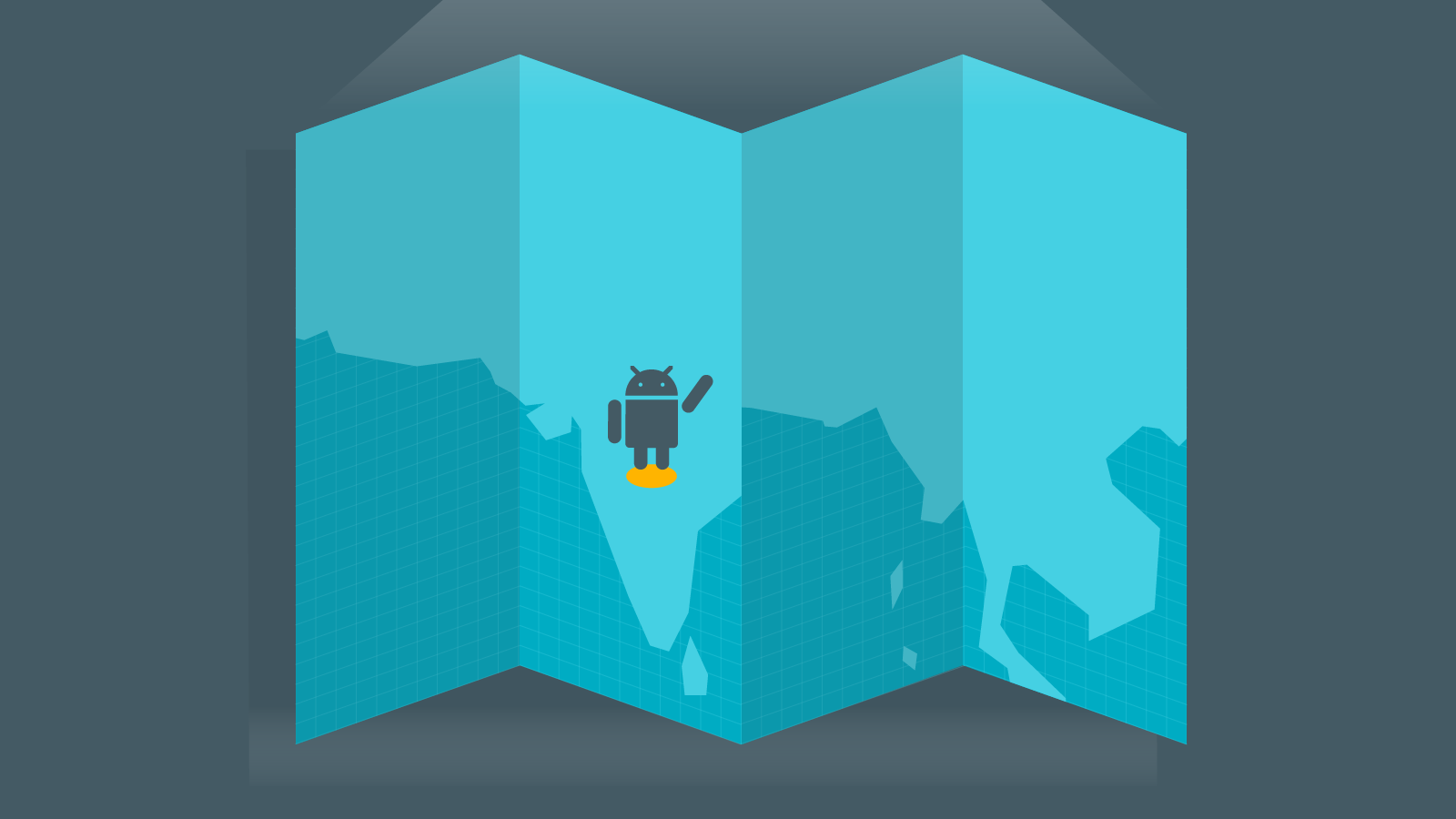
Google has today announced the Android Skilling Program for India, its initiative to provide Indian developers with access to a “world-class skilling and educational program”. India will add several million software developers over the next half decade, and Google wants to step in and help train two million of those over the next three years…
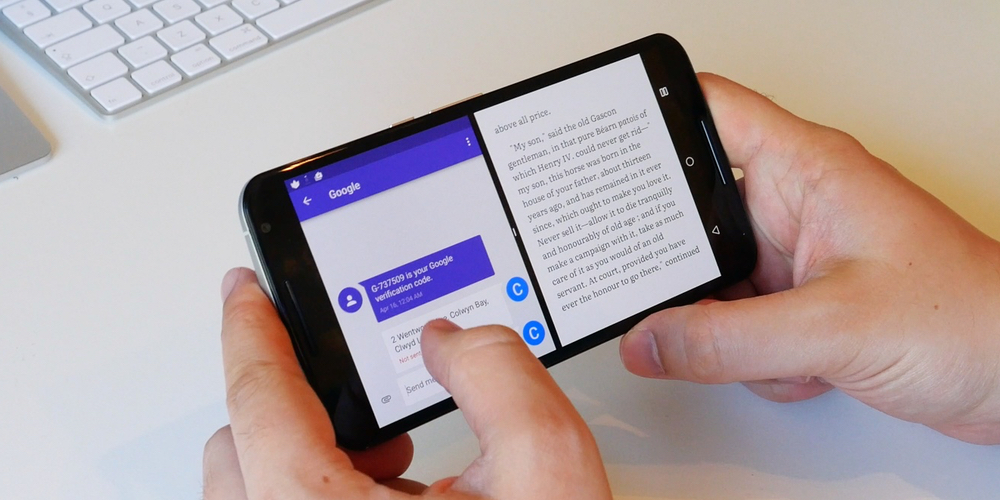
We exclusively told you a few weeks ago that Google was planning to launch a partner program for agencies that build Android apps, and the company confirmed the existence of said program on the day of the Google I/O 2016 keynote. Now, Google has taken to its Developers blog to formally “announce” the program and spill some more details…


The Big Android BBQ Europe 2016 has been officially announced, and will take place at the CASA400 Conference Hotel in Amsterdam between August 14-16. Developers are invited to register now to take part in the event which promises great grilled foods, and a chance network and build on their coding abilities.
With Android N about to launch, along with Google’s Daydream VR capabilities, this could be one of the most important coding/networking events to date.

Alongside all of the Google I/O announcements today, Google announced a new resource for app developers in the form of the new ‘Playbook by Google Play’ app available in beta now.
Expand
Expanding
Close

Google’s annual developers’ conference is set to kick off in just a couple days, so it seems appropriate that Google has today updated its Developers site with some refreshed navigation…

Along with the Android N Developer Preview, Google released a preview version of Android Studio to allow developers to begin testing their apps. Android Studio 2.1 has now been released to the stable channel with updates to Instant Run, along with other Android N development features.

Google has announced on its Android Developers blog that it is open sourcing its WALT Latency Timer. The company says that it has been using the tool in its Chrome OS and Android divisions to measure and minimize touch and audio latency, but now all developers will be able to take advantage of the tool.
Update 3/14: The discount is now available to those in the UK, Ireland, Australia, and New Zealand.
Update: As of Wednesday afternoon, Google has started emailing the redemption codes. They must be redeemed by July 15th. The 25% discount also applies to the 32GB model.
To coincide with the release of the Android N Developer Preview, Google is offering developers a hefty 25% discount on the 64GB Pixel C. This $150 price cut brings the device down to a much more reasonable $450.
Since its launch in 2013, Chromecast has been a hit success for Google and its attempt to capture the media streaming market. Starting today, developers will get access to analytics about their Cast applications.
Updates to the Google Play Developer Console will help developers gain a better insight on feedback left by users. Specifically, the new tools will help developers analyze app ratings and reviews.
Google today announced a couple of new significant moves as it plans to refocus on development in southeast Asia. It will build its first engineering team dedicated to the area, in Singapore, and has promised to help train up to 100,000 developers in Indonesia within 4 years, in a bid to get more content out in the country, using its own national language(s).
Over the weekend, Google announced changes to Play Games permissions that are mostly meant for developers, but regular users who game on Android will also see a benefit. Players no longer need their Google accounts upgraded to Google+ to use Play Games and can now automatically be signed-in with a standard Google account.
Windows 10 has a feature that can unlock a computer with a face in lieu of a password. The so called Windows Hello takes advantage of Intel’s RealSense camera and technology. Today, Intel is releasing a smartphone developer kit that has RealSense cameras, and also support for Google’s Project Tango…
In the past, we’ve seen developers get Game Boy Advance games working on Android Wear watches. It’s not entirely practical for a number of reasons, but it’s still kind of fun and cool. There is now a Space Defender-esque game for Wear that was released as an Android Experiments app.

Google has today launched the Google Cast Remote Display plugin for Unity, in hopes that developers will now be able to more easily bring their mobile games to the TV. This is the same plugin that many games on the Play Store — including Monopoly Here & Now, Risk, and more — already use…
Today we launched the Google Cast Remote Display plugin for Unity to make it easy to take your Unity games to TVs. The Google Cast Remote Display APIs use the powerful GPUs, CPUs and sensors of your Android or iOS mobile device to render a local display on your mobile device and a remote display on your TV.
Google says that, as of today, developers can download the new Remote Display plugin for Unity from both GitHub and the Unity Asset Store.
Developers with preexisting Unity games simply need to import the Remote Display package to their project, add the CastRemoteDisplayManager prefab, and configure cameras for the local and remote displays. More detailed information can be found at Google’s Developers Blog.
Google has released API 23 SDK for Android Wear, which means developers can now start optimizing their smartwatch apps for Android Marshmallow. Once apps are updated, it means they’ll be able to take advantage of a number of new Android features, and they’ll be better at automatically detecting if they’re being displayed on a round or square watch face…
Google Play will soon show users what apps are ad-supported before downloading as the company asks developers to declare the status of ads in their apps by January, 2016.
Expand
Expanding
Close
Google has announced today that — following a successful trial in India — it will allow developers in 17 more countries to charge a lower price for its premium apps and in-app purchases. This news comes a couple of weeks after the company raised the maximum price, now giving developers much more flexibility in what they can charge customers, and hopefully enabling them to reach more customers.
The full list of countries this reaches, and the minimum prices:
If you’re a developer in one of these countries, you can lower the prices of your app by going to the Google Play Developer Console and clicking “Pricing and Distribution” or “In-app Products” for your apps.

Google has updated its Play Services to allow developers to make use of some very useful new enhancements to the overall experience of using Android. Google Play Services 8.3 includes updates to the way users sign in to apps, as well as new functionality for app invites, wearable data layer APIs and improvements to location services…

Google has raised the per-app maximum charge limit available to developers on its Play Store to $400 in the US. The maximum limit has been increased in multiple regions, and means app developers can now charge up to $400 for an app. It’s worth noting that $400 apps probably won’t show up any time soon. However, it is perhaps concerning to think which developers may decide to start offering ludicrously expensive in-app purchases for virtual donuts, credits or gold (or whatever else you may wish to pay for).
Expand
Expanding
Close
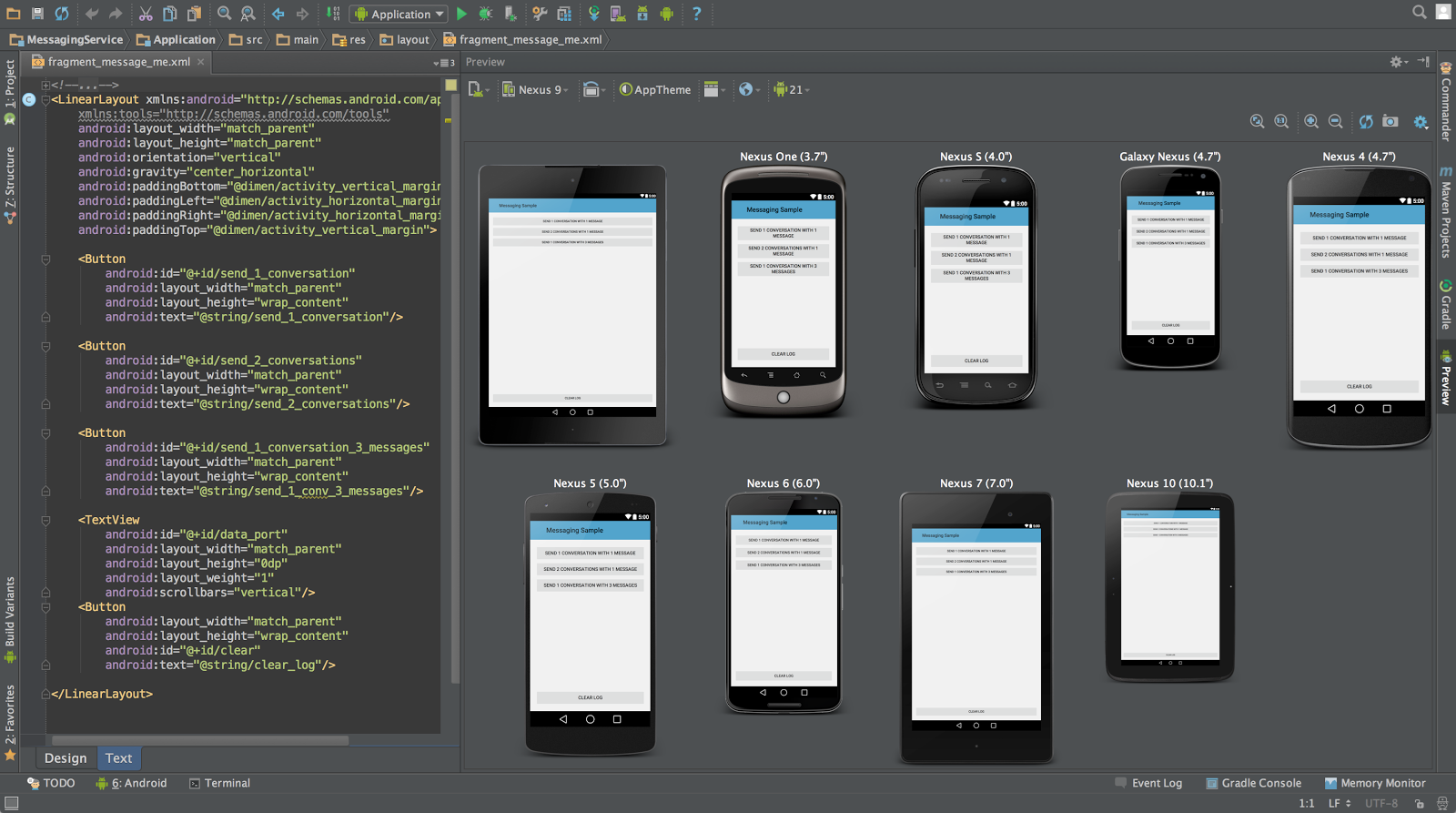
Android Studio 1.0
Google has today released Android Studio 1.4 in the stable update channel. As has been the case since the software was first released in beta just about a month ago, the update features new design tools such as vector assets, a theme editor, new project template features, new performance monitors, and more…
Some of the new design tools, as outlined at the Android Developers blog:
Vector Assets:
Starting with API 21, you can use Vector Drawables for image assets. For most apps, using VectorDrawables decreases the amount of density dependent drawables you need to maintain, and will also give you sharp image assets regardless of the screen device densities your app supports.
Theme Editor:
We understand that managing your app theme and style can be a bit complex. With Android Studio 1.4, we are releasing a preview of the Theme Editor to help with this task. This first version of the Theme Editor is focused on editing and updating the material theme colors (
colors.xml) in your app project.
Project Templates:
We know many of you use the New Project Wizard app templates to start a new app project or to quickly add an activity to an existing app. To help with the visual design of your apps, we updated the app templates to include the Android Design Support Library alongside the AppCompat Support library.
There are also two new monitors: You’ll find one for GPU rendering and another for networking, which can monitor both GPU rending performance and the network usage of your app, respectively. Finally, Google says that it’s making taking advantage of a Firebase mobile backend even easier with the latest version.
You can grab Android Studio at the Google Developer website, and if you already have it installed, you’ll find that version 1.4 should be available right now.
In May, we told you that Google had partnered with Udacity to offer a new Android Developer Nanodegree program. Now, Google has announced that it is launching the same program in India.
With a vision to transform India into a hub of high-quality mobile developers for global and local apps, we’re delighted to announce the launch of a program to offer Android Developer Nanodegrees in India in partnership with Udacity. The Android Nanodegree is an education credential that is designed to help developers learn new skills and advance their careers in a few months—from anywhere on any device—at their own pace.
 India is world’s second largest programming population, but Google says that today, less than 2% of the apps built in India are “featured in top 1000 apps globally.” The company’s goal — with this initiative and others — is to bring this number beyond 10% over the next three years.
The Mountain View company has been putting a lot of focus as of late on the next billion people in the world to come online. Among other initiatives, Google also launched the Android One program in India last year to bring affordable and well-supported handsets to the masses.
Google says that the program “takes an average of 6-9 months to complete,” and will cost Rs. 9,800 per month in India. If this sounds steep to you, it’s worth keeping in mind that Udacity is refunding 50 percent of the tuition you pay when you complete the program, and Google and Tata Trusts are giving away 1000 scholarships for the Android Nanodegree.
Image: Forbes

It seems crazy that this didn’t exist before, but today Google released Desktop Head Unit (DHU), a testing tool which emulates the Android Auto in-car experience on desktop computer hardware.
Once installed, you can connect your phone to your computer over USB and the companion app will behave as if it’s connected to a car which has Android Auto installed, while the emulator will display the Auto app you’re testing just like it would in a car with Android Auto.
Here’s my favorite part of the post, emphasis mine:
Now you can test pre-released versions of your app in a production-like environment, without having to work from your car. With the release of the DHU, the previous simulators are deprecated, but will be supported for a short period prior to being officially removed.
Auto developers who want to go back to working at their desks can head over to the blog post on the official Android Developers Blog to see all the details on how to get started with DHU.