YouTube
YouTube is Google's massive video streaming platform, accepting videos from creators large and small
YouTube is a major video platform owned by Google — and it has grown to be one of the most famous social media destinations on the web.
YouTube is Google's massive video streaming platform, accepting videos from creators large and small
YouTube is a major video platform owned by Google — and it has grown to be one of the most famous social media destinations on the web.

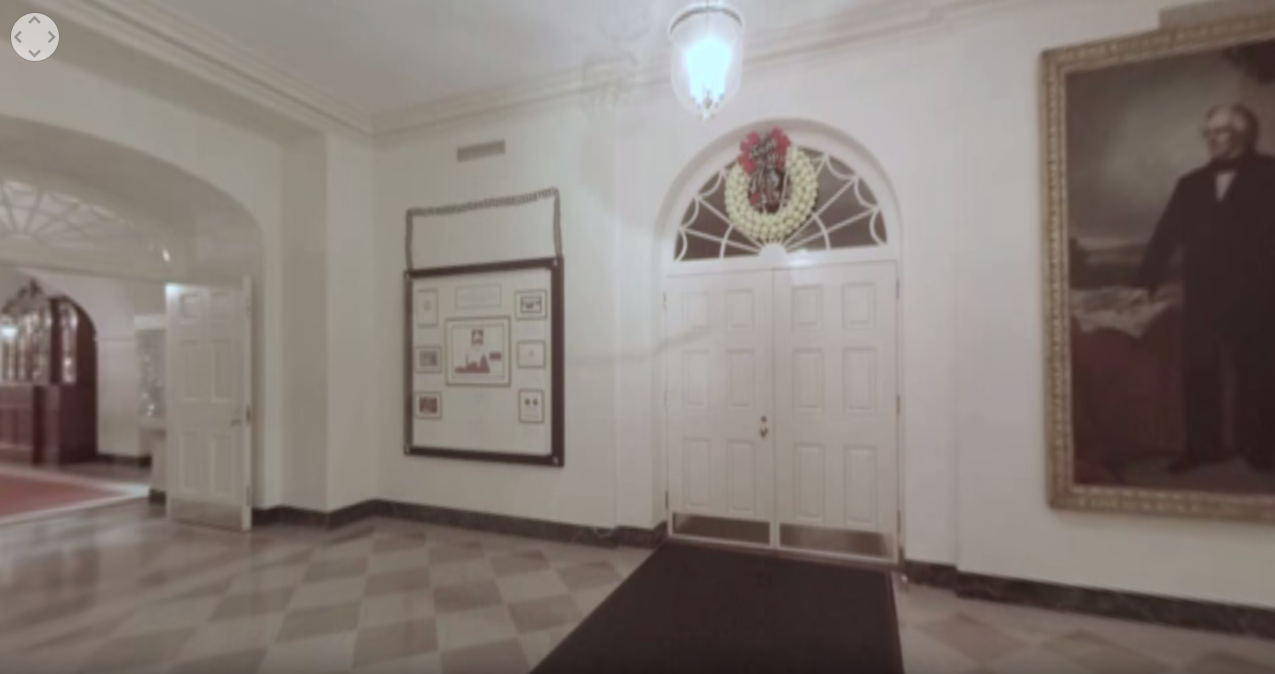
360 degree video has taken off this year, and now yet another creation use of the technology is hitting YouTube. Just in time for the holidays, the White House has taken to YouTube to upload a 360 degree video tour of the decked out temporary residence and workplace of the President of the United States.
Beyond just being a 360 video that you can pan around, this video also offers 3D options for those that have a pair of classic 3D glasses laying around. Also, as with any 360 degree video on YouTube, you can also head over to your mobile device and pan around the video using your phone’s gyroscope. There’s also Google Cardboard support.

YouTube today has shared a new video on its YouTube For Business channel that highlights the advertising opportunities that exist on the platform. The video features the popular characters from the hit TV series The Simpsons and shows Lisa using YouTube advertising to help advertise Homer’s “Mr. Plow Snow Removal” business.
Facebook video sharing has been emerging over the past year as a serious competitor to YouTube. Last year, a report showed that more and more Facebook pages were uploading videos directly to the social network itself as opposed to uploading to YouTube and sharing the link. Despite these reports, however, YouTube views are staying strong this holiday season for one of the biggest cultural trends of the year: Star Wars: The Force Awakens.

As 2015 comes to an end, YouTube has released their annual mashup of the year’s top events, Internet memes, and songs.


Google has found all kinds of uses for its 360-degree images and video since launching it. Now that YouTube supports VR and Google Cardboard as standard, it’s ramping up its efforts to make it more relevant to the every day viewer.
One such effort is its ‘Inside The Game’ video, featuring a behind the scenes look at New England Patriots’ pre-game practicing. But the NFL team isn’t the only one to get in on the VR game, Stanford’s college football team has made a similar video experience, and even offered Cardboard headsets to those in the press-box for its weekend game…
According to a report out of The Wall Street Journal, YouTube is looking to gain streaming rights to TV shows and movies in an effort to compete more directly with services like Netflix, Hulu, and Amazon Video. YouTube executives have reportedly been meeting with Hollywood studios over recent months to discuss licensing content.
Google has recently been on a major push to bring its 360-degree and VR experience to as many people as possible, and in as many services as applicable. Most recently, that was bringing some awesome 360-degree views of areas effected by climate change to Street View. Today, the company has announced that it will be launching 360 tours of popular performing arts locations.
You can browse performances and everything that goes on on- and off-stage at more than 60 institutions—including the world famous Carnegie Hall, to the Royal Shakespeare Company and the Berliner Philharmoniker. Moving east, I’ve selected some highlights from our partners in Asia-Pacific—the Queensland Performing Arts Center in Australia, the Dilli Gharana and Natural Streets For Performing Arts Foundation in India, Aomori Nebuta Matsuri in Japan, and the National Theatre of Korea, National Gugak Center and Kukkiwon in Korea.
It’s an incredible collection of imagery, photos and Street View-like tours of some great cultural locations. There are tons of backstage photos and images of classic performances, costumes and exhibitions in a host of venues across the globe. If you’re in to the performing arts, it seems a fantastic resource to dig in to.

A report by the UK’s telecoms and Internet watchdog Ofcom says that children are too trusting of what they find on the web, a surprisingly high percentage of them taking search results on trust, and unable to identify paid ads.
One in five online 12-15s (19%) believe information returned by a search engine such as Google or Bing must be true, yet only a third of 12-15s (31%) are able to identify paid-for adverts in these results.
The report found that the position was even worse with YouTube …
Expand
Expanding
Close
Many YouTube videos include short clips of copyrighted material for the purposes of commentary or parody, uses that are protected by copyright law. However, most users would be intimidated by legal threats and so back down when faced by a takedown notice.
Google has today said that it will be fighting to protect the fair use principle by offering “legal support” to a handful of videos that it believes represent good examples of legitimate use. For these videos, Google will refuse takedown notices, keeping the videos live on the service, and will meet all the legal costs of defending any court action …
Expand
Expanding
Close
Having launched in the US back in February, YouTube’s child-friendly video service is making its way across the globe from today. YouTube Kids is now available in the UK, Canada, Australia, Ireland and New Zealand. The app is free to download on iOS and Android and offers customers a curated YouTube experience with content aimed specifically at children.
In the UK, content will include the likes of Wallace & Gromit, Morph, The Magic Roundabout and Teletubbies among many others. Featured content will differ depending on your region, but the service is essentially the same in all available markets. Since it’s free, the app is supported by ads, but only advertisements suitable for children are shown in the YouTube Kids app. As reported by The Guardian:
“We only show ads that are approved as family-friendly – for example, we don’t show any food and beverage ads – and all ads undergo a rigorous review process for compliance with our policies,” a YouTube spokesperson told the Guardian.
“All ads are clearly labeled and include ad intros. Ads don’t include any click-throughs to websites or product purchase flows.”
Now, parents outside the US will be able to let their kids watch ‘The wheels on the bus’ without worrying they’ll end up following through links and watching something slightly dubious content. On the negative side, undoubtedly, I’ll now have to watch more loom band how-to videos with my 6 year-old.
The app is available to download from the Play Store now, and is compatible with any Android device running version 4.1 or later.


YouTube has finally debuted the music streaming app it announced last month. The app helps users find new music to enjoy by allowing them to select from pre-made stations or create their own based on their musical tastes.

With YouTube video as the motivation, Chrome recently received some enhancements to make the video experience as smooth as possible across devices. Dubbed “Project Butter” (not that Project Butter), YouTube engineers worked together with Chrome engineers to make optimizations to video playback.
YouTube engineers walked us through their thought process with the optimizations in a blog post:
Your device’s screen redraws itself at a certain frame rate. Videos present frames at a certain rate. These rates are often not the same. At YouTube we commonly see videos authored at 24, 25, 29.97, 30, 48, 50, 59.94, and 60 frames per second (fps) and these videos are viewed on displays with different refresh rates – the most common being 50Hz (Europe) and 60Hz (USA)… For a video to be smooth we need to figure out the best, most regular way to display the frames – the best cadence. The ideal cadence is calculated as the ratio of the display rate to frame rate. For example, if we have a 60Hz display (a 1/60 second display interval) and a 30 fps clip, 60 / 30 == 2 which means each video frame should be displayed for two display intervals of total duration 2 * 1/60 second.
Using that math, the team was able to come up with an algorithm that will allow Chrome to auto adjust to the optimal settings based on the display and the quality of the video being streamed. The improvements were introduced with Chrome 44:
In Chrome 44, we re-architected the media and compositor pipelines to communicate carefully about the intent to generate and display. Additionally, we also improved which video frames to pick by using the optimal display count information. With these changes, Chrome 44 significantly improved on smoothness scores across all video frame rates and display refresh rates… Smooth like butter
YouTube has more on the enhancements for video in Chrome 44 in its blog post here.
Google’s original Project Butter debuted with the announcement of Android 4.1 Jelly Bean, as an initiative to make the Android experience smoother and more user-friendly. For its purpose, the project was a success — Android 4.4 went on to become one of the most stable and beloved versions of Android yet, and was succeeded by Lollipop, a complete revamp that reinvented Android from the ground up.
As you may know, the current stable release of Chrome is version 46, and version 44 stable was released a few months ago.
YouTube announced today that it’s bringing two new features to its popular video-viewing service. Perhaps the most important of the two updates is that YouTube now supports VR Video. That means people can upload full virtual reality experience videos which have an added depth versus the regular two-dimensional flat video. Objects that are near look close, those further away seem far.
Google introduced the world to its curiously-named YouTube Red service just last week, and mentioned that October 28th would be the day that it launched. Well, today is October 28th, and you can now head over to YouTube.com/red to sign up for the service. Google’s kicking off Red with a one month free trial for all users, after which you’ll be charged $9.99 per month…
With YouTube Red, you’ll get access to a completely ad-free YouTube experience (which alone is an enticing offer for those of us that still want to support content creators), you’ll be able to download videos for offline viewing on a variety of devices, and — one feature that has been much-requested since YouTube hit mobile devices — you’ll be able to keep the app running in the background when your screen is off.
The thing that’s confusing to me about this whole ordeal is that there’s so much convergence of content between Google Play Music and YouTube Red. A Google Play Music Unlimited subscription seems to get you a YouTube Red subscription and vice-versa, so now I have to decide which of the two platforms I will use for music streaming. But I guess that’s pretty typical for Google’s products.
I’m not complaining, so don’t get me wrong. I think it’s pretty nice that Google is making these two services just one monthly bill, and I doubt I ever be willing to pay for both. The reason for that is because there’s just so much content overlap, and I guess that’s the same thing that might make this confusing for the average customer. Either way, I get another free month of Google Play Music Unlimited out of this even if I don’t end up sticking with Red, and that’s fine by me.
https://youtu.be/YL9RetC0ook
YouTube announced its new Red ad-free subscription service last week and we’ve slowly been learning the specifics on how content will be affected by it. Disney’s sports network ESPN has now announced that it has pulled all of its content from YouTube due to the YouTube Red subscription service.

Not to be confused with (Red) Youtube or RedTube, Google announced a new streaming Netflix competitor today dubbed YouTube Red. The service will also include YouTube streaming music which is also Google Play Music all access which currently carries a $9.99/month price tag so the effective upgrade is $0 for streaming videos and much more…
Expand
Expanding
Close
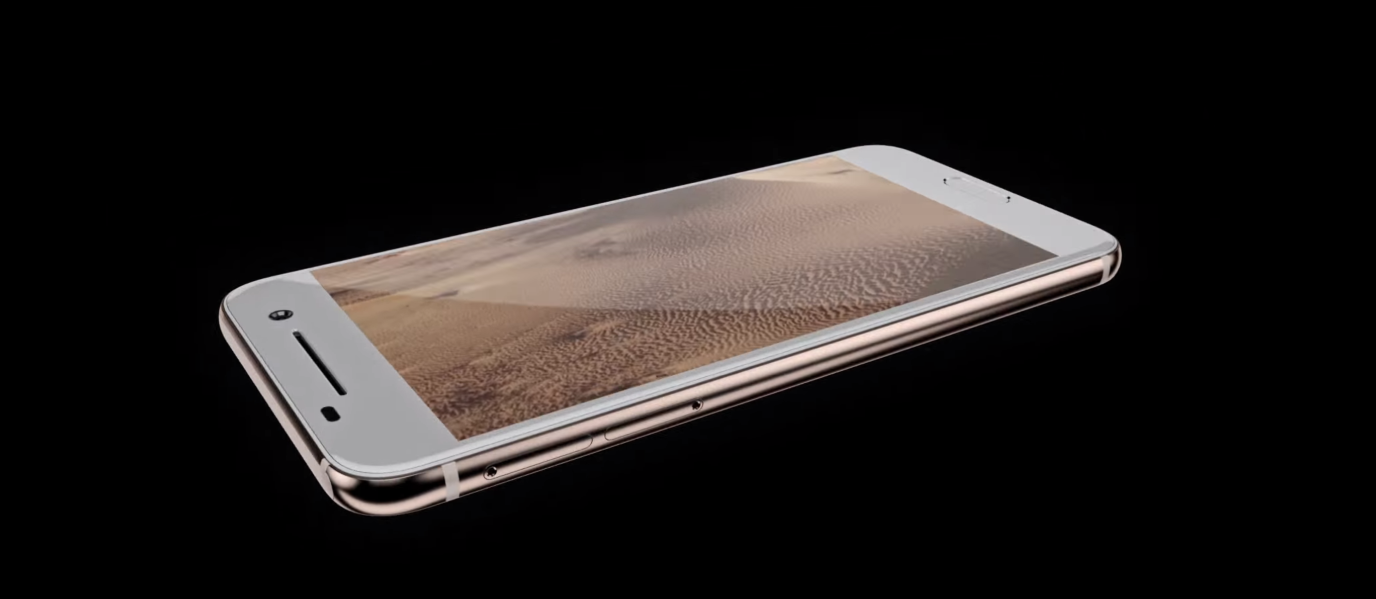
HTC just announced the HTC One A9, and a new phone means new marketing materials. It looks like the struggling Taiwanese company may have over-delivered in this area, as there are 9 (yes, nine) new YouTube videos on the company’s channel…
Expand
Expanding
Close
We’ve read many times over the past months that YouTube is planning to launch a subscription service. The company itself has announced as such, and is already nearly all the way to getting enough partners onboard with the new monetization method. In return for a low monthly fee, likely $10, YouTube wants to give you access to all the videos and music you can manage, and without showing any ads of any kind. Google is planning announce this new service at an event this Wednesday, October 21st.
What Google has said all along, however, is that customers who don’t pay can still watch all their favorite videos, but with the ads (as normal). What it hasn’t stated publicly, is that it may be holding some exclusive content back, for the eyes of subscribers only. In a report from Re/code, it’s rumored that when YouTube kicks off its new paid service, the streaming site will also place content that it funds behind a paywall. Regular non-payers won’t be able to watch it.
It’s unclear when you’ll be able to see the new programming YouTube is announcing. Sources say some of the stuff YouTube is paying for hasn’t been created yet, and won’t be available until 2016. In September, I reported that industry sources expected YouTube to launch its subscription service near the end of this month, though it could slip past 2015.
The timing of YouTube’s planned subscription service launch is still, clearly, up in the air. But it will be interesting see how the streaming platform delivers the service, and how many long-time YT users sign up. Will YouTube be able to tempt enough people to subscribe with its own funded and exclusive content? Those questions remain unanswered for now. Let’s just hope the launch happens sooner rather than later, if only to satisfy my curiosity.

BlackBerry already made the PRIV official last month, and then followed up with some of the first official images of the device posted to its blog. Not much of what the company has said up to this point though has been new, though. Even the official images it published a couple weeks ago were pretty much the same as the ones we saw four months ago.
And this new video follows in the same vein as that theme. We’ve already seen an in-depth hands-on video with the phone, we’ve seen its specs leaked what feels like a dozen times, pre-registration for the phone opened up a couple of days ago, and just earlier today pre-orders for the phone went live in the UK. I guess it’s just a pretty marketing clip…
Expand
Expanding
Close
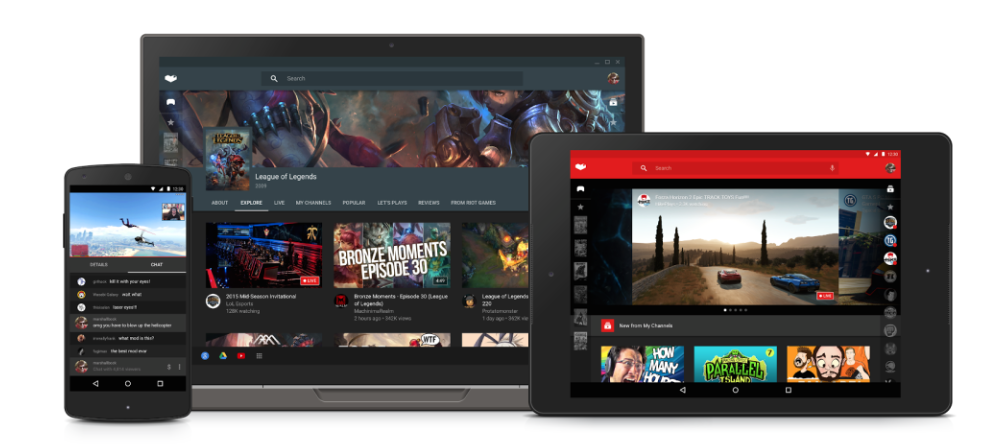
YouTube has today announced that its Gaming platform is getting a couple of really big updates, just as the service reaches more than 144 billion minutes of gaming videos watched per month. As of today, uers of the newly-updated Android app will be able to stream the games they’re playing on their phones, and certain creators can monetize their viewership with sponsorships…
Expand
Expanding
Close
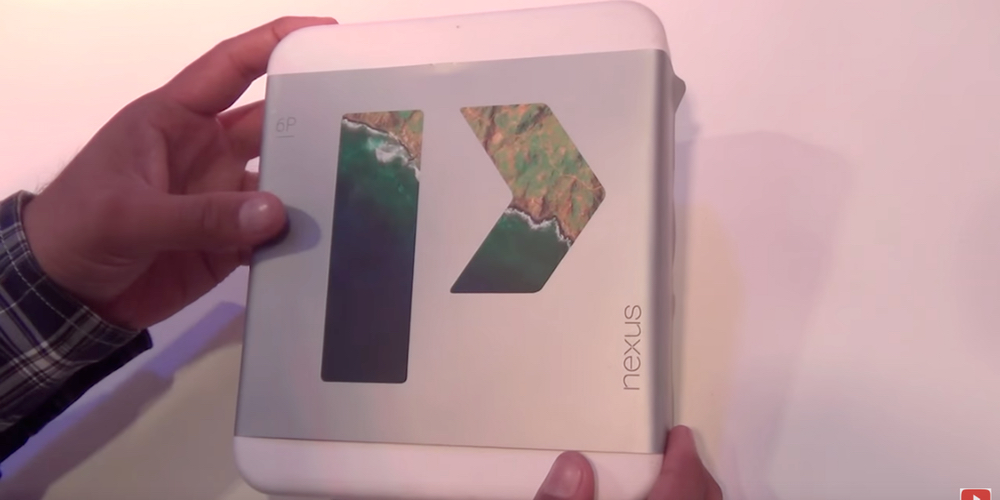
Google announced the Nexus 6P and Nexus 5X at an official press unveiling just a few weeks ago, right before opening up pre-orders for the two newest stock Android devices. It marks the first year that two different Nexus phones have been released at the same time, and it seems the first lot of devices are already landing in the hands of the early adopters.

Google has announced today that the number of countries with local versions of YouTube is growing to 85, with the additional of 7 new territories and countries. As of today, there is now a localized version of the web’s most popular video streaming site in the Adriatics, the Baltics, Bulgaria, Georgia, Azerbaijan, Kazakhstan, and Belarus…
The news comes from Google’s official YouTube blog:
We want to make sure the videos you see when you fire up YouTube are relevant to you, wherever you’re watching. That’s why we’re launching even more local country versions of YouTube, connecting fans with creators in their home countries and giving those creators a way to earn money from their popularity. With the addition of the Adriatics, Baltics, Bulgaria, Georgia, Azerbaijan, Kazakhstan and Belarus, YouTube now has local versions in 85 countries.
While it’s easy to have a biased perspective on the world when you live in the US, Google says that more than 80% of YouTube’s views come from people outside the US. And with content creators and consumers speaking dozens of languages and creating an unthinkable amount of content, it makes sense to be able to connect to the community in your physical vicinity.
Sundar Pichai was given the title of Google CEO as part of the company’s Alphabet restructure and now Pichai has made his first changes according to Re/code. In a company wide email sent out recently, the Google CEO appointed three executives to new roles…
When you upload a video to YouTube, the site processes each frame individually and passes them through an algorithm to try and find a few of the best to be your video’s thumbnail. You get to pick between the ones it chooses, or you can upload your own. And while many YouTube creators opt for the latter option, those who aren’t as dedicated usually just go with whatever frame the site chooses.
Now, thanks to deep neural networks, the algorithm that picks the best frames is much more powerful…
Expand
Expanding
Close
