We already knew that Google Glass would be running Android 4.0.4 and got a look at the official tech specs straight from Google, but until now we didn’t know some of the specifics such as how much RAM and what processor the device is using. Today we details via developer +JayLee (via Selfscreens) that Google Glass reports running a OMAP 4430 CPU similar to that used in the original Kindle (although not other details are available on the processor) and 682mb of RAM. Lee speculates Glass might actually pack in 1GB of RAM: Read more
Motorola advisor Guy Kawasaki hints at rumored customizable hardware for upcoming smartphones

After joining Motorola as an advisor late last month, former long-time Apple evangelist Guy Kawasaki appears to be dropping some big hints about the company’s upcoming plans in the smartphone space. In a post to his Google+ account (via DroidLife), Kawasaki posted a link to a video detailing customization options offered by Porsche and posing the question, “Wouldn’t it be great if you could personalize your phone like this?”
This has of course lead to speculation that Kawasaki is referring to the ability customize an upcoming Motorola device at the time of purchase, something that recent reports indicate could be in the plans for Motorola’s much rumored X Phone. AndroidandMe and other blogs have reported that the Motorola’s X Phone could include hardware customization options, but also the ability to preload apps, ringtone, wallpapers, etc, features that other devices have offered versions of in the past.
The latest rumors claim X Phone could see an official release by June and its possible we could get our first look at the device in May during Google I/O.
Intel’s reference phone design looks business, packs more oomph than today’s top Android devices
Intel has had little luck putting its chips into smartphones and tablets, as the devices continue to rely predominantly on silicon designs based around Britain’s ARM Holdings technology. Its easy to see why: ARM-licensed chips built by the likes of Nvidia, Qualcomm, Samsung and Texas Instruments are famous for their efficiency in terms of CPU performance versus power consumption.
Nevertheless, the world’s largest chipmaker is hoping to turn the tables with the Medfield platform: a 32-nanometer Atom processor for tablets and smartphones. Google and Intel announced a partnership at the Intel Developers Forum 2011 in San Francisco that promises to put Medfield chips in Android devices beginning January 2012.
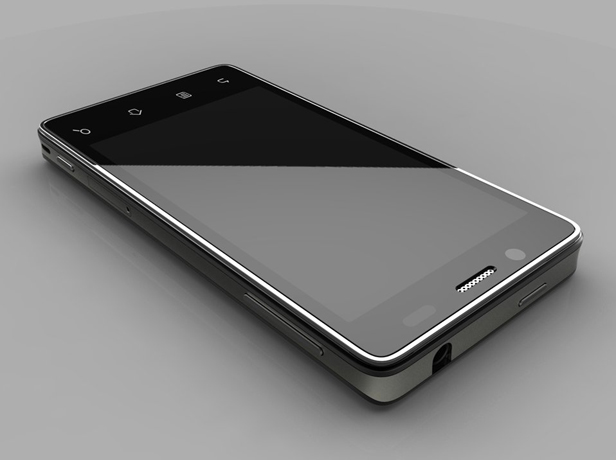
Intel unveiled a reference design today for Android smartphones using the Medfield architecture. According to Technology Review, prototype hardware is speedier than today’s flagship smartphones without taxing the battery heavily. Medfield-driven Ice Cream Sandwich smartphones and tablets, performance-wise, should be able to play Blu-ray-rated high-definition video, stream to the tube over a wireless network, and take up to 10 8-megapixel images in burst mode. Do not mistaken the above image for an iPhone 4S, because it is just a reference prototype design meant as a guidance for OEMs looking to incorporate Intel’s chips into their products.
Wearables expert Richard DeVaul jumps ship from Apple to Google
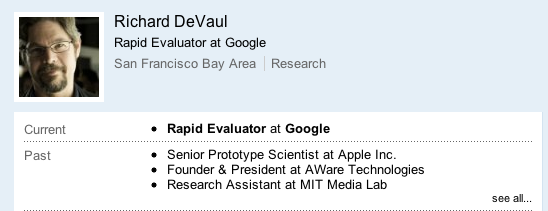
Richard DeVaul, a PhD. scientist from MIT with a focus on building wearable technologies, was snared from Apple this month by Google. At Apple he was rumored to be working with SVP of Industrial Design, Jonny Ive in Apple’s secret labs building the next big thing.
Besides his having knowledge of the inter-workings of Apple, it is also interesting that DeVaul is a hardware person who has focused on building wearable products for the past decade. Google has been a software company for all of its existence, but more and more it appears that it will enter the hardware business…but probably in smart accessories rather than phones.
He’ll likely join two former Danger hardware experts in a new Google lab called Google Hardware where his Job Description of “Rapid idea evaluation and prototyping for new projects at Google. ” seems to fit in with Joel Britt and Matt Hershenson are doing.
I wrote about DeVaul’s transition to Apple at Computerworld 18 months ago, excerpted below: