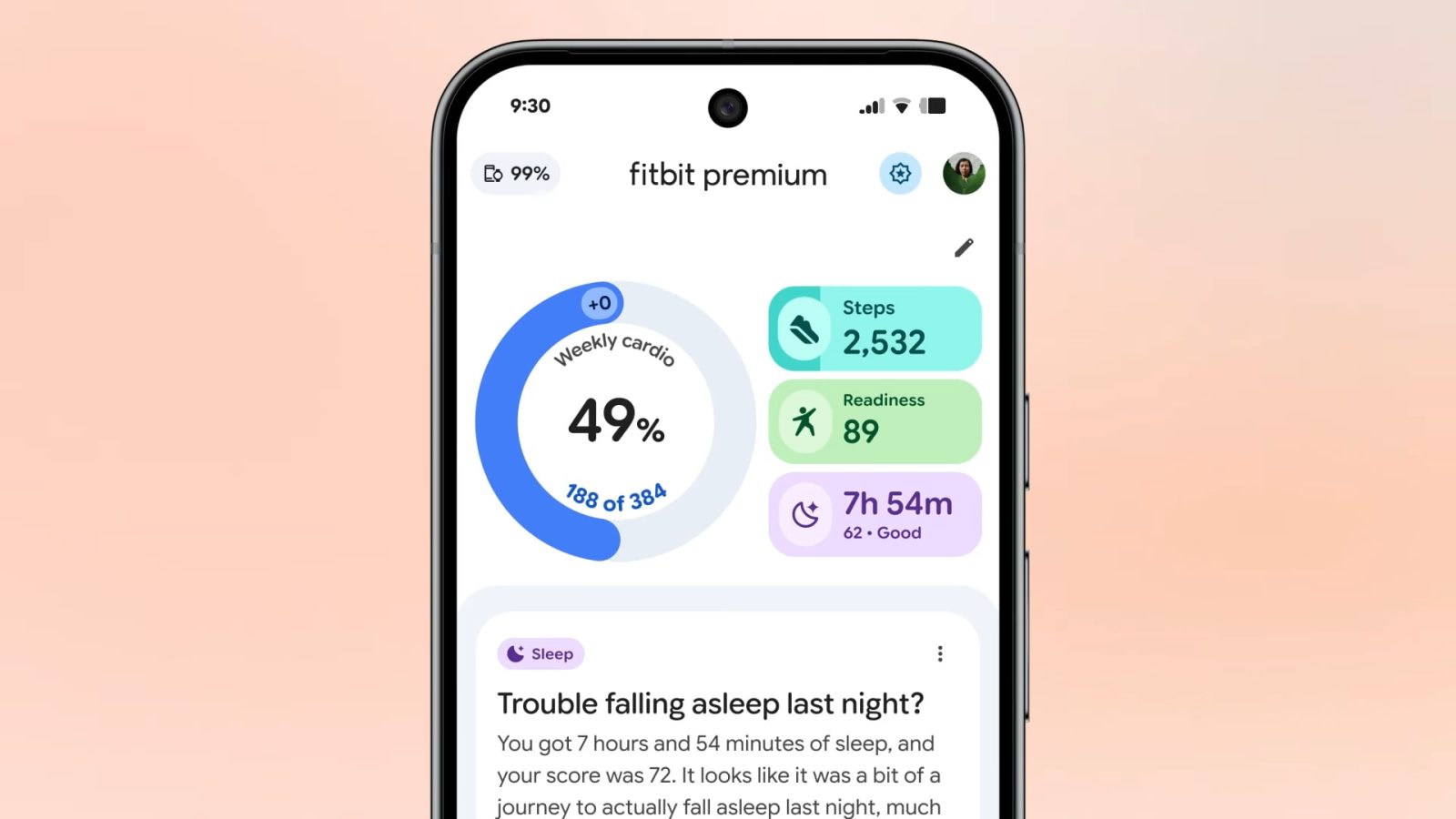
Fitbit Public Preview adds food & water logging, more as app redesign comes to free users


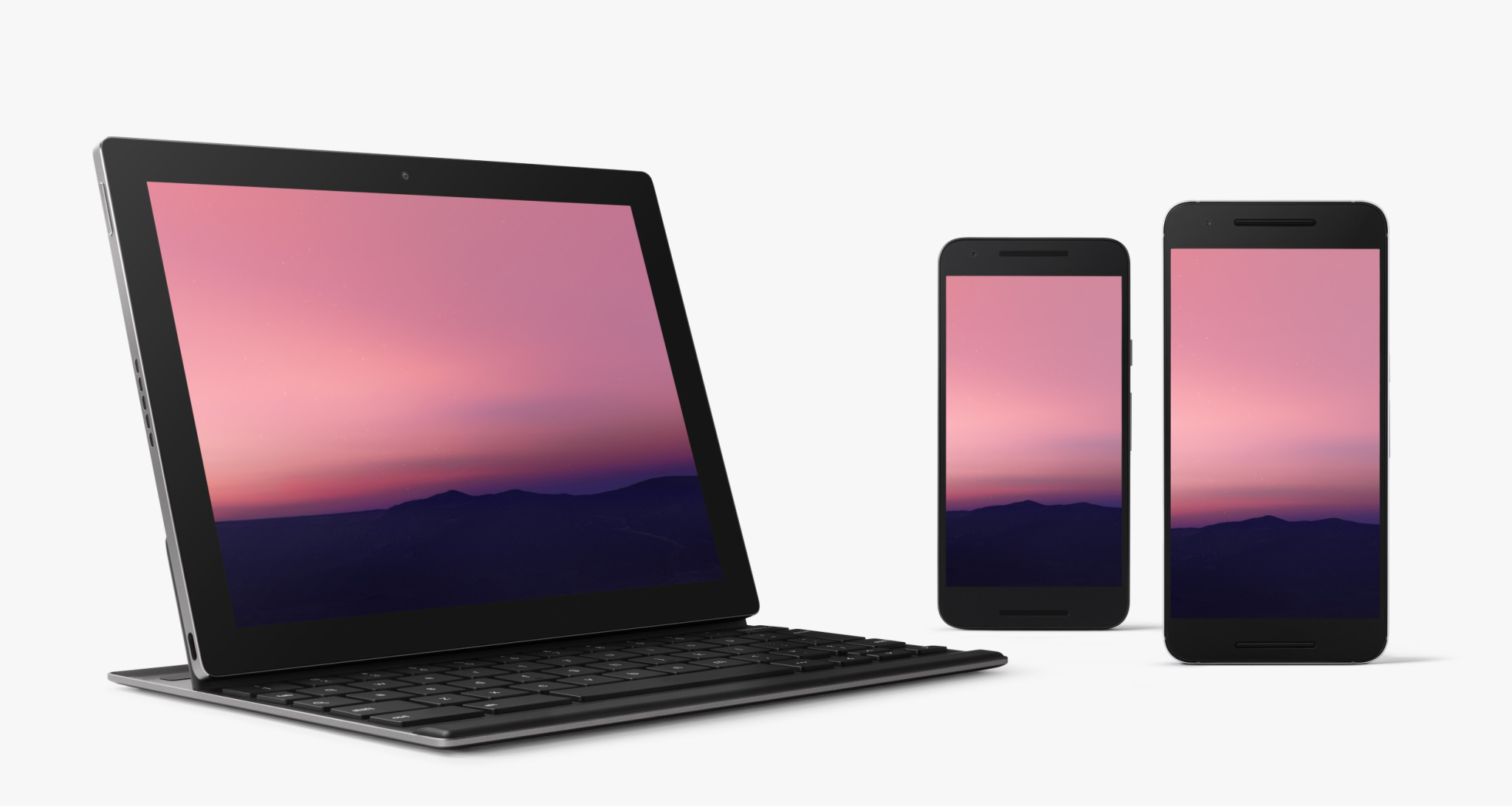
Google introduced to the world the next version of Android, dubbed Android N, oddly early this year compared to the usual announcement at its I/O developer conference. And while the currently-available version may be a developer preview, many who aren’t as familiar with how to flash factory images might want to try the latest build of the mobile OS as well.
If you have the Nexus 5X, Nexus 6P, Nexus 6, Nexus 9, Nexus Player, or Pixel C, there’s a build of Android N available for you to install prior to the update’s official unveiling later this year. Be warned however, as this is a very early build of the OS and is riddled with bugs, glitches, and overall performance jankiness. If that doesn’t sway you, though, keep reading…

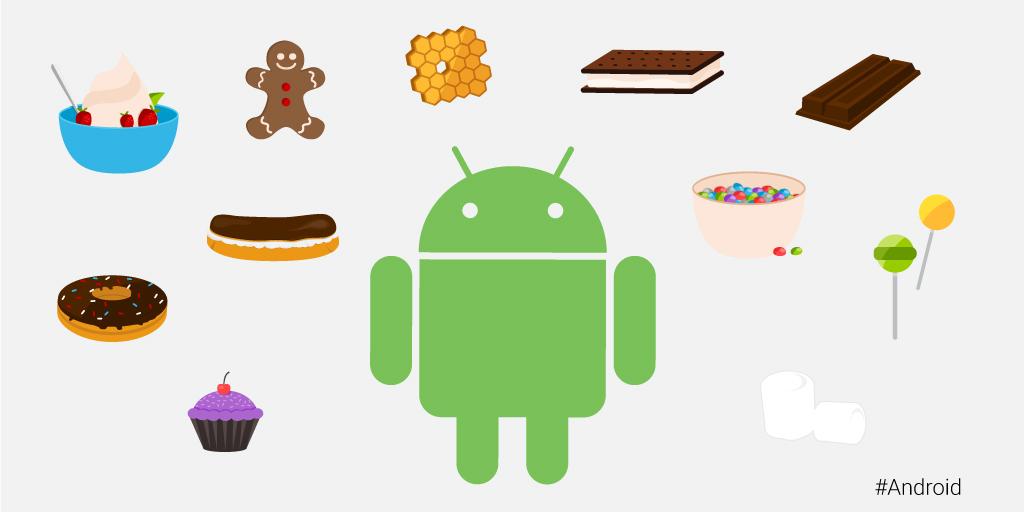

Google has released the latest distribution numbers for the various shipping versions of Android, with the latest version, Marshmallow, picking up a marginal increase.
Last month’s numbers showed Android 6.0 running on only 0.3% of devices, while this month’s chart puts it at 0.5%, making it the least-used version of Android except for Froyo.
Android Studio 1.0
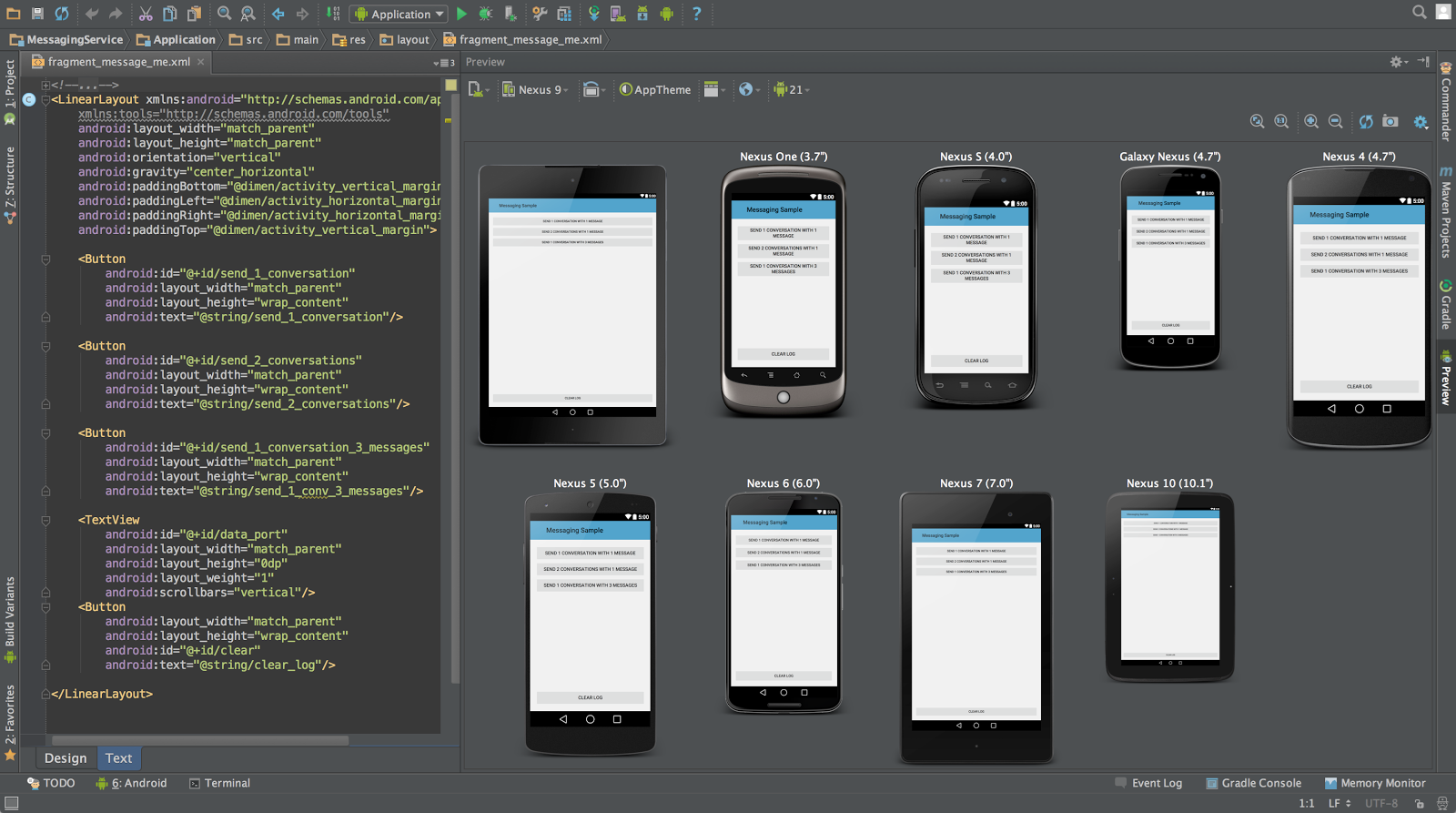
Last week we told you that Android Studio 1.5 became available in the beta release channel, and now Google has announced that it’s being pushed out to everyone. This release is “focused on delivering more stability,” Google says. Most of the upgrades here are under the hood.
Here’s a rundown of some of the bug fixes in this version:
You can check for updates within the app, or head over to the Android Studio site to grab a fresh version if you need it. Android Studio comes with the Studio IDE, the SDK tools, and the Android 6.0 platform and emulator.

If you’re a Chrome or web developer, you’re probably already aware that the Chrome Dev Summit is set to take place today and tomorrow. The event brings Chrome engineers and web developers together for a two-day “exploration of building beautiful and fast mobile web applications.” This is an important event for many people, especially considering the growing relevance of web apps.
This is a two-day event, as I mentioned, and day 1 is set to start at 9 AM PT on November 17th. Google has provided livestreaming video of the entire event, and you can tune in below…

Cyanogen OS is the popular operating system from the team behind CyanogenMod that ships on devices such as the OnePlus One and Wiley Fox. Cyanogen OS offers a handful of features that its aftermarket CyanogenMod ROM solution doesn’t, in large part to make the OS more consumer friendly. Today, however, Cyanogen announced that it is making the added features of Cyanogen OS available as a separate download for users not running the operating system.
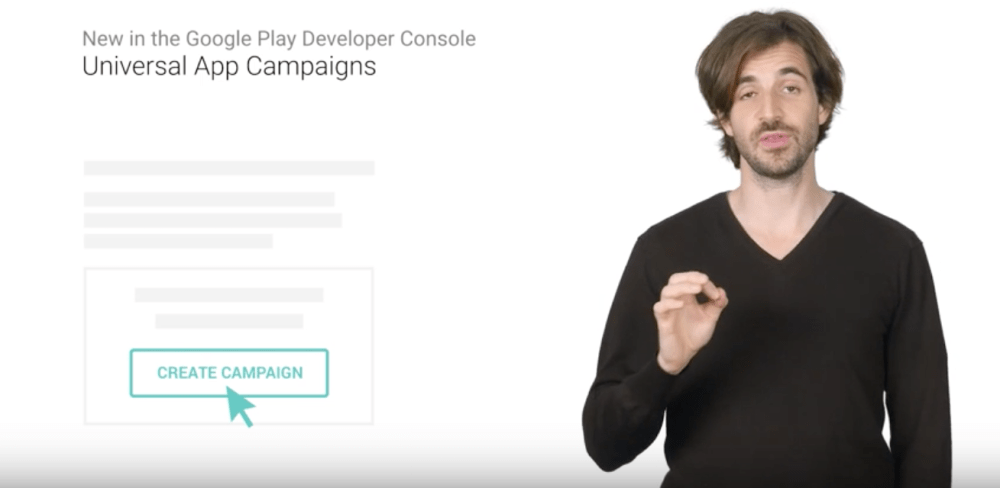
Google today has made several of the features it originally previewed back at I/O for developers available today. Google says that these new features will help developers further grow their business and improve decision making on developer insights on Google Play.
First up is AdWords Campaigns:
With just a few simple steps, universal app campaigns lets you easily set up ad campaigns from within the Google Play Developer Console and promote your app across Google Play, Google Search, YouTube and the Google Display Network. You will now be able to more effectively find and grow your install base with the help of Google’s unparalleled reach.
Google also today has made a new performance report feature available to developers:
When you’re growing an audience for your app, you’ll want to understand where your most valuable users are coming from. The new performance report on the User Acquisition tab in the Developer Console lets you see how people are finding your Play Store listing, how many install your app, and how many go on to make purchases.
These new features are accessible for developers via the developer console. More can be found in the video seen below:
In a blog post, Google today has announced that three new Android Marshmallow sample applications have gone live. The applications are, as usual, available through the Google Samples repository on Github and through the Android Studio samples browser. The apps include Android Direct Share, Android MidiSynth, and Android MidiScope.
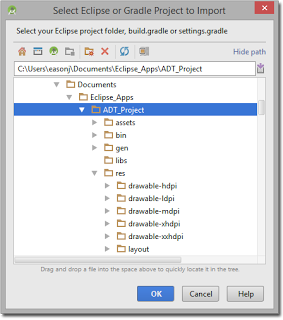
Android Studio was first announced at Google I/O 2013, and now Google is making one of the last pushes to get developers to move over to the new development environment. According to a post on the Google Developers blog, the company is planning to retire support for Android Developer Tools in Eclipse later this year:
To that end and to focus all of our efforts on making Android Studio better and faster, we are ending development and official support for the Android Developer Tools (ADT) in Eclipse at the end of the year. This specifically includes the Eclipse ADT plugin and Android Ant build system.
Google then goes on to detail how to migrate over to Android Studio if you haven’t yet. Obviously, the first step is to download Android Studio. After this, most developers will be able to easily migrate by importing existing Eclipse ADT projects into Android Studio via the Import Project window (as shown above).
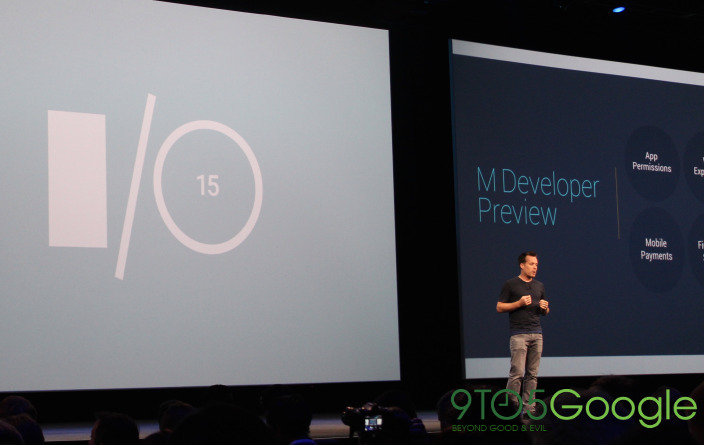
Google finally introduced to the world the next version of Android, dubbed Android M for the moment, at its Google I/O developer conference in San Francisco. And while the currently-available version may be a developer preview (and those who are developers likely wouldn’t need this guide), many who aren’t as familiar with how to flash factory images might want to try the latest build of the mobile OS as well.
That’s why we made this guide. If you have the Nexus 5, Nexus 6, Nexus 9, or Nexus Player (and possibly others in the future), there’s a build of Android M available for you to install prior to the update’s official unveiling later this year. Be warned however, as this is a very early build of the OS and is riddled with bugs, glitches, and overall performance jankiness. If that doesn’t sway you, though, keep reading…
Expand
Expanding
Close
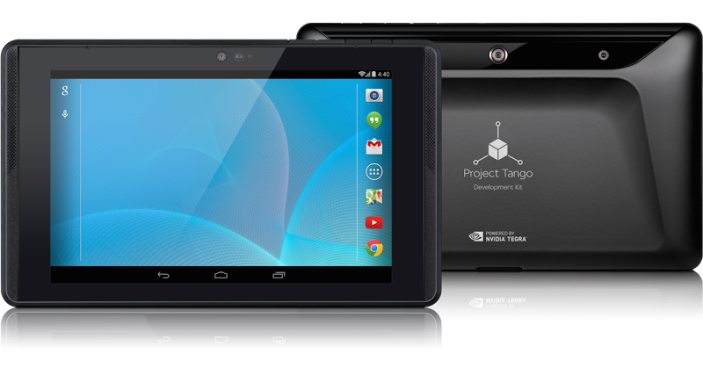
Google’s Tango tablet
Earlier this week, Google made its Project Tango tablet available to everyone via the Google Store for $512. While many expected this price drop and public availability to lead to a successor at Google I/O, the company kept quiet and didn’t address its Tango initiative. Nevertheless, Qualcomm this evening has taken the wraps off of its own Tango smartphone platform powered by the Snapdragon 810.
Google’s Project Tango initiative was originally introduced last year alongside a tablet with “advanced vision capabilities.” Until today, the tablet had only been available with an invite, but now the device is listed on the Google Store for anyone to purchase (via Android Police). Google dropped the price of the tablet for invitees to $512 earlier this year and that’s also the price for which the device is available on the Play Store.
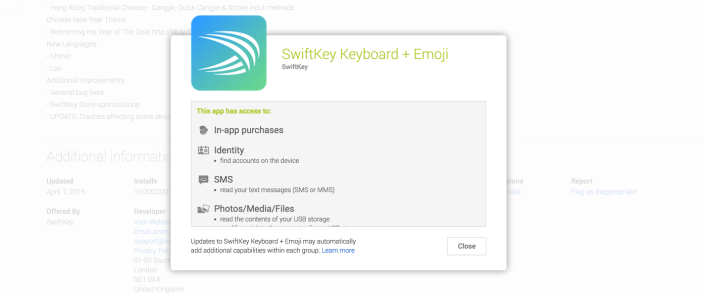
According to a report this afternoon from Bloomberg, “people familiar with the matter” have said that Google is preparing to give Android users more control over what data gets shared with their apps. Users will, at some point in the near future, have “more detailed choices” over which pieces of their information that apps have access to:
Google’s Android operating system is set to give users more detailed choices over what apps can access, according to the people, who asked not to be identified because the matter remains private. That could include photos, contacts or location. An announcement of the change, which would put Android closer in line with Apple Inc.’s iOS, is expected for Google’s developer’s conference in San Francisco this month, one of the people said.
More than likely, this is a feature that Google will be announcing alongside Android “M” at this year’s Google I/O conference which is set to kick off at the end of the month.


Today Google released a new Chrome Dev app, a way for developers to access the latest Chrome builds and experimental features before they’re ready for beta and public releases.
Google has always had a developer release channel for Chrome, allowing devs to get access to the latest builds and features even before regular users are encouraged to start testing through its beta and public release channels. Previously the dev channel was only for Windows, Mac, Linux, and Chrome OS, but today the company is bringing it to Android.
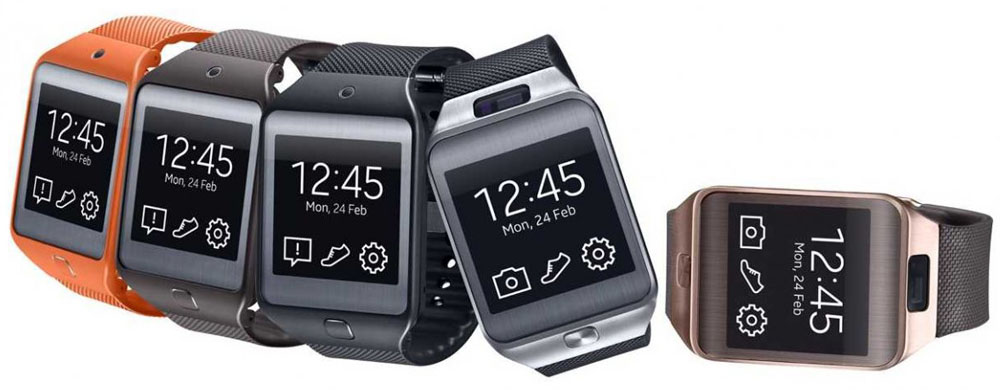
Samsung made a very bold attempt at entering the now-somewhat-established smartwatch space—long before the current market leaders—with the launch of their Galaxy Gear devices, but none of these wearables ever made very much of an impact. And since these devices came several months before Android Wear even existed, they ran Samsung’s proprietary Tizen operating system, which many users have agreed is notoriously clunky and unintuitive.
Now, a developer on the XDA-Developers forum has started work on porting Android Wear to the Galaxy Gear 2, and it looks like the OS is already partially functional…
Expand
Expanding
Close
 Google today has officially released Play Games Player Analytics to developers. In a post on the Android Developers Blog, Google announced that these new tools will allow for game developers to better track in-game player behavior and improve in-app business tactics and performance.
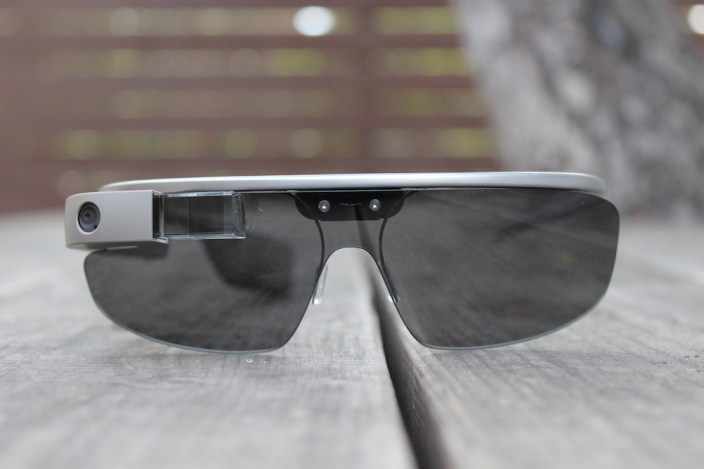
Google Glass is definitely in limbo right now, but as I talked about earlier this week, it’s far too early to say that the project is dead in the water. Those of us that had consumer interest in the project are curious enough about what the future might hold, but what about those who have been investing in development for the platform for two years now? Google—unsurprisingly—says there’s still value in developing for Glass, but also that some changes to the developer experience are incoming…
[googlemaps https://www.google.com/maps/embed?pb=!1m0!4v1416448266011!6m8!1m7!1s9WgYUb5quXDjqqFd3DWI6A!2m2!1d46.41438376976309!2d10.01394735785013!3f210!4f10!5f0.7820865974627469&w=704&h=400]
Google, in a post on the Geo Developers Blog, today announced the ability for website owners to embed Street View panoramas and Photospheres within their site using an HTML snippet. Google launched this feature for Maps last year, but only today did it add support for Street View and public Photospheres.
Today, we added the ability to easily embed the Street View and Photo Sphere images you find in Google Maps and we’re also enabling the same capabilities programmatically in the Google Maps Embed API. These embeds use the new imagery viewer technology that powers Street View in the new Google Maps.
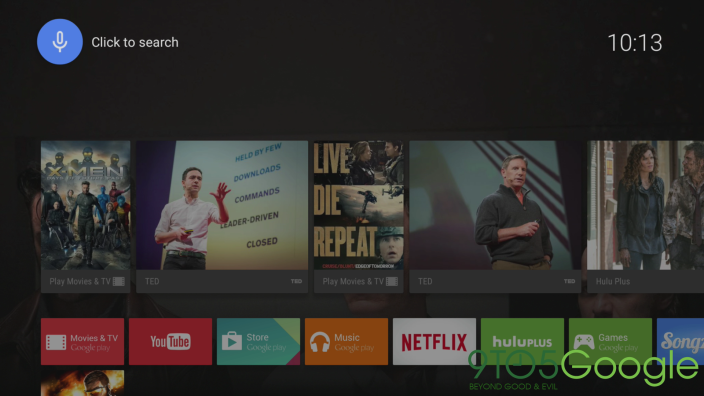
Earlier this month, Google started accepting Android TV app submissions to the Play Store, but today, another detail about the app submission process was revealed. According to the Android developer documentation page, Google will pre-screen and approve all submitted Android TV apps. After the approval process, the apps will then be distributed for download on the Play Store (via Android Police).
Before distributing apps to the Play Store on Android TV devices, our team reviews apps for usability with a DPAD (apps) and Gamepad (games only) and other quality guidelines.

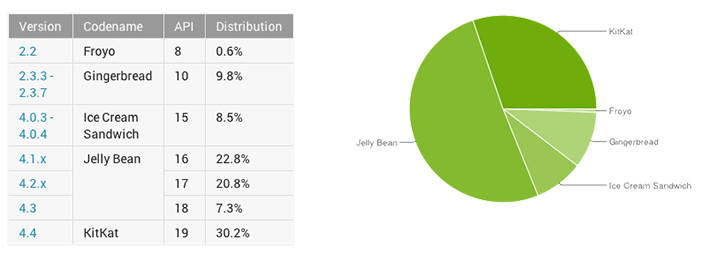
The latest Android distribution numbers for a seven-day period ending November 3rd reveal that KitKat is installed on 30.2% of devices that accessed the Play Store during the last week. Meanwhile, the distribution of the over two-year-old Jelly Bean version continued to decline, but remains the leading platform, with a 50.1% share.
Expand
Expanding
Close
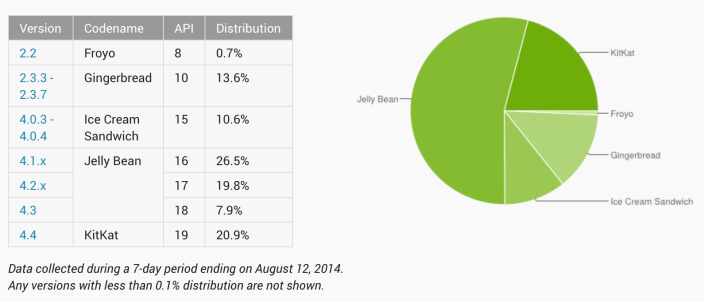
Like it always does during the first half of a new month, Google this evening updated its Android Distribution data to reflect a 7 day period ending on August 12th. The data shows the most recent version of Android, KitKat, reach an all-time usage high at 20.9 percent, up from 17.9 percent this time last month. Jelly Bean continued its steady decline, falling from 56.5 percent to 54.2 percent.
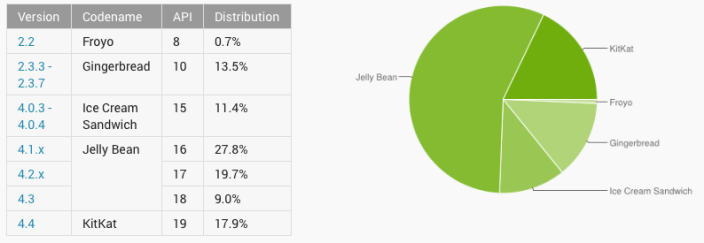
Like it does at the beginning of every month, Google this afternoon updated its Android distribution numbers to reflect a 7 day period ending today, July 7th. The most recent version of Android, 4.4 KitKat, saw a modest increase from 13.6 percent to 17.9 percent. Jelly Bean, for the first time ever, saw a decline as a whole in usage by 1.9 percent.
Google today announced that a major update to Play Services is now rolled out, bumping it from version 4.4 to 5.0. Many of the details in this update were announced at Google I/O last week, but the company also broke everything down in blog post today, as well. The update began rolling out after I/O, but now is entirely rolled out to devices world-wide.
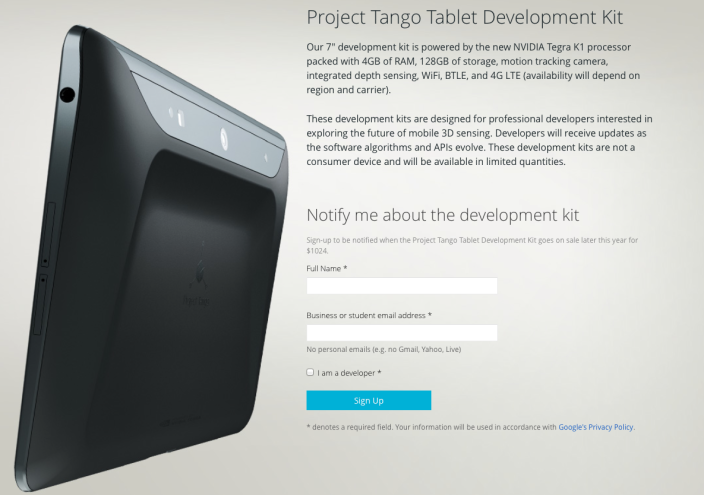
Google has just announced a official development kit for its Project Tango. The tablet is incredibly powerful, packing an NVIDIA Tegra K1 processor and 4GB of RAM. It’s also got 128GB of storage under the hood. There’s also all kinds of sensors, insulting motion tracking cameras, integrated depth sending, and LTE. There are three cameras on the back of the device for motion tracking, too.

[vimeo 91688685 w=700 h=365]
Matias Duarte — the man behind the design of every version of Android since Ice Cream Sandwich — recently took the stage with Joshua Topolsky of The Verge at the Accel Design Conference in San Francisco to participate in a fireside chat on topics ranging from Android, the future of mobile, design methodology, and wearables.
The video is available on Vimeo (via AndroidPolice), and includes 37 minutes of talk between the two. The beginning covers Duarte’s thoughts on design methodology, and he stresses that good design is always a middle ground between appearance, emotional appeal, and usability — perhaps a shot at iOS 7’s stark interface.
Expand
Expanding
Close


