Android

See All Stories

Breaking news for Android. Get the latest on apps, carriers, devices, and more!
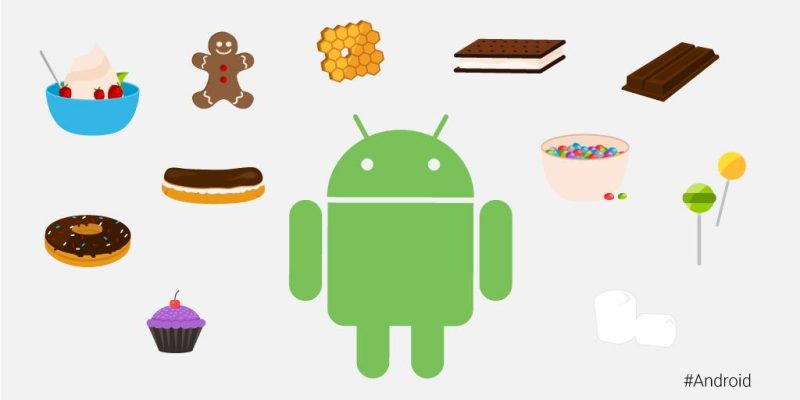
Android is Google’s mobile operating system, launched in September 2008, although its history technically began with the release of the Android alpha in November 2007. To this day, Android powers the majority of the world’s smartphones and comes in several different flavors across many phone makers.

What is Android?

Android Inc.

Android, before it was Android, was a company called Android Inc. That company was founded in Palo Alto, California, in 2003 by a crew of four: Andy Rubin, Rich Miner, Nick Sears, and Chris White. The company and its project was acquired by Google in 2005 for a sum of more than $50 million, although the exact number is unknown. The company’s founders joined Google as part of the deal.

In its infancy, Android was an operating system built not for touch screen smartphones like the iPhone, but rather BlackBerry-like devices with physical keyboards. It’s well documented that after Apple shocked the world with the iPhone, ahead of its nearest competition by at least a couple years, Google and Android Inc. had to go back to the drawing board to build something competitive.

Adoption by third-party makers

It didn’t take long after the launch of the iPhone for various manufacturers to enter the market with their alternatives — and Google’s Android immediately became the obvious platform of choice for just about everyone except Microsoft. HTC was the first manufacturer on board, and introduced the T-Mobile G1 running Android in September 2008. Soon after, HTC, Motorola, Samsung, and carriers like Sprint and T-Mobile jumped on board to form the Open Handset Alliance.

Android makers across the world

Iconic Android handsets

There have been thousands of Android phones released since Android’s inception, but some have been more important to the platform’s history than others. There was the original T-Mobile G1, as mentioned, but there was also the HTC One Google Play Edition, Moto G, Samsung Galaxy S4, and others. Some of the most iconic Android handsets include:

  • HTC G1
  • HTC Nexus One
  • Samsung Galaxy S, S2, S3, S4, and their successors
  • HTC Incredible S
  • Samsung Nexus S
  • Samsung Galaxy Nexus
  • Samsung Galaxy Note
  • Nokia 8
  • BlackBerry KeyOne
  • Google Pixel and its successors

In more modern times, there are several Android smartphones makers that popped up across various niches and in several international markets. Huawei is a dominant Android maker in China and many European markets, while Samsung is by far the most popular maker in the United States by far — effectively creating a duopoly with Apple. Today, there are dozens of major device makers contributing to the Android ecosystem.

Full list of Android OEMs

History of major Android versions

Android has seen countless software revisions over the course of its life, but in modern times the OS usually sees a major release on an annual cadence. In the earlier days, Google famously gave its major software releases dessert-themed codenames, but retired that practice in 2019 with the release of Android 10.

VersionNameReleaseDevices
2.3GingerbreadFebruary 9, 2011Nexus S
4.0Ice Cream SandwichOctober 19, 2011Galaxy Nexus
4.1Jelly BeanJuly 9, 2012Nexus 7
4.2Jelly BeanNovember 13, 2012Nexus 4, 10
4.3Jelly BeanJuly 24, 2013Nexus 7 (2013)
4.4KitKatOctober 31, 2013Nexus 5
5.0LollipopNovember 3, 2014Nexus 6, 9
5.1LollipopMarch 9, 2015Android One
6.0MarshmallowOctober 5, 2015Nexus 5X, 6P
7.0NougatAugust 22, 2016Nexus 5X, 6P
7.1NougatOctober 4, 2016Pixel, Pixel XL
8.0OreoAugust 21, 2017Pixel, Pixel XL
8.1OreoDecember 5, 2017Pixel, Pixel XL
9PieAugust 6, 2018Pixel 2, Pixel 2 XL
1010September 3, 2019Pixel 3, 3a
1111September 8, 2020Pixel 4

List of major Android OS platforms

While Android proper is certainly the most widespread of Google’s Android operating systems, the company has also launched many offshoots of the main OS over the years. There’s Android Auto, Android Wear (now Wear OS), Android TV (now rebranded to Google TV), as well as versions of Android built for tablets and Android Things (now defunct).

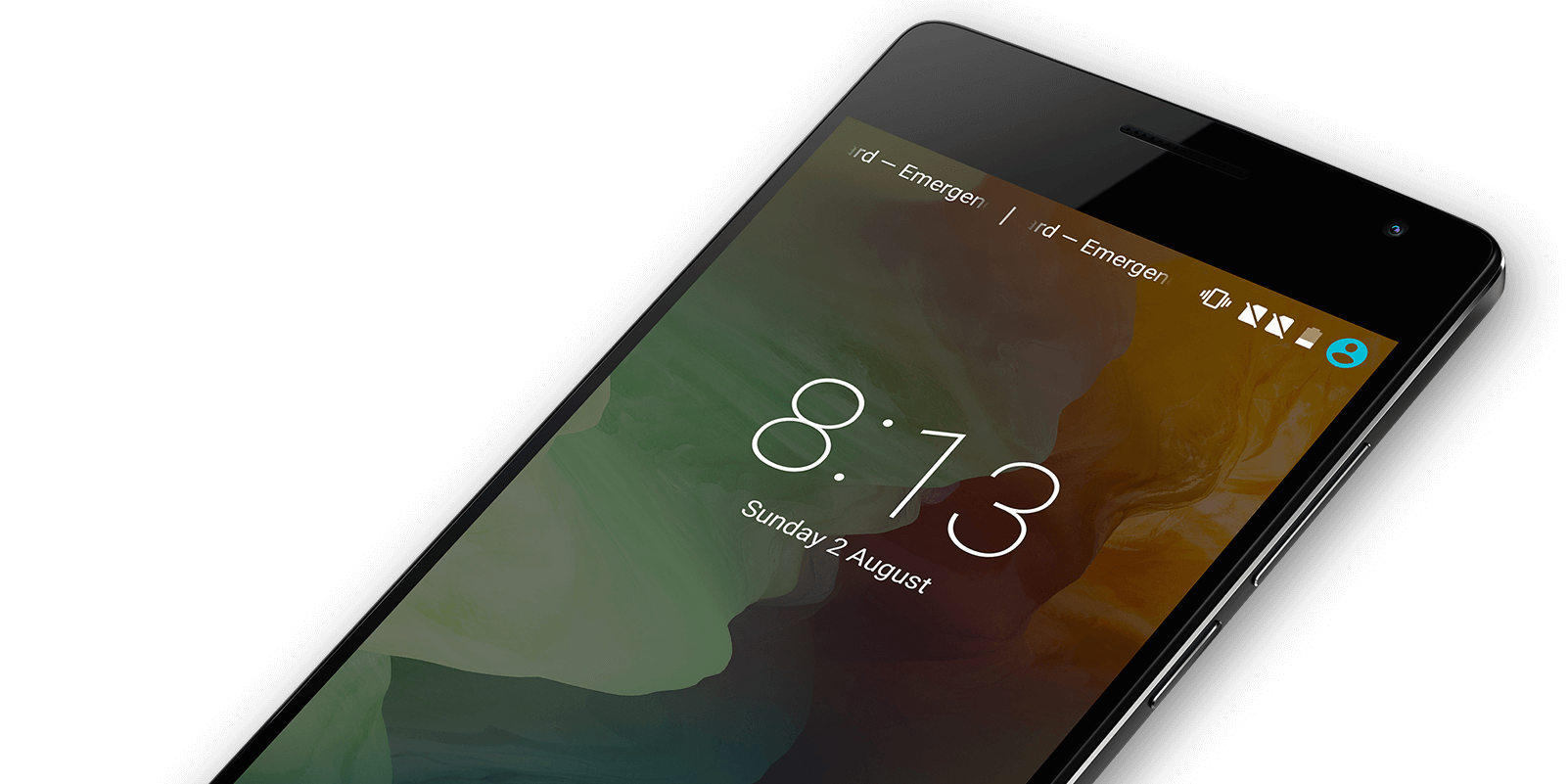
Poll: OnePlus 2 and Moto X Pure Edition compared – which is your pick?

Both the OnePlus 2 and the Moto X Pure Edition were announced this week, showcasing the best that these two Android OEMs have to offer this year. Both of these devices were horribly-kept secrets in their own ways, so there weren’t many surprises — we already knew almost every detail about both phones before they were announced.

But now that they’re here, which one do you think you’ll be getting? Or if you’re not in line for an upgrade right now, which one would be your pick? Let’s take a look at a few of their differences…
Expand
Expanding
Close

Motorola’s SVP of Software talks about the new Moto X and future development

Site default logo image

In an interview in Engadget, Motorola’s SVP of Software Seang Chau spoke briefly about the focus the company had chosen for the development of its latest Moto X smartphone, and where he saw the next generation of smartphones heading.

Chau said that Google “levels the playing field every time” by adding to Android features that were once device-specific. It’s for this reason that Motorola has chosen to focus on the ‘always on’ capability of the Moto X Style (or Moto X Pure Edition, as it is known in the U.S.).

We’ve got Moto Voice, where you just talk or make motions and gestures or you just approach it and [it] wakes up — those kinds of things, you can’t copy in software and if you try, you’ll just kill your battery. We put a lot of effort into always-on, and I think that’s where we’re going to continue focusing a lot of our software efforts.

The future would, he said, be in making intelligent assistants like Google Now, Siri and Cortana significantly more capable. So far, he considers them to be at the “getting there” stage … 
Expand
Expanding
Close

Google Translate app instant visual translation adds 20 languages

If you travel internationally, you’re well aware that Google Translate’s visual translation features — which originated as the Word Lens app — are invaluable. Today, Google announced that the app has added support for 20 new languages, bringing the total up to 27.

Today, we’re updating the Google Translate app again—expanding instant visual translation to 20 more languages (for a total of 27!), and making real-time voice translations a lot faster and smoother—so even more people can experience the world in their language.

The app originally supported English, French, German, Italian, Portuguese, Russian and Spanish.

As of today, you can now translate to and from Bulgarian, Catalan, Croatian, Czech, Danish, Dutch, Filipino, Finnish, Hungarian, Indonesian, Lithuanian, Norwegian, Polish, Romanian, Slovak, Swedish, Turkish and Ukrainian. You can also do one-way translations from English to Hindi and Thai.

Get a free $10 Amazon gift card when you buy a Chromecast for $30 Prime shipped

From 9to5Toys.com:

Amazon is throwing in a free $10 gift card with the purchase of a Google Chromecast HDMI Streaming Media Player for $29.99 Prime shipped. This combo carries a street value of $45 since the Chromecast usually sells for $35 by itself. Assuming you use the credit, today’s deal nets you the best HDMI streaming player for an effective price of just $20. Prime members (free trial) receive free 2-day shipping, while all other buyers will need to spend $35 or more to lock-in free standard shipping. To qualify for this deal you’ll need to add the Chromecast and $10 gift card to your cart via this promo page.

Chromecast streams Netflix, YouTube, HBO Go, Hulu Plus and tons of other apps to your TV over Wi-Fi using your iOS/Android device or laptop. Get even more value out of your Chromecast by taking advantage of special offers like a free Google Play movie rental. It’s rated 4.1 out of 5 stars from 35,264 Amazon reviewers.

Other retailers are also discounting Chromecast: Buy two and save $15 at Google Play or Best Buy, $20 for refurbished at Groupon.
Expand
Expanding
Close

Site default logo image

Samsung reduces camera sensor thickness by 20% in quest for slimmer smartphones

Samsung has begun mass-production of a new 16MP camera sensor a full 20% thinner than existing modules, allowing slimmer devices without “bumps” and without compromising on quality, says the company.

Built with 1.0μm pixels, Samsung’s new 16Mp image sensor reduces the module’s overall height by 20 percent, compared to current 1.12μm-pixel based 16Mp sensor modules. Enabling a module z-height that is less than 5mm, the S5K3P3 offers designers the ability to develop a mobile device with minimal camera protrusion without compromising on resolution.

Smaller pixels usually means more ‘noise’ in photos, especially in low-light conditions, but the company says that the inclusion of physical barriers between pixels – something Samsung calls ISOCELL technology – dramatically reduces noise. It claims that ISOCELL allows it to deliver image quality on a par with 1.12μm-pixel sensors.

Samsung says that the new S5K3P3 sensor is available to mobile device manufacturers from today; bets on it appearing in the forthcoming Galaxy S6 edge+ and possible the Galaxy Note 5 – it gets its current flagship phone cameras from Sony.

LG cites “extremely challenging environment” and iPhone competition as mobile division barely breaks even

Site default logo image

LG cited “an extremely challenging environment” for premium smartphones as the reason for posting a net operating profit of just 200M won ($172k) for its mobile division – a number put into stark perspective by Engadget as a profit of just 1.2 cents per phone. LG specifically singled out competition from the iPhone as a factor.

While year-on-year smartphone shipments were down 3%, it did achieve a tiny 1% increase in revenue, but said that profitability was hit by weaker demand in the premium sector in its home market of Korea. There was better news in the U.S. and Canada, however … 
Expand
Expanding
Close

Hands on with the Moto X Pure Edition Android phone [Video]

Site default logo image

The Moto X Style — called Moto X Pure Edition in the US — phones we got to play with at the end of today’s event were obviously very pure Android and with their much larger displays and heavy batteries very much reminiscent of the Nexus 6 that I’m carrying around. The one big and important difference is the Sony 21MP shooter on the back that in limited testing makes all the difference.


Expand
Expanding
Close

Opinion: OnePlus 2’s lack of Quick Charge & NFC equals a deal breaker

OnePlus gets a lot of hype for just about anything they announce (including limited-availability toys for April Fools day). Part of that is because of their genius marketing (I can’t count the number of people who used “#hype” and “#NeverSettle” in their Google+ posts, ironically or not, when mentioning the OnePlus 2 over the last few months), and the other part is that they actually make really good stuff. The OnePlus One is a stellar phone. In my opinion — and many agree with me — it was probably one of the best of 2014.

The OnePlus 2 also looks like it’s going to be a stellar phone, and we’re looking forward to reviewing it in very full soon. It offers a lot of great features, it comes in a physical build that’s marketable as something — much like Apple’s  hardware — extremely sexy, and it packs some specifications that contend with top-of-the-line flagships. All of this, and it comes at a price — if you’re buying in the United States, at least — that makes it seem ridiculous to ever buy a Samsung Galaxy S6 or iPhone 6 Plus off contract.

But the #NeverSettle company, which did a pretty good job at bringing a phone with hardly any compromises last year, seems to have introduced something that requires its buyers to make some compromises. From the outside, at least, there are two that stick out to me. First, the OnePlus 2 completely forgoes any NFC hardware. Yes, the recently-made-official Android Pay is going to be completely useless on a OnePlus 2. Secondly, the phone — in exchange for USB Type-C support — ditches any kind of Quick Charge feature…
Expand
Expanding
Close

Qualcomm announces WiPower: Wireless charging compatible with metal smartphones

Qualcomm announced today that it has become the first company to launch wireless charging that works on devices with metal casing. WiPower is not only material-agnostic, in that it can technically charge all kinds of devices, but it can do so at a distance and charge multiple devices simultaneously. If it works as Qualcomm says it does, this could be one of the most versatile and easy-to-use wireless charging solutions announced so far.
Expand
Expanding
Close

PSA: ‘Moto X Style’ is simply ‘Moto X Pure Edition’ in the US

Motorola announced two new Moto X variants this morning, but the company didn’t do a great job of clarifying in its multi-national livestream exactly how the phones would be marketed in the United States. First, as we mentioned, there aren’t any plans to bring the Moto X Play to the US at all at this point. But secondly, and perhaps more confusingly, the Moto X Style isn’t really coming to the US, either. In the United States, the equivalent of the Moto X Style will simply be called “Moto X Pure Edition”.
Expand
Expanding
Close

Site default logo image

Motorola announces Bluetooth headphones: on-ear, and sports-oriented in-ear

As part of a launch event for its new Android smartphones, Motorola has announced two new Bluetooth headphones compatible with most Android devices.

The $59.99 Moto pulse are stylish-looking on-ear headphones with beefy 40mm drivers, fold-flat ear cups for portability and a claimed 18-hour battery life. The $69.99 Moto surround earbuds are aimed at sports and fitness use, being both waterproof and sweatproof and equipped with a collar band designed to be light yet remain in place during exercise.

A companion Android app provides easy pairing, battery notifications and a location function to reunite you with either pair of headphones if you lose them.

Motorola officially announces the 3rd generation Moto G

Site default logo image

After almost a dozen leaks over the last couple of months, Motorola has today made the 2015 Moto G official. As with previous years, this handset is made for the budget-minded customer in mind, but it definitely is one of the better options in its class and you won’t be sacrificing much in terms of the overall Android experience…


Expand
Expanding
Close

OnePlus officially announces the OnePlus 2, available August 11

Site default logo image

After months upon months of rumors and speculation, OnePlus finally announced its highly anticipated OnePlus 2 smartphone this evening. While nearly everything was already known about the device, it’s nice to get confirmation and some rehashing of details from OnePlus. As expected, the OnePlus 2 features a 5.5-inch display at 1080p and a refreshed design. The company brags that it’s not a 2015 flagship, but rather a 2016 flagship. The device will be available August 11th in the US,  Canada, India, EU, and China. It will rollout to Southeast Asia in Q4.


Expand
Expanding
Close

Samsung sends invites to August 13 press event, will unveil the next Galaxy

Site default logo image

Samsung today has sent invites to a press event taking place August 13th in New York City. At the event, it is likely that we will see the unveil of the Galaxy Note 5 and perhaps a new Gear VR virtual reality headset to go with it.

Leaked images have shown almost all of the Galaxy Note 5 already, but it will be nice to get some confirmation from Samsung itself. It’s unclear if we will see the Galaxy S6 Plus at this event or not.


Expand
Expanding
Close

Best Buy offering HTC’s RE camera accessory for $100 (Reg. $200)

Site default logo image

Best Buy is offering HTC’s RE camera accessory for $99.99, down from its normal list price of $200. The $99.99 price point is the lowest we’ve seen since during a Black Friday deal when supply was very constrained. For those unfamiliar, the RE camera is a GoPro-like device that records point of view video, but does not have any sort of viewfinder.


Expand
Expanding
Close

9to5Toys Lunch Break: LG G Flex 2 (unlocked) $300, Galaxy Tab Pro $350, Samsung EVO 1TB SSD $310, more

Keep up with the best gear and deals on the web by signing up for the 9to5Toys Newsletter. Also, be sure to check us out on: TwitterRSS FeedFacebookGoogle+ and Safari push notifications.

Today’s can’t miss deals:

LG G Flex 2 silver (unlocked) 4G LTE w/ curved OLED: $300 shipped (Reg. $330) | eBay

Samsung Galaxy Tab Pro 12.2″ Tablet: $350 shipped (Reg. $650) (must be signed in) | Adorama

Samsung 850 EVO 1TB 2.5-inch Internal Solid-State Drive: $310 shipped (Reg. $350)

Sony 7.2-ch. 4K AV Receiver w/ AirPlay and Bluetooth for $299 shipped (Reg. $400), more

More new gear from today:

Motorola Refurb DOCSIS 3.0 Cable Modems: SB6121 $45 (Orig. $100), SB6141 $55 (Orig. $100)

More deals still alive:

VIZIO 43-inch 4K 120Hz Smart LED UHDTV: $500 shipped (Reg. $600)

New products & more:


JBL details new Flip3 & Xtreme portable Bluetooth speakers w/ fresh designs & features

Review: Bang & Olufsen Beolit 15 Bluetooth speaker

Review: DODOcase Apple Watch Charging Stand

Review: SanDisk Connect Wireless Stic

Chrome Beta 45 introduces improved media playback controls, timed install banners to Android version

As the Google Chrome web browser and web-based Chrome OS operating system continue on their ever quickening path towards divergence and feature parity with the native Android smartphone operating system, all of which are overseen by Google CEO Larry Page’s number two, Sundar Pichai, Chrome for Android is getting some new functionality that brings it closer to what developers can get out of native apps.


Expand
Expanding
Close

Razer’s acquisition of Android gaming box maker OUYA made official

We told you that investment bank Mesa Global accidentally let out in June that Razer had acquired flopped-Android-gaming-box maker OUYA, and today the company has made that acquisition official. Ouya’s Android-based gaming box quickly fell flat a couple years ago after receiving millions in funding through Kickstarter. 
Expand
Expanding
Close