Stay up to date on news from Google headquarters. Be the first to learn about plans for Android, Google Plus, Google Apps, and more!
Stay up to date on news from Google headquarters. Be the first to learn about plans for Android, Google Plus, Google Apps, and more!

Earlier this month, Google started accepting Android TV app submissions to the Play Store, but today, another detail about the app submission process was revealed. According to the Android developer documentation page, Google will pre-screen and approve all submitted Android TV apps. After the approval process, the apps will then be distributed for download on the Play Store (via Android Police).
Before distributing apps to the Play Store on Android TV devices, our team reviews apps for usability with a DPAD (apps) and Gamepad (games only) and other quality guidelines.

Europe’s controversial ‘right to be forgotten‘ ruling, giving individuals the right to have sensitive information about them removed from search engines if it is deemed to be ‘out-dated or irrelevant,’ could extend beyond Europe following a recent court ruling.
Google has so far been removing links only from its European sites, for example google.fr in France and google.co.uk in the UK. However, a French court has now ruled that Google is required to remove links globally, and that local subsidiaries can be fined if the company fails to do so, reports the Guardian …
Expand
Expanding
Close
Project Loon, Google’s ambitious balloon-based project to bring Internet access to the two-thirds of the world’s population who don’t yet have it, is about to begin its first live tests with a real carrier, reports The Guardian.
Australian carrier Telstra is providing base stations and part of its radio spectrum to allow Google to carry out tests with 20 balloons. The base stations will provide a two-way radio link with the balloons, which will then broadcast an LTE signal back to the ground – each balloon providing a signal across up to 600 square miles …
Expand
Expanding
Close
Since its initial unveiling more than two years ago, one of the biggest questions surrounding Google Glass has been its commercial viability. Reuters today has published a report, yet again questioning the long-term success opportunities of Glass. Sergey Brin, the head of Google’s X Lab which is responsible for Glass, was seen this weekend in public not wearing a pair. The Google executive remarked that he had left his pair in the car when asked by a reporter.
We like Samsung’s Galaxy Note 4 very much indeed, but it has had one flaw: it didn’t support screen mirroring to Chromecast. Android Police noticed that this has now been fixed.
Since TouchWiz doesn’t support the transient tile to initiate a screen cast, you’ll have to fire it up manually through the Chromecast app. To get things started, just pull out the navigation drawer, tap on Cast screen, and hit the Cast Screen button. If the button is missing and there’s a warning about there being no compatible devices, you can probably get everything on the right track by restarting your phone.
Sony’s Xperia Z3v, Z2 and Z2 Tablet were also added to the list of supported devices a couple of weeks ago.
Google recently revealed that Chromecast users have used the device a total of 650 million times, with over 10,000 apps in the pipeline. Showtime Anytime and Starz Play were the most recent additions to the platform, just a few days ago.
Google has begun a year-long tour of Bangladesh in a 3G-equipped bus which will visit over 500 campuses in order to introduce half a million students to web tools that can help them start and grow a business.
The specially retrofitted bus with 3G Internet will hopefully help give half a million undergraduates a better sense of the power and utility of the Internet, and show them how to plan and collaborate in new ways […]
We hope this program equips the country’s next generation of entrepreneurs with the digital tools that will empower them to start and grow their own projects and businesses online.
Students who want the Google Bus to visit their school or college can make a request on the project’s Google+ page.
Via Engadget
If you liked the idea of the poor man’s virtual reality headset, Google Cardboard, but decided your DIY skills weren’t up to the task of making your own and didn’t want to lay out $20 for a third-party kit, you’ll soon be able to get one for free, thanks to Volvo.
The car-maker is using a Volvo-branded version of Google Cardboard together with a companion app to help promote its new XC90 SUV.
Simply download the free Volvo Reality app, then wait until Tuesday when you’ll be able to request your free Google Cardboard through the app. Best fire it up early, though: Volvo says supplies are limited.
Once you have it, you can of course use it with any Google Cardboard-compatible app.
Via The Verge
Google has announced today that it is ending its support of Google Wallet for digital purchases, including games, goods, and services. The company announced that it will sunset Wallet for digital purchases in a support document, saying that the industry has “matured” a lot since the service was initially launched back in 2012.

Twitter’s chief financial officer Anthony Noto at its Twitter Analyst Day today reassured analysts that the social network has room for growth in the future, with one of the strategies being to generate more search engine optimization traffic from Google. The strategy is somewhat ironic, given that Twitter had one of the best SEO partnerships with Google until the deal fell apart around three years ago.
Expand
Expanding
Close

Google today officially announced its highly rumored YouTube music subscription service and its calling it YouTube Music Key. YouTube’s Music Key service with be available for a monthly subscription of $9.99 and unlock ad-free music, offline playback and video viewing, and the ability to play music in the background when using other apps.
The service is rolling out as a beta next week with a promotional price of $7.99/month, and early adopters will be able to request access from YouTube.com/MusicKey. YouTube’s Music Key beta service will be available through the YouTube apps on Android and iOS and through YouTube.com.


It’s hard to believe that the Nexus 6 is the Nexus 5’s successor. There’s a huge difference between these two devices in almost every department, but this year you’ll pay for those changes. Today we’re comparing the Motorola-made Google Nexus 6 to the LG-made Nexus 5.
The Nexus 5 was a steal of a deal when it was first released. In fact it’s still a great device. For the money, it’s hard to find a comparable device with the same software experience. The Nexus 5 is loaded up with Android 5.0 Lollipop (update is coming soon) and even after being outdated by better specifications and other smartphones on the market, it still runs like a boss.
With the Nexus 6, you’re getting the latest and greatest that this industry has to offer. It’s also running Android 5.0 Lollipop and overall will offer the same exact software interface and features as its predecessor. With both of these devices, you’re getting a pure Android experience, just as Google intended it to be. Does the Nexus 6 bring enough to the table to justify the difference in price? Well, let’s get right into the comparison and find out…
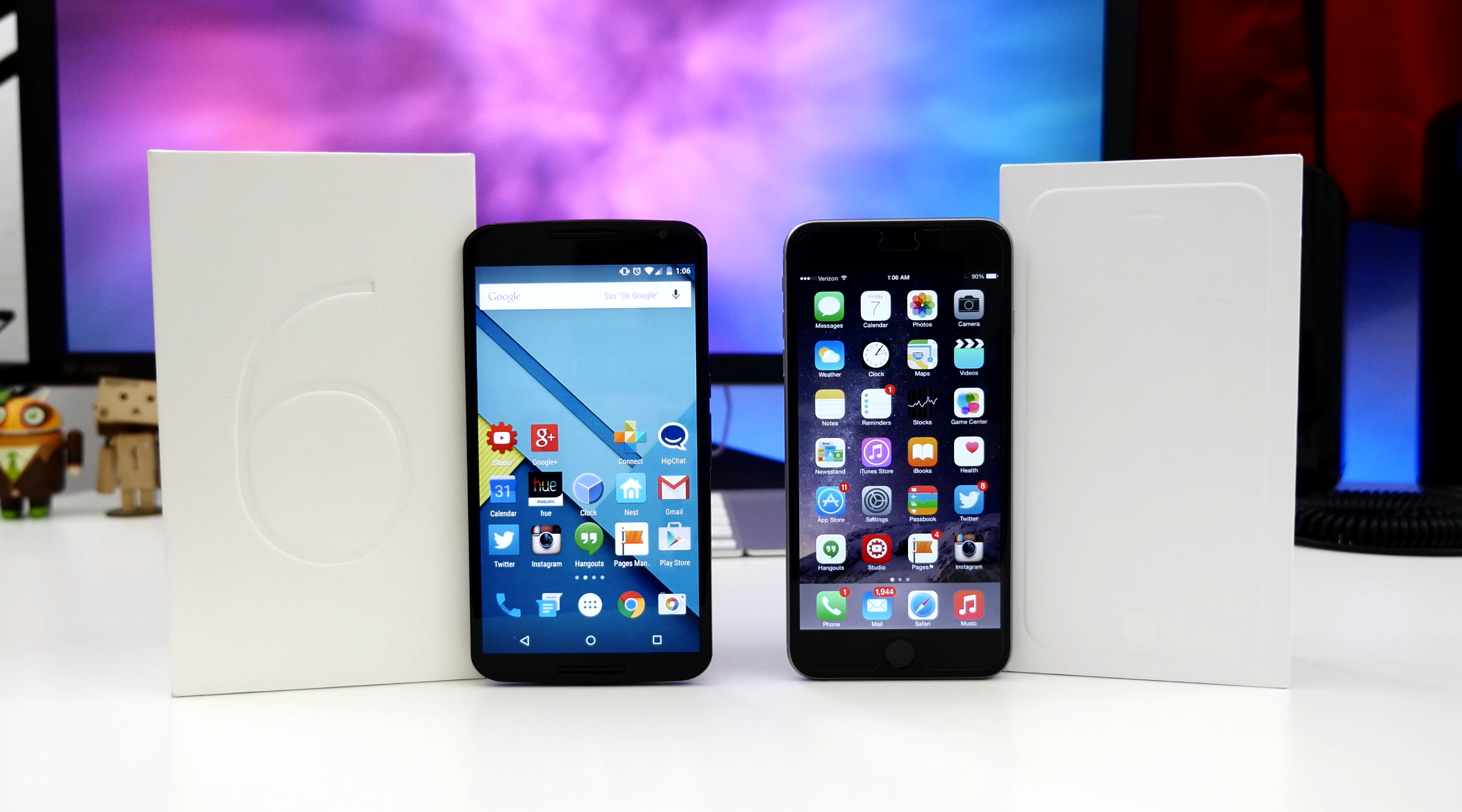
It’s not always the easiest task to compare an Android device with one running iOS. Most people choose one platform or another as a personal preference or an investment into the ecosystem that provides what they need. Today we’re comparing the Motorola-made Google Nexus 6 to Apple’s iPhone 6 Plus. There are benefits to each side, but which one is right for you?
We’re going to be comparing the design, specifications, features, and camera performance between these two flagship phablets. If you’re looking for more, check out our Nexus 6 review and 9to5Mac’s iPhone 6 Plus review. There may not be a clear winner at the end of the day, but I’ll leave that discussion for the comments section below…
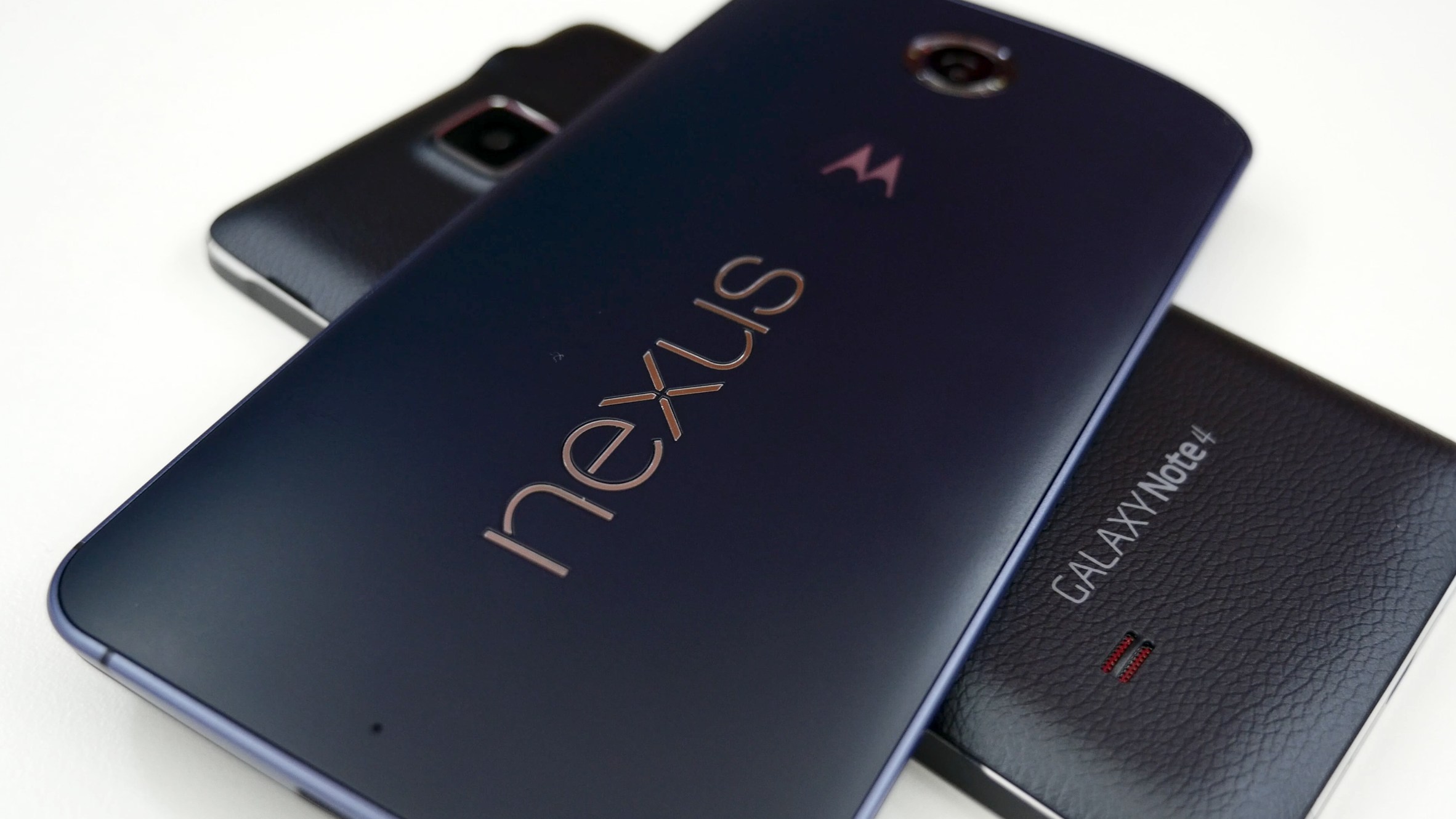
At this point, it’s very clear that Google’s Nexus 6 and Samsung’s Galaxy Note 4 are the two hottest Android phablets on the market. These two monster-sized smartphones are both great in many ways, but what makes them so different? In this article, we’re going to be comparing the Nexus 6 to the Galaxy Note 4. This comparison won’t get too in-depth with every single feature from each device, but it’s nice to know how these two stack up against each other.
We’ll be taking a brief look at features, specifications, design, and camera performance in this comparison and hopefully give you a good idea of what each device has to offer. Also, be sure to check out our full review of the Galaxy Note 4 and Nexus 6 for more details on each device. These two Android smartphones are complete opposites in terms of features and design, but which one is right for you? Let’s go ahead and find out…
Demand for Nexus devices has always been crazy, but this year Google took it a step further in every department and created somewhat of a super-smartphone. Most of what makes the Nexus 6 so great stems from its pure Android experience. Essentially, you’re experiencing this mobile OS exactly as it was crafted and straight from the source.
Because of Android’s openness, many smartphone makers dilute Android with their own custom skins. This is mostly great for consumers as skins add features that help create the core concepts of devices such as Samsung’s Galaxy Note line, but there’s almost always a tradeoff. You’re sacrificing overall speed and fluidity thanks to the resources being consumed.
Google’s Nexus lineup is a series of devices without all of the added bulk. This is the cleanest Android experience you can find. While it may not be as feature-rich when compared to other devices and their skins, it might be the best Android experience you can get…
Google has been a high-profile advocate for stronger privacy laws following NSA whistleblower Edward Snowden’s revelations about government surveillance activities last year. Continuing that trend, Google chief legal officer David Drummond has published a post on the Google Europe Blog this morning that calls for the U.S. Privacy Act to be extended to European citizens.
Expand
Expanding
Close
Update: It appears that Google’s DoubleClick servers are now functioning properly as ads begin to reappear across the web.
If you happen to be browsing the web and noticing fewer banner ads or slower loading times on your favorite websites, including our very own, the reason is that Google DoubleClick for Publishers appears to have been experiencing some downtime since approximately 9:00 AM Eastern. AdSense ads still appear to be loading correctly.
Expand
Expanding
Close
Last week, Motorola began rolling out a soak test for Android 5.0 Lollipop to users of the Moto X Pure Edition, and today it appears Motorola is continuing its soak testing with the second generation Moto G. Several users have reported receiving the update already and Motorola has also published the full release notes on its website (via Android Police).
From 9to5Toys:
As the leaked Black Friday ads continue to surface, today we got a look at what Target will be offering come the end of the month. The retailer says it will have hundreds of door busters and thousands of deals on everything from Google products and gaming consoles with gift cards attached along with deep discounts on home goods and more. Items on pages 2 and 3 of the ad are available today to order online with free in-store pickup. We’ve shared some of the standout deals we’ve spotted so far ahead, and keep checking back as we add more.
Google has been using NASA’s Moffett Airfield as a home and launch pad for its private jets for several years now, but today, the company announced that it has singed a deal with NASA in which it will lease the airfield for the next 60 years. Google, via its real estate organization Planetary Ventures, will contribute $1.16 billion to the facilities over the lease, reducing NASA’s operation costs by $6.3 million annually.
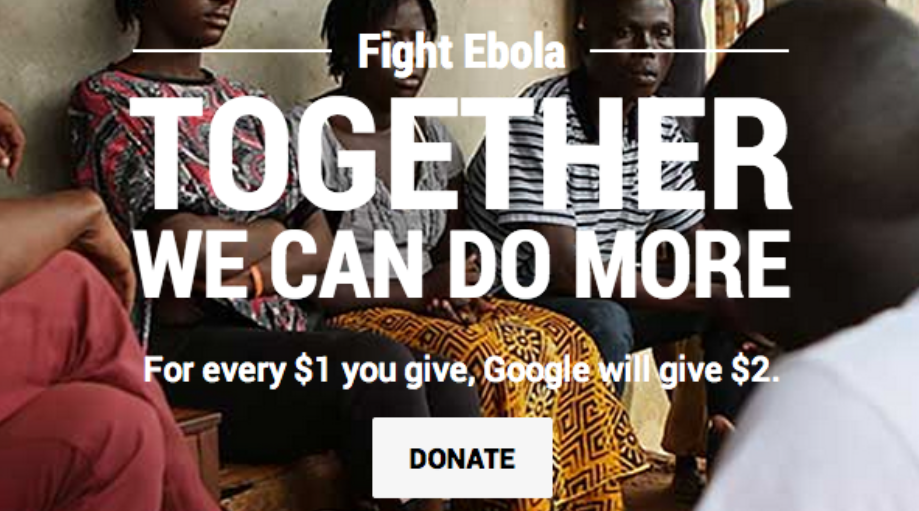
Google CEO Larry Page announced on the company’s blog today that Google has donated $10 million to several nonprofit organizations in an effort to fight the Ebola virus disease. Among the nonprofit organizations Google has donated money, “InSTEDD, International Rescue Committee, Medecins Sans Frontieres, NetHope, Partners in Health, Save the Children and U.S. Fund for UNICEF” are included according to Page.
In addition to donating $10 million to assist nonprofit groups in the fight against Ebola, Google is pledging to donate $2 for ever $1 donated to its public giving campaign. Funds raised through Google’s public giving campaign will go toward the Network for Good and continue until an addition $7.5 million is raised.
Expand
Expanding
Close
LG announced this weekend that it will begin rolling out the highly-anticipated Android Lollipop update for its flagship LG G3 smartphone starting in Poland this upcoming week. The handset maker confirmed that other key markets will receive the update in the near future, with an upgrade schedule for other smartphones to follow at a later date.
Expand
Expanding
Close
Uber has already disrupted taxi service in metropolitan areas like San Francisco, New York and Chicago with its affordable and convenient ride-sharing service, and now the multibillion dollar startup could be planning to use its massive fleet of vehicles and drivers to take on delivery services like Amazon Prime, Google Express, FedEx and UPS.
Expand
Expanding
Close
Sprint announced on Friday that it has appointed former Google executive Nikesh Arora to the company’s board of directors. Arora worked at Google for a decade, leaving his post as Senior Vice President and Chief Business Officer in August to become Vice Chairman and CEO of Internet and Media at SoftBank, the parent company of Sprint.
Expand
Expanding
Close
First we had the mystery about why Google was building floating structures on a set of barges based in San Francisco and Portland, before Google finally revealed that they were to become “interactive spaces where people can learn about new technology.”
Then we had the equally mysterious apparent cancellation of the project, with one of the barges sold for scrap and another sitting unused on the Sacramento-San Joaquin River Delta.
The WSJ used Freedom of Information Act requests to get hold of documents which seem to provide an explanation: email correspondence suggests that Google was unable to satisfy the Coast Guard’s fire-safety concerns.
“These vessels will have over 5,000 gallons of fuel on the main deck and a substantial amount of combustible material on board,” warned Robert Gauvin, the Coast Guard’s acting chief of commercial vessel compliance, in a March 27, 2013 email to the contractor, Foss Maritime Co.
Google argued that the barges would have no more than 150 people on board at any one time, despite estimating a total of 1200 visitors a day, but the Coast Guard was unimpressed.
“I am unaware of any measures you plan to use to actually limit the number of passengers,” Mr. Gauvin wrote in the March 27 email about fire safety. He criticized the effort by Google and Foss to seek quick approvals. “While I understand there is a sense of urgency, I am concerned that significant work has already been performed without full consent of the Coast Guard.”