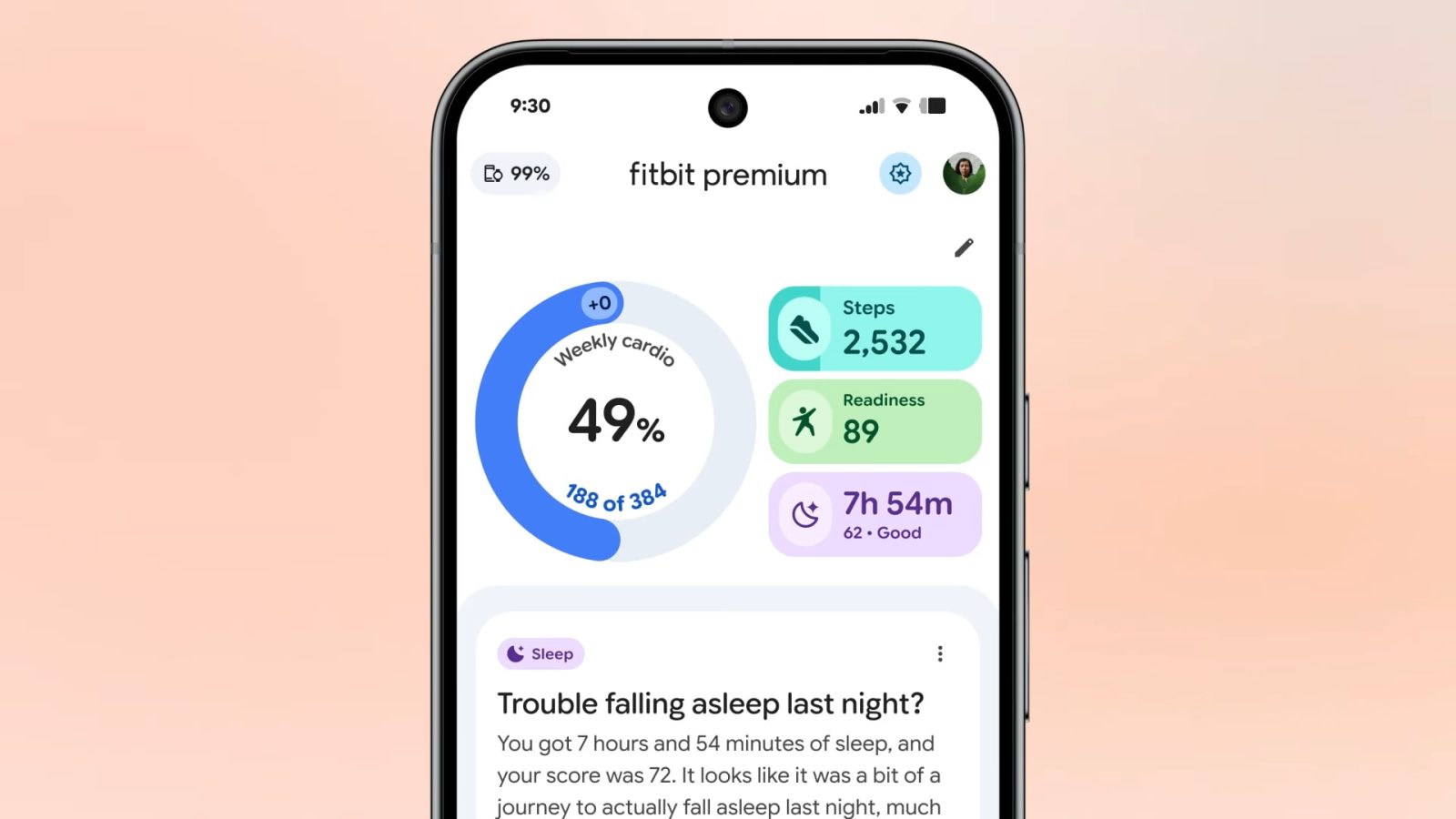
Fitbit Public Preview adds food & water logging, more as app redesign comes to free users

Following big Google Cloud announcements at the National Association of Broadcasters (NAB) Show earlier this week, the company is announcing a new ad platform to monetize and personalize video content, as well as that live TV listings are coming to Search results.


Google introduced a really awesome feature called app streaming to search results last month, and now a very similar technology is coming to the company’s AdMob ad platform. A couple new app ad formats are being introduced today, the first of which allowing users to try out an app within an ad itself before downloading…
Expand
Expanding
Close


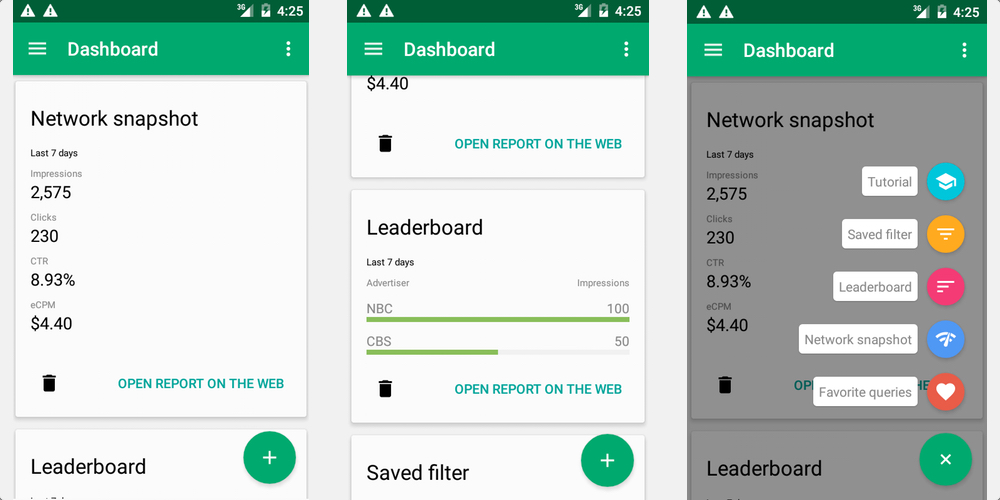
Google has finally launched an Android app for its DoubleClick for Publishers customers. This way, those who use the service to serve or sell ads will be able to keep on top of their performance without being tied to a desktop. If you are a DoubleClick for Publishers user, you’ll be able to monitor network performance by measuring several key metrics, including impressions, clicks, click ratios and CPM as well as individual advertisement performance.
All in all, it’s a pretty simple app, but potentially very useful to DFP customers. The description itself says nothing but the following:
Provides a high-level overview of a DFP network’s performance. The data is displayed in a series of cards, which contain information associated with what’s happening in your DFP network.
As you’d expect, it’s a free download from the Play Store. It’s compatible with any Android device running 4.0.3 or later.


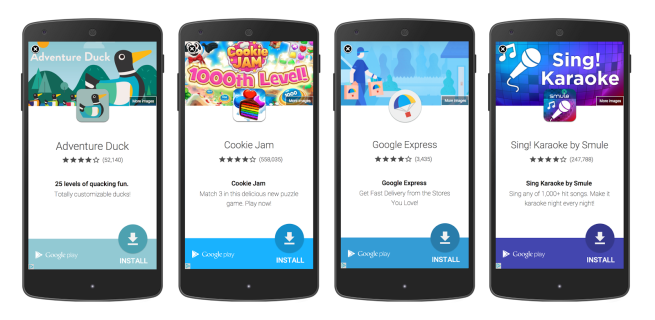
There might not be any topic more heated in today’s digital space than advertising. In most cases, no ads is better than any ads at all. The reality right now is, however, that no ads still also means no money to pay writers at sites like this one. With all that said, Google’s AdWords team has beautified its full-screen in-app ads (don’t worry, we don’t use these).
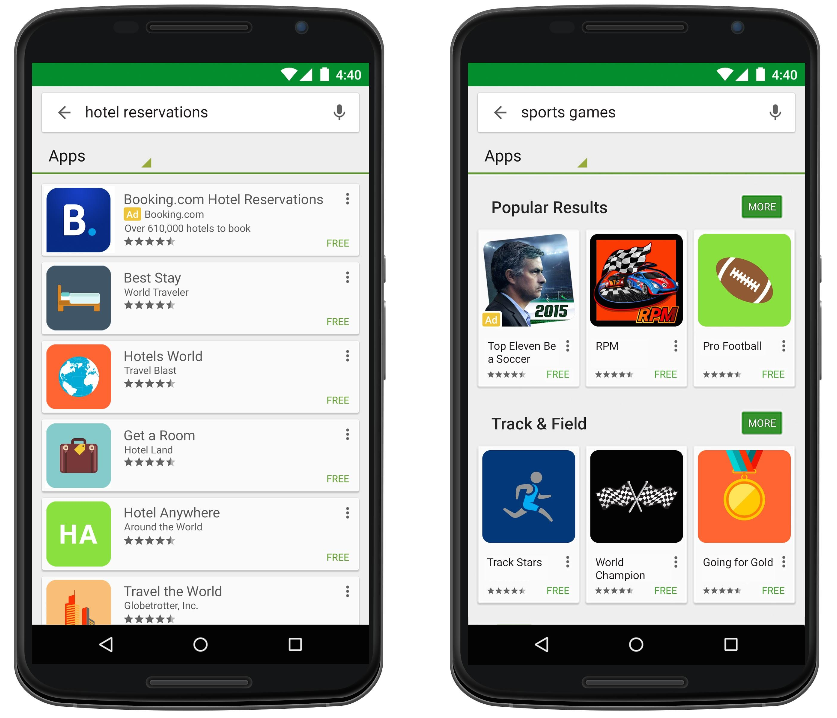
Google at its I/O developer conference back in May took some time to discuss improvements it was making to its Play Store for Android devices. Of those, one area in particular the company touched on was improving the discoverability of apps through better categorization and the ability for developers to A/B test their listings to find which combination of titles and screenshots would lead to the most downloads.
Another way the company has been working to help developers drive awareness of their apps has been through testing Play Store search advertisements, placing a developers’ app at the top of search results against specific keywords. The ability to purchase these placements is starting to roll out today.
Expand
Expanding
Close

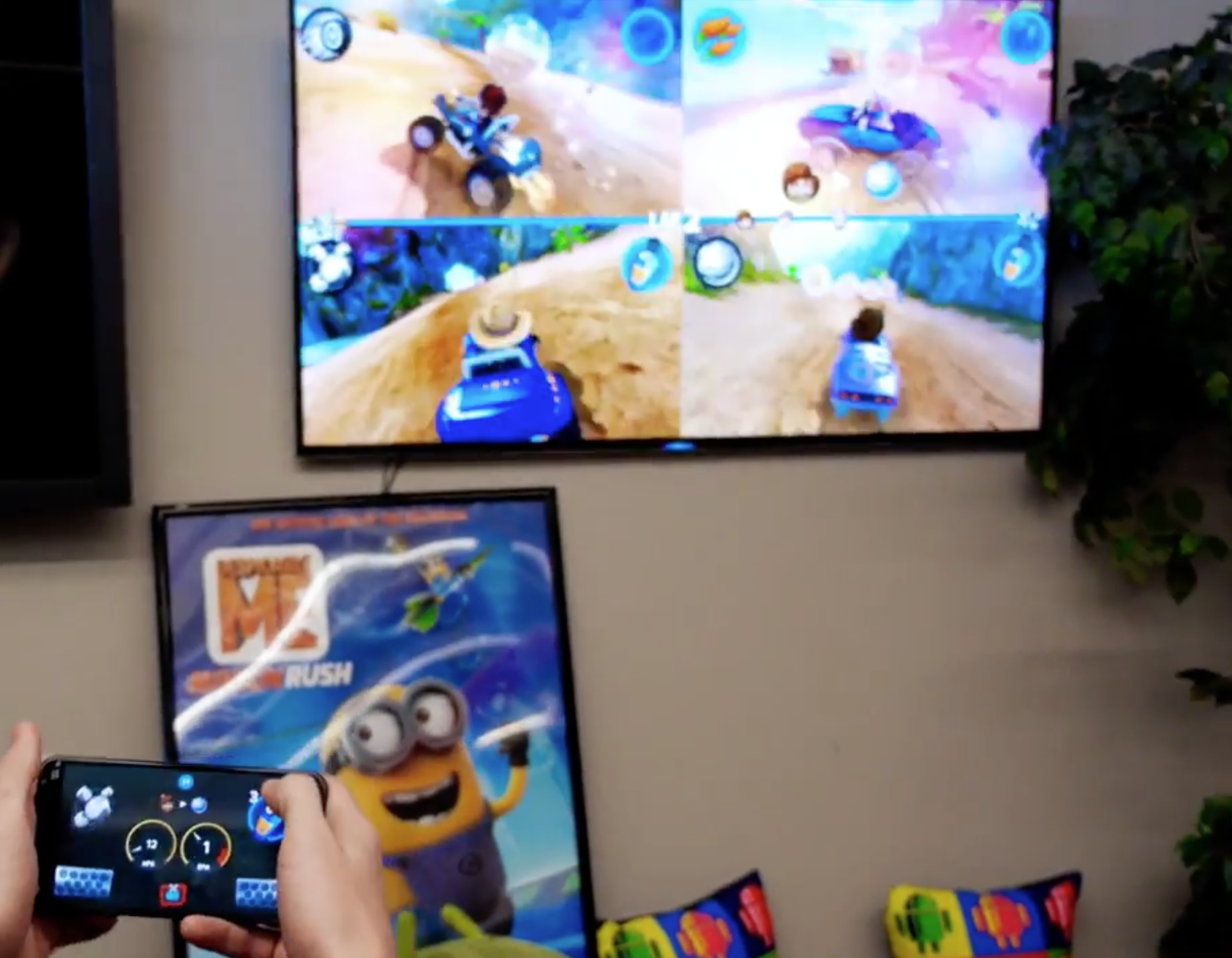
As part of the Game Developers Conference taking place this week in San Francisco, Google is hosting its own Developer Day and updating its AdMob platform and introducing a new Nearby Connections API for developers.
Using the Nearby Connections API, developers will be able to build a connection between Android phones or tablets and Android TV into games. The Android phone or tablet will display on-screen controls, and game playback will be displayed on Android TV creating a console-like experience without a separate controller.
Expand
Expanding
Close

Update: It appears that Google’s DoubleClick servers are now functioning properly as ads begin to reappear across the web.
If you happen to be browsing the web and noticing fewer banner ads or slower loading times on your favorite websites, including our very own, the reason is that Google DoubleClick for Publishers appears to have been experiencing some downtime since approximately 9:00 AM Eastern. AdSense ads still appear to be loading correctly.
Expand
Expanding
Close


Google announced today on its AdWords blog that it will be rolling out new mobile display ad formats and tools for advertisers in the coming months. Google is hoping the new ads, which will be available through the Google Display Network, the AdMob Network and DoubleClick, will help advertisers increase engagement with users on mobile devices.
The ad types include “Mobile lightbox Engagement Ads” that will dynamically resize to fit any ad and device size, TrueView video ads that will roll out more broadly in apps through the AdMob network, as well as an anchor ad format for mobile web apps and magazine style text ad formats that will expand into apps instead of just on mobile websites. Google also announced a number of new tools coming for advertisers to help improve the experience with mobile campaigns:
Google says the new ad formats will roll out to its various ad networks in the coming months.


Today, Google announced that it has acquired video advertising firm mDialog. A post on DoubleClick’s official Google+ account welcomed the ad company to the team and reaffirmed its commitment to helping publishers monetize their content.

Google announced today that it has finished the rollout of its new AdMob to more than 200 countries and as a result the company will stop accepting apps into Google Play based on its old SDK on August 1st. Following this initiative, the search giant will sunset AdMob’s legacy platform on August 31st. After this, legacy ad units will stop working and the outdated AdMob UI will no longer be accessible.
Google today announced on its DoubleClick blog that it has acquired spider.io, a company that has been developing technology to fight online fraud related to advertisements. While noting that it has also been investing in developing its own technologies to fight fraud, Google said it would first implement spider.io’s technology into its video and display ad products to help detect fraudulent activity:
Our immediate priority is to include their fraud detection technology in our video and display ads products, where they will complement our existing efforts.
Google adds that the long-term goal for the technology it acquired is to provide advertisers and publishers with more accurate methods of measuring a campaign’s results. “Also, by including spider.io’s fraud fighting expertise in our products, we can scale our efforts to weed out bad actors and improve the entire digital ecosystem.”
More on the DoubleClick advertisers blog here.
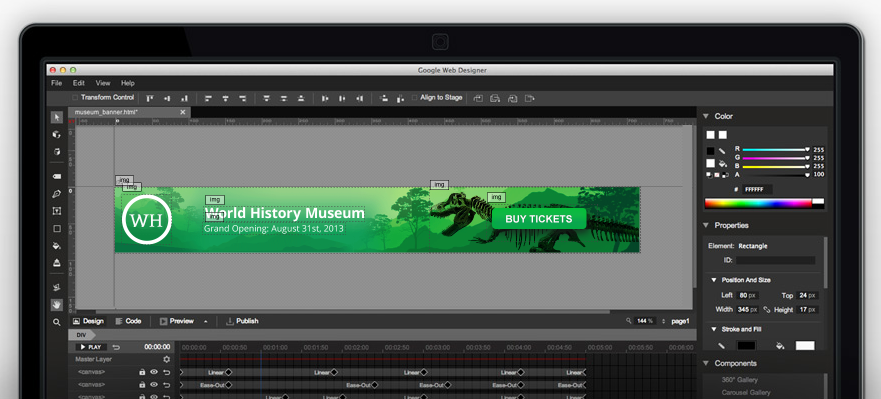
Google today announced that it is launching a public beta for its new Web Designer tool that allows users to build interactive ads and other HTML5 content. Google says that with HTML5 ad spend expected to overtake Flash spend within the next two years, it’s aiming to provide easy-to-use tools that will allow publishers to quickly and easily create and publish HTML5 ads:
We’re working hard to solve this development challenge by offering agencies powerful yet easy-to-use tools for HTML5 production. In this vein, we announced DoubleClick Studio Layouts for HTML5 back in August, which lets you create HTML5 ads in minutes, and last week we announced Ready Creatives in AdWords, which creates HTML5 ads for you in seconds. Today, we’re excited to announce the public beta of Google Web Designer, a new professional-quality design tool that makes HTML5 creative accessible to everyone from the designer to the dabbler.
Google walked through a few of the features of Web Designer in its blog post:
It also noted that access to Web Designer will be free for all, at least for the time being.
The Web Designer beta is available to download on Google’s website. Google has a getting started guide here, and high-speed demo of an ad being created in the Web Designer beta is below:
http://www.youtube.com/watch?v=kHj7fqbNaQw&feature=youtu.be

[ooyala code=”RiOGV1Yjr9VQ_1XpY_42igQqa24801Me” player_id=”null”]
According to Bloomberg, the FTC is now investigating Google over its Display ad business which it picked up originally in its purchase of DoubleClick almost a decade ago.
The fresh inquiry, which follows the FTC’s decision to close a review of Google’s search business in January without taking action, is in the preliminary stages and may not expand into a larger probe, said the people, who asked not to be named because the matter hasn’t been made public.
FTC investigators are examining whether Google is using its position in U.S. display ads — a $17.7 billion industry that includes the sale of banner ads on websites — to push companies to use more of its other services, a practice that can be illegal under antitrust laws, the people said.
Out of the FTC Frying Pan, into the Fire.
Expand
Expanding
Close
Google announced updates to its AdMob ad network, which it acquired in 2010, including improved app promotion, strong filters for ad relevance, local payments eliminating currency conversions, and more.
Developers will see the changes roll out over the next few months according to Google.

[youtube=http://www.youtube.com/watch?v=FDiTDBK4q8I&feature=player_embedded]
DoubleClick for Advertisers introduced a new tool today for agencies and marketers, called “DoubleClick Verification,” that acts as a built-in ad verification solution and subsequently promotes smarter media buying.
DoubleClick is a Google subsidiary that develops and provides Internet ad serving services. According to the official DoubleClick Advertiser blog, the new tool’s benefits include:
DoubleClick Verification currently offers website content monitoring for identifying content issues with ads and it allows partners to customize content profiles for defining safe or non-safe websites.
For more information on today’s news: Download DoubleClick’s “Smarter Media Buying with Ad Verification” white paper, visit DoubleClick’s blog post, watch the video above, or register for an upcoming “Introducing Ad Verification with DoubleClick” webinar on Oct. 17 at 1 p.m. EST.
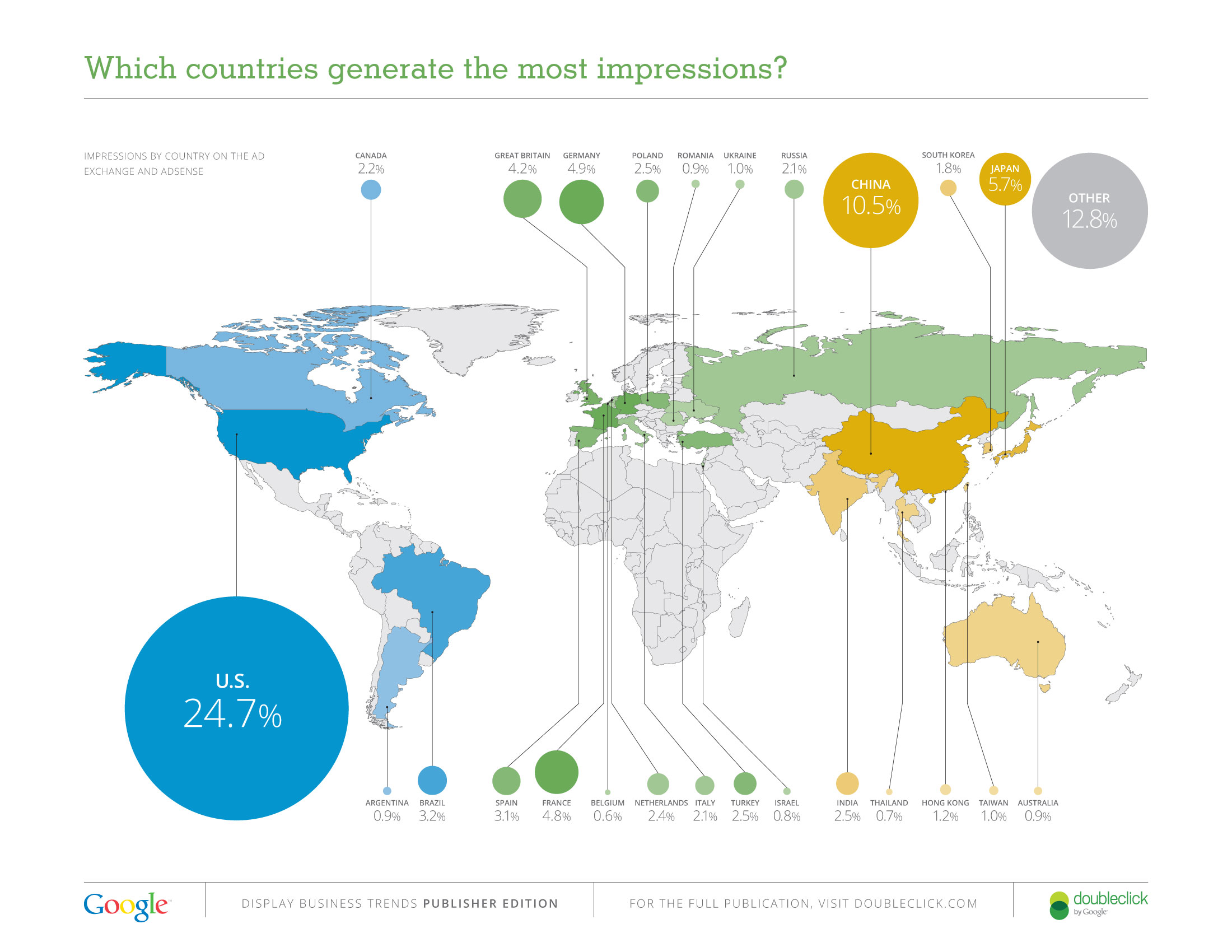
Everyone knows online advertising is a tricky business, but Google launched a new report today that hopes to uncloak some of the mystery behind the plug-medium that keeps everyone guessing.
In a DoubleClick blog post today, Google’s Director of Product Management and Display Advertising Jonathan Bellack announced the death of the 468×60 banner ad, which now only garners 3 percent of Google’s ad impressions. The classic ad-type is a standard across most blogs and websites, but its low success rate is just another indication of how touchy advertising on the Web is for publishers.
Google, through its buyout of DoubleClick, unveiled the “Display Business Trends: Publisher Edition” report today to help publishers finally determine what works and doesn’t work in the world of Internet-based advertising. Bellack explained:
The Publisher Edition will be the first in a series of publications looking at aggregated global data from across our display advertising solutions. We’re doing this to generate metrics that will answer a few of of the most common questions we hear from our partners, and put some data behind long-held industry assumptions. […] These metrics are a beginning: they give a snapshot of what’s happening in an ever-changing industry. We hope this sparks conversations across the marketplace about the trends driving these metrics, and how publishers can best capitalize on them to grow their businesses bigger, faster.
Google will also hold a DoubleClick “Insights” event on June 5, where it plans to live-stream discussions on the future of buying and selling ads online. Those who are interested can register online. Oh, and the full Display Business Trends report is available for download here (PDF).
[youtube=http://www.youtube.com/watch?v=ZBduf8o0AbI]
Google’s Vice President of Corporate Development David Lawee sat down with MG Siegler today at TechCrunch Disrupt in New York City to discuss the search engine’s history with acquisitions including yesterday’s buyout of Motorola Mobility.
The entire interview is above (part 2 is below-soon), but the main point of discussion concerns the nugget that Google acquires 20 to 30 companies a year, with an additional 20 or more related to patents, but Lawee said two-thirds of all Google’s acquisitions have been successful. Lawee attributes the success rate to Google’s initiative to only recruit endeavors that will benefit from being a part of Google, rather than to continue existing on their own.
The VP further said each acquisition has its own metrics to determine whether it is successful, while he then mentioned DoubleClick and AdMob as two of Google’s most successful acquisitions. Slide, on the other hand, is one of Google’s failures.
“Sometimes executing on strategy leads other things to fail. […] 85 percent of that team ended up working for YouTube and they’ve done quite well there,” Lawee explained.
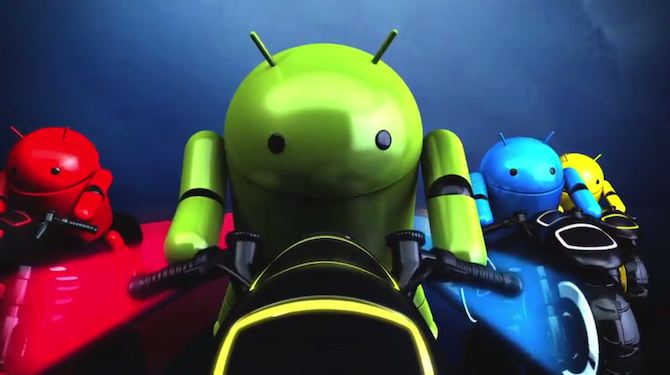
Software maker Oracle estimated that each day’s worth of Android activations makes Google approximately $10 million in annual revenue while also strengthening its Google+ service, German patent blogger Florian Mueller wrote on his FOSS Patents blog today. Oracle made this claim at a German court in regards to its patent infringement claims against the search giant:
While this case awaits trial, more than 700,000 Android-based devices are activated every day, all fundamentally built around the copyrighted Java APIs and the enhanced performance enabled by Oracle’s patents. Each day’s worth of activations likely generates approximately $10 million in annual mobile advertising revenue for Google.
Oracle did not explain its math, however, leading Mueller to suspect that the figure is based “on the assumption of annual advertising revenues of $14 per Android user.” Interestingly, Oracle wrote in court documents “Analysts have predicted that the number of new Android devices will reach 2.5 million per day within twelve months.” However, it is not just about mobile advertising, the success of Android is benefiting Google’s other properties, namely its Google+ social network…
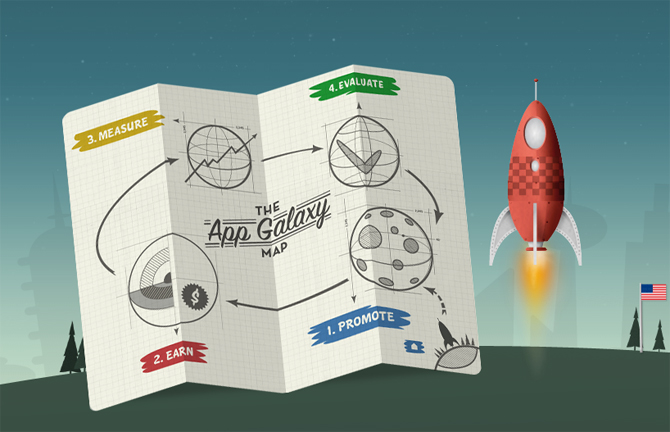
Hot on the heels of a plethora of yesterday’s Android announcements, Google has launched a new site aimed at app developers. In a nod at “The Hitchiker’s Guide to the Galaxy”, a sci-fi comedy series by Douglas Adams, the company named it “The Guide to the App Galaxy by Google”.
Available here, this useful new place is meant to “help app developers, regardless of platform, build a business on mobile – whether they’ve just launcher their first app or are looking for additional tips as they grow their portfolio“, Google says. Resources include Google’s AdMob network to promote apps via paid campaigns or cross-promote apps within one’s own portfolio.
It’s all about monetizing lazy users who aren’t keen keen on paying for Android apps as much as their iOS counterparts. In addition to the freemium model, the site notes, developers will benefit from better understanding of the ways to monetize users with in-app adverts and in-app purchases as opposed to one-time paid downloads.
Hint: Use the arrow keys on your keyboard to navigate the spaceship through the site.

It didn’t take long for the iPhone location tracking issue to escalate and get blown out of proportion. The story spread like a wildfire as we learned that both Google and Apple were summoned for the May 10 Congressional hearing. That was just a warm up, though. Reuters reports that South Korea police is after the search giant, having raided their Seoul office on Tuesday.
The reason? AdMob, Google’s mobile advertising arm, was illegally collecting location data from Android users without their consent. That’s the official line the country’s authorities provided to Reuters.
The probe into suspected collection of data on where a user is located without consent highlights growing concerns about possible misuse of private information as the use of mobile devices such as smartphones and tablets increases.
We suspect AdMob collected personal location information without consent or approval from the Korean Communication Commission.
A Google spokesperson confirmed the raid and said the company was co-operating with investigators. This latest development follows-up on the news that the governments of South Korea, France, Germany and Italy are considering probing Apple over the location data gathering fiasco.


