Android

See All Stories

Breaking news for Android. Get the latest on apps, carriers, devices, and more!
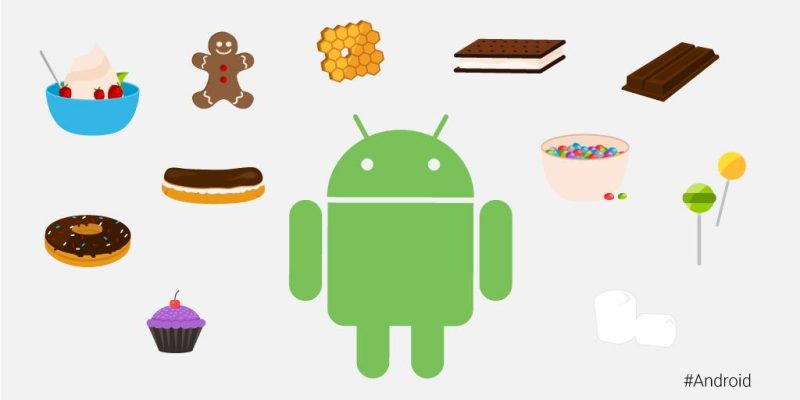
Android is Google’s mobile operating system, launched in September 2008, although its history technically began with the release of the Android alpha in November 2007. To this day, Android powers the majority of the world’s smartphones and comes in several different flavors across many phone makers.

What is Android?

Android Inc.

Android, before it was Android, was a company called Android Inc. That company was founded in Palo Alto, California, in 2003 by a crew of four: Andy Rubin, Rich Miner, Nick Sears, and Chris White. The company and its project was acquired by Google in 2005 for a sum of more than $50 million, although the exact number is unknown. The company’s founders joined Google as part of the deal.

In its infancy, Android was an operating system built not for touch screen smartphones like the iPhone, but rather BlackBerry-like devices with physical keyboards. It’s well documented that after Apple shocked the world with the iPhone, ahead of its nearest competition by at least a couple years, Google and Android Inc. had to go back to the drawing board to build something competitive.

Adoption by third-party makers

It didn’t take long after the launch of the iPhone for various manufacturers to enter the market with their alternatives — and Google’s Android immediately became the obvious platform of choice for just about everyone except Microsoft. HTC was the first manufacturer on board, and introduced the T-Mobile G1 running Android in September 2008. Soon after, HTC, Motorola, Samsung, and carriers like Sprint and T-Mobile jumped on board to form the Open Handset Alliance.

Android makers across the world

Iconic Android handsets

There have been thousands of Android phones released since Android’s inception, but some have been more important to the platform’s history than others. There was the original T-Mobile G1, as mentioned, but there was also the HTC One Google Play Edition, Moto G, Samsung Galaxy S4, and others. Some of the most iconic Android handsets include:

  • HTC G1
  • HTC Nexus One
  • Samsung Galaxy S, S2, S3, S4, and their successors
  • HTC Incredible S
  • Samsung Nexus S
  • Samsung Galaxy Nexus
  • Samsung Galaxy Note
  • Nokia 8
  • BlackBerry KeyOne
  • Google Pixel and its successors

In more modern times, there are several Android smartphones makers that popped up across various niches and in several international markets. Huawei is a dominant Android maker in China and many European markets, while Samsung is by far the most popular maker in the United States by far — effectively creating a duopoly with Apple. Today, there are dozens of major device makers contributing to the Android ecosystem.

Full list of Android OEMs

History of major Android versions

Android has seen countless software revisions over the course of its life, but in modern times the OS usually sees a major release on an annual cadence. In the earlier days, Google famously gave its major software releases dessert-themed codenames, but retired that practice in 2019 with the release of Android 10.

VersionNameReleaseDevices
2.3GingerbreadFebruary 9, 2011Nexus S
4.0Ice Cream SandwichOctober 19, 2011Galaxy Nexus
4.1Jelly BeanJuly 9, 2012Nexus 7
4.2Jelly BeanNovember 13, 2012Nexus 4, 10
4.3Jelly BeanJuly 24, 2013Nexus 7 (2013)
4.4KitKatOctober 31, 2013Nexus 5
5.0LollipopNovember 3, 2014Nexus 6, 9
5.1LollipopMarch 9, 2015Android One
6.0MarshmallowOctober 5, 2015Nexus 5X, 6P
7.0NougatAugust 22, 2016Nexus 5X, 6P
7.1NougatOctober 4, 2016Pixel, Pixel XL
8.0OreoAugust 21, 2017Pixel, Pixel XL
8.1OreoDecember 5, 2017Pixel, Pixel XL
9PieAugust 6, 2018Pixel 2, Pixel 2 XL
1010September 3, 2019Pixel 3, 3a
1111September 8, 2020Pixel 4

List of major Android OS platforms

While Android proper is certainly the most widespread of Google’s Android operating systems, the company has also launched many offshoots of the main OS over the years. There’s Android Auto, Android Wear (now Wear OS), Android TV (now rebranded to Google TV), as well as versions of Android built for tablets and Android Things (now defunct).

5 Android smartphone makers to watch in 2016

In 2015, the smartphone or, more specifically, the Android smartphone market reached tipping point. What you can get for your money now compared to 12 months ago is pretty astounding. It started with the sub $300 Alcatel OneTouch Idol 3 in March, and ended with the $100 BLU phone equipped with a full HD screen. With 2016 almost here, we’re right in the thick of a race to the bottom, and the price drops are being driven primarily by Chinese companies.

If 2016 is the going to be the year of anything, it’ll be the year more western consumers will be handing over their hard-earned cash for something designed and made in China. These are the companies to watch:


Expand
Expanding
Close

LG adds funky-looking hub to its SmartThinQ home automation system

As home automation devices proliferate, most tech companies seem to have decided that wirelessly connecting them up to a central hub is the best way to enable us to keep them all under control. Apple’s HomeKit platform uses the Apple TV as its central box, and Samsung has its SmartThings Hub.

LG is now following suit, pre-announcing the SmartThinQ Hub it plans to formally launch at CES. Interestingly, the device – which looks similar to the Amazon Echo – has a built-in display, which the company says can display alerts as well as allow direct control of devices without using your smartphone.

LG SmartThinQ Hub serves as a gateway to smart sensors and connected appliances in the home but is more than that, with the ability to display reminders from personal calendars and stream music from its built-in speaker. The elegantly designed SmartThinQ Hub includes a 3.5-inch color LCD display and connects to a smartphone app to facilitate two way communication with smart appliances and smart sensors in the home.

LG also offers SmartThinQ sensors, which aim to turn dumb appliances into smart ones by using things like vibration to allow a washing-machine to signal when a wash is complete.

The company hasn’t yet announced a price, but Samsung’s SmartThings Hub costs $99, so is likely to be in the same kind of range.

9to5Toys Lunch Break: Galaxy Tab A $150, Sharp 55″ 4K UHDTV $600, Nexus 6 $300, more

Keep up with the best gear and deals on the web by signing up for the 9to5Toys Newsletter. Also, be sure to check us out on: TwitterRSS FeedFacebookGoogle+ and Safari push notifications.

TODAY’S CAN’T MISS DEALS:

Samsung Galaxy Tab A 9.7-Inch Tablet (16 GB): $150 shipped (Reg. $300) | eBay

Daily Deals: Sharp AQUOS 55-inch Smart 4K Ultra HDTV $600, Logitech MX Master Wireless Mouse $79more

New Google Nexus 6 64GB by Motorola: $300 shipped (Reg. $600) | Amazon

Refurbished Samsung Gear Fit Watch: $50 shipped (Reg. $100) | eBay

Samsung 850 EVO 2.5-inch Internal Solid-State Drives: 250GB $65 (Reg. $90), 500GB $140 (Reg. $150+)

Write-Off Week™: Last chance to write off biz expenses w/ best deals on office equipment, tech, supplies, more

Starbucks $15 gift card for $10: save 30% on your favorite drinks!

MORE NEW GEAR FROM TODAY:

HP Officejet Pro 8610 e-All-in-One Inkjet Printer w/ AirPrint $50 shipped (Reg. $100)

MORE DEALS STILL ALIVE:


Macbook Air 11.6″ Core i5 4GB/128GB w/.edu: $700 shipped ($750 without .edu or less)

NEW PRODUCTS & MORE:

Thimble’s DIY robot subscription service launches on Kickstarter to great success

Here are the Holiday Best Sellers from Amazon’s record-breaking year

Hitachi’s new tech could double your smartphone’s battery capacity without increasing size

Hitachi Maxell has developed a new lithium-ion battery which could increase a portable product’s capacity without increasing its battery’s thickness. In fact, it has twice the capacity of its current technology, thanks to a newly developed silicon-based material used as the battery’s negative electrode.

The new technology, named ULSiON, uses a composite material made by coating the surface of its Silicon-based layer with carbon. Although typical silicon-based negative electrode layers tend to expand and contract, causing swollen batteries, the new technology reduces that risk significantly by using fine silicon particles.

Using the ULSiON technology, Hitachi will be able to make batteries that are really small, but don’t sacrifice capacity.

“(By using the new material,) we will realize compact lithium-ion batteries that have a width of 13mm or less and an energy density twice as high as that of the existing product of the same size,” the company said.

In practice, this could mean smartphone makers can continue to make slim devices with small, but powerful batteries. Perhaps more importantly, the ability to make small batteries with high capacity is ideal for the rising demand for wearable technology. Smartwatches with 2-day battery life could potentially be much smaller and thinner. Or even better, smartwatches could retain their current thickness and have 4-5 day battery life.

Hitachi expects that the ULSiON-based Li-on batteries will be used in compact devices, like wearables. It also expects demand for this technology to be in high since space is a premium, but long battery life is ideal, and current batteries don’t quite cut it.

Hitachi Maxell will show off its new battery tech at the 2nd Wearable Expo in Tokyo between January 13-15.

Samsung Galaxy S7 dimensions seemingly revealed in new schematics leak

Yesterday, a report stated Samsung would look to make the regular and ‘Edge’ versions of the Galaxy S7 in two different sizes. While the Galaxy S7 would features a 5.2-inch screen, it’s reported that the S7 Edge will have a larger 5.5-inch display with curved secondary screens on either side of the screen. A leaked schematic — created by Shai Mizrachi and published afterwards by Android Authority — reveals a little more detail, and shows the size differences more clearly.

In the leak, the S7 and S7 Edge are shown alongside the current Galaxy S6 and, perhaps of most interest, is that the S7 has the same dimensions as the S6, despite having a larger screen. This would indicate that Samsung has worked a little on trimming down the bezel further. It’s also interesting to note, the S7 appears to have curves near the edges on the back, similar to the Galaxy Note 5, presumably to make it more comfortable to hold.

As for the difference between S7 and S7 Edge dimensions, the schematic indicates we’ll see a 2.5mm difference in width and 8mm difference in height.

There are a couple of other tidbits worth noting. Firstly, the metal frame shown in the top-down view suggests Sammy is changing the design somewhat. The S7, as previously mentioned, has bigger curves on the back, while the S7 Edge has them on the front. What’s more, the camera protrusion appears much smaller on the upcoming models, while the IR blaster seems to have been removed completely.

Otherwise, it’s very much the same from Samsung. As previously rumored, the design doesn’t look as though it’ll change much from this year’s form factor.


PSA: Google’s ‘Ubiquity’ Internet of Things dev summit will take place in January

The Internet of Things will become an increasingly big deal as all consumer technology becomes connected to the web, and by extension one another. Google has several technologies including Brillo and Weave that take advantage of this ubiquitous computing trend. Announced at Google I/O earlier this year, Google is hosting a developer summit for developers focused around those topics. They announced the speaker list and opened registration today.


Expand
Expanding
Close

Android’s Do Not Disturb ‘until next alarm’ option has randomly disappeared

When Google released Android 6.0 Marshmallow, it removed one of the most useful Do Not Disturb features, and that was the ‘until next alarm’ option. For those unfamiliar, it allows you to turn off all notifications until your morning alarm goes off and saves you being woken up at a ridiculous time. With 6.0.1, the feature returned, but recently it seems to have vanished again.

A thread on Reddit deals with the issue and claims that even users who aren’t running Android Marshmallow have experienced it. Some claim to have seen it disappear from the options while looking at them. I’ve tried to set Do Not Disturb myself, and like the complainants, I don’t see the ‘until next alarm’ option anymore.

Thankfully, there is a sort-of fix: change your phone’s date to before or after the holidays. If, for instance, you change your phone’s date to January 1st 2016, it seems to reappear, suggesting this is a really weird bug, or Google was trying to make sure you spent less time looking at your phone during the holiday period. You’ll get the same result if you change your phone’s date to before December 25th, according to Android Police.

If you don’t want to mess with your phone’s date, the option should return automatically in the new year, once the phone’s date changes to January 1st on its own.

Letv expanding in to India with powerful, Quad HD Le Max phablet

We’ve seen a huge rise in the number of affordable smartphones come to market with premium design and specifications over the past 12-18 months. It’s no coincidence that this has lead to a rise in the number of relatively unknown Chinese manufacturers push out of their national borders to sell their branded products overseas. Companies like Huawei, OnePlus and Xiaomi have all launched competitive smartphones at budget-friendly prices. Following in their trail is Letv, a company which has just announced its intention to launch a high-end smartphone in India for the first time.


Expand
Expanding
Close

Unreleased Oppo A35 passes through TENAA certification, features octa-core chip, 5-inch screen, metal body, more

With Samsung having launched its Galaxy A-series phones for 2016 and BLU launching the first sub-$100 1080p smartphone at the end of this year, it looks as though the trend of releasing premium-looking smartphones at affordable prices is set to continue in to 2016. One company known for releasing great, affordable smartphones is Oppo, and the Chinese smartphone manufacturer is about to launch its next small, powerful and budget-friendly smartphone…


Expand
Expanding
Close

HTC One X9 officially announced, features all-metal body, full HD 5.5-inch display, 3000mAh battery, more

HTC has finally launched the long-rumored One X9 in China, and it boasts some pretty decent specs in a package which costs 2399 Yuan, or roughly $370 USD when converted. There’s very little revealed about the device that we didn’t already know, and we’re unsure if/when the phone will be launched in the US or other international markets.

Like the One A9, the latest smartphone from HTC features an all-metal body, but with a separate pill-shaped panel housing the camera on the back. The manufacturer claims it takes over 300 hours of work and more than 50 individual processes to make the unibody metal chassis. The company is  also keen to boast the return of capacitive buttons on the front panel, which avoids the virtual buttons onscreen taking up valuable display real estate.

Other key specifications include:

  • 5.5-inch full HD display
  • Front facing stereo BoomSound speakers
  • 64-bit MediaTek octa-core Helio X10 processor
  • 3GB RAM
  • 32GB storage (expandable to 2TB via MicroSD)
  • 13MP rear camera with OIS
  • 5MP front camera
  • 3000mAh battery
  • Bluetooth 4.1
  • Wi-Fi 802.11 a/b/g/n/ac
  • Dimensions: 153.9 x 75.9 x 7.99 mm
  • Weight: 170 grams (approx)

The HTC One X9 was leaked a number of times prior to today’s launch. Most recently, it showed up in a hands-on video and in a TENAA listing. Most of the details shown off in those, and in a more detailed pre-release overview, gave us a good idea of what to expect from the newly announced mid-tier phablet.

With the One X9 and One A9 both featuring premium all-metal build, and being obvious mid-tier devices, it’s clear HTC is moving away from its insistence on releasing plastic devices in the mid-range market. Whether or not this means the death of the Desire range is yet to be seen. It seems an obvious move given the rise of cheaper metal alternatives from manufacturers like Huawei, Xiaomi and BLU.

UK Galaxy S6 and S6 Edge owners now receiving Android Marshmallow beta

It’s been a long time coming for owners of the Galaxy S6 and S6 Edge, but Samsung is now rolling out a beta of Android 6.0 Marshmallow. Samsung recently started looking for testers of the new software, and now it appears that owners of Samsung’s latest flagship S-series phones in the UK (but only those that opted in to the program, of course), are now getting the beta firmware…


Expand
Expanding
Close

Samsung Galaxy A9 officially announced w/ 4,000mAh battery, 6-inch display & octa-core processor

Having only recently been leaked online through unofficial and official sources, the largest of the Galaxy A-series family of devices has now been announced by Samsung. The Galaxy A9 has been unveiled and features a collection of impressive specs which should easily satisfy the desires of any consumers looking for a (presumably) inexpensive phablet…


Expand
Expanding
Close

The Beatles music will be available to stream from Christmas Eve on Google Play, Spotify, Apple Music, many more

At long last, The Beatles music is going to be available to stream on many of the most popular music streaming services from tomorrow, December 24th. Whether you prefer to use Spotify, Google Play, Apple Music, Rhapsody or one of many others, you’ll be able to sing along to the Fab Four’s most popular tunes anywhere you like, without having to pay to download individual songs or albums …


Expand
Expanding
Close

Android 6.0 Marshmallow rolling out for unlocked HTC One M9 today, 6.0.1 for One A9

Earlier this month, a leaked roadmap suggested when each HTC device could expect to receive its update to Android Marshmallow. In it, the One A9 and One M9 were allegedly due to get their next updates in the first quarter of next year. While that may be true of some variants internationally, others should start seeing the update land today.

Mo Versi, the company’s US head of product management, tweeted to say that Android 6.0 for the unlocked HTC One M9 and 6.0.1 for the unlocked One A9 should be rolling out at some point over the next 24 hours. Being based in the States, we’re pretty confident this rollout only applies to the US models and — as always — those with carrier-locked, bloatware-laden versions will have to wait a little while longer before they see the newest software on their smartphones.

[tweet https://twitter.com/moversi/status/679481121604808704 align=’center’]

HTC’s One A9 was the first non-Nexus smartphone to launch with Android Marshmallow out of the box. Today’s update for users with that phone just brings some minor improvements, along with new emoji, to the Android-powered iPhone-lookalike.

For One M9 owners, this is the firs time they’ll be able to get a taste of the latest operating system from Google. Marshmallow brings a number of new features to the M9, most notable are the ‘Doze’ mode, which effectively stops the battery from running down during standby, plus the ability to ‘adopt’ a MicroSD card as internal storage.

Samsung Galaxy A9 TENAA listing seemingly confirms 6-inch, full HD display, 3GB RAM, more

A short while ago a hands on video and promotional poster leaked indicating that Samsung will be launching a bigger version of its Galaxy A-series smartphone for 2016. It shared the same design language and some of the same specifications of the recently launched Galaxy A3, A5 and A7, albeit in a larger package. Although it’s yet to be officially announced by Samsung, the A9 has appeared on TENAA, suggesting a launch is right around the corner…


Expand
Expanding
Close

Google explains why the new colorful hockey puck Chromecast looks so different

When we first exclusively leaked the 2nd generation Chromecast, we were dumbfounded by its design. Ditching the dongle-like look of its predecessor (that many other streaming sticks have come to mimic), the new Chromecast is more like a miniature hockey puck with a long HDMI cord attached, and comes in three bright colors. Many asked why a streaming device that sits behind the TV would need three colors, and Google has come out to answer this question and many others in a new interview…


Expand
Expanding
Close

9to5Toys Lunch Break: 64GB Nexus 6 (New) $300, Google Play movie & music deals, more

Keep up with the best gear and deals on the web by signing up for the 9to5Toys Newsletter. Also, be sure to check us out on: TwitterRSS FeedFacebookGoogle+ and Safari push notifications.

TODAY’S CAN’T MISS DEALS:

New Google Nexus 6 64GB by Motorola (might not arrive for Christmas): $300 shipped (Reg. $600) | Amazon

Google Play Discounts: Save 75% on a movie rental or 50% off one music album

Nexus 6P is $50 off at the Google Store with free overnight shipping

Amazon’s Xmas shipping cutoff for Prime is today, take advantage of last-minute deals & gift ideas

Apple 13-inch MacBook Air 1.6GHz/4GB/128GB (newest version): $800 or $750 w/ .edu (Reg. $999), more

9to5Google Gift GuidesStephen, Abner, and Cam’s favorite Chrome and Android-powered products

MORE NEW GEAR FROM TODAY:

Get 12 months of Adobe’s Creative Cloud plan with Photoshop for $96 (20% savings)

MORE DEALS STILL ALIVE:

SanDisk Connect Wi-Fi iOS/Android Flash Drive: 32GB $25 (Reg. $40), 64GB $40 (Reg. $60)

Headphones: Philips Over-Ears w/ Lightning Connector $199 (Reg. $240+), SoundPEATS Bluetooth Earbuds $9more

NEW PRODUCTS & MORE:

The new iOS-connected Hamwells e-Shower recycles your water with eyes on saving energy

Hult blends copper and concrete in a stunning modern take on the Bluetooth speaker

Searching ‘bubble level’ in Google Search now presents you with an interactive level

One Googler took to Reddit last week to tell the world about a new feature that his team (presumably) added to Google search. Now, if you search for “bubble level” in search from the Google app or Chrome on your mobile device (yes, including the iPhone), you’ll get access to an interactive bubble level mini-app directly from the results page itself.

And that’s about it. This doesn’t need much explaining, does it? Personally, I think this is a pretty nifty little feature to have whenever I need it. That said, I wouldn’t use this for any professional jobs that need exact precision. At least in my experience, this little widget isn’t nearly as accurate as the standalone apps on the Play Store or the iOS Compass app.