Gmail

See All Stories

Announced on April 1, 2004 with an unprecedented 1GB of user storage, many assumed that Gmail was just one of Google’s April Fools’ pranks. For comparison, competing services only had 2 to 4MB for users to store email messages and attachments. Currently, Gmail storage is combined with that of other Google products with 15GB available for free.

Gmail was released in beta with an invite system and was not open to the general public until February 2007. In July of 2009, it finally dropped its beta status. As of February 2016, Gmail is the most widely used web email provider with 1 billion active users worldwide.

Besides email, Gmail has a number of features, including integration with Google Drive for sending large attachments and choosing images from Google Photos. Users can fully search their email with advanced spam filtering and labels to manage messages. Google also scans emails to show context-related advertisements.

Since launch, the email service has gone through a number of redesigns. Apps are available for Android, iOS, and the mobile web.

Hands-on: Gmail for Android’s Google Material Theme isn’t radical, save for one new feature

Gmail for Android

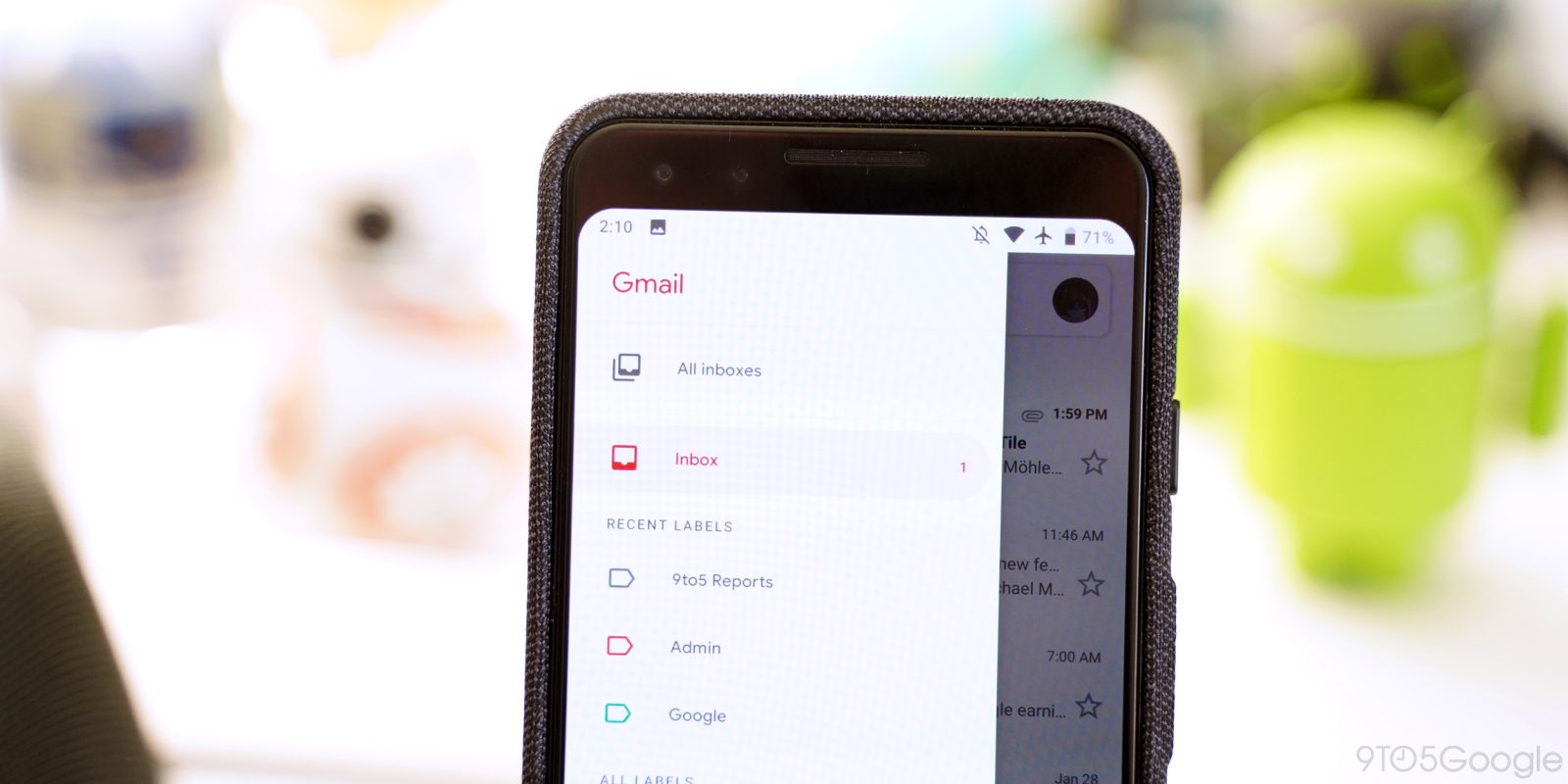
Last April, Google completely revamped Gmail on the desktop web with a focus on machine learning-powered features and other smart functionality. Now available on Gmail for Android, this redesign includes a handful of other changes beyond the Google Material Theme that are welcome carry-overs from the web counterpart.


Expand
Expanding
Close

Inbox users being pushed to Gmail are realizing they don’t like the new Gmail

Gmail

Earlier this year, on the coattails of the latest Gmail redesign, Google announced that it was shutting down Inbox by Gmail by March of next year. While this announcement should have been enough of a nudge to transition many users off the platform, Google is now giving a stronger push, and not all Inbox users are liking what they find on the other side.


Expand
Expanding
Close

Don’t like Gmail’s new sidebar? Now you can hide it with a single click

Gmail sidebar

Google launched a completely redesigned Gmail on the web, featuring the Google Material Theme, earlier this year. We’ve been fans of it for quite a while from purely an aesthetic perspective, but it’s definitely had some places where it feels like Google chose form over function. No longer!

Now, Google’s letting you hide that pesky new Gmail sidebar that you never use.


Expand
Expanding
Close

Gmail Confidential Mode rolls out to mobile as EFF warns of misleading claims

Gmail for Android

Features of the new Gmail have been rolling out to users since its unveiling just before I/O. One such feature, Confidential Mode, which offers a suite of email protection options, is arriving now on mobile. However, the Electronic Frontier Foundation is advising users to be fully aware of how Confidential Mode works, and how its use can affect others.


Expand
Expanding
Close

Gmail for Android’s Google Material Theme will add new features from web, density, more

Gmail for Android

During a session at Cloud Next 2018, Google showed off Gmail for Android’s upcoming Google Material Theme update. To match the recent web revamp, the mobile version of Gmail will gain traditional desktop features like density options and quick attachments in the inbox view.


Expand
Expanding
Close

How to remove third-party access to your Gmail inbox w/ Google Security Checkup

Google Account sign-in

There’s been a lot of brouhaha this week about Gmail and the access that it’s giving third-party apps to your email. I already outlined exactly why this is not something to be particularly concerned about and how those headlines might be misleading to some. One of the key takeaways of my argument is that you still have control over your data and who gets to use it, so here’s how to do that…


Expand
Expanding
Close

Third-party Gmail developers are not reading your emails unless you’ve allowed them to

Gmail for Android

There’s been a lot of noise this week about Gmail and the access that some third-parties have to your Gmail inbox. Hidden under misleading headlines, reports have, I think rightfully, highlighted the parallels between Gmail’s system and Facebook’s prior third-party allowances which led to Cambridge Analytica-related repercussions. The public perception of these stories is much different, though.


Expand
Expanding
Close