Judge says Apple and Google are using litigation as a business strategy, have ‘no interest’ in settlement

apple_motorolaIn an ongoing case in which Apple and Google’s Motorola have accused each other of infringing various mobile related patents since 2010, U.S. District Judge Robert Scola said in an order yesterday that the two companies have no interest in reaching a settlement. Bloomberg reports Scola said in his order that both companies are using the litigation as a “business strategy that appears to have no end”:

“The parties have no interest in efficiently and expeditiously resolving this dispute; they instead are using this and similar litigation worldwide as a business strategy that appears to have no end,” U.S. District Judge Robert Scola in Miami said in an order dated yesterday. “That is not a proper use of this court.”

“Without a hint of irony, the parties now ask the court to mop up a mess they made by holding a hearing to reduce the size and complexity of the case,” he wrote. “The court declines this invitation.”

The result is Apple and Google will now have a four month period to narrow their claims related to the case that now includes over 180 claims for 12 patents. Bloomberg notes that Scola said the case currently includes “disputes over the meaning of more than 100 terms,” and that the case would be put on hold until the disputes are resolved if the two companies are unable to come up with a solution before the four month timeframe expires… Read more

Google cites $30B in patent privateering losses in campaign against patent trolls

Google today announced in a blog post on its Public Policy Blog that it has asked the Federal Trade Commission and the Department of Justice to investigate and take a stronger stance against patent privateering and patent assertion entities, aka patent trolls. Google linked to a document submittedGoogle-building to the government agencies mentioned above and noted that BlackBerry, Earthlink and RedHat are among other companies backing the request.

Within its post, Google’s Senior Competition Counsel Matthew Bye cited losses of nearly $30 billion a year in the U.S. due to patent trolls and urged companies to help Google create “cooperative licensing agreements that can help curb privateering.”

Trolls use the patents they receive to sue with impunity—since they don’t make anything, they can’t be countersued. The transferring company hides behind the troll to shield itself from litigation, and sometimes even arranges to get a cut of the money extracted by troll lawsuits and licenses.

Google described patent privateering as companies selling “patents to trolls with the goal of waging asymmetric warfare against its competitors.” While it didn’t name any companies specifically in its blog post or document submitted to the FTC, it did link to an article on Bloomberg that mentions Microsoft, Nokia, and Alcatel-Lucent as companies linked to patent privateering.

In the document submitted to the FTC, Google outlined its stance on patent trolls and recommended the FTC initiate an investigation into patent assertion entities and or expand its broader inquiry to include a number of important areas specifically related to patent privateering: Read more

Google licenses MPEG LA patents for VP8 video format

Google today announced that it has struck a deal with MPEG LA that will allow it to license patents essential to Google’s VP8 and previous generation VPx video compression technologies. The deal will allow Google to stop MPEG LA’s efforts to form a “VP8 patent pool” made up of the 11 patents Google has licensed today.

It will also allow Google to sublicense the VP8 technology to others and sublicense “VP8 techniques in one next-generation VPx video codec.”

Deputy General Counsel for Patents at Google Allen Lo said the deal is a “significant milestone”:

“This is a significant milestone in Google’s efforts to establish VP8 as a widely-deployed web video format. We appreciate MPEG LA’s cooperation in making this happen.”

The press release (below) didn’t provide any financial information related to the licensing agreement: Read more

Patent diagrams of Google Glass show a new, detailed view

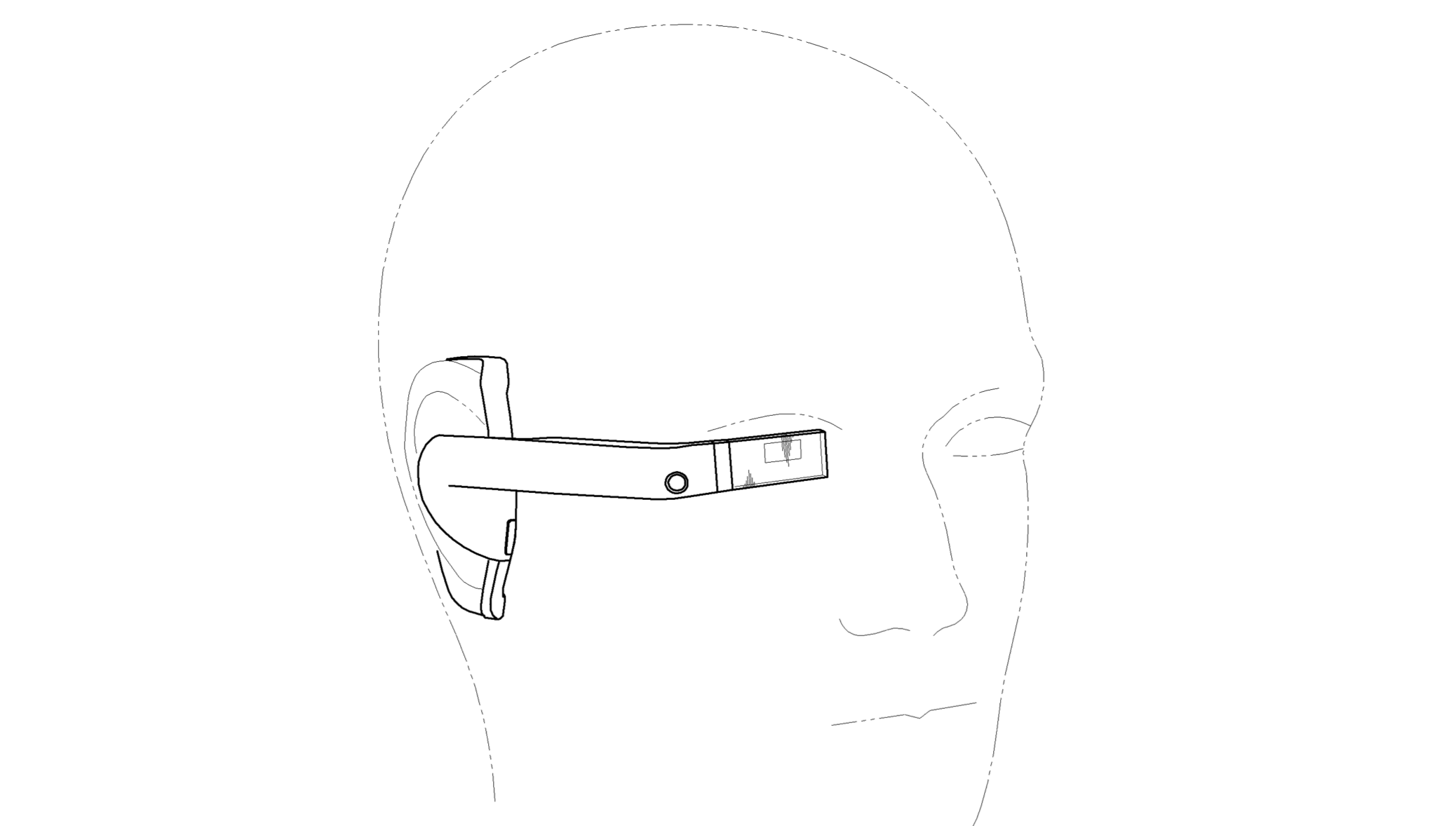
google-glass-patent-2-21-13-02

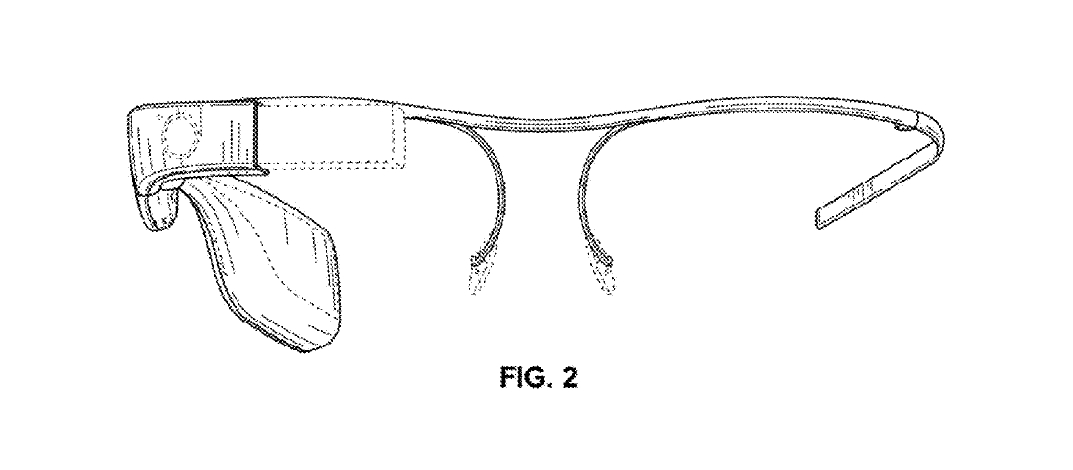
A United States Patent Application filling from today revealed three detailed diagrams of Google Glass. Google announced yesterday that it would open applications, asking people to answer the question “If I had Glass”. A Google-approved, answer along with $1,500, will score you a set of the futuristic glasses this year. The new diagrams, along with many pages, detail the future potential. In the filling, mentions of Wi-Fi, LTE, Bluetooth, and more are all listed as connectivity options, as well as back-up battery slots that accept AA and AAA batteries to help keep that LTE juice flowing all day. Some other features of the device possibly include touch input all along the frame of the glasses and different RAM, battery, and storage configurations.

Other possible mentioned features are:

  • Gyroscope and accelerometer
  • Retina laser scanner
  • Semi-transparent LED display
  • Balanced internal distribution for “predetermined weight distribution”

While there are tons of mentioned features in the filling, it’s unsure how many will actually come to life when Glass launches officially next year.

Google Legal Chief David Drummond calls for a reform on software patents

It is no secret that Mountain View-based Google has been in a flurry of legal proceedings over its Android operating system—along with the OEMs that use it. Consequently, Google has been vocal in the past about how it wants to change the patent system in the United States. Adding to the attempt of reform, in an interview with reporters in Seoul this afternoon, Google Legal Chief David Drummond called for a reform of how software patents are issued.

According to the Wall Street Journal, Drummond talked about making it more difficult to obtain a software patent as one possible solution. He spoke about other countries, specifically: “There are places in the world where you can’t get a software patent, or at least it’s harder, like Europe. We think that’s probably the better way to go.” Many others have also voiced a similar opinion.

Read more

German court rules Motorola does not infringe Microsoft patent

According to the Mannheim Regional Court in Germany, Motorola Mobility does not infringe on a Microsoft patent enabling a “method and radio interface layer comprising a set of application programming interfaces (APIs).” The patent, which Reuters described as allowing “applications to work on different handsets,” is considered a rare victory for Google’s Motorola. Throughout its countersuits, Microsoft has been able to win three patent cases against Motorola in Germany. As noted by Microsoft-funded blogger Florian Mueller, “Microsoft should actually thank Motorola for this initiative, which at this stage has been far more productive for Microsoft than for Google.”

Microsoft is expected to appeal the decision, as usual, but the Judge Voss did not go over the reasoning behind the ruling during the announcement. Microsoft’s associate general counsel David Howard provided a statement to Reuters:

Read more