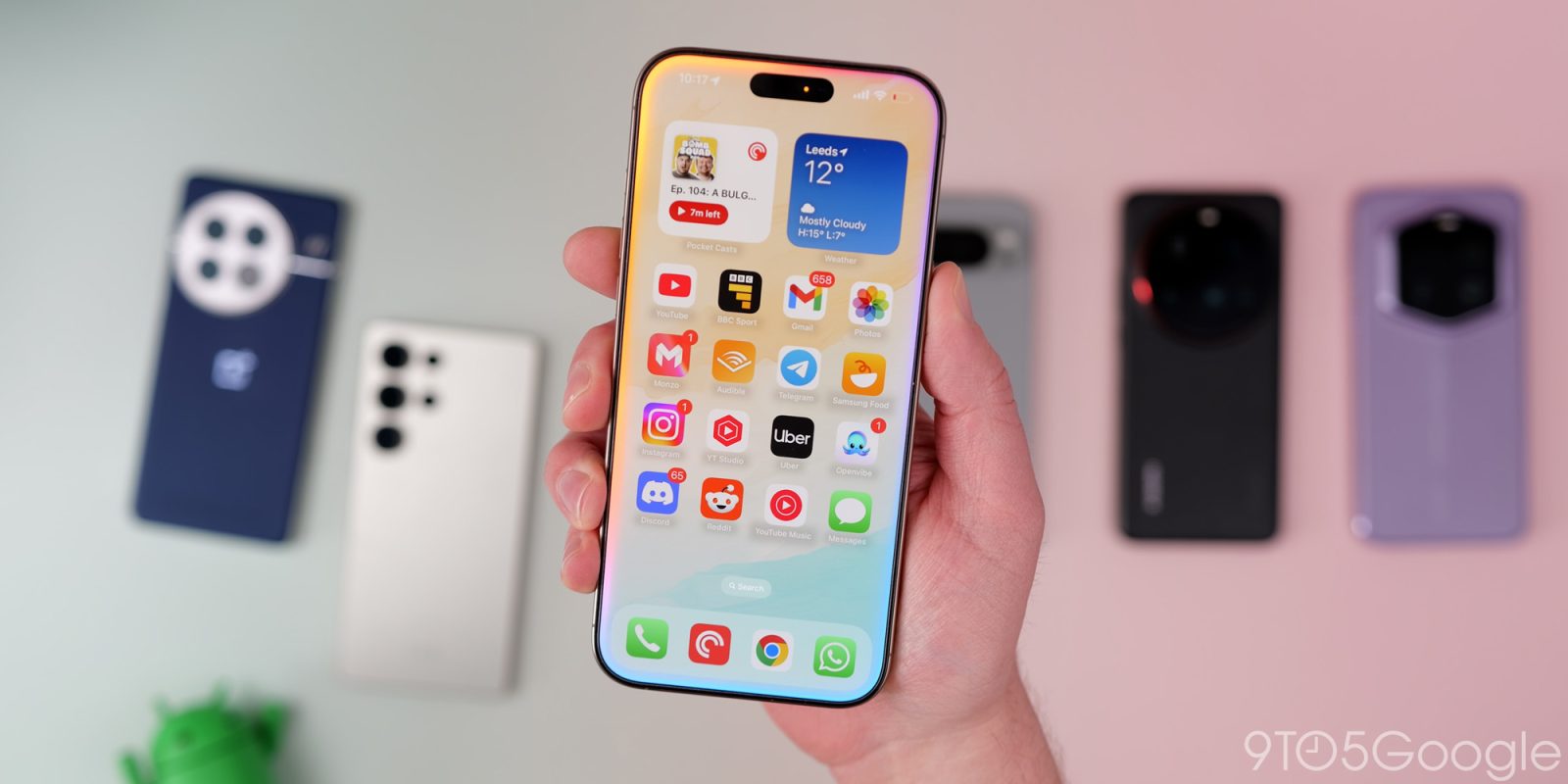
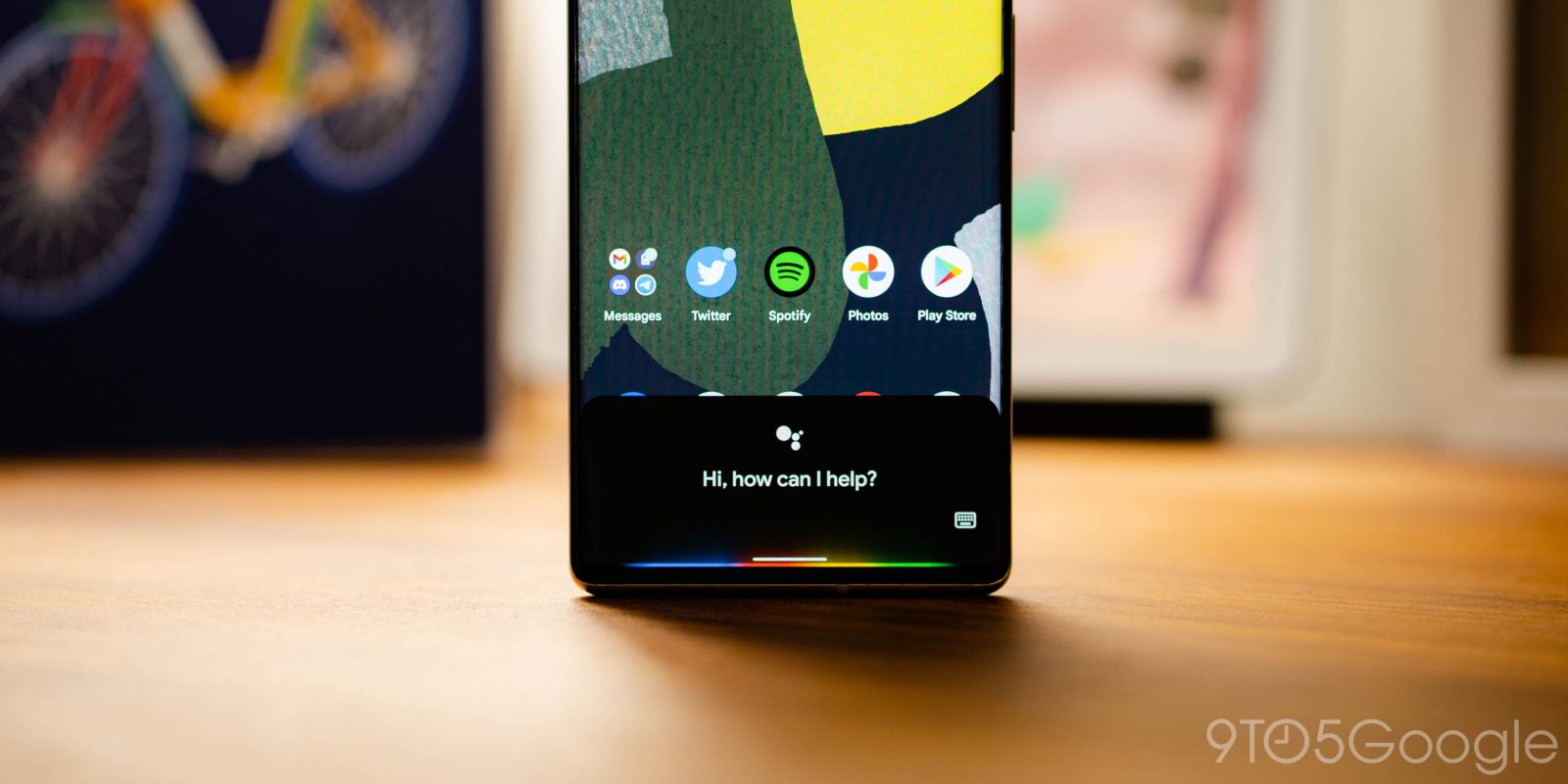
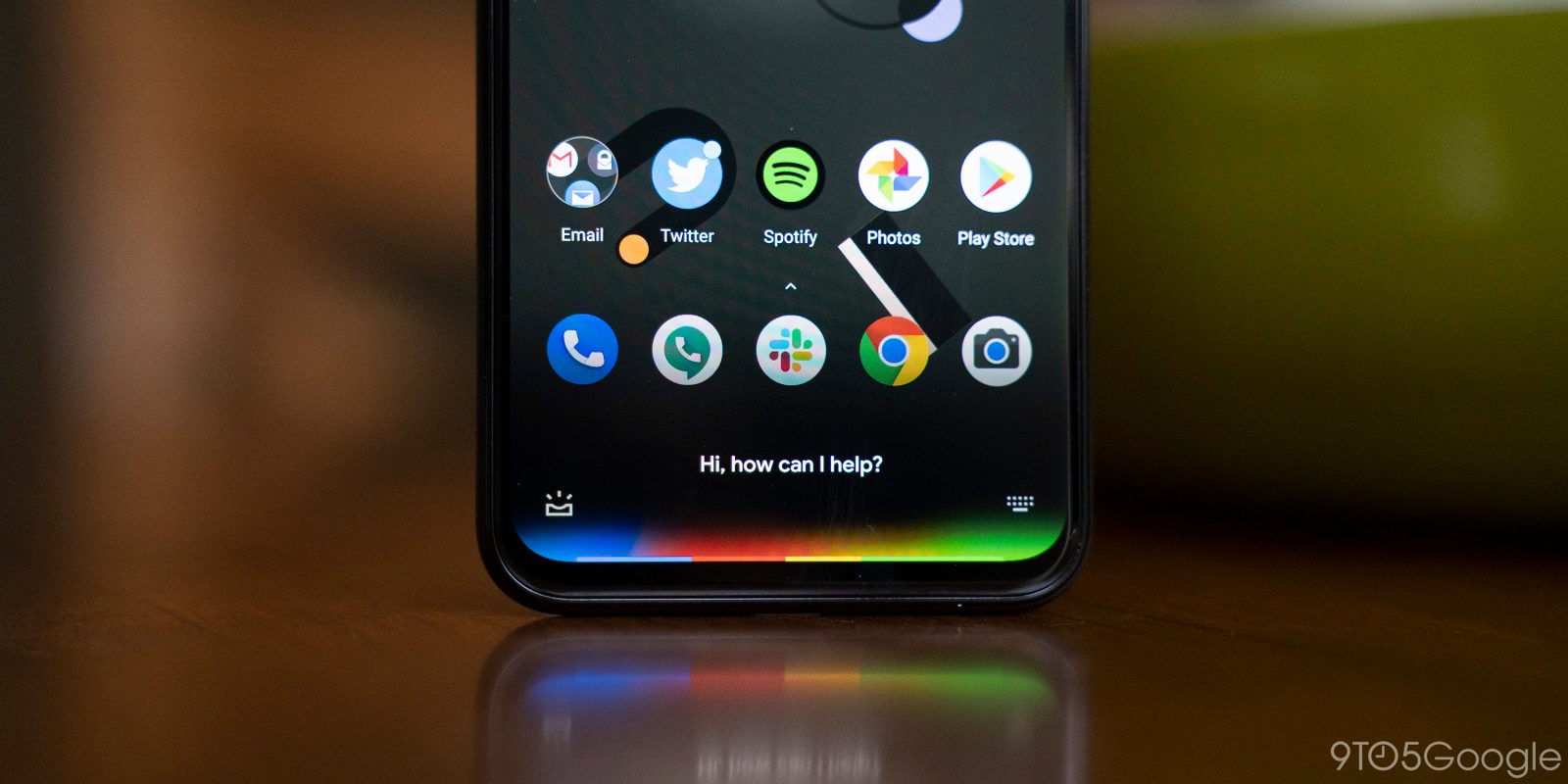
Voice assistants have been getting a bit less attention over the past year compared to previous years, but it’s always fun to take a look at how they all compare with how we actually use them. To no one’s surprise, Google Assistant took the crown in a recent comparison, but it really shows the gap Assistant has over Siri, Bixby, and especially Amazon Alexa.
In lieu of Google I/O 2020 (Google opted not to hold a virtual event this year), the various arms of the company that would have otherwise had announcements at the event are trying to hold virtual conferences. That continued this week with the “Hey Google” Smart Home Virtual Summit. The big news was Google bringing Home/Away triggers to Assistant Routines with ‘presence detection’, but another minor tidbit surfaced: a new “Works with Hey Google” brand we hadn’t seen yet. Let’s overanalyze this, shall we?
Google Assistant has long dominated the voice assistant field, despite a huge head start from Apple’s Siri. With the new release of iOS 14, Apple tried to close that gap a bit with a bunch of improvements to Siri, but it’s clear that, even with that, Google Assistant still has quite the lead.
It’s hard to argue that Apple’s Siri is better than Google Assistant, and, thanks to improvements on the Pixel 4, Google’s lead is only increasing. Now, a video comparison shows how much faster and more accurate Google Assistant is.
If you primarily use a Google Voice number, there are a few little roadblocks you’ve got to put up with. However, one of those is going away, as the latest Google Voice update for iOS adds better support for Siri. Expand Expanding Close
Slowly but surely, Google Assistant speakers have been catching up with Amazon’s Alexa. However, Assistant isn’t just on speakers, it’s also a core aspect of nearly every Android smartphone. Now, it’s been revealed in a study that in less than three years, Google Assistant has managed to match market share with Apple’s Siri in terms of what people are actually using.
It’s hard for anyone to argue against Google Assistant being the best voice assistant at answering queries. Assistant has proven time after time that it’s superior. Recently though, one test found that the gap between Assistant, Siri, and Alexa is starting to close quite a bit.
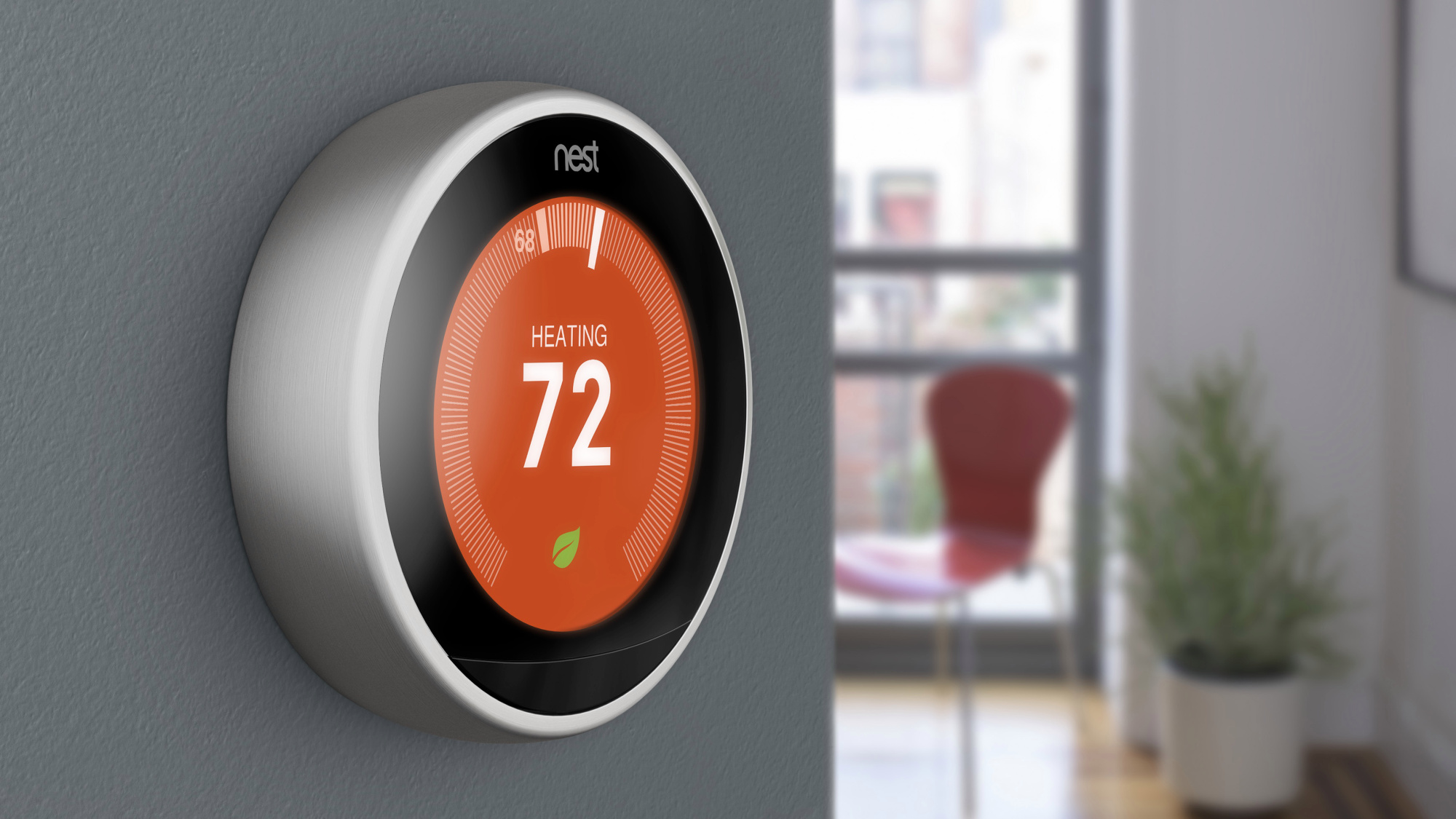
Google might just be admitting a notable defeat in its battle with Amazon, with the latter company today saying that Nest thermostats will soon work with Alexa-powered devices. According to a report from Re/code, people familiar with the matter have said that Alphabet’s Nest unit explored the idea of building an Echo-like device at some point, but eventually came to the conclusion that customers wouldn’t be able to trust such a device that was built by the search engine behemoth…
Microsoft has been offering the Android version of its intelligent assistant Cortana as a small-scale beta since last month, and it’s now ready to go live. Engadget notes that it just hit Google Play.
Don’t expect it to match Google Now for functionality, however – with Google’s own assistant deeply embedded into Android and Cortana a mere app, it will have limited capabilities, but you can at least see how it compares when it comes to answering questions …
Google Now, Siri and Cortana all have their respective followings, but which application is the best at answering real world questions? Recently, the folks at Stone Temple Consulting pit the three platforms each other in a 3,086 query challenge packed with questions that required direct answers.
According to a new report out of the Wall Street Jounral, speech and dictation service Nuance Communications has held acquisition talks with Samsung and has been exploring the possibility of a sale. It is widely speculated that the Apple’s virtual assistant Siri is powered by Nuance in the back-end. Samsung started partnering with Nuance late in 2013 for the voice recognition functionalities on its Galaxy Gear smart watch and Galaxy Note 3 smartphone.
Two former Stanford University students who created a startup to help doctors use Google Glass to view and update patient records have raised $3.2M in venture capital funding, reports SFGate.
Augmedix’s founders say that physicians currently spend around a third of their time with a patient looking at a computer screen, and that using Glass instead will allow them to spend more time communicating with patients … Expand Expanding Close
Google has rolled out a massive update to its Text-to-Speech Android app that includes a variety of enhancements. The update, which began rolling out to devices yesterday evening, bumps the app to version 3.0. Most notably, this update improves the voice functionality and quality. While the voice was originally rather robotic and boring, this update makes it more fluent and realistic, much like Apple did with Siri in iOS 7. The updated voice is available in several languages and both male and female varieties, but each language and style runs about 200MB, so be sure you’re on WiFi when you download them. The voices are also now available in Portugese (Brazil), and Spanish (United States).
There are some issues with the new voices, however. Android Police notes that commands that contact the Google server for a reply, such as “what is 3+2”, still use the old robotic voice. Local questions, such as “what is my next appointment”, do use the new voices, however.
The user interface has also been tweaked heavily. The voice management screen has been redesigned to show the size of each download, as well as detailed information about the voice.
The update is rolling out gradually on Google Play, so be sure to keep an eye on the Play Store for it to hit your device.
As Google’s Chairman Eric Schmidt makes his own predictions for 2014, I’m turning the subject over to you…the 9to5Google reader. There’s absolutely no shortage of topics to cover or “what ifs” for Google in 2014. Given the various branch directions that Android, Chrome OS and the company itself can go, it’s a loaded question. With recent reports indicating Chrome OS is on the rise, could we see Microsoft running scared in 2014 against the impending threat of low-cost hardware with an operating system that costs manufacturers absolutely nothing?
With Yahoo’s acquisition of SkyPhrase, a natural language processing startup this month questions immediately arose as to how Yahoo would incorporate the technology. Now, thanks to a video on Daily Motion discovered by Android Police, we may have our answer as Yahoo prepares a Google Now/Siri voice-controlled personal assistant.
PhoneBuff has put together an interesting video showcasing fifty things Google Voice Command can do, and we think there’s a pretty high chance you won’t be aware of all of them. It’s getting on for eight minutes long, but well worth a look if you want to make sure you’re getting the most out of Google’s virtual assistant.
The video includes examples of linked queries, where Google knows who or what you are referring to based on your previous question.
PhoneBuff did a similar thing with Apple’s Siri, and although they don’t use the same questions – each video designed to illustrate their respective capabilities rather than a head-to-head challenge – it does make for an interesting comparison. Siri video below.
A novel new use for Google Glass: In the operating room, a surgeon does an operation wearing Google Glass and shares the procedure real time with his colleagues and students in a far off classroom via Google Hangouts.
“It’s a privilege to be a part of this project as we explore how this exciting new technology might be incorporated into the everyday care of our patients,” said Dr. Christopher Kaeding. “To be honest, once we got into the surgery, I often forgot the device was there.”
Google Glass has a frame similar to traditional glasses, but instead of lenses, there is a small glass block that sits above the right eye. On that glass is a computer screen that, with a simple voice command, allows users to pull up information as they would on any other computer. Attached to the front of the device is a camera that offers a point-of-view image and the ability to take both photos and videos while the device is worn.
Google is testing a new “card” for its Google Now service that would display local news that’s contextually relevant to the user. It’s not something that users have been able to try out just yet, but Quartz reports that vice president of search and assist at Google Johanna Wright tells them that Google is currently testing the feature internally.
There’s no word on whether or not the Google Now card would some how be integrated with Google’s current News service, but Wright provides an example of how the “hyper-local news card” might function: Expand Expanding Close
Above we see a new ad that Samsung recently aired for its flagship Galaxy S4 in Iceland. The ad itself is a little on the strange side, but what’s not surprising is the fact that Samsung is once again not so subtly going after Apple. The point of the ad, in case you don’t speak Icelandic, is to drive home the fact that Apple doesn’t yet support the language for Siri or dictation features. Samsung’s YouTube description for the ad notes that the S4 allows users to dictate emails and messages in Icelandic, while the tagline for the ad reads “Get a phone that understands you.” We’re not exactly sure where the ninjas fit into that message, however. Expand Expanding Close
Microsoft must be pretty happy with Apple’s decision to include Bing as the default search engine powered web results in Apple’s revamped Siri application heading to iOS 7 this fall. However, what does this all mean for Google? It could very well signal Apple’s increasing desire to cut its reliance on services powered by its biggest competitor in the smartphone space.
Before iOS 7, searching for something with Siri would often turn up the option to search for web results. Doing so would give you results through Safari using your default search engine (which by default is set to Google). Now, in iOS 7, web results will be displayed right in the Siri app, however, they will be powered by Microsoft’s Bing– and not Google. Expand Expanding Close
Despite having access to a pretty powerful voice-enabled, predictive search engine with Google Now, Samsung is still pushing ahead with its own ‘S Voice’ app to try and provide a unique Siri-like experience on its devices. We’ve seen many comparisons of how Samsung might have borrowed from Apple for its own voice-controlled assistant, but today a post from AndroidCentral got us curious about how S Voice reacts when asked about Siri.
The screenshot we grabbed above speaks for itself with the Galaxy S4 returning snappy answers when asked about the iPhone and Siri. When asked, “Have you ever used an iPhone?,” S Voice responded, simply, “No, I have standards.” Another question, “Are you Siri?,” returns the answer, “I think that I am, but I’m a little biased.”
Results appear to vary for users, but it’s certainly an easter egg that Samsung has intentionally included in the app at some point. Siri isn’t free of its own clever responses with users finding several easter eggs and controversial remarks since the app first launched on iPhone 4S. Asking Siri about Samsung or its devices, however, usually just provides a vague response or directs users to Apple’s website or the web.
Some answers Siri gives are amusing, such as responding to marriage questions with “My End User License Agreement does not cover marriage”. People are more amused by the silly stuff, like when you say “call me an ambulance” and she responds by acknowledging “From now on, I’ll call you ‘an ambulance’”.
It’s no surprise that Google would bring its voice search to the web, as it already offers the service on Android and plans to bring it to iOS (Google Search for iOS currently offers real-time voice search but doesn’t support Google Now cards), and tends to have a cross-platform approach to its services as opposed to Apple’s ownership approach to its services.
If Nuance gets its way with the just announced ‘Voice Ads’ mobile advertising platform, soon every mobile ad could include Siri-like functionality that lets you communicate with and ask questions about the product being advertised.
Nuance, the company behind the voice recognition module now used in Apple’s Siri, today announced a new project to bring its voice recognition technology to the mobile advertising world. The basic concept of the new platform, which Nuance made available through an SDK for advertising companies, is to bring a two-way, interactive conversation to mobile ads. As highlighted by Nuance in the video above, ads that implement the Voice Ads platform will allow users to engage in a Siri-like conversation with an advertisement:
Nuance Voice Ads gives mobile advertisers and creative agencies an opportunity to go beyond the limitations of the four-inch mobile device screen and create a conversation with consumers through the power of voice recognition. Voice Ads finally creates an opportunity for brands to deepen the relationship with their consumers, with targeted interactive ads that deeply engage their core audience – much in the way that the world’s most popular mobile personal assistants have deepened consumers’ relationship with their mobile phones.
In the demo above, Nuance shows an advertisement for a fictional deodorant brand that uses a magic 8-ball theme to answer any question that users might have. The ad of course ends in a pitch for the product in question, as you might expect. Other ads could allow users to ask specific questions about a product’s release date or specs…