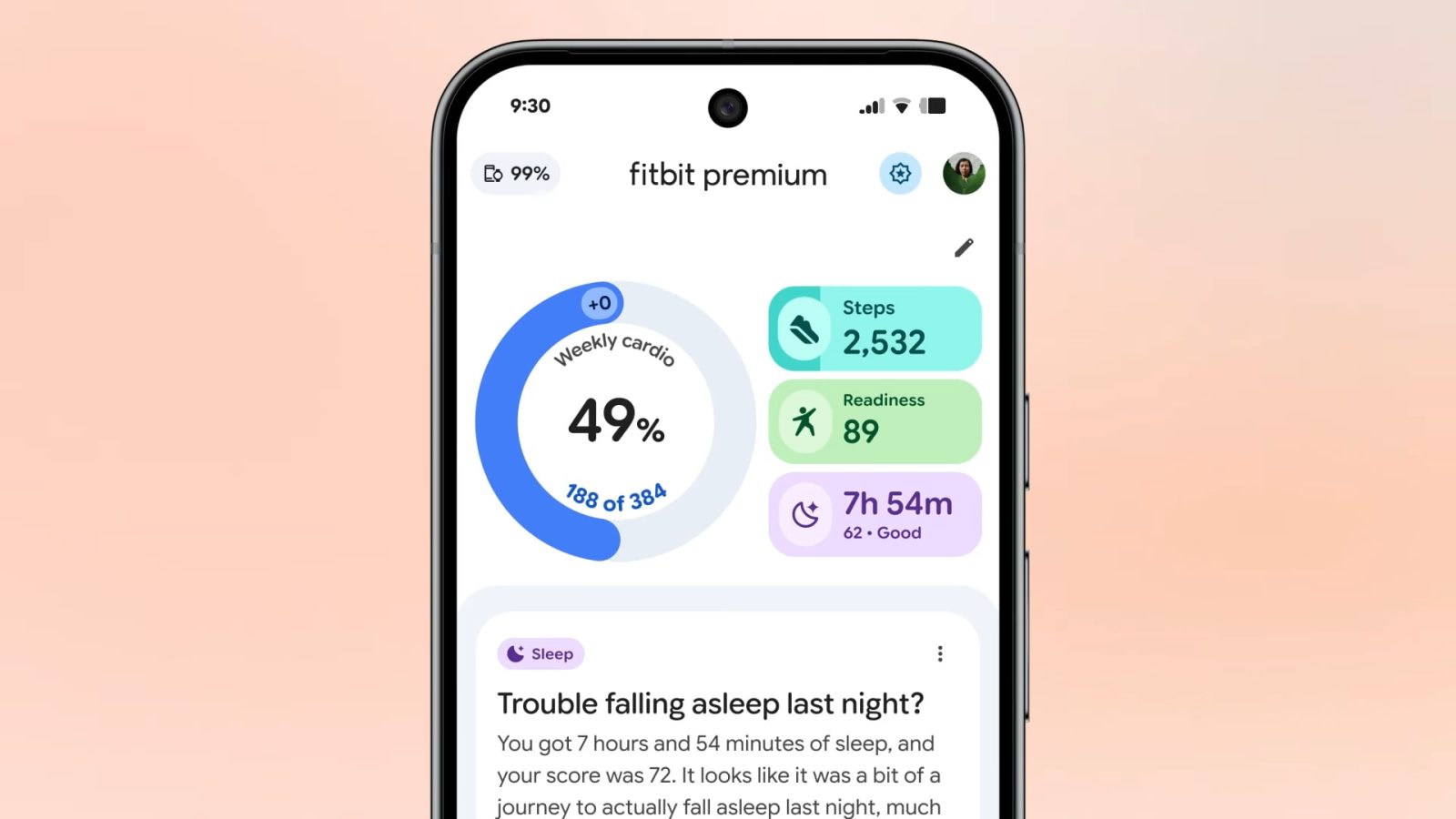
Fitbit Public Preview adds food & water logging, more as app redesign comes to free users


Back in 2017, courts in the EU slapped Google with an unprecedented multi-billion euro fine over anti-competitive practices. After years of appeals, Google has officially lost in that case.
Expand Expanding Close
Following up on the Digital Markets Act, the European Union is launching a “non-compliance investigation” into Alphabet, specifically centered around Google Search and specific rules in the Play Store.
Expand Expanding Close
Google’s dominance over the online ad market has been scrutinized time and time again, and this week the European Union is expressing its concerns that Google has breached the EU’s antitrust laws, and that the company should break up its ad business.
Expand Expanding Close
In 2018, the European Union ruled that Google’s app bundling with Android, essentially forcing its partners to include a long list of Google apps with their phones, was illegal. Google appealed that ruling, but the EU has just announced that it will uphold the decision, despite lowering the fine.
Expand Expanding Close

While the Android ecosystem as a whole has been getting better about long-term support and the speed of updates, EU lawmakers are now pushing for a set standard for Android updates that just so happens to mirror what Google offers on the Pixel 6.
Expand Expanding Close

While the US and other regions are shining more of a spotlight on Google and the Play Store, the EU has already issued a 2018 ruling that imposed Google with a $5 billion fine over anticompetitive practices on Android. Google is fighting that fine, and slamming EU regulators over turning a blind eye to Apple.
Expand Expanding Close
As Google tests out its replacement for third-party cookies, the Federated Learning of Cohorts, the company has faced a lot of scrutinies for the initiative. Now, some regulators in the EU are raising concerns about FLoC as well that could spell trouble for the future of Google’s initiative.
Expand Expanding Close
Google announced late last year that it planned to purchase Fitbit to bolster its wearable portfolio, but the deal has been under scrutiny from the EU since day one. Several months later, it’s now looking like Google’s Fitbit deal will undergo a full investigation from the European Union.
Expand Expanding Close
While other events may have started to overshadow the coronavirus pandemic, the virus is still very much a big deal around the globe. Now, in order with a request from the European Union, US tech giants including Google are going to produce regular reports regarding misinformation online about the coronavirus.
GDPR has had a huge effect on how internet services work in the European Union, but following Brexit, Google may make some changes to how UK data is handled. A report from Reuters reveals that Google is preparing to shift data from UK users to be under US jurisdiction.
Last year, Google announced that it had plans to acquire the popular wearable maker Fitbit, something that’s raised both hope and concern from users. This week, the European Data Protection Board is raising flags regarding Google’s Fitbit acquisition, calling it a privacy risk.
The Federal Trade Commission and New York Attorney General announced today that Google will pay $170 million over alleged children’s privacy violations on YouTube. In response, the video service will be implementing a number of changes related to kids.


Google has been fined $1.69 billion after EU regulators claimed that the tech company abused its own search system to essentially force third-party sites to use the AdSense network over other rival online ad serving companies.



The European Commission has proposed changes to copyright laws that would require video sites like YouTube to pay more to musicians and music labels, reports the BBC. It follows a plea by more than 1000 artists – among them Lady Gaga and Coldplay.
The draft directive will also require publishers and producers to tell performers or authors what profits their works have generated. The music industry has long criticised YouTube for failing to pay enough for content such as music …
The European Union has already filed two sets of antitrust charges against Google, the first accusing it of manipulating search results to favor its own products, the second alleging that Google forces Android device manufacturers to install its own apps and set Google search as the default.
Last summer, it was reported that the company may face a third antitrust case in Europe, this time for abusing its dominant position in advertising, and the WSJ reports that the EU is currently preparing to files these charges, possibly next month …

We had heard that the EU was planning to levy a substantial fine on Google for its alleged favoring of its own services in search over those belonging to competitors last year already, and the Telegraph is reporting that the European Commission is now estimating a hefty €3 billion ($3.4b) tag…
Expand
Expanding
Close
Google seems to be under fire lately. Less than a week from the European Union’s charges against the Mountain View company regarding supposedly unfair practices towards its hardware partners, TIME is reporting that the famous stock photo agency Getty Images is now accusing the technology giant of “promoting piracy” with its Images search engine…
The Financial Times reports that tight deadlines given to four lawyers suggest that the European Commission’s Android anti-trust case against Google could see formal charges finalized this week, possibly as early as Wednesday.

TNW reports that the European Commission is pressing ahead with proposals to make Google News pay a fee for linking to news stories on the web. The EC says that as search results include a short excerpt from the piece, and that text is protected by copyright, Google must pay.
Three European countries have tried this, and it failed in all three. In Spain, Google simply decided to close Google News in that country, and news websites lost 10-15% of their traffic overnight. Spanish publishers – who had originally demanded the law – quickly realized their mistake and tried to pass a new law that would somehow force Google to return …
The French data protection regulator CNIL has fined Google €100,000 ($112,000) after rejecting the company’s proposed compromise over the controversial ‘right to be forgotten‘ legislation.
The legislation gives individuals the right to have ‘outdated or irrelevant’ information about them removed from Google’s search results. Google at first offered to remove the results from Google’s local domains on a country-by-country basis, in this case google.fr, before saying that it would also remove them from google.com when a search was carried out from within France …
Just one day after the UK’s public spending watchdog described the £130M ($185M) back-tax paid by Google in the country as “disproportionately small,” France is demanding a rather larger sum. Reuters reports that the country’s finance ministry believes Google owes €1.6B ($1.76B).
“As far as our country is concerned, back taxes concerning this company amount to 1.6 billion euros,” the official, who spoke on condition of anonymity, said […]
Earlier this month, Finance Minister Michel Sapin ruled out striking a deal with the U.S. search engine company as the British government recently did, saying the sums at stake in France were “far greater” than those in Britain …

The Public Accounts Committee, the British Parliament’s public spending watchdog, has criticized the £130M ($185M) tax deal Google struck with the UK government as “disproportionately small.” The committee also criticized the secrecy around how the sum was calculated, reports the Guardian.
Google’s controversial tax deal cannot be properly assessed by MPs because of secrecy surrounding the negotiations, according to a report by parliament’s public spending watchdog. But the deal to pay £130m in back taxes for a 10-year period seems “disproportionately small when compared with the size of Google’s business in the UK”, the public accounts committee has found.
A report published today calls for more to be done to prevent “aggressive [tax] avoidance” by multinational companies, with Google accused of hypocrisy …

The European Commission says that the £130M ($185M) tax deal struck between Google and the UK government may amount to “illegal state aid” by offering the company better terms than those available to smaller businesses.
Google first came under fire for its tax arrangements in the UK in early 2013, when it was accused of funneling profits from UK Adword sales through Ireland, resulting in the company paying just £6M ($8.5M) tax on a turnover of £395M ($565M). In the new deal, it agreed to change its accounting practices to pay more tax in the UK, and to pay a lump sum in back tax …


