Android

See All Stories

Breaking news for Android. Get the latest on apps, carriers, devices, and more!
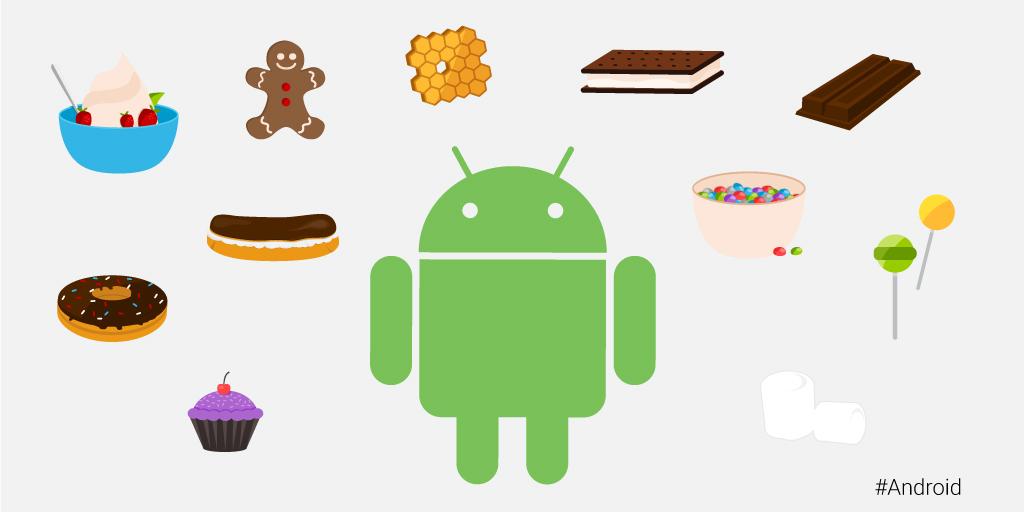
Android is Google’s mobile operating system, launched in September 2008, although its history technically began with the release of the Android alpha in November 2007. To this day, Android powers the majority of the world’s smartphones and comes in several different flavors across many phone makers.

What is Android?

Android Inc.

Android, before it was Android, was a company called Android Inc. That company was founded in Palo Alto, California, in 2003 by a crew of four: Andy Rubin, Rich Miner, Nick Sears, and Chris White. The company and its project was acquired by Google in 2005 for a sum of more than $50 million, although the exact number is unknown. The company’s founders joined Google as part of the deal.

In its infancy, Android was an operating system built not for touch screen smartphones like the iPhone, but rather BlackBerry-like devices with physical keyboards. It’s well documented that after Apple shocked the world with the iPhone, ahead of its nearest competition by at least a couple years, Google and Android Inc. had to go back to the drawing board to build something competitive.

Adoption by third-party makers

It didn’t take long after the launch of the iPhone for various manufacturers to enter the market with their alternatives — and Google’s Android immediately became the obvious platform of choice for just about everyone except Microsoft. HTC was the first manufacturer on board, and introduced the T-Mobile G1 running Android in September 2008. Soon after, HTC, Motorola, Samsung, and carriers like Sprint and T-Mobile jumped on board to form the Open Handset Alliance.

Android makers across the world

Iconic Android handsets

There have been thousands of Android phones released since Android’s inception, but some have been more important to the platform’s history than others. There was the original T-Mobile G1, as mentioned, but there was also the HTC One Google Play Edition, Moto G, Samsung Galaxy S4, and others. Some of the most iconic Android handsets include:

  • HTC G1
  • HTC Nexus One
  • Samsung Galaxy S, S2, S3, S4, and their successors
  • HTC Incredible S
  • Samsung Nexus S
  • Samsung Galaxy Nexus
  • Samsung Galaxy Note
  • Nokia 8
  • BlackBerry KeyOne
  • Google Pixel and its successors

In more modern times, there are several Android smartphones makers that popped up across various niches and in several international markets. Huawei is a dominant Android maker in China and many European markets, while Samsung is by far the most popular maker in the United States by far — effectively creating a duopoly with Apple. Today, there are dozens of major device makers contributing to the Android ecosystem.

Full list of Android OEMs

History of major Android versions

Android has seen countless software revisions over the course of its life, but in modern times the OS usually sees a major release on an annual cadence. In the earlier days, Google famously gave its major software releases dessert-themed codenames, but retired that practice in 2019 with the release of Android 10.

VersionNameReleaseDevices
2.3GingerbreadFebruary 9, 2011Nexus S
4.0Ice Cream SandwichOctober 19, 2011Galaxy Nexus
4.1Jelly BeanJuly 9, 2012Nexus 7
4.2Jelly BeanNovember 13, 2012Nexus 4, 10
4.3Jelly BeanJuly 24, 2013Nexus 7 (2013)
4.4KitKatOctober 31, 2013Nexus 5
5.0LollipopNovember 3, 2014Nexus 6, 9
5.1LollipopMarch 9, 2015Android One
6.0MarshmallowOctober 5, 2015Nexus 5X, 6P
7.0NougatAugust 22, 2016Nexus 5X, 6P
7.1NougatOctober 4, 2016Pixel, Pixel XL
8.0OreoAugust 21, 2017Pixel, Pixel XL
8.1OreoDecember 5, 2017Pixel, Pixel XL
9PieAugust 6, 2018Pixel 2, Pixel 2 XL
1010September 3, 2019Pixel 3, 3a
1111September 8, 2020Pixel 4

List of major Android OS platforms

While Android proper is certainly the most widespread of Google’s Android operating systems, the company has also launched many offshoots of the main OS over the years. There’s Android Auto, Android Wear (now Wear OS), Android TV (now rebranded to Google TV), as well as versions of Android built for tablets and Android Things (now defunct).

Three months after being announced, the Essential Phone is now shipping to buyers

At the time of this article being published, Andy Rubin announced the Essential Phone exactly 87 days ago. Those 87 days have been far from perfect for Essential following shipment delays and executives jumping ship, but at long last, the company’s very first device, the Essential Phone, is shipping out to buyers.


Expand
Expanding
Close

Pixel Launcher for any Android device updated with new 8.0 Oreo features

In June, a launcher from developer AmirZ popped up that mostly brought Google’s Pixel Launcher to any Android device — including the Google Search pill, Google Feed cards, and plenty more. With the recent release of Android 8.0 Oreo, AmirZ has released a new 2.0 version of the launcher that brings a lot of new features and goodies to sink your teeth into.


Expand
Expanding
Close

Samsung’s next dual-camera phone reported to be the Galaxy J7+

Samsung’s recently announced Galaxy Note 8 is a fairly incremental update compared to last year’s model and the Galaxy S8+, but one of its standout features is its dual camera setup. The Note 8 is Samsung’s first device to offer dual-cameras, and it’s now being reported that the company’s next phone to wield two cameras on the back will be the Galaxy J7+.


Expand
Expanding
Close

BlackBerry reported to license out its own Android ROM to other manufacturers

BlackBerry’s first ever Android phone, the Priv, was met with mixed reactions following its release in 2015. The phone got a few things really, really right, but faltered in a few key areas. One of the strong suits for the Priv was its near-stock Android software with a few helpful additions that didn’t bog down the OS. Now, according to a new report, BlackBerry may soon start licensing out its take on Android to other manufacturers.


Expand
Expanding
Close

So, what’s the deal with the Essential Phone’s camera? [Gallery]

The Essential Phone is just about to ship to early customers, and there’s a lot that’s good about the first product from Andy Rubin’s startup. Early reviews have been glowing overall, but the camera has been disappointing for most. I’ve spent the past couple of days using the Essential Phone as my daily driver in preparation for my full review, and I’ve been testing out the camera quite a bit. Is it actually as bad as everyone has been saying? Well…


Expand
Expanding
Close

Moto X4: Motorola’s return to the X-series passes through the FCC with full specs in tow

Motorola’s had quite the year so far, and even after releasing the Moto G5, Moto E4 Plus, Moto C, Moto Z2 Play, and plenty more, the company isn’t about to stop growing its already massive product line. We’ve been hearing plenty of talk about the upcoming Moto X4, and with the device now having passed through the FCC, we have confirmation on just about everything the phone will be bringing to the table.


Expand
Expanding
Close

Samsung Galaxy Note 8 tidbits: New Gear VR, free in-home support, camera samples & more

samsung gear vr

Yesterday saw the debut of Samsung’s latest flagship, the Galaxy Note 8. Following a successful launch with the Galaxy S8 earlier this year and the massive consequences of the Galaxy Note 7 last year, Samsung had a lot riding on this launch.

We’ve already given you the details on this launch as well as our first impressions, but now let’s take a look at some of the smaller details you might have missed…


Expand
Expanding
Close

KGI: Samsung Galaxy S9 will follow the Note 8’s example w/ a dual-camera setup

The Samsung Galaxy Note 8 was officially unveiled yesterday, and although it’s a fairly modest improvement compared to the Note 7 and Galaxy S8/S8+, one of the most notable new features is the phone’s dual-camera system. The Note 8 is the first phone from Samsung to feature a dual-camera setup, and according to a new report, the Galaxy S9 will follow suit with this latest trend.


Expand
Expanding
Close

Substratum themes coming soon to Android 8.0 Oreo without the need for custom ROMs or root

People choose Android over iOS for a number of reasons, but one of the most common ones is that Android offers greater customization over what Apple allows on its mobile OS. The recent release of Android 8.0 Oreo introduced a lot of new features and smaller tweaks to make the operating system more polished than ever before, but thanks to a recent discovery, it looks like you’ll soon be able to use Oreo to take your customization game to an entirely new level.


Expand
Expanding
Close

Android 8.0 Oreo tidbits: All of the smaller changes and features you might have missed

Since Android 8.0 Oreo has been available in the form of Developer Previews since late March, we essentially knew all of the main features that were coming with the official build of this latest update. However, now that 8.0 Oreo is officially out in the wild, we’ve spotted a few smaller additions that we previously didn’t know about…


Expand
Expanding
Close

Sony Xperia XZ1 shown off in official renders for our clearest look yet at the phone [Gallery]

IFA will officially be starting on September 1, and throughout the event, we’re anticipating a lot of new device announcements/launches. One company’s presence that we’re looking forward to seeing is Sony, and a new batch of renders for the Xperia XZ1 has us salivating over the device more than ever.


Expand
Expanding
Close

Samsung Galaxy Note 8 goes official with 6.3-inch display, dual-cameras, 6GB RAM

Just over a year ago, it wasn’t an unreasonable thought that there would never be another Note smartphone on the market. With devices “exploding” around the world, it was a disaster for the company that had lasting effects. However, Samsung bounced back with the release of the Galaxy S8 earlier this year, and now the Galaxy Note 8 has gone official.


Expand
Expanding
Close