Android

See All Stories

Breaking news for Android. Get the latest on apps, carriers, devices, and more!
Android is Google’s mobile operating system, launched in September 2008, although its history technically began with the release of the Android alpha in November 2007. To this day, Android powers the majority of the world’s smartphones and comes in several different flavors across many phone makers.

What is Android?

Android Inc.

Android, before it was Android, was a company called Android Inc. That company was founded in Palo Alto, California, in 2003 by a crew of four: Andy Rubin, Rich Miner, Nick Sears, and Chris White. The company and its project was acquired by Google in 2005 for a sum of more than $50 million, although the exact number is unknown. The company’s founders joined Google as part of the deal.

In its infancy, Android was an operating system built not for touch screen smartphones like the iPhone, but rather BlackBerry-like devices with physical keyboards. It’s well documented that after Apple shocked the world with the iPhone, ahead of its nearest competition by at least a couple years, Google and Android Inc. had to go back to the drawing board to build something competitive.

Adoption by third-party makers

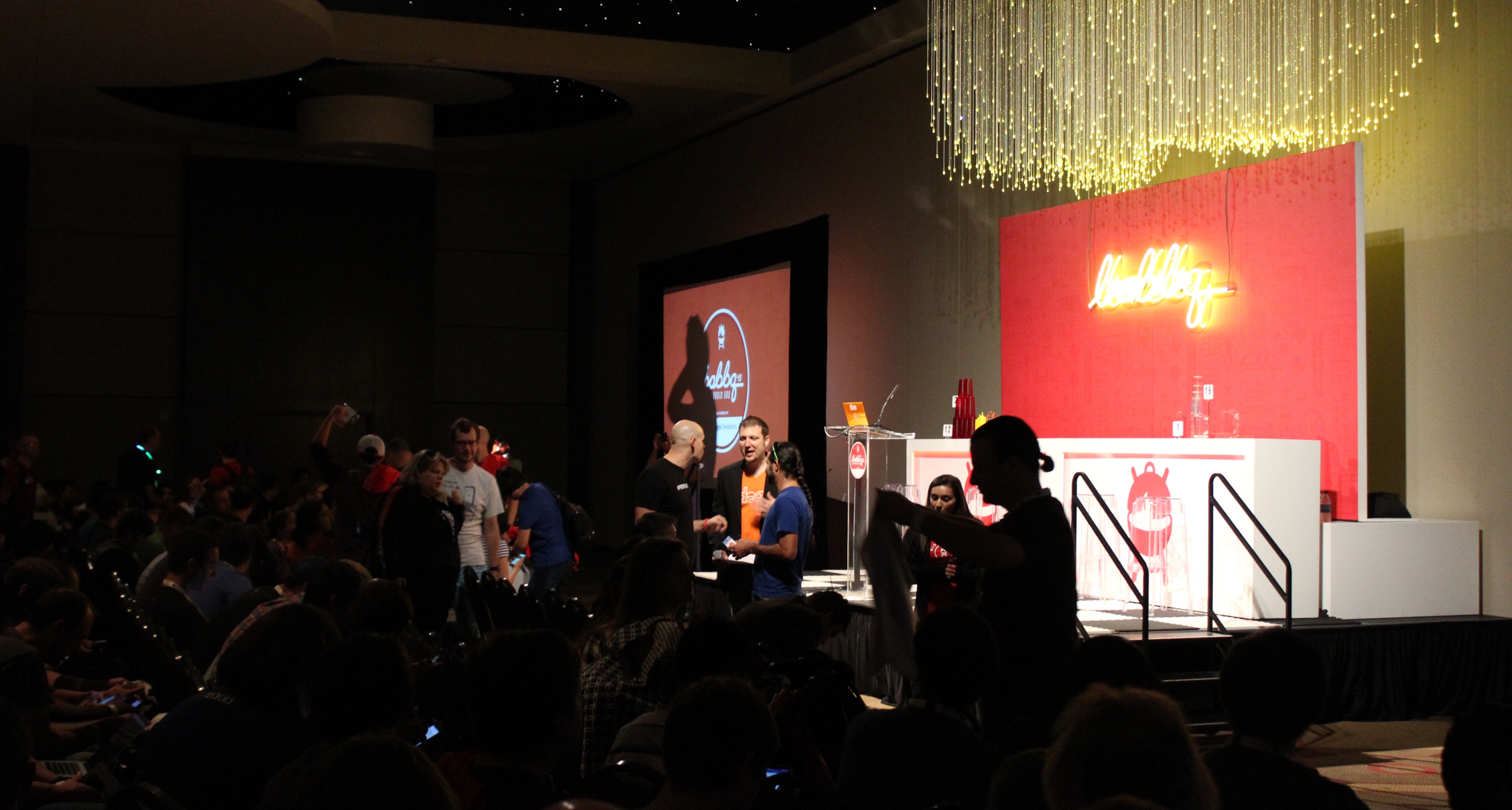
It didn’t take long after the launch of the iPhone for various manufacturers to enter the market with their alternatives — and Google’s Android immediately became the obvious platform of choice for just about everyone except Microsoft. HTC was the first manufacturer on board, and introduced the T-Mobile G1 running Android in September 2008. Soon after, HTC, Motorola, Samsung, and carriers like Sprint and T-Mobile jumped on board to form the Open Handset Alliance.

Android makers across the world

Iconic Android handsets

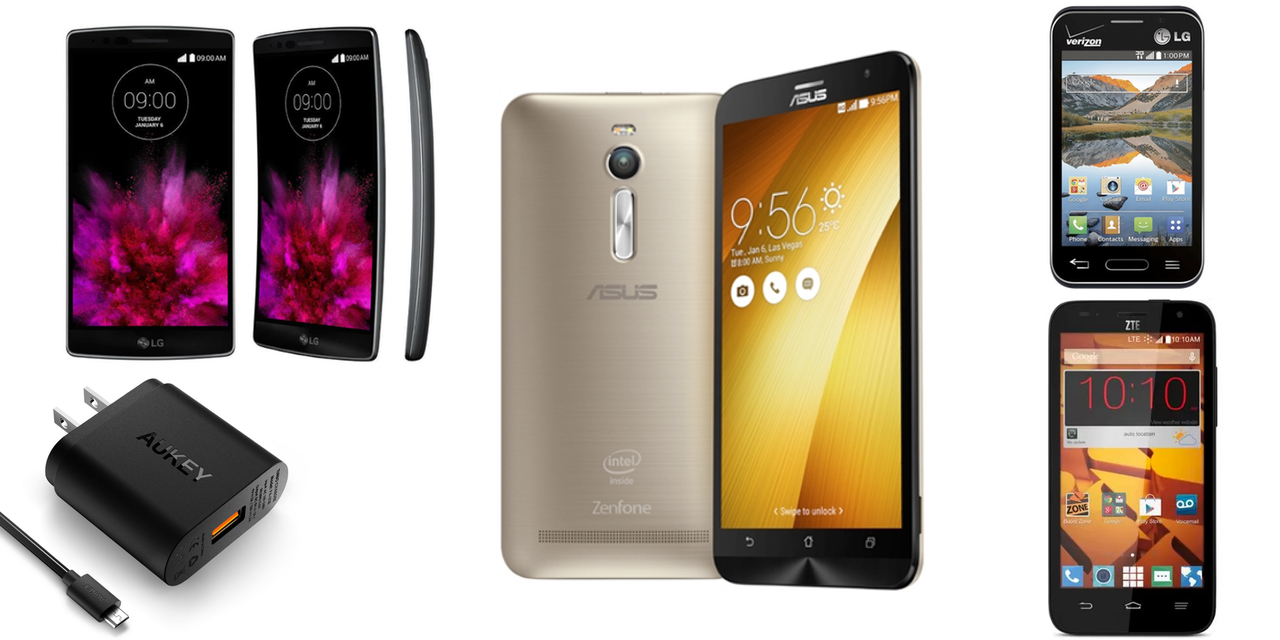
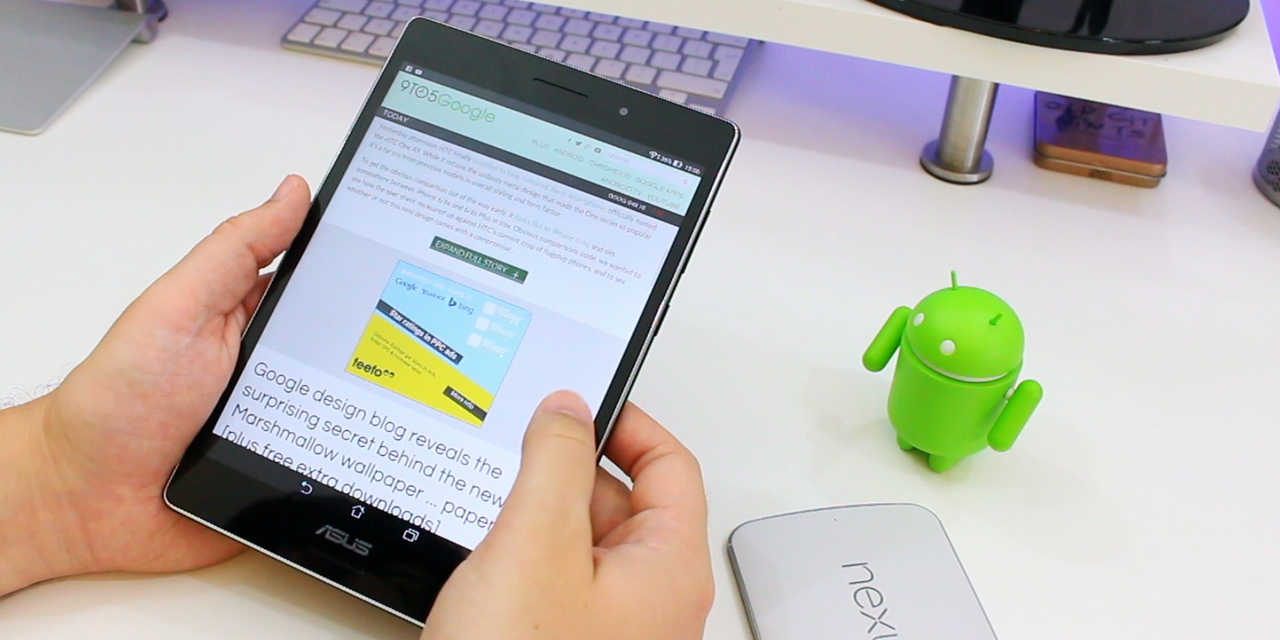
There have been thousands of Android phones released since Android’s inception, but some have been more important to the platform’s history than others. There was the original T-Mobile G1, as mentioned, but there was also the HTC One Google Play Edition, Moto G, Samsung Galaxy S4, and others. Some of the most iconic Android handsets include:

  • HTC G1
  • HTC Nexus One
  • Samsung Galaxy S, S2, S3, S4, and their successors
  • HTC Incredible S
  • Samsung Nexus S
  • Samsung Galaxy Nexus
  • Samsung Galaxy Note
  • Nokia 8
  • BlackBerry KeyOne
  • Google Pixel and its successors

In more modern times, there are several Android smartphones makers that popped up across various niches and in several international markets. Huawei is a dominant Android maker in China and many European markets, while Samsung is by far the most popular maker in the United States by far — effectively creating a duopoly with Apple. Today, there are dozens of major device makers contributing to the Android ecosystem.

Full list of Android OEMs

History of major Android versions

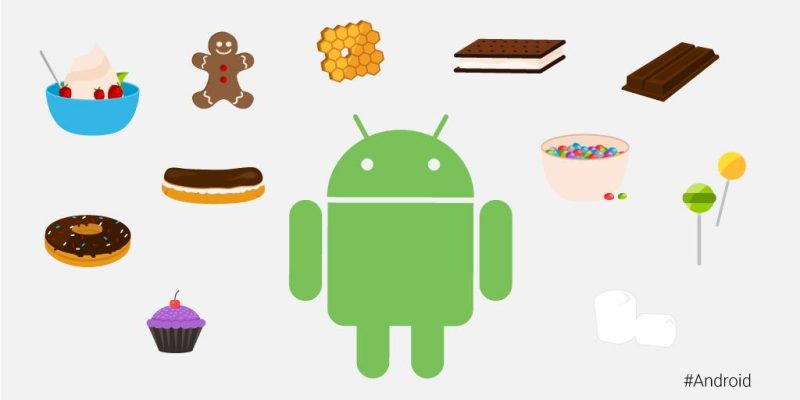
Android has seen countless software revisions over the course of its life, but in modern times the OS usually sees a major release on an annual cadence. In the earlier days, Google famously gave its major software releases dessert-themed codenames, but retired that practice in 2019 with the release of Android 10.

VersionNameReleaseDevices
2.3GingerbreadFebruary 9, 2011Nexus S
4.0Ice Cream SandwichOctober 19, 2011Galaxy Nexus
4.1Jelly BeanJuly 9, 2012Nexus 7
4.2Jelly BeanNovember 13, 2012Nexus 4, 10
4.3Jelly BeanJuly 24, 2013Nexus 7 (2013)
4.4KitKatOctober 31, 2013Nexus 5
5.0LollipopNovember 3, 2014Nexus 6, 9
5.1LollipopMarch 9, 2015Android One
6.0MarshmallowOctober 5, 2015Nexus 5X, 6P
7.0NougatAugust 22, 2016Nexus 5X, 6P
7.1NougatOctober 4, 2016Pixel, Pixel XL
8.0OreoAugust 21, 2017Pixel, Pixel XL
8.1OreoDecember 5, 2017Pixel, Pixel XL
9PieAugust 6, 2018Pixel 2, Pixel 2 XL
1010September 3, 2019Pixel 3, 3a
1111September 8, 2020Pixel 4

List of major Android OS platforms

While Android proper is certainly the most widespread of Google’s Android operating systems, the company has also launched many offshoots of the main OS over the years. There’s Android Auto, Android Wear (now Wear OS), Android TV (now rebranded to Google TV), as well as versions of Android built for tablets and Android Things (now defunct).
Google’s standalone Street View app adds Google Cardboard support in latest update

If you aren’t yet aware, Google released a standalone Street View app for Android last month — and with it comes a showcase of all the best Street View imagery right at your fingertips. While previous versions of the app have allowed you to use your phone’s gyroscope to look at the Street View photography in 3D, the latest version of the app brings a great feature for VR fans: Google Cardboard support…

To access the feature, all you have to do is make sure you have the latest version of the app (which is rolling out now on Google Play, and alternatively available now over at APKMirror). Once you open the app, all you have to do is navigate your way to a view that you’d like to look at, rotate your phone 90 degrees, and tap the new Google Cardboard icon at the top-right of the screen.


Google launches Accelerated Mobile Pages Project, its plan to speed up the mobile web

With the debate over ads and the speed of the mobile web growing every day, many web companies like Apple and Facebook have pushed for publishers to hand over their content in the name of a better experience for users. But content creators — for the most part — don’t want to do that, and Google knows that. So today, the Mountain View company has announced the Accelerated Mobile Pages initiative, a plan it’s leading to make the mobile web faster…
Expand
Expanding
Close

FCC filing reveals Samsung Galaxy View will be almost half meter wide, heading to AT&T

Samsung’s gigantic upcoming tablet has cropped up online more than once in recent times. The most recent rumor indicated that the device, code-named ‘Tahoe’, will be released as the Samsung Galaxy View and sport whopping 18.4-inch display. An FCC filing reveals more about the as-yet-unreleased tablet from Samsung, including its dimensions, some previously unknown features and which carrier it’s likely heading to…


Expand
Expanding
Close

Sony wants 10,000 Xperia Z3 and Z3 Compact owners to test its Android Marshmallow concept software

Early this summer, Sony announced a new Concept for Android software testing scheme in which it invited owners in specific markets, and with specific handsets, to test out new concept software. Seemingly it went well for Sony, as it announced this morning that it’s opening up a similar program for Android 6.0 Marshmallow.

Users with the Xperia Z3 or Z3 Compact in a number of countries will be able to apply to join the program. This news comes just a day after the manufacturer released its long list of devices which should receive Marshmallow over the coming months.


Expand
Expanding
Close

Samsung predicts first return to profit growth in two years – but thanks to chips, not phones

There’s good news and bad news for Samsung today. The good news: the company has forecast a reversal of its seven-quarter decline in profits, suggesting an impressive year-on-year hike of almost 80%.

The bad news is that, while the company itself hasn’t released any details on where the profit is coming from, analysts cited by the WSJ and elsewhere put it down to strong growth in sales of chips and displays – not phone sales. This suggests that Samsung is making its money by helping other manufacturers, like Apple, sell their phones … 
Expand
Expanding
Close

BlackBerry Priv leak indicates 4K video recording, 64-bit processor and ‘BlackBerry Safeguard’ software

One of the most hotly-anticipated handsets of this year was finally made official recently, although little was said about its internal specs. All we know (officially) is that the BlackBerry PRIV will be an Android smartphone, and it will be a portrait slider with a physical QWERTY keyboard with “flagship specs”. Apart from a couple of official press renders, and a bungled hands-on demo by the chief, BlackBerry hasn’t been keen too share all the details with us yet.

A new leak from N4BB suggests strongly that early rumors of a focus on camera performance are accurate. The 18MP camera on the back purportedly features Schneider-Kreuznach optics and can record in 4K resolution at 30fps. It can also film 1080p at 720p at both 30fps and 60fps.

Although we don’t know exactly what processor is inside the PRIV, the leak suggests that it will be a 64-bit processor. There have been rumors previously stating that it will be the Snapdragon 808 hexa-core chip, the same processor found in the LG G4, Moto X Pure and LG Nexus 5X. BlackBerry then seemingly among the many manufacturers keen to avoid the overheating Snapdragon 810.

Previous leaks showed that the software would be a customized version of Android, keeping many stock elements but adding some of BlackBerry’s own popular tools and features like the notification Hub. Another piece of software being installed is a program called BlackBerry Safeguard which shows you how secure your BlackBerry PRIV is. In it, users can manage what information apps have access to and how they’re using it, and gives you warnings if there are settings you can change to make your device more secure.

We’ve heard before that PRIV = Privacy and Privilege. Security is a big focus for BlackBerry and its enterprise services are among some of the most-trusted on the planet. In the past, BlackBerry’s chief did state that they’d only release an Android phone if they could make it secure. It seems then that it has, and that BlackBerry Safeguard is just one of the ways which the company will secure the Google-powered device.

How-to: Enable battery percentage indicator and Quick Settings in Marshmallow


Earlier today we broke down the top 10 best new features in Android 6.0 Marshmallow, but as with any operating system change, a few things have changed that are a little harder to find. First noted by Android Authority, Android 6.0 Marshmallow includes the ability to display a battery percentage in the status bar or in the Quick Settings panel via a UI Tuner menu.


Expand
Expanding
Close

Google Creative Lab launches Meter, a live wallpaper that shows battery, WiFi, and notification info

Google Creative Lab, the same group responsible for a few quirky photo and location-based apps that we told you about earlier this year, has released a new live wallpaper for your Android phone that shows you some useful info about your device. There are three different status indicators shown with this wallpaper: Battery, WiFi, and Notifications…

Based on my initial testing, it seems that the wallpaper randomly switches between these three indicators. Locking and unlocking your phone, as well as opening and closing apps, will rotate between them so that you’re always up to date. Also, they all respond to the tilting of your device for some added phone — the battery one reminds me a lot of calibrating the iPhone’s compass app.

You can grab the app for free on the Google Play Store right now.


Pressure-sensitive screens coming to Android as Synaptics announces new display controller

Synaptics has today announced the ClearPad 3700 force-sensing touchscreen controller, which the company hopes will be packed inside many a 2016 flagship Android smartphone. This comes just about a month after Apple’s September 9th event, at which the Cupertino company announced the iPhone 6s and 6s Plus, both packing “3D Touch” as a headline feature…
Expand
Expanding
Close

As Android Marshmallow launches, Lollipop reaches 23.5% of devices

Google finally made Android 6.0 Marshmallow available to download for Nexus users yesterday, and as it did, its previous newest version of the OS reached 23.5% of current connected Android devices. That means Google’s “sweetest update yet” jumped 2.5% over the past few weeks.

As Android 6.0 launches, we’re still in a position where most users on Google’s mobile OS are using a version that’s at least two years old. A huge 38.9% are using Android 4.4 KitKat (launched in 2013), while just over 30% are using one of the three versions of Jelly Bean, which was initially released way back in 2012. To put it bluntly, that means that the previously most recent version of Android was only the third most popular OS.

We’re used to Apple poking fun at Android during its iOS announcements every year, and we’ve read just about every angle there is going on the fragmentation argument, but stats like this won’t do anything to help Google’s cause. Realizing that more than three quarters of its user base are still running 2+ year-old versions of software can’t be a good thing. It’s part of the reason Google announced the Android One program last year.

Android One devices are typically very budget-friendly smartphones made available in developing markets which — like the higher end Nexus phones — get the latest software as soon as it’s available. Marshmallow, which was only launched yesterday, has already started showing up on these Android One phones.

Google begins rolling out in-app translations for Android Marshmallow users

Google today announced that it’s tapping into Google Translate to bring in-app translations to Android 6.0 Marshmallow users beginning this week. With the new feature, anyone running the latest version of Android that also has the Google Translate app downloaded will have the ability to translate text into 90 languages right from within supported apps.
Expand
Expanding
Close

Microsoft updates Band, takes on premium Chromebook and Android tablets w/ new Surface Pro 4 & first Surface Book laptop, more

Microsoft’s Hololens now has a price for developers

At Microsoft’s event today it unveiled a huge array of ambitious and interesting technology which should be enough to make Google and Apple stand up and take notice. The once-giant of the consumer electronics world has had to reinvent itself over the past couple of years, and judging from today’s event, it’s doing enough to get people interested again at the very least. At best, it could transform the way we see technology and computing.
Expand
Expanding
Close

Some Nexus 5 owners on T-Mobile reporting worsened reception on Android Marshmallow

Never does a software update — of any kind — land without some group of users believing that it caused more problems than it solved. With Android 6.0 Marshmallow, which Google starting pushing out yesterday, it looks like Nexus 5 owners who use T-Mobile are that minority group of people. Apparently, Marshmallow is causing some problems with reception for these users…
Expand
Expanding
Close

Google also pushing Marshmallow OTA updates to Android One devices

Google yesterday announced that Android Marshmallow is coming over-the-air to Nexus devices in the coming days and weeks, but now we have confirmation that Google is also pushing the update to Android One devices. Google promised when it launched the Android One program that these phones would get update priority and offer the latest and greatest much like Nexus phones, and it looks like the company is delivering on that promise…
Expand
Expanding
Close

Sony confirms Android 6.0 Marshmallow coming to 14 devices including Xperia Z5, Z3+, Z2, more

Sony has joined the likes of Motorola, HTC and Google in announcing which of its products will (eventually) receive the sought-after update to Android 6.0 Marshmallow. Sony’s list includes several Xperia devices, old and new, and spans devices back to 2013. So, even if you have a Sony Xperia M5, you’ll be able to get the brand new OS on your device at some point. The Xperia-makers state in their blog post that they’ve “been working hard to bring this major update to as many of our devices as possible, as quickly as we can.”


Expand
Expanding
Close

More than 30% of U.S. children first use a mobile device while in diapers, says American Academy of Pediatrics

Updated parental guidelines are needed to help make informed decisions about the use of technology by children, says the American Academy of Pediatrics, as it revealed that more than 30% of U.S. children first use a mobile device while still in diapers. The AAP says that “digital life begins at a young age, and so must parental guidance.”

The Academy says that its existing policy statement was actually drafted before the first iPad was launched, which kickstarted the popularity of tablets as consumer devices. A two-day symposium held earlier this year generated twelve key messages, based not just on limiting screen time but also on distinguishing helpful from harmful use of technology … 
Expand
Expanding
Close

Porsche rejects Android Auto for new 911, saying that Google demands access to too much data

Update: While Google has not commented directly on Porsche’s reported rejection of Android Auto, the company made a statement to The Verge in which it denied that it currently collects any of the data mentioned in the original report. It does not go as far as saying that it has not requested access to such data.

“We take privacy very seriously and do not collect the data the Motor Trend article claims such as throttle position, oil temp, and coolant temp,” Google said in a statement to The Verge. “Users opt in to share information with Android Auto that improves their experience, so the system can be hands-free when in drive, and provide more accurate navigation through the car’s GPS.”

Sportscar manufacturer Porsche has rejected Android Auto for the 2017 version of its famous 911, saying that Google demands access to too much data, reports Motor Trend.

As part of the agreement an automaker would have to enter with Google, certain pieces of data must be collected and [sent] back to Mountain View, California. Stuff like vehicle speed, throttle position, coolant and oil temp, engine revs—basically Google wants a complete OBD2 dump whenever someone activates Android Auto.

Porsche has approved Apple’s CarPlay, as this requires access to only a single piece of data: whether or not the car is moving.

Porsche’s parent company Volkswagen is, however, pressing full speed ahead with Google’s in-car infotainment system, stating back in July that almost every 2016 Volkswagen model in almost every trim level will get Android Auto support.

Android Auto got a user-interface refresh back in August.

Latest Google Play Movies & TV app update makes binge watching shows even easier


Google today has updated its Play Movies & TV app to version 3.9 with a couple of new features and bug fixes. The standout new feature of the app with this update is a new feature called binge watch. Binge watch is a capability that will automatically plays the next episode in the season of a show a user is watching.

Once the credits of the show start to play at the end, a small thumbnail will appear in the lower right corer of the display with the number and title of the next episode, as well as a timer. Once the timer hits zero, the next episode will automatically begin to play. Users can also tap on the thumbnail to immediately jump to the next episode, or swipe right to stop autoplay (via Android Police).

Next up, the update improves the process of setting up a Roku device through the app. Users can now setup a Roke through a new “Connect a device” option in the Settings menu. Google also notes that the update adds support for Android 6.0 Marshmallow and includes a variety of bug fixes and under-the-hood improvements.

  • Android Marshmallow support
  • Bug fixes and stability improvements
  • Easier setup for Roku devices
  • Binge watch for TV episodes

The latest version of the Play Movies & TV app is available now on the Play Store.

T-Mobile details its Android 6.0 Marshmallow update strategy for 17 devices

On the same day that Google released the factory images for Android 6.0 Marshmallow, T-Mobile has updated its Software Updates support page with details on its plans for the rollout. T-Mobile has listed the 17 devices that it plans to update to the latest version of the Android operating system.

T-Mobile says there are three main stages to its update process. The first is “Manufacturer Development,” which means T-Mobile and the manufacturer have agreed to support a software update. The second stage is “T-Mobile Testing,” during which the carrier itself tests the latest build of the operating system. Finally, the final stage is “Completed” and is when the update starts to rollout to users.

You can view T-Mobile’s Software Updates page here and track the progress of an update to your device. Below are the 17 devices on T-Mobile that will receive Android 6.0 Marshmallow:

  • HTC
    • One M8
    • One M9
  • LG
    • G3
    • G4
    • G Stylo
  • Nexus devices
    • Nexus 5
    • Nexus 6
    • Nexus 7
    • Nexus 9
  • Samsung
    • Galaxy Note 4
    • Galaxy Note 5
    • Galaxy Note Edge
    • Galaxy S5
    • Galaxy S6
    • Galaxy S6 edge
    • Galaxy S6 edge+
    • Galaxy Tab S2

How to update to Android 6.0 Marshmallow manually using OTA downloads

Google today announced that Android Marshmallow is coming OTA to several Nexus devices in the coming days and weeks. If you like to get the latest from Google, you know that “coming weeks” could be a pretty long wait. Thankfully, you can head to the front of the line and install the over-the-air (OTA) update by following our quick guide…


Expand
Expanding
Close

Android 6.0 Marshmallow OTA downloads start showing up for Nexus devices, here’s how to install them [Roundup]

Google began the rollout of Android 6.0 Marshmallow earlier today, and while we already have full access to downloading the 6.0 factory images, OTA update download links are going to trickle in slowly as the update rolls out over the next several days. Factory images are typically for doing a fresh install of the OS, but these OTA updates are intended to let you keep your data intact and are typically smaller in total size…
Expand
Expanding
Close

Asus releases new app that allows quick creation of custom watchfaces

The same day as its ZenWatch 2 became available via the Google Store, Asus has this evening launched a new app that allows users to design custom watchfaces. The app, cleverly called the ZenWatch FaceDesigner, is compatible with both the ZenWatch and ZenWatch 2.

ZenWatch FaceDesigner allows users to easily design their own watchfaces. Users can choose from a variety of pre-designed backgrounds and add layers of texts, clocks, and widgets to the background. Widgets include things like weather info, battery life, and app shortcuts. As far as backgrounds go, you can also add your own image to the app and design a watchface based on it.

ZenWatch FaceDesigner is an ASUS wearable application that’s fully-compatible with Android Wear. It lets you create exclusive watch faces for your ZenWatch in three easy steps:

1. Choose your watch face.
2. Choose your clock type.
3. Finish it up by choosing your information widget.

Aside from its simplicity, the ZenWatch FaceDesigner also offers a variety of options for you to choose from such as background image and color, tick, icon, text color, date info, weather info, battery info, missed call info, time zone info, tep count, burned calories, plus more. You can even pick your own favorite image as your watch’s background or icon for a more personalized touch.

The new ZenWatch FaceDesigner app is available now on the Play Store for free and is compatible with the ZenWatch and ZenWatch 2.


Verizon & Sony officially cancel the Xperia Z4v

Verizon took the veil off of the Sony Xperia Z4v just about 4 months ago, saying that it would be coming in the summer. That quite obviously didn’t happen even after Sony’s website proudly proclaimed that the phone would be coming on August 13th, leading most to believe that it has just been straight-up cancelled. As of today, Verizon has confirmed that to be the case: The Xperia Z4v will never see the light of day…
Expand
Expanding
Close